
Alabama
Alabama Dashcam Laws: Legality, Mounting Rules, and Evidence Use
Independently fact-checked against primary sources (last audited August 15, 2026). · Reviewed by the RecordingLaw editorial team. · Law checked current as of August 15, 2026. · 4 primary sources cited on this page. How we verify our legal content
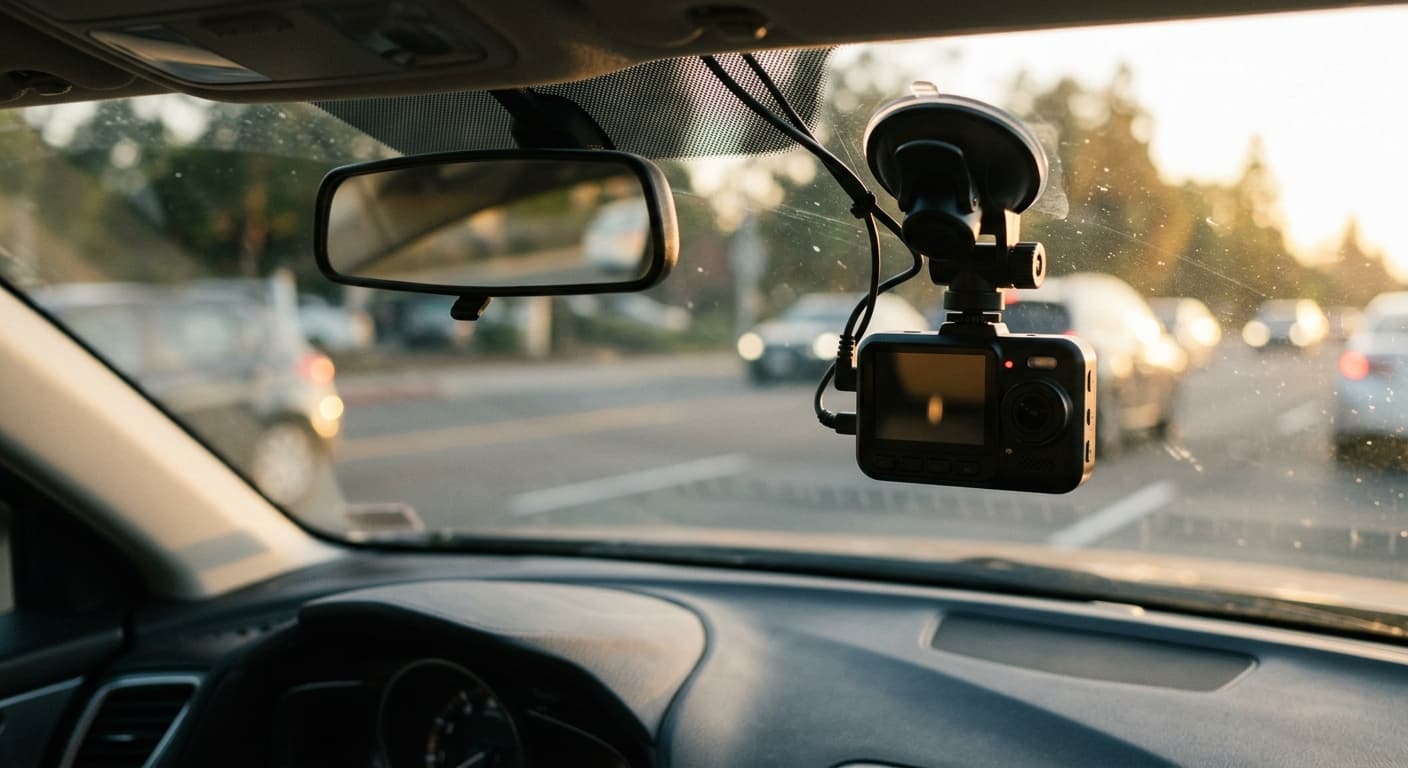
Alabama allows dashboard cameras in private vehicles with no permit or registration required. Audio recording inside your car is lawful under Alabama's one-party consent rule at Ala. Code 13A-11-30, and you must mount the camera so it does not obstruct your forward view of the road.
Dashboard cameras are legal in Alabama. The state has no statute that specifically prohibits or restricts the use of dashcams in private vehicles. You are free to install a dashboard camera in your car, truck, or motorcycle to record your drives, and the footage can serve as valuable evidence in accident claims, traffic disputes, and insurance proceedings.
This guide covers everything you need to know about dashcam laws in Alabama in 2026, including mounting requirements, audio recording rules, how dashcam footage is treated as evidence, and interactions with law enforcement.
Are Dashcams Legal in Alabama?
No State Prohibition
Alabama does not have any state law that bans or restricts dashboard cameras in private vehicles. There is no registration requirement, no permit needed, and no obligation to notify passengers or other drivers that a dashcam is recording.
This permissive approach is consistent with the general principle that video recording in areas without a reasonable expectation of privacy is unrestricted. Public roads are not private places under Ala. Code 13A-11-30, so recording what happens on the road does not implicate Alabama's privacy statutes.
Windshield Mounting Placement
Alabama has no dashcam-specific mounting statute. Federal vehicle safety standards do not fill that gap: FMVSS 205 (49 CFR 571.205) governs the glazing material used in windshields, not where a driver may mount an aftermarket accessory. The actual legal backstop for dashcam placement is Alabama's general windshield-obstruction rule, Ala. Code 32-5-215, discussed below.
As a matter of practical safety, and to stay clearly on the right side of that obstruction rule, mount your dashcam:
- Behind the rearview mirror where it does not block your forward view
- In the lower corner of the windshield if a rearview mirror mount is not possible
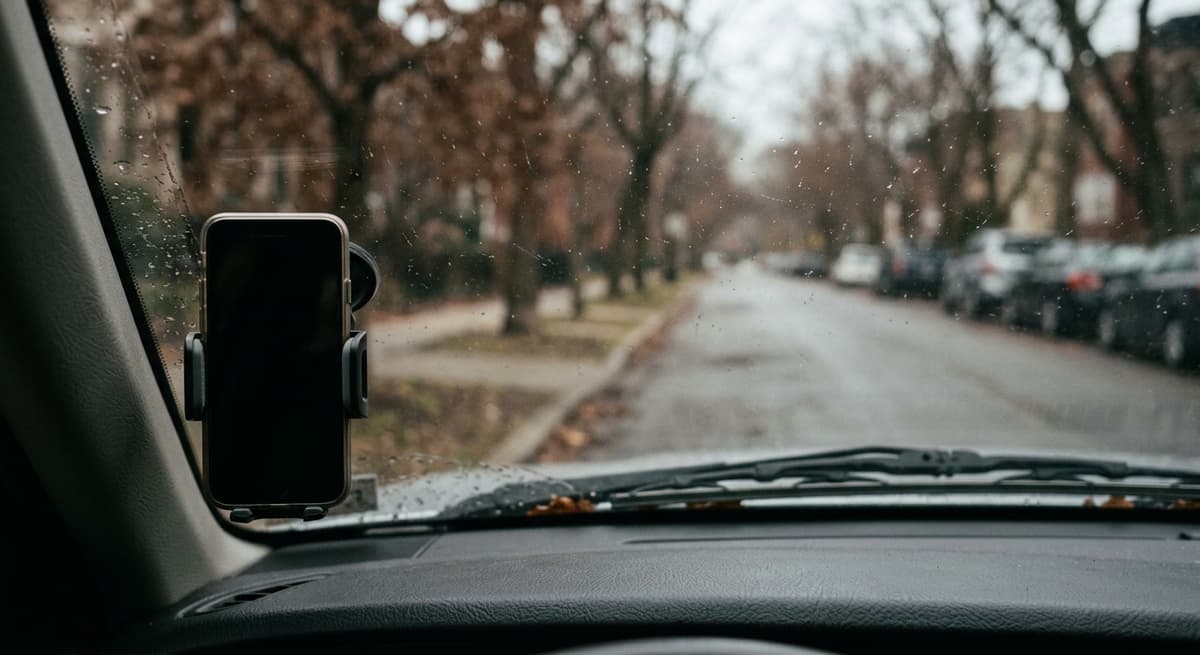
- Using a suction cup or adhesive mount that can be repositioned if needed
- With a compact camera that minimizes the area of windshield it covers
Alabama Traffic Safety Law
Alabama's general traffic safety statutes require drivers to maintain a clear view of the road. Under Ala. Code 32-5-215, it is unlawful to operate a vehicle with any sign, poster, or other nontransparent material upon the front windshield that obstructs the driver's clear view. While dashcams are not specifically mentioned, a dashcam that significantly blocks the driver's view could technically violate this provision.
Audio Recording Rules for Dashcams
One-Party Consent in Your Vehicle
Alabama's one-party consent rule under Ala. Code 13A-11-30 applies to the audio component of dashcam recordings. If your dashcam records audio of conversations inside your vehicle, your consent as a participant in those conversations satisfies the legal requirement.
This means you can record:
- Conversations with passengers in your vehicle
- Phone calls you make or receive while driving (hands-free)
- Your own verbal narration describing road conditions or incidents
- Interactions with police officers during traffic stops where you are a participant
Audio During Traffic Stops
When a police officer approaches your vehicle during a traffic stop, you are a participant in that conversation. Your dashcam's audio recording of the interaction is legal under one-party consent. You do not need to inform the officer that your dashcam is recording audio.
Disabling Audio in Certain Situations
If your dashcam records audio continuously and you are concerned about capturing conversations of people outside your vehicle (such as pedestrians near your parked car), you may want to disable the audio recording feature when the vehicle is parked. This avoids any potential eavesdropping concerns with recording conversations you are not participating in.
Types of Dashcams and Alabama Law
Front-Facing Dashcams
Standard front-facing dashcams that record the road ahead are the most common and least legally complicated. They capture video of public roadways where there is no expectation of privacy.
Dual-Camera Systems
Dual-camera dashcams that record both the road ahead and the vehicle interior are legal in Alabama. The interior camera is useful for:
- Rideshare drivers (Uber, Lyft) documenting passenger interactions
- Commercial fleet operators monitoring driver behavior
- Parents monitoring teen drivers
- Documenting what happens inside the vehicle during an accident
Rear-Facing Cameras
Rear-facing dashcams that record the road behind your vehicle are also legal. These cameras can capture tailgaters, rear-end collisions, and road rage incidents from behind.
Parking Mode Cameras
Some dashcams have a parking mode that activates when the vehicle is parked and detects motion or impact. These cameras are legal in Alabama for capturing vandalism, hit-and-run incidents, and break-in attempts. The video component is unrestricted because the camera is recording in a public or semi-public area (a parking lot or street). Audio recording while parked follows the same one-party consent rules.
Using Dashcam Footage as Evidence in Alabama
Traffic Accidents
Dashcam footage is one of the most valuable types of evidence in traffic accident cases in Alabama. The footage can:
- Establish who had the right of way at an intersection
- Show the speed and behavior of both vehicles before a collision
- Capture traffic signals, signs, and road conditions at the time of the accident
- Document the immediate aftermath including vehicle positions and damage
- Record statements made by the other driver at the scene
Insurance Claims
Alabama insurance companies routinely accept dashcam footage when evaluating claims. The footage can support your version of events and help resolve disputes about fault. Many Alabama insurance providers have begun offering discounts or incentives for policyholders who use dashcams.
When submitting dashcam footage to your insurance company:
- Provide the original, unedited file
- Include a written statement explaining what the footage shows
- Note the date, time, and location of the recorded incident
- Keep a backup copy of the footage for your own records
Criminal Cases
Dashcam footage can be used in Alabama criminal proceedings, including:
- DUI cases where the footage shows erratic driving or the traffic stop
- Hit-and-run cases where the camera captured the fleeing vehicle's license plate
- Road rage incidents documenting threatening behavior
- Reckless driving evidence showing dangerous maneuvers
- Assault occurring at or near your vehicle
Admissibility Requirements
For dashcam footage to be admissible in an Alabama court, it must meet standard evidentiary requirements:
- Authentication: Someone must testify that the footage accurately depicts what occurred
- Relevance: The footage must relate to an issue in the case
- Unaltered: The footage must not have been edited, spliced, or manipulated
- Proper format: The footage must be presented in a format the court can review
Courts may also consider the timestamp accuracy of the dashcam and whether the device was functioning properly at the time of recording.
Dashcams and Law Enforcement
During Traffic Stops
You have the right to keep your dashcam running during a traffic stop in Alabama. Officers cannot order you to turn off your dashcam, and they cannot seize your dashcam or its memory card without a warrant. The U.S. Supreme Court's ruling in Riley v. California (2014) established that police generally need a warrant to search digital devices, including cameras.
Police Dashcams and Body Cameras
Alabama law enforcement agencies use their own dashboard cameras and body cameras, but there is no statewide mandate requiring their use. Individual departments set their own policies about when cameras must be activated and how footage is stored and retained.
Access to police dashcam footage in Alabama is governed by public records laws and individual department policies. You may need to file a formal request to obtain police dashcam footage related to your traffic stop or accident.
Commercial Vehicle Dashcams
Fleet Management
Alabama businesses that operate commercial vehicle fleets commonly use dashcams for:
- Monitoring driver safety and compliance with traffic laws
- Documenting deliveries and customer interactions
- Protecting against fraudulent accident claims
- Training new drivers using recorded footage of real-world situations
Rideshare and Taxi Drivers
Rideshare drivers (Uber, Lyft) and taxi drivers in Alabama can legally use dashcams in their vehicles. Both the forward-facing and interior-facing cameras are legal. Audio recording of conversations with passengers is permitted under one-party consent because the driver is a participant in those conversations.
Some rideshare platforms have their own policies about dashcams. Check your platform's terms of service for any specific requirements about camera placement, signage, or notification to passengers.
Commercial Driver Privacy
If you are a commercial driver whose employer has installed a dashcam in your work vehicle, the employer generally has the right to review the footage. Interior-facing cameras that monitor driver behavior (alertness, phone use, seatbelt compliance) are legal in commercial vehicles because the driver does not have a reasonable expectation of privacy while operating a company vehicle on public roads.
Alabama Recording Laws by Topic
Phone Call Recording | Audio Recording | Video Recording | Workplace Recording | Recording Police | Security Cameras | Recording in Public | Landlord-Tenant | Dashcam Laws | Schools | Medical Recording | Voyeurism Laws
Back to Alabama Recording Laws
More Alabama Recording Topics
More Alabama Laws
Frequently Asked Questions
Are dashcams legal in Alabama?
Yes. Alabama has no law prohibiting dashboard cameras in private vehicles. You can install and use a dashcam to record your drives without any permit or registration. Just make sure the camera does not obstruct your view of the road.
Where should I mount my dashcam in Alabama?
Mount your dashcam behind the rearview mirror or in a lower corner of the windshield where it does not block your forward view. Alabama law under Ala. Code 32-5-215 prohibits obstructing the driver's clear view through the windshield.
Can my dashcam record audio in Alabama?
Yes. Audio recording by dashcams follows Alabama's one-party consent rule under Ala. Code 13A-11-30. As a participant in conversations inside your vehicle, your consent to the recording is sufficient. You do not need to inform passengers that the dashcam records audio.
Can dashcam footage be used as evidence in Alabama court?
Yes. Dashcam footage is regularly used as evidence in Alabama traffic accident cases, insurance claims, DUI cases, and other legal proceedings. The footage must be authenticated, relevant, and unaltered to be admissible.
Can a police officer make me turn off my dashcam during a traffic stop in Alabama?
No. You have the right to keep your dashcam running during a traffic stop. Officers cannot order you to turn off your dashcam or seize the memory card without a warrant, consistent with the U.S. Supreme Court's ruling in Riley v. California.
Updates
Corrected a mischaracterized federal windshield safety standard (it governs glazing material, not dashcam mounting) and rewrote the mounting guidance to rest on Alabama's actual windshield-obstruction law; also fixed a dead U.S. Supreme Court citation link for Riley v. California.
Independently fact-checked against the cited primary sources; governing law re-checked for recent changes
Governing law re-checked for recent changes
Governing law re-checked for recent changes
Propagated hub refresh to [dashcam](/dashboard-camera-legality-and-privacy-laws-is-it-illegal-to-use-dashcams-in-north-america) spoke. Replaced Justia commercial-codifier links with alison.legislature.state.al.us. Added full four-tier penalty ladder (13A-11-31 Class A misd, 13A-11-32 Class B misd with trespass, 13A-11-32.1 Class C felony for sexual gratification, 13A-11-33 Class C felony for installing eavesdropping device). Added body-worn and dashboard camera law: Ala. Code sections 36-21-210 to 36-21-213, enacted as Alabama Act 2023-507 (HB 289, 2023RS), effective June 13, 2023; body-cam footage is not a default public record in Alabama. Added civil cause of action note: Title 13A Chapter 11 Article 2 has no statutory civil remedy; route through federal ECPA section 2520 and Alabama common-law invasion of privacy (Phillips v. Smalley Maintenance Servs., 435 So. 2d 705 (Ala. 1983)).
Reviewed and approved by an editor
The Law Behind This Article
This article rests on the statutory provisions below, held in our own legal record and retrieved from the official source. Tap a section to read the operative text.
Code of Alabama 1975, Title 13A: Criminal Code.
§ 13A-11-31Criminal Eavesdropping.In forcecited in 18 of our articles
(a) A person commits the crime of criminal eavesdropping if he intentionally uses any device to eavesdrop, whether or not he is present at the time. (b) Criminal eavesdropping is a Class A misdemeanor.
Official text (excerpt) · last checked 2026-09-23 · Read the full text in our law library · Verify at alison.legislature.state.al.us
Cited in 4 court opinions in our collectionLatest citing opinion in our collection: 2007
Opinions citing this section in our collection:
- Stinson v. Larson (Court of Civil Appeals of Alabama 2004, 893 So. 2d 462)“…rding of the minor child's telephone conversations violated Ala. Code 1975, § 13A-11-31 (a), which prohibits the use of any dev…”
- Lawson v. Shelby County Sheriff's Office (Court of Civil Appeals of Alabama 2007, 961 So. 2d 158)“…office but also state law prohibiting eavesdropping, see Ala.Code 1975, § 13A-11-31, 1 Chief Deputy Samaniego recommended…”
- Glazner v. Glazner (Court of Appeals for the Eleventh Circuit 2003, 347 F.3d 1212)“…ade wiretapping of the sort in which James engaged a crime. Ala.Code § 13A-11-31 (1994); O.C.G.A. § 16-11-62 (1999); Fl…”
Identified automatically from the court opinions citing this section — not a ranking of which case controls.
Also relied on in: Alabama Phone Call Recording Laws: What You Need to Know, Alabama Audio Recording Laws: Consent Rules and Penalties, Alabama Smart Glasses Recording Laws
§ 13A-11-30Definitions.In forcecited in 22 of our articles
The following definitions apply to this article: (1) EAVESDROP. To overhear, record, amplify or transmit any part of the private communication of others without the consent of at least one of the persons engaged in the communication, except as otherwise provided by law. (2) PRIVATE PLACE. A place where one may reasonably expect to be safe from casual or hostile intrusion or surveillance, but such term does not include a place to which the public or a substantial group of the public has access. (3) SURVEILLANCE. Secret observation of the activities of another person for the purpose of spying upon and invading the privacy of the person observed.
Official text (excerpt) · last checked 2026-07-29 · Read the full text in our law library · Verify at alison.legislature.state.al.us
Cited in 5 court opinions in our collectionLatest citing opinion in our collection: 2024
Opinions citing this section in our collection:
- Stinson v. Larson (Court of Civil Appeals of Alabama 2004, 893 So. 2d 462)“…ons Privacy Act of 1986, 18 U.S.C. §§ 2510 et seq., and Ala. Code 1975, §§ 13A-11-30 and 13A-11-31 (a). We note that the f…”
- Ages Group, LP v. Raytheon Aircraft Co., Inc. (District Court, M.D. Alabama 1998, 22 F. Supp. 2d 1310)“…f at least one of the persons engaged in the communication. Ala. Code § 13A-11-30 (1994). Alabama Code § 13A-11-32, prohi…”
- Bartnicki v. Vopper (Supreme Court of the United States 2001, 532 U.S. 514)“…[1] See 18 U. S. C. § 2511 (1) (1994 ed. and Supp. V); Ala. Code § 13A-11-30 et seq. (1994); Alaska Stat. Ann. §…”
Identified automatically from the court opinions citing this section — not a ranking of which case controls.
Also relied on in: Alabama Landlord-Tenant Recording Laws: Rights for Renters and Property Owners, Alabama Medical Recording Laws: Patient Rights and HIPAA Rules, Alabama Laws on Recording Police: Your Rights and Limits
Code of Alabama 1975, Title 32: Motor Vehicles and Traffic.
§ 32-5-215Windshields Must Be Unobstructed; Windshield Wipers; Tinting.In forcecited in 2 of our articles
(a) No person shall drive any motor vehicle with any sign, poster, or other nontransparent material upon the front windshield, sidewings, or side or rear windows of such vehicle which obstructs the driver’s clear view of the highway or any intersecting highway. (b) The windshield on every motor vehicle shall be equipped with a device for cleaning rain, snow, or other moisture from the windshield, which device shall be so constructed as to be controlled or operated by the driver of the vehicle. (c) Every windshield wiper upon a motor vehicle shall be maintained in good working order. (d) No person shall operate a motor vehicle which has a windshield, sidewing, or rear window which has tinting to the extent or manufactured in such a way that occupants of the vehicle cannot be easily identified or recognized through the sidewing or rear windows from outside the motor vehicle. (e) The provisions of this section shall not apply to the manufactured tinting of windshields of motor vehicles or to certificates of identification, decals, or other papers required by law to be displayed on such windshield or windows.
Official text (excerpt) · last checked 2026-09-07 · Read the full text in our law library · Verify at alison.legislature.state.al.us
Cited in 1 court opinions in our collectionLatest citing opinion in our collection: 1988
Opinions citing this section in our collection:
- Brown v. Gold Kist, Inc. (Supreme Court of Alabama 1988, 540 So. 2d 663)“…s negligence as a matter of law. Lang requested a charge on Ala.Code 1975, § 32-5-215(b) and (c), which require that every ve…”
Identified automatically from the court opinions citing this section — not a ranking of which case controls.
Also relied on in: Alabama Windshield Mounting Laws (2026 Guide)
Code of Federal Regulations Title 49
§ 571.205Standard No. 205, Glazing materials.In forcecited in 11 of our articles
S1. Scope. This standard specifies requirements for glazing materials for use in motor vehicles and motor vehicle equipment. S2. Purpose. The purpose of this standard is to reduce injuries resulting from impact to glazing surfaces, to ensure a necessary degree of transparency in motor vehicle windows for driver visibility, and to minimize the possibility of occupants being thrown through the vehicle windows in collisions. S3. Application. This standard applies to passenger cars, multipurpose passenger vehicles, trucks designed to carry at least one person, buses, motorcycles, slide-in campers, pickup covers designed to carry persons while in motion and low speed vehicles, and to glazing materials for use in those vehicles. S4. Definitions. Bullet resistant shield means a shield or barrier that is installed completely inside a motor vehicle behind and separate from glazing materials that independently comply with the requirements of this standard. Camper means a structure designed to be mounted in the cargo area of a truck, or attached to an incomplete vehicle with motive power, for the purpose of providing shelter for persons.
Official text (excerpt) · last checked 2026-07-28 · Read the full text in our law library · Verify at ecfr.gov
Cited in 34 court opinions in our collectionLatest citing opinion in our collection: 2024
In the courts (editorial summary, independently checked):O'Hara Ex Rel. H.O. v. General Motors Corp. (2007) held FMVSS 205, 49 CFR 571.205, does not preempt a state design claim seeking advanced side glazing. McCracken v. Ford Motor Co. (2008) read the same standard as mandatory rather than a floor, so a conflicting claim would be preempted, and denied dismissal only on that open question.
Opinions citing this section in our collection:
- O'Hara Ex Rel. H.O. v. General Motors Corp. (Court of Appeals for the Fifth Circuit 2007, 508 F.3d 753)✓A child was partially ejected through a Tahoe's tempered-glass side window in a rollover, and her parents claimed GM should have used advanced glazing; the court held FMVSS 205 is a minimum safety standard that does not preempt their common law claims.
- United States v. Ruel Antonio Wallace (Court of Appeals for the Ninth Circuit 2000, 213 F.3d 1216)“…uirements of Federal Motor Vehicle Safety Standard No. 205 (49 C.F.R. 571.205), including the specified minimum light…”
- McCracken v. Ford Motor Co. (District Court, E.D. Pennsylvania 2008, 588 F. Supp. 2d 635)✓A buyer blaming his thyroid cancer on radiation through his Fords' windshields said Lucite or leaded glass should have been used; treating FMVSS 205 as a mandatory standard, the court refused to dismiss on preemption because the pleadings did not show Lucite was unapproved.
Identified automatically from the court opinions citing this section — not a ranking of which case controls.
United States Code Title 18
§ 2511Interception and disclosure of wire, oral, or electronic communications prohibitedIn forcecited in 441 of our articles
Except as otherwise specifically provided in this chapter any person who— intentionally intercepts, endeavors to intercept, or procures any other person to intercept or endeavor to intercept, any wire, oral, or electronic communication; intentionally uses, endeavors to use, or procures any other person to use or endeavor to use any electronic, mechanical, or other device to intercept any oral communication when— such device is affixed to, or otherwise transmits a signal through, a wire, cable, or other like connection used in wire communication; or such device transmits communications by radio, or interferes with the transmission of such communication; or such person knows, or has reason to know, that such device or any component thereof has been sent through the mail or transported in interstate or foreign commerce; or such use or endeavor to use (A) takes place on the premises of any business or other commercial establishment the operations of which affect interstate or foreign commerce; or (B) obtains or is for the purpose of obtaining information relating to the operations of any business or other commercial establishment the operations of which affect interstate or foreign…
Official text (excerpt) · last checked 2026-09-17 · Read the full text in our law library · Verify at uscode.house.gov
Cited in 2,045 court opinions in our collectionLatest citing opinion in our collection: 2026
In the courts (editorial summary, independently checked):Griggs-Ryan v. Smith (1990) applied the Section 2511(2)(d) prior-consent exception, treating a tenant repeatedly told that all incoming calls were taped as having impliedly consented. United States v. United States District Court (1972) read the then-current Section 2511(3) as conferring no presidential surveillance power.
Opinions citing this section in our collection:
- Mitchell v. Forsyth (Supreme Court of the United States 1985, 472 U.S. 511)✓The Attorney General authorized a warrantless 1970 national security wiretap that caught the plaintiff's calls; the Court held the since-repealed Section 2511(3) disclaimer left the tap lawful under Title III, and that Mitchell had qualified immunity.
- United States v. United States District Court for the Eastern District of Michigan (Supreme Court of the United States 1972, 407 U.S. 297)✓The Attorney General approved warrantless wiretaps on members of a domestic group accused of bombing a CIA office; the Court read Section 2511(3) as a congressional disclaimer conferring no surveillance power, then held the Fourth Amendment required prior judicial approval.
- Forsyth v. Barr (Court of Appeals for the Fifth Circuit 1994, 19 F.3d 1527)✓Dallas police used, in an internal affairs probe of an officer, calls private parties allegedly intercepted illegally; assuming that was unlawful, the Fifth Circuit held Section 2517(1) and (2) allowed the disclosure and use, defeating the Section 2511(1)(c) and (d) claims.
Identified automatically from the court opinions citing this section — not a ranking of which case controls.
Also relied on in: Connecticut Recording Laws (2026): Hybrid Consent Rules Explained, Oregon Recording Laws (2026): Hybrid One-Party and All-Party Rules, US Recording Laws by State (2026): All 50 States Explained
Search our full record of US law — 2.1 million sections, every state + federal →
Sources and References
- Alabama Code of Alabama(alison.legislature.state.al.us).gov
- Ala. Code 13A-11-30 - Definitions(law.justia.com)
- Riley v. California, 573 U.S. 373 (2014)(supremecourt.gov).gov
- 49 CFR 571.205 (FMVSS 205) - Glazing Materials(govinfo.gov).gov
- Ala. Code 13A-11-30 - Definitions (Offenses Against Privacy)(alison.legislature.state.al.us).gov
- Federal Wiretap Act - 18 U.S.C. 2511(law.cornell.edu)