
Alabama
Alabama Landlord-Tenant Recording Laws: Rights for Renters and Property Owners
Independently fact-checked against primary sources (last audited August 15, 2026). · Reviewed by the RecordingLaw editorial team. · Law checked current as of August 15, 2026. · 6 primary sources cited on this page. How we verify our legal content
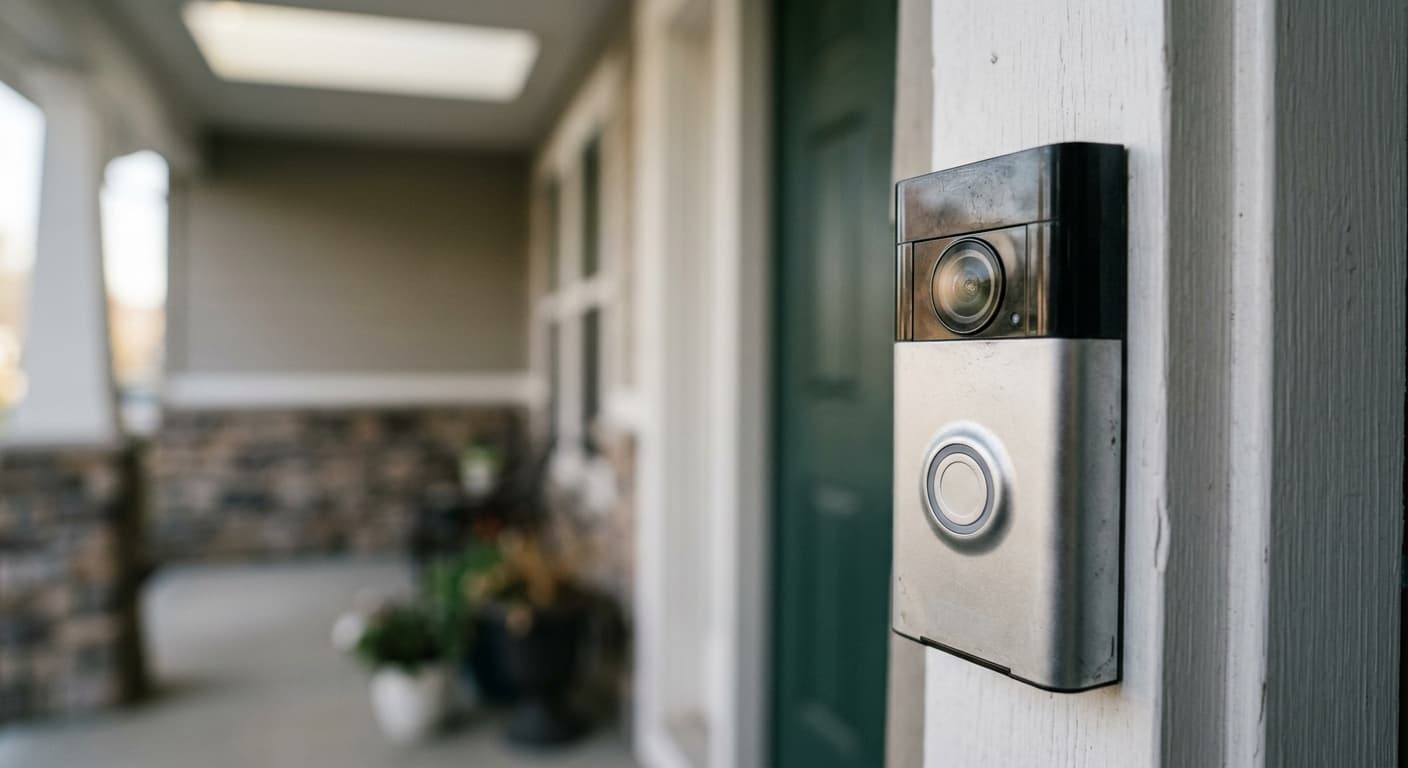
In Alabama, either party to a landlord-tenant conversation may record it without notifying the other side because the state follows one-party consent under Ala. Code 13A-11-30. Landlords are prohibited from placing cameras inside a tenant's rented unit, which Alabama law treats as a private place carrying a reasonable expectation of privacy.
Alabama's one-party consent law gives both tenants and landlords the right to record conversations they participate in without telling the other party. Under Ala. Code 13A-11-30, as long as one person in the conversation consents to the recording, it is legal. This means you can record phone calls, in-person discussions, and interactions related to your rental without notifying the other side.
This guide covers the recording rights and restrictions that apply to both tenants and landlords in Alabama in 2026, including rules for security cameras in rental properties, recording during inspections and disputes, and how recordings can be used as legal evidence.
Tenant Recording Rights in Alabama
Recording Conversations With Your Landlord
As a tenant in Alabama, you can record any conversation you have with your landlord, property manager, or maintenance staff without their knowledge. This includes:
- Phone calls about rent payments, lease terms, or repair requests
- In-person meetings at the rental property or the landlord's office
- Maintenance interactions when workers enter your unit
- Lease negotiations and renewal discussions
- Move-in and move-out inspections where you are present
- Conversations about security deposit returns
Your participation in the conversation satisfies the one-party consent requirement under Alabama law. You do not need to announce that you are recording.
Why Tenants Record Landlords
Common reasons tenants record interactions with landlords include:
- Documenting verbal promises about repairs, upgrades, or concessions that the landlord later denies making
- Preserving evidence of harassment or illegal entry into the rental unit
- Recording the condition of the property during inspections (both audio descriptions and video)
- Capturing threats of illegal eviction or retaliation for exercising tenant rights
- Supporting security deposit disputes by recording conversations about deductions
Tenant Security Cameras
Alabama tenants can generally install security cameras inside their rented unit for personal safety. However, there are several considerations:
- Check your lease for any clauses restricting modifications to the property, including camera installation
- Interior cameras are for your own space only and should not be positioned to record other tenants' units, common hallways, or the landlord's property beyond your unit
- Exterior cameras (such as doorbell cameras) may require landlord approval if installation involves drilling or modifications to the exterior structure
- Audio recording on security cameras follows one-party consent rules
Landlord Recording Rights in Alabama
Recording Conversations With Tenants
Landlords have the same one-party consent rights as tenants. A landlord can record conversations with tenants without disclosure, including:
- Discussions about lease violations or late rent payments
- Phone calls about maintenance requests and scheduling
- Conversations during property inspections
- Meetings about lease renewal or termination
- Interactions during the eviction process
Security Cameras in Common Areas
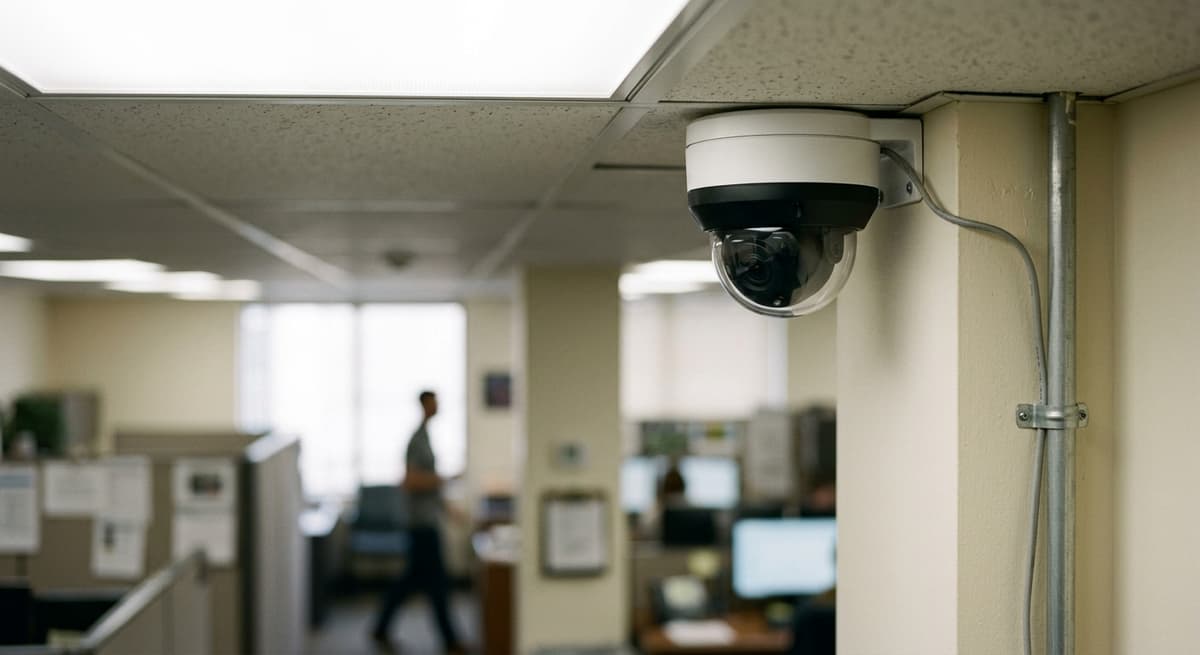
Landlords of multi-unit properties can install security cameras in common areas where tenants do not have a reasonable expectation of privacy:
- Building lobbies and entryways
- Hallways and stairwells
- Parking lots and garages
- Laundry rooms and mail areas
- Exterior grounds and perimeter
- Pool areas and fitness rooms (with limitations for changing areas)
Where Landlords Cannot Install Cameras
Landlords are strictly prohibited from installing cameras in areas where tenants have a reasonable expectation of privacy:
- Inside tenant apartments or houses, including any room in the rented unit
- Bathrooms and restrooms in common areas
- Changing areas near pools or fitness facilities
- Individual storage units assigned to specific tenants
Secretly installing cameras or recording devices inside a tenant's unit can lead to criminal charges, but which statute applies depends on the facts. Ala. Code 13A-11-33 (installing an eavesdropping device, a Class C felony) covers placing a device in a private place for eavesdropping without the permission of the tenant.
Ala. Code 13A-11-32.1 (aggravated criminal surveillance, a Class C felony) covers secret surveillance of a person where they have a reasonable expectation of privacy, without consent, for the purpose of sexual gratification, and it does not require trespass. Ala. Code 13A-11-32 (criminal surveillance, a Class B misdemeanor) applies only to surveillance carried out while trespassing in a private place.
Notification About Common Area Cameras
Alabama does not have a specific statute requiring landlords to notify tenants about security cameras in common areas. However, posting signs indicating that video surveillance is in use is a recommended best practice. Notification establishes that tenants are aware of the cameras, reducing potential privacy claims.
Including information about surveillance systems in the lease agreement provides additional legal protection for the landlord.
Recording During Property Inspections
Landlord Entry and Inspection Rights
Alabama governs landlord entry through a single statewide act adopted in 2006. The Alabama Uniform Residential Landlord and Tenant Act (Ala. Code 35-9A-303) applies to covered dwellings and requires landlords to give reasonable notice (typically at least two days) before entering a tenant's unit, except in emergencies.
Recording Inspections as a Tenant
Recording a property inspection is one of the most valuable uses of recording for tenants. During inspections, consider:
- Video recording the condition of every room, including walls, floors, fixtures, and appliances
- Narrating the condition as you walk through to create an audio record
- Recording any statements the landlord or inspector makes about the property's condition
- Documenting existing damage at move-in to protect against unfair security deposit deductions
- Recording the final walkthrough at move-out
Recording Inspections as a Landlord
Landlords can also record inspections they conduct:
- Document the condition of the unit during periodic inspections
- Record evidence of lease violations such as unauthorized pets, excessive damage, or unauthorized occupants
- Preserve a record of what was discussed during the inspection for future reference
Both parties benefit from having a clear audio and video record of the property's condition at different points during the tenancy.
Recording During Eviction Proceedings
Before the Eviction
If a landlord-tenant dispute is heading toward eviction, recording interactions can protect both parties:
- Tenants can record conversations showing the landlord's failure to make promised repairs or the landlord's retaliatory motives
- Landlords can record conversations documenting lease violations, late rent discussions, and the tenant's responses to cure-or-quit notices
During the Legal Process
In Alabama eviction cases filed in district court, recordings made under one-party consent can be submitted as evidence. Common uses include:
- Proof that a landlord gave or failed to give proper notice
- Evidence of verbal agreements about payment plans
- Documentation of property conditions at different times
- Records of harassment, threats, or illegal lockout attempts
Self-Help Evictions
Alabama law prohibits landlords from conducting "self-help" evictions, which include changing locks, shutting off utilities, or removing a tenant's belongings without a court order. Under Ala. Code 35-9A-407, if a landlord unlawfully removes or excludes a tenant, the tenant may recover possession or terminate the lease. Recording a self-help eviction in progress provides strong evidence for a tenant's legal claims.
Security Deposit Disputes
Recording to Protect Your Deposit
Security deposit disputes are among the most common landlord-tenant conflicts in Alabama. Under Ala. Code 35-9A-201, landlords must return security deposits within 60 days of lease termination, minus legitimate deductions for damage beyond normal wear and tear.
Recordings can help in several ways:
- Move-in video documenting pre-existing damage protects the tenant from unfair deductions
- Move-out video showing the condition of the unit when the tenant vacates
- Recorded conversations about what the landlord considers damage vs. normal wear and tear
- Audio records of the landlord's verbal commitments about returning the deposit
Using Recordings in Small Claims Court
Alabama small claims courts (District Court for amounts up to $6,000) regularly accept video and audio evidence in security deposit cases. The recording must be:
- Relevant to the dispute
- Made legally under one-party consent
- Authenticated by the person who made it
- Presented in a playable format
Penalties for Illegal Recording in Landlord-Tenant Situations
| Offense | Statute | Classification | Maximum Penalty |
|---|---|---|---|
| Landlord surveillance while trespassing, or installing an eavesdropping device in tenant's unit | 13A-11-32 / 13A-11-33 | Class B misdemeanor to Class C felony | Up to 10 years in prison, $15,000 fine |
| Recording tenant conversations without consent (not a party) | 13A-11-31 | Class A misdemeanor | 1 year in jail, $6,000 fine |
| Aggravated surveillance of tenant (for sexual gratification) | 13A-11-32.1 | Class C felony | 10 years in prison, $15,000 fine |
Tenants who discover illegal recording devices in their rental unit should contact local law enforcement and consult with an attorney about both criminal prosecution and civil remedies, including invasion of privacy claims and lease termination rights.
Alabama Recording Laws by Topic
Phone Call Recording | Audio Recording | Video Recording | Workplace Recording | Recording Police | Security Cameras | Recording in Public | Landlord-Tenant | Dashcam Laws | Schools | Medical Recording | Voyeurism Laws
Back to Alabama Recording Laws
More Alabama Recording Topics
More Alabama Laws
- Alabama AI Meeting Recording Laws
- Alabama Dashcam Laws
- Alabama Data Privacy Laws
- Alabama Deepfake Laws
- Alabama Employee Monitoring Laws
- Alabama GPS Tracking Laws
- Alabama Police Bodycam Laws
- Alabama Smart Glasses Recording Laws
Frequently Asked Questions
Can I record my landlord in Alabama without telling them?
Yes. Alabama is a one-party consent state under Ala. Code 13A-11-30. You can record any conversation with your landlord, property manager, or maintenance staff as long as you are participating in the conversation. You do not need to inform them.
Can my landlord put cameras inside my apartment in Alabama?
No. Your rented unit is your private place under Alabama law. A landlord who secretly installs cameras or recording devices inside your apartment may face criminal charges depending on the facts: Ala. Code 13A-11-33 (installing an eavesdropping device without the tenant's permission, a Class C felony), Ala. Code 13A-11-32.1 (aggravated criminal surveillance for sexual gratification, a Class C felony), or Ala. Code 13A-11-32 (criminal surveillance while trespassing, a Class B misdemeanor).
Can I install a Ring doorbell camera at my rental in Alabama?
Generally yes, but check your lease for restrictions on modifications to the property. If installation requires drilling into exterior walls or doors, you may need your landlord's written permission. The camera is legal under Alabama recording laws as long as it is pointed at your own entrance and not into other tenants' private spaces.
Can my landlord have security cameras in the apartment building hallway?
Yes. Landlords can install security cameras in common areas of multi-unit buildings, including hallways, lobbies, parking lots, and laundry rooms. These areas do not carry a reasonable expectation of privacy. Cameras cannot be placed in common-area bathrooms or changing rooms.
Can I use a recording of my landlord as evidence in court in Alabama?
Yes. Recordings made under Alabama's one-party consent law are generally admissible as evidence in eviction proceedings, security deposit disputes, and other landlord-tenant cases. The recording must be authenticated, relevant, and unaltered.
Updates
Corrected the description of Alabama's criminal surveillance statute (13A-11-32 requires trespass) and added the aggravated criminal surveillance felony (13A-11-32.1) to the hidden-camera section and FAQ.
Independently fact-checked against the cited primary sources; governing law re-checked for recent changes
Governing law re-checked for recent changes
Governing law re-checked for recent changes
Propagated hub refresh to landlord-tenant spoke. Replaced Justia commercial-codifier links with alison.legislature.state.al.us canonical citations. Added civil cause of action note: Title 13A Chapter 11 Article 2 has no statutory civil cause of action; landlord-tenant plaintiffs route to federal ECPA at 18 U.S.C. section 2520 and common-law intrusion upon seclusion under Butler v. Town of Argo, 871 So. 2d 1 (Ala. 2003). Clarified that aggravated surveillance Class C felony under 13A-11-32.1 applies even without trespass when sexual gratification is the purpose, which is the operative statute for landlord hidden-camera scenarios in tenant bedrooms and bathrooms.
Reviewed and approved by an editor
The Law Behind This Article
This article rests on the statutory provisions below, held in our own legal record and retrieved from the official source. Tap a section to read the operative text.
Code of Alabama 1975, Title 13A: Criminal Code.
§ 13A-11-31Criminal Eavesdropping.In forcecited in 18 of our articles
(a) A person commits the crime of criminal eavesdropping if he intentionally uses any device to eavesdrop, whether or not he is present at the time. (b) Criminal eavesdropping is a Class A misdemeanor.
Official text (excerpt) · last checked 2026-09-23 · Read the full text in our law library · Verify at alison.legislature.state.al.us
Cited in 4 court opinions in our collectionLatest citing opinion in our collection: 2007
Opinions citing this section in our collection:
- Stinson v. Larson (Court of Civil Appeals of Alabama 2004, 893 So. 2d 462)“…rding of the minor child's telephone conversations violated Ala. Code 1975, § 13A-11-31 (a), which prohibits the use of any dev…”
- Lawson v. Shelby County Sheriff's Office (Court of Civil Appeals of Alabama 2007, 961 So. 2d 158)“…office but also state law prohibiting eavesdropping, see Ala.Code 1975, § 13A-11-31, 1 Chief Deputy Samaniego recommended…”
- Glazner v. Glazner (Court of Appeals for the Eleventh Circuit 2003, 347 F.3d 1212)“…ade wiretapping of the sort in which James engaged a crime. Ala.Code § 13A-11-31 (1994); O.C.G.A. § 16-11-62 (1999); Fl…”
Identified automatically from the court opinions citing this section — not a ranking of which case controls.
Also relied on in: Alabama Phone Call Recording Laws: What You Need to Know, Alabama Audio Recording Laws: Consent Rules and Penalties, Alabama Smart Glasses Recording Laws
§ 13A-11-30Definitions.In forcecited in 22 of our articles
The following definitions apply to this article: (1) EAVESDROP. To overhear, record, amplify or transmit any part of the private communication of others without the consent of at least one of the persons engaged in the communication, except as otherwise provided by law. (2) PRIVATE PLACE. A place where one may reasonably expect to be safe from casual or hostile intrusion or surveillance, but such term does not include a place to which the public or a substantial group of the public has access. (3) SURVEILLANCE. Secret observation of the activities of another person for the purpose of spying upon and invading the privacy of the person observed.
Official text (excerpt) · last checked 2026-07-29 · Read the full text in our law library · Verify at alison.legislature.state.al.us
Cited in 5 court opinions in our collectionLatest citing opinion in our collection: 2024
Opinions citing this section in our collection:
- Stinson v. Larson (Court of Civil Appeals of Alabama 2004, 893 So. 2d 462)“…ons Privacy Act of 1986, 18 U.S.C. §§ 2510 et seq., and Ala. Code 1975, §§ 13A-11-30 and 13A-11-31 (a). We note that the f…”
- Ages Group, LP v. Raytheon Aircraft Co., Inc. (District Court, M.D. Alabama 1998, 22 F. Supp. 2d 1310)“…f at least one of the persons engaged in the communication. Ala. Code § 13A-11-30 (1994). Alabama Code § 13A-11-32, prohi…”
- Bartnicki v. Vopper (Supreme Court of the United States 2001, 532 U.S. 514)“…[1] See 18 U. S. C. § 2511 (1) (1994 ed. and Supp. V); Ala. Code § 13A-11-30 et seq. (1994); Alaska Stat. Ann. §…”
Identified automatically from the court opinions citing this section — not a ranking of which case controls.
Also relied on in: One-Party Consent States: Complete 2026 Guide, Alabama Dashcam Laws: Legality, Mounting Rules, and Evidence Use, Alabama Medical Recording Laws: Patient Rights and HIPAA Rules
§ 13A-11-32Criminal Surveillance.In forcecited in 14 of our articles
(a) A person commits the crime of criminal surveillance if he intentionally engages in surveillance while trespassing in a private place. (b) Criminal surveillance is a Class B misdemeanor.
Official text (excerpt) · last checked 2026-08-31 · Read the full text in our law library · Verify at alison.legislature.state.al.us
Cited in 2 court opinions in our collectionLatest citing opinion in our collection: 2026
Opinions citing this section in our collection:
- Ages Group, LP v. Raytheon Aircraft Co., Inc. (District Court, M.D. Alabama 1998, 22 F. Supp. 2d 1310)“…rvation from a public street” does not violate the statute. Ala.Code § 13A-11-32, Commentary. However, AGES argues that…”
- United States v. Watkins (Court of Appeals for the Tenth Circuit 2026)“…ohibit the conduct in this case are noted in bold. Ala. Code § 13A-11-32;1 Ala. Code § 13A-11-32.1;2 Ariz. Rev.…”
Identified automatically from the court opinions citing this section — not a ranking of which case controls.
Also relied on in: Alabama Recording Laws (2026): One-Party Consent Rules, Alabama Voyeurism Laws: Hidden Cameras, Penalties, and Victim Rights, Alabama Workplace Recording Laws: Employee and Employer Rights
§ 13A-11-32.1Aggravated Criminal Surveillance.In forcecited in 13 of our articles
(a) A person commits the crime of aggravated criminal surveillance if he or she intentionally engages in surveillance of an individual in any place where the individual being observed has a reasonable expectation of privacy, without the prior express or implied consent of the individual being observed, for the purpose of sexual gratification. (b) Aggravated criminal surveillance is a Class C felony. (c) The statute of limitations begins at the time of discovery of the surveillance.
Official text (excerpt) · last checked 2026-07-29 · Read the full text in our law library · Verify at alison.legislature.state.al.us
Cited in 1 court opinions in our collectionLatest citing opinion in our collection: 2026
Opinions citing this section in our collection:
- United States v. Watkins (Court of Appeals for the Tenth Circuit 2026)“…is case are noted in bold. Ala. Code § 13A-11-32;1 Ala. Code § 13A-11-32.1;2 Ariz. Rev. Stat. Ann. § 13- 1424;2 Ar…”
Identified automatically from the court opinions citing this section — not a ranking of which case controls.
Also relied on in: Alabama School Recording Laws: Rules for Students, Parents, and Teachers, Alabama Security Camera Laws: Rules for Homes and Businesses, Alabama Video Recording Laws: What Is Legal and What Is Not
§ 13A-11-33Installing Eavesdropping Device.In forcecited in 11 of our articles
(a) A person commits the crime of installing an eavesdropping device if he intentionally installs or places a device in a private place with knowledge it is to be used for eavesdropping and without permission of the owner and any lessee or tenant or guest for hire of the private place. (b) Installing an eavesdropping device in a private place is prima facie evidence of knowledge that the device is to be used for eavesdropping. (c) Installing an eavesdropping device is a Class C felony.
Official text (excerpt) · last checked 2026-07-29 · Read the full text in our law library · Verify at alison.legislature.state.al.us
Cited in 1 court opinions in our collectionLatest citing opinion in our collection: 2003
Opinions citing this section in our collection:
- Glazner v. Glazner (Court of Appeals for the Eleventh Circuit 2003, 347 F.3d 1212)“…te the problems inherent in such an approach. For example, Ala. Code § 13A-11-33 provides: A person commits the…”
Identified automatically from the court opinions citing this section — not a ranking of which case controls.
Also relied on in: Alabama Ring Doorbell Laws: What You Need to Know in 2026, Alabama Surveillance Camera Laws (2026 Guide), Alabama AI Meeting Recording Laws (2026)
Search our full record of US law — 2.1 million sections, every state + federal →
Sources and References
- Alabama Code of Alabama(alison.legislature.state.al.us).gov
- Ala. Code 13A-11-30 - Definitions(law.justia.com)
- Ala. Code 13A-11-32 - Criminal Surveillance(law.justia.com)
- Ala. Code 13A-11-33 - Installing Eavesdropping Device(law.justia.com)
- Ala. Code 13A-11-32.1 - Aggravated Criminal Surveillance(law.justia.com)
- Ala. Code 13A-11-30 - Definitions (Offenses Against Privacy)(alison.legislature.state.al.us).gov
- Ala. Code 13A-11-32 - Criminal Surveillance(alison.legislature.state.al.us).gov
- Ala. Code 13A-11-33 - Installing Eavesdropping Device(alison.legislature.state.al.us).gov
- Ala. Code 13A-11-32.1 - Aggravated Criminal Surveillance(alison.legislature.state.al.us).gov
- Ala. Code 13A-11-31 - Criminal Eavesdropping(alison.legislature.state.al.us).gov