
Alabama
Alabama Security Camera Laws: Rules for Homes and Businesses
Independently fact-checked against primary sources (last audited August 15, 2026). · Reviewed by the RecordingLaw editorial team. · Law checked current as of August 15, 2026. · 7 primary sources cited on this page. How we verify our legal content
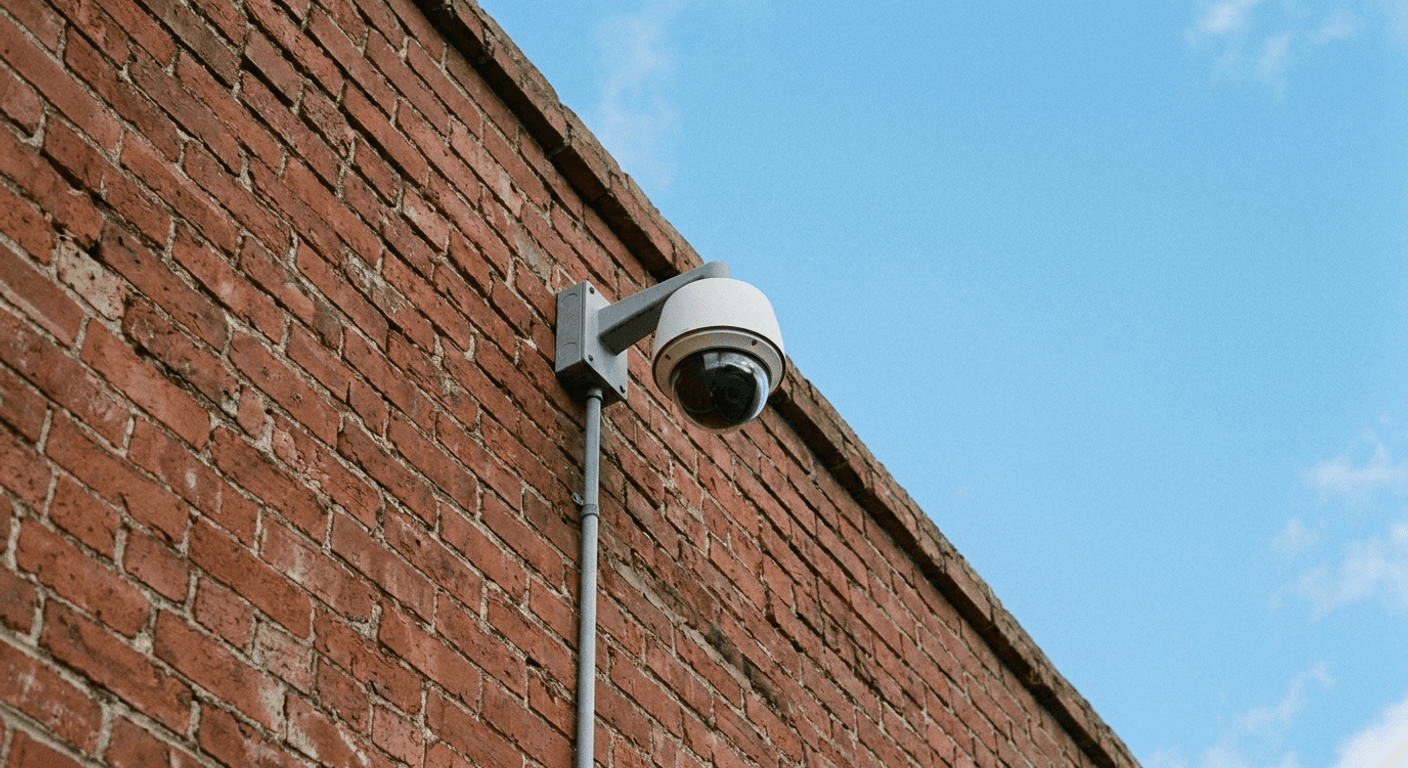
Alabama allows security cameras on your own property with no state permit required. Video recording is legal in areas visible from your property, but aiming a camera to secretly observe someone in a place where they expect privacy, for the purpose of sexual gratification, violates Ala. Code 13A-11-32.1 (aggravated criminal surveillance) regardless of whose property the camera sits on. Audio recording follows the one-party consent standard built into the definition of eavesdropping in Ala. Code 13A-11-30(1).
Alabama does not have a dedicated security camera statute. Instead, the legality of security cameras is governed by the state's broader privacy laws, particularly the criminal surveillance and eavesdropping statutes in Title 13A, Chapter 11, Article 2 of the Alabama Code. You are generally free to install security cameras on your own property, but there are important limits on where cameras can point and whether they capture audio.
This guide explains Alabama's security camera laws for both residential and commercial settings in 2026, covering installation rules, audio recording restrictions, neighbor disputes, workplace cameras, and legal remedies for privacy violations.
Alabama Statutes That Govern Security Cameras
Ala. Code 13A-11-32: Criminal Surveillance
Ala. Code 13A-11-32 makes it a Class B misdemeanor to engage in surveillance in a private place while trespassing. "Surveillance" is defined under Ala. Code 13A-11-30 as secret observation of the activities of another person for the purpose of spying upon and invading the privacy of the person observed.
While this statute requires trespassing as an element, it establishes the principle that secret observation of someone in a private place is a criminal offense in Alabama.
Ala. Code 13A-11-32.1: Aggravated Criminal Surveillance
Ala. Code 13A-11-32.1 creates the more serious offense of aggravated criminal surveillance, a Class C felony. This applies when a person intentionally engages in surveillance (secret observation) of someone in any place where that individual has a reasonable expectation of privacy, without the individual's prior express or implied consent, for the purpose of sexual gratification. The statute does not require a device or trespass. The maximum penalty is 10 years in prison and a $15,000 fine.
Ala. Code 13A-11-30 and 13A-11-31: Audio Recording Rules
If your security camera records audio, Alabama's eavesdropping law applies. Ala. Code 13A-11-30 defines "eavesdrop" as overhearing or recording a private communication of others without the consent of at least one of the persons engaged in it, and Ala. Code 13A-11-31 makes intentionally using a device to eavesdrop a crime. This one-party consent rule means that audio recording of conversations requires consent from at least one participant. For security cameras that continuously record ambient audio, this creates a legal gray area when the camera captures conversations between visitors or passersby who have not consented.
Residential Security Camera Laws
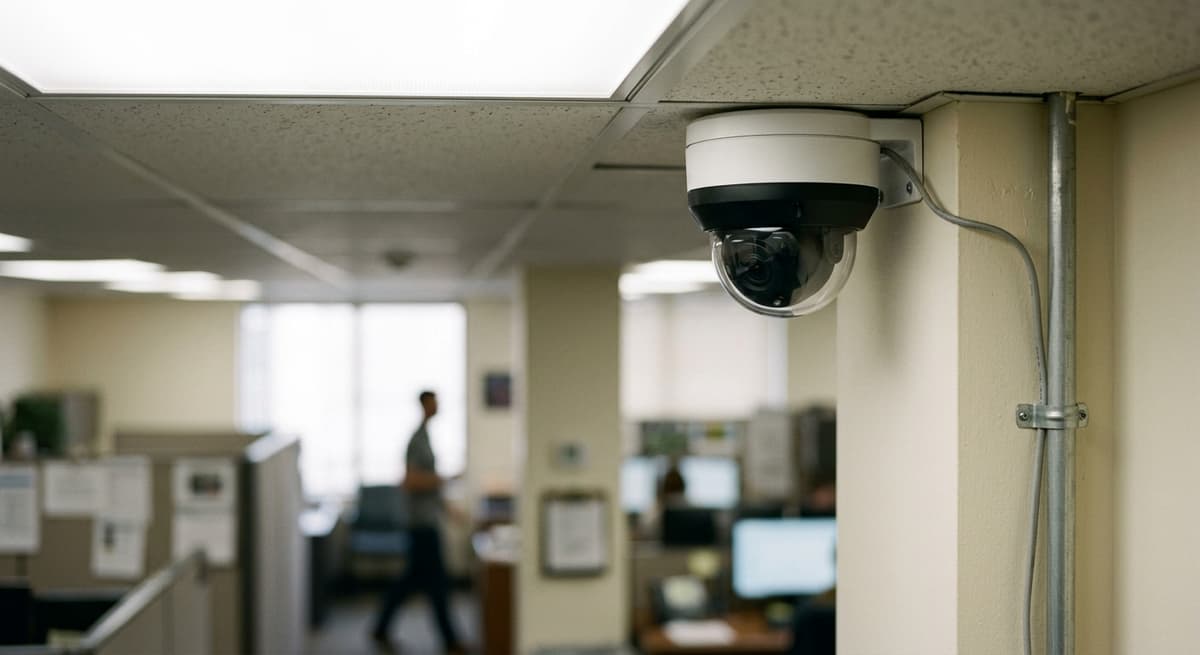
Installing Cameras on Your Own Property
Alabama homeowners can install security cameras on their own property without any state permit or registration. Common and legal camera placements include:
- Front door and porch areas to capture visitors and deliveries
- Driveways and garages to monitor vehicles
- Backyards and side yards for general security
- Interior rooms of your own home (with limitations if you have guests, tenants, or domestic employees)
- Exterior walls pointed at your own property
Where You Cannot Point Your Cameras
While you can install cameras on your own property, you cannot aim them in ways that invade others' reasonable expectation of privacy. Problematic camera angles include:
- Directly into a neighbor's bedroom, bathroom, or changing area windows
- Over fences into areas where neighbors expect privacy, such as enclosed patios, hot tubs, or screened porches
- Into other homes using zoom or telephoto lenses to observe activities not visible to the naked eye
If your camera captures incidental footage of a neighbor's yard or public areas as part of its normal field of view, this is generally acceptable. The key distinction is between incidental capture and intentional surveillance of private activities.
Hidden Cameras in Your Home
You can install hidden cameras inside your own home for security purposes, such as nanny cameras or monitoring for break-ins. However, there are important restrictions:
- You cannot place hidden cameras in areas where guests expect privacy, such as guest bedrooms, bathrooms, or changing areas
- If you have tenants, their living spaces are their "private place" under Alabama law, and hidden cameras in those areas could violate Ala. Code 13A-11-32
- Audio recording by hidden cameras must comply with one-party consent rules
Doorbell Cameras
Smart doorbell cameras like Ring, Nest, and Arlo are legal in Alabama. These cameras typically record video of your front entrance and the surrounding area. Because they are mounted on your own property and pointed at areas visible from the public street, they do not generally raise privacy concerns.
Audio recording by doorbell cameras follows one-party consent rules. When you answer your doorbell camera and speak with a visitor, your consent satisfies the one-party requirement for that conversation.
Business Security Camera Laws
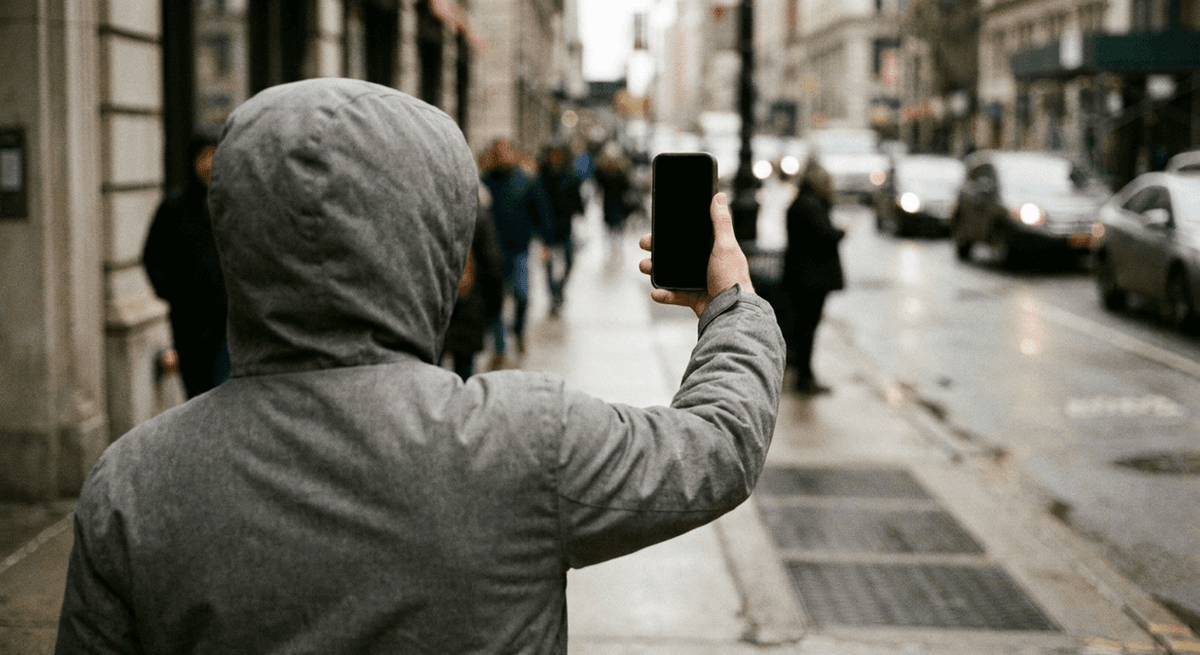
Where Businesses Can Install Cameras
Alabama businesses can install security cameras in areas where there is no reasonable expectation of privacy:
- Sales floors, showrooms, and customer areas
- Cash registers and point-of-sale locations
- Warehouses, storage areas, and loading docks
- Parking lots and building exteriors
- Lobbies, hallways, and common areas
- Break rooms (with some limitations on audio)
Where Businesses Cannot Install Cameras
Businesses are prohibited from placing cameras in areas where employees and customers have a reasonable expectation of privacy:
- Restrooms and bathrooms
- Locker rooms and changing rooms
- Shower facilities
- Nursing and lactation rooms
- Private employee offices (depending on the specific circumstances and whether the door is closed)
A hidden camera installed in these areas for the purpose of sexual gratification can result in aggravated criminal surveillance charges under Ala. Code 13A-11-32.1, even though the business owns the property. Criminal surveillance charges under Ala. Code 13A-11-32 would additionally apply only if whoever installed the camera was trespassing.
Employee Notification
Alabama does not have a specific statute requiring employers to notify employees about security cameras. However, posting signs indicating that surveillance is in use is a widely recommended best practice. Notification helps establish that employees and customers do not have a reasonable expectation of privacy in monitored areas.
Audio Recording and Security Cameras
The One-Party Consent Challenge
Most security cameras today have audio recording capabilities. In Alabama, the one-party consent standard in the eavesdropping definition at Ala. Code 13A-11-30 means that recording private communications requires consent from at least one participant.
For security cameras that continuously record audio:
- If you are present and participating in conversations captured by the camera, your consent satisfies the one-party requirement
- If the camera records conversations between other people when you are not present, you may not have consent from any participant, creating potential eavesdropping concerns
- In public-facing areas where conversations are not "private communications," audio recording is generally less restricted
Best Practice: Disable Audio or Post Notice
To avoid potential legal issues with audio recording on security cameras, consider:
- Disabling the audio recording feature on outdoor cameras that may capture neighbor conversations
- Posting visible signs stating that audio and video recording is in progress, which can be interpreted as implied consent from those who continue the conversation in the area
- Using audio recording only on cameras where you are regularly present and participating in conversations (such as a doorbell camera)
Neighbor Disputes Over Security Cameras
Common Issues
Security camera disputes between Alabama neighbors frequently involve:
- Cameras that appear to be pointed at a neighbor's property
- Cameras that capture audio of conversations in adjacent yards
- Floodlights associated with security cameras that cause light pollution
- Concerns about continuous recording creating a feeling of being watched
Legal Options for Neighbors
If you believe a neighbor's security camera is invading your privacy, you may have several options under Alabama law:
- Talk to your neighbor about adjusting the camera angle
- Document the situation with photos showing the camera's field of view
- Contact your HOA if your community has rules about camera placement
- File a civil lawsuit for invasion of privacy if the camera is pointed into a private area of your home
- Report to local law enforcement if you believe the camera constitutes criminal surveillance under Ala. Code 13A-11-32
HOA Restrictions
Many Alabama homeowners associations have adopted rules addressing security cameras. Common HOA restrictions include:
- Limits on the number of visible cameras per property
- Requirements that cameras be aesthetically consistent with the neighborhood
- Prohibitions on cameras that point at common areas or neighboring properties
- Approval requirements before installing exterior cameras
- Restrictions on camera placement that affects shared walls in condominiums
HOA rules are enforceable through the community's governing documents and can impose stricter requirements than state law.
Penalties for Illegal Security Camera Use
| Offense | Statute | Classification | Maximum Penalty |
|---|---|---|---|
| Criminal surveillance | 13A-11-32 | Class B misdemeanor | 6 months in jail, $3,000 fine |
| Aggravated criminal surveillance | 13A-11-32.1 | Class C felony | 10 years in prison, $15,000 fine |
| Criminal eavesdropping (audio) | 13A-11-31 | Class A misdemeanor | 1 year in jail, $6,000 fine |
| Installing eavesdropping device | 13A-11-33 | Class C felony | 10 years in prison, $15,000 fine |
Civil Remedies
In addition to criminal penalties, victims of illegal surveillance may pursue civil claims for:
- Invasion of privacy (intrusion upon seclusion)
- Nuisance if the cameras substantially interfere with the use and enjoyment of property
- Intentional infliction of emotional distress
- Injunctive relief ordering the camera to be removed or repositioned
Using Security Camera Footage as Evidence
Security camera footage is commonly used as evidence in Alabama courts for:
- Burglary and theft cases where the camera captured the perpetrator
- Slip-and-fall claims on commercial property
- Vehicle accidents captured by exterior cameras
- Domestic disputes where the footage is relevant to protective orders
- Insurance claims for property damage
To be admissible, the footage must be authenticated by someone who can testify about the camera system, its normal operation, and the chain of custody of the recording.
Alabama Recording Laws by Topic
Phone Call Recording | Audio Recording | Video Recording | Workplace Recording | Recording Police | Security Cameras | Recording in Public | Landlord-Tenant | Dashcam Laws | Schools | Medical Recording | Voyeurism Laws
Back to Alabama Recording Laws
More Alabama Recording Topics
See Also
- Alabama Surveillance Camera Laws covers home, HOA, neighbor, workplace, and landlord camera rules in Alabama.
More Alabama Laws
- Alabama AI Meeting Recording Laws
- Alabama Dashcam Laws
- Alabama Data Privacy Laws
- Alabama Deepfake Laws
- Alabama Employee Monitoring Laws
- Alabama GPS Tracking Laws
- Alabama Police Bodycam Laws
- Alabama Smart Glasses Recording Laws
Frequently Asked Questions
Do I need a permit to install security cameras at my home in Alabama?
No. Alabama does not require a permit to install security cameras on your own residential property. You are free to install cameras for home security as long as they do not invade a neighbor's reasonable expectation of privacy or violate criminal surveillance statutes.
Can my neighbor point a security camera at my house in Alabama?
A neighbor can have a camera that incidentally captures your property as part of its normal field of view. However, they cannot point a camera directly into your private areas such as bedrooms or bathrooms. If a neighbor's camera is aimed at private areas of your home, you may have grounds for an invasion of privacy claim.
Can I have audio recording on my security cameras in Alabama?
Audio recording on security cameras must comply with Alabama's one-party consent standard (the eavesdropping definition in Ala. Code 13A-11-30(1)). If you are present and participating in conversations captured by the camera, your consent is sufficient. If the camera records conversations between others when you are not present, there may be eavesdropping concerns.
Can my employer have hidden cameras at work in Alabama?
Employers can have cameras in common work areas, but they should not place cameras in bathrooms, locker rooms, or changing areas. A hidden camera in areas where employees expect privacy, installed for sexual gratification, may violate Ala. Code 13A-11-32.1 (aggravated criminal surveillance) even on the employer's own property; Ala. Code 13A-11-32 (criminal surveillance) would apply only if whoever installed the camera was trespassing.
Can security camera footage be used as evidence in Alabama court?
Yes. Security camera footage is regularly used as evidence in Alabama courts for criminal cases, civil disputes, and insurance claims. The footage must be authenticated by someone familiar with the camera system, and it must be relevant to the case and unaltered.
Updates
Corrected the description of Alabama's aggravated criminal surveillance statute (no device element) and clarified that the one-party consent standard comes from the eavesdropping definition in Ala. Code 13A-11-30(1), enforced through 13A-11-31.
Independently fact-checked against the cited primary sources; governing law re-checked for recent changes
Governing law re-checked for recent changes
Corrected repeated overstated claims that Ala. Code 13A-11-32 flatly bars aiming security cameras at private areas: that statute requires trespassing in a private place, which a property owner (residential or business) is not doing on their own property. The statute that actually reaches a hidden camera on one's own property is the aggravated criminal surveillance offense, Ala. Code 13A-11-32.1, which requires a sexual-gratification purpose instead.
Governing law re-checked for recent changes
Propagated hub refresh to security-cameras spoke. Replaced Justia commercial-codifier links with alison.legislature.state.al.us. Added civil cause of action note: Title 13A Chapter 11 Article 2 has no statutory civil remedy; residential plaintiffs route through federal ECPA at 18 U.S.C. section 2520 and common-law intrusion upon seclusion under Butler v. Town of Argo, 871 So. 2d 1 (Ala. 2003). Confirmed aggravated criminal surveillance under 13A-11-32.1 (Class C felony) does not require trespass, so a property owner installing a hidden camera in a place of reasonable expectation of privacy for sexual purposes is covered regardless of ownership. FTC May 2023 Ring settlement referenced as federal consumer-protection overlay.
Reviewed and approved by an editor
The Law Behind This Article
This article rests on the statutory provisions below, held in our own legal record and retrieved from the official source. Tap a section to read the operative text.
Code of Alabama 1975, Title 13A: Criminal Code.
§ 13A-11-32Criminal Surveillance.In forcecited in 14 of our articles
(a) A person commits the crime of criminal surveillance if he intentionally engages in surveillance while trespassing in a private place. (b) Criminal surveillance is a Class B misdemeanor.
Official text (excerpt) · last checked 2026-08-31 · Read the full text in our law library · Verify at alison.legislature.state.al.us
Cited in 2 court opinions in our collectionLatest citing opinion in our collection: 2026
Opinions citing this section in our collection:
- Ages Group, LP v. Raytheon Aircraft Co., Inc. (District Court, M.D. Alabama 1998, 22 F. Supp. 2d 1310)“…rvation from a public street” does not violate the statute. Ala.Code § 13A-11-32, Commentary. However, AGES argues that…”
- United States v. Watkins (Court of Appeals for the Tenth Circuit 2026)“…ohibit the conduct in this case are noted in bold. Ala. Code § 13A-11-32;1 Ala. Code § 13A-11-32.1;2 Ariz. Rev.…”
Identified automatically from the court opinions citing this section — not a ranking of which case controls.
Also relied on in: Alabama Recording Laws (2026): One-Party Consent Rules, Alabama Landlord-Tenant Recording Laws: Rights for Renters and Property Owners, Alabama Voyeurism Laws: Hidden Cameras, Penalties, and Victim Rights
§ 13A-11-30Definitions.In forcecited in 22 of our articles
The following definitions apply to this article: (1) EAVESDROP. To overhear, record, amplify or transmit any part of the private communication of others without the consent of at least one of the persons engaged in the communication, except as otherwise provided by law. (2) PRIVATE PLACE. A place where one may reasonably expect to be safe from casual or hostile intrusion or surveillance, but such term does not include a place to which the public or a substantial group of the public has access. (3) SURVEILLANCE. Secret observation of the activities of another person for the purpose of spying upon and invading the privacy of the person observed.
Official text (excerpt) · last checked 2026-07-29 · Read the full text in our law library · Verify at alison.legislature.state.al.us
Cited in 5 court opinions in our collectionLatest citing opinion in our collection: 2024
Opinions citing this section in our collection:
- Stinson v. Larson (Court of Civil Appeals of Alabama 2004, 893 So. 2d 462)“…ons Privacy Act of 1986, 18 U.S.C. §§ 2510 et seq., and Ala. Code 1975, §§ 13A-11-30 and 13A-11-31 (a). We note that the f…”
- Ages Group, LP v. Raytheon Aircraft Co., Inc. (District Court, M.D. Alabama 1998, 22 F. Supp. 2d 1310)“…f at least one of the persons engaged in the communication. Ala. Code § 13A-11-30 (1994). Alabama Code § 13A-11-32, prohi…”
- Bartnicki v. Vopper (Supreme Court of the United States 2001, 532 U.S. 514)“…[1] See 18 U. S. C. § 2511 (1) (1994 ed. and Supp. V); Ala. Code § 13A-11-30 et seq. (1994); Alaska Stat. Ann. §…”
Identified automatically from the court opinions citing this section — not a ranking of which case controls.
Also relied on in: Alabama Audio Recording Laws: Consent Rules and Penalties, Alabama Dashcam Laws: Legality, Mounting Rules, and Evidence Use, Alabama Medical Recording Laws: Patient Rights and HIPAA Rules
§ 13A-11-31Criminal Eavesdropping.In forcecited in 18 of our articles
(a) A person commits the crime of criminal eavesdropping if he intentionally uses any device to eavesdrop, whether or not he is present at the time. (b) Criminal eavesdropping is a Class A misdemeanor.
Official text (excerpt) · last checked 2026-09-23 · Read the full text in our law library · Verify at alison.legislature.state.al.us
Cited in 4 court opinions in our collectionLatest citing opinion in our collection: 2007
Opinions citing this section in our collection:
- Stinson v. Larson (Court of Civil Appeals of Alabama 2004, 893 So. 2d 462)“…rding of the minor child's telephone conversations violated Ala. Code 1975, § 13A-11-31 (a), which prohibits the use of any dev…”
- Lawson v. Shelby County Sheriff's Office (Court of Civil Appeals of Alabama 2007, 961 So. 2d 158)“…office but also state law prohibiting eavesdropping, see Ala.Code 1975, § 13A-11-31, 1 Chief Deputy Samaniego recommended…”
- Glazner v. Glazner (Court of Appeals for the Eleventh Circuit 2003, 347 F.3d 1212)“…ade wiretapping of the sort in which James engaged a crime. Ala.Code § 13A-11-31 (1994); O.C.G.A. § 16-11-62 (1999); Fl…”
Identified automatically from the court opinions citing this section — not a ranking of which case controls.
Also relied on in: Alabama Phone Call Recording Laws: What You Need to Know, Alabama Smart Glasses Recording Laws, Alabama Video Recording Laws: What Is Legal and What Is Not
§ 13A-11-32.1Aggravated Criminal Surveillance.In forcecited in 13 of our articles
(a) A person commits the crime of aggravated criminal surveillance if he or she intentionally engages in surveillance of an individual in any place where the individual being observed has a reasonable expectation of privacy, without the prior express or implied consent of the individual being observed, for the purpose of sexual gratification. (b) Aggravated criminal surveillance is a Class C felony. (c) The statute of limitations begins at the time of discovery of the surveillance.
Official text (excerpt) · last checked 2026-07-29 · Read the full text in our law library · Verify at alison.legislature.state.al.us
Cited in 1 court opinions in our collectionLatest citing opinion in our collection: 2026
Opinions citing this section in our collection:
- United States v. Watkins (Court of Appeals for the Tenth Circuit 2026)“…is case are noted in bold. Ala. Code § 13A-11-32;1 Ala. Code § 13A-11-32.1;2 Ariz. Rev. Stat. Ann. § 13- 1424;2 Ar…”
Identified automatically from the court opinions citing this section — not a ranking of which case controls.
Also relied on in: Alabama School Recording Laws: Rules for Students, Parents, and Teachers, Alabama Workplace Recording Laws: Employee and Employer Rights, Alabama Ring Doorbell Laws: What You Need to Know in 2026
§ 13A-11-33Installing Eavesdropping Device.In forcecited in 11 of our articles
(a) A person commits the crime of installing an eavesdropping device if he intentionally installs or places a device in a private place with knowledge it is to be used for eavesdropping and without permission of the owner and any lessee or tenant or guest for hire of the private place. (b) Installing an eavesdropping device in a private place is prima facie evidence of knowledge that the device is to be used for eavesdropping. (c) Installing an eavesdropping device is a Class C felony.
Official text (excerpt) · last checked 2026-07-29 · Read the full text in our law library · Verify at alison.legislature.state.al.us
Cited in 1 court opinions in our collectionLatest citing opinion in our collection: 2003
Opinions citing this section in our collection:
- Glazner v. Glazner (Court of Appeals for the Eleventh Circuit 2003, 347 F.3d 1212)“…te the problems inherent in such an approach. For example, Ala. Code § 13A-11-33 provides: A person commits the…”
Identified automatically from the court opinions citing this section — not a ranking of which case controls.
Also relied on in: Alabama Surveillance Camera Laws (2026 Guide), Alabama AI Meeting Recording Laws (2026), Alabama Nursing Home Camera Laws: No Statute, What Applies
United States Code Title 18
§ 2511Interception and disclosure of wire, oral, or electronic communications prohibitedIn forcecited in 441 of our articles
Except as otherwise specifically provided in this chapter any person who— intentionally intercepts, endeavors to intercept, or procures any other person to intercept or endeavor to intercept, any wire, oral, or electronic communication; intentionally uses, endeavors to use, or procures any other person to use or endeavor to use any electronic, mechanical, or other device to intercept any oral communication when— such device is affixed to, or otherwise transmits a signal through, a wire, cable, or other like connection used in wire communication; or such device transmits communications by radio, or interferes with the transmission of such communication; or such person knows, or has reason to know, that such device or any component thereof has been sent through the mail or transported in interstate or foreign commerce; or such use or endeavor to use (A) takes place on the premises of any business or other commercial establishment the operations of which affect interstate or foreign commerce; or (B) obtains or is for the purpose of obtaining information relating to the operations of any business or other commercial establishment the operations of which affect interstate or foreign…
Official text (excerpt) · last checked 2026-09-17 · Read the full text in our law library · Verify at uscode.house.gov
Cited in 2,045 court opinions in our collectionLatest citing opinion in our collection: 2026
In the courts (editorial summary, independently checked):Griggs-Ryan v. Smith (1990) applied the Section 2511(2)(d) prior-consent exception, treating a tenant repeatedly told that all incoming calls were taped as having impliedly consented. United States v. United States District Court (1972) read the then-current Section 2511(3) as conferring no presidential surveillance power.
Opinions citing this section in our collection:
- Mitchell v. Forsyth (Supreme Court of the United States 1985, 472 U.S. 511)✓The Attorney General authorized a warrantless 1970 national security wiretap that caught the plaintiff's calls; the Court held the since-repealed Section 2511(3) disclaimer left the tap lawful under Title III, and that Mitchell had qualified immunity.
- United States v. United States District Court for the Eastern District of Michigan (Supreme Court of the United States 1972, 407 U.S. 297)✓The Attorney General approved warrantless wiretaps on members of a domestic group accused of bombing a CIA office; the Court read Section 2511(3) as a congressional disclaimer conferring no surveillance power, then held the Fourth Amendment required prior judicial approval.
- Forsyth v. Barr (Court of Appeals for the Fifth Circuit 1994, 19 F.3d 1527)✓Dallas police used, in an internal affairs probe of an officer, calls private parties allegedly intercepted illegally; assuming that was unlawful, the Fifth Circuit held Section 2517(1) and (2) allowed the disclosure and use, defeating the Section 2511(1)(c) and (d) claims.
Identified automatically from the court opinions citing this section — not a ranking of which case controls.
Also relied on in: Connecticut Recording Laws (2026): Hybrid Consent Rules Explained, Oregon Recording Laws (2026): Hybrid One-Party and All-Party Rules, US Recording Laws by State (2026): All 50 States Explained
Search our full record of US law — 2.1 million sections, every state + federal →
Sources and References
- Alabama Code of Alabama(alison.legislature.state.al.us).gov
- Ala. Code 13A-11-32 - Criminal Surveillance(law.justia.com)
- Ala. Code 13A-11-32.1 - Aggravated Criminal Surveillance(law.justia.com)
- Ala. Code 13A-11-30 - Definitions(law.justia.com)
- FTC Consumer Privacy(ftc.gov).gov
- 18 U.S.C. 2511 - Interception of Communications (ECPA)(law.cornell.edu)
- Ala. Code 13A-11-30 - Definitions (Offenses Against Privacy)(alison.legislature.state.al.us).gov
- Ala. Code 13A-11-32 - Criminal Surveillance(alison.legislature.state.al.us).gov
- Ala. Code 13A-11-32.1 - Aggravated Criminal Surveillance(alison.legislature.state.al.us).gov
- Ala. Code 13A-11-31 - Criminal Eavesdropping(alison.legislature.state.al.us).gov
- Ala. Code 13A-11-33 - Installing Eavesdropping Device(alison.legislature.state.al.us).gov