Property Records by State (2026): Free Deed & Owner Lookup
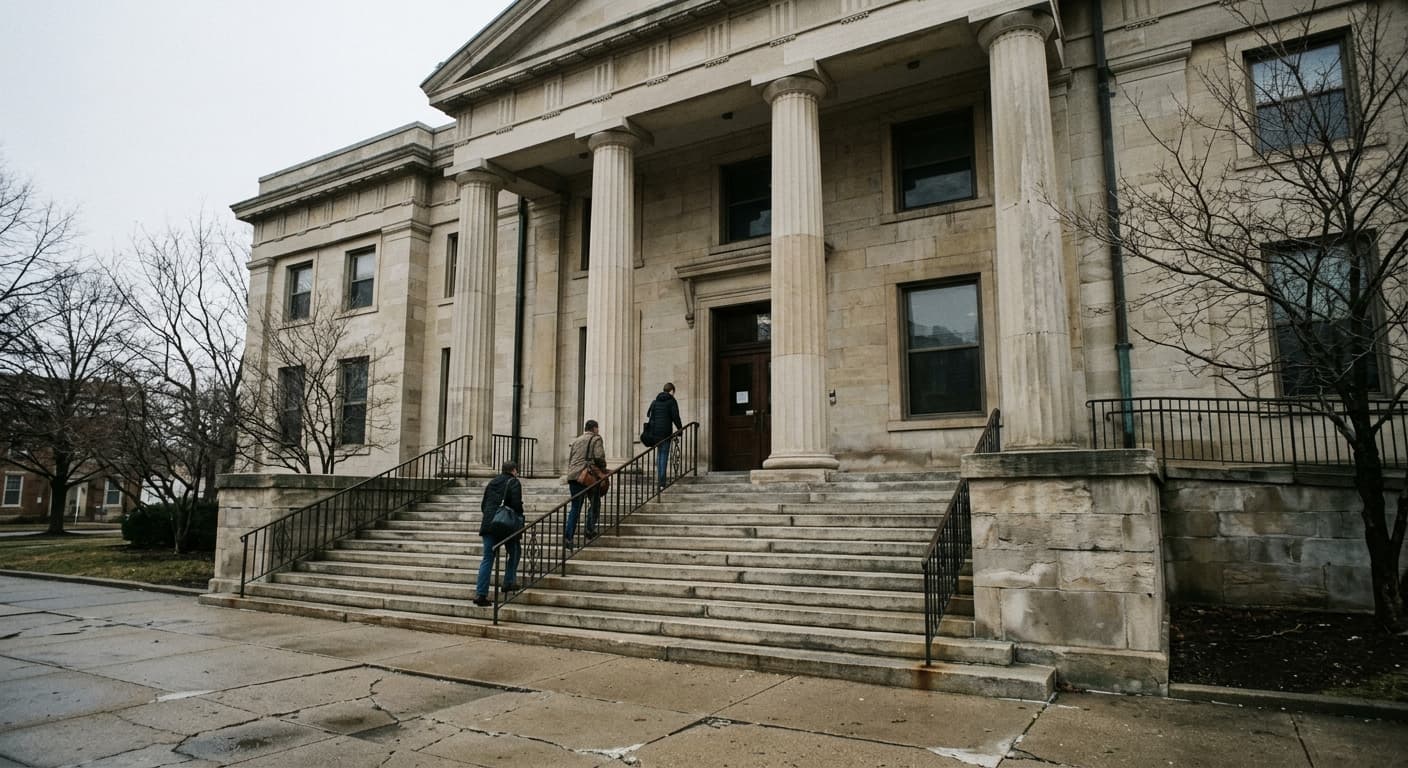
There is no single national website where you can search property records for the entire country. Ownership and deed information is recorded and searched county by county (or, in a few states, town by town), through a county Recorder, Clerk, or Assessor's office. This guide explains how the system works before sending you to your state's specific page.
Information last verified on 2026-07-16. This article has not yet been reviewed by a licensed lawyer.
The Three Offices That Hold Property Records
Property-related records are commonly split across up to three different local offices, and confusing them is the single biggest source of frustration when trying to look something up.
The Recorder of Deeds (also called Register of Deeds, County Clerk, or County Clerk-Recorder depending on the state) is the office of official record. It receives, indexes, and archives the actual legal documents that make up a property's chain of title: deeds, mortgages and deeds of trust, liens, easements, and plats. This is the office to go to for a certified copy of an actual recorded document.
The County Assessor (called the Property Valuation Administrator, or PVA, in Kentucky) values property for tax purposes. As a byproduct, most Assessor offices run the fastest, easiest, free public "who owns this property" search, typically by owner name, street address, or parcel number, with no account or login required.
The Clerk of Court handles court filings generally, but in many Southern states, and in every one of Louisiana's 64 parishes, the Clerk of Court's office also serves as the ex officio recorder of deeds and mortgages, meaning there is no separate "recorder" office at all in those jurisdictions.
A few counties have gone further and merged all three roles into one office. Several California counties, including Sonoma and San Mateo, now run a combined "Clerk-Recorder-Assessor" office that handles all of it under one roof.
Watch out: A property that just sold may show up correctly in the recorder's newly filed deed before the assessor's "current owner" field has caught up. If timing matters, check both offices rather than relying on just one.
Deed, Title, Plat, and Mortgage: What's the Difference?
Four terms get used almost interchangeably in casual conversation but mean genuinely different things in the public record.

A deed is the recorded legal instrument, an actual piece of paper, that transfers ownership from one party to another. To be valid it must be in writing, name a grantor and grantee, contain words of conveyance, and include a legal description of the property.
Title is not a document at all. It is the legal concept of ownership itself, the bundle of rights a person holds in a property. You can have "clear title" or a "cloud on title" without there being any single piece of paper labeled "title" anywhere in the record.
A plat, or plat of survey, is a scaled diagram prepared and certified by a licensed land surveyor showing a parcel's boundaries, dimensions, easements, and rights-of-way. It is typically filed with, or referenced by, the deed at the recorder's office.
A mortgage or deed of trust is a separate recorded instrument that creates a lien against the property to secure a loan. It is not the deed and does not itself transfer ownership. It sits alongside the deed in the recorder's index, and it has to be formally released or satisfied once the loan is paid off.
One more concept worth knowing: the grantor-grantee index is how a recorder's office lets you search by a person's name rather than by address. The grantor index lists a person as a seller or transferor, letting you trace forward through history; the grantee index lists them as a buyer or recipient, letting you trace backward. Together they're how a title chain gets built.
How to Find Out Who Owns a Property
The realistic free path, roughly in order of speed and ease, looks like this.
Start with the county Assessor's or Tax Collector's website. Search by address, owner name, or parcel number. This is usually the fastest route and typically returns the owner of record, mailing address, and assessed value with no account or fee required. Examples confirmed during research include the Los Angeles County Assessor's property search and Kentucky's PVA-run county lookup tools.
Try the county's GIS or interactive parcel viewer if you only have a location, not a clean address. Many counties now run a map-based tool where you click a parcel to see the owner, boundaries, and zoning. This is often the same underlying assessor data presented as a map instead of a search box.
Search the Recorder's grantor-grantee name index to go deeper than current ownership. This is how you find every deed, mortgage, or lien a specific person has been party to, which is the basis for tracing a chain of title or finding prior owners.
Order a certified copy from the Recorder's office if you need the actual official document, for example for a legal proceeding, a lost original, or certain loan or estate situations, generally through the same public-records request process used for other government documents. This generally costs a modest per-page fee, commonly in the range of $1 to $6 per page plus a small certification charge, though the exact figure is set county by county. Your state's page in this guide gives specifics where available.
Be aware that commercial sites like PropertyShark, CountyOffice.org, or similar aggregators can be convenient, but they are not the authoritative source, and some charge subscription fees for data the county gives away free. A site like NETRonline is useful specifically as a free directory that points you to the correct official county page, not as a source of ownership data itself. Zillow and Redfin show estimated values, sometimes called a "Zestimate," which is explicitly not authoritative ownership or deed data.
Watch Out for Deed Solicitation Mailers
A well-documented scam involves official-looking mail solicitations offering to sell homeowners a "certified copy of your deed" or a "property assessment profile" for an inflated fee. Real examples found during research, cited by state and county government sources, run in the $80 to $95 range for a document that typically costs a few dollars, often around $10 total, directly from the county recorder.

These mailers deliberately mimic government correspondence. They use language like "official" or "certified," pull real property details such as your address, parcel number, and purchase date from the public record to look legitimate, and often create false urgency with a response deadline, while burying a disclaimer in fine print that it is not a government bill and there is no obligation to pay.
Most homeowners already received their original deed for free at closing, from their closing attorney or title company, and simply don't need another copy unless the original is lost. If you receive one of these mailers, the recommended response, confirmed across multiple state and county government sources, is to disregard it and not pay. You can report it to your state Attorney General's consumer protection office, to the Federal Trade Commission at reportfraud.ftc.gov or 1-877-FTC-HELP, and to the US Postal Inspection Service if it arrived by mail.
Deed Fraud and Title Theft
A distinct and more serious problem is deed fraud, sometimes called title theft or home title theft: the actual fraudulent transfer of ownership, usually through a forged or fraudulent deed filed with the recorder using a stolen or fabricated identity.
The FBI issued a formal public service announcement on this in June 2026, titled "Protect Your Property from Illegal Sales Through Parcel Owner Impersonation." According to that announcement, criminals fabricate fake identification, email addresses, and phone numbers using identity data pulled from public records, data brokers, or the dark web, then contact real estate or title companies posing as the true owner, sometimes submitting forged deeds, and divert sale or loan proceeds to accomplices, often out of state. The most common targets are vacant land, rental properties, and homes without a mortgage, since fraud there is less likely to be noticed quickly.
The primary real defense, confirmed at dozens of county recorder offices nationwide, is a free "property fraud alert" or "recorded document notification" service. Once enrolled, the county emails, texts, or calls you the moment any document is recorded against your name or a specific parcel, so a fraudulent filing gets caught fast rather than discovered months later. Bucks County, Pennsylvania and San Diego County, California are two confirmed examples of counties offering this free. A national opt-in directory, PropertyFraudAlert.com, also lists participating counties. California's SB 255, signed in 2025 and effective January 1, 2026, went further. Government Code section 27297.7 requires every county in the state to establish a recorder notification program on or before January 1, 2027, mailing a notice within 30 days any time a deed, quitclaim deed, mortgage, or deed of trust is recorded against a homeowner's name, with no sign-up required from the homeowner. A county that already operates its own notification program under Government Code section 27297.6, currently Los Angeles, is exempt from the new statewide requirement.
Your state's page in this guide notes whether a free fraud-alert service is confirmed available in that state.
A County Records Search Is Not a Title Search
A free lookup through your county's assessor or recorder is genuinely useful for general research, curiosity, identifying a neighbor, or monitoring for fraud. It is not the same thing as, and should never be treated as a substitute for, a licensed title company's full title search and a title insurance policy before an actual real estate purchase or closing.

State insurance-department consumer guides put real numbers on why this distinction matters: roughly one in four residential real estate transactions has some kind of title issue that a professional search catches and resolves before closing, issues like an unreleased old mortgage, a missing heir, an unpaid contractor's lien, or a boundary dispute. A professional title search also reaches further than a typical public lookup, covering not just recorded deeds and mortgages but also relevant court documents such as wills, divorce decrees, and judgments. Even then, a search can only report what the public record actually shows, which is exactly why title insurance exists as a separate layer of protection against risks a search alone can't fully rule out, including forgery.
If you're planning an actual purchase, engage a licensed title company or real estate attorney rather than relying on a DIY records search alone.
Property Records by State
Select your state for the specific office name, whether a free online search exists, and any state-specific quirks worth knowing before you search.
- Alabama Property Records
- Alaska Property Records
- Arizona Property Records
- Arkansas Property Records
- California Property Records
- Colorado Property Records
- Connecticut Property Records
- Delaware Property Records
- District of Columbia Property Records
- Florida Property Records
- Georgia Property Records
- Hawaii Property Records
- Idaho Property Records
- Illinois Property Records
- Indiana Property Records
- Iowa Property Records
- Kansas Property Records
- Kentucky Property Records
- Louisiana Property Records
- Maine Property Records
- Maryland Property Records
- Massachusetts Property Records
- Michigan Property Records
- Minnesota Property Records
- Mississippi Property Records
- Missouri Property Records
- Montana Property Records
- Nebraska Property Records
- Nevada Property Records
- New Hampshire Property Records
- New Jersey Property Records
- New Mexico Property Records
- New York Property Records
- North Carolina Property Records
- North Dakota Property Records
- Ohio Property Records
- Oklahoma Property Records
- Oregon Property Records
- Pennsylvania Property Records
- Rhode Island Property Records
- South Carolina Property Records
- South Dakota Property Records
- Tennessee Property Records
- Texas Property Records
- Utah Property Records
- Vermont Property Records
- Virginia Property Records
- Washington Property Records
- West Virginia Property Records
- Wisconsin Property Records
- Wyoming Property Records
Disclaimer
This article provides general information about how property records and deed lookups work in the United States as of the verification date above. It is not legal advice and does not create an attorney-client relationship. It is not a substitute for a licensed title company's title search or title insurance before a real estate purchase. Program rules, tools, and their availability change and vary by state and county; verify current details directly with the official source before relying on any figure here.

Last updated: 2026-07-16. Figures and program details reflect their in-force version as of 2026-07-16.
Frequently Asked Questions
Are property records really public?
Yes. In every state, basic ownership and deed information is a public record, generally accessible to anyone through the county recorder or assessor, no special reason or credential required, unlike many background-check or criminal-record searches.
What's the fastest free way to find out who owns a property?
Usually the county Assessor's or Tax Collector's website, searchable by address, owner name, or parcel number. It's typically the quickest free source and requires no account or login in most counties.
Is there one national website for property records?
No. Property records are recorded and searched at the county level in almost every state, and at the town level in a few (Vermont and Rhode Island, for example). There is no single nationwide search tool; you generally need the correct county or town office.
What's the difference between a deed and a title?
A deed is the actual recorded document that transfers ownership. Title is the legal concept of ownership itself, the underlying bundle of rights, not a single piece of paper. You can have clear title without holding any document labeled 'title.'
I got a letter offering to sell me a copy of my deed for $90. Is that legitimate?
It's very likely a documented solicitation scam, not fraud exactly, but a significant markup. The same certified copy typically costs a few dollars directly from your county recorder. You likely already received your original deed for free at closing.
What is deed fraud or title theft?
It's the filing of a forged or fraudulent deed to steal a property's title, usually targeting vacant land, rental property, or homes without a mortgage. The FBI has issued a formal warning on this. Free county 'property fraud alert' notification services are the primary defense.
Can I use a free property records search instead of hiring a title company before buying a house?
No. A free county lookup is useful for general research but is not a substitute for a licensed title company's full title search and title insurance before a purchase. A professional search reaches further into the record and title insurance covers risks a search alone can't rule out.
Updates
Corrected the California SB 255 dates: the law took effect January 1, 2026, and January 1, 2027 is the deadline by which each county must have its recorder notification program in place.
State-by-state comparison
Each state guide below is paired with the governing statute our editors adjudicated for it, held in our own legal record and verified against the official source.
Each statute shown is the same adjudicated anchor its state guide renders, independently verified against primary sources. A dash means not yet adjudicated in our record — never that no law exists.
The Law Behind This Article
This article rests on the statutory provisions below, held in our own legal record and retrieved from the official source. Tap a section to read the operative text.
California Government Code
§ 27297.7In forcecited in 3 of our articles
(a) On or before January 1, 2027, each county within the state shall establish a recorder notification program, in accordance with this section, and the board of supervisors of each county shall adopt an authorizing resolution for these purposes. (b) (1) Following adoption of an authorizing resolution by the board of supervisors, the county recorder shall, within 30 days of recordation of a deed, quitclaim deed, mortgage, or deed of trust, notify by mail the party or parties executing the document. The notification shall be sent to the address for mailing tax bills that was established prior to the recording of the document. (2) The recorder may require, as a condition of recording, that a deed, quitclaim deed, mortgage, or deed of trust indicate the assessor’s identification number or numbers that fully contain all, or a portion of, the real property described in the legal description. If the description contains more than one assessor’s parcel, all assessor’s parcels shall be indicated. If assessor’s identification numbers are required, they shall be listed on the first page of the document.
Official text (excerpt) · last checked 2026-07-28 · Read the full text in our law library · Verify at leginfo.legislature.ca.gov
Also relied on in: California Property Records: How to Find Out Who Owns a Property (2026), California Quitclaim Deed: Requirements, Recording and Transfer Tax
Search our full record of US law — 2.1 million sections, every state + federal →
Sources and References
- Cornell Law School, Legal Information Institute, "Register of Deeds"(law.cornell.edu)
- Cornell Law School, Legal Information Institute, "Deed"(law.cornell.edu)
- Cornell Law School, Legal Information Institute, "Grantor-Grantee Index"(law.cornell.edu)
- FBI Internet Crime Complaint Center, Public Service Announcement I-061626-PSA, "Protect Your Property from Illegal Sales Through Parcel Owner Impersonation" (June 16, 2026)(ic3.gov).gov
- Bucks County, Pennsylvania, Recorder of Deeds Fraud Alert System(buckscounty.gov).gov
- Sonoma County, California, Clerk-Recorder-Assessor, "Current Scams"(sonomacounty.ca.gov).gov
- Maryland Insurance Administration, Consumer Guide to Title Insurance(insurance.maryland.gov).gov
- Texas Department of Insurance, Title Insurance FAQs(tdi.texas.gov).gov
- Jefferson County, Kentucky, Property Valuation Administrator, "Find Out Who Owns a Certain Property"(jeffersonpva.ky.gov).gov
- California SB 255 (2025), statewide deed and title recording notification mandate, effective January 1, 2027(sr32.senate.ca.gov).gov
- California Government Code § 27297.7 (recorder notification program; added by Stats. 2025, Ch. 351, Sec. 2 (SB 255), effective January 1, 2026; county programs required on or before January 1, 2027)(leginfo.legislature.ca.gov)