New Jersey Supreme Court Orders Release of Police Body Camera Footage Under OPRA in Fuster v. Township of Chatham
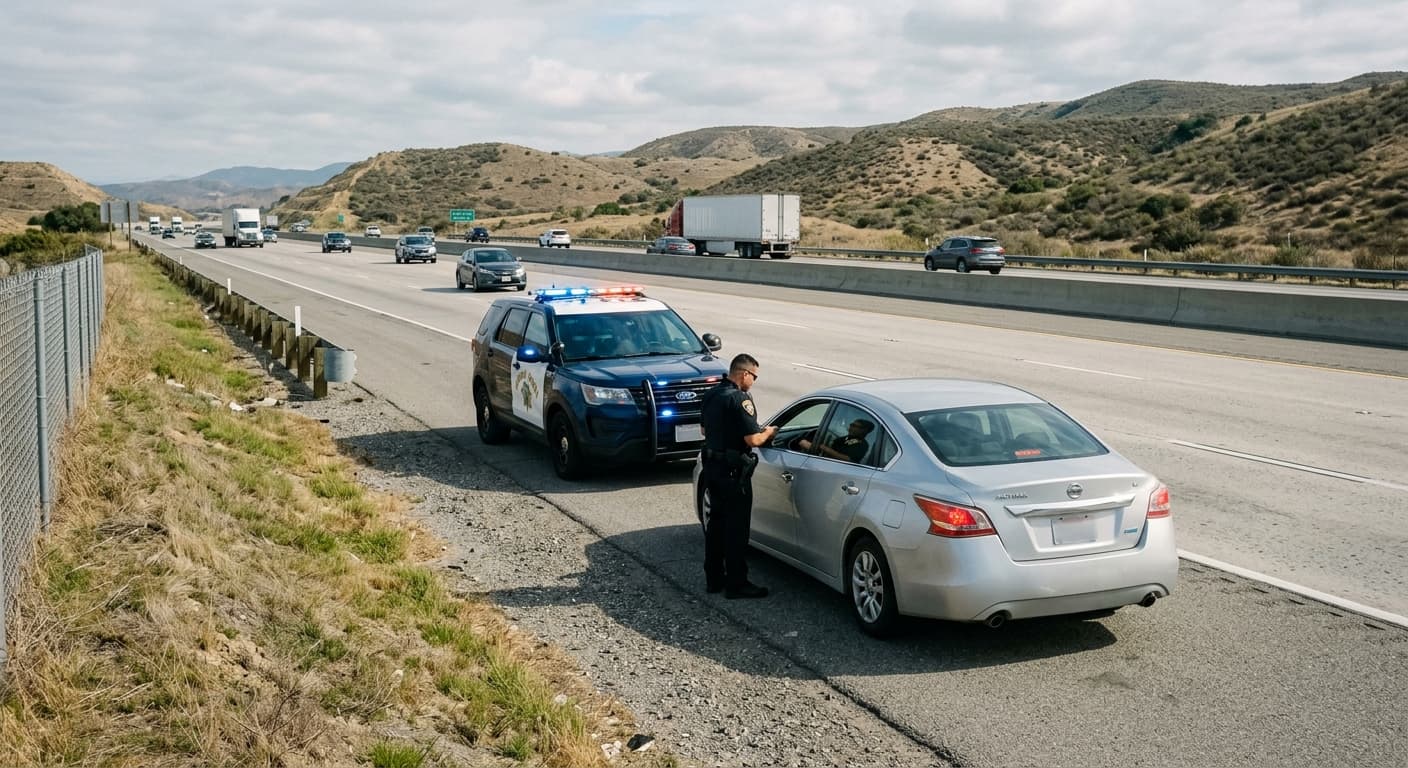
New Jersey's highest court has handed open-records requesters a significant win on police body camera footage. On January 21, 2025, the Supreme Court of New Jersey ruled in Fuster v. Township of Chatham that body worn camera recordings are not categorically shielded from the public, and it ordered a township to release footage of a man's own statement to police.
The decision rejected the idea that footage involving a person who was never arrested or charged is automatically confidential. It is one of the clearest recent statements from a state high court on how a public records act applies to the body camera video that police agencies now generate by the millions of hours.
Information last verified on June 20, 2026.
What the Court Decided
The case arose from a May 2022 visit Antonio Fuster made to the Chatham Township Police Department. He reported that his special-needs child had accused an adult male relative of sexual misconduct, and an officer recorded the conversation on a body worn camera. After Fuster and his wife, Brianne Devine, reviewed the resulting police report and said it was inaccurate, Fuster filed an Open Public Records Act request for the written reports and the body worn camera video of his interview. A records clerk denied the request for the video.
The trial court and the Appellate Division both sided with the township. The Appellate Division concluded the footage was exempt under judicial case law's confidentiality protection for an uncharged person's law enforcement records, reported at 477 N.J. Super. 477 (App. Div. 2023). The Supreme Court granted certification and reversed.
The core holding turns on a definition. OPRA exempts "criminal investigatory records," which the statute defines at N.J.S.A. 47:1A-1.1 as a record "which is not required by law to be made, maintained or kept on file" that a law enforcement agency holds and that pertains to a criminal investigation. The Court reasoned that body worn camera video falls outside that definition, because the 2020 Body Worn Camera Law (BWCL), N.J.S.A. 40A:14-118.5, requires the footage to be made and kept. In the Court's words, even if such videos are held by police and pertain to investigations, "they are by definition not criminal investigatory records under OPRA because they are 'required by law' . . . 'to be made, maintained or kept on file.'"
The Uncharged-Person Exemption the Court Rejected
The township also argued the video was confidential under N.J.S.A. 47:1A-9(b), an OPRA provision stating that the act does not "abrogate or erode" any grant of confidentiality already established by the Constitution, statute, court rule, or judicial case law. The lower courts had rooted that argument in a 2016 Appellate Division decision, North Jersey Media Group Inc. v. Bergen County Prosecutor's Office, which treated records about a person not arrested or charged as automatically confidential.

The Supreme Court disagreed with the premise. It explained that the 2016 case was decided long after OPRA took effect and that the pre-OPRA cases it relied on did not actually create any automatic grant of confidentiality for all law enforcement records about a person who was never charged. "Before OPRA was enacted," the Court wrote, "judicial case law in New Jersey had not established or recognized any automatic grant of confidentiality" of that kind. Because no such grant existed, there was nothing for OPRA's preservation clause to protect, and the exemption did not apply.
This reasoning matters well beyond body cameras. The question of whether records about uncharged people are presumptively secret recurs across the public records landscape, from incident reports to 911 audio. Requesters frequently encounter blanket privacy denials, much like those who pursue access to records such as 911 call recordings, where the strength of any exemption depends on the specific statute rather than a general assumption of confidentiality.
Privacy and the Subject of the Recording
The township's last argument invoked the "citizen's reasonable expectation of privacy" language in N.J.S.A. 47:1A-1. New Jersey courts weigh that interest using the seven-factor test from Doe v. Poritz, 142 N.J. 1 (1995).

Applying those factors, the Court emphasized that the requester was not a curious third party but the subject of the video, and that the footage was "not a recording of the State's investigation, but a verbatim recording of Fuster's own complaint as he made it to the police." The Court noted that if Fuster wanted to publicize the underlying allegations, he could simply repeat them himself on camera, which limited any privacy interest of the accused relative. It also pointed to the state constitutional command that crime victims "shall be treated with fairness, compassion and respect," concluding that barring an alleged victim from inspecting the recording of their own statement would not honor that mandate. The result was a unanimous reversal, with the Court ordering release "under the circumstances of this case."
Because the holding is anchored to a requester seeking footage of their own statement, it is most powerful for people who appear in the recording. Anyone outside that category, including journalists and members of the public seeking footage of others, still faces the full OPRA exemption analysis the Court left in place.
Analysis: Why This Matters
The following analysis reflects the views of the Recording Law Editorial Team.
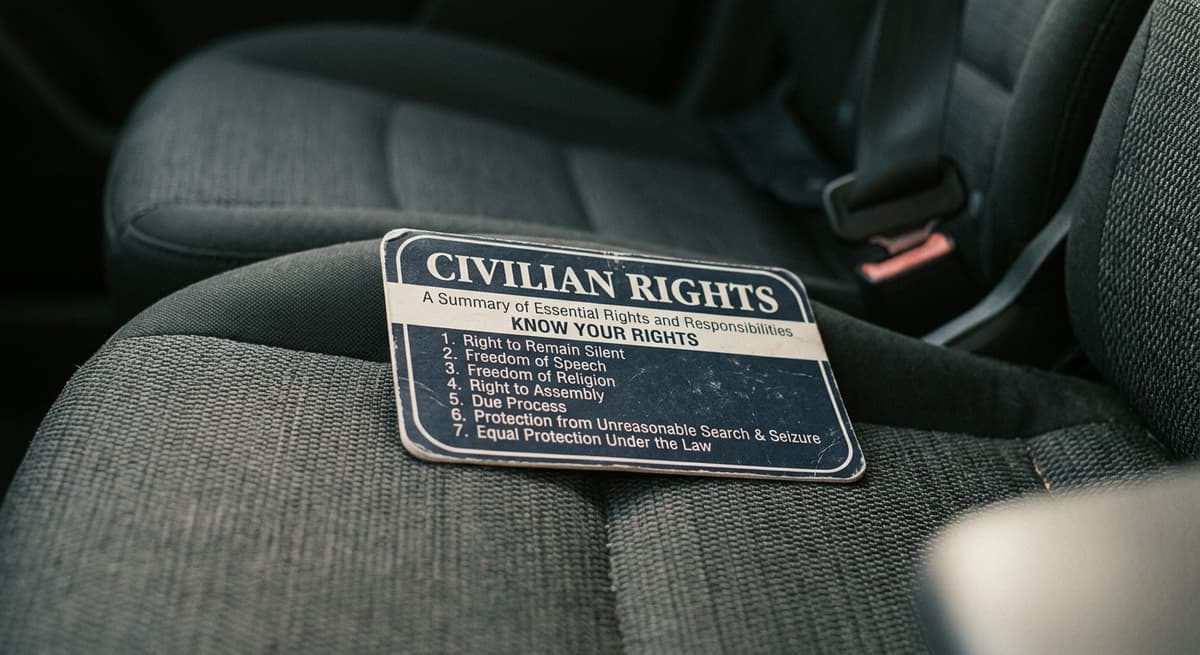
Fuster is consequential because of what it refuses to do. The township asked the Court to bless two broad shortcuts: treat all body camera video tied to an investigation as a criminal investigatory record, and treat all records about an uncharged person as automatically secret. A high court that wanted to limit disclosure could have taken either path. Instead, the Court tied the outcome to statutory text, holding that footage the Legislature required police to create cannot be swept into an exemption written for records that are not required by law to be made.
That textual move is the durable part of the decision. By keying the criminal-investigatory exemption to whether a record is "required by law" to exist, the Court drew a line that other body camera disputes can follow. As more states pass laws mandating that police record and retain body camera video, the same logic, that a mandated record is not an investigatory record exempt from disclosure, becomes available to requesters elsewhere, even though Fuster itself binds only New Jersey.
The limits deserve equal emphasis. The Court repeatedly framed its holding around the specific facts: a requester who was the subject of the footage, asking for a recording of his own words. It expressly declined to decide whether the Body Worn Camera Law's exemption provision displaces OPRA's other exemptions, leaving that fight for another case. Readers should not assume the ruling opens every body camera file to everyone. It does not.
The broader lesson for the public records world is methodological. Exemptions are creatures of text and history, not of intuition. The Court took apart a confidentiality rule that had been treated as settled and found it lacked the pre-OPRA foundation the lower courts assumed. That kind of scrutiny is exactly what open-government law is supposed to invite, and it is a reminder that the strength of any records denial, whether the records concern body cameras, autopsies, or deaths, depends on a real statute or precedent rather than habit. Those evaluating access to sensitive government records, from autopsy reports to death records held by the state, should expect custodians and courts to be held to the actual text of the exemptions they cite.
None of this is legal advice. Anyone facing a specific records denial or considering an OPRA or public-records lawsuit should consult a licensed attorney in their jurisdiction about their particular situation.
Frequently Asked Questions
What did the New Jersey Supreme Court decide in Fuster v. Township of Chatham?
On January 21, 2025, the Court unanimously held that police body worn camera footage is not a 'criminal investigatory record' exempt from the Open Public Records Act, and that there is no OPRA exemption automatically shielding information about a person who was never arrested or charged. It reversed the lower courts and ordered the footage released to the requester, who was the subject of the recording.
Why is body camera video not a 'criminal investigatory record' under OPRA?
OPRA defines a criminal investigatory record at N.J.S.A. 47:1A-1.1 as one 'not required by law to be made, maintained or kept on file.' Because New Jersey's 2020 Body Worn Camera Law, N.J.S.A. 40A:14-118.5, requires police to make and retain this footage, the Court held it does not fit that definition and so is not exempt on that basis.
Does Fuster mean anyone can now get any police body camera footage in New Jersey?
No. The Court tied its ruling to the facts, including that the requester was the subject of the video asking for a recording of his own statement. It expressly did not decide whether the Body Worn Camera Law's own exemptions displace OPRA's other exemptions, so other body camera requests still face a full exemption analysis.
Does this ruling apply outside New Jersey?
Not directly. Fuster interprets New Jersey's OPRA and Body Worn Camera Law and binds only New Jersey courts as of June 20, 2026. Its reasoning, that a record the law requires police to make is not an exempt investigatory record, may be persuasive elsewhere, but every state's public records statute is different.
Who decided the case and was it unanimous?
Justice Rachel Wainer Apter wrote for a unanimous Court. Chief Justice Rabner and Justices Patterson, Fasciale, and Noriega joined the opinion, and Justice Pierre-Louis did not participate.
What happened to the argument that records about uncharged people are automatically confidential?
The Court rejected it. It found that the 2016 Appellate Division case the township relied on lacked a genuine pre-OPRA foundation, and that New Jersey case law had never established an automatic grant of confidentiality for all law enforcement records about a person not arrested or charged. There was therefore nothing for OPRA's preservation clause in N.J.S.A. 47:1A-9(b) to protect.
Sources and References
- Antonio Fuster v. Township of Chatham, A-33-23 (089030) (N.J. Jan. 21, 2025), slip opinion (Wainer Apter, J., for a unanimous Court), reversing and ordering release of body worn camera footage under OPRA(njcourts.gov).gov
- New Jersey Attorney General Law Enforcement Directive No. 2022-1, statewide Body Worn Camera Policy implementing the Body Worn Camera Law, N.J.S.A. 40A:14-118.5 (L. 2020, c. 129), which requires law enforcement to make and retain body worn camera recordings(nj.gov).gov
- Official text of the Open Public Records Act (OPRA), N.J.S.A. 47:1A-1 to -13, published by the New Jersey Government Records Council, including the criminal investigatory records exemption and definition at N.J.S.A. 47:1A-1.1(nj.gov).gov
- Antonio Fuster v. Township of Chatham, 477 N.J. Super. 477 (App. Div. 2023), the Appellate Division opinion later reversed by the Supreme Court(njcourts.gov).gov
- Reporters Committee for Freedom of the Press, case page and amicus materials for Fuster v. Township of Chatham (context on open-records significance)(rcfp.org)