Restraining Order Laws by State (2026): How to Get a Protective Order
Independently fact-checked against primary sources (last audited September 29, 2026). · Reviewed by the RecordingLaw editorial team. · Law checked current as of August 17, 2026. · 2 primary sources cited on this page. How we verify our legal content

A restraining order is a civil court order that tells someone to stop contacting, threatening, or coming near you. Every state has at least one track for domestic violence victims and most also have a separate stalking or harassment track that requires no relationship to the respondent. Filing is free in nearly every state for domestic violence, dating violence, sexual assault, and stalking protection orders, and courts can issue a temporary order the same day you file.
If you are in immediate danger, call 911. For confidential help 24/7, contact the National Domestic Violence Hotline at 1-800-799-7233 (text START to 88788).
What is a restraining order?
A restraining order is a civil court order that legally prohibits a person (the respondent) from contacting, harassing, threatening, or coming near another person (the petitioner). The court can also order the respondent to stay away from the petitioner's home, workplace, or children's school. Courts can add provisions about child custody, firearms surrender, and housing.
The name of the order is a load-bearing fact because it tells you which court to go to and which forms to use. Common names include Protection From Abuse (PFA) in Pennsylvania, Alabama, and Maine; Order of Protection in New York, Illinois, Tennessee, Arizona, and Missouri; Domestic Violence Restraining Order (DVRO) in California; Civil Protection Order (CPO) in Ohio and Washington DC; FAPA Restraining Order in Oregon; injunction for protection in Florida; Relief From Abuse (RFA) in Vermont; and Victim Protective Order (VPO) in Oklahoma. Whatever the label, the legal effect is the same: a court command backed by the criminal law.
Restraining orders and orders of protection are the same thing in most states. The terms are used interchangeably in everyday speech, and both refer to a civil court order directing someone to stop certain behavior. In Maryland, however, a Protective Order (for domestic victims) and a Peace Order (for non-domestic victims) are distinct and governed by separate statutes.
Who can get a restraining order?
For the domestic-violence track, the relationship between you and the respondent is the key requirement. Most states require that the respondent is a current or former spouse, a current or former dating or intimate partner, a co-parent, or a household member or family member by blood or marriage. Ohio added dating partners to its Civil Protection Order statute in 2023. South Carolina's domestic statute does not yet cover dating-only relationships; victims in that situation must rely on criminal remedies.
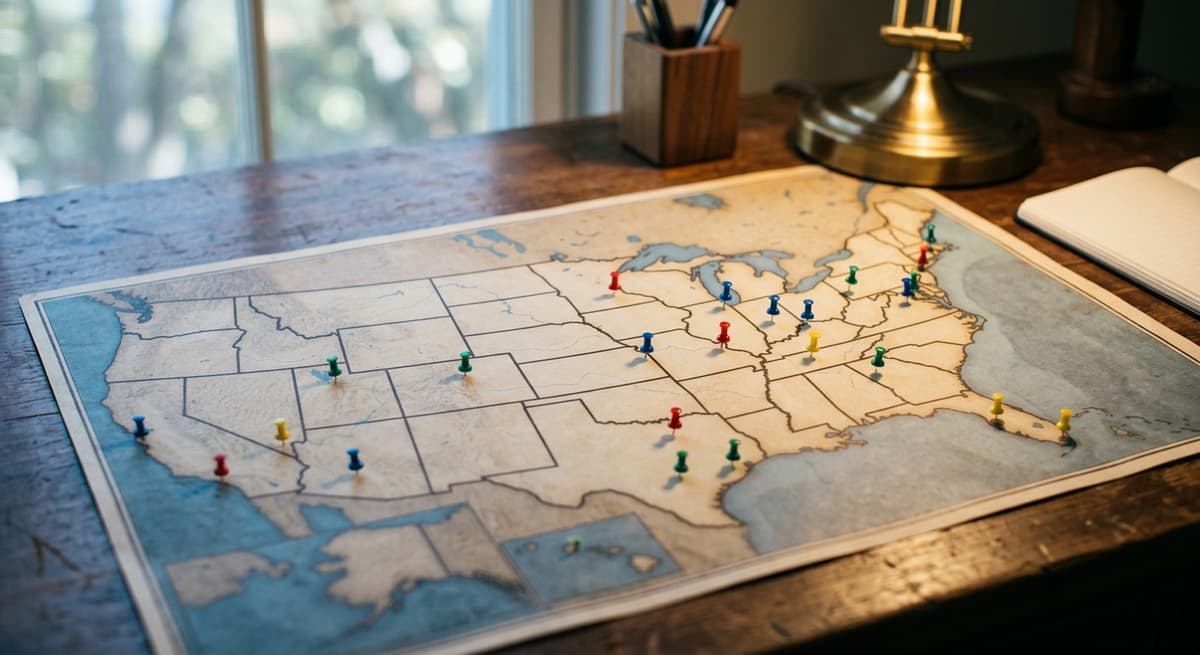
Most states also have a separate stalking, harassment, or sexual-assault track that requires no qualifying relationship at all. Under that track, any victim of repeated threatening conduct, stalking, sexual assault, or the nonconsensual distribution of intimate images can petition regardless of whether they know the respondent. A protective order does not remove content already posted online, so victims of image-based abuse often pair it with a Take It Down Act request to the hosting platform. Alabama and South Carolina are among the few states that do not have a standalone civil harassment or stalking protective order; non-domestic victims there must work through criminal stalking statutes. Wyoming does have a separate civil stalking and sexual assault order of protection under WS 7-3-506 through 7-3-510, available to any victim regardless of relationship.
Washington state consolidated six separate order types into one unified statute, RCW 7.105, in 2022. Anyone in Washington can now seek a domestic violence, sexual assault, stalking, anti-harassment, vulnerable adult, or extreme risk protection order through a single petition form. Massachusetts splits them cleanly: a 209A Abuse Prevention Order requires a domestic relationship, while a 258E Harassment Prevention Order is available to any victim of harassment.
How to get a restraining order: the basic steps
You begin by filing a petition with the appropriate court, which varies by state. Common choices are family court, district court, circuit court, or common pleas court. The petition asks you to describe the abuse or threats and explain why you need protection. You do not need a lawyer to file, and court self-help centers and domestic-violence advocates provide free help with the forms in most jurisdictions.

After you file, a judge reviews the petition and, if there is evidence of immediate danger, can issue a temporary ex parte order the same day without notifying the other person. That temporary order is served on the respondent by a law enforcement officer. A hearing is then scheduled, usually within 10 to 30 days, at which both sides can appear. If you have never been inside a courtroom before, our guide on what to wear to court covers practical dress and conduct tips for that hearing.
Under 34 U.S.C. 10450, a state that accepts federal Violence Against Women Act grant funding must certify that its laws and practices do not make the victim bear the costs of the filing, issuance, registration, modification, enforcement, dismissal, withdrawal, or service of a protection order that protects a victim of domestic violence, dating violence, sexual assault, or stalking. That is a condition on federal grant money rather than an outright federal ban on fees, but essentially every state accepts the funding, so filing is free in practice on the stalking and sexual-assault track as well as the domestic-violence track. If a clerk asks you for a fee, say the petition is for a protection order and ask about a fee waiver. If the final hearing shows the petitioner's allegations are credible, the judge issues a final order, which can last from several months to several years depending on your state, and can include firearm surrender requirements.
Temporary vs. final orders
A temporary order, also called an ex parte order or emergency order, is issued the same day you file your petition. The respondent is not present and does not have advance notice. The purpose is to provide immediate protection while the court schedules a full hearing. Temporary orders are generally effective for 10 to 30 days; South Dakota allows up to 30 days and Hawaii allows up to 180 days on a temporary order.
A final order is issued after a hearing where both parties have notice and an opportunity to appear. In most states, if the judge finds by a preponderance of the evidence that abuse, threats, stalking, or harassment occurred, the court issues a final order. Final order durations vary significantly by state, as the table below shows. Most states allow the petitioner to request renewals before the order expires.
| Order stage | How it is issued | Typical length |
|---|---|---|
| Temporary (ex parte) | Same-day, without notice to respondent | 10 to 30 days (until hearing) |
| Final | After a two-party hearing | Varies by state: 6 months to permanent |
Restraining orders and firearms
A qualifying final protective order triggers the federal firearm prohibition in 18 U.S.C. 922(g)(8). Once a final order is entered after notice and a hearing, the respondent may not lawfully possess any firearm or ammunition anywhere in the United States, for the duration of the order. This is a federal criminal law and applies in every state regardless of whether the state has its own surrender statute. Important limit: the 922(g)(8) ban applies only when the protected person is a current or former spouse, a person who shares a child with the respondent, or a current or former cohabitant. It does not yet extend to non-cohabiting dating partners under a protective order. (The 2022 Bipartisan Safer Communities Act extended a separate firearm bar to dating partners only for misdemeanor-conviction cases under 18 U.S.C. 922(g)(9), not for protective orders under (g)(8).) Many state DV orders cover dating partners, so the order itself may be valid while the federal firearms prohibition may not apply.
Many states go further and require mandatory physical surrender of firearms. Pennsylvania, Virginia, Tennessee, Texas, New Jersey, Illinois, Washington, North Carolina, New Hampshire, and several others require the respondent to hand over all firearms to law enforcement or a licensed dealer within 24 to 48 hours of service and to file proof of surrender with the court. A few states such as Ohio and Wyoming do not have a separate state surrender statute but include a federal-law warning in every order, and the federal prohibition still applies.
Violating the federal firearm ban while under a protective order is a federal felony. Under 18 U.S.C. 924(a)(8), added by the Bipartisan Safer Communities Act of 2022, a knowing violation of section 922(g) carries a fine, up to 15 years in prison, or both, separate from any state violation charge.
What happens if someone violates a restraining order?
Violating a protective order is almost always a crime in addition to being contempt of court. A first violation is typically a misdemeanor. Penalties range from a few months to up to a year in jail and a fine. Repeat violations or violations that involve assault, stalking, or a deadly weapon are frequently charged as felonies in most states.

If the respondent contacts you, comes near you, or otherwise violates the terms of the order, call 911 immediately and report the violation. Police in most states are authorized to arrest the respondent without a warrant if they have probable cause to believe an order has been violated. Keep a copy of your order with you and report every violation.
Documenting violations, including screenshots of texts or social media messages, call logs, and photos of any damage, strengthens both emergency calls and any follow-up criminal or contempt proceeding. If the respondent is arrested, the prosecutor can charge them separately from any contempt proceeding the civil court may pursue.
Restraining orders in common situations
The right order depends mostly on your relationship to the other person and on what they have done. Most searches on this topic are really the same question: which track applies to my situation? The sections below cover the common ones. Your state's court self-help site has the exact forms and rules.
Neighbor or someone you are not related to
A domestic-violence order usually requires a qualifying relationship, so a neighbor, roommate, acquaintance, or stranger generally falls under a separate harassment, stalking, or civil no-contact track. Not every state has one. California calls it a civil harassment restraining order and defines harassment in CCP 527.6 as "unlawful violence, a credible threat of violence, or a knowing and willful course of conduct directed at a specific person that seriously alarms, annoys, or harasses the person, and that serves no legitimate purpose." A course of conduct must also cause substantial emotional distress, both to a reasonable person and to the petitioner.
Other states set the bar differently. Massachusetts defines harassment in Chapter 258E, Section 1 as "3 or more acts of willful and malicious conduct aimed at a specific person committed with the intent to cause fear, intimidation, abuse or damage to property and that does in fact cause fear, intimidation, abuse or damage to property," or a single act of coerced sexual relations or one that violates certain listed criminal statutes. Washington offers an antiharassment protection order under RCW 7.105.100. See the California, Massachusetts, and Washington pages for detail.
A single rude comment or an ordinary property dispute is usually not enough. Courts tend to look for a pattern of targeted conduct or a credible threat, so keeping dates, messages, and photos matters.
A parent, adult child, or other relative
Family members are usually covered by the domestic-violence track, not the harassment track. California's definition of domestic violence in Family Code 6211 includes abuse against "any other person related by consanguinity or affinity within the second degree," alongside spouses, cohabitants, and dating partners. Other states draw the family line in their own words, so check whether your relative counts as a family or household member.
California's court system explains the split simply: domestic violence orders apply "when you are or were in a relationship with someone or are closely related to them," and civil harassment orders apply "when you are not in a relationship and not closely related." If a relative falls outside your state's family definition, the harassment or stalking track may be the fallback.
A spouse, ex, or dating partner
Current and former spouses are covered by the domestic-violence track in essentially every state, and being married does not prevent you from asking for an order. Dating partners are covered in many states but not all. As noted above, South Carolina's domestic statute does not yet reach dating-only relationships, and Ohio added them in 2023. California's Family Code 6211 lists spouses or former spouses, cohabitants, and people in dating or engagement relationships.
If your state's domestic track does not cover the relationship, the stalking or harassment track may still apply. Protection orders can also carry support, custody, and visitation provisions: the federal definition in 18 U.S.C. 2266 expressly includes "any support, child custody or visitation provisions, orders, remedies or relief issued as part of a protection order."
A coworker
A coworker with no personal relationship to you is usually handled like anyone else outside your family: through the civil harassment or stalking track, filed by you. If the coworker is also a current or former partner or relative, the domestic track may apply instead.
Some states also let an employer ask for protection for the workforce. California is the example we verified. Under CCP 527.8, an employer or collective bargaining representative of an employee who has suffered "harassment, unlawful violence, or a credible threat of violence" that can reasonably be construed to have been carried out at the workplace may seek a temporary restraining order and an order after hearing on the employee's behalf and, at the court's discretion, for other employees at the workplace. If you work in another state, ask your HR department and your court's self-help site whether a similar employer-filed order exists.
How hard is it, and do you have to go to court?
There is no single national standard. Many states use a preponderance of the evidence standard, but some states set a higher bar for harassment orders. California requires "clear and convincing evidence" for a civil harassment order under CCP 527.6, and Massachusetts requires three or more acts that actually cause fear, intimidation, abuse or property damage, unless a single act of coerced sexual relations or a listed criminal offense is involved. Specific, dated, documented conduct is what courts respond to. That record matters most at the final hearing, so have a lawyer help you organize it in a free case evaluation before you go (attorney advertising).
You can usually get a temporary order without the other person present, but a final order generally follows a hearing where the respondent has notice and a chance to be heard. Federal out-of-state enforcement rules require reasonable notice and an opportunity to be heard; for a temporary ex parte order, that notice and hearing opportunity must follow within the time state law requires and within a reasonable time after the order is issued. Whether you can appear by video or phone varies by court, so ask the clerk.
Is a restraining order valid in other states?
Generally yes. Under 18 U.S.C. 2265(a), a qualifying protection order from one state, tribe, or territory "shall be accorded full faith and credit" by the court of another. The issuing court must have had jurisdiction, and the person restrained must have been given "reasonable notice and opportunity to be heard." For a temporary ex parte order, that notice and opportunity must be provided within the time state law requires and within a reasonable time after the order is issued.
You do not have to register the order first. Section 2265(d)(2) says a consistent order gets full faith and credit "notwithstanding failure to comply with any requirement that the order be registered or filed in the enforcing State." The federal definition in 18 U.S.C. 2266(5) is broad enough to cover a civil "injunction, restraining order, or any other order" meant to prevent "violent or threatening acts or harassment," so harassment and stalking orders can be covered too.
Two limits apply. An order issued against someone who had petitioned for protection from a spouse or intimate partner is not entitled to full faith and credit unless a cross or counter petition was filed and the court made specific findings that each party was entitled to an order (section 2265(c)). And in practice, local police may not know your order, so carry a certified copy and ask your court whether local filing would help. Traveling across state lines intending to violate the protective terms of an order, and then doing so, is also a federal crime under 18 U.S.C. 2262.
Restraining order basics by state
Each row links to the detailed state page. The "Final order length" column reflects the statutory default; courts often can extend orders or make them permanent based on circumstances.
The table below covers 9 states in the Northeast.
| State | What it is called | Final order length |
|---|---|---|
| Connecticut | Civil Restraining Order | Up to 1 year; extendable |
| Maine | Protection from Abuse Order (PFA) | Up to 2 years; extendable |
| Massachusetts | Abuse Prevention Order (209A) | Up to 1 year; renewable |
| New Hampshire | Domestic Violence Protective Order | Up to 1 year; up to 5 years on renewal |
| New Jersey | Final Restraining Order (FRO) | Permanent |
| New York | Order of Protection | Up to 2 years; up to 5 years (aggravated) |
| Pennsylvania | Protection From Abuse Order (PFA) | Up to 3 years; renewable |
| Rhode Island | Domestic Abuse Restraining Order | Up to 3 years; extendable |
| Vermont | Relief From Abuse Order (RFA) | Up to 1 year; renewable |
The table below covers 12 states in the Midwest.
| State | What it is called | Final order length |
|---|---|---|
| Illinois | Order of Protection | Up to 2 years; renewable |
| Indiana | Protective Order | 2 years |
| Iowa | Protective Order | Up to 1 year; renewable |
| Kansas | Protection from Abuse Order (PFA) | Court-set; extendable up to lifetime |
| Michigan | Personal Protection Order (PPO) | Minimum 182 days; court-set |
| Minnesota | Order for Protection (OFP) | Up to 2 years; up to 50 years |
| Missouri | Order of Protection | 180 days to 1 year (up to 10 years with a serious-danger finding) |
| Nebraska | Domestic Abuse Protection Order | 1 to 2 years; renewable |
| North Dakota | Civil Protection Order (CPO) | Up to 2 years; renewable |
| Ohio | Civil Protection Order (CPO) | Up to 5 years; renewable |
| South Dakota | Protection Order | Up to 5 years; renewable |
| Wisconsin | Domestic Abuse Injunction | Up to 4 years; up to 10 years |
The table below covers 16 states in the South, plus the District of Columbia.
| State | What it is called | Final order length |
|---|---|---|
| Alabama | Protection from Abuse Order (PFA) | 1 year; can be made permanent |
| Arkansas | Order of Protection | 90 days to 10 years |
| Delaware | Protection from Abuse Order (PFA) | Up to 2 years |
| Florida | Injunction for Protection | Permanent/indefinite |
| Georgia | Family Violence Protective Order | Up to 12 months; up to 3 years |
| Kentucky | Domestic Violence Order (DVO) | Up to 3 years; renewable |
| Louisiana | Protective Order | Up to 18 months; indefinite abuse-prohibition |
| Maryland | Protective Order | Up to 1 year; extendable |
| Mississippi | Domestic Abuse Protection Order | Court-set period |
| North Carolina | Domestic Violence Protective Order (DVPO) | Up to 1 year; renewable up to 2 years |
| Oklahoma | Victim Protective Order (VPO) | Up to 5 years; permanent option |
| South Carolina | Order of Protection | 6 months to 1 year; extendable |
| Tennessee | Order of Protection | Up to 1 year; renewable |
| Texas | Protective Order | Up to 2 years; lifetime option |
| Virginia | Protective Order | Up to 2 years; renewable |
| West Virginia | Protective Order | 90 to 180 days; renewable |
| District of Columbia | Civil Protection Order (CPO) | Up to 2 years; extendable |
The table below covers 13 states in the West.
| State | What it is called | Final order length |
|---|---|---|
| Alaska | Domestic Violence Protective Order | Up to 1 year; renewable |
| Arizona | Order of Protection | 2 years |
| California | Domestic Violence Restraining Order (DVRO) | Up to 5 years; renewable |
| Colorado | Civil Protection Order | Permanent (lifetime of respondent) |
| Hawaii | Order for Protection | Fixed reasonable period; renewable |
| Idaho | Protection Order | Up to 1 year; renewable |
| Montana | Order of Protection | Fixed period or permanent |
| Nevada | Protective Order | Up to 2 years |
| New Mexico | Order of Protection | Indefinite until modified |
| Oregon | FAPA Restraining Order | 1 year; renewable |
| Utah | Cohabitant Abuse Protective Order | 150 days (civil; extendable for good cause up to 3 years total); permanent (criminal) |
| Washington | Protection Order (RCW 7.105) | At least 1 year; permanent option |
| Wyoming | Order of Protection | Up to 3 years; renewable |
This article is general legal information, not legal advice, and it is not a safety plan. Protective-order rules vary by state and change over time. If you are in danger, call 911. For help with your specific situation, contact your local court self-help center, a domestic-violence advocate, or a licensed attorney.
Related news
Frequently Asked Questions
How do I get a restraining order?
Go to the appropriate court in your state, such as family court or district court, and file a petition describing the abuse or threats. A judge can issue a temporary order the same day if there is evidence of immediate danger. You will then receive a hearing date, usually within 10 to 30 days, at which the judge can issue a final order. Court self-help centers and domestic-violence advocates can help you complete the forms at no charge.
How long does a restraining order last?
It depends on your state. Many states set a default of 1 year for a final order (Tennessee, Alabama, Iowa, Massachusetts). Others go longer: up to 2 years in Texas, Virginia, DC, and Illinois; up to 3 years in Pennsylvania and Wyoming; up to 5 years in California and Ohio. New Jersey final orders are permanent. Most states allow you to request a renewal before the order expires.
Is it free to get a restraining order?
In nearly every state, yes, and not only for domestic-violence orders. Under 34 U.S.C. 10450, a state that accepts federal Violence Against Women Act grant funding must certify that it does not make the victim bear the cost of filing, issuing, registering, modifying, enforcing, or serving a protection order that protects a victim of domestic violence, dating violence, sexual assault, or stalking. It is a condition on federal grant money rather than an outright federal ban on fees, but essentially every state accepts it. Court self-help centers and domestic-violence advocates also provide free assistance with the paperwork.
Does a restraining order take away the respondent's gun rights?
Yes. A qualifying final protective order triggers the federal firearm ban in 18 U.S.C. 922(g)(8): the respondent may not possess any firearm or ammunition for the duration of the order. Many states also require mandatory surrender of firearms within 24 to 48 hours of service, with proof of surrender filed with the court.
What is the difference between a restraining order and an order of protection?
There is no meaningful legal difference. They are different names for the same type of civil court order, and different states simply use different terms. California calls it a Domestic Violence Restraining Order, New York and Illinois call it an Order of Protection, Pennsylvania calls it a Protection From Abuse order, and Oregon calls it a FAPA Restraining Order. The legal effect is the same in each case.
Can I get a restraining order without a police report?
Yes. You can file a petition for a civil protective order directly with the court without having filed a police report. A police report may support your petition, but it is not required. The court will consider your sworn statement describing the abuse, threats, or stalking.
Can I get a restraining order against a neighbor or coworker?
Often yes, but usually through a civil harassment, stalking, or similar no-contact track rather than a domestic-violence order, which typically requires a family or intimate relationship. The rules differ by state, and a few states have no separate civil harassment order. Courts generally look for a pattern of targeted conduct or a credible threat, so keep dates, messages, and photos. Some states, such as California under CCP 527.8, also let an employer seek a workplace violence restraining order for an employee.
Is a restraining order valid in other states?
Generally yes. Under 18 U.S.C. 2265, a protection order from one state must be given full faith and credit by other states if the issuing court had jurisdiction and the other person received reasonable notice and an opportunity to be heard. For a temporary ex parte order, that notice and opportunity can come after the order is issued, within the time state law requires. The order does not have to be registered in the new state first. Carry a certified copy, because local police may not know your order.
What happens if the respondent violates the order?
Call 911 immediately and report the violation. Police are generally authorized to arrest the respondent without a warrant if they have probable cause to believe the order was violated. A first violation is usually a misdemeanor; repeat violations or violations involving assault or weapons are often charged as felonies. Document every violation, including any threatening messages or physical evidence.
Updates
Independently fact-checked against the cited primary sources
Corrected the federal firearm-ban penalty to up to 15 years under 18 U.S.C. 924(a)(8), and clarified that the federal no-fee rule for protection orders also covers stalking, sexual assault, and dating violence, not domestic violence alone.
Corrected the state-comparison table: a Utah protective order's civil provisions (no-contact, exclusion from the home, custody terms) expire 150 days after entry and can be extended to a 3-year cap, not a flat 2 years as the table previously stated.
Independently fact-checked against the cited primary sources; governing law re-checked for recent changes
Governing law re-checked for recent changes
Reviewed and approved by an editor
State-by-state comparison
Each state guide below is paired with the governing statute our editors adjudicated for it, held in our own legal record and verified against the official source.
Each statute shown is the same adjudicated anchor its state guide renders, independently verified against primary sources. A dash means not yet adjudicated in our record — never that no law exists.
The Law Behind This Article
This article rests on the statutory provisions below, held in our own legal record and retrieved from the official source. Tap a section to read the operative text.
United States Code Title 18
§ 922Unlawful actsIn forcecited in 72 of our articles
It shall be unlawful— for any person— except a licensed importer, licensed manufacturer, or licensed dealer, to engage in the business of importing, manufacturing, or dealing in firearms, or in the course of such business to ship, transport, or receive any firearm in interstate or foreign commerce; or except a licensed importer or licensed manufacturer, to engage in the business of importing or manufacturing ammunition, or in the course of such business, to ship, transport, or receive any ammunition in interstate or foreign commerce; for any importer, manufacturer, dealer, or collector licensed under the provisions of this chapter to ship or transport in interstate or foreign commerce any firearm to any person other than a licensed importer, licensed manufacturer, licensed dealer, or licensed collector, except that— this paragraph and subsection (b)(3) shall not be held to preclude a licensed importer, licensed manufacturer, licensed dealer, or licensed collector from returning a firearm or replacement firearm of the same kind and type to a person from whom it was received; and this paragraph shall not be held to preclude an individual from mailing a firearm owned in compliance…
Official text (excerpt) · last checked 2026-09-16 · Read the full text in our law library · Verify at uscode.house.gov
Cited in 40,024 court opinions in our collectionLatest citing opinion in our collection: 2026
In the courts (editorial summary, independently checked):Section 922(g)(1) bars a felon from possessing a firearm, and the Supreme Court cases in this line turn on sentencing, not on the ban. Taylor v. United States (1990) and Shepard v. United States (2005) held that whether prior convictions enhance a 922(g) sentence under 924(e) is decided from offense elements and limited plea records.
Opinions citing this section in our collection:
- United States v. Booker (Supreme Court of the United States 2004, 543 U.S. 220)“…e Johnson with one crime (say, illegal gun possession, see 18 U. S. C. § 922 (g)) and Jackson with another (say, ban…”
- Almendarez-Torres v. United States (Supreme Court of the United States 1998, 523 U.S. 224)“…cidivism an offense element in such circumstances. But cf. 18 U. S. C. § 922 (g)(1) (prior felony conviction an elem…”
- Taylor v. United States (Supreme Court of the United States 1990, 495 U.S. 575)✓Taylor pleaded guilty to felon-in-possession under 18 U.S.C. § 922(g)(1) and had two Missouri burglary convictions; the Court held that 'burglary' in the § 924(e) enhancement attached to a § 922(g) conviction means generic burglary judged by the prior statute's elements.
Identified automatically from the court opinions citing this section — not a ranking of which case controls.
Also relied on in: Can You Become an ICE Agent with a Criminal Record? (2026 Guide), How Long Does a Felony Stay on Your Record? (2026), Supreme Court Limits the Federal Gun Ban on Marijuana Users (Hemani, 2026)
§ 2262Interstate violation of protection orderIn force
A person who travels in interstate or foreign commerce, or enters or leaves Indian country or is present within the special maritime and territorial jurisdiction of the United States, with the intent to engage in conduct that violates the portion of a protection order that prohibits or provides protection against violence, threats, or harassment against, contact or communication with, or physical proximity to, another person or the pet, service animal, emotional support animal, or horse of that person, or that would violate such a portion of a protection order in the jurisdiction in which the order was issued, and subsequently engages in such conduct, shall be punished as provided in subsection (b).
Official text (excerpt) · last checked 2026-07-28 · Read the full text in our law library · Verify at uscode.house.gov
Cited in 77 court opinions in our collectionLatest citing opinion in our collection: 2026
Opinions citing this section in our collection:
- Jones v. United States (Supreme Court of the United States 1999, 526 U.S. 227)“…erious bodily injury as a sentencing factor, see, e. g., 18 U. S. C. § 2262 (b)(2) (interstate violation of a prote…”
- United States v. Robinson (Court of Appeals for the First Circuit 2005, 433 F.3d 31)“…d guilty to a charge under the Violence Against Women Act, 18 U.S.C. § 2262, for the interstate violation of a prot…”
- United States v. Stephan Paul Doll Von Foelkel (Court of Appeals for the Second Circuit 1998, 136 F.3d 339)“…interstate violation of a protection order in violation of 18 U.S.C. § 2262 (a)(1). Von Foelkel primarily argues th…”
Identified automatically from the court opinions citing this section — not a ranking of which case controls.
§ 2265Full faith and credit given to protection ordersIn force
Any protection order issued that is consistent with subsection (b) of this section by the court of one State, Indian tribe, or territory (the issuing State, Indian tribe, or territory) shall be accorded full faith and credit by the court of another State, Indian tribe, or territory (the enforcing State, Indian tribe, or territory) and enforced by the court and law enforcement personnel of the other State, Indian tribal government or Territory 1 So in original. Probably should not be capitalized. as if it were the order of the enforcing State or tribe. A protection order issued by a State, tribal, or territorial court is consistent with this subsection if— such court has jurisdiction over the parties and matter under the law of such State, Indian tribe, or territory; and reasonable notice and opportunity to be heard is given to the person against whom the order is sought sufficient to protect that person’s right to due process.
Official text (excerpt) · last checked 2026-07-28 · Read the full text in our law library · Verify at uscode.house.gov
Cited in 312 court opinions in our collectionLatest citing opinion in our collection: 2026
Opinions citing this section in our collection:
- United States v. Coccia (Court of Appeals for the First Circuit 2006, 446 F.3d 233)“…tate sovereignty. Specifically, Coccia contends that 18 U.S.C. § 2265 is overly broad and conflicts with Mas…”
- Joy Spurr v. Melissa Lopez Pope (Court of Appeals for the Sixth Circuit 2019, 936 F.3d 478)“…arising in the Indian country of the Indian tribe? Because 18 U.S.C. § 2265(e) unambiguously grants tribal courts t…”
- United States v. Thompson (Court of Appeals for the Second Circuit 2019, 921 F.3d 82)“…by 18 U.S.C. § 2266 (5) [ 5 ] and consistent with 18 U.S.C. § 2265 (b)." U.S.S.G. § 1B1.1 cmt. n.1(D). In…”
Identified automatically from the court opinions citing this section — not a ranking of which case controls.
§ 2266DefinitionsIn force
In this chapter: The term “bodily injury” means any act, except one done in self-defense, that results in physical injury or sexual abuse. The term “course of conduct” means a pattern of conduct composed of 2 or more acts, evidencing a continuity of purpose. The term “enter or leave Indian country” includes leaving the jurisdiction of 1 tribal government and entering the jurisdiction of another tribal government. The term “Indian country” has the meaning stated in section 1151 of this title.
Official text (excerpt) · last checked 2026-07-28 · Read the full text in our law library · Verify at uscode.house.gov
Cited in 55 court opinions in our collectionLatest citing opinion in our collection: 2026
Opinions citing this section in our collection:
- United States v. Thompson (Court of Appeals for the Second Circuit 2019, 921 F.3d 82)“…protection order’ means ‘protection order’ as defined by 18 U.S.C. § 2266(5)[5] and consistent with 18 U.S.C. §…”
- United States v. Jordan (District Court, S.D. New York 2008, 591 F. Supp. 2d 686)“…guilty of a crime. 18 U.S.C. § 2261A(2); see 18 U.S.C. § 2266 (8) (defining “State”); 18 U.S.C. § 22…”
- United States v. Dion (Court of Appeals for the First Circuit 2022, 37 F.4th 31)“…"protection order" as defined by the VAWA. See 18 U.S.C. § 2266(5). We answer this question in the a…”
Identified automatically from the court opinions citing this section — not a ranking of which case controls.
§ 924PenaltiesIn forcecited in 3 of our articles
Except as otherwise provided in this subsection, subsection (b), (c), (f), or (p) of this section, or in section 929, whoever— knowingly makes any false statement or representation with respect to the information required by this chapter to be kept in the records of a person licensed under this chapter or in applying for any license or exemption or relief from disability under the provisions of this chapter; knowingly violates subsection (a)(4), (f), (k), or (q) of section 922; knowingly imports or brings into the United States or any possession thereof any firearm or ammunition in violation of section 922(l); or willfully violates any other provision of this chapter, shall be fined under this title, imprisoned not more than five years, or both. Whoever knowingly violates subsection (a)(6), (h), (i), (j), or (o) of section 922 shall be fined as provided in this title, imprisoned not more than 10 years, or both.
Official text (excerpt) · last checked 2026-07-28 · Read the full text in our law library · Verify at uscode.house.gov
Cited in 35,403 court opinions in our collectionLatest citing opinion in our collection: 2026
Opinions citing this section in our collection:
- Almendarez-Torres v. United States (Supreme Court of the United States 1998, 523 U.S. 224)“…increase sentences dramatically for serious recidivists); 18 U. S. C. § 924 (e) (Armed Career Criminal Act of 1984)…”
- Alleyne v. United States (Supreme Court of the United States 2013, 570 U.S. 99)“…here is no such risk of judicial overreaching here. Under 18 U.S.C. § 924 (c)(1)(A)(i), the jury's verdict fully…”
- Taylor v. United States (Supreme Court of the United States 1990, 495 U.S. 575)“…Amendment Act of 1986) of the Anti-Drug Abuse Act of 1986, 18 U. S. C. § 924 (e). This statute provides a sentence e…”
Identified automatically from the court opinions citing this section — not a ranking of which case controls.
Also relied on in: 18 U.S.C. § 922 Explained: Prohibited Persons, Penalties, Federal Judge Lets Defamation Claim Over Google AI Overviews Go Forward
Revised Code of Washington
§ 7.105.100Filing—Types of petitions.In forcecited in 2 of our articles
(1) There exists an action known as a petition for a protection order. The following types of petitions for a protection order may be filed: (a) A petition for a domestic violence protection order, which must allege the existence of domestic violence committed against the petitioner or petitioners by an intimate partner or a family or household member. The petitioner may petition for relief on behalf of himself or herself and on behalf of family or household members who are minors or vulnerable adults. A petition for a domestic violence protection order must specify whether the petitioner and the respondent are intimate partners or family or household members. A petitioner who has been sexually assaulted or stalked by an intimate partner or a family or household member should, but is not required to, seek a domestic violence protection order, rather than a sexual assault protection order or a stalking protection order. (b) A petition for a sexual assault protection order, which must allege the existence of nonconsensual sexual conduct, nonconsensual sexual penetration, or commercial sexual exploitation that was committed against the petitioner by the respondent.
Official text (excerpt) · last checked 2026-09-14 · Read the full text in our law library · Verify at app.leg.wa.gov
Cited in 23 court opinions in our collectionLatest citing opinion in our collection: 2026
Opinions citing this section in our collection:
- Anne Jones Obo C.j., V. Maguire Darragh (Court of Appeals of Washington 2025)“…ual conduct or nonconsensual sexual penetration. RCW 7.105.100(1)(b), .225(1)(b). However, in Jones v.…”
- Kathryn Cox, V. Charles A. Fulmer (Court of Appeals of Washington 2024, 555 P.3d 431)“…or vulnerable adult protection order as defined in RCW 7.105.100. The Protected Person should hav…”
- Lorelle Rose Harke v. Rex Elam Harke (Court of Appeals of Washington 2024, 543 P.3d 829)“…etitioner. Rex contends that, in addition to RCW 7.105.210, RCW 7.105.100 sanctions an order of protection only…”
Identified automatically from the court opinions citing this section — not a ranking of which case controls.
Also relied on in: Washington Restraining Order Laws (2026): How to Get a Protection Order
United States Code Title 34
§ 10450Costs for criminal charges and protection ordersIn forcecited in 5 of our articles
A State, Indian tribal government, or unit of local government, shall not be entitled to funds under this subchapter unless the State, Indian tribal government, or unit of local government— certifies that its laws, policies, and practices do not require, in connection with the prosecution of any misdemeanor or felony domestic violence, dating violence, sexual assault, or stalking offense, or in connection with the filing, issuance, registration, modification, enforcement, dismissal, withdrawal or service of a protection order, or a petition for a protection order, to protect a victim of domestic violence, dating violence, sexual assault, or stalking, that the victim bear the costs associated with the filing of criminal charges against the offender, or the costs associated with the filing, issuance, registration, modification, enforcement, dismissal, withdrawal or service of a warrant, protection order, petition for a protection order, or witness subpoena, whether issued inside or outside the State, tribal, or local jurisdiction; or gives the Attorney General assurances that its laws, policies and practices will be in compliance with the requirements of paragraph (1) within the…
Official text (excerpt) · last checked 2026-07-28 · Read the full text in our law library · Verify at uscode.house.gov
Also relied on in: Arizona Restraining Order Laws (2026): How to Get a Protective Order, Georgia Restraining Order Laws (2026): How to Get a Protective Order, Minnesota Restraining Order Laws (2026): How to Get an OFP or HRO
Search our full record of US law — 2.1 million sections, every state + federal →
Sources and References
- 18 U.S.C. 922(g)(8) - Federal firearm prohibition for persons under qualifying domestic violence protective orders(law.cornell.edu).gov
- Violence Against Women Act - Office on Violence Against Women, U.S. Department of Justice(justice.gov).gov
- National Domestic Violence Hotline - 1-800-799-7233(thehotline.org)
- 18 U.S.C. 924(a)(8) - Knowing violation of the 922(g) firearm prohibition is punishable by up to 15 years (added by the Bipartisan Safer Communities Act of 2022)(govinfo.gov)
- 34 U.S.C. 10450 - Costs for criminal charges and protection orders; VAWA grant funding conditioned on victims not bearing protection-order costs for domestic violence, dating violence, sexual assault, or stalking(uscode.house.gov)