Car Accident Laws by State (2026): Fault, No-Fault, and Your Claim
Independently fact-checked against primary sources (last audited August 17, 2026). · Reviewed by the RecordingLaw editorial team. · Law checked current as of August 17, 2026. · 6 primary sources cited on this page. How we verify our legal content

Most states follow an at-fault (tort) system, meaning the driver who caused the crash and their insurer pays; a minority of states operate under a no-fault (PIP) system that pays your own insurer first. Your state's fault system and negligence rule together determine who pays, what you can recover, and whether partial fault reduces or eliminates your claim entirely.
What car accident laws cover
Car accident law is a branch of civil tort law that determines who is legally responsible for a crash, what damages the responsible party must pay, and what procedural rules govern claims and lawsuits. Every state has its own statutory framework and court-made common law that answers three core questions: Which driver (or drivers) caused the crash? How are damages split when both drivers share some fault? And what is the time limit for filing a lawsuit?
Beyond fault and negligence rules, car accident law covers mandatory insurance minimums, the right to sue in no-fault states once injuries are serious enough, reporting obligations after a crash, and the elements of damages a plaintiff can recover. Federal law plays a limited role, mainly through the Federal Motor Carrier Safety Regulations for commercial trucks. Ordinary passenger-vehicle crashes are almost entirely a matter of state law.
Understanding these rules matters before a crash, not just after. Knowing whether your state uses a 51% bar or pure contributory negligence can change how you document a scene, whether you accept an early settlement offer, and whether hiring an attorney before speaking to the other driver's insurer is worth it (it almost always is).
No-fault vs. at-fault states
In an at-fault (tort) state, the driver who caused the accident is responsible for the other party's damages. The injured driver files a claim with the at-fault driver's liability insurer, not their own. If the at-fault driver is uninsured or underinsured, the injured driver turns to their own UM/UIM coverage. The at-fault system gives injured drivers access to both economic damages (medical bills, lost wages) and non-economic damages (pain and suffering) from the first dollar of loss.
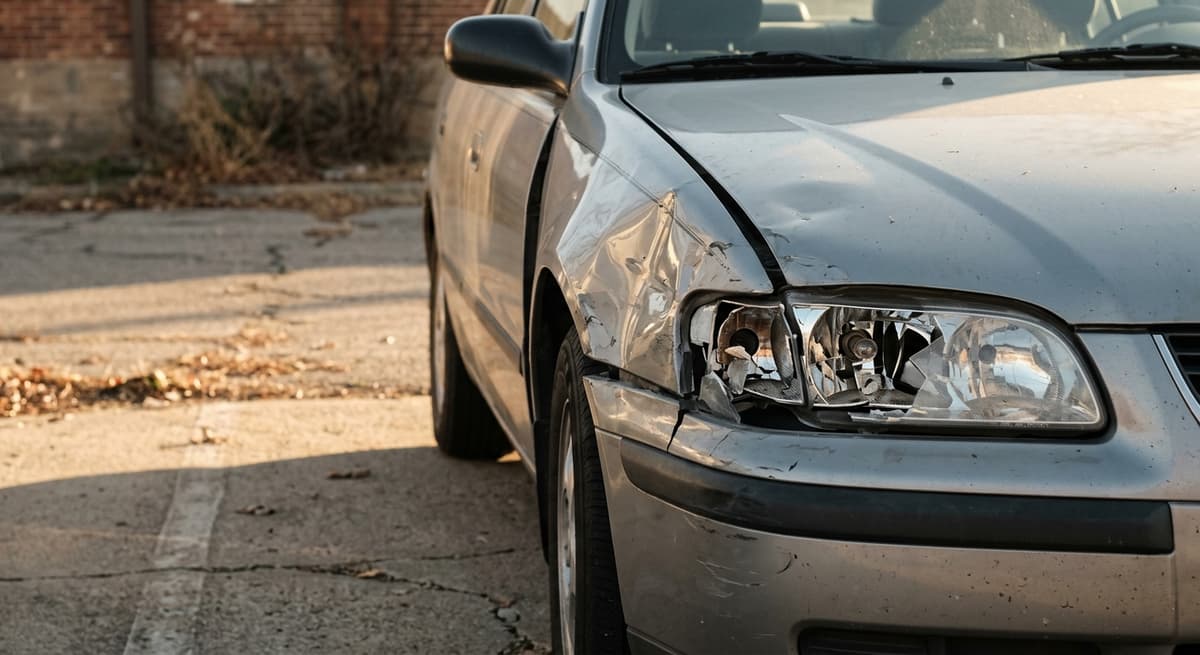
In a no-fault state, each driver's own personal injury protection (PIP) policy pays their medical bills and lost wages regardless of who caused the crash. The tradeoff is a threshold: you generally cannot sue the at-fault driver for pain and suffering unless your injuries exceed that state's serious-injury threshold. Thresholds are defined by monetary cost of treatment (e.g., Florida at $10,000 in medical bills) or by the nature of the injury (permanent injury, significant scarring, or death). Once you clear the threshold, you step outside no-fault and can pursue a full tort claim.
The mandatory no-fault states are Florida, Hawaii, Kansas, Massachusetts, Michigan, Minnesota, North Dakota, New York, and Utah. Kentucky, New Jersey, and Pennsylvania are choice states, where drivers elect either the no-fault or full tort option when they buy their policy. Arkansas, Delaware, DC, Maryland, and Oregon are add-on states that allow PIP coverage as an add-on without restricting your right to sue in tort.
Michigan's no-fault system underwent a significant overhaul in 2019. Unlimited lifetime PIP was previously required; since July 2020, drivers may choose from multiple PIP levels, including complete opt-out if they have qualified health coverage. Michigan drivers should verify their current PIP election carefully.
The four negligence rules (and why they matter)
Every at-fault state uses one of four rules to allocate damages when both drivers share blame for a crash.

Pure comparative negligence is the most plaintiff-friendly rule. Your damages are reduced by your percentage of fault, but recovery is never barred. A plaintiff found 80% at fault still collects 20% of proven damages. Pure comparative states include Alaska, Arizona, California, Kentucky, Mississippi, Missouri, New Mexico, New York, Rhode Island, and Washington.
Modified comparative negligence with a 50% bar bars recovery if you are equally or more at fault than the defendant (50% or more). States using this rule include Arkansas, Colorado, Georgia, Idaho, Kansas, Maine, Michigan, Nebraska, North Dakota, Tennessee, Utah, and Vermont.
Modified comparative negligence with a 51% bar works the same way but allows recovery up to and including exactly 50% fault. You are barred only when your fault reaches 51% or more. This is the most common rule and covers Connecticut, Delaware, Florida (for comparative purposes under tort threshold), Hawaii, Illinois, Indiana, Iowa, Louisiana, Massachusetts, Montana, Nevada, New Hampshire, New Jersey, Ohio, Oklahoma, Oregon, Pennsylvania, South Carolina, Texas, West Virginia, Wisconsin, and Wyoming.
Pure contributory negligence is the harshest rule for plaintiffs. If you are even 1% at fault for a crash, you cannot recover anything from the other driver. Only five jurisdictions use pure contributory negligence: Alabama, the District of Columbia, Maryland, North Carolina, and Virginia. If you live in or are injured in one of these places, document your own careful driving as carefully as you document the other driver's negligence. A single lapse, even a failure to use a turn signal, can extinguish a six-figure claim.
South Dakota applies a distinct slight-gross rule. Your negligence must be only "slight" in comparison to the other driver's "gross" negligence, or your recovery is barred. It is the only state still using this doctrinal remnant, and its practical effect lies between modified and pure contributory in most cases.
The car accident claim and lawsuit process
Most car accident claims never become lawsuits. They resolve through the insurance-claim process, which begins when one or both drivers report the crash to their respective insurers. In an at-fault state, the injured driver typically opens a third-party claim against the at-fault driver's liability insurer. In a no-fault state, the injured driver first exhausts their own PIP before any third-party claim is viable.

The insurer assigns an adjuster who investigates liability, evaluates injuries, and makes a settlement offer. If you accept, you sign a release that closes the claim permanently. Before accepting, make sure your medical treatment is complete (or that you have a clear picture of future costs), because you cannot reopen a released claim even if new complications emerge. Before you sign that release, get a free claim review from a car accident lawyer, weighing the adjuster's offer against your full medical picture (attorney advertising).
If negotiations fail, the next step is a lawsuit filed in the appropriate state civil court. Most personal-injury car accident cases are filed in state superior or district court; small-property-damage disputes may go to small claims court. After filing, the parties exchange discovery, attempt mediation or arbitration, and either settle or go to trial. Fewer than 5% of filed cases reach a jury verdict.
Timing matters. Missing the statute of limitations bars your lawsuit permanently, and some states have shorter windows for government-entity claims (often 6 months from injury). Government vehicles include city buses, county vehicles, and state patrol cars.
What a car accident settlement is worth
Car accident settlement values are highly case-specific, but every settlement starts with the same two categories of damages. Economic damages are the easily quantified losses: medical bills already incurred, estimated future medical costs, lost wages and lost earning capacity, and property damage. Non-economic damages are the harder-to-quantify harms: pain and suffering, emotional distress, loss of enjoyment of life, and loss of consortium.

Several variables compress or inflate the final number. Your comparative fault percentage directly reduces your recovery in all comparative negligence states and eliminates it entirely in pure contributory states. The at-fault driver's liability limits cap the maximum a single claim can reach from their carrier; a minimum-limits policy in a state with 25/50/25 limits delivers at most $25,000 per person, no matter how serious the injury. Your own UM/UIM limits provide an additional layer when the at-fault driver's coverage is exhausted.
Soft-tissue injuries (whiplash, sprains) typically settle within the at-fault driver's minimum limits. Fractures, surgeries, and permanent injuries regularly exceed minimum limits and require your own UM/UIM, or a policy-limits demand followed by a bad-faith claim, to fully compensate you.
Use the car accident settlement calculator to model how medical costs, fault percentages, and insurance limits interact in your specific situation and jurisdiction.
Minimum car insurance by state
Every state except New Hampshire (which allows cash alternatives) mandates minimum liability coverage. Limits are written as three numbers: bodily injury per person / bodily injury per accident / property damage. Florida is the outlier: for ordinary passenger-vehicle registration it requires no bodily-injury liability at all, only $10,000 in personal injury protection (Fla. Stat. 627.736) and $10,000 in property-damage liability (Fla. Stat. 324.022). The 10/20/10 figure widely quoted as Florida's minimum is the state's proof-of-financial-responsibility definition in Fla. Stat. 324.021(7), which attaches only when a trigger applies, such as reinstatement after a crash or conviction, or certain for-hire vehicles. That means a minimally insured Florida driver may carry zero coverage for the injuries they cause you, which is why uninsured and underinsured motorist coverage matters more there than almost anywhere else. Among states that do mandate bodily-injury liability, Pennsylvania is the lowest at 15/30/5; North Carolina and Virginia require 50/100/50 and 50/100/25. Most states cluster around 25/50/25 or 25/50/15.
Minimum limits are a floor, not a recommendation. A serious crash with multiple injured parties can exhaust minimum limits quickly, leaving the at-fault driver personally responsible for the remainder. Higher limits, combined with uninsured motorist coverage that matches your liability limits, provide meaningful protection.
No-fault states generally require PIP on top of liability coverage. Michigan and Hawaii require higher minimum bodily injury limits (50/100/10 and 40/80/20) than neighboring states. The state-by-state breakdown is in the comparison table below.
Statute of limitations for car accidents by state
Every state sets a deadline for filing a personal-injury lawsuit after a car accident. Miss it and you permanently lose the right to sue, no matter how strong your case. The range across all 51 jurisdictions runs from 1 year to 6 years.
The shortest deadline is Tennessee's, at 1 year from the crash date. At the other end, Maine, Minnesota, and North Dakota all allow 6 years. The most common deadline is 2 years, covering 25 of the 51 jurisdictions, including California, Texas, and Florida.
Kentucky is the trap in this table. Its general personal-injury statute is 1 year, but the Motor Vehicle Reparations Act displaces it for motor-vehicle torts: KRS 304.39-230(6) allows an action for tort liability "not later than two (2) years after the injury, or the death, or the date of issuance of the last basic or added reparation payment made by any reparation obligor, whichever later occurs." A Kentucky car accident claim therefore has at least 2 years, and longer when reparation benefits were paid.
Several states separate property-damage deadlines from personal-injury deadlines. California gives 3 years for property damage but only 2 for injury. New York gives 3 years for property damage and 3 for injury. Always check both.
Government-entity claims are the wildcard. When the at-fault vehicle is a publicly owned vehicle (police car, city bus, school vehicle), most states require a pre-lawsuit notice of claim within 60 to 180 days. Missing that administrative deadline can extinguish your lawsuit right even before the general statute of limitations runs.
The state-by-state deadlines are in the comparison table below. For a deeper look at deadlines in your state, see the statute of limitations hub.
Car accident laws by state
The table below covers all 51 jurisdictions. Each state name links to its detailed spoke page. "Add-on" means PIP is available as an add-on without restricting tort rights; "Choice" means the driver elects no-fault or full tort at the time of purchase. The "Negligence rule" column uses: Pure comp = pure comparative; Mod 50% = modified comparative 50% bar; Mod 51% = modified comparative 51% bar; Pure contrib = pure contributory; Slight-gross = South Dakota's slight-gross rule.
The table below covers 9 states in the Northeast.
| State | Fault system | Negligence rule | Min. liability limits | PI deadline |
|---|---|---|---|---|
| Connecticut | At-fault | Modified 51% | 25/50/25 | 2 years |
| Maine | At-fault | Modified 50% | 50/100/25 | 6 years |
| Massachusetts | No-fault | Modified 51% | 25/50/30 | 3 years |
| New Hampshire | At-fault | Modified 51% | 25/50/25 | 3 years |
| New Jersey | Choice | Modified 51% | 35/70/25 | 2 years |
| New York | No-fault | Pure comparative | 25/50/10 | 3 years |
| Pennsylvania | Choice | Modified 51% | 15/30/5 | 2 years |
| Rhode Island | At-fault | Pure comparative | 25/50/25 | 3 years |
| Vermont | At-fault | Modified 50% | 25/50/10 | 3 years |
The table below covers 12 states in the Midwest.
| State | Fault system | Negligence rule | Min. liability limits | PI deadline |
|---|---|---|---|---|
| Illinois | At-fault | Modified 51% | 25/50/20 | 2 years |
| Indiana | At-fault | Modified 51% | 25/50/25 | 2 years |
| Iowa | At-fault | Modified 51% | 20/40/15 | 2 years |
| Kansas | No-fault | Modified 50% | 25/50/25 | 2 years |
| Michigan | No-fault | Modified 50% | 50/100/10 | 3 years |
| Minnesota | No-fault | Modified 51% | 30/60/10 | 6 years |
| Missouri | At-fault | Pure comparative | 25/50/25 | 5 years |
| Nebraska | At-fault | Modified 50% | 25/50/25 | 4 years |
| North Dakota | No-fault | Modified 50% | 25/50/25 | 6 years |
| Ohio | At-fault | Modified 51% | 25/50/25 | 2 years |
| South Dakota | At-fault | Slight-gross | 25/50/25 | 3 years |
| Wisconsin | At-fault | Modified 51% | 25/50/10 | 3 years |
The table below covers 16 states in the South, plus the District of Columbia.
| State | Fault system | Negligence rule | Min. liability limits | PI deadline |
|---|---|---|---|---|
| Alabama | At-fault | Pure contributory | 25/50/25 | 2 years |
| Arkansas | Add-on | Modified 50% | 25/50/25 | 3 years |
| Delaware | Add-on | Modified 51% | 25/50/10 | 2 years |
| District of Columbia | Add-on | Pure contributory | 25/50/10 | 3 years |
| Florida | No-fault | Modified 51% | $10k PIP + $10k PD (no BI required) | 2 years |
| Georgia | At-fault | Modified 50% | 25/50/25 | 2 years |
| Kentucky | Choice | Pure comparative | 25/50/25 | 2 years |
| Louisiana | At-fault | Modified 51% | 15/30/25 | 2 years |
| Maryland | Add-on | Pure contributory | 30/60/15 | 3 years |
| Mississippi | At-fault | Pure comparative | 25/50/25 | 3 years |
| North Carolina | At-fault | Pure contributory | 50/100/50 | 3 years |
| Oklahoma | At-fault | Modified 51% | 25/50/25 | 2 years |
| South Carolina | At-fault | Modified 51% | 25/50/25 | 3 years |
| Tennessee | At-fault | Modified 50% | 25/50/25 | 1 year |
| Texas | At-fault | Modified 51% | 30/60/25 | 2 years |
| Virginia | At-fault | Pure contributory | 50/100/25 | 2 years |
| West Virginia | At-fault | Modified 51% | 25/50/25 | 2 years |
The table below covers 13 states in the West.
| State | Fault system | Negligence rule | Min. liability limits | PI deadline |
|---|---|---|---|---|
| Alaska | At-fault | Pure comparative | 50/100/25 | 2 years |
| Arizona | At-fault | Pure comparative | 25/50/15 | 2 years |
| California | At-fault | Pure comparative | 30/60/15 | 2 years |
| Colorado | At-fault | Modified 50% | 25/50/15 | 3 years |
| Hawaii | No-fault | Modified 51% | 40/80/20 | 2 years |
| Idaho | At-fault | Modified 50% | 25/50/15 | 2 years |
| Montana | At-fault | Modified 51% | 25/50/20 | 3 years |
| Nevada | At-fault | Modified 51% | 25/50/20 | 2 years |
| New Mexico | At-fault | Pure comparative | 25/50/10 | 3 years |
| Oregon | Add-on | Modified 51% | 25/50/20 | 2 years |
| Utah | No-fault | Modified 50% | 30/65/25 | 4 years |
| Washington | At-fault | Pure comparative | 25/50/10 | 3 years |
| Wyoming | At-fault | Modified 51% | 25/50/20 | 4 years |
This article is general legal information, not legal advice. Car accident law varies by state and changes frequently; settlement values depend on the specific facts of each case. For advice about a specific crash, consult a licensed attorney in your state.
Related:
Frequently Asked Questions
How many states are no-fault?
Nine states operate mandatory no-fault (PIP) systems: Florida, Hawaii, Kansas, Massachusetts, Michigan, Minnesota, North Dakota, New York, and Utah. Three additional states (Kentucky, New Jersey, and Pennsylvania) offer a choice between no-fault and full tort coverage. Arkansas, Delaware, DC, Maryland, and Oregon are add-on states that allow PIP without restricting your right to sue in tort.
What is the difference between no-fault and at-fault states?
In an at-fault state, the driver who caused the crash is legally responsible, and the injured party claims against that driver's liability insurer for both economic and non-economic damages (including pain and suffering) from the first dollar. In a no-fault state, each driver's own PIP policy pays their own medical bills and lost wages regardless of fault, and access to the at-fault driver's insurer for pain and suffering is restricted to injuries that meet a statutory serious-injury threshold.
What states are pure contributory negligence?
Only five jurisdictions use pure contributory negligence: Alabama, the District of Columbia, Maryland, North Carolina, and Virginia. In these places, if you are even 1% at fault for a crash, you are barred from recovering any damages from the other driver. This is the harshest negligence rule in the country and makes careful documentation of the other driver's fault critical.
What is comparative negligence?
Comparative negligence is a rule that allocates damages proportionally when both drivers share fault. Under pure comparative negligence, your recovery is reduced by your percentage of fault but never eliminated entirely. Under modified comparative negligence (50% or 51% bar), you can recover as long as your fault does not reach or exceed the threshold, at which point you recover nothing. Most states use some form of comparative negligence rather than the older pure contributory rule.
How long do I have to file a car accident lawsuit?
The statute of limitations for personal-injury car accident claims ranges from 1 year (Tennessee) to 6 years (Maine, Minnesota, and North Dakota). The most common deadline is 2 years, used by 25 of the 51 jurisdictions. Kentucky is a common point of confusion: its general injury statute is 1 year, but KRS 304.39-230(6) gives motor-vehicle tort claims 2 years from the injury, the death, or the date the last basic or added reparation payment was issued, whichever is later. When a government vehicle was involved, a pre-lawsuit administrative claim is often required within 60 to 180 days of the injury. Missing any of these deadlines permanently bars your lawsuit.
What are the minimum car insurance requirements by state?
Minimum liability limits vary significantly. Florida requires no bodily-injury liability for ordinary registration at all, only $10,000 in PIP and $10,000 in property-damage liability; the 10/20/10 figure often attributed to Florida is its proof-of-financial-responsibility standard, which applies only on triggers such as post-crash or post-conviction reinstatement. Among states that do mandate bodily-injury liability, Pennsylvania's 15/30/5 is the lowest. Most states require at least 25/50/25. North Carolina and Maine require 50/100/50 and 50/100/25. No-fault states also require PIP coverage on top of liability. The exact limits for each state are listed in the comparison table above. Minimum limits are a legal floor, not a coverage recommendation; serious crashes routinely exceed minimum limits.
How much is the average car accident settlement?
Settlement value depends on the facts of each crash, the severity of injuries, the applicable negligence rule, and the insurance limits available. Economic damages (medical bills, lost wages, property damage) are the baseline. Non-economic damages (pain and suffering) multiply the economic base in serious-injury cases. Your comparative fault percentage directly reduces the final number. Use the car accident settlement calculator at /tools/car-accident-settlement-calculator/ to model your specific situation.
Can I sue if I was partly at fault?
In most states, yes. Pure and modified comparative negligence states allow recovery even when you share blame; your damages are simply reduced by your fault percentage. The exception is pure contributory negligence jurisdictions (Alabama, DC, Maryland, North Carolina, Virginia), where any fault on your part bars recovery entirely. South Dakota's slight-gross rule also bars recovery unless your negligence was only 'slight' compared to the other driver's 'gross' negligence.
Do I have to report a car accident?
Most states require you to call 911 and report any crash involving injury, death, or property damage above a threshold (commonly $500 to $2,500). Some states also require a written report to the DMV within 10 to 30 days when police did not respond. Failing to report can result in license suspension and may complicate your insurance claim. Check your specific state's motor vehicle code for the exact reporting triggers.
Is my state a no-fault state?
The mandatory no-fault states are Florida, Hawaii, Kansas, Massachusetts, Michigan, Minnesota, North Dakota, New York, and Utah. Kentucky, New Jersey, and Pennsylvania are choice states where drivers elect their system at the time of purchase. All other states are at-fault (tort) states, though Arkansas, Delaware, DC, Maryland, and Oregon allow optional add-on PIP. Look up your state in the table above for the definitive answer.
What should I do immediately after a car accident?
Move to safety and call 911. Document the scene with photos before vehicles move if it is safe to do so. Exchange insurance and contact information with all drivers. Seek medical attention the same day even if injuries feel minor, because adrenaline masks pain and a prompt medical record links your injuries to the crash. Report the crash to your own insurer, but do not give a recorded statement to the at-fault driver's insurer before speaking with an attorney. Do not accept a settlement offer until you know your complete medical picture.
Updates
Corrected Kentucky's car accident filing deadline to 2 years under KRS 304.39-230(6), removed New York from the 2-year group (it is 3 years under CPLR 214), and restated Florida's insurance minimums as $10,000 PIP plus $10,000 property damage with no bodily-injury liability required for ordinary registration.
Independently fact-checked against the cited primary sources; governing law re-checked for recent changes
Reviewed and approved by an editor
State-by-state comparison
Each state guide below is paired with the governing statute our editors adjudicated for it, held in our own legal record and verified against the official source.
Each statute shown is the same adjudicated anchor its state guide renders, independently verified against primary sources. A dash means not yet adjudicated in our record — never that no law exists.
The Law Behind This Article
This article rests on the statutory provisions below, held in our own legal record and retrieved from the official source. Tap a section to read the operative text.
Florida Statutes
§ 324.021Definitions; minimum insurance required.In forcecited in 2 of our articles
The following words and phrases when used in this chapter shall, for the purpose of this chapter, have the meanings respectively ascribed to them in this section, except in those instances where the context clearly indicates a different meaning:(1) MOTOR VEHICLE.—Every self-propelled vehicle that is designed and required to be licensed for use upon a highway, including trailers and semitrailers designed for use with such vehicles, except traction engines, road rollers, farm tractors, power shovels, and well drillers, and every vehicle that is propelled by electric power obtained from overhead wires but not operated upon rails, but not including any personal delivery device or mobile carrier as defined in s. 316.003, bicycle, electric bicycle, or moped. However, the term “motor vehicle” does not include a motor vehicle as defined in s. 627.732(3) when the owner of such vehicle has complied with the requirements of ss. 627.730-627.7405, inclusive, unless the provisions of s. 324.051 apply; and, in such case, the applicable proof of insurance provisions of s. 320.02 apply. (2) DEPARTMENT.—The Department of Highway Safety and Motor Vehicles.
Official text (excerpt) · last checked 2026-07-28 · Read the full text in our law library · Verify at leg.state.fl.us
Cited in 23 court opinions in our collectionLatest citing opinion in our collection: 2025
Opinions citing this section in our collection:
- Berges v. Infinity Ins. Co. (Supreme Court of Florida 2004, 29 Fla. L. Weekly Supp. 679)“…meet the statutory financial responsibility requirements of section 324.021, Florida Statutes (2003). It is inescapable that the deci…”
- Enterprise Leasing Co. South Central, Inc. v. Hughes (District Court of Appeal of Florida 2002, 833 So. 2d 832)“…e single subject rule. In addition, appellant contends that section 324.021, Florida Statutes (2000), which limits the liability of s…”
- General Motors Acceptance Corp. v. Davis (District Court of Appeal of Florida 1995, 664 So. 2d 1025)“…vehicle and asserted in its Third Defense that, pursuant to section 324.021, Florida Statutes, it was immune from liability. Sectio…”
Identified automatically from the court opinions citing this section — not a ranking of which case controls.
Also relied on in: Florida Car Accident Laws: No-Fault, PIP, and Your Claim
§ 324.022Financial responsibility for property damage.In forcecited in 2 of our articles
(1) Every owner or operator of a motor vehicle required to be registered in this state shall establish and maintain the ability to respond in damages for liability on account of accidents arising out of the use of the motor vehicle in the amount of $10,000 because of damage to, or destruction of, property of others in any one crash. The requirements of this section may be met by one of the methods established in s. 324.031; by self-insuring as authorized by s. 768.28(16); or by maintaining an insurance policy providing coverage for property damage liability in the amount of at least $10,000 because of damage to, or destruction of, property of others in any one accident arising out of the use of the motor vehicle. The requirements of this section may also be met by having a policy which provides coverage in the amount of at least $30,000 for combined property damage liability and bodily injury liability for any one crash arising out of the use of the motor vehicle. The policy, with respect to coverage for property damage liability, must meet the applicable requirements of s.
Official text (excerpt) · last checked 2026-07-28 · Read the full text in our law library · Verify at leg.state.fl.us
Cited in 4 court opinions in our collectionLatest citing opinion in our collection: 2017
Opinions citing this section in our collection:
- Grant v. New Hampshire Ins. Co. (Supreme Court of Florida 1993, 18 Fla. L. Weekly Supp. 107)“…on in any one accident. [4] The appellants also cite to "section 324.022, Florida Statutes, (1986)" to support their contention th…”
- Garcia Ex Rel. Estate of Garcia v. Vanguard Car Rental USA, Inc. (District Court, M.D. Florida 2007, 510 F. Supp. 2d 821)“…sition, p. 7. 11 .See also Fla. Stat. § 324.022 (the requirement of having sufficient…”
- Welford v. Liberty Insurance Corp. (District Court, N.D. Florida 2016, 190 F. Supp. 3d 1085)“…627.730-627.7405 ], and property damage coverage under Fla. Stat. § 324.022 . . There is a dispute in the rec…”
Identified automatically from the court opinions citing this section — not a ranking of which case controls.
§ 627.736Required personal injury protection benefits; exclusions; priority; claims.In forcecited in 4 of our articles
(1) REQUIRED BENEFITS.—An insurance policy complying with the security requirements of s. 627.733 must provide personal injury protection to the named insured, relatives residing in the same household unless excluded under s. 627.747, persons operating the insured motor vehicle, passengers in the motor vehicle, and other persons struck by the motor vehicle and suffering bodily injury while not an occupant of a self-propelled vehicle, subject to subsection (2) and paragraph (4)(e), to a limit of $10,000 in medical and disability benefits and $5,000 in death benefits resulting from bodily injury, sickness, disease, or death arising out of the ownership, maintenance, or use of a motor vehicle as follows:(a) Medical benefits.—Eighty percent of all reasonable expenses for medically necessary medical, surgical, X-ray, dental, and rehabilitative services, including prosthetic devices and medically necessary ambulance, hospital, and nursing services if the individual receives initial services and care pursuant to subparagraph 1. within 14 days after the motor vehicle accident. The medical benefits provide reimbursement only for:1.
Official text (excerpt) · last checked 2026-09-08 · Read the full text in our law library · Verify at leg.state.fl.us
Cited in 189 court opinions in our collectionLatest citing opinion in our collection: 2026
Opinions citing this section in our collection:
- Nunez v. Geico General Insurance (Supreme Court of Florida 2013, 38 Fla. L. Weekly Supp. 440)“…t. We answer the certified question in the negative as to section 627.736, Florida Statutes (2008), and confirm our statement in C…”
- Williams v. Gateway Insurance Company (Supreme Court of Florida 1976, 331 So. 2d 301)“…for personal injury protection benefits paid, pursuant to Fla. Stat. § 627.736 (3)(b). The circuit court later entered…”
- Mercury Insurance Co. v. Emergency Physicians of Central (District Court of Appeal of Florida 2015, 182 So. 3d 661)“…tion for payment to emergency physicians (emphasis added). Fla. Stat. § 627.736 (4)(c). This amount must be used to pay…”
Identified automatically from the court opinions citing this section — not a ranking of which case controls.
Also relied on in: Florida Dashcam Laws: Rules for Dashboard Cameras (2026), Motorcycle Accident Laws in Florida (2026): Deadlines & Helmets
Kentucky Revised Statutes, Chapter 304: INSURANCE CODE
§ 304.39-230Limitations of actionsIn forcecited in 5 of our articles
(1) If no basic or added reparation benefits have been paid for loss arising otherwise than from death, an action therefor may be commenced not later than two (2) years after the injured person suffers the loss and either knows, or in the exercise of reasonable diligence should know, that the loss was caused by the accident, or not later than four (4) years after the accident, whichever is earlier. If basic or added reparation benefits have been paid for loss arising otherwise than from death, an action for further benefits, other than survivor's benefits, by either the same or another claimant, may be commenced not later than two (2) years after the last payment of benefits. (2) If no basic or added reparation benefits have been paid to the decedent or his or her survivors, an action for survivor's benefits may be commenced not later than one (1) year after the death or four (4) years after the accident from which death results, whichever is earlier. If survivor's benefits have been paid to any survivor, an action for further survivor's benefits by either the same or another claimant may be commenced not later than two (2) years after the last payment of benefits.
Official text (excerpt) · last checked 2026-07-29 · Read the full text in our law library · Verify at apps.legislature.ky.gov
Cited in 81 court opinions in our collectionLatest citing opinion in our collection: 2026
Opinions citing this section in our collection:
- Bailey v. Reeves (Kentucky Supreme Court 1984, 662 S.W.2d 832)“…lature in enacting the MVRA and to add limiting language to KRS 304.39-230(6) based on appellee’s interpretation o…”
- Fann v. McGuffey (Court of Appeals of Kentucky (pre-1976) 1975, 534 S.W.2d 770)“…benefits, but are not pertinent to this inquiry except for KRS 304.39-230(5), which provides as follows: "If a…”
- Troxell v. Trammell (Kentucky Supreme Court 1987, 730 S.W.2d 525)“…9-060. Thus the two-year statute of limitations provided in KRS 304.39-230(6) applies perforce to all other causes…”
Identified automatically from the court opinions citing this section — not a ranking of which case controls.
Also relied on in: Motorcycle Accident Laws in Kentucky (2026): Deadlines & Helmets, Kentucky Statute of Limitations: Filing Deadlines by Case Type, Truck Accident Laws in Kentucky (2026): Deadlines & Liability
New York Civil Practice Law and Rules
§ 214Actions to be commenced within three years: for non-payment of money collected on execution; for penalty created by statute; to recover c...In forcecited in 9 of our articles
Actions to be commenced within three years: for non-payment of money collected on execution; for penalty created by statute; to recover chattel; for injury to property; for personal injury; for malpractice other than medical, dental or podiatric malpractice; to annul a marriage on the ground of fraud. The following actions must be commenced within three years: 1. an action against a sheriff, constable or other officer for the non-payment of money collected upon an execution; 2. an action to recover upon a liability, penalty or forfeiture created or imposed by statute except as provided in sections 213 and 215; 3. an action to recover a chattel or damages for the taking or detaining of a chattel; 4. an action to recover damages for an injury to property except as provided in section 214-c; 5. an action to recover damages for a personal injury except as provided in sections 214-b, 214-c, 214-i and 215; 6. an action to recover damages for malpractice, other than medical, dental or podiatric malpractice, regardless of whether the underlying theory is based in contract or tort; and 7.
Official text (excerpt) · last checked 2026-07-29 · Read the full text in our law library · Verify at legislation.nysenate.gov
Also relied on in: New York Statute of Limitations: Filing Deadlines by Case Type, New York Dog Bite Laws: Liability and Victim Rights, New York Car Accident Laws: No-Fault, Serious Injury, and Your Claim
Search our full record of US law — 2.1 million sections, every state + federal →
Sources and References
- NHTSA — Motor Vehicle Traffic Crash Data(nhtsa.gov).gov
- LII Cornell — Negligence (Wex Legal Dictionary)(law.cornell.edu)
- LII Cornell — Comparative Negligence (Wex Legal Dictionary)(law.cornell.edu)
- LII Cornell — No-Fault Insurance (Wex Legal Dictionary)(law.cornell.edu)
- LII Cornell — Statute of Limitations (Wex Legal Dictionary)(law.cornell.edu)
- KRS 304.39-230 - Limitations of actions (Kentucky Motor Vehicle Reparations Act), Kentucky Legislature(apps.legislature.ky.gov).gov
- N.Y. CPLR 214 - Actions to be commenced within three years, New York State Senate(nysenate.gov).gov
- Fla. Stat. 627.736 - Required personal injury protection benefits, Florida Legislature(leg.state.fl.us).gov
- Fla. Stat. 324.021 - Definitions, including proof of financial responsibility, Florida Legislature(leg.state.fl.us).gov
- Fla. Stat. 324.022 - Financial responsibility for property damage, Florida Legislature(leg.state.fl.us).gov
Paid attorney referral. RecordingLaw may receive compensation when you use an attorney-help link. RecordingLaw is not a law firm. Submitting a request does not guarantee that an attorney will accept your case and does not create an attorney-client relationship.