Are 911 Calls Public Records? State Access Guide (2026)
Independently fact-checked against primary sources (last audited August 3, 2026). · Law checked current as of August 9, 2026. · 13 primary sources cited on this page. How we verify our legal content

In most states, 911 call recordings are public records under state open-records law, but access varies significantly. Some states release the audio freely; others provide only transcripts or computer-aided-dispatch logs; and several restrict the audio itself, releasing it only on a court order, written caller consent, or a showing that the public interest outweighs privacy. Active investigations, victim privacy, and caller identity are the most common grounds for withholding.
What Counts as a 911 Record?
When someone calls 911, the Public Safety Answering Point (PSAP) that receives the call creates at least three separate record types:
Audio recording. The actual voice call, including everything said by the caller and the dispatcher. This is the record that media and attorneys most often seek. Retention periods range from 30 days at some agencies to several years at others, and state policy is often silent, leaving it to individual PSAPs.
Transcript. A written summary or verbatim transcription of the call. Several states specifically authorize transcript access while withholding the audio (see the state table below). Transcripts are sometimes preferred by agencies because they can be produced quickly and sensitive caller information can be redacted without altering the audio file.
Computer-Aided Dispatch (CAD) log. The electronic record generated as dispatchers enter information during the call: the reported address, the type of incident, responding units, timestamps, and any updates. CAD logs are generally treated more openly than audio recordings in most states, because they contain fewer personal details and no voice data. They are often the fastest record to obtain and can confirm basic facts about an incident even when the audio is withheld.
Knowing which record type you need helps you draft a targeted request and anticipate likely objections. If all you need is the incident time and responding units, asking only for the CAD log is faster and faces fewer exemptions than requesting the full audio.
Are 911 Calls Public Records? State Law Controls, Not Federal FOIA
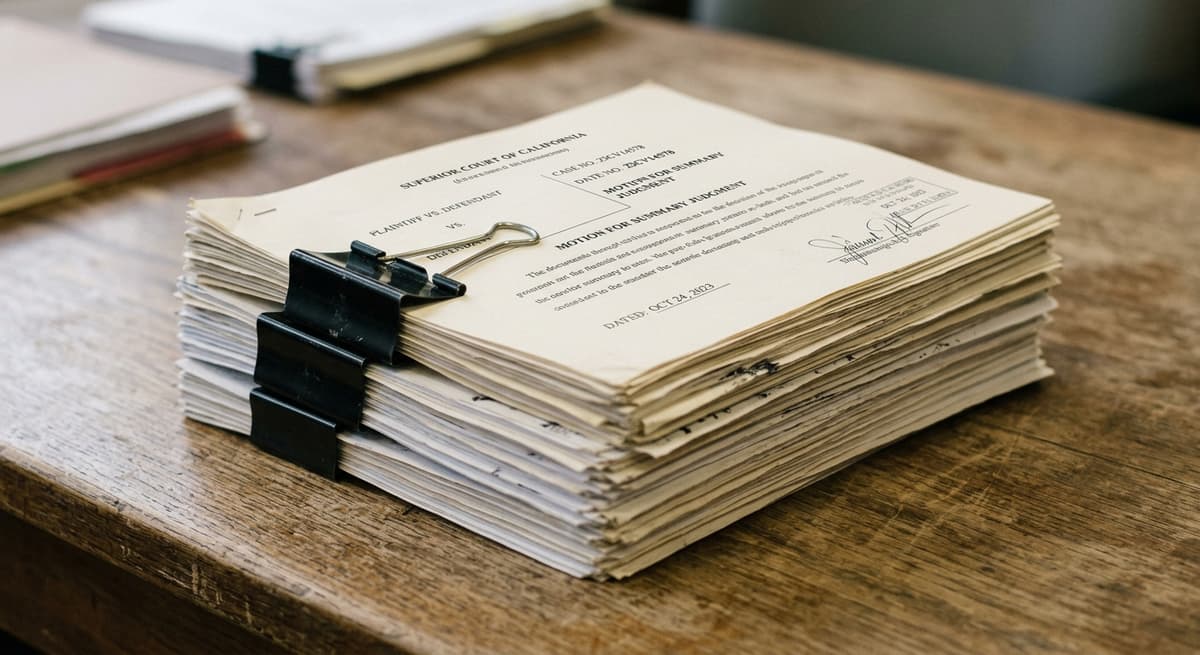
A persistent misconception is that the federal Freedom of Information Act (FOIA), 5 U.S.C. 552, governs access to 911 calls. It does not. Federal FOIA applies only to federal executive-branch agencies. Local PSAPs, county sheriff dispatch centers, and municipal police dispatch centers are not federal agencies. Your right to obtain a 911 recording depends entirely on your state's open-records statute, sometimes called a sunshine law, public-records act, or right-to-know law, and on local agency policy.
Every state has some form of open-records law. The default posture in most states is that government records are public unless a specific statutory exemption applies. For 911 recordings, that default has been chipped away over time. Legislative pressure from privacy advocates, grieving families, and law enforcement has led roughly a dozen states to pass statutes that make 911 audio confidential by default, the opposite of the general presumption.
If you are looking for records held by a true federal agency, such as a recording of a call to a federal law-enforcement tip line, then federal FOIA does apply. But for the overwhelming majority of 911 calls placed in the United States, the request goes to a state or local agency, and state law controls.
The General Rule
In states without a specific 911 exemption, the recording is treated like any other public record. The agency must produce it on request unless a recognized exemption applies, such as the investigatory records exemption or the medical information exemption. Silence in the statute tends to favor disclosure.
In states with a specific 911 exemption, the burden shifts. The agency may refuse to release the audio, and the requester must often satisfy whatever release valve the statute provides. That valve is not the same everywhere. Rhode Island turns on a court order or the caller's written consent (R.I. Gen. Laws sec. 39-21.1-17). Alabama requires a court order finding that the public's right to the recording outweighs the privacy interests involved, and releases the audio without a court order only to the caller whose own voice is on it, or to the legal representative of a deceased or incapacitated caller, on a sworn affidavit (Ala. Code sec. 11-98-12). Mississippi and Missouri offer no consent route at all: Mississippi releases the recording only on a court order or subpoena from a court of competent jurisdiction (Miss. Code sec. 19-5-319(2)), and Missouri only on a valid court order authorizing disclosure upon motion and good cause shown (Mo. Rev. Stat. sec. 610.150). Pennsylvania turns on a public-interest balancing test the agency or a court performs (65 Pa. Stat. sec. 67.708(b)(18)). New York's E911 statute simply limits who may receive the records at all and states no court-order or consent exception (County Law sec. 308(4)). Read the specific statute before assuming a court order is the answer.

State-by-State Access Overview
The table below draws on the Reporters Committee for Freedom of the Press Open Government Guide and state statutes. Where the law is silent or the outcome depends on facts, the table reflects the best-supported general rule. Local agency policy, whether a case is active, and whether the call involved a minor or crime victim can all change the outcome in any state.
| State | General Access to 911 Audio | Notes |
|---|---|---|
| Alabama | Restricted | Court order required unless requester's voice is on the recording (Ala. Code sec. 11-98-12) |
| Alaska | Open | Presumptively disclosable under the Public Records Act |
| Arizona | Open | Available unless government shows a specific interest in withholding |
| Arkansas | Open | Subject to FOIA disclosure; caller subscriber info (name, address, number) is confidential |
| California | Conditional | Audio may be withheld under the law-enforcement investigatory records exemption (Cal. Gov't Code sec. 7923.600); factual details must be disclosed |
| Colorado | Open | Available under the Colorado Open Records Act |
| Connecticut | Conditional | No specific 911 exemption; may be withheld if part of an active criminal investigation |
| Delaware | Conditional | Attorney General has found certain calls exempt based on privacy interests |
| District of Columbia | Conditional | Obtainable via FOIA; privacy and investigatory exemptions may apply |
| Florida | Open | Subject to public inspection unless a specific exemption applies |
| Georgia | Conditional | Restricted where the caller died during the call or the recording contains the voice of someone who was a minor at the time; eligible persons, including a deceased caller's estate representative, may obtain the recording by sworn affidavit (O.C.G.A. sec. 50-18-72(a)(26.1)) |
| Hawaii | Conditional | Confidential if related to family court proceedings |
| Idaho | Open | No express statutory exemption; presumed open |
| Illinois | Open | Generally open under the Freedom of Information Act |
| Indiana | Open | Presumed disclosable; investigatory exception does not apply to non-crime calls |
| Iowa | Open | Generally a public record (Iowa Code sec. 22.1(3)) |
| Kansas | Conditional | Open unless part of an active criminal investigation |
| Kentucky | Conditional | Personal privacy exception applies in some cases |
| Louisiana | Restricted | Treated as a confidential communication; requires consent or court order |
| Maine | Transcript only | Redacted transcripts available; audio is confidential except for good cause (25 M.R.S.A. sec. 2929) |
| Maryland | Open | Public except for medical information (Op. Att'y Gen. 288 (1986)) |
| Massachusetts | Conditional | No specific statute; requests processed case by case through state 911 department |
| Michigan | Open | Agencies cannot arbitrarily deny access; requester entitled to audio, not just transcript |
| Minnesota | Transcript only | Written transcriptions are public; audio released only for specific authorized purposes (Minn. Stat. sec. 13.82, subd. 4) |
| Mississippi | Restricted | Confidential; requires court order or subpoena (Miss. Code sec. 19-5-319(2)) |
| Missouri | Restricted | Inaccessible to the general public without a court order (Mo. Rev. Stat. sec. 610.150) |
| Montana | Open | Presumed open as initial offense/public criminal justice information |
| Nebraska | Conditional | May be withheld as investigatory records |
| Nevada | Open | Presumed open (NRS 179.070(1)) |
| New Hampshire | Conditional | No statute or case law addresses 911 calls specifically; check agency policy |
| New Jersey | Conditional | Public unless privacy interests are shown; family members' expectations of privacy may be protected |
| New Mexico | Open | Available for public inspection (NMSA 1978 sec. 29-10-7(A)(2)) |
| New York | Restricted | E911 call records may go only to the municipality's public safety agency, another government agency or body, or providers of medical, ambulance, crisis or other emergency services; the statute states no court-order or consent exception (County Law sec. 308(4)) |
| North Carolina | Open | Explicitly public (G.S. sec. 132-1.4(c)(4)) |
| North Dakota | Transcript only | Audio exempt from copying; a person may listen in person but may not copy; transcripts available |
| Ohio | Open | Must provide copies; public entitled to audio, not just transcript (State ex rel. Cincinnati Enquirer v. Hamilton Cty.) |
| Oklahoma | Open | Public record (51 O.S. sec. 24A.8(A)(4)) |
| Oregon | Conditional | No specific statute or case law; check agency policy |
| Pennsylvania | Restricted | Exempt, but the 911 exemption does not apply to a recording or transcript where the agency or a court determines the public interest in disclosure outweighs the interest in nondisclosure, though other Right-to-Know Law exemptions such as the criminal investigative records exemption can still be raised (65 Pa. Stat. sec. 67.708(b)(18)); transcripts available through Pennsylvania Emergency Management Agency |
| Rhode Island | Restricted | Confidential; requires written caller consent or court order (R.I. Gen. Laws sec. 39-21.1-17) |
| South Carolina | Conditional | Public unless release would harm agency or involves a dying victim's final statements (S.C. Code sec. 30-4-40(a)) |
| South Dakota | Conditional | Open if "public interest outweighs interest in nondisclosure" (SDCL sec. 1-27-1.5(5)) |
| Tennessee | Open | Generally open, though the legislature has periodically attempted to restrict access |
| Texas | Open | Texas Attorney General guidance has long treated 911 call recordings as public information under the Public Information Act; caller identifying info often protected separately |
| Utah | Open | Presumed public unless exemptions clearly apply |
| Vermont | Conditional | No dedicated 911-audio secrecy statute; requests run through the general Public Records Act exemptions (1 V.S.A. sec. 317(c)(5) crime detection and investigation, sec. 317(c)(7) personal documents). Customer name and address held by the E911 system are separately exempt (30 V.S.A. sec. 7059(c)) |
| Virginia | Open | Noncriminal records presumed open (Va. Code sec. 2.2-3706.E) |
| Washington | Conditional | Available except under investigatory records exemption (RCW 42.56.240(1)) |
| West Virginia | Varies | No specific statutory guidance; check agency policy |
| Wisconsin | Open | Generally subject to inspection; requests must be reasonably limited |
| Wyoming | Restricted | Exempt from disclosure (Wyo. Stat. sec. 16-4-203(d)(x)) |
Access also depends on local agency policy, whether a case is active, and whether the call involved a minor or crime victim. The table reflects the general rule; individual requests may have a different outcome based on specific facts. Where a row cites no statute, treat it as a working summary rather than a settled rule and confirm with the agency or your state's open-records ombudsman before relying on it.
How to Request a 911 Recording
Requesting a 911 recording follows the same basic procedure as any open-records request, with a few important practical considerations.
Step 1: Identify the correct agency. The request goes to the PSAP or law-enforcement agency that received the call, not to a central state office. This might be a county sheriff's office dispatch center, a city police or fire department communications division, or a regional 911 authority. If you do not know which PSAP received the call, the FCC publishes a Master PSAP Registry that lists primary and secondary PSAPs by state, county, and city, and updates it periodically (most recently 25 June 2026). The National Association of State 911 Administrators separately links to each state 911 program where one exists, which is the faster route when you need the state-level office rather than the individual call center.
Step 2: Write a specific request. Submit a written request. Include: the date and approximate time of the call, the address or location associated with the call, the type of incident if known, and any incident or case number the agency may have assigned. The more specific your request, the faster the response and the less likely it is to be returned for clarification. You can draft this letter yourself, or use our FOIA request generator to build one quickly.
Step 3: Request all record types. Consider asking for the audio recording, any written transcript, and the CAD log in a single request. If the audio is withheld, the CAD log and transcript may still be released and can contain the information you need.
Step 4: Note the retention period. Many agencies retain recordings for only 30 to 90 days. File your request as soon as you know the recording exists. Some requester guides recommend including a preservation notice in your request to put the agency on notice that the record must be held even if the routine retention period expires during processing.
Step 5: Follow up and appeal. Most state open-records laws require agencies to respond within a set number of business days, commonly three to ten. If your request is denied, the agency must cite the specific statutory exemption it is relying on. A blanket refusal with no legal basis is itself a violation of most state open-records laws. You can appeal to the state attorney general, an open-records mediator, or a court depending on your state's process.
Common Exemptions and Restrictions
Even in states where 911 recordings are generally public, several categories of exemptions commonly apply.
Active criminal investigation. This is the most frequently cited exemption. In California, Connecticut, Iowa, Kansas, Nebraska, Washington, and many others, a recording may be withheld if it is part of an ongoing criminal investigation. California's version, Cal. Gov't Code sec. 7923.600, covers records of complaints to and investigations conducted by any state or local police agency, along with investigatory files compiled for law-enforcement purposes. This exemption typically expires when the case is closed or the investigation ends, at which point the recording becomes disclosable. Request again after a case closes if you were initially refused on this ground.
Victim privacy. Many state open-records laws contain victim-privacy carve-outs. In states that have adopted Marsy's Law constitutional amendments (including Florida, Georgia, Illinois, Kentucky, Nevada, North Carolina, Ohio, Oklahoma, and Wisconsin), victims may assert a constitutional right to prevent disclosure of information that could be used to locate or harass them. This can apply to 911 audio where a victim describes their location or identity. In Maine and Arkansas, the caller's name, address, and phone number are protected regardless of the overall status of the recording.
Medical information. If the 911 call involved a medical emergency and the audio contains health information about the caller or another person, that content may be withheld under the state's medical-privacy statutes even if the recording is otherwise public.
Minors. Calls involving children as callers or victims receive heightened protection in most states. Georgia's 911 exemption reaches any recording containing the speech or cries of a person who was a minor at the time of the call, not just calls a child placed, though a parent or legal guardian of a minor caller is among the eligible persons who can obtain the recording by sworn affidavit (O.C.G.A. sec. 50-18-72(a)(26.1)). Agencies elsewhere routinely redact or withhold portions that identify or could endanger a child.
Dying declarations. South Carolina may exempt the final statements of a dying victim unless the deceased's next of kin waives the privacy interest (S.C. Code sec. 30-4-40(a)). Calls involving suicide attempts are similarly treated sensitively in many agencies even where no express exemption exists.
Fees
Many agencies charge a fee to produce 911 records. Fees vary significantly by state and agency. Texas and Florida commonly charge processing fees ranging from approximately ten to twenty-five dollars per request to cover duplication and administrative costs. In some states, brief records inspections are free while copying carries a per-page or per-minute charge.
If you believe a fee is excessive, most state open-records laws allow you to challenge fees that go beyond actual reproduction costs. Fee waivers are often available for news media, nonprofit organizations, or requests that serve a clear public-interest purpose; ask for the waiver criteria in writing.
What You Can and Cannot Expect to Receive
Typically releasable: The audio content of the call (the conversation between caller and dispatcher), CAD timestamps and incident codes, the responding unit identifiers, and the general location of the incident.
Typically redacted or withheld: The caller's name, address, and telephone number; the name and contact information of any crime victim; medical information about any person involved; information about minors; and portions of the recording that would disclose confidential informant identities or the tactics of an ongoing investigation.
Not within PSAP control: Text-to-911 messages, Next Generation 911 data such as sensor readings, and recordings held by a different agency (for example, a state police dispatch center for a call that was transferred) may require a separate request to the custodian of those records.
Understanding these limits before you file helps set realistic expectations and allows you to craft a request that asks for everything that is releasable, without triggering a reflexive denial by asking for categories the agency cannot lawfully provide.
Disclaimer: This page provides general legal information about open-records laws and is not legal advice. Access rules vary by state and change with new legislation and court decisions. If you need to obtain specific records for litigation or regulatory purposes, consult an attorney familiar with your state's open-records statutes.
For the specific rules on getting a copy of police body-camera footage, which follows a similar but distinct public-records framework in most states, see police bodycam laws by state.
Frequently Asked Questions
How do I get a copy of a 911 call recording?
Submit a written open-records request to the PSAP or law-enforcement agency that received the call. Include the date, approximate time, location, and incident number if available. Many agencies respond within three to ten business days. File quickly because retention periods can be as short as 30 days at some agencies.
Are 911 calls public record in California?
Generally yes, but California's law-enforcement investigatory records exemption (Cal. Gov't Code sec. 7923.600) allows agencies to withhold the recording while an investigation is active. Factual details such as the time, location, and basic facts of the incident must still be disclosed even if the tape itself is withheld.
Are 911 calls public record in Florida?
Yes. Florida treats 911 recordings as public records subject to inspection unless a specific exemption applies. Caller identifying information may be protected under Florida's victim-privacy provisions. Submit your request to the PSAP or law-enforcement agency that received the call.
Are 911 calls public record in Texas?
Yes. Texas Attorney General guidance has long treated 911 call recordings as public information under the Texas Public Information Act. Caller identifying information, including name and address, is often protected separately. The agency may charge a modest processing fee.
Can I get a 911 transcript instead of the audio?
In many states, yes. Maine and Minnesota specifically allow written transcripts while treating audio as confidential. Other states produce transcripts as a practical alternative when audio release is contested. When requesting records, ask for the audio, transcript, and CAD log all at once so you receive whatever is releasable.
How long are 911 recordings kept?
There is no uniform federal rule. Retention periods vary by state and local agency, ranging from about 30 days at the short end to several years for recordings related to ongoing litigation or serious incidents. If you know a relevant call was made, request the recording as soon as possible and include a preservation notice asking the agency to hold the record during processing.
Can a 911 call recording be withheld because of an active investigation?
Yes, in nearly every state. The investigatory records exemption is the most commonly cited basis for withholding 911 audio. This exemption typically expires once the case is closed. If you were denied on this ground, you can request the recording again after the investigation ends or the case is resolved.
Do I have to give a reason for requesting a 911 call recording?
In most states, no. The default rule under most state open-records laws is that a requester does not need to state a purpose. In states where 911 audio is presumptively restricted, the release mechanism varies: Rhode Island turns on a court order or the caller's written consent, while Alabama requires a court order for anyone other than the caller whose own voice is on the recording. In Pennsylvania the 911 exemption does not apply to a recording or transcript where the agency or a court determines that the public interest in disclosure outweighs the interest in nondisclosure, though other Right-to-Know Law exemptions such as the criminal investigative records exemption can still be raised (65 Pa. Stat. sec. 67.708(b)(18)). Check your state's open-records statute before filing.
Does federal FOIA apply to local 911 calls?
No. Federal FOIA (5 U.S.C. 552) applies only to federal executive-branch agencies. Local PSAPs and dispatch centers are state or local government entities. Your right to access a local 911 recording is governed entirely by your state's open-records or sunshine law, not by federal law.
What if the caller's identity is what I am trying to find?
Caller identifying information (name, address, telephone number) is protected by statute in many states regardless of whether the underlying recording is public. Arkansas, Maine, Texas, and Vermont are among the states that explicitly shield subscriber information; Vermont's exemption sits in 30 V.S.A. sec. 7059(c), which covers customer name and address held by the E911 system. In most other states, agencies routinely redact this information even when releasing the audio. You would typically need a court order to obtain caller identity information.
Updates
Governing law re-checked for recent changes
Corrected the California statute citation (the investigatory-records exemption is Gov't Code sec. 7923.600, not 7923.610) and reclassified Vermont from restricted to conditional after confirming its cited statutes cover E911 customer data rather than call audio. Corrected the description of how restricted states release 911 audio: Alabama, Mississippi and Missouri require a court order and provide no caller-consent route, while Rhode Island accepts a court order or the caller's written consent. Clarified that Pennsylvania's public-interest test removes the 911 exemption but does not override other Right-to-Know Law exemptions, narrowed the Georgia entry to the recordings its statute actually covers and added the sworn-affidavit route for eligible persons, softened the Texas entry to attorney general guidance rather than a single unretrievable 1989 opinion, and replaced a dead Rhode Island statute link.
Independently fact-checked against the cited primary sources
The Law Behind This Article
This article rests on the statutory provisions below, held in our own legal record and retrieved from the official source. Tap a section to read the operative text.
California Government Code
§ 7923.600In forcecited in 2 of our articles
(a) Except as provided in Sections 7924.510, 7924.700, and 7929.610, this division does not require the disclosure of records of complaints to, or investigations conducted by, or records of intelligence information or security procedures of, the office of the Attorney General and the Department of Justice, the Office of Emergency Services and any state or local police agency, or any investigatory or security files compiled by any other state or local police agency, or any investigatory or security files compiled by any other state or local agency for correctional, law enforcement, or licensing purposes. (b) A customer list that an alarm or security company provides to a state or local police agency at the agency’s request is a record subject to this article.
Official text (excerpt) · last checked 2026-07-28 · Read the full text in our law library · Verify at leginfo.legislature.ca.gov
Cited in 11 court opinions in our collectionLatest citing opinion in our collection: 2026
Opinions citing this section in our collection:
- City of Fresno v. Superior Court (California Court of Appeal 2026)“…stigatory records exemption set forth in subdivision (a) of Government Code section 7923.600, and subdivision (b) of Government Code…”
- First Amendment Coalition v. Super. Ct. (California Court of Appeal 2023)“…sure exemptions codified in the CPRA, with the exception of Government Code section 7923.600, which section 832.7(b)(1) expressly ov…”
- City of Vallejo v. Super. Ct. (California Court of Appeal 2025)“…quirement of disclosure. (Gov. Code, § 6254, subd. (f) [now Gov. Code, §§ 7923.600–7923.630]. . . .)” (Becerra, supra, 44…”
Identified automatically from the court opinions citing this section — not a ranking of which case controls.
Also relied on in: How to Get a Police Report in California (2026): Crash & Incident Reports
Connecticut General Statutes, Title 01 (Provisions of General Application), Chapter 14
§ 1-210(Formerly Sec. 1-19). Access to public records. Exempt records.In forcecited in 4 of our articles
(a) Except as otherwise provided by any federal law or state statute, all records maintained or kept on file by any public agency, whether or not such records are required by any law or by any rule or regulation, shall be public records and every person shall have the right to (1) inspect such records promptly during regular office or business hours, (2) copy such records in accordance with subsection (g) of section 1-212, or (3) receive a copy of such records in accordance with section 1-212. Any agency rule or regulation, or part thereof, that conflicts with the provisions of this subsection or diminishes or curtails in any way the rights granted by this subsection shall be void. Each such agency shall keep and maintain all public records in its custody at its regular office or place of business in an accessible place and, if there is no such office or place of business, the public records pertaining to such agency shall be kept in the office of the clerk of the political subdivision in which such public agency is located or of the Secretary of the State, as the case may be.
Official text (excerpt) · last checked 2026-09-02 · Read the full text in our law library · Verify at cga.ct.gov
Cited in 107 court opinions in our collectionLatest citing opinion in our collection: 2024
In the courts (editorial summary, independently checked):Comm'r of Emergency Servs. & Pub. Prot. v. Freedom of Info. Comm'n (2018) held 1-210(a)'s clause for records confidential under another statute must be read narrowly, and that the search and seizure statutes create no exemption; Department of Public Safety v. FOIC (2010) applied the clause to Megan's Law.
Opinions citing this section in our collection:
- Department of Public Safety v. Freedom of Information Commission (Supreme Court of Connecticut 2010, 298 Conn. 703)✓A reporter sought court records on 41 sex offenders whose registry information a court had restricted; the court held section 1-210(a)'s access right yields where another state statute provides otherwise, and section 54-258(a)(4) stripped that information of public record status.
- Comm'r of Emergency Servs. & Pub. Prot. v. Freedom of Info. Comm'n (Supreme Court of Connecticut 2018, 330 Conn. 372)✓A newspaper sought documents seized from the Sandy Hook shooter and cited in the state police report; the court held the search and seizure statutes impose no confidentiality and so are not a statute that otherwise provides under section 1-210(a), leaving the records disclosable.
- Rocque v. Freedom of Information Commission (Supreme Court of Connecticut 2001, 255 Conn. 651)✓A newspaper sought records of a state agency's sexual harassment investigation; applying section 1-210(b)(2), the court held the complainant's identity and the sexually explicit portions were exempt, but rejected a rule treating such material as always exempt.
Identified automatically from the court opinions citing this section — not a ranking of which case controls.
Also relied on in: Connecticut Police Body Camera Laws: Rules & Public Access (2026), How to Get a Police Report in Connecticut (2026): Crash & Incident Reports, Connecticut Freedom of Information Act: Requests and FOI Commission Appeals
New York County Law
§ 308Miscellaneous provisionsIn force
Miscellaneous provisions. 1. At least one public service answering point within and serving the 911 service area of a municipality which has enacted a local law or resolution pursuant to the provisions of this article shall be operated on a twenty-four hour basis. 2. The board may also apply for and accept federal monies and may accept contributions and donations from any source for the purpose of funding an E911 emergency telephone system. 3. Nothing contained in this article shall require the imposition of a surcharge by a municipality which has established or plans to establish an E911 system to serve such municipality nor preclude other means of funding all or part of an E911 system nor require the operation or establishment of such system by any municipality. 4.
Official text (excerpt) · last checked 2026-07-29 · Read the full text in our law library · Verify at legislation.nysenate.gov
Vermont Statutes Annotated, Title 1: General Provisions, Chapter 5: Common Law; General Rights, Subchapter: ACCESS TO PUBLIC RECORDS
§ 317Definitions; public agency; public records and documents; exemptionsIn forcecited in 4 of our articles
(a) As used in this subchapter: (1) “Business day” means a day that a public agency is open to provide services. (2) “Public agency” or “agency” means any agency, board, department, commission, committee, branch, instrumentality, or authority of the State or any agency, board, committee, department, branch, instrumentality, commission, or authority of any political subdivision of the State. (b) As used in this subchapter, “public record” or “public document” means any written or recorded information, regardless of physical form or characteristics, which is produced or acquired in the course of public agency business. Individual salaries and benefits of and salary schedules relating to elected or appointed officials and employees of public agencies shall not be exempt from public inspection and copying. (c) The following public records are exempt from public inspection and copying: (1) Records that by law are designated confidential or by a similar term. (2) Records that by law may only be disclosed to specifically designated persons.
Official text (excerpt) · last checked 2026-09-02 · Read the full text in our law library · Verify at legislature.vermont.gov
Cited in 113 court opinions in our collectionLatest citing opinion in our collection: 2026
In the courts (editorial summary, independently checked):Trombley v. Bellows Falls Union High School District No. 27 (1993) limited 1 V.S.A. 317's personal-documents exemption to records revealing intimate details, wherever filed; Wesco, Inc. v. Sorrell (2004) read the litigation exemption to reach records relevant, not just discoverable, in pending litigation.
Opinions citing this section in our collection:
- Wesco, Inc. v. Sorrell (Supreme Court of Vermont 2004, 177 Vt. 287)✓Gas station operators facing state criminal and environmental cases filed records requests for documents denied them in discovery; the court held section 317(c)(14) exempts records relevant to pending litigation, a wider class than discoverable ones, until that litigation ends.
- Trombley v. Bellows Falls Union High School District No. 27 (Supreme Court of Vermont 1993, 160 Vt. 101)✓Town residents sought a teachers' grievance and the school board's decision on it; the court read section 317(b)(7) to shield only genuinely personal documents wherever filed, found the board had not met its burden, and remanded for in camera review.
- Springfield Terminal Railway Co. v. Agency of Transportation (Supreme Court of Vermont 2002, 174 Vt. 341)✓A losing bidder for state rail freight service sought competitors' financial data submitted with their proposals; the court held section 317(c)(9) can exempt internal corporate financial information as a compilation of information, and voluntary submission waives no protection.
Identified automatically from the court opinions citing this section — not a ranking of which case controls.
Also relied on in: Vermont Police Body Camera Laws: Mandate & Access, Vermont Public Records Act: How to Request Records (2026), Vermont Police Report: How to Get a Crash Report, Incident Report, or Body Camera Video
Vermont Statutes Annotated, Title 30: Public Service, Chapter 87: Enhanced 911; Emergency Services
§ 7059Confidentiality of system informationIn force
(a)(1) A person shall not access, use, or disclose to any other person any individually identifiable information contained in the system database created under subdivision 7053(a)(4) of this title, including any customer or user ALI or ANI information, except in accordance with rules adopted by the Board and for the purpose of: (A) responding to emergency calls; (B) system maintenance and quality control under the direction of the Director; (C) investigation, by law enforcement personnel, of false or intentionally misleading reports of incidents requiring emergency services; (D) assisting in the implementation of a statewide emergency notification system; (E) provision of emergency dispatch services by public safety answering points in other states that are under contract with local law enforcement and emergency response organizations; or (F) coordinating with state and local service providers for the provision of emergency dispatch services that serve individuals with a disability, elders, and other populations with special needs.
Official text (excerpt) · last checked 2026-08-01 · Read the full text in our law library · Verify at legislature.vermont.gov
Revised Code of Washington
§ 42.56.240Investigative, law enforcement, and crime victims.In forcecited in 12 of our articles
The following investigative, law enforcement, and crime victim information is exempt from public inspection and copying under this chapter: (1) Specific intelligence information and specific investigative records compiled by investigative, law enforcement, and penology agencies, and state agencies vested with the responsibility to discipline members of any profession, the nondisclosure of which is essential to effective law enforcement or for the protection of any person's right to privacy; (2) Information revealing the identity of persons who are witnesses to or victims of crime or who file complaints with investigative, law enforcement, or penology agencies, other than the commission, if disclosure would endanger any person's life, physical safety, or property. If at the time a complaint is filed the complainant, victim, or witness indicates a desire for disclosure or nondisclosure, such desire shall govern.
Official text (excerpt) · last checked 2026-09-02 · Read the full text in our law library · Verify at app.leg.wa.gov
Cited in 81 court opinions in our collectionLatest citing opinion in our collection: 2025
In the courts (editorial summary, independently checked):Sargent v. Seattle Police Dept. (2013) held the effective law enforcement exemption in RCW 42.56.240(1) is not categorical once a case goes to a prosecutor, nor for internal investigation files; the agency must justify each withheld record. Bainbridge Island Police Guild v. City of Puyallup (2011) exempted only an officer's identity.
Opinions citing this section in our collection:
- Bainbridge Island Police Guild v. City of Puyallup (Washington Supreme Court 2011, 172 Wash. 2d 398)✓Police reports on an unsubstantiated sexual misconduct claim against an officer were withheld in full; the court held Section 42.56.240(1) exempts only the officer's identity, since its privacy analysis is the same, and ordered the rest produced with his name redacted.
- BAINBRIDGE POLICE GUILD v. City of Puyallup (Washington Supreme Court 2011, 259 P.3d 190)✓Police reports on an unsubstantiated sexual misconduct claim against an officer were withheld in full; the court held Section 42.56.240(1) exempts only the officer's identity, since its privacy analysis is the same, and ordered the rest produced with his name redacted.
- Sargent v. Seattle Police Dept. (Washington Supreme Court 2013, 179 Wash. 2d 376)✓Seattle police withheld criminal and internal affairs files from a man arrested after a scuffle with an off-duty officer; the court held Section 42.56.240(1) stops applying categorically once a case reaches a prosecutor and never applies categorically to internal investigations.
Identified automatically from the court opinions citing this section — not a ranking of which case controls.
Also relied on in: Washington Laws on Recording Police: Your Rights and Legal Limits (2026), Washington Police Body Camera Laws: Mandate & Access, Washington Public Records Act: Requests, Fees, and Body Camera Video (2026)
United States Code Title 5
§ 552Public information; agency rules, opinions, orders, records, and proceedingsIn forcecited in 38 of our articles
Each agency shall make available to the public information as follows: Each agency shall separately state and currently publish in the Federal Register for the guidance of the public— descriptions of its central and field organization and the established places at which, the employees (and in the case of a uniformed service, the members) from whom, and the methods whereby, the public may obtain information, make submittals or requests, or obtain decisions; statements of the general course and method by which its functions are channeled and determined, including the nature and requirements of all formal and informal procedures available; rules of procedure, descriptions of forms available or the places at which forms may be obtained, and instructions as to the scope and contents of all papers, reports, or examinations; substantive rules of general applicability adopted as authorized by law, and statements of general policy or interpretations of general applicability formulated and adopted by the agency; and each amendment, revision, or repeal of the foregoing.
Official text (excerpt) · last checked 2026-09-02 · Read the full text in our law library · Verify at uscode.house.gov
Cited in 11,434 court opinions in our collectionLatest citing opinion in our collection: 2026
In the courts (editorial summary, independently checked):United States Department of Justice v. Reporters Committee for Freedom of the Press (1989) held categorically that releasing a private citizen's FBI rap sheet to a third party is an unwarranted privacy invasion under Exemption 7(C). Consumer Product Safety Commission v. GTE Sylvania, Inc. (1980) applied Exemption 3, 552(b)(3).
Opinions citing this section in our collection:
- Alyeska Pipeline Service Co. v. Wilderness Society (Supreme Court of the United States 1975, 421 U.S. 240)“…Pub. L. 93-502, § 1 (b) (2), 88 Stat. 1561 (amending 5 U. S. C. § 552 (a)); Packers and Stockyards Act, 42…”
- Consumer Product Safety Commission v. GTE Sylvania, Inc. (Supreme Court of the United States 1980, 447 U.S. 102)✓Consumer groups filed FOIA requests for accident reports manufacturers had given the CPSC as confidential; the Court held that the Consumer Product Safety Act's section 6(b)(1) applies to FOIA requests and that its standards fall within Exemption 3, 5 U.S.C. § 552(b)(3).
- Taylor v. Sturgell (Supreme Court of the United States 2008, 553 U.S. 880)✓An aircraft enthusiast made a FOIA request for FAA records after a friend's identical suit failed; the Court disapproved preclusion by 'virtual representation' and read § 552(a)(3)(A) as directing agencies to release records to the requesting person, not the public at large.
Identified automatically from the court opinions citing this section — not a ranking of which case controls.
Also relied on in: Public Records Laws by State: FOIA Guide for All 50 States (2026), How to File a FOIA Request (Step by Step, 2026), Virginia Freedom of Information Act: Who Can Request and How (2026)
Search our full record of US law — 2.1 million sections, every state + federal →
Sources and References
- RCFP Open Government Guide: 911 Tapes - state-by-state access rules(rcfp.org)
- Alabama Code sec. 11-98-12 - 911 audio released only by court order, or to the caller whose own voice is recorded(al911.gov).gov
- California Government Code sec. 7923.600 - law enforcement investigatory records exemption(leginfo.legislature.ca.gov).gov
- Colorado Open Records Act - PSAP records request(publicsafety.colorado.gov).gov
- Connecticut General Statutes sec. 1-210(b)(3) - law enforcement records exemption(cga.ct.gov).gov
- New York County Law sec. 308(4) - who may receive E911 call records(nysenate.gov).gov
- Pennsylvania Right-to-Know Law, 65 P.S. sec. 67.708(b)(18) - 911 recordings exemption and public-interest balancing test(legis.state.pa.us).gov
- Pennsylvania Emergency Management Agency - Request a 911 Transcript(pa.gov).gov
- Rhode Island General Laws sec. 39-21.1-17 - 911 recordings confidential absent written caller consent or court order(webserver.rilegislature.gov).gov
- 30 V.S.A. sec. 7059 - Vermont E911 customer name and address exempt from disclosure(legislature.vermont.gov).gov
- 1 V.S.A. sec. 317(c) - Vermont Public Records Act exemptions, including crime detection and investigation records(legislature.vermont.gov).gov
- Vermont Enhanced 911 Board - Public Records Requests and Statewide Database(e911.vermont.gov).gov
- FCC 911 Master PSAP Registry - locate the PSAP for any area (updated 25 June 2026)(fcc.gov).gov
- National 911 Program - Computer-Aided Dispatch interoperability and records(911.gov).gov
- ProPublica: Going Quiet - states restricting 911 recording access(propublica.org)
- RCFP (2010): State proposals to limit access to 911 calls - historical background on then-proposed restriction bills(rcfp.org)
- NASNA State 911 Contacts - links to each state 911 program(nasna911.org)
- FOIAfile: How to Request 911 Call Recordings and Dispatch Logs(foiafile.com)