
Germany
German Law Explained: Codes, Courts and Key Rules (2026)
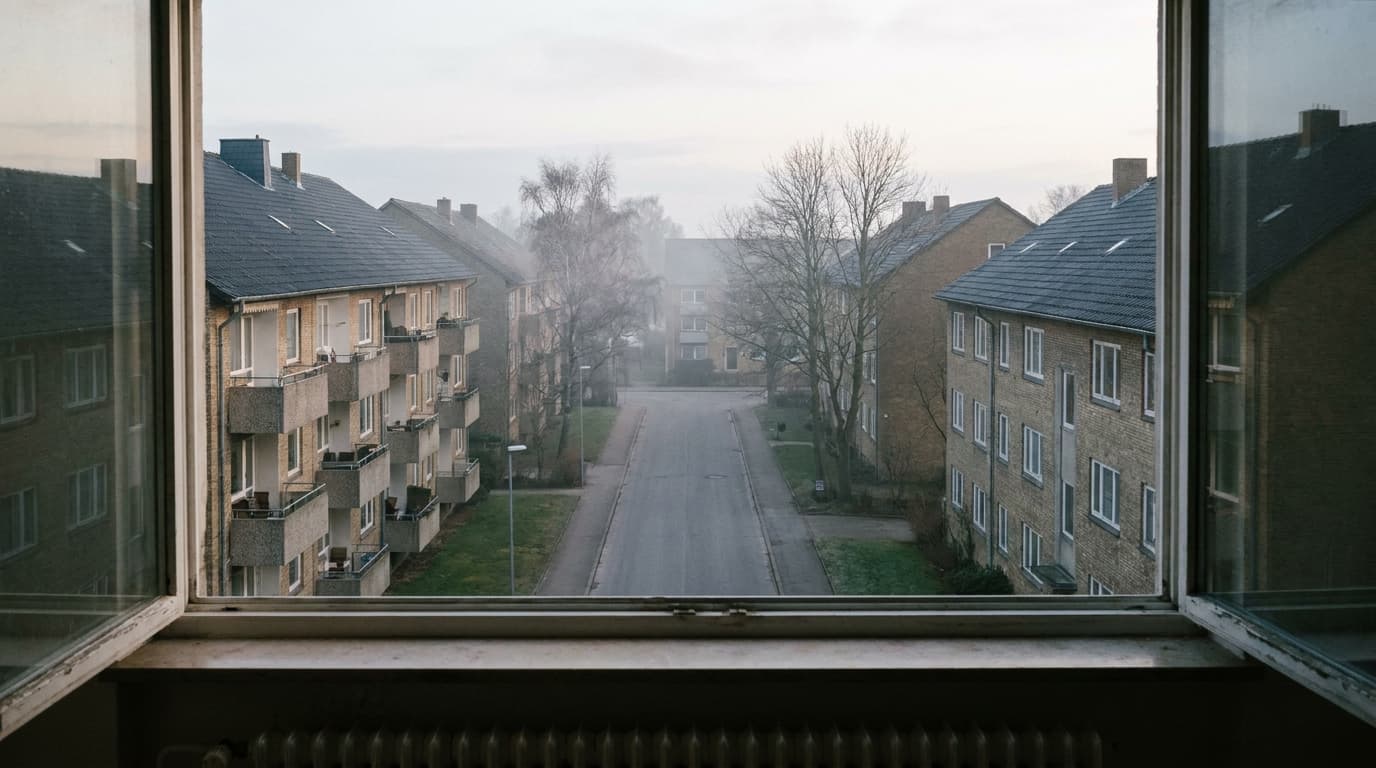
German law asks a reader coming from the United States, the United Kingdom, Canada or Australia to unlearn two habits at once. The rules do not live in decided cases, they live in numbered paragraphs of written codes. And they are almost never state law. Where an American question begins with "which state am I in," the German equivalent usually has no state dimension at all.
That second point saves an enormous amount of time. Germany has 16 Bundesländer, but employment, tenancy, family, inheritance, consumer, debt, defamation, recording and most of criminal law are federal, and they read the same in Hamburg as in Munich.
Information last verified on 19 July 2026. This page provides general legal information and does not constitute legal advice in an individual case.
Codes, not case law
German law belongs to the Roman-Germanic civil-law family. The legislature writes comprehensive codes intended to cover a whole field, and a dispute is resolved by working out which section applies and what it means.
This is not the same as saying court decisions do not matter. They matter a great deal. The rulings of the highest federal courts are followed consistently by the courts beneath them, and a Bundesgerichtshof decision can change practice across the country overnight. What differs is the mechanism. A German court is interpreting a written provision, not extending a line of precedent that exists independently of any statute.
The practical effect for a reader is that you can almost always find the actual rule yourself, in the actual words, for free. That is unusual and worth using.
The codes you will meet most often
A handful of codes carry nearly every topic an ordinary person searches for.
The Bürgerliches Gesetzbuch (BGB) is the civil code and by far the largest presence. It holds employment contracts and notice periods, residential tenancy, family law, inheritance, consumer sales and gifts. When a German page cites a bare § number with no code named, it is usually the BGB.
The Strafgesetzbuch (StGB) is the criminal code. It carries the offences this site follows most closely, including the rules on recording someone without consent and the three separate offences that make up German defamation law.
Road rules split across the Straßenverkehrs-Ordnung (StVO) for conduct, the Straßenverkehrsgesetz (StVG) for licensing and the points system, and the Bußgeldkatalog-Verordnung (BKatV), which is the national schedule of fines. That last one is federal and uniform, which is why a German fine amount does not depend on where you were stopped.
Beyond those, the Kündigungsschutzgesetz governs protection against dismissal, the Erbschaftsteuer- und Schenkungsteuergesetz governs inheritance and gift tax, the Zivilprozessordnung governs civil procedure including wage garnishment, and the Bundesdatenschutzgesetz sits alongside the GDPR for data protection.
Federal law, not sixteen versions of it
The single most useful thing to understand about German law is how little of it varies by Land.
Notice periods, dismissal protection, holiday entitlement, sick pay, deposit limits, rent-increase caps, divorce procedure, child maintenance, forced heirship, warranty rights, withdrawal rights and the fines catalogue are all federal. One answer covers the whole country.
Where the Länder do act, it tends to be at the edges of daily life rather than the centre. Two of those edges matter enough to be worth naming.
Dangerous-dog law is genuinely per-Land, and the rules do not even take the same shape. Some Länder work from a list of breeds treated as dangerous, with permit, muzzle and insurance requirements attached. Others, including Niedersachsen and Schleswig-Holstein, have abolished their breed lists entirely and assess the individual animal's behaviour instead. Some legislate by statute, others by ordinance. A dog that is unremarkable in one Land can be a listed breed in the next.
Boundary distances are also mostly per-Land. Most Länder have their own Nachbarrechtsgesetz setting how far from a neighbour's boundary a hedge or tree may be planted and how tall it may grow, and those distances are not the same across the country. Bavaria covers the same ground inside its Ausführungsgesetz zum BGB rather than a standalone statute, and a small number of Länder, among them Hamburg and Mecklenburg-Vorpommern, have no dedicated neighbour-law statute at all and fall back on the general civil-law rules.
Beyond those, policing, schools and building regulation are Land matters, and local authorities set things like quiet hours in municipal ordinances. Enforcement is frequently local even where the rule is federal: a speeding fine comes from a municipal Bußgeldstelle, but the amount comes from the federal catalogue.
Which court hears what
Germany does not have one court hierarchy. It has five, each with its own federal supreme court, and picking the wrong one is a common mistake in translated content.
For everyday civil and criminal matters, the route runs Amtsgericht (local court) to Landgericht (regional court) to Oberlandesgericht (higher regional court) to the Bundesgerichtshof in Karlsruhe. The Amtsgericht is where smaller civil claims, tenancy disputes, probate and the order-for-payment procedure sit.
Family matters do not have their own building. The Familiengericht is a division of the Amtsgericht, and it handles divorce, maintenance, custody and contact.
Employment is separate from the start. A dispute involving an ordinary private-sector employee begins at an Arbeitsgericht, appeals to a Landesarbeitsgericht, and ends at the Bundesarbeitsgericht in Erfurt. A dismissal claim by such an employee never goes to an ordinary civil court. Civil servants are the exception: a Beamter holds a public-law appointment rather than a contract of employment, so disputes with their employing authority go to the administrative courts instead.
Above all of it, the Bundesverfassungsgericht in Karlsruhe rules on constitutional questions under the Grundgesetz. It is not an appeal court in the ordinary sense; it decides whether a law or a decision is compatible with constitutional rights.
Two other bodies come up constantly even though neither is a court in the usual sense. The Oberlandesgericht Düsseldorf publishes the Düsseldorfer Tabelle, the national benchmark for child maintenance. The Kraftfahrt-Bundesamt in Flensburg runs the driving-fitness register, which is why Germans talk about collecting points in Flensburg.
How to read a German citation
German legal references are dense but completely systematic, and five minutes spent on the notation pays for itself.
The section sign § means a numbered section, and §§ marks a range. Abs. is Absatz, a subsection. Nr. is Nummer, a numbered item within a subsection. S. is Satz, an individual sentence.
So § 573c Abs. 2 BGB is section 573c, subsection 2, of the civil code, and it can be read in about thirty seconds.
EU law breaks the pattern. European regulations are cited by article, so the GDPR right of access is Art. 15 DSGVO, never a § reference. DSGVO is simply the German abbreviation for the GDPR.
Court decisions are cited by court, date and file number, as in BGH, Urteil v. 15.05.2018 - VI ZR 233/17. That file number, the Aktenzeichen, is the reliable way to find a ruling, because German decisions are not named after the parties the way common-law cases are.
One convention is worth stating plainly, because it is where translated content usually goes wrong: a German statutory citation is never translated or Anglicised. It is § 622 BGB in English text as much as in German text.
Where the official law actually lives
Germany publishes its consolidated statute law free of charge, which puts primary sources within reach in a way many countries do not.
gesetze-im-internet.de is run for the Federal Ministry of Justice and carries the consolidated text of essentially every federal statute. It also has stable per-section URLs, so an individual provision can be linked directly rather than buried inside a whole Act.
For material beyond the statute text, the federal ministries publish plain-language explainers, the three federal courts named above publish their own press releases for significant rulings, and the data-protection regulator publishes guidance for the GDPR and its German companion legislation.
A note of caution about everything else. The German legal-information search results are dominated by commercial content networks funded by advertising and lawyer-referral funnels. Some are accurate, many reproduce figures that stopped being correct years ago, and several publish maintenance and fine tables that do not match the official versions. When a number matters, it is worth reaching the ministry, the court or the statute itself.
The values that change on a schedule
A distinctive feature of German law is that several of the most-searched figures move on a fixed annual calendar rather than whenever a reform happens. Anything written about them carries an expiry date.
Each January, the statutory minimum wage can change, and the Minijob earnings ceiling moves with it automatically, because the ceiling is calculated from the minimum wage rather than set separately. For 2026 the minimum wage is 13.90 euro per hour and the Minijob ceiling is 603 euro per month, up from 12.82 euro and 556 euro in 2025.
Also each January, the Oberlandesgericht Düsseldorf reissues the Düsseldorfer Tabelle, which sets the benchmark amounts for child maintenance across income bands and age groups.
Each July, the garnishment thresholds under the code of civil procedure are adjusted, changing how much of a salary is protected from creditors.
On top of that sit the genuine reforms, and the past two years have produced several: cannabis possession rules, changes to knife-carrying offences, an extension of the rent brake, and a run of court decisions on credit-scoring records.
The practical implication is simple. A German legal figure without a date attached to it is not much use, and a page that has not been rechecked since the last January or July may be quietly wrong.
Where to start by topic
The German sections of this site are organised by the situation a reader is actually in rather than by which code the rule happens to live in.
Employment law is the deepest section so far. It covers the rules that decide what happens when a job starts, changes or ends: notice periods under § 622 BGB and the asymmetry that lets an employer owe up to seven months while an employee always owes four weeks, dismissal and the three week deadline that quietly decides most cases, severance and why there is no general right to it, termination agreements and the unemployment benefit trap inside them, the Arbeitszeugnis and the grading code hidden in its wording, plus Minijobs, the minimum wage, holiday, sick leave, overtime and parental leave. Two calculators sit inside that section, one for notice periods and one for severance benchmarks.
Traffic law is the second full section. The fine catalogue is federal, so the same figures apply in every Bundesland, which is why the Bußgeldkatalog page can carry a national calculator. It also covers the points system in Flensburg, driving bans versus losing the licence outright, being caught by a speed camera, the alcohol limits and the separate THC limit, the MPU, Unfallflucht, phone use at the wheel, challenging a fine and e-scooters.
Family law covers separation, divorce and what follows. The Düsseldorfer Tabelle is reproduced in full with a calculator, alongside the statutory framework behind it, spousal maintenance, how a divorce actually runs and what it costs, Zugewinnausgleich, custody and contact rights. Three features surprise most readers arriving from a common law country: the compulsory separation year before a divorce, the automatic splitting of pension rights, and the fact that German marriage does not pool assets at all.
Inheritance law is the section where the structural gap with common law countries is widest. German succession is Universalsukzession: under § 1922 BGB the estate passes to the heirs automatically on death, as a whole and including the debts, with no probate court administering it first. That is why the six week window to disclaim is the most urgent deadline in the whole area. The section also covers inheritance and gift tax with a calculator, lifetime giving and the ten year rule, writing a valid will where a typed and witnessed document is simply void, who inherits without one, and the Pflichtteil, which limits how far a will can disinherit a child.
Tenancy law is where most residents meet German law first, and it is far more tenant protective than the anglophone norm. A landlord needs a statutory ground to end a tenancy at all, so the section covers how a tenancy actually ends and the asymmetric notice periods in § 573c BGB, Eigenbedarf, the Räumungsklage, rent increases and the Mietpreisbremse, the deposit, the service charge statement, Mietminderung, Schönheitsreparaturen and subletting.
Debt and insolvency starts from one fact that reorients almost every reader: a creditor cannot take anything without a court title first, and a collection agency's letter is not one. The section covers collection agencies, the Mahnverfahren, wage garnishment with a Pfändungsrechner, SCHUFA entries and their deletion and the three year route out through personal insolvency.
Consumer law separates two rights people constantly merge: Gewährleistung, the seller's statutory liability for defective goods, and the 14 day Widerrufsrecht, which exists only for distance and off premises contracts and not at all for a purchase in a shop. It also covers the filesharing Abmahnung, a letter that arrives without warning and whose enclosed Unterlassungserklärung outlasts the sum demanded.
Criminal law and citizen rights covers the parts an ordinary resident meets: the Führungszeugnis and the § 32 Abs. 2 BZRG rule that keeps a single modest conviction off it entirely, filing a Strafanzeige and the three month Strafantrag deadline that closes the criminal route when missed, Notwehr, the Waffenschein and kleiner Waffenschein, knife law after the 2024 Sicherheitspaket and the Konsumcannabisgesetz.
Neighbour law is one of only two areas where German law genuinely varies by Bundesland, so it carries a sixteen row comparison table of the Grenzabstand rules. It covers quiet hours, where the widely repeated claim that 22:00 to 06:00 is a national rule turns out to be wrong, noise disturbance and hedges and boundary distances.
Dog law is the other genuinely regional area. The federal layer bans importing four breeds, but whether a dog counts as dangerous where you live is a Land question, and moving house can change its status overnight. See dangerous dog breeds by Bundesland and leash requirements.
Germany and this site
Recording Law follows recording, surveillance, privacy and defamation law closely, and Germany is a substantial jurisdiction in all four.
Secret recording of a private conversation is a criminal offence under the Strafgesetzbuch rather than a civil matter, which puts Germany firmly in the all-party-consent camp and makes it stricter than most of the United States. The German recording and surveillance cluster covers it in depth: recording a conversation and a phone call under § 201 StGB, whether a secret recording can be used as evidence, which is a separate question from whether making it was a crime, dashcams, monitoring at work, a neighbour pointing a camera at your property and photographing a person without consent. See also the country overview in Germany recording laws.
Defamation is also criminal, and unusually it is split into three distinct offences depending on whether the statement is an insult, an unproven allegation, or one the speaker knew to be false. That structure is covered in the German defamation cluster: Beleidigung under § 185 StGB, üble Nachrede under § 186 StGB, whose burden structure has no close common law equivalent, and Verleumdung under § 187 StGB. See also the country overview in Germany defamation laws.
On data protection, Germany applies the GDPR alongside its own federal act. Enforcement is split by the type of organisation rather than genuinely shared: the federal regulator covers federal public bodies together with telecoms and postal providers, while the Land supervisory authorities cover virtually the whole private sector along with Land and municipal bodies. There are seventeen of those for sixteen Länder, because Bavaria runs a separate one for the private sector. For most German businesses the only relevant regulator is the authority of the Land they are based in. The German data protection cluster works through which authority is competent and how a complaint works, the Art. 15 right of access, when a Datenschutzbeauftragter is required and the Auftragsverarbeitungsvertrag. See also Germany data privacy laws, and for the European layer, EU data privacy laws, what GDPR is and GDPR subject access requests.
Frequently Asked Questions
Is German law the same in every Bundesland?
For most everyday topics, yes. Employment, tenancy, family, inheritance, consumer, debt, defamation, recording and most criminal law are federal and identical across all 16 Bundesländer. The genuine exceptions are dangerous-dog rules and boundary distances for hedges and trees. Most Länder legislate those for themselves, though Bavaria places its boundary rules inside its Ausführungsgesetz zum BGB and a few, including Hamburg and Mecklenburg-Vorpommern, have no dedicated neighbour-law statute and fall back on general civil law. Locally set matters such as quiet hours vary as well, and enforcement can be local even where the rule itself is federal.
What does the § symbol mean in German law?
It marks a numbered section of a statute, and §§ marks a range of them. A full citation such as § 573c Abs. 2 BGB gives the section, the subsection (Absatz) and the code. Nr. refers to a numbered item and S. to a specific sentence. EU legislation is the exception and is cited by article instead, for example Art. 15 DSGVO for the GDPR right of access.
Where can I read German statutes for free?
The Federal Ministry of Justice publishes consolidated federal statute law at gesetze-im-internet.de at no cost, with stable links to individual sections. Federal ministries publish plain-language explainers on their own sites, and the Bundesgerichtshof, Bundesverfassungsgericht and Bundesarbeitsgericht publish press releases for significant rulings.
Which court would hear my case in Germany?
It depends on the subject. An employment dispute involving a private-sector employee, including a dismissal claim, starts at an Arbeitsgericht rather than an ordinary civil court, with appeals to the Landesarbeitsgericht and then the Bundesarbeitsgericht. Civil servants are the exception and go to the administrative courts, because a Beamter holds a public-law appointment rather than a contract of employment. Divorce, maintenance, custody and contact go to the Familiengericht, which is a division of the Amtsgericht. Smaller civil claims, tenancy disputes and probate also sit at the Amtsgericht, with appeals running to the Landgericht, then the Oberlandesgericht, then the Bundesgerichtshof.
Does case law matter in a civil-law system like Germany's?
Yes, though it works differently. German courts interpret written statutory provisions rather than building rules from precedent, and decisions are not formally binding on later courts in the common-law sense. In practice the rulings of the federal supreme courts are followed consistently, so a Bundesgerichtshof or Bundesarbeitsgericht decision can change how a provision operates across the country.
Why do German legal figures change every January and July?
Several are indexed on a fixed statutory calendar rather than revised only when a reform passes. The minimum wage can change each January, and the Minijob earnings ceiling moves with it automatically because it is calculated from the minimum wage. The Düsseldorfer Tabelle for child maintenance is reissued each January, and garnishment thresholds are adjusted each July. Any figure quoted without a date should be treated with caution.
Is secretly recording a conversation illegal in Germany?
Recording the non-public spoken word of another person without their consent is a criminal offence under the Strafgesetzbuch, not merely a civil wrong, which places Germany among the stricter jurisdictions and well beyond the one-party-consent rule familiar from much of the United States. The scope, the penalties and the narrow exceptions are covered on our dedicated Germany recording laws page.
Sources and References
- Bürgerliches Gesetzbuch (BGB), consolidated text(gesetze-im-internet.de).gov
- Strafgesetzbuch (StGB), consolidated text(gesetze-im-internet.de).gov
- Grundgesetz für die Bundesrepublik Deutschland(gesetze-im-internet.de).gov
- § 622 BGB, Kündigungsfristen bei Arbeitsverhältnissen(gesetze-im-internet.de).gov
- § 201 StGB, Verletzung der Vertraulichkeit des Wortes(gesetze-im-internet.de).gov
- Bundesministerium der Justiz und für Verbraucherschutz, Gesetze im Internet portal(gesetze-im-internet.de).gov
- Bundesverfassungsgericht, the Federal Constitutional Court(bundesverfassungsgericht.de).gov
- Bundesgerichtshof, the Federal Court of Justice(bundesgerichtshof.de).gov
- Bundesarbeitsgericht, the Federal Labour Court(bundesarbeitsgericht.de).gov
- Minijob-Zentrale, official guidance on the Verdienstgrenze(minijob-zentrale.de).gov
- BMAS press release, Mindestlohn from 1 January 2026(bmas.de).gov
- OLG Düsseldorf, Düsseldorfer Tabelle (Stand 01.01.2026)(olg-duesseldorf.nrw.de).gov
- Kraftfahrt-Bundesamt, Fahreignungs-Bewertungssystem(kba.de).gov
- Bundesbeauftragte für den Datenschutz und die Informationsfreiheit (BfDI)(bfdi.bund.de).gov