
Germany
Leinenpflicht in Germany: Where Dogs Must Be on a Lead, and the Strict Liability Rule Behind It
Independently fact-checked against primary sources (last audited July 20, 2026). · 13 primary sources cited on this page. How we verify our legal content
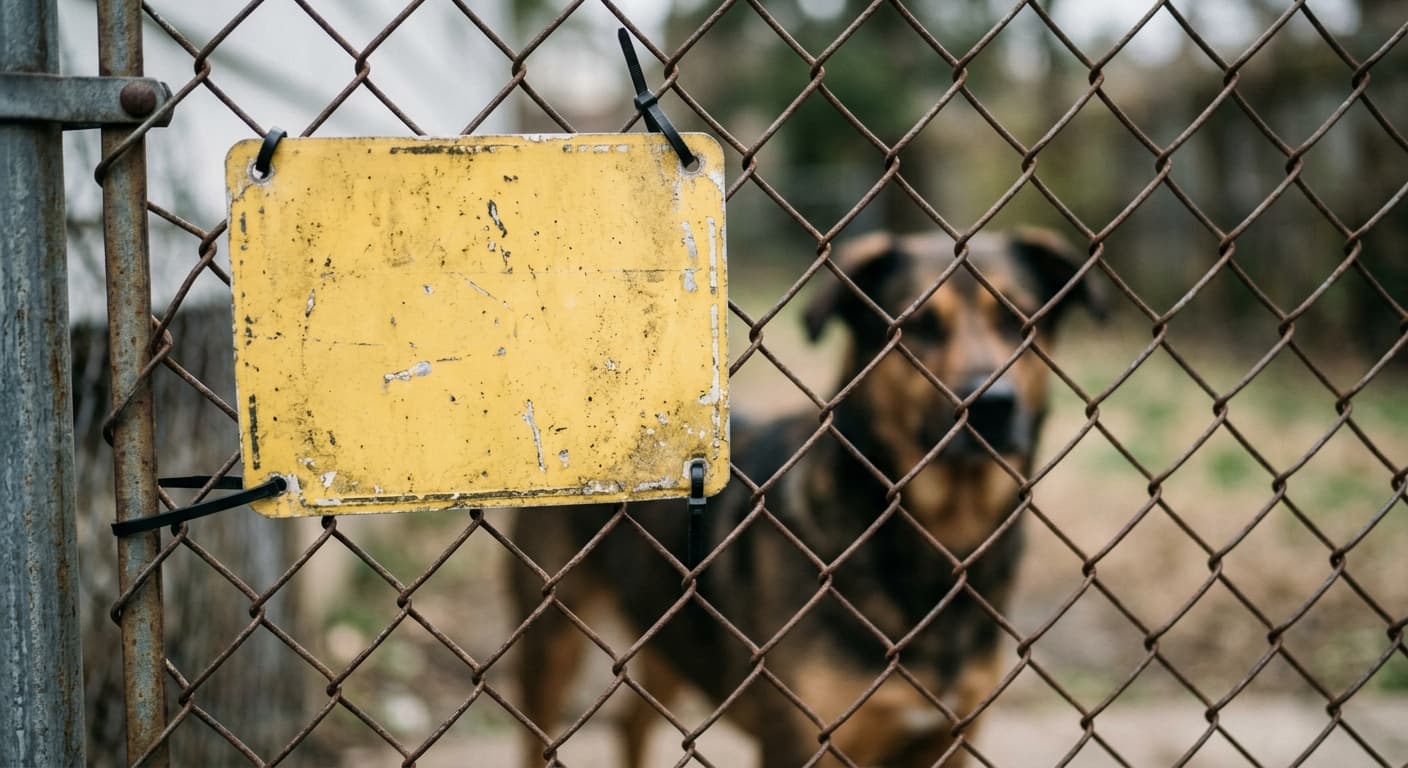
The single most common question English speakers ask about dogs in Germany is where a dog has to be on a lead. The honest answer is that there is no national answer, because there is no federal Leinenpflicht. Germany has never legislated a country-wide lead rule for ordinary dogs, and it is unlikely to.
What exists instead is a stack of three separate sources, each with its own geography: Land law, municipal public-order rules, and nature conservation rules that switch on and off with the seasons. Underneath all of them sits a liability rule in the Bürgerliches Gesetzbuch that catches out more dog keepers than every lead rule combined, because it applies whether or not the keeper did anything wrong.
Information last verified on 20 July 2026. This page provides general legal information and does not constitute legal advice in an individual case.
Why there is no federal lead rule
The absence is structural rather than an oversight. Preventing dangers to public safety and order, Gefahrenabwehr, is one of the classic responsibilities left with the Länder under the German constitutional division of competences, and dog rules are treated as a straightforward instance of it. The federation legislates on dogs where it has a distinct hook: animal welfare, cross-border movement of goods and animals, and private law.
That is why the federal statute book contains a detailed ordinance on how much space a kennel must have, and a rule about who pays after a bite, but nothing at all about whether a dog must be leashed in a town park. The question was never a federal one, so no federal answer exists to be found.
The practical consequence for a reader is that any source claiming to state the German lead rule is describing something that does not exist. What can be stated accurately is the structure, which of the three levels below is likely to hold the answer for a given place, and that is what the rest of this page does.
Level one: Land law
Each Bundesland legislates for dogs itself, and Land law is where the lead and muzzle duties for dogs classified as dangerous live. Rheinland-Pfalz, under its Landesgesetz über gefährliche Hunde of 22 December 2004, requires a dangerous dog to be on a lead and to wear a muzzle that prevents biting, both outside secured property and inside multi-occupancy buildings, which catches the stairwell of an ordinary apartment block. The Saarland ordinance is built on the same pattern: a dangerous dog must be led and muzzled outside the keeper's property, and several dangerous dogs may not be led at the same time.
Land law also increasingly imposes duties on every dog keeper, not just those with a listed dog. Niedersachsen requires a Sachkundenachweis, identification, liability insurance and registration in a central Land register for dog keepers generally. Brandenburg's ordinance of 1 July 2024 introduced marking with a transponder and registration with the responsible authority for every dog from eight weeks of age.
Land law varies here more than a single sentence can capture. Several Länder do impose a general lead requirement in defined settings, and § 2 Abs. 2 LHundG NRW is an example, while others leave the ordinary daily walk to municipal rules. The level below is usually where the answer for a particular street actually sits.
Level two: the municipality
The rules that actually govern the daily walk are usually municipal. A Gemeinde or Stadt issues a Gefahrenabwehrverordnung or a Polizeiverordnung under Land enabling powers, and that instrument decides where in that town a dog must be leashed: pedestrian zones, marketplaces, parks, playgrounds, cemeteries, bathing areas, public transport, school grounds. Larger cities commonly leash dogs across the whole built-up area and designate specific Hundeauslaufflächen where dogs may run free.
This is why two neighbouring towns can have visibly different rules, and why a rule that applies in one district of a city may not apply in the next. It is also why no honest page can tell a reader what the lead rule is at their address. The instrument that governs it is published by their own municipality, usually on the Ordnungsamt pages of the town website, and that is the only source that answers the question for a specific street.
The enforcement side is municipal too. A breach is normally an Ordnungswidrigkeit under the municipal instrument, and the Bußgeld comes from the local Bußgeldkatalog, which each municipality sets for itself. Ranges vary widely between towns, so a figure quoted for one city says nothing about another.
Level three: nature conservation and the Brut- und Setzzeit
The third layer is the one visitors are least likely to expect, because it is invisible on the ground for part of the year and then suddenly applies.
Naturschutzgebiete. § 23 Abs. 2 BNatSchG provides that all acts which may lead to the destruction, damage or alteration of a Naturschutzgebiet or its components, or to a lasting disturbance, are prohibited in accordance with more detailed provisions. Those more detailed provisions are in the individual Schutzgebietsverordnung for that reserve, and it is extremely common for such an order to require dogs to be leashed, or to be kept on marked paths, throughout the year. Because the prohibition is written per reserve, the signage at the entrance is the operative statement of what applies there.
Wild animals generally. § 39 Abs. 1 BNatSchG prohibits wilfully disturbing wild animals and catching, injuring or killing them without good reason. A dog coursing deer or flushing ground-nesting birds is the classic situation this reaches, and it applies outside protected areas as well as inside them.
The Brut- und Setzzeit. Between roughly the start of spring and the end of summer, ground-nesting birds are on eggs and deer, hares and foxes have dependent young. Many Länder and many municipalities respond with a seasonal Leinenpflicht in fields, woodland and open country. The important point for accuracy is that this is not one federal rule with one set of dates. The obligation is created by Land nature conservation law, Land forest law, Land hunting law or a local order, and both the dates and the covered areas differ between Länder. A reader should take the dates from their own Land or municipality rather than from a general figure, because a widely repeated approximate window is not what any particular authority will enforce.
Hunting law. Land hunting statutes also address dogs that chase game, and in some Länder this extends to powers that most dog owners would find surprising. This is again Land law, and it is not uniform.
The rule most owners do not know: § 833 BGB
Every lead rule above is public law. The rule that determines who pays after something goes wrong is private law, and it is unusually severe.
§ 833 Satz 1 BGB provides that where an animal kills a person, injures a person's body or health, or damages a thing, the person who keeps the animal must compensate the injured party for the resulting damage. This is Tierhalterhaftung, and it is strict. There is no requirement that the keeper was negligent, no requirement that the keeper could have prevented it, and no requirement that the dog had ever shown any sign of aggression before. It attaches to the realisation of the specific unpredictability of animal behaviour, which is precisely the risk a keeper takes on by keeping an animal at all.
The exception in § 833 Satz 2 BGB is narrow and is often misdescribed. It removes liability only where the damage was caused by a Haustier that is intended to serve the keeper's occupation, trade or subsistence, and even then only if the keeper observed the care required in the circumstances when supervising the animal, or the damage would have arisen even with that care. A farm dog working livestock can fall inside it. A family pet, kept for companionship, does not.
§ 834 BGB extends a parallel, fault-based liability to a person who takes on supervision of an animal by contract, which is the provision that reaches a professional dog sitter or a boarding kennel.
A worked example
A dog on an extending lead in a park lunges as a cyclist passes, the cyclist swerves, falls and breaks a wrist. Assume the treatment, physiotherapy and a replacement bicycle come to 4.000 EUR, and that the cyclist is off work for six weeks with a further 3.000 EUR of lost earnings, plus a Schmerzensgeld claim.
Under § 833 Satz 1 BGB the question is not whether the keeper handled the lead well. It is whether the harm flowed from the animal's behaviour. If it did, the keeper is liable for the resulting damage, and the amount is whatever the loss turns out to be. There is no statutory ceiling, which is the whole point: a serious injury can produce a claim well into six figures once long-term care or permanent loss of earning capacity enters the picture.
That uncapped exposure is why Hundehaftpflichtversicherung is treated in Germany as basic infrastructure rather than an optional extra, and why several Länder now require it. Bremen's 2025 statute, for example, sets minimum cover of 500.000 EUR for personal injury and 250.000 EUR for property damage. Whether contributory conduct by the injured person reduces a claim, and by how much, is a question of German civil law that turns entirely on the specific facts, and it is decided by a court rather than by any general rule that could be stated here.
§ 121 OWiG, the federal backstop
There is one federal provision that sits close to the lead question. § 121 OWiG makes it an Ordnungswidrigkeit to intentionally or negligently let a dangerous animal of a wild species, or a vicious animal, move about freely. It is a public-order offence punishable by a Geldbuße, and the statute does not itself name a figure.
It is worth knowing because it is genuinely federal, but it is not a general lead rule. It addresses animals that are dangerous or vicious, not dogs at large, and it does not displace anything a Land or a municipality has enacted.
What a lead rule does not settle
It is worth separating three questions that get run together, because they are decided by different bodies under different rules.
Was a rule broken. That is a public-law question under the municipal or Land instrument, handled by the Ordnungsamt, and the consequence is normally a Verwarnung or a Bußgeld from that municipality's own catalogue.
Who pays for the harm. That is a civil question under § 833 BGB, decided between the parties and ultimately by a civil court, and it does not depend on whether any lead rule was broken. A keeper who was fully compliant can still owe compensation, and a keeper who was not compliant does not owe more for that reason alone.
Whether the dog is now classified as dangerous. That is a third question, decided by the local authority under the applicable Land rules after an incident, and its consequences run forward: a permit requirement, lead and muzzle duties, a competence requirement. A dog of any breed can be brought into that category by its own behaviour, entirely independently of any breed list.
Because the three run on separate tracks, an outcome on one says very little about the others, and the bodies deciding them do not decide them together.
How the three levels stack
The levels are cumulative, not alternative. A dog walked in a Land that imposes a muzzle duty on dangerous dogs, in a town that leashes dogs across the built-up area, on a path that runs through a Naturschutzgebiet, is subject to all three at once, and the strictest of them governs. Nothing at the municipal level can relax a nature conservation prohibition, and nothing in a Schutzgebietsverordnung removes a Land duty attaching to a dog classified as dangerous.
The practical reading order for anyone working out what applies to a particular walk is therefore: what does the Land say about this dog, what does this municipality say about this place, and is this place inside a protected area or subject to a seasonal restriction. Whether a given dog falls into a Land's dangerous category in the first place is set out on the page on dangerous dog breeds and the Länder lists. For the wider area, see the Germany dog law hub, and where a dog dispute is really a dispute between neighbours, see noise and disturbance in German neighbour law. For German law generally, see German law explained.
Frequently Asked Questions
Is there a general Leinenpflicht in Germany?
No. There is no federal lead requirement for ordinary dogs. Lead duties come from Land law for dogs classified as dangerous, from municipal public-order rules for everyday places such as parks and pedestrian zones, and from nature conservation rules in protected areas. That is why the answer differs from one town to the next.
Where do I find the lead rule for my own town in Germany?
In the municipality's own Gefahrenabwehrverordnung or Polizeiverordnung, normally published on the Ordnungsamt pages of the town website. Because this is municipal law, no national source can state the rule for a particular street, and a rule that applies in one city does not apply in the next.
What is the Brut- und Setzzeit and does it mean dogs must be leashed?
It is the breeding and rearing season, when ground-nesting birds are on eggs and wild mammals have dependent young. Many Länder and municipalities impose a seasonal lead requirement in fields, woodland and open country during it, but the dates and the covered areas are set by Land or local rules rather than by one federal provision, so they have to be taken from the responsible Land or municipality.
Do dogs have to be on a lead in a Naturschutzgebiet?
Very often yes, and frequently all year round. § 23 Abs. 2 BNatSchG prohibits acts capable of destroying, damaging or altering a nature reserve or causing lasting disturbance, with the detailed prohibitions set in each reserve's own designation order. The signage at the entrance states what applies in that particular reserve.
Who pays if my dog injures someone in Germany?
§ 833 Satz 1 BGB makes the keeper of the animal liable for the resulting damage where a dog kills or injures a person or damages property. The liability is strict, so it does not depend on the keeper having been careless, and the exception in Satz 2 covers only an animal kept to serve the keeper's occupation, trade or subsistence, which does not include a family pet.
Is dog liability insurance compulsory in Germany?
It depends on the Land. Several Länder require Hundehaftpflichtversicherung for dogs classified as dangerous, and some now require it for every dog. Bremen's 2025 statute sets minimum cover of 500.000 EUR for personal injury and 250.000 EUR for property damage. Because the liability under § 833 BGB has no statutory ceiling, cover is treated as standard practice regardless of whether a particular Land compels it.
Am I liable if a dog sitter was walking the dog?
The keeper's strict liability under § 833 BGB does not disappear because someone else held the lead. § 834 BGB adds a separate, fault-based liability for a person who takes over supervision of an animal by contract, so a professional sitter or boarding kennel can be liable alongside the keeper. How responsibility is allocated between them turns on the specific arrangement and is decided by a court.
What is the fine for not leashing a dog in Germany?
There is no single figure, because the offence is usually created by municipal rules and the Bußgeld comes from that municipality's own catalogue. Ranges differ substantially between towns, so a figure quoted for one city gives no reliable indication for another. Separately, § 121 OWiG makes letting a vicious animal run free a federal Ordnungswidrigkeit punishable by a Geldbuße.
Updates
Independently fact-checked against the cited primary sources
Sources and References
- § 833 BGB, Haftung des Tierhalters(gesetze-im-internet.de).gov
- § 834 BGB, Haftung des Tieraufsehers(gesetze-im-internet.de).gov
- § 121 OWiG, Halten gefährlicher Tiere(gesetze-im-internet.de).gov
- § 23 BNatSchG, Naturschutzgebiete(gesetze-im-internet.de).gov
- § 39 BNatSchG, Allgemeiner Schutz wild lebender Tiere und Pflanzen(gesetze-im-internet.de).gov
- § 2 HundVerbrEinfG, Verbringungs- und Einfuhrverbot für bestimmte Hunde(gesetze-im-internet.de).gov
- Gefährliche Hunde, Aufsichts- und Dienstleistungsdirektion Rheinland-Pfalz (Landesgesetz über gefährliche Hunde vom 22. Dezember 2004)(add.rlp.de).gov
- Gefährliche Hunde im Saarland, Ministerium für Umwelt, Klima, Mobilität, Agrar und Verbraucherschutz(saarland.de).gov
- Neue Hundehalteverordnung tritt am 1. Juli in Kraft, Ministerium des Innern und für Kommunales Brandenburg(mik.brandenburg.de).gov
- Das Niedersächsische Hundegesetz (NHundG), Landesamt für Verbraucherschutz und Lebensmittelsicherheit(laves.niedersachsen.de).gov
- Haltung von Hunden und gefährlichen Hunden, Serviceportal Baden-Württemberg(service-bw.de).gov
- Berliner Hundegesetz, Senatsverwaltung für Verbraucherschutz(berlin.de).gov
- Landeshundegesetz Nordrhein-Westfalen (LHundG NRW)(recht.nrw.de).gov