
Germany
Handy am Steuer: Germany's Mobile Phone Driving Law Explained
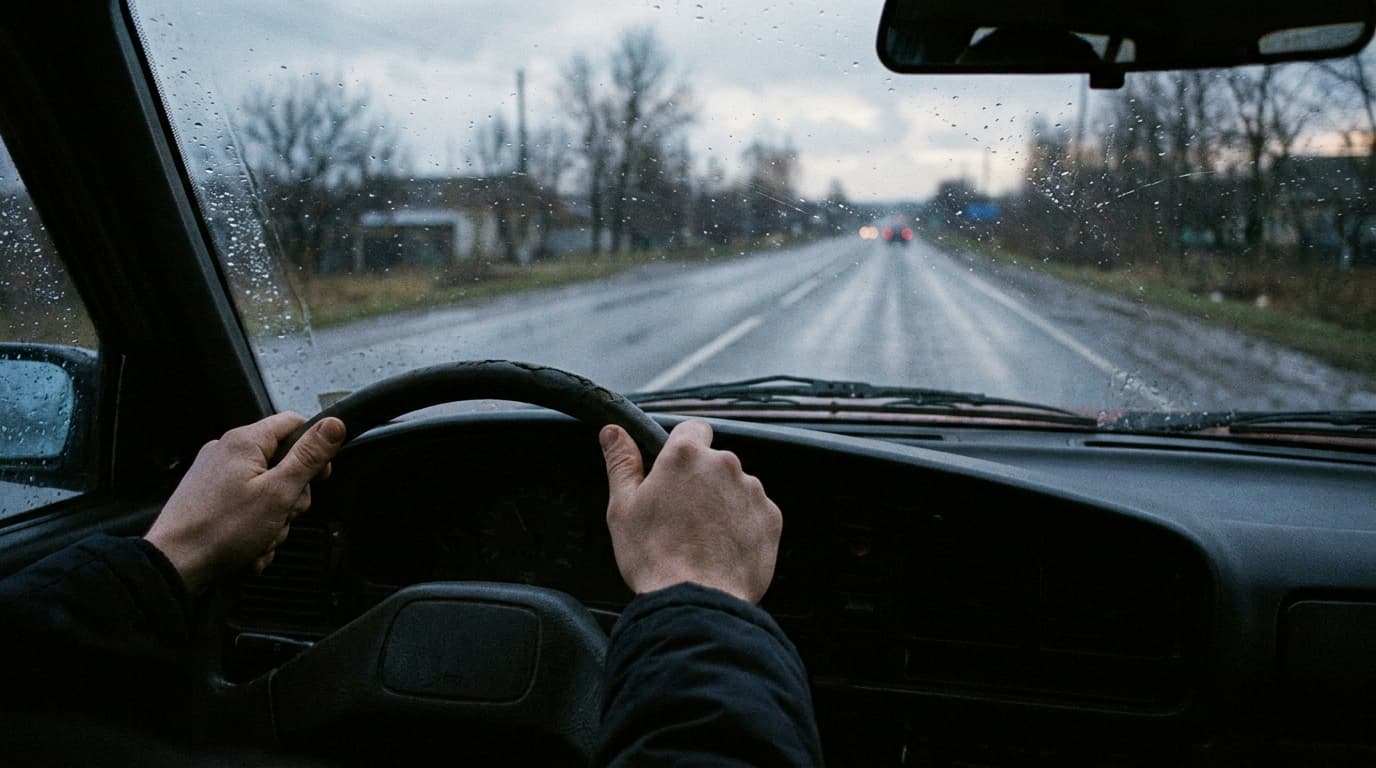
Germany's ban on using a phone while driving does not just cover phone calls. § 23 Absatz 1a of the Straßenverkehrs-Ordnung (StVO) reaches any electronic device used for communication, information or organization, held or picked up by the driver, and it applies even while stopped at a red light with the engine running.
This page works through what the rule covers, what it exempts, the current fine and point figures pulled directly from the Bußgeldkatalog-Verordnung (BKatV) and its underlying point table, the lower tariff for cyclists, the Probezeit consequence for new drivers, and when phone use behind the wheel becomes a criminal matter rather than a fine.
Information last verified on 19 July 2026. This page provides general legal information and does not constitute legal advice in an individual case.
What § 23 Abs. 1a StVO actually bans
The rule sits inside § 23 StVO, a provision that otherwise deals with a driver's general duties, such as keeping sight and hearing unobstructed. Absatz 1a was written broadly on purpose: it names any electronic device serving communication, information or organizational purposes, then lists mobile and car phones, touchscreens, tablets, navigation units, televisions, video players and audio recorders as examples, not the full scope of the rule.
That wording means the ban was never limited to calls or texting. A driver scrolling a dashboard mounted tablet or operating a handheld satnav unit falls under the same rule as a driver holding a phone to their ear. The conduct actually prohibited has two parts: the device cannot be picked up or held at all while driving, and even where mounted, its use is only permitted through voice control and a read aloud function, or a brief glance appropriate to the conditions, with attention returning to the road.
Stopped at a red light still counts
A common misconception is that stopping the car, even briefly, opens a window to check a phone. § 23 Absatz 1b StVO addresses this directly, and the exception is narrower than most drivers assume. The device restriction stops applying to a vehicle only once its engine is completely switched off. Idling at a red light with the engine running does not qualify, no matter the wait.
The regulation closes an obvious loophole here: an automatic start stop system shutting the engine down, or an electric vehicle's drive motor simply sitting idle, is expressly stated not to count as switching the engine off. A driver whose engine cuts out automatically at a junction cannot use that moment to check a phone, since legally the engine has not been turned off within the meaning of the rule. Narrower exceptions also cover an alcohol interlock's handheld unit and trams or line buses stopped at a designated stop.
What is actually permitted
Two situations are carved out from the glance restriction specifically, rather than from the device rule as a whole: a screen or windshield projection assisting reversing or parking at walking pace, and a device that replaces or supplements a required mirror, such as a rear view camera. Head up displays projecting vehicle, traffic sign, route or journey information are also permitted. A head mounted visual output device, such as video glasses, is banned outright and gets no carve out.
The safest reading for an ordinary driver: mount the phone, use voice commands or a spoken readout where possible, and keep any unavoidable glance brief with attention on the road. Picking the device up at any point is what turns a permitted use into a violation.
The fine table, straight from the current Bußgeldkatalog
The BKatV sets no fine amount inside the StVO itself. The number lives in the BKatV's Anlage, its appendix table, at catalogue item 246, titled "Elektronisches Gerät rechtswidrig benutzt" and tied directly to § 23 Absatz 1a.
| Item | Conduct | Fine | Driving ban | Points |
|---|---|---|---|---|
| 246.1 | Ordinary violation while driving a vehicle | 100 euro | None | 1 |
| 246.2 | The same conduct, with endangerment | 150 euro | 1 month | 2 |
| 246.3 | The same conduct, causing property damage | 200 euro | 1 month | 2 |
| 246.4 | While riding a bicycle | 55 euro | None | None |
Points do not come from the BKatV table itself. They are assigned separately under § 40 FeV together with Anlage 13, and an Ordnungswidrigkeit only reaches the Fahreignungsregister once the fine reaches 60 euro. Anlage 13 lists the ordinary 246.1 violation among entries scored at 1 point, and the endangerment and property damage tiers among the smaller group scored at 2 points as particularly impairing to road safety. The 55 euro cyclist entry sits below the 60 euro line, so it produces no points entry at all.
Worked example. A driver stopped at a red light picks up a phone to read a message and does not notice the light change, delaying the car behind by a few seconds with no contact. That is an ordinary 246.1 violation: 100 euro and 1 point, no driving ban. Change the facts: the same driver, distracted, pulls into an intersection without noticing a cyclist has right of way, who has to brake hard to avoid a collision. That endangerment moves the case to 246.2: 150 euro, a 1 month Fahrverbot, and 2 points rather than 1.
For how points accumulate toward the 8 point licence loss threshold, see points in Flensburg. For the wider fine and Fahrverbot system, see the fine catalogue.
New drivers: this is a Kategorie A violation
Every new licence holder spends a two year Probezeit under § 2a StVG, and violations during it are sorted under Anlage 12 FeV into Kategorie A, serious violations, and Kategorie B, less serious ones. Anlage 12 FeV places a violation of § 23 Absatz 1a StVO directly in Kategorie A, alongside offenses such as failing to observe right of way. That matters because a single Kategorie A violation, rather than the two generally required at the Kategorie B tier, is enough to trigger a mandatory Aufbauseminar and a two year extension of the Probezeit itself.
That consequence runs alongside the ordinary fine and points, not instead of them. See driving bans for how a Fahrverbot interacts with the Probezeit rules where a ban is also ordered.
Cyclists: a real but separate rule
The same catalogue item covers cyclists, at entry 246.4, worth stating plainly since the two are often confused. A cyclist holding a phone while riding faces a 55 euro fine, not the 100 euro figure that applies to a driver, and because that sits below the 60 euro points threshold, a cyclist's violation adds no points to a driving record regardless of how the incident unfolds.
When it becomes a criminal matter
A fine and points are the ordinary consequence of being caught using a phone while driving, not the consequence of causing a collision while doing so. Where phone use leads to a crash that injures or kills someone, the analysis shifts to the Strafgesetzbuch. The baseline offense is fahrlässige Körperverletzung, negligent bodily harm, under § 229 StGB, or fahrlässige Tötung, negligent homicide, under § 222 StGB if someone dies. Being distracted by a phone at the moment of a crash is generally enough to support a negligence finding under either provision.
§ 315c StGB, Gefährdung des Straßenverkehrs, is considerably more serious, carrying up to five years, and is often assumed to apply automatically to any phone related crash. It does not. The statute requires the driving to amount to one of a specific, narrow list of grossly reckless failures set out in its own text, such as ignoring another vehicle's right of way or driving too fast through an unclear intersection, combined with a concrete danger to a person or property of significant value. Distraction from a phone can be the reason a driver commits one of those listed failures, but the phone alone is not what the statute punishes.
Dashcams and phones mounted as cameras
Some drivers use a phone mounted on the dashboard as a dashcam rather than for calls or messages, which raises a different question entirely, governed by data protection law rather than § 23 Abs. 1a StVO. That question, including when continuous recording is lawful and when footage can be used as evidence after a crash, is covered separately at Germany's recording and dashcam laws rather than on this page.
How this is enforced, and contesting a notice
Most handy am Steuer citations still start with direct observation, an officer at the roadside or in a following patrol car. A small number of automated camera systems capable of flagging likely phone use have begun operating in individual federal states in recent years, but this remains the exception, and any automated flag is still reviewed by an officer before a notice is issued.
That pattern shapes what a contest usually turns on: without measurement equipment involved, the officer's own observation and any photograph taken at the time tend to be the central evidence. A driver who receives a notice has two weeks from delivery to file a written Einspruch under § 67 OWiG, without needing to state reasons in that initial filing. See challenging a fine for the fuller procedure, including how to request Akteneinsicht, file inspection, before deciding how to respond.
Frequently Asked Questions
How much is the fine for using a phone while driving in Germany?
An ordinary violation under item 246.1 of the Bußgeldkatalog carries 100 euro and 1 point. Where the conduct endangers someone, it rises to 150 euro, a 1 month Fahrverbot and 2 points, and where it causes property damage, to 200 euro, a 1 month Fahrverbot and 2 points.
Can I use my phone if I am stopped at a red light?
No, not while the engine is running. § 23 Absatz 1b StVO only lifts the restriction once the engine is completely switched off, and the regulation states that an automatic start stop shutdown does not count as switching the engine off.
Am I allowed to look at my phone if it is mounted in a holder?
A brief glance at a mounted device, with attention returning to the road, is generally permitted, along with voice control and read aloud functions. Picking the device up or holding it at any point is what is prohibited, regardless of whether it is otherwise mounted.
Does using a phone while driving affect new drivers differently?
Yes. Anlage 12 FeV classifies a violation of § 23 Abs. 1a StVO as a Kategorie A, serious, violation for drivers in their two year Probezeit, which can trigger a mandatory Aufbauseminar and a two year extension of the probationary period after a single incident, on top of the ordinary fine and points.
Is the fine lower for cyclists using a phone?
Yes. Catalogue item 246.4 sets a separate 55 euro fine for cyclists, which sits below the 60 euro threshold that would otherwise add an entry to the Fahreignungsregister, so a cyclist's violation does not carry points.
Can I be charged with a crime if I cause an accident while using my phone?
A crash causing injury or death typically leads to a fahrlässige Körperverletzung charge under § 229 StGB, or fahrlässige Tötung under § 222 StGB if someone dies. The more serious § 315c StGB offense requires the driving to also amount to one of a specific list of grossly reckless failures, not distraction from the phone alone.
Are speed cameras used to catch phone use in Germany?
Most citations still come from an officer's direct observation rather than an automated camera. A limited number of camera systems designed to flag likely phone use have begun operating in individual federal states, with any flagged image still reviewed by an officer before a notice is issued.
How long do I have to challenge a phone use fine?
Two weeks from delivery of the Bußgeldbescheid, under § 67 OWiG. The written Einspruch, objection, does not need to state reasons at the time it is filed.
Sources and References
- § 23 StVO, Sonstige Pflichten von Fahrzeugführenden (Absatz 1a und 1b: elektronisches Gerät)(gesetze-im-internet.de).gov
- § 49 StVO, Ordnungswidrigkeiten(gesetze-im-internet.de).gov
- § 1 BKatV, Bußgeldkatalog(gesetze-im-internet.de).gov
- § 4 BKatV, Regelfahrverbot(gesetze-im-internet.de).gov
- Anlage zu § 1 Absatz 1 BKatV, Bußgeldkatalog (BKat), lfd. Nr. 246, 246.1 bis 246.4(gesetze-im-internet.de).gov
- § 40 FeV, Fahreignungs-Bewertungssystem(gesetze-im-internet.de).gov
- Anlage 13 FeV, Bewertung der Straftaten und Ordnungswidrigkeiten (Punktzahlen)(gesetze-im-internet.de).gov
- Anlage 12 FeV, Bewertung der Straftaten und Ordnungswidrigkeiten im Rahmen der Fahrerlaubnis auf Probe(gesetze-im-internet.de).gov
- § 2a StVG, Fahrerlaubnis auf Probe(gesetze-im-internet.de).gov
- § 25 StVG, Fahrverbot(gesetze-im-internet.de).gov
- § 315c StGB, Gefährdung des Straßenverkehrs(gesetze-im-internet.de).gov
- § 229 StGB, Fahrlässige Körperverletzung(gesetze-im-internet.de).gov
- § 67 OWiG, Einspruch gegen den Bußgeldbescheid(gesetze-im-internet.de).gov
- § 222 StGB, Fahrlässige Tötung(gesetze-im-internet.de).gov