
Germany
Unfallflucht in Germany (§ 142 StGB): Penalties and Why a Note Is Not Enough
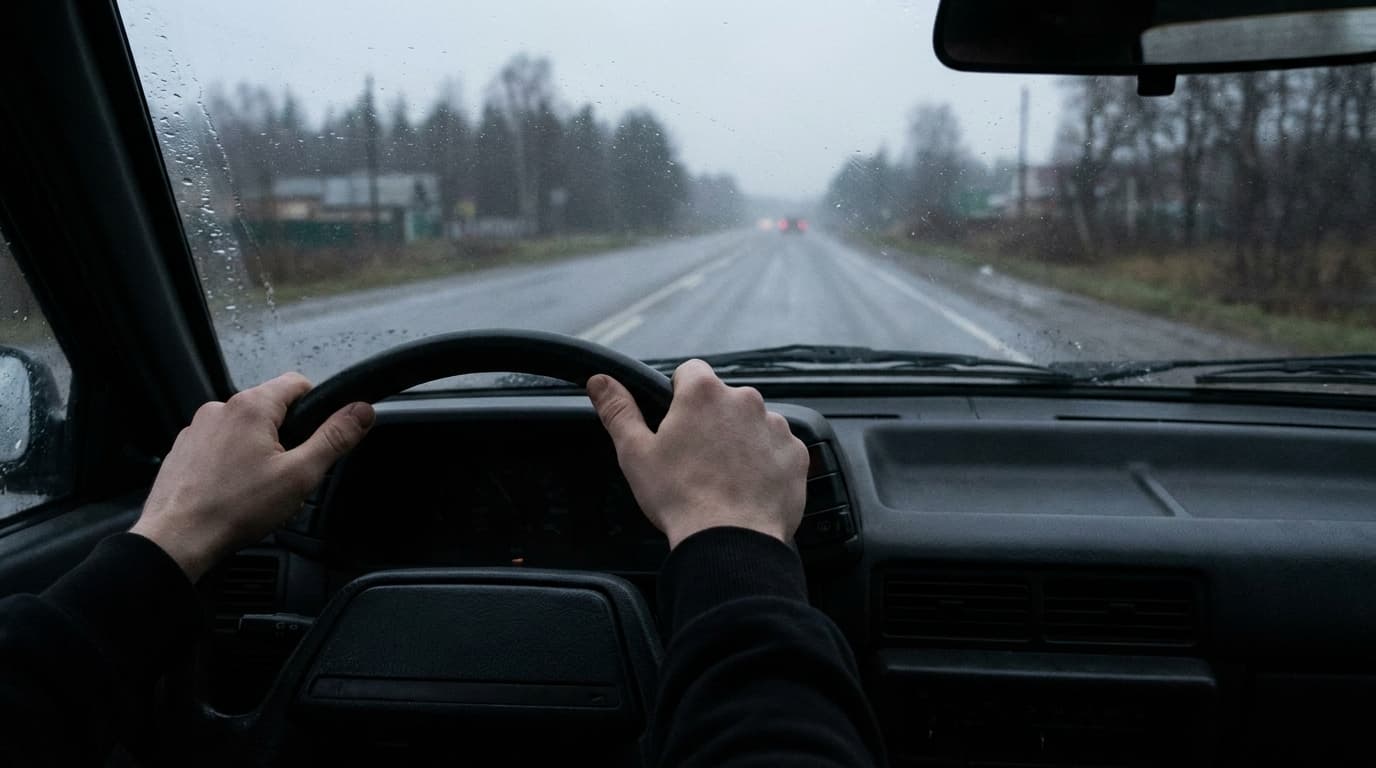
Unfallflucht is the German name for leaving the scene of a road accident without doing what the law requires first. It is not simply bad manners toward the other driver. Under § 142 of the Strafgesetzbuch, the German Criminal Code, it is a criminal offence in its own right, entirely separate from whatever caused the accident itself.
The rule surprises many drivers who have moved to Germany from a country where leaving your name and number on a windscreen is treated as good faith and often good enough. German law asks for more, and getting the sequence wrong, even where nobody was hurt and the damage was minor, can leave a mark on your criminal record and put your licence at risk.
This page, part of our broader guide to German law explained, sets out what § 142 StGB actually requires, why a note under the wiper is not on its own sufficient, what the voluntary self report exception can do for you, and what happens next with your licence and your insurance.
Information last verified on 19 July 2026. This page provides general legal information and does not constitute legal advice in an individual case.
What Unfallflucht means: the offence under § 142 StGB
Unfallflucht is not a term the statute itself uses. The Criminal Code calls it unerlaubtes Entfernen vom Unfallort, unauthorised departure from the scene of an accident, and sets it out in § 142 StGB. The maximum penalty is imprisonment of up to three years or a fine, the same tier as several genuinely serious offences elsewhere in the code.
That single fact is the most important thing to understand before anything else on this page. A speeding ticket, looked up directly in the fine catalogue, is an Ordnungswidrigkeit, a regulatory offence handled by an administrative fine. Unfallflucht is a Straftat, a criminal offence, prosecuted by the public prosecutor and entered on your criminal record on conviction. That distinction changes how seriously the situation should be taken.
§ 142 Abs. 5 StGB defines who the rule applies to broadly. An Unfallbeteiligter, an accident participant, is anyone whose conduct could, according to the circumstances, have contributed to causing the accident. That can include a driver who was not at fault in the ordinary sense, and it is not limited to whoever caused the damage.
The two ways to meet your duty at the scene
§ 142 Abs. 1 StGB gives an accident participant exactly two routes to avoid committing the offence, and no others.
The first is presence: staying at the scene long enough to enable the other participants and anyone who suffered damage to establish your identity, your vehicle and the fact that you were involved, through your own presence and your own statement that you took part in the accident.
The second applies only where nobody is there to take that information, or nobody present is willing to. In that situation, the law requires waiting a reasonable period under the circumstances, eine nach den Umständen angemessene Zeit, before leaving. The statute does not fix a number of minutes. What counts as reasonable depends on how busy the location is, the time of day, and how likely it is that the other party or the police will arrive, and a court weighs those facts after the event rather than a driver applying a fixed clock in the moment.
Why a note on the windscreen is required, and still not enough
This is the point that catches out the most people, including many who moved to Germany from a country where leaving contact details is treated as sufficient on its own. The German position is split across two different provisions, and conflating them is what causes the trouble.
Leaving a note is an affirmative legal duty, but it lives in the road traffic regulation rather than the criminal code. § 34 Abs. 1 Nr. 6 b) StVO provides that a participant who has waited a reasonable time, where nobody was willing to take the details, must leave their own name and address at the scene. Not doing so is itself an Ordnungswidrigkeit under § 49 StVO. The note is not optional.
What the note does not do is discharge the criminal offence, and that is the part with the serious consequences. § 142 StGB does not mention a note anywhere in its text. The only two ways to discharge the duty at the scene are the two set out above: presence, or waiting. A note tucked under a wiper does neither. It does not make you present if the other party turns up moments later, and it is not equivalent to waiting, because by the time it is read you have already left.
Writing your name and number on a piece of paper also proves little to a court about who actually left it, and it gives the other party no reliable way to reach you if the note blows away, becomes illegible, or is never found. None of that is how § 142 StGB structures the obligation, and settled German case law treats a note on its own as falling short of what the statute requires.
The law does provide a route once you have already left the scene, but it is not the note. § 142 Abs. 2 and Abs. 3 StGB require you to promptly, unverzüglich, tell the injured party or a nearby police station that you were involved, and to give your address, your whereabouts, your registration number and where the vehicle can be found, keeping it available for inspection for a reasonable time. Promptly means promptly: generally the same day and without avoidable delay, not whenever the other party happens to find and read a note.
In practice this means that if nobody is present or willing to exchange details after a reasonable wait, the step the law actually requires is to go to a nearby police station or call the police, not to leave a note and drive away assuming the matter is settled.
Voluntary self report within 24 hours: tätige Reue under Abs. 4
§ 142 Abs. 4 StGB lets a court reduce the sentence, or impose none at all, for what is called tätige Reue, active repentance. All three of the following conditions have to be met together, and dropping any one of them takes the case outside the mitigation entirely.
| Condition | What it requires |
|---|---|
| Timing | The accident participant voluntarily enables identification within 24 hours of the accident |
| Location | The accident happened outside moving traffic, außerhalb des fließenden Verkehrs, for example in a parked position or a car park |
| Damage | The accident caused only nicht bedeutender Sachschaden, property damage that is not significant, and no injury to anyone |
Meet all three and a court can reduce the sentence under § 49 Abs. 1 StGB, or decide not to punish the offence under Abs. 1 or Abs. 2 at all. Miss the 24 hour window, or the accident involved someone being hurt, or it happened in moving traffic rather than a stationary situation such as a car park, and Abs. 4 simply does not apply, however voluntary the eventual report turns out to be.
Worked example. A driver reverses into a parked car in a supermarket car park, causing a dent a body shop later quotes at around EUR 400 to repair. Nobody is hurt. The driver leaves without waiting long enough or reporting it on the spot, but goes to a police station that same evening, within 24 hours, and gives a full account. Because the accident was outside moving traffic, caused only minor property damage and was reported voluntarily inside the 24 hour window, all three Abs. 4 conditions are met, and the court has room to reduce the sentence or impose none at all. Had the driver waited three days to report it, or had someone been injured, the same facts would not qualify.
Losing your licence on top of the criminal penalty
A conviction under § 142 StGB can trigger a second, separate consequence: losing your driving licence entirely, rather than serving a fixed term ban.
§ 69 Abs. 2 Nr. 3 StGB names unerlaubtes Entfernen vom Unfallort as one of the offences where the court treats the driver as unfit to drive as a rule, specifically where the driver knew, or could have known, that the accident killed someone, caused significant injury, or caused significant damage to someone else's property, bedeutender Schaden. Where that applies, § 69 Abs. 3 StGB extinguishes the licence the moment the judgment becomes final, and the court also sets a Sperrfrist under § 69a StGB, a waiting period of six months to five years, occasionally longer or even indefinite in serious repeat cases, before a new licence can even be applied for.
This is a different and more severe consequence than a driving ban, which runs for a fixed one to three months and does not require a criminal conviction at all. Separately from the criminal track, the licensing authority can also revoke a licence administratively under § 3 StVG where it independently concludes a driver is unfit, whether or not a court has convicted them under § 142 StGB.
It is worth keeping two thresholds apart, because they are constantly confused. Whether Unfallflucht is a crime at all under § 142 StGB does not depend on the size of the damage. A scraped bumper is enough to trigger the offence in principle. The bedeutender Schaden threshold under § 69 Abs. 2 Nr. 3 StGB matters for a separate question: whether a conviction also costs the driver their licence. That figure is not written into the statute. It comes from case law, and courts have moved it upward over time to track rising repair costs, so it currently sits somewhere in the low four figures in euros rather than at one fixed number. Nobody should try to estimate their own case against a specific euro figure; the courts, not the statute, decide where that line falls.
What counts as an Unfall in the first place
§ 142 StGB and § 34 StVO, the parallel road traffic rule covering similar ground for less serious cases, both turn on the same starting concept: an Unfall, an accident, in road traffic. Courts define it broadly as a sudden event connected to traffic that causes damage to a person or to property beyond the genuinely trivial.
In practice that bar is low. A scrape that leaves a visible mark or a dent on a parked car counts, even where the driver never intended it and the eventual repair bill turns out to be modest. Only contact so light it leaves no discernible trace at all sits outside the concept, and that is a narrow exception rather than something to rely on after the fact.
An accident involving alcohol brings its own separate exposure under the drink driving limits that apply in Germany, on top of anything arising from leaving the scene itself. The two sets of rules are assessed independently of each other.
Insurance consequences
The criminal exposure is not the only cost. Leaving the scene without doing what § 142 StGB requires can also damage your own insurance position, on both sides of the policy.
If you carry Kaskoversicherung, comprehensive cover for your own vehicle, most policies impose a contractual duty to cooperate in establishing what happened after an accident, an Aufklärungsobliegenheit. § 28 VVG, the Insurance Contract Act, sets the general framework: an intentional breach of a contractual duty can release the insurer from paying out altogether, and a grossly negligent breach lets the insurer reduce the payout in proportion to fault, with the policyholder carrying the burden of showing the breach was not grossly negligent. Insurers routinely treat leaving the scene in a way that amounts to Unfallflucht as exactly this kind of breach.
Separately, your own liability insurer, the Kfz-Haftpflichtversicherung that covers damage you cause to someone else, can pursue you personally for a contribution after paying out the other party, a Regress. § 5 of the Kraftfahrzeugpflichtversicherungsverordnung caps that recourse at EUR 5,000 per person in most circumstances, though the cap does not protect a driver who obtained the vehicle through a criminal act. The insurer still pays the injured third party in full either way. The Regress is about what it can then claw back from the driver personally.
The parked car scrape with no witnesses: a worked example
The single most common situation behind this search is not a dramatic collision. It is reversing out of a tight space in a car park, feeling contact, and finding a scrape or a dent on a car with no owner in sight.
Here is what § 142 StGB actually asks of a driver in that position. First, stay and wait a reasonable time under the circumstances: in a busy supermarket car park in daylight, that might mean waiting a short while and checking the immediate area to see whether the owner returns; on an empty street at night it may reasonably be shorter, since there is little prospect of anyone arriving. Second, if nobody comes, leave a note with a name and address. This is where the two provisions genuinely diverge, and it is worth being precise. § 34 Abs. 1 Nr. 6 b) StVO makes it an affirmative duty: after waiting a reasonable time where nobody was willing to take the details, the driver must leave their own name and address at the scene, and failing to do so is a separate Ordnungswidrigkeit under § 49 StVO. What a note does not do is discharge § 142 StGB. The criminal provision recognises only presence or waiting, followed by the Nr. 7 duty to enable the determinations afterwards, so a note alone still leaves the criminal exposure open. Third, and this is the step that closes it, go to a nearby police station or call the police promptly, the same day, and give a name, address, registration and the vehicle's location so it can be inspected.
A driver who does only the first two steps, waiting a while and leaving a note, has not satisfied § 142 StGB. A driver who also makes that call or visit has.
How long you can be prosecuted
Unfallflucht does not stay open indefinitely. § 78 Abs. 3 Nr. 4 StGB sets a five year Verjährungsfrist, a limitation period, for offences carrying a maximum penalty of more than one year and up to five years, the tier § 142 StGB falls into. Once five years have passed from the accident without the relevant procedural steps being taken, prosecution is generally barred, though specific investigative steps can interrupt and restart the period.
Separately, § 323c StGB makes it a criminal offence on its own to fail to render assistance in an accident or emergency where doing so is possible without substantial risk. That duty to help an injured person exists independently of § 142 StGB, and applies whether or not the accident participant later leaves the scene in a way that complies with § 142.
Frequently Asked Questions
Is Unfallflucht a criminal offence or just a fine in Germany?
It is a criminal offence, a Straftat, under § 142 StGB, not a regulatory fine like a parking ticket. The maximum penalty is three years' imprisonment or a fine, and a conviction goes on your criminal record.
Is it enough to leave a note with my phone number on the car I hit?
No. § 142 StGB recognises only two ways to meet your duty at the scene: staying present to identify yourself, or waiting a reasonable time if nobody is there. A note satisfies neither, and it does not replace the separate duty to promptly tell the police or the other party your details afterward.
What should I do if I damage a parked car and nobody is around?
Wait a reasonable time under the circumstances in case the owner or a witness appears. If nobody does, go to a nearby police station or call the police promptly, generally the same day, and give your name, address, registration and where the vehicle can be inspected. A note left on the car does not meet the legal requirement on its own.
How long do I have to wait at the scene before I can leave?
The law does not set a fixed number of minutes. It asks for a period that is reasonable under the circumstances, weighing how busy the location is, the time of day and how likely someone is to arrive. A court assesses that after the fact rather than a driver applying a set clock in the moment.
Can I avoid punishment by reporting the accident myself afterward?
Possibly, under § 142 Abs. 4 StGB, but only if all three conditions are met together: the report happens within 24 hours, the accident happened outside moving traffic, for example in a parked position, and the damage involved was only minor property damage with no injury. Missing any one of the three takes the case outside this mitigation.
Can I lose my driving licence for Unfallflucht even if nobody was hurt?
Yes, if the property damage is significant. § 69 Abs. 2 Nr. 3 StGB treats unauthorised departure from an accident scene as grounds to find a driver unfit where they knew or could have known that the accident caused significant property damage, not only where someone was killed or seriously hurt.
Does leaving the scene affect my car insurance?
It can, on both sides of your cover. Your own comprehensive insurer can reduce or refuse to pay for breaching your duty to cooperate under the policy, and your liability insurer can separately seek a personal contribution from you after paying the other party, currently capped at EUR 5,000 per person in most cases.
How long can I be prosecuted for Unfallflucht after the accident?
Generally five years from the accident, under the limitation period set by § 78 Abs. 3 Nr. 4 StGB for offences in this penalty range. Certain investigative steps can interrupt and restart that period.
Sources and References
- § 142 StGB, Unerlaubtes Entfernen vom Unfallort(gesetze-im-internet.de).gov
- § 34 StVO, Unfall(gesetze-im-internet.de).gov
- § 69 StGB, Entziehung der Fahrerlaubnis(gesetze-im-internet.de).gov
- § 69a StGB, Sperre für die Erteilung einer Fahrerlaubnis(gesetze-im-internet.de).gov
- § 3 StVG, Entziehung der Fahrerlaubnis durch die Verwaltungsbehörde(gesetze-im-internet.de).gov
- § 28 VVG, Verletzung einer Obliegenheit(gesetze-im-internet.de).gov
- § 5 KfzPflVV, Regelung des Rückgriffs(gesetze-im-internet.de).gov
- § 78 StGB, Verjährungsfrist(gesetze-im-internet.de).gov
- § 323c StGB, Unterlassene Hilfeleistung(gesetze-im-internet.de).gov
- Bundesministerium der Justiz, Gesetze im Internet portal (StGB)(gesetze-im-internet.de).gov