
Germany
E-Scooter Rules in Germany: Insurance, Alcohol Limits and Where You Can Ride
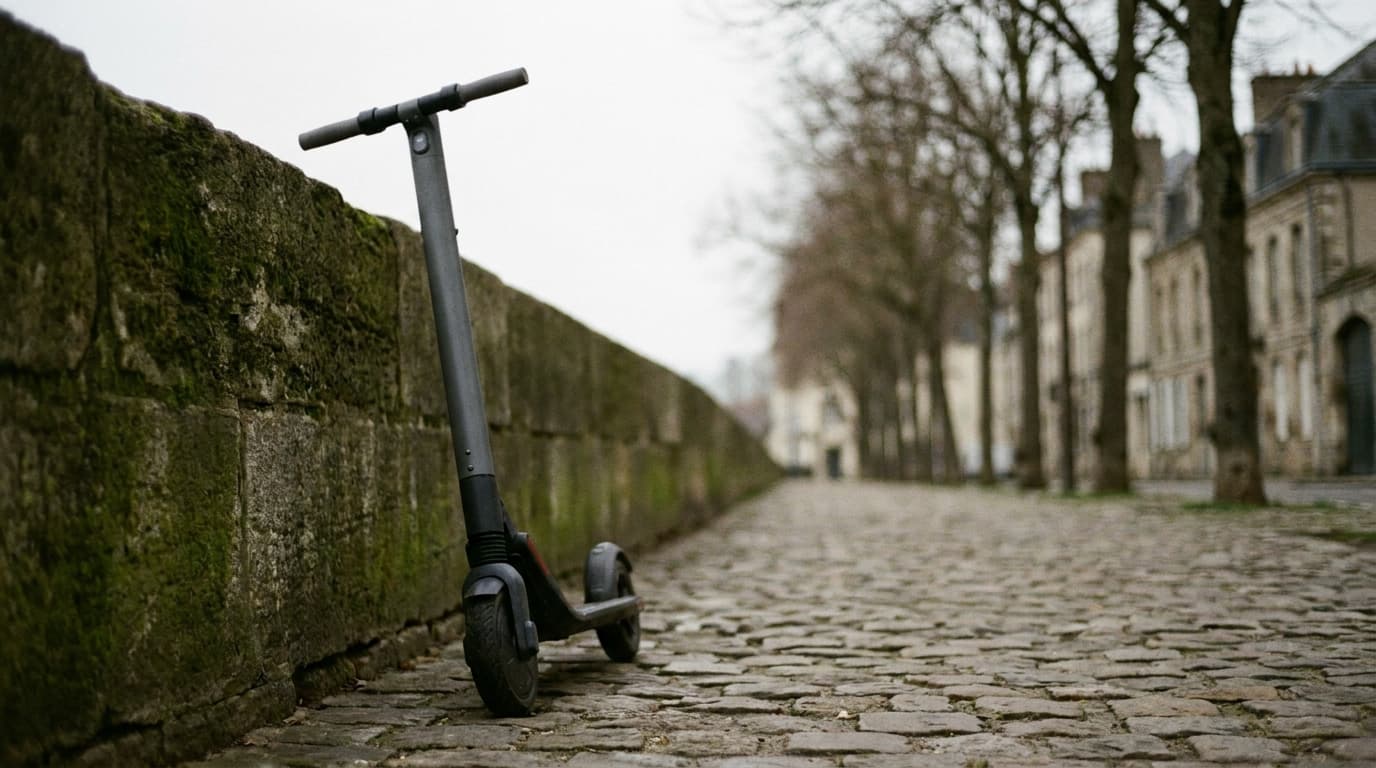
Rental e-scooters sit on nearly every corner of a German city center, and that visibility leads a lot of newcomers to treat them like a shared bicycle. German law does not. The regulation that governs them classifies an e-scooter as a Kraftfahrzeug, a motor vehicle, and that single classification is the reason almost every rule on this page reads closer to the rules for a car than the rules for a bike.
That matters most for two things visitors rarely expect: the alcohol limits that apply while riding one, and what a conviction for riding one drunk can do to a car driving licence a person already holds. This page works through the eKFV, the ordinance that sets these rules, the insurance requirement, where riding is and is not allowed, and a 2026 update to the surrounding fine and safety rules.
Information last verified on 19 July 2026. This page provides general legal information and does not constitute legal advice in an individual case.
Why an e-scooter counts as a Kraftfahrzeug, not a bicycle
§ 1 Abs. 1 eKFV defines Elektrokleinstfahrzeuge as Kraftfahrzeuge with electric drive and a design speed of more than 6 km/h and not more than 20 km/h. It goes on to add weight, width and safety equipment conditions, but the opening line is what matters here: the ordinance calls them motor vehicles by name.
That is not a formality. Because an e-scooter is also a Kraftfahrzeug for the purposes of § 1 Abs. 2 StVG, every rule that keys off that word elsewhere in German traffic law reaches it too, including the drink driving statutes covered further below. An ordinary bicycle is not a Kraftfahrzeug, and the alcohol thresholds that apply to one are meaningfully higher as a result. Confusing the two categories is where most of the surprises on this page come from.
Age and licence: what § 3 actually requires
§ 3 eKFV sets a single condition for who may ride: a person who has turned 14 years old. It does not add a licence requirement, a Mofa Prüfbescheinigung, or any other qualifying test, and no other section of the ordinance adds one either.
That is a genuinely different position from a car. A 16 year old visiting relatives in Germany does not need any form of German or foreign driving licence to rent and ride a scooter, only the age of 14. It is worth restating plainly, because the Kraftfahrzeug classification elsewhere on this page makes people assume a licence must be hiding somewhere in the rules. It is not: age is the only qualifying condition the eKFV sets.
Where you can, and cannot, ride
§ 10 eKFV sets out the surfaces an e-scooter may use, built around a strict order rather than a free choice. Inside a built up area, a rider must use a cycle path, a combined pedestrian and cycle path, a marked cycle lane, or a Fahrradstraße where one exists. Only where none of those exist may the carriageway or a traffic calmed zone be used instead. Outside a built up area, the same cycle infrastructure comes first, followed by a paved verge, with the carriageway itself as the fallback.
Footpaths and pedestrian only zones are not on that list at all, and § 10 does not treat them as a fallback the way it treats the carriageway. A road authority can post the supplementary sign 'Elektrokleinstfahrzeuge frei' to open a specific footpath, but absent that sign, riding on a footpath or through a pedestrian zone is not permitted, a genuinely common way for a visiting rider to pick up a fine without realising a rule existed.
§ 11 eKFV adds the general conduct rules underneath that: riding single file rather than side by side, giving a hand signal before changing direction, and, for parking, applying the same rules that apply to a parked bicycle.
The insurance sticker every legal e-scooter needs
§ 2 Abs. 1 Nr. 2 eKFV makes putting an e-scooter into operation on a public road conditional on it carrying a valid Versicherungsplakette for Elektrokleinstfahrzeuge under § 56 of the Fahrzeug-Zulassungsverordnung (FZV). § 56 FZV in turn defines that sticker as the proof that a compulsory motor vehicle liability policy exists for the vehicle under § 1 of the Pflichtversicherungsgesetz (PflVG), the same statute that requires liability cover for a car.
For a rented scooter, the operator has already bought and displayed that cover, and the sticker colour changes each year so an officer can tell at a glance whether it is current. For a privately owned e-scooter, the rider or owner has to buy that policy directly and renew the sticker every year.
Riding one without valid cover is not simply an administrative gap. § 6 PflVG prohibits using a vehicle for which the required liability insurance under § 1 does not exist, and that prohibition carries criminal exposure rather than a fixed fine, precisely because an uninsured Kraftfahrzeug on the road can leave an injured third party with nothing to claim against.
Helmets, passengers and towing
No German law requires a helmet for an e-scooter rider of any age, and § 11 eKFV does not add one. Police and the Bundesministerium für Verkehr both recommend wearing one anyway, and the recommendation is not boilerplate: e-scooter falls concentrate head and wrist injuries in emergency room data in a way ordinary cycling falls generally do not, largely because of the small wheels and the standing posture.
§ 8 eKFV is short and leaves no room to read around it: Personenbeförderung, carrying a passenger, and Anhängerbetrieb, towing a trailer, are both not permitted. That covers a second adult standing on the deck for a short distance, a child riding along, or a small trailer or basket towed behind, none of which the ordinance treats as a minor variation on riding alone.
Alcohol limits: the car rules apply, not the bicycle rules
This is the point that catches out the most people, and it follows directly from the Kraftfahrzeug classification covered above. Because an e-scooter is a motor vehicle for the purposes of § 1 Abs. 2 StVG, the alcohol limits that apply are the ones written for cars, not the considerably higher threshold German courts apply to an ordinary bicycle.
Three numbers matter. § 24a StVG sets 0.5 promille, or an equivalent breath alcohol reading, as a regulatory offence, an Ordnungswidrigkeit, on its own, without any need to show actual impaired riding. Above that, German courts treat 1.1 promille as absolute Fahruntüchtigkeit, absolute unfitness to drive, a threshold that is judge made rather than written into any statute as a number. The Bayerisches Oberstes Landesgericht, in a decision of 24 July 2020 (205 StRR 216/20), confirmed directly that this car level 1.1 promille threshold, not a separate or lower e-scooter figure, applies once a rider is classified as operating a Kraftfahrzeug, reasoning that a separate value for every vehicle type would produce an unworkable patchwork. Third, § 24c StVG sets a strict zero tolerance line, for alcohol and for cannabis, for anyone still in the Probezeit or under 21, regardless of the general 0.5 threshold that applies to everyone else.
Worked example: the case that settled this question began with a rider who took a rental e-scooter from a Munich train station late one evening during the Oktoberfest season. A blood sample taken shortly afterward measured 1.35 promille. Because that figure sits above the 1.1 promille absolute unfitness threshold used for cars, and because the court held that threshold applies to an e-scooter exactly as it would to a car, the rider was convicted of Trunkenheit im Verkehr under § 316 StGB, a criminal offence rather than a fine only matter.
The consequence that surprises people: your car licence
A conviction under § 316 StGB is not the end of the exposure. § 69 StGB lists drunk driving under § 316 among the offences where a court presumes the offender unfit to drive, and where that presumption holds, the court revokes the Fahrerlaubnis itself, not merely the right to use the specific vehicle involved in the offence.
Because riding an e-scooter never required a driving licence in the first place, there is no scooter specific permit sitting there for a court to revoke instead. What the court revokes is whatever Fahrerlaubnis the person actually holds, which for most adult riders means the car category. § 69a StGB then bars a new licence being issued for between six months and five years while that revocation runs, and while a court can exclude specific vehicle categories from the bar in unusual circumstances under § 69a Abs. 2, that is described as an exception rather than the default outcome.
In practical terms, a rider who has had too much to drink and treats an e-scooter as the responsible alternative to driving a car home can still end up losing the right to drive that car, on top of whatever the scooter ride itself cost them. See drink driving limits for how the same 0.5 and 1.1 promille thresholds play out for an ordinary car, and driving bans for how a Fahrverbot differs from the full Entziehung der Fahrerlaubnis described here.
Rental scooters: parking and who is liable
§ 11 Abs. 5 eKFV applies the ordinary bicycle parking rules to an e-scooter, which in practice means leaving it upright, out of the direct path of pedestrians, and away from tactile paving, building entrances and crossings, rather than wherever a rental app happens to end the trip. Several German cities have added local rules on top of that baseline aimed specifically at operators, generally to keep scooters from being left lying flat across a pavement.
Liability for an incident during a rental normally sits with the rider under the terms of the rental agreement and the compulsory liability cover described above, in much the same way a car rental agreement places responsibility on the driver rather than the rental company for how the vehicle was used. The specific allocation between rider, operator and any third party insurer depends on the individual operator terms, and a rider involved in a serious incident should keep the reservation record and any in app photos of where the scooter was parked, rather than relying on memory afterward.
A 2026 update, and two claims to ignore
An omnibus ordinance adopted on 30 January 2026 amends both the eKFV and the Bußgeldkatalog-Verordnung, but the two halves arrive on different dates and a lot of coverage runs them together. Article 5 of the ordinance sets this out: the ordinance takes effect on 1 April 2026 apart from Articles 2 to 4, which take effect on 1 March 2027.
That matters because Article 3 is the amendment to the Bußgeldkatalog-Verordnung, the one that folds e-scooter offences into cyclist parallel fine entries. So as of today the eKFV construction and battery standards in Article 1 are live, while the fine table change is not yet in force and does not arrive until 1 March 2027. Anything telling you the e-scooter fine entries changed in April 2026 has read only the headline date. See Germany's fine catalogue for how the broader tariff system works.
Two widely repeated claims about e-scooters could not be traced back to an actual Bundesgesetzblatt entry: a general e-scooter fine increase said to have taken effect in April 2025, and a mandatory turn signal requirement, a Blinkerpflicht, said to arrive in 2027. Neither appears in the official legislative record, and this page does not repeat either one. For the wider split between federal and state traffic rules, see German law explained.
Frequently Asked Questions
Do I need a driving licence to ride an e-scooter in Germany?
No. Paragraph 3 eKFV sets a single condition, having turned 14, and no licence, Mofa certificate or other qualifying test is required at any age.
Is a helmet required on an e-scooter in Germany?
No law requires one for any age group. Riding without a helmet is legal, though police and the transport ministry recommend one because of the injury pattern e-scooter falls tend to produce.
What alcohol limit applies to e-scooters in Germany?
The same limits that apply to a car, not the higher bicycle threshold. 0.5 promille is a regulatory offence on its own under § 24a StVG, 1.1 promille is treated by the courts as absolute unfitness to drive and a criminal offence, and the limit is zero for anyone in the Probezeit or under 21 under § 24c StVG.
Can riding an e-scooter drunk cost me my car licence?
Yes. A conviction for drunk riding under § 316 StGB can lead a court to revoke the offender entire Fahrerlaubnis under § 69 StGB, not just the right to use the scooter, because no separate e-scooter licence exists for the court to revoke instead.
Can e-scooters be ridden on the footpath or in a pedestrian zone?
Generally no. Paragraph 10 eKFV lists cycle paths and, failing those, the carriageway as the permitted surfaces. A footpath or pedestrian zone is only open to e-scooters where a specific sign permits it.
Do rental e-scooters already have insurance?
A legally operating rental scooter carries a current Versicherungsplakette, proving cover under § 56 FZV and the Pflichtversicherungsgesetz. A privately owned e-scooter needs its own policy and sticker, renewed every year.
Can two people ride one e-scooter, or tow something behind it?
No. Paragraph 8 eKFV prohibits carrying a passenger and towing a trailer outright, regardless of how short the distance or how light the load.
Sources and References
- § 1 Abs. 1 eKFV, Begriffsbestimmung Elektrokleinstfahrzeuge(gesetze-im-internet.de).gov
- § 2 eKFV, Anforderungen an das Inbetriebsetzen(gesetze-im-internet.de).gov
- § 3 eKFV, Berechtigung zum Führen(gesetze-im-internet.de).gov
- § 8 eKFV, Personenbeförderung und Anhängerbetrieb(gesetze-im-internet.de).gov
- § 10 eKFV, Zulässige Verkehrsflächen(gesetze-im-internet.de).gov
- § 11 eKFV, Allgemeine Verhaltensregeln(gesetze-im-internet.de).gov
- § 56 FZV, Versicherungsplakette(gesetze-im-internet.de).gov
- § 6 PflVG, Verbot des Gebrauchs ohne Haftpflichtversicherung(gesetze-im-internet.de).gov
- § 24a StVG, 0,5 Promille-Grenze(gesetze-im-internet.de).gov
- § 24c StVG, Alkohol- und Cannabisverbot für Fahranfänger und Fahranfängerinnen(gesetze-im-internet.de).gov
- § 316 StGB, Trunkenheit im Verkehr(gesetze-im-internet.de).gov
- § 69 StGB, Entziehung der Fahrerlaubnis(gesetze-im-internet.de).gov
- § 69a StGB, Sperre für die Erteilung einer neuen Fahrerlaubnis(gesetze-im-internet.de).gov
- Bundesministerium für Verkehr, Elektrokleinstfahrzeuge-Verordnung: Fragen und Antworten(bmv.de).gov
- § 1 PflVG, Pflicht zum Abschluss einer Haftpflichtversicherung(gesetze-im-internet.de).gov
- Verordnung zur Änderung der eKFV und weiterer Vorschriften, BGBl. 2026 I Nr. 32(recht.bund.de).gov