
Germany
Einspruch Against a German Bußgeldbescheid: The Deadline, the Cost Risk, and When It Is Worth It
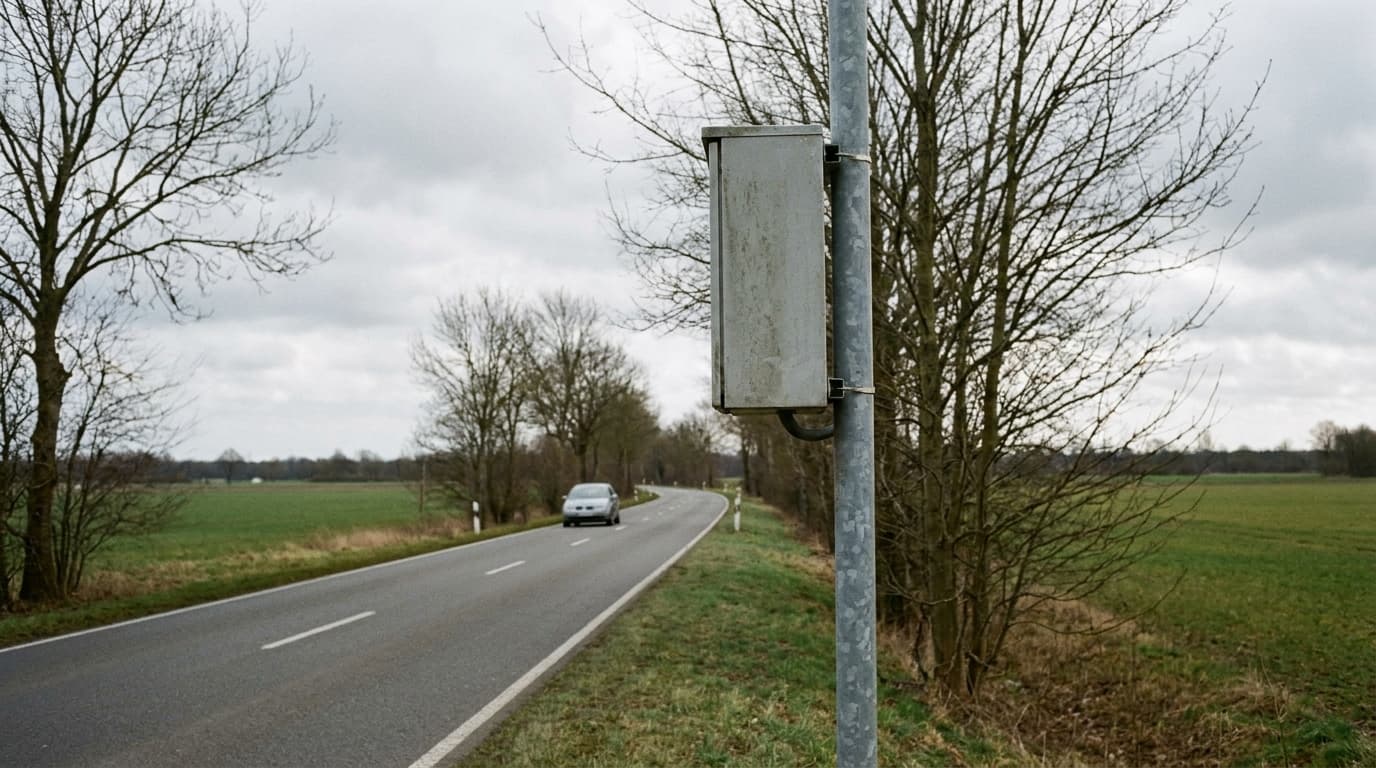
An Einspruch is a formal written objection to a German Bußgeldbescheid, the fine notice an authority sends after a traffic violation (see the Bußgeldkatalog for how fines are set). Filing one does not send the case straight to a judge; it opens a review that can go several ways, and one of them is worse than the fine you started with.
Much of the advice aimed at this search is written by firms selling the challenge itself. This page sets out what an Einspruch does procedurally, what it costs if it fails, and where it has a genuine basis versus where it mostly adds expense to a fine you were always going to owe. For German law explained more broadly, start at the country hub.
Information last verified on 19 July 2026. This page provides general legal information and does not constitute legal advice in an individual case.
What an Einspruch actually is
A Bußgeldbescheid is an administrative decision, not a court judgment, and it becomes final and enforceable on its own if nobody challenges it in time. Filing an Einspruch is what keeps that from happening.
§ 67 Abs. 1 OWiG sets the form: filed in writing, or stated for the record in person, "zur Niederschrift," at the authority that issued the Bescheid. It does not go to a court and does not need to explain itself in detail. § 67 Abs. 2 OWiG lets it be limited to specific points, for example the fine amount, the points entered on the Flensburg register, or a Fahrverbot, rather than the finding of the violation itself. Treated like an objection to a Strafbefehl, §§ 297 to 300 and § 302 StPO apply by reference, so it can later be limited or withdrawn.
The two week clock, and if you miss it
The Einspruchsfrist is two weeks from Zustellung, formal service of the Bußgeldbescheid, not from the date printed on the notice. § 51 OWiG routes service through the Verwaltungszustellungsgesetz or the equivalent state law, usually delivery with a Zustellungsurkunde, a delivery record the carrier completes. If nobody is home, substitute delivery to another person at the address, or deposit in the mailbox, is generally valid, and that recorded date starts the clock regardless of when the driver reads it.
Worked example. A Bescheid is deposited in the mailbox on Tuesday 4 August, recorded as served that day. The deadline runs to Tuesday 18 August. An Einspruch received on 19 August is late, even if the driver only found it after a week away.
That scenario, being genuinely unable to meet the deadline through no fault of your own, is what § 52 OWiG addresses (applying §§ 44, 45, 46 Abs. 2 and 3, and § 47 StPO by reference): the missed Einspruch must be filed together with a Wiedereinsetzung request, without delay once the obstacle ends, showing the delay was not your fault. Not having checked the mail while travelling does not usually qualify; being hospitalized or otherwise genuinely prevented does.
What happens after you file
Most people picture the Einspruch going straight to a judge. It does not. § 69 OWiG governs the Zwischenverfahren, and the issuing authority handles it first. A late or otherwise inadmissible Einspruch is rejected under § 69 Abs. 1 OWiG, itself reviewable by a court within two weeks.
If admissible, § 69 Abs. 2 OWiG requires the authority to decide whether to uphold or withdraw the Bescheid, gathering further evidence if needed. This is where an Einspruch most often pays off: the authority corrects an error or drops the case with no court involved. Only if it maintains its decision does § 69 Abs. 3 OWiG send the file, through the Staatsanwaltschaft, to the Amtsgericht.
The Beschlussverfahren, the Hauptverhandlung, and Verböserung
Once at the Amtsgericht, a case can be resolved two ways, and the difference matters more than most Einspruch guidance says. § 72 OWiG lets the court decide by Beschluss, a written resolution without a hearing, but only if neither side objects after being told and given two weeks to respond. § 72 Abs. 3 OWiG states plainly that in this route the court may not worsen the outcome for the driver.
That protection does not extend to a Hauptverhandlung, a full oral hearing, where the judge is not bound by the original figure and can impose a higher fine or a Fahrverbot the authority never sought. § 66 Abs. 2 Nr. 1 OWiG requires every Bescheid to warn of exactly this, the central risk of the whole process.
| Route | Hearing | Can the outcome get worse |
|---|---|---|
| Beschlussverfahren, § 72 OWiG | None, both sides agree to skip it | No, barred by § 72 Abs. 3 OWiG |
| Hauptverhandlung, § 71 OWiG | Full oral hearing | Yes, the court is not bound by the Bescheid |
The cost risk if it fails
§ 46 Abs. 1 OWiG applies the StPO's cost rules to Bußgeldverfahren, and § 105 OWiG carries this through: if the Einspruch fails, the driver generally bears the proceeding's costs and their own necessary expenses, ordinarily their lawyer's fee, the same way a convicted defendant bears costs under § 465 StPO. § 109a OWiG adds that for fines up to ten euros, a lawyer's fee counts as necessary only if the case's difficulty or importance called for one.
Worked example. A driver challenges a clearly documented, undisputed speed violation, retains a lawyer, and the Amtsgericht upholds the fine after a Hauptverhandlung. They now owe the original fine plus the court costs and their own lawyer's fee, a second layer of cost on an unchanged result. Where an Einspruch succeeds instead, the driver's necessary expenses are generally not left on their own shoulders.
Verjährung: how long the authority has
Separately from your deadline to object, there is a deadline on how long the authority has to act, and it changed recently. § 26 Abs. 3 StVG sets the Verfolgungsverjährung for most traffic Ordnungswidrigkeiten under § 24 Abs. 1 StVG. Until 30 June 2026 it ran three months from the violation while no Bescheid had issued, extending to six months once one issued. Effective 1 July 2026 it became a flat six months. How that applies to a violation committed shortly before 1 July whose old clock had not yet expired is, honestly, not settled: the enacting law contains no transitional provision on the point, and practitioners have taken both views. German doctrine generally treats limitation rules as procedural and applies a lengthened period immediately to matters not yet time-barred, which points away from the comfortable assumption that an older violation keeps the shorter clock. If your violation straddles that date, treat the question as open rather than resolved. § 33 Abs. 1 Nr. 9 OWiG restarts the clock when the Bescheid issues, provided it is served within two weeks, otherwise from actual service.
Worked example. A violation recorded 20 July 2026 falls under the flat rule: the authority has until 20 January 2027 to issue and serve a Bescheid, or the case becomes unenforceable. Checking that window against the file's own dates is a low-risk reason to file. Once final, § 34 OWiG gives enforcement its own limit: three years for a fine up to one thousand euros, five years above that.
Akteneinsicht, and does insurance cover this
§ 49 OWiG gives a driver the right, on request, to inspect the authority's file, unless it would endanger an ongoing investigation. For a speed camera or red light case, that file holds the actual measurement documentation, calibration and maintenance records, and raw data, not just the summary on the Bescheid. The right belongs to the driver, but interpreting calibration logs takes familiarity with the device and case law, which is why Akteneinsicht is, in practice, almost always exercised through a lawyer.
Verkehrsrechtsschutz, legal expenses insurance for traffic matters, commonly covers a Bußgeldverfahren defense, including the lawyer's fee, subject to the specific policy. Most policies exclude intentional violations and require the cover to have already been active, past any waiting period, before the violation. A driver with this cover carries much less of the cost risk above.
When it has a real basis, and when it mostly adds cost
Given the cost risk and the lack of protection at a full hearing, an Einspruch deserves real consideration in a narrower set of cases than the search volume suggests: a measurement or device defect uncovered through Akteneinsicht, not assumed; a misidentified driver, where the evidence does not clearly show who was driving; an expired Verjährungsfrist the file confirms; or a Fahrverbot that would cost someone their livelihood, aimed at the hardship route under § 4 Abs. 4 BKatV, which trades the ban for a raised fine, though that route carries the same Verböserung exposure at a full hearing.
A challenge mostly adds cost where none of that applies: the measurement is properly documented, the driver is clearly identified, and the fine is routine. There, an Einspruch invites a further review of a file that already supports the Bescheid, with a real chance of the same outcome plus the added cost. Almost any Bescheid can be objected to. The honest question is whether the file has something in it worth the cost of finding out.
Frequently Asked Questions
How long do I have to file an Einspruch against a Bußgeldbescheid?
Two weeks from the date the Bescheid is formally served on you, under § 67 OWiG. That is the delivery date on the Zustellungsurkunde, not the date printed on the notice and not the day you personally open it.
Can the court increase my fine if I file an Einspruch?
Yes, but only at a full Hauptverhandlung. Deciding without a hearing under § 72 OWiG bars the court from making the outcome worse; at an oral hearing that protection does not apply, and the Bescheid is legally required to warn you of this.
What happens right after I file an Einspruch?
The issuing authority reviews it first, under § 69 OWiG, and can withdraw or amend the Bescheid itself. Only if it maintains its decision does the file move, through the prosecutor's office, to the Amtsgericht.
Do I have to pay costs if my Einspruch fails?
Generally yes. If it does not succeed, the driver typically bears the court costs and their own necessary expenses, including their lawyer's fee, under § 105 OWiG with § 465 StPO, on top of the original fine.
What if I missed the two week deadline?
§ 52 OWiG allows a Wiedereinsetzung, reinstatement of the deadline, if you were prevented from filing in time through no fault of your own and act without delay once the obstacle ends. Simply not checking the mail while travelling does not usually qualify.
Can I see the measurement evidence behind my speeding fine?
Yes. § 49 OWiG gives you a right to inspect the authority's file, including calibration and measurement records, unless it would endanger a related investigation. Interpreting that documentation is normally done through a lawyer.
Does legal expenses insurance cover fighting a Bußgeldbescheid?
Verkehrsrechtsschutz commonly covers a Bußgeldverfahren defense, subject to the specific policy. Most policies exclude intentional violations and require the cover to have been active, past any waiting period, before the violation happened.
Is it worth challenging a routine, clearly documented fine?
Usually not. Where the measurement is properly documented, the driver is clearly identified, and the violation is not seriously in dispute, an Einspruch mostly adds cost, without the protection against a worse result a Beschlussverfahren provides.
Sources and References
- § 67 OWiG, Form und Frist(gesetze-im-internet.de).gov
- § 52 OWiG, Wiedereinsetzung in den vorigen Stand(gesetze-im-internet.de).gov
- § 69 OWiG, Zwischenverfahren(gesetze-im-internet.de).gov
- § 71 OWiG, Hauptverhandlung(gesetze-im-internet.de).gov
- § 72 OWiG, Entscheidung durch Beschluss(gesetze-im-internet.de).gov
- § 66 OWiG, Inhalt des Bußgeldbescheids(gesetze-im-internet.de).gov
- § 49 OWiG, Akteneinsicht des Betroffenen und der Verwaltungsbehörde(gesetze-im-internet.de).gov
- § 51 OWiG, Zustellungen(gesetze-im-internet.de).gov
- § 33 OWiG, Unterbrechung der Verjährung(gesetze-im-internet.de).gov
- § 34 OWiG, Verjährung der Vollstreckung(gesetze-im-internet.de).gov
- § 46 OWiG, Anwendung von Vorschriften über das Strafverfahren(gesetze-im-internet.de).gov
- § 105 OWiG, Kostenentscheidung(gesetze-im-internet.de).gov
- § 109a OWiG, Auslagen des Betroffenen(gesetze-im-internet.de).gov
- § 26 StVG, Zuständige Verwaltungsbehörde; Verjährung(gesetze-im-internet.de).gov