
Germany
Cannabis and Driving in Germany: The 3.5 ng/ml THC Limit Explained
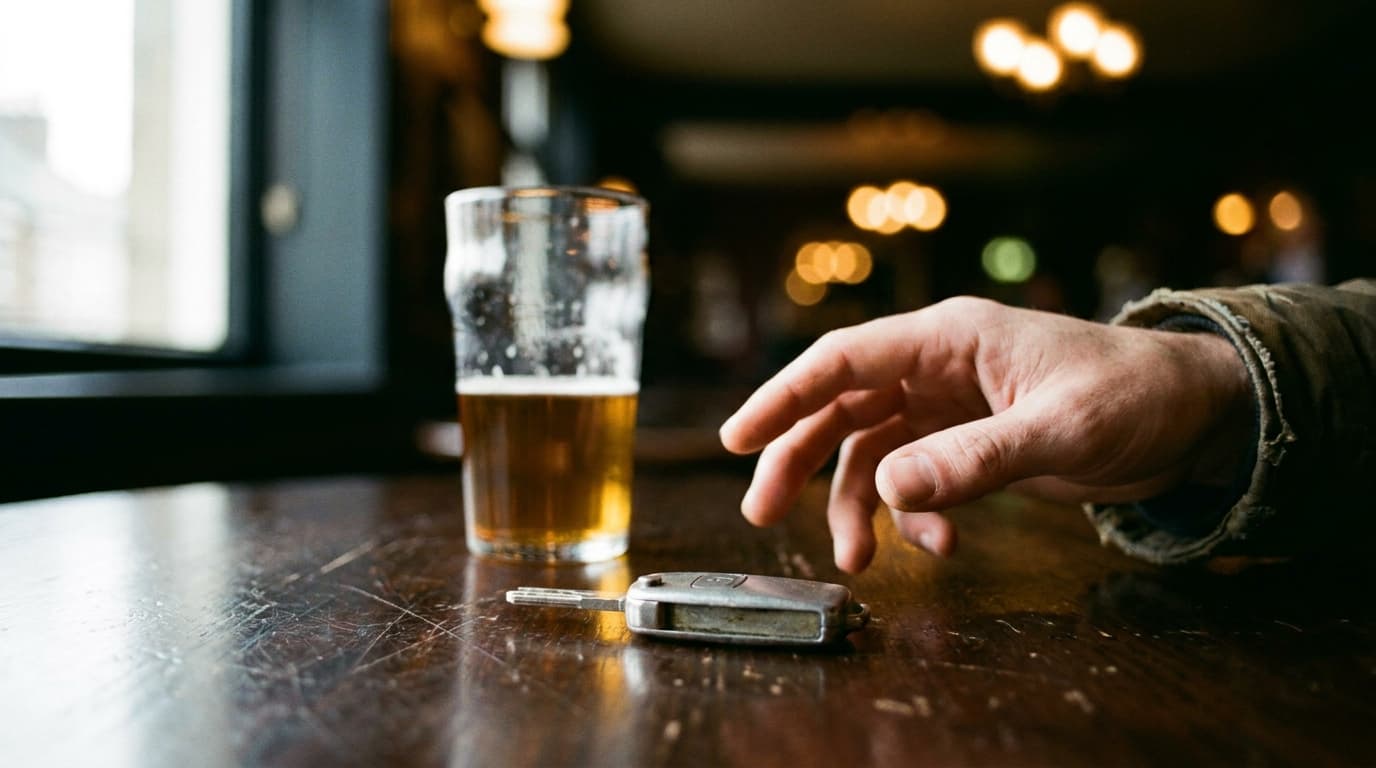
Germany does not have one THC limit for driving. It has an adult threshold written directly into the road traffic statute, a separate zero tolerance rule for new and young drivers, and a stricter combination rule for anyone who mixes cannabis with alcohol before driving.
This topic also moves faster than almost anything else in German traffic law. The Konsumcannabisgesetz (KCanG) legalized limited adult possession on 1 April 2024, but the specific driving limit that most searches are actually looking for, the 3.5 ng/ml THC figure in § 24a Abs. 1a StVG, only took effect later, on 22 August 2024, once the Sechstes Gesetz zur Änderung des Straßenverkehrsgesetzes was published in the Bundesgesetzblatt. Some older German language content still describes the driving limit and the possession law as one and the same reform. They are not, and the gap between the two dates has already produced court decisions reopening older fines.
Information last verified on 19 July 2026. This page provides general legal information and does not constitute legal advice in an individual case.
Two different THC rules, not one scaled down version of the other
A great deal of confusion around this topic comes from people assuming Germany applies one THC number and simply halves it for younger or newer drivers. That is not how the statute is built.
§ 24a Abs. 1a StVG sets 3.5 ng/ml of THC in blood serum for drivers who are both 21 or older and past the two year Probezeit defined in § 2a StVG. § 24c StVG governs everyone else in that younger or newer group separately, and it does not borrow the 3.5 ng/ml figure at all. It simply bans consuming alcohol or THC, or driving under the influence of either, with no numeric floor.
The honest way to state the novice rule is zero, full stop, not some smaller decimal. A source suggesting a reduced figure such as 1.0 ng/ml for new or young drivers is describing an older, pre reform legal landscape, not the rule in force since the 2024 amendment.
Where 22 August 2024 fits against 1 April 2024
It matters which reform did what, because these are genuinely two different laws with two different effective dates.
The KCanG took effect on 1 April 2024. It legalized possession of up to 25 grams of cannabis in public and up to 50 grams at home for adults, along with limited home cultivation, under § 3 KCanG. It says nothing about driving.
The driving specific limit came later. The Sechstes Gesetz zur Änderung des Straßenverkehrsgesetzes, which inserted 3.5 ng/ml into § 24a Abs. 1a StVG and added THC to the § 24c StVG novice ban, passed the Bundestag on 6 June 2024, cleared the Bundesrat on 5 July 2024, and was published in the Bundesgesetzblatt on 21 August 2024, entering into force the next day, 22 August 2024. Before that, courts applied an older, judge made THC threshold, and several defendants fined under that older standard for readings below 3.5 ng/ml have since had their cases reopened.
Why 3.5 ng/ml, and why it is not a detectability line
The 3.5 ng/ml figure did not come from the Bundestag doing its own toxicology. It came from an independent interdisciplinary expert group convened to recommend a value, which reported in March 2024.
The expert group's own reasoning, published alongside its recommendation, ties a THC concentration of roughly 2 to 5 ng/ml in blood serum to an impairment risk comparable to a blood alcohol level of about 0.2 promille. The group then added a flat safety margin of 1 ng/ml, drawn from the possibility of measurement error, arriving at 3.5 ng/ml as a deliberately conservative line.
That history matters for one reason above all others: 3.5 ng/ml is not the point at which THC first shows up in blood. It is a risk based line set well above the level where a sensitive lab test can detect the substance at all. A frequent cannabis user can, in principle, test positive for THC in blood serum for a period well beyond any actual impairment, particularly at low concentrations. The gap between detectability and impairment is precisely why no simple number of hours can substitute for an actual reading.
The § 24a StVG fine ladder
Driving above 3.5 ng/ml under § 24a Abs. 1a StVG is an Ordnungswidrigkeit, and it sits on the same regulatory ladder as the 0.5 promille alcohol limit in § 24a Abs. 1 StVG. Fines escalate sharply once an earlier entry for § 24a StVG, § 316 StGB or § 315c Abs. 1 Nr. 1 Buchstabe a StGB already sits in the Fahreignungsregister, the federal driver record.
| Situation | First offense | One prior entry | Multiple prior entries |
|---|---|---|---|
| 3.5 ng/ml THC alone (§ 24a Abs. 1a) | EUR 500, 1 month Fahrverbot, 2 points | EUR 1,000, 3 month Fahrverbot, 2 points | EUR 1,500, 3 month Fahrverbot, 2 points |
| Alcohol combined with 3.5 ng/ml THC (§ 24a Abs. 2a) | EUR 1,000, 1 month Fahrverbot, 2 points | EUR 1,500, 3 month Fahrverbot, 2 points | EUR 2,000, 3 month Fahrverbot, 2 points |
| Probezeit or under 21, any measurable THC or alcohol (§ 24c Abs. 1) | EUR 250 | Escalates with Probezeit consequences under § 2a StVG | Escalates with Probezeit consequences under § 2a StVG |
These figures are the standard rates (Regelsätze) set in the Anlage to the Bußgeldkatalog-Verordnung (BKatV). § 24a Abs. 3 StVG allows a Geldbuße of up to EUR 3,000 for an Abs. 1a offense and up to EUR 5,000 for the combined Abs. 2a offense in an aggravated individual case, so the table above is the normal outcome, not a ceiling. See the fine catalogue for how these figures sit inside the wider BKatV, and driving ban for how a Fahrverbot is actually served and how it differs from losing the licence outright.
Mixing cannabis and alcohol: the stricter rule
Germany does not simply add the cannabis penalty to the alcohol penalty when someone combines the two. It applies a specific, separate provision, § 24a Abs. 2a StVG, that is deliberately harsher than the THC only offense on its own.
Under § 24a Abs. 2a StVG, it is a distinct Ordnungswidrigkeit to reach the 3.5 ng/ml THC threshold in Abs. 1a and to have also consumed an alcoholic drink, or to drive while still under the effect of one, regardless of whether that alcohol reading alone would have crossed the separate 0.5 promille line. As the table above shows, the standard fine roughly doubles compared with THC alone, EUR 1,000 rather than EUR 500 on a first offense, while the Fahrverbot length stays the same at each tier.
Zero tolerance for new and young drivers: § 24c StVG
Anyone within the two year Probezeit defined in § 2a StVG, or anyone under 21 regardless of how long they have held a licence, falls under § 24c StVG rather than § 24a StVG for both alcohol and THC. That provision does not set a number for either substance. It simply prohibits consuming alcohol or Tetrahydrocannabinol, or driving under the influence of either, while in that group.
A violation is still an Ordnungswidrigkeit rather than a crime, with a standard fine of EUR 250 under the BKatV. Beyond the fine, a Probezeit violation typically also extends the Probezeit itself and can require attending an Aufbauseminar, additional driver improvement training, under § 2a StVG, on top of whatever points result from the underlying offense.
Medical cannabis: a narrow exception, not a licence to drive impaired
Germany draws a specific line for patients using cannabis as medicine. § 24a Abs. 4 StVG removes the Ordnungswidrigkeit under Abs. 1a, Abs. 2 Satz 1 and Abs. 2a where the THC in the driver's blood comes from the properly directed use of a medicine prescribed by a doctor for a specific, diagnosed illness. § 24c Abs. 3 StVG carries an identical exception for Probezeit and under 21 drivers.
The exception is narrow in two ways that matter in practice. First, it covers a prescribed medicine taken as directed, such as dronabinol or a cannabis based pharmaceutical product, not cannabis obtained and used under the general KCanG possession allowance even by someone who believes it helps a medical condition. Second, and more importantly, the exception only removes the regulatory THC offense. It says nothing about actual fitness to drive. A patient whose prescribed medication in fact leaves them unable to drive safely remains fully exposed to § 316 or § 315c StGB, exactly like anyone else. Being medically authorized to take a substance has never been a defense to driving while genuinely impaired by it.
When it becomes a criminal matter: § 316 and § 315c StGB
Crossing 3.5 ng/ml is not the only way cannabis use can create legal exposure while driving. Above or even below that figure, the criminal drink and drug driving offense in § 316 StGB can apply if the driver was, as a factual matter, not in a position to drive the vehicle safely because of the substance. Unlike § 24a StVG, § 316 StGB contains no THC number at all; it is written around actual unfitness, and a negligent version of the offense is punished under Abs. 2 as well as an intentional one. The maximum penalty is imprisonment of up to one year or a Geldstrafe, a criminal fine set in day fine units under § 40 StGB.
§ 315c StGB, Gefährdung des Straßenverkehrs, applies the identical unfitness standard but requires more: the impaired driving has to actually endanger another person's life or body, or property of significant value. That extra element carries a heavier penalty, up to five years imprisonment where committed intentionally under Abs. 1, reduced to up to two years where the danger or the underlying conduct was only negligent under Abs. 3.
A conviction under either statute is a materially different event from a § 24a StVG fine. § 69 StGB requires a court to revoke the licence outright, called Entziehung, where the offense shows the driver unfit, and both § 316 and § 315c StGB are offenses where § 69 Abs. 2 StGB presumes that unfitness from the conviction itself. § 69a StGB then sets a Sperrfrist, a waiting period of six months to five years, sometimes longer, before a new licence can even be applied for. That is a different and heavier consequence than the temporary Fahrverbot that sits on the § 24a StVG administrative track; see driving ban for how the Fahrverbot itself works.
The MPU question: one test is not automatically an MPU
A great deal of anxiety around this topic comes from an assumption that any positive THC result leads straight to the MPU, the medizinisch-psychologische Untersuchung. The actual rule in § 14 FeV is more layered than that.
§ 14 Abs. 1 FeV lets the licensing authority order the lesser of the two available instruments, an ärztliches Gutachten, a medical opinion from a physician, where facts suggest dependency, use of a controlled substance, or misuse of a psychoactive medication. A single drug related finding, without more, typically supports only this medical opinion.
The full medical psychological assessment under § 14 Abs. 2 FeV is generally reserved for a narrower set of situations: where the licence was already withdrawn for a drug related reason, where the authority still needs to clarify whether dependency or ongoing use continues, or where the driver has committed repeated § 24a StVG offenses involving drugs. Repetition, not a single reading, is what typically moves a case from the lesser medical opinion to the full MPU. See MPU assessment for how the assessment itself is structured and what the Abstinenznachweis requirement involves.
Roadside test or blood sample: what actually proves the offense
A roadside oral fluid swab is a real and commonly used tool, but it is a screening step, not proof of the statutory threshold. § 24a Abs. 1a StVG is written around a concentration in blood serum, so the figure that decides the case has to come from an actual blood draw analyzed in a laboratory, not a field test result alone.
Who can order that blood draw depends on the track. For the criminal offenses in §§ 315a, 315c and 316 StGB, a 2017 amendment to § 81a Abs. 2 StPO removed the earlier rule that only a judge could order a blood draw, so police or the prosecutor can order one directly once those offenses are suspected. The regulatory track does not require a judge either, and for a different reason that is easy to miss because it does not live in the StPO at all. § 46 Abs. 4 OWiG carves the point out expressly: a blood sample needs no judicial order, contrary to § 81a Abs. 2 Satz 1 StPO, where specific facts support a suspicion of an offence under §§ 24a or 24c StVG. So neither route turns on reaching a judge. What both routes do still require is that only a doctor may perform the draw itself.
Worked examples: four drivers, four outcomes
A 34 year old, five years past the Probezeit, is stopped and later tests at 4.8 ng/ml THC in blood serum, no accident, no earlier entry in the Fahreignungsregister. That is a straightforward § 24a Abs. 1a StVG Ordnungswidrigkeit: EUR 500, a one month Fahrverbot, and two points, with the licence itself untouched.
A second driver, also well past the Probezeit, tests at 5.1 ng/ml THC and admits to two beers earlier that evening. Because the THC threshold and alcohol combine, § 24a Abs. 2a StVG applies instead of Abs. 1a alone: EUR 1,000 and the same one month Fahrverbot, roughly double the fine of the first driver for a nearly identical THC reading.
A third driver is 19 and eleven months into the Probezeit. A blood draw shows a low but measurable THC concentration, well under 3.5 ng/ml. Because § 24c StVG applies to this driver regardless of the exact figure, any measurable THC is enough for a EUR 250 fine under § 24c Abs. 1 StVG, plus the usual Probezeit consequences.
A fourth driver is stopped after visibly erratic driving and a minor collision, tests at 6.2 ng/ml THC, and is assessed as unable to control the vehicle safely. Actual unfitness plus endangerment of another person moves this case beyond § 24a StVG into § 315c StGB: up to five years imprisonment, near certain Entziehung of the licence under § 69 StGB, and a Sperrfrist under § 69a StGB before a new one can even be applied for.
Why this page will not publish a wait time before driving
Many sites publish a rule of thumb such as waiting a set number of hours after using cannabis before driving. This page deliberately will not do that.
THC elimination and, separately, actual impairment both vary enormously between individuals, based on frequency of use, dose, method of consumption, body composition and tolerance. A frequent user can carry a measurable blood concentration for a period well beyond any occasional user with the same last use time, sometimes even where no meaningful impairment remains, while an occasional user can in other cases still be genuinely impaired at a point a fixed hourly rule would have called safe. Because the number that decides a case, 3.5 ng/ml in blood serum, only comes from an actual test taken at the time, any number of hours offered in advance is, at best, a rough guess and cannot be relied on to keep a specific evening's driving under the legal line. The only way to know a reading at a given moment is an actual test at that moment, and the honest answer for anyone unsure is simply not to drive.
For the wider context of how German federal statutes, state authority and the courts fit together, see German law explained.
Frequently Asked Questions
What is the legal THC limit for driving in Germany?
For a full licence holder aged 21 or over who is past the Probezeit, the limit is 3.5 ng/ml of THC in blood serum under § 24a Abs. 1a StVG, in force since 22 August 2024. Anyone in the Probezeit or under 21 faces a zero tolerance rule instead under § 24c StVG.
Is the cannabis driving limit the same law as cannabis legalization?
No. The Konsumcannabisgesetz legalized limited adult possession from 1 April 2024. The 3.5 ng/ml driving limit came from a separate law, the Sechstes Gesetz zur Änderung des Straßenverkehrsgesetzes, which took effect later, on 22 August 2024.
Is the THC limit for new drivers half the adult limit?
No. § 24c StVG does not use a fraction of the 3.5 ng/ml figure for Probezeit or under 21 drivers. It bans any measurable alcohol or THC outright, so the correct novice threshold is zero, not a reduced number such as 1.0 ng/ml.
What happens if I drive after cannabis and alcohol together?
A stricter, separate provision applies. § 24a Abs. 2a StVG punishes reaching the 3.5 ng/ml THC threshold while also having consumed alcohol, with a standard first offense fine of EUR 1,000, roughly double the fine for THC alone under § 24a Abs. 1a StVG.
Does one positive THC test mean I need an MPU?
Not usually. Under § 14 FeV, a single drug related finding typically supports only a lesser ärztliches Gutachten, a medical opinion. The full medical psychological assessment is generally reserved for repeated § 24a StVG drug offenses or a licence already withdrawn for a drug related reason.
Can I drive if I have a prescription for medical cannabis?
§ 24a Abs. 4 StVG and § 24c Abs. 3 StVG remove the regulatory THC offense where the substance comes from a doctor prescribed medicine taken as directed for a diagnosed illness. That exception does not cover actual impairment. Driving while genuinely unable to drive safely remains a criminal matter under § 316 or § 315c StGB regardless of the prescription.
Can police prove a THC offense with a roadside swab alone?
No. A roadside oral fluid test is a screening tool, not proof of the statutory threshold. Because § 24a Abs. 1a StVG is measured in blood serum, establishing the offense normally requires an actual blood draw analyzed in a laboratory.
How many hours after using cannabis is it safe to drive?
This page will not give a fixed number of hours. THC elimination and actual impairment vary too much between individuals, based on frequency of use, dose and tolerance, for any general rule to be a safe guide for one specific person on one specific occasion.
Sources and References
- § 24a StVG, 0,5 Promille-Grenze, Tetrahydrocannabinol-Grenzwert(gesetze-im-internet.de).gov
- § 24c StVG, Alkohol- und Cannabisverbot für Fahranfänger und Fahranfängerinnen(gesetze-im-internet.de).gov
- § 316 StGB, Trunkenheit im Verkehr(gesetze-im-internet.de).gov
- § 315c StGB, Gefährdung des Straßenverkehrs(gesetze-im-internet.de).gov
- § 14 FeV, Klärung von Eignungszweifeln im Hinblick auf Betäubungsmittel und Arzneimittel(gesetze-im-internet.de).gov
- Anlage zur Bußgeldkatalog-Verordnung (BKatV), Regelsätze für §§ 24a und 24c StVG(gesetze-im-internet.de).gov
- § 3 KCanG, Erlaubter Besitz von Cannabis(gesetze-im-internet.de).gov
- § 81a StPO, Körperliche Untersuchung des Beschuldigten(gesetze-im-internet.de).gov
- § 69 StGB, Entziehung der Fahrerlaubnis(gesetze-im-internet.de).gov
- § 69a StGB, Sperre für die Erteilung einer Fahrerlaubnis(gesetze-im-internet.de).gov
- Bundesministerium für Verkehr, Gesetzlicher THC-Grenzwert im Straßenverkehr verkündet(bmv.de).gov
- Empfehlungen der interdisziplinären Expertengruppe zur Festlegung eines Cannabis-Grenzwerts im Straßenverkehr(bmv.de).gov
- § 46 Abs. 4 OWiG, Blutprobe ohne richterliche Anordnung bei §§ 24a und 24c StVG(gesetze-im-internet.de).gov