
Germany
The MPU in Germany (Idiotentest): When It Is Ordered and How It Works
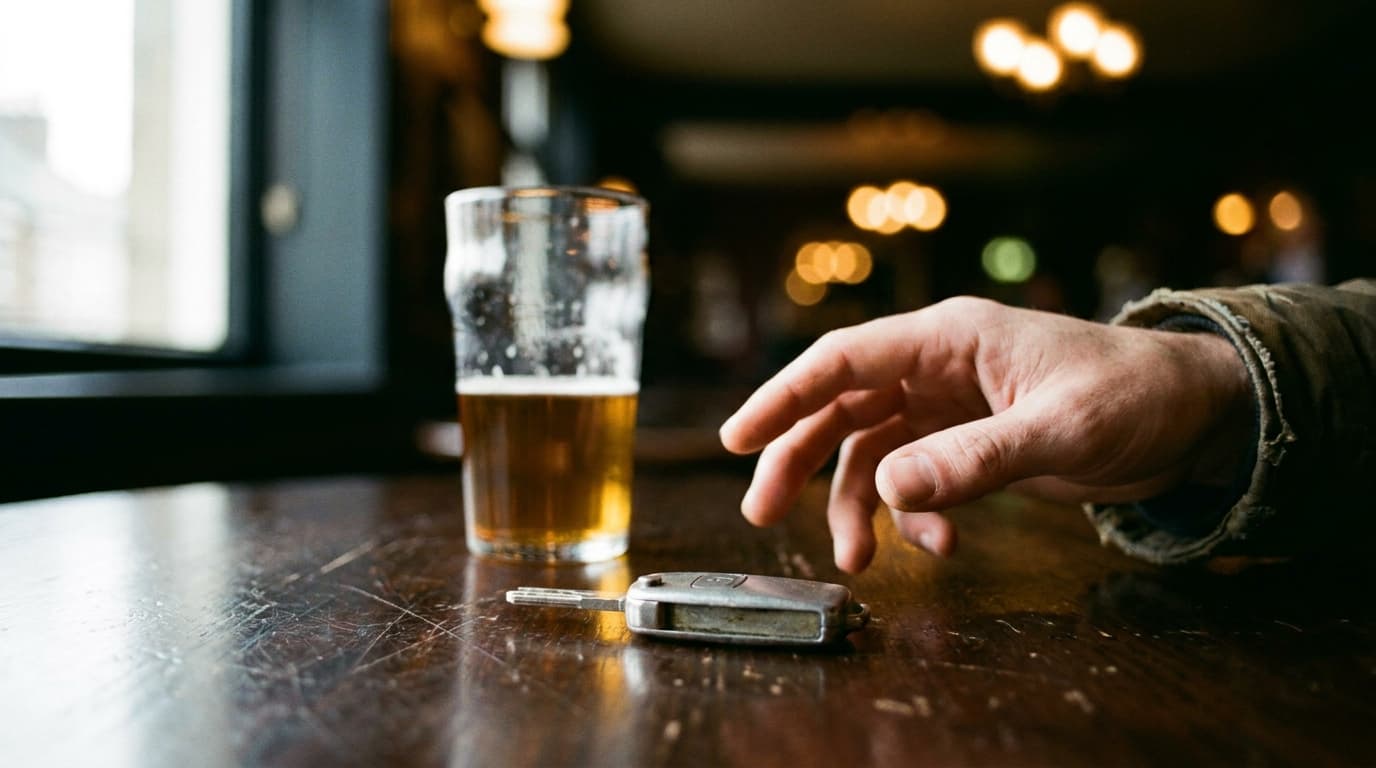
The medizinisch-psychologische Untersuchung, almost always shortened to MPU, is an administrative fitness assessment ordered by a driver's local Fahrerlaubnisbehörde, the licensing authority. It is not a court sentence and not a punishment added to a fine. It exists to answer one narrow question: has the driver's fitness to hold a licence actually been restored, or is it still in doubt.
Many people searching for this topic never type MPU at all. Idiotentest is the colloquial nickname German drivers use for it, reflecting how demanding and, to many, how insulting the process feels. No authority, statute or Begutachtungsstelle uses that word; it survives purely as everyday slang.
This page works through what actually triggers an MPU, how the assessment is structured, the Abstinenznachweis requirement that trips up more people than any other single step, what it costs, and how it connects to a separate, court ordered Sperrfrist. The preparation industry around this topic is full of marketing promising a pass. Nothing below should be read that way: this is a description of the legal framework, not a guide to beating it.
Information last verified on 19 July 2026. This page provides general legal information and does not constitute legal advice in an individual case.
What an MPU actually is
The MPU sits inside the Fahrerlaubnis-Verordnung (FeV), the regulation that governs who may hold a German driving licence. When facts raise a real doubt about a driver's fitness, most commonly alcohol, drugs, accumulated points, or a serious criminal matter connected to driving, the Fahrerlaubnisbehörde can order an assessment before issuing, keeping, or reissuing a licence.
That framing matters because it is easy to conflate the MPU with a court punishment. It is not one. A criminal court can separately revoke a licence and set a Sperrfrist, a disqualification period, under § 69a StGB, covered further down this page. The MPU itself is always an administrative step, decided and required by the licensing authority, even where the underlying facts also produced a criminal conviction.
What triggers an MPU
Alcohol: § 13 FeV
§ 13 FeV requires an MPU where a driver was measured at 1.6 promille blood alcohol or more, or 0.8 mg/l breath alcohol or more, on a single occasion. That threshold alone is enough; the statute does not require an earlier offence.
Separately, § 13 FeV also requires an MPU where a driver has committed repeated traffic offences under the influence of alcohol, even where no individual incident reached 1.6 promille. A prior licence withdrawal for an alcohol related reason under this section brings the same requirement on reapplication. For the general drink driving thresholds themselves, including the lower administrative limits that do not on their own trigger an MPU, see drink driving limits.
Drugs: § 14 FeV, and the distinction most content gets wrong
§ 14 FeV draws a real line between a first drug related concern and a repeated one, and a large share of German language content flattens it into a single rule. It should not be flattened.
Where facts suggest dependency, use of a controlled substance under the Betäubungsmittelgesetz, or misuse of a psychoactive medication, the authority may order the lesser of the two instruments: an ärztliches Gutachten, a medical opinion from a physician, rather than the full medical-psychological assessment. A single drug offence, on its own, typically supports only this medical opinion, not an MPU.
The full MPU under § 14 FeV becomes the requirement where a licence was already withdrawn for one of these reasons, where the authority still needs to clarify whether dependency or use is ongoing, or where the driver has committed repeated § 24a StVG offences involving drugs. Repetition, in other words, is normally what moves the case from a medical opinion to a full MPU. See cannabis and driving for the separate THC limits that feed into § 24a StVG in the first place.
Points: § 4 Abs. 10 StVG
Under § 4 StVG, reaching 8 points results in automatic withdrawal of the licence; the holder is treated as unfit to drive at that threshold. § 4 Abs. 10 StVG then provides that, as a rule, the authority requires an MPU style Gutachten before a new licence is issued to that person.
The sequencing here is easy to get backwards. Hitting 8 points is itself what causes the withdrawal. The MPU requirement generally bites later, when the person applies for a new licence, not at the moment of withdrawal itself. See points in Flensburg for the full 8 point scale and how points accumulate and expire.
The general catch-all: § 11 Abs. 3 FeV
§ 11 Abs. 3 FeV lists a wider set of grounds, including a serious or repeated breach of traffic rules under Nr. 4, alongside serious traffic related criminal conduct and cases involving aggression connected to driving fitness. This is the provision the authority reaches for outside the alcohol, drug, and points scenarios above, for example a pattern of serious violations that does not fit neatly into § 13 or § 14 FeV.
A worked example of the first-versus-repeat line
Take three drivers stopped on the same evening. The first blows 1.7 promille at a routine checkpoint and has never been stopped before. Because a single reading at or above 1.6 promille is enough under § 13 FeV, an MPU follows regardless of the clean record.
The second driver is caught at 0.6 promille, well under 1.6, and is stopped again eight months later at 0.9 promille, again under 1.6. Neither reading alone would trigger an MPU, but the repetition itself can, since § 13 FeV also captures repeated alcohol offences.
The third driver tests positive for THC for the first time under § 24a StVG, with no indication of dependency beyond that single result. That fact pattern points toward the lesser ärztliches Gutachten rather than a full MPU. A second § 24a StVG drug offence, by contrast, would normally move the case to the full MPU under § 14 FeV.
How the assessment is structured
An MPU appointment generally runs three to four hours and has three components, usually taken in one sitting though not in a fixed order.
| Part | What it checks |
|---|---|
| Medical examination | A physician reviews physical fitness and, depending on the reason for the order, relevant health and laboratory findings, including any abstinence evidence submitted |
| Leistungstest | Computer based tests of reaction speed and accuracy, attention, concentration, resilience under load, and orientation |
| Psychological interview | A roughly one hour structured conversation, documented by the examiner, focused on whether a change in behaviour is genuine and likely to hold |
The assessment can only be carried out by a Begutachtungsstelle für Fahreignung officially recognised by a state authority under § 66 FeV. Recognition runs for up to ten years and has to be renewed. Examiners work from the Begutachtungsleitlinien zur Kraftfahreignung, the assessment guidelines anchored in Anlage 4a FeV, so the underlying criteria are the same regardless of which recognised provider carries out the appointment. The Bundesanstalt für Straßenwesen (BASt) runs quality assurance over these centres and publishes the list of recognised providers.
Abstinenznachweis: the step that decides most outcomes
Where an order concerns alcohol or drugs, the assessor typically needs documented proof of abstinence covering a defined period before the appointment, commonly around six or twelve months depending on the case and the specific requirement set. This proof is not fixed by statute in the way a fine amount is; it follows the assessment guidelines and the practice of the recognised laboratories and centres.
Two accepted methods exist. Urine screening involves a series of separate, unannounced samples spread across the required period, so a single clean sample close to the appointment date proves nothing about the months before it. Hair analysis instead reads back through a strand of hair, since each roughly one centimetre segment corresponds to about a month of growth, with alcohol markers detectable over a shorter window than most drug markers, which is why more than one sample is usually needed to cover a full twelve month claim.
The single most important practical point on this whole page is timing. This evidence has to be built up before the assessment, not produced afterward. A laboratory cannot certify six or twelve months of abstinence that has not yet happened, so a driver who waits until an appointment is already scheduled before starting the testing regime has, in practice, made it impossible to present a complete record on the day.
The three possible outcomes
An MPU report generally lands in one of three places. A positive result concludes that fitness has been restored, and it can be submitted to the authority to support the pending application or to resolve the doubts that triggered the order. A negative result concludes that the doubts about fitness have not been resolved. A third outcome recommends further measures short of an outright finding, most often a course of verkehrspsychologische Beratung, traffic psychology counselling, before the question is revisited.
A negative report belongs to the person who was assessed, not to the state, and there is no legal obligation to hand it over. Declining to submit it does not, by itself, resolve anything: where the authority lawfully ordered the report as a condition and it is not received within the deadline it set, § 11 Abs. 8 FeV allows the authority to draw its own conclusion of unfitness from that non-submission, provided the driver was warned of that consequence when the order was issued. A pending application can also simply be withdrawn rather than left to be formally refused, though for someone with an existing licence facing a live compliance order, refusal to attend at all carries the same inference.
What it costs
There is no single nationwide fee schedule for an MPU. Since 2018 the assessment fee has not been fixed by any uniform Gebührenordnung, so recognised centres set their own prices, and a points related case is typically charged less than an alcohol or drug case. Based on current guidance published by ADAC, Germany's largest motoring association, the assessment fee itself commonly falls somewhere in the range of a few hundred to around EUR 800 depending on the reason for the order, with abstinence testing, any optional preparatory counselling, and the administrative fee for a new licence document coming on top of that figure.
The fee is payable by the applicant and is not contingent on the result. A negative outcome does not bring a refund, and a repeat assessment after a negative result means paying the fee again in full.
MPU and a court ordered Sperrfrist
Some of the same facts that lead to an MPU, particularly a serious drink driving conviction or an accident caused while impaired, can separately result in a criminal court revoking the licence under § 69 StGB and setting a Sperrfrist, a disqualification period during which no new licence can be issued at all, under § 69a StGB. That period generally runs from six months to five years, or indefinitely in the most serious cases, and the court, not the licensing authority, controls it.
§ 69a StGB does allow a court to lift a Sperrfrist early, but only once it has run at least three months, or one year for certain repeat cases, and only where new facts justify assuming the grounds for the ban no longer exist. This is where a persistent misconception causes real harm: an MPU cannot simply be scheduled early to shorten that clock. The court still needs to see a real, elapsed period of demonstrated fitness, and the abstinence evidence behind a positive assessment cannot be manufactured faster no matter how soon the appointment itself is booked. See driving bans for how a temporary Fahrverbot differs from this kind of full revocation with a Sperrfrist attached.
Who is allowed to carry out an assessment
Only a Begutachtungsstelle für Fahreignung recognised under § 66 FeV by the competent Land authority may issue an MPU report. TÜV and DEKRA operate the largest networks of recognised centres nationwide, alongside a number of smaller regional institutes. Recognition depends on meeting the requirements in Anlage 14 FeV and BASt's technical guidelines, including trained, continuously certified examiners and evaluation that follows the same nationwide Begutachtungsleitlinien wherever the centre is located.
Can the result be challenged
There is no formal Widerspruch procedure against the content of a private assessor's report the way there is against a government decision. The report is expert input to the authority's own decision, not a decision in itself. A driver who disagrees with a negative finding has, in practice, two paths: decline to submit it and undergo a fresh assessment once genuinely ready, which means paying the fee again, or wait for the authority's own administrative decision, such as a refusal to reissue a licence, and challenge that decision through the ordinary administrative process.
For background on German law generally, including how federal and state authority is divided, see German law explained.
Frequently Asked Questions
What does MPU stand for and who orders it?
MPU stands for medizinisch-psychologische Untersuchung. It is ordered by the Fahrerlaubnisbehörde, the local licensing authority, as a condition of keeping or getting back a driving licence. It is not a court sentence and it is not triggered automatically by every traffic offence.
Why do people call the MPU the Idiotentest?
Idiotentest is a colloquial nickname, not an official term, reflecting how demanding and intrusive many drivers find the process. Every official document and every recognised Begutachtungsstelle refers to it only as the medizinisch-psychologische Untersuchung.
Does a first drug offence automatically lead to an MPU?
Not usually. Under § 14 FeV a single drug related concern typically supports only a lesser ärztliches Gutachten, a medical opinion, where facts point to dependency or misuse. The full MPU under that section is normally reserved for repeated § 24a StVG drug violations or a licence already withdrawn for a drug related reason.
How early do I need to start an Abstinenznachweis before an MPU?
The evidence has to be built up before the appointment, commonly across six or twelve months depending on the case, since a laboratory cannot certify a period that has not yet happened. Starting the testing only after an appointment is already booked usually means there is not enough time to cover the required period.
Do I have to hand a negative MPU report to the licensing authority?
No. The report belongs to the person assessed, not the authority, and a negative result does not have to be submitted. Where the authority lawfully ordered the report and it is not received within the deadline, though, § 11 Abs. 8 FeV allows it to draw its own conclusion of unfitness from that non-submission.
Can I take the MPU early to shorten a court ordered Sperrfrist?
Not effectively. A Sperrfrist under § 69a StGB is set and lifted by a criminal court, not by the licensing authority, and lifting it early after the statutory minimum period has run still depends on demonstrating real, elapsed fitness. Scheduling an assessment sooner does not shorten the abstinence or behaviour period the assessment is meant to confirm.
Who is allowed to carry out an MPU in Germany?
Only a Begutachtungsstelle für Fahreignung officially recognised by a state authority under § 66 FeV, following the nationwide Begutachtungsleitlinien anchored in Anlage 4a FeV. TÜV and DEKRA run the largest networks, alongside smaller regional institutes.
What does an MPU cost?
There is no fixed nationwide fee schedule. The assessment fee itself commonly runs from a few hundred euros to around EUR 800 depending on the reason for the order, with abstinence testing, optional preparatory counselling, and the new licence document fee on top. The fee is due regardless of whether the result is positive or negative.
Sources and References
- § 13 FeV, Fahrerlaubnis nach Alkoholverstößen(gesetze-im-internet.de).gov
- § 14 FeV, Fahrerlaubnis nach Betäubungsmittel- oder Arzneimitteleinnahme(gesetze-im-internet.de).gov
- § 11 FeV, Eignungsklärung und Folgen der Nichtvorlage eines Gutachtens (Abs. 3, Abs. 8)(gesetze-im-internet.de).gov
- § 4 StVG, Fahreignungs-Bewertungssystem und Gutachten bei Wiedererteilung (Abs. 10)(gesetze-im-internet.de).gov
- § 66 FeV, Anerkennung von Begutachtungsstellen für Fahreignung(gesetze-im-internet.de).gov
- Anlage 4a FeV, Begutachtungsleitlinien zur Kraftfahreignung(gesetze-im-internet.de).gov
- § 69a StGB, Sperre für die Erteilung einer Fahrerlaubnis(gesetze-im-internet.de).gov
- § 24a StVG, Alkoholgrenzwerte im Straßenverkehr(gesetze-im-internet.de).gov
- Bundesanstalt für Straßenwesen, Qualitätssicherung von MPU und Beratung(bast.de).gov
- ADAC, Ablauf der MPU(adac.de)
- ADAC, MPU-Kosten im Überblick(adac.de)