
Germany
Nachbarrecht: German Neighbour Law and the One Area That Really Varies by Bundesland
Independently fact-checked against primary sources (last audited July 20, 2026). · 13 primary sources cited on this page. How we verify our legal content
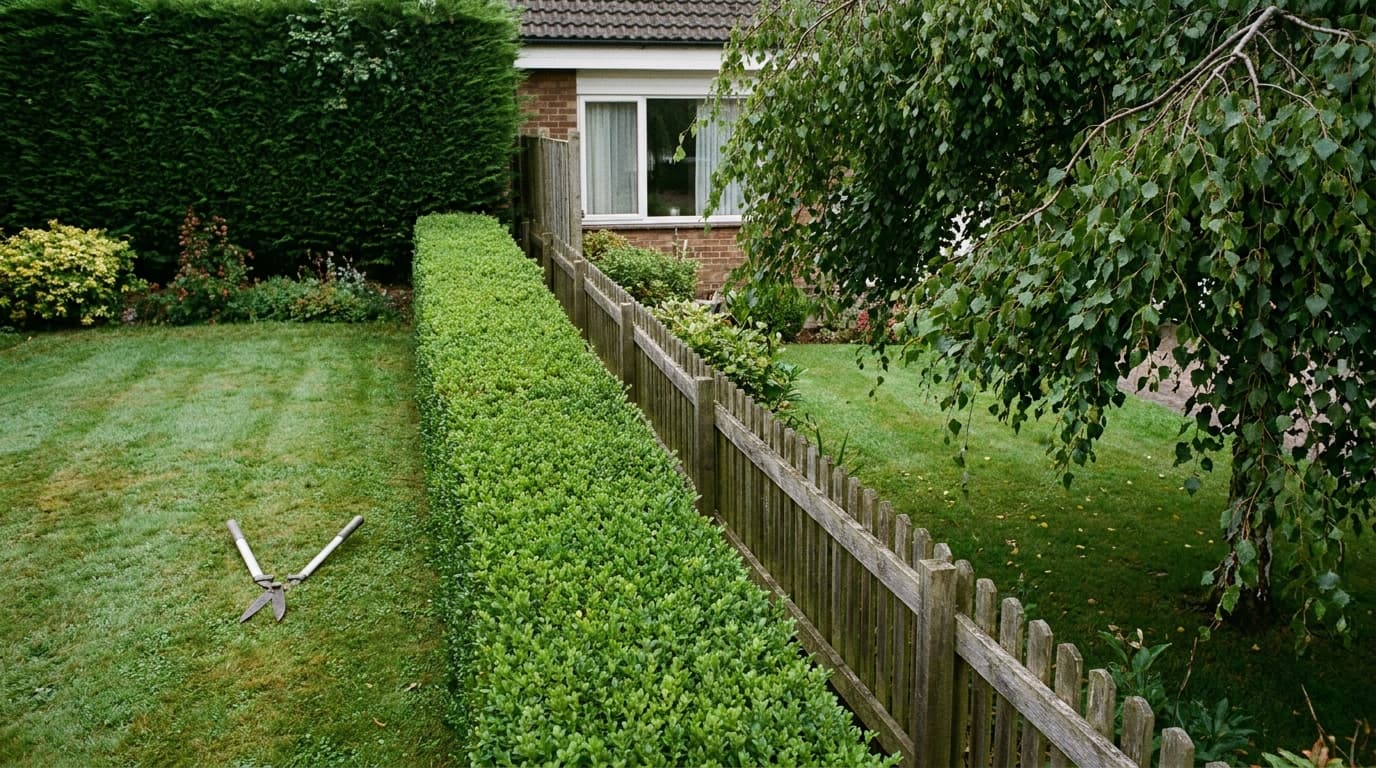
Nachbarrecht, German neighbour law, is the area where newcomers most often assume a single national rulebook exists and most often turn out to be wrong. Germany is a federal state, and in most of the legal fields covered on this site that federalism is invisible to an ordinary resident, because the BGB, the StGB and the big federal codes apply identically from Flensburg to Passau.
Neighbour law is the exception. It is the one everyday area where the answer to a simple question genuinely changes when you cross a Land border, and where a correct answer for Munich can be the wrong answer for Hanover. Getting that structure clear is more useful than memorising any single number, because it tells you which source to look at.
This hub maps the whole area: the BGB provisions that apply everywhere, the Land statutes that apply only in one Bundesland, the municipal ordinances that set the quiet hours everybody quotes, and the procedural rule that in several Länder requires an attempted settlement before a neighbour dispute can even reach a court. Each section routes to a dedicated page. For the wider picture, see German law explained.
Information last verified on 20 July 2026. This page provides general legal information and does not constitute legal advice in an individual case.
Layer one: the BGB, which applies everywhere
The BGB sets the framework. § 903 BGB gives the owner of a thing the power to deal with it as they please and to exclude others from any interference, so far as statute or the rights of third parties do not conflict. Everything else in neighbour law is a qualification of that sentence.
The most important qualification is § 906 BGB, which governs Immissionen: gases, vapours, odours, smoke, soot, warmth, noise, vibration and similar effects coming from another property. It provides that an owner cannot prohibit such effects insofar as they do not impair the use of their property, or impair it only insubstantially, and it treats compliance with statutory and regulatory limit values as the ordinary indicator of insubstantiality.
§ 1004 BGB then supplies the remedy. Where ownership is impaired other than by dispossession, the owner may demand removal of the impairment from the disturber, and where further impairments are to be feared, may sue for Unterlassung. § 1004 Abs. 2 BGB excludes that claim where a duty to tolerate exists, and § 906 BGB is where such duties normally come from, so the two provisions are always read together.
A cluster of shorter provisions handles the physical realities of adjoining land. § 907 BGB lets an owner require that installations not be maintained next door where an inadmissible effect is certain to follow, while § 907 Abs. 2 BGB expressly excludes trees and shrubs from the concept of an installation. § 910 BGB deals with intruding roots and overhanging branches. § 911 BGB settles who owns fruit that falls over the boundary, treating it as fruit of the property it falls onto unless that property serves public use. § 912 BGB governs an accidental Überbau, a building that crosses the line, and § 923 BGB divides a Grenzbaum, a tree standing on the boundary itself, between both neighbours in equal shares.
Layer two: the Land statutes, and why they exist
The BGB deliberately left a defined space to the Länder. Art. 124 EGBGB preserves Land law competence in this field, and the Länder used it. The result is a set of Nachbarrechtsgesetze that regulate exactly the questions the BGB does not answer: how far from the boundary different categories of plant may stand, how that distance is measured, what happens with a shared wall, and how long a neighbour has to raise an objection before the right to do so is gone.
Twelve Länder have such a statute under that name. Bavaria is the structural oddity: it has the rules but keeps them in the Siebter Abschnitt of its Ausführungsgesetz zum Bürgerlichen Gesetzbuch, at Art. 43 to Art. 54, rather than in a separately named Nachbarrechtsgesetz. Art. 47 AGBGB is the Bavarian boundary distance provision, requiring 0,50 m from the boundary for trees, shrubs, hedges, vines and hops, or 2 m where the plant is over 2 m tall.
The three Länder without a dedicated statute are the city states Bremen and Hamburg, together with Mecklenburg-Vorpommern, a position confirmed on each of the three Land legislation portals. Where no Land statute supplies a distance rule, a dispute about planting falls back on the general BGB provisions and on building and planning law, which is a materially different starting point from a Land where a specific number is written down.
The practical consequence is worth stating plainly. If you want to know how close to the boundary a hedge may stand, the source is the statute of your Bundesland, and there is no federal answer to fall back on. That comparison, statute by statute, is set out at hedges, trees and boundary distances, together with the Ausschlussfristen that several Länder impose on a claim to have a plant cut back.
Layer three: the municipality, which sets the clock times
The rule everybody knows, Nachtruhe from 22:00 to 06:00, sits in the third layer, and it is not federal law. The Bundes-Immissionsschutzgesetz imposes duties but contains no clock times. § 117 OWiG makes unzulässiger Lärm an Ordnungswidrigkeit punishable by a Geldbuße of up to 5.000 EUR without naming a single hour of the day.
The one federal instrument with real clock times is 32. BImSchV § 7, and its window is a different one: in residential and comparable areas it bans specified garden and building machinery outdoors on weekdays from 20:00 to 07:00, and on Sundays and public holidays for the whole day, with a stricter additional layer for the loudest equipment. § 7 Abs. 3 says expressly that further reaching Land rules on Sonn- und Feiertagsruhe and on Nachtruhe remain unaffected, which is the federal legislator confirming that the Nachtruhe rules live elsewhere.
They live in Land immission control statutes and in municipal ordinances. 22:00 to 06:00 is the pattern most municipalities follow, but it is enacted locally, and Mittagsruhe varies far more than that. The full treatment, including what happens when somebody complains and why a breach is an Ordnungswidrigkeit rather than a crime, is at quiet hours in Germany.
Noise as a private claim, not just an administrative one
Noise is the most frequent neighbour dispute in Germany, and it runs on two tracks at once. The public law track goes through the Ordnungsamt and the local Ordnung. The private law track goes through § 906 BGB and § 1004 BGB and is decided by a civil court between the two property owners.
The tests are not the same. The Ordnungsamt asks whether a local rule was broken at a particular time. A civil court asks the § 906 BGB question, whether the use of the affected property is impaired more than insubstantially, and then the § 906 Abs. 2 BGB question, whether the interference nonetheless has to be tolerated because it comes from a locally customary use that cannot reasonably be prevented.
Tenants have a third route that owners do not, because their claim commonly runs against their own landlord rather than against the neighbour. That, the Lärmprotokoll a German court expects to see, and the choice of authority are covered at noise disturbance and neighbour complaints and, for the tenancy side, at rent reduction in Germany.
Plants, branches and boundaries
The planting rules are Land law, but two BGB provisions cut across all of them. § 910 Abs. 1 BGB allows a property owner to cut off and keep roots that have penetrated from a neighbouring property, and allows the same for overhanging branches, but only after setting the possessor of the neighbouring property a reasonable period for removal which then passes without the removal being made. § 910 Abs. 2 BGB removes the right entirely where the roots or branches do not impair the use of the property.
Those two qualifications are the reason this provision is so often described wrongly. It is a real self help right, and it is conditional on a prior deadline and on actual impairment. § 923 BGB adds the separate case of a tree standing on the boundary line itself, which belongs to both neighbours in equal shares, with either able to demand its removal on the cost rules the provision sets out and subject to the exception where the tree serves as a boundary marker.
Separate rules again may protect an individual tree regardless of all of this, because many municipalities have a Baumschutzsatzung that makes felling or heavy pruning of a tree above a certain trunk circumference subject to permission. The interaction of the Land distance rules, § 910 BGB and those local protection rules is set out at hedges, trees and boundary distances.
Cameras, and the point where neighbour law meets data protection
A neighbour dispute that has run for a while often produces a camera, and at that point a different body of law takes over. Filming a neighbour's property or a shared access way engages the general right of personality and the DSGVO, and the analysis is not the same as the § 906 BGB balancing exercise. That subject is covered at neighbour surveillance cameras.
Before court: the Schlichtung requirement in § 15a ZPOEG
This procedural rule catches many people by surprise and belongs on any map of German neighbour law. § 15a Abs. 1 ZPOEG allows a Bundesland to provide by statute that an action may be brought only after an attempt has been made before a Gütestelle set up or recognised by the Land justice administration to settle the dispute by agreement.
The categories listed include neighbour law claims under §§ 910, 911 and 923 BGB and under § 906 BGB, together with claims under the Land law provisions within the meaning of Art. 124 EGBGB, provided the effects do not come from a commercial operation. Claims about personal honour outside press and broadcasting, and low value monetary claims before the Amtsgericht up to 750 EUR, are on the same list.
The mechanics matter. The claimant has to file with the action a certificate from the Gütestelle recording an unsuccessful attempt at settlement, and § 15a Abs. 1 Satz 3 ZPOEG requires that certificate to be issued on application where the requested conciliation procedure has not been carried out within three months. § 15a Abs. 2 ZPOEG excludes a list of case types, and expressly disapplies the requirement where the parties do not live, or have their seat or a branch, in the same Land.
Because § 15a ZPOEG only authorises the Länder to impose the requirement, whether it applies to a given dispute is once again a question of the Bundesland. That is the recurring theme of this whole area, and it is why the first step in any German neighbour question is to identify which layer the answer sits in.
Where to go next
| If your question is about... | Start here |
|---|---|
| Whether noise at a particular time of day is permitted, and who enforces it | Quiet hours in Germany |
| Persistent neighbour noise, the legal test and the evidence a court expects | Noise disturbance and neighbour complaints |
| How close to the boundary a hedge or tree may stand, and overhanging branches | Hedges, trees and boundary distances |
| Noise in a rented flat and the claim against a landlord | Rent reduction in Germany |
| A neighbour pointing a camera at your property | Neighbour surveillance cameras |
This hub and the pages it links explain the rules. They do not assess an individual dispute or evaluate the prospects of a particular claim, because under § 2 RDG advice in an individual case is a regulated Rechtsdienstleistung in Germany. Readers with a live dispute should take advice from a Rechtsanwalt, and tenants who are members may also use a Mieterverein.
Frequently Asked Questions
Is German neighbour law the same in every Bundesland?
No, and this is the main area of German everyday law where it is not. The BGB framework applies nationwide, but thirteen of the sixteen Länder set their own boundary distances for plants, twelve of them in a dedicated Nachbarrechtsgesetz and Bavaria inside its Ausführungsgesetz zum BGB.
Which Bundesländer have no Nachbarrechtsgesetz?
Bremen, Hamburg and Mecklenburg-Vorpommern have no dedicated Nachbarrechtsgesetz. Where a Land statute supplies no distance rule, a planting dispute falls back on the general BGB provisions and on building and planning law.
Which BGB provisions matter most in a neighbour dispute?
§ 903 BGB sets out the owner's freedom and its limits, § 906 BGB governs noise, odours and similar effects crossing a boundary, § 1004 BGB provides the removal and Unterlassung remedies, § 910 BGB covers roots and overhanging branches, and §§ 911, 912 and 923 BGB deal with fallen fruit, accidental overbuilding and a tree standing on the boundary.
Are quiet hours in Germany set by federal law?
No. The BImSchG contains no clock times and § 117 OWiG contains no time window. The only federal instrument with real hours is 32. BImSchV § 7, which uses 20:00 to 07:00 on weekdays plus all day on Sundays and public holidays for specified machinery, and it says expressly that Land rules on Nachtruhe remain unaffected.
Can I cut branches that hang over from my neighbour's tree?
§ 910 BGB grants a conditional right. For overhanging branches it applies only after the owner has set the possessor of the neighbouring property a reasonable period for removal and that period has passed without removal, and § 910 Abs. 2 BGB removes the right where the branches do not impair the use of the property. Local tree protection rules can restrict cutting separately.
Do I have to try mediation before suing my neighbour in Germany?
In some Länder, yes. § 15a ZPOEG lets a Bundesland require an attempted settlement before a recognised Gütestelle before certain neighbour law actions may be brought, including claims under § 906 BGB and §§ 910, 911 and 923 BGB, and the claimant must file a certificate of an unsuccessful attempt with the action.
Who owns fruit that falls from a neighbour's tree into my garden?
§ 911 BGB treats fruit falling from a tree or shrub onto a neighbouring property as fruit of that property, unless the neighbouring property serves public use.
What happens to a tree that stands exactly on the boundary?
§ 923 BGB gives the fruit, and the tree itself if felled, to both neighbours in equal shares. Either neighbour may demand removal, with the costs shared, subject to the rules the provision sets out on cost allocation and to the exception where the tree serves as a boundary marker that cannot suitably be replaced.
Updates
Independently fact-checked against the cited primary sources
Sources and References
- § 903 BGB, Befugnisse des Eigentümers(gesetze-im-internet.de).gov
- § 906 BGB, Zuführung unwägbarer Stoffe(gesetze-im-internet.de).gov
- § 907 BGB, Gefahrdrohende Anlagen(gesetze-im-internet.de).gov
- § 910 BGB, Überhang(gesetze-im-internet.de).gov
- § 911 BGB, Überfall(gesetze-im-internet.de).gov
- § 912 BGB, Überbau, Duldungspflicht(gesetze-im-internet.de).gov
- § 923 BGB, Grenzbaum(gesetze-im-internet.de).gov
- § 1004 BGB, Beseitigungs- und Unterlassungsanspruch(gesetze-im-internet.de).gov
- § 15a ZPOEG, Einigungsversuch vor einer Gütestelle in Nachbarrechtsstreitigkeiten(gesetze-im-internet.de).gov
- § 7 32. BImSchV, Betrieb von Geräten und Maschinen(gesetze-im-internet.de).gov
- § 117 OWiG, Unzulässiger Lärm(gesetze-im-internet.de).gov
- Art. 47 AGBGB Bayern, Grenzabstand von Pflanzen(gesetze-bayern.de).gov
- § 2 RDG, Begriff der Rechtsdienstleistung(gesetze-im-internet.de).gov