
Texas
Texas Property Records: How to Find Out Who Owns a Property (2026)

In Texas the County Clerk, not a Recorder or Register of Deeds, records property documents, and with 254 counties the quality of online access swings enormously, from Dallas County's free document images to rural counties with no online index at all.
Information last verified on 2026-07-16. This article has not yet been reviewed by a licensed lawyer.
How Property Records Work in Texas
Texas is one of the states that vests the recording function in a county clerk rather than a dedicated Recorder or Register of Deeds office; Florida, for example, makes the clerk of the circuit court the county recorder. Under Article V, Section 20 of the Texas Constitution and Local Government Code section 191.001(a), the elected County Clerk serves as the county recorder for each of the state's 254 counties, the most of any state in the country. The County Clerk's Real Property or Recording division receives, indexes, and archives deeds, deeds of trust (Texas's version of a mortgage), releases, liens, easements, and plats for that county. There is no statewide agency that performs this function. Each County Clerk's office is legally and technologically independent, funded and run separately, which is the single biggest reason online access, search tools, and fees vary so widely from one Texas county to the next.
That independence matters because of scale. With 254 counties, ranging from Harris County's roughly 4.7 million residents down to sparsely populated counties with only a few hundred, there is an enormous range in the technology and staff each Clerk's office can put toward public online access. Large, well-resourced counties have built modern e-filing and search systems; many smaller, rural counties have limited or no online index at all, and require an in-person visit or a mailed request to search or copy a recorded document.
How to Find Out Who Owns a Property in Texas
A practical free starting point for identifying who owns a specific property in Texas is usually the county's Central Appraisal District (CAD) website, since CADs value every property for tax purposes and typically publish a free owner-name, address, or parcel-number search with no login required. The Harris Central Appraisal District's Property Search (search.hcad.org) and Parcel Viewer, and the Travis Central Appraisal District's Property Search (traviscad.org/propertysearch/), are both free, official examples. For the actual recorded deed rather than the tax-assessment record, the search has to go through that county's County Clerk directly, since there is no statewide deed-search portal. This guide is part of RecordingLaw's Property Records by State series, which walks through the recording office, search tools, and fees for every state.
Coverage differs sharply even among Texas's largest counties. Dallas County provides both a free index search and free document image viewing through dallas.tx.publicsearch.us. That free online image access is a county service choice rather than something the Public Information Act requires. Local Government Code section 191.006 keeps county clerk records open to the public at all reasonable times, and Government Code section 552.271 bars a charge for inspecting a record that exists on paper when no copy is requested (section 552.272 covers records held in an electronic medium), but nothing in the Act obliges a clerk to publish document images online for free. Travis County offers a comparable free index-and-image search through its County Clerk's public portal, tccsearch.org. Harris County's County Clerk provides a free online index search at cclerk.hctx.net, but document images, both certified and non-certified, must be purchased through the office's e-commerce checkout rather than viewed for free. A researcher working in a smaller or rural Texas county should expect less: often only a partial index online, if anything, with in-person or mailed requests required for anything further.
Certified copies of a recorded document are available directly from the County Clerk at a rate set by state statute, not by each county. Local Government Code section 118.011(a)(3) directs that a county clerk shall collect $5.00 for the clerk's certificate plus $1.00 for each page or part of a page printed on paper. That is why the published county schedules line up: Fort Bend, Tarrant, Taylor, and Harris counties all charge the same $1.00 per page plus $5.00 for certification, because all four are applying the same statutory schedule. None of these figures include the separate fee to record a brand-new document for the first time, which the same section sets at $5.00 for the first page and $4.00 for each additional page.
Why Texas's 254 Counties Make Coverage So Uneven
No other state divides recording authority across as many counties as Texas does. With 254 independent County Clerk offices, each funded, staffed, and run by its own county government, there is no practical way to guarantee uniform online access statewide, and no state law requires one. Third-party aggregators, including TexasFile, PublicSearch, and CountyGovernmentRecords, have built commercial products that index multiple Texas counties' records into a single paid search, which can be a convenience, but none of them is an official state portal, and none is authoritative over the County Clerk's own record. For a genuinely reliable answer, especially anything relied on for a legal or financial purpose, the search should go to the specific County Clerk's office in the county where the property sits, not a statewide or commercial aggregator.
Property Fraud Alerts and the Deed Solicitation Scam in Texas
Some of Texas's larger counties offer a free property fraud alert service that emails or texts a registered property owner whenever a new document is recorded against their name or parcel. Dallas County's County Clerk offers a free Property Fraud Alert in partnership with a third-party monitoring provider. Tarrant County and Fort Bend County confirm similar free sign-up programs on their own County Clerk websites. Harris County is a notable gap: local news coverage of Houston-area deed-theft cases has directed residents to the general, nationwide PropertyFraudAlert.com subscription service or to manually re-checking the Harris County Clerk's free online index, rather than to any Harris County-run alert program, suggesting the county did not operate its own branded service as of this research. The FBI's Internet Crime Complaint Center (IC3) separately warned, in a June 2026 public service announcement, that criminals increasingly use stolen identity information to file fraudulent deeds against vacant land, rental property, and mortgage-free homes, making a fraud alert service, county-run or the nationwide alternative, a genuinely useful protective step in any Texas county.
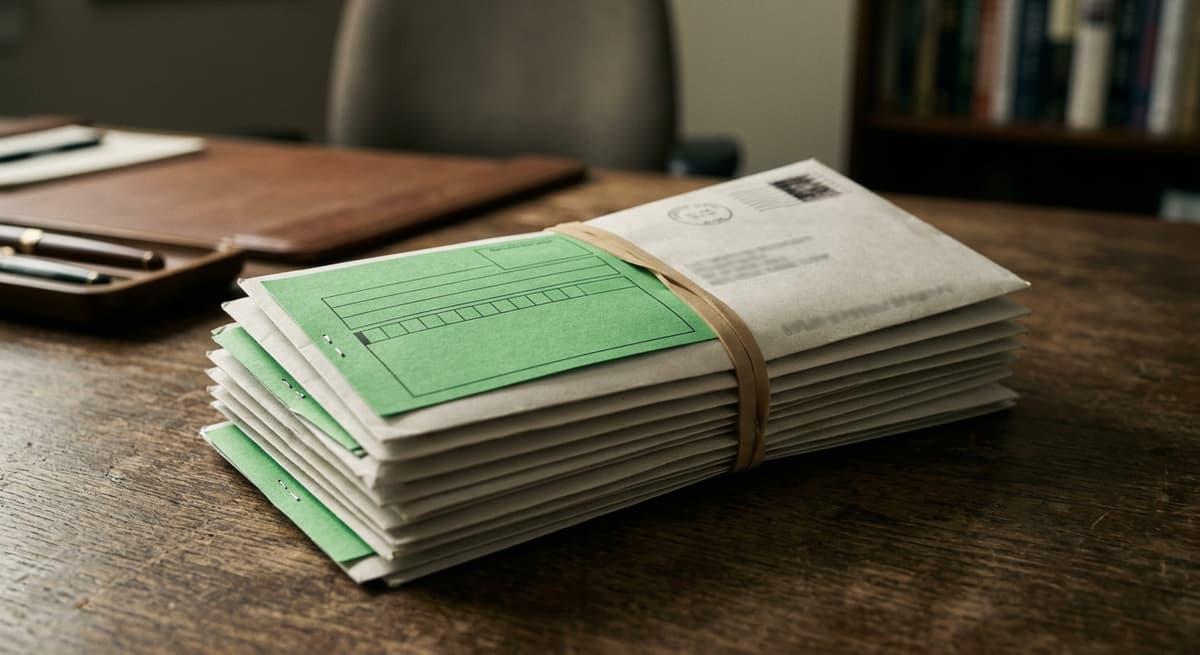
Separately, Texas homeowners, like homeowners nationwide, have reported receiving official-looking mail offering a 'certified copy of your deed' or a property profile for $80 to $95, far above the roughly $6.00 a County Clerk actually charges for a one-page certified copy. These mailers often use words like 'official' or 'government' and cite the recipient's real address and parcel number to look legitimate, while a disclaimer buried in fine print states the offer is not from a government agency. Most Texas homeowners already received their original deed for free from the title company or closing attorney at closing and do not need to buy another copy. Anyone who receives a mailer like this should not pay it and can report it to the Texas Attorney General's consumer protection division or to the FTC at reportfraud.ftc.gov.
A Property Records Search Is Not a Title Search
A free County Clerk index search or CAD ownership lookup is a genuinely useful tool for identifying a Texas property's current owner of record, confirming a name, or catching a fraudulent filing early. It does not replace a professional title search. The Texas Department of Insurance, which regulates title insurance in the state, explains that a title company or attorney examines deeds, liens, judgments, and other court records together and resolves problems before closing, a process that surfaces an issue in roughly one of every four residential transactions industry-wide. Anyone buying Texas real estate should use a licensed title company and title insurance policy rather than relying on a self-directed public-records search alone.

Disclaimer
This article provides general legal and public-records information about Texas property records. It does not constitute legal advice and is not a substitute for consultation with a licensed Texas attorney or a licensed title company. Recording procedures, online access, and fees are set independently by each of Texas's 254 County Clerk offices and can change without notice. Information in this article was last verified on 2026-07-16. For advice about a specific property, transaction, or fraud concern, consult a licensed attorney or title professional in Texas.

Last updated: 2026-07-16. Figures and program details reflect their in-force version as of 2026-07-16.
More Texas Laws
Frequently Asked Questions
Why is it called the County Clerk instead of the Recorder in Texas?
The Texas Constitution designates the elected County Clerk as ex officio recorder in each of the state's 254 counties. Texas does not have a separate Recorder of Deeds or Register of Deeds office like most other states.
Is there one website to search property records for all of Texas?
No. Texas has no unified statewide portal for recorded deeds. Each of the 254 County Clerk offices runs its own system, so a search has to go to the specific county where the property is located.
Can I view deed images online for free in Harris County?
The Harris County Clerk's index search is free, but viewing or obtaining document images, certified or not, requires a paid purchase through the office's online checkout. This differs from Dallas and Travis counties, which both offer free image viewing.
How much does a certified copy of a deed cost in Texas?
State law sets the rate, so it does not vary from county to county. Local Government Code section 118.011(a)(3) sets $5.00 for the clerk's certificate plus $1.00 for each page, which is what Fort Bend, Tarrant, Taylor, and Harris counties all charge for a certified copy.
Does Texas have a free property fraud alert program?
Coverage depends on the county. Dallas County, Tarrant County, and Fort Bend County all offer free property fraud alert sign-ups through their County Clerk offices. Harris County does not appear to run its own program; residents there can use the nationwide PropertyFraudAlert.com service instead.
I got a letter offering to sell me a certified copy of my Texas deed for $89. Is it legitimate?
It is very likely a solicitation mailer, not an official government notice. A certified copy from the County Clerk costs a few dollars: Local Government Code section 118.011(a)(3) sets $5.00 for the clerk's certificate plus $1.00 for each page. Most homeowners already have their original deed from closing.
What is a good free way to find out who owns a property in Texas?
The county's Central Appraisal District website, such as the Harris Central Appraisal District's Property Search or the Travis Central Appraisal District's Property Search, lets you search by owner name, address, or parcel number at no cost.
Updates
Corrected the certified-copy fee to the statewide statutory rate set by Local Government Code section 118.011(a)(3) ($5.00 for the clerk's certificate plus $1.00 per page, the same in every county), removed the incorrect claim that Texas is the only major state whose county clerk records property documents, and replaced a misattributed Public Information Act citation with the provisions that actually govern record inspection and county clerk access.
The Law Behind This Article
This article rests on the statutory provisions below, held in our own legal record and retrieved from the official source. Tap a section to read the operative text.
Texas Local Government Code
§ 191.001COUNTY RECORDER; SEAL; GENERAL DUTIESIn force
(a) As provided by Article V, Section 20, of the Texas Constitution, the county clerk of a county serves as the county recorder. (b) The county clerk shall use the county court seal to authenticate all of the clerk's official acts as county recorder. The clerk may affix the seal on an original document by stamp, electronic means, facsimile, or other means that legibly reproduces all of the required elements of the seal for the purposes of reproduction. (c) The county clerk shall record, exactly, without delay, and in the manner provided by this subtitle, the contents of each instrument that is filed for recording and that the clerk is authorized to record. (d) The county clerk shall keep the records properly indexed and arranged as provided by this subtitle.
Official text (excerpt) · last checked 2026-09-07 · Read the full text in our law library · Verify at statutes.capitol.texas.gov
§ 191.006PUBLIC ACCESS TO RECORDSIn force
All records belonging to the office of the county clerk to which access is not otherwise restricted by law or by court order shall be open to the public at all reasonable times. A member of the public may make a copy of any of the records.
Official text (excerpt) · last checked 2026-07-28 · Read the full text in our law library · Verify at statutes.capitol.texas.gov
Cited in 2 court opinions in our collectionLatest citing opinion in our collection: 2007
Opinions citing this section in our collection:
- Opinion No. (Texas Attorney General Reports 2007)“…rder shall be open to the public at all reasonable times." Tex. Loc. Gov't Code Ann. § 191.006 (Vernon 1999) (emphasis added). Sectio…”
Identified automatically from the court opinions citing this section — not a ranking of which case controls.
Texas Government Code
§ 552.271INSPECTION OF PUBLIC INFORMATION IN PAPER RECORD IF COPY NOT REQUESTEDIn force
(a) If the requestor does not request a copy of public information, a charge may not be imposed for making available for inspection any public information that exists in a paper record, except as provided by this section. (b) If a requested page contains confidential information that must be edited from the record before the information can be made available for inspection, the governmental body may charge for the cost of making a photocopy of the page from which confidential information must be edited. No charge other than the cost of the photocopy may be imposed under this subsection.
Official text (excerpt) · last checked 2026-07-28 · Read the full text in our law library · Verify at statutes.capitol.texas.gov
Search our full record of US law — 2.1 million sections, every state + federal →
Sources and References
- Travis County Clerk, Recording Real Property Records(countyclerk.traviscountytx.gov).gov
- Harris County Clerk, Real Property Records(cclerk.hctx.net)
- Dallas County Clerk, Property Fraud Alert(dallascounty.org)
- Dallas County Official Public Records Search(dallas.tx.publicsearch.us)
- Tarrant County Clerk, Property Fraud Alert(tarrantcountytx.gov).gov
- Fort Bend County Clerk, Fee Schedule(fortbendcountytx.gov).gov
- Harris Central Appraisal District, Property Search(search.hcad.org)
- Travis Central Appraisal District, Property Search(traviscad.org)
- Texas State Law Library, Court and Recording Records Guide(tsl.texas.gov).gov
- Texas Department of Insurance, Title Insurance FAQs(tdi.texas.gov).gov
- FBI Internet Crime Complaint Center (IC3), Public Service Announcement I-061626-PSA(ic3.gov).gov
- Texas Local Government Code ch. 191 (sec. 191.001, county clerk as county recorder; sec. 191.006, public access to county clerk records)(tcss.legis.texas.gov)
- Texas Local Government Code sec. 118.011, county clerk fee schedule (certified papers; real property records filing)(tcss.legis.texas.gov)
- Texas Government Code ch. 552, Public Information Act (sec. 552.271, inspection of paper record if copy not requested; sec. 552.272, electronic records)(tcss.legis.texas.gov)
- Fla. Stat. sec. 28.222, Clerk to be county recorder(leg.state.fl.us)