
Vermont
Vermont Property Records: How to Find Out Who Owns a Property (2026)
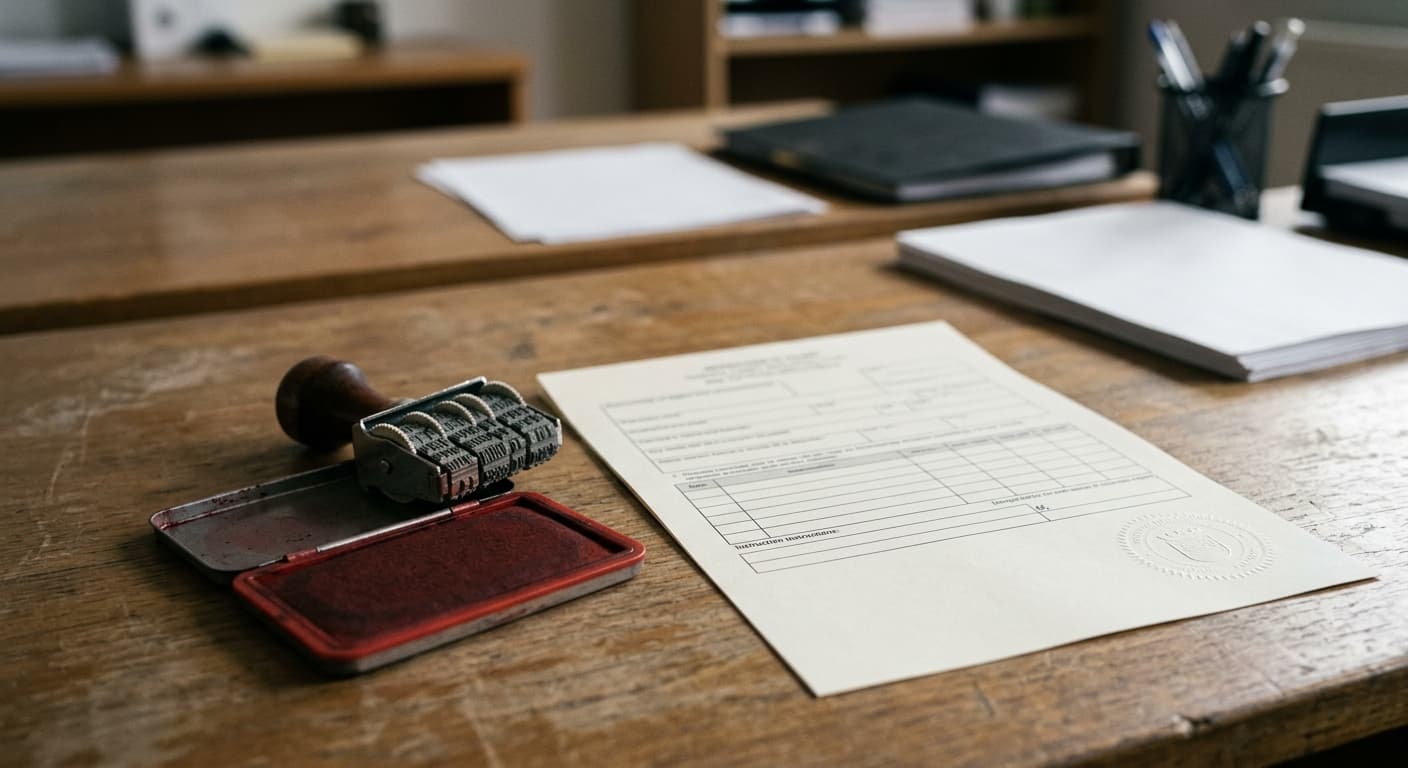
Vermont keeps property records at the town level rather than the county level. All 247 town and city clerks, not any county office, hold the land records for organized towns and cities under 24 V.S.A. section 1154, so finding out who owns a Vermont property usually means knowing which of the 247 municipalities to contact. The narrow exception is land in an unorganized town, gore, or grant, which 27 V.S.A. section 403 directs the county clerk to record.
Information last verified on 2026-07-16. This article has not yet been reviewed by a licensed lawyer.
How Property Records Work in Vermont
Vermont organizes land-records recording by municipality, not by county. Under 24 V.S.A. section 1154, the clerk of the town or city where a property sits must record in the land records the deeds and other "instruments or evidences respecting real estate" delivered for recording, a category that covers mortgages and easements, and must keep an index of reference in each book of record. A companion statute, 24 V.S.A. section 1159, sets the intake mechanics: the clerk indorses a certificate of the date and time of reception on the instrument, and within three days following that indorsement enters the names of the parties, the type of instrument, and the date and time of recording in a day book or index open to public inspection. Vermont's 14 counties play no part in recording land in an organized town or city. Unlike nearly every other state, a county government in Vermont does not run a recorder's or register of deeds' office. Instead, the job falls to 247 separate municipalities, 237 towns and 10 cities, each with its own town or city clerk maintaining a physically or digitally separate land-records system.
That fragmentation means there is no single Vermont "recorder's office" to call. A property in Burlington is recorded with the Burlington city clerk; a property forty miles away in Middletown Springs is recorded with that town's clerk, in a completely separate system with its own hours, fees, and (unevenly available) online tools. Larger municipalities such as Burlington and Montpelier have digitized their indexes and document images, often through vendors like Cott Systems, NEMRC, or Avenu Insights. Many smaller towns have not, and the only reliable way to search their records is to contact the town clerk directly.
How to Find Out Who Owns a Property in Vermont
Start with the town or city where the property is located, since that determines which clerk's office holds the record. Not every town publishes an online index. Check the Vermont Municipal Clerks & Treasurers Association's directory of towns with land records online first; it lists which municipalities offer a searchable index, and in some cases scanned document images, over the web. Burlington, for example, offers both an online index and document images dating back to 1934. If the town isn't listed, or the online system doesn't go back far enough, contact the town clerk directly by phone or email. Many small-town clerks, such as Middletown Springs, will look up a name or parcel and provide copies for $1.00 per page.

For a statewide view of parcels, VCGI's Vermont Parcel Viewer aggregates the tax-map and GIS data that towns voluntarily submit, searchable by each parcel's SPAN (Statewide Parcel Number). It shows boundaries and a reference index of ownership, useful for identifying which parcel you mean before contacting the right town clerk, but VCGI itself cautions its data are "not a land survey" and it does not host scanned deed documents. Treat it as a locator tool, not a document source.
If you need a certified copy of an actual recorded deed, for a legal proceeding, a lost-deed replacement, or a lender's requirement, only the town clerk's office can issue one. Uncertified copies cost $1.00 per page with a $2.00 minimum; certified copies cost $10.00 per page, both set statewide under 32 V.S.A. section 1671. See the Property Records by State hub for how lookup approaches compare across other states.
Vermont's Town-Based System: Why There's No County Recorder
Most states route property recording through a county office, called a Recorder of Deeds, Register of Deeds, or County Clerk depending on the state. Vermont is a genuine outlier. Its 14 counties exist as judicial districts and for a handful of other functions, and none of them runs a general recording office for land in an organized town or city. VCGI, the state's geographic-information coordinating agency, describes Vermont as "one of only a few states in the country where property records are maintained at the town level, not the county level."
The practical consequence for anyone searching Vermont property records is significant: there is no single office, or even 14 offices, to check. There are 247, one for each incorporated town and city, each with its own hours, its own digitization level, and in many cases its own third-party vendor for whatever online system exists. A reader used to a county-based state's single recorder's office needs to reset that expectation before starting a Vermont search. For any parcel in an organized town or city, the correct first question isn't "which county," it's "which town."
There is one exception worth knowing before you assume no county office is ever involved. Vermont still contains a few unorganized towns, gores, and grants with no town clerk of their own. Under 27 V.S.A. section 403, deeds and conveyances of land in an unorganized town, gore, or grant are recorded by the clerk of the county in which the land lies, so for those parcels the county clerk is the office to contact. Separately, 27 V.S.A. section 402 lets a purchaser record a deed together with the town clerk's certificate of its record with the county clerk as a backup copy; if the town's records are destroyed, an attested copy from the county clerk's office carries the same validity as one from the town.
Deed Scam Mailers and Property Fraud Protection
Vermont homeowners aren't immune to a nationwide scam pattern involving deed-copy solicitations. Third-party companies mail official-looking notices offering to sell a "certified copy of your deed" or a property "assessment profile" for $80 to $95 or more. These mailers often use language like "official," borrow formatting that resembles a government bill, cite a response deadline, and bury a disclaimer that payment is optional in fine print. The actual document costs a fraction of that directly from the town clerk, $1.00 per page for an uncertified copy or $10.00 per page certified, and most homeowners already received their original deed for free at closing. If you receive one of these mailers, do not pay it. Report it to the Vermont Attorney General's Consumer Assistance Program and to the FTC at ftc.gov/complaint.
A more serious problem is deed fraud itself: someone recording a forged deed, often a quitclaim deed, to fraudulently transfer or borrow against a property, frequently targeting vacant land or homes without a mortgage. The FBI's Internet Crime Complaint Center (IC3) issued a public service announcement in June 2026 warning that criminals increasingly use identity data pulled from public records and data brokers to impersonate real property owners. Many states counter this with a free "property fraud alert" or "recorded-document notification" service that emails or texts an owner the moment a document is recorded against their name. A targeted search did not turn up a Vermont-specific version of this service, statewide or town-level, at the time of writing. That should be read as "none confirmed," not a guarantee none exists across all 247 municipalities. Ask your town clerk directly whether they offer a notification option.
Not a Substitute for a Professional Title Search
A free town-clerk lookup or VCGI parcel search is a good tool for general research, confirming an owner's name, or satisfying curiosity about a neighboring property. It is not equivalent to a professional title search. Industry sources estimate that roughly a quarter of residential real estate transactions have a title issue that a professional search catches before closing, and a licensed title company or closing attorney reviews court records, tax records, and recorded instruments together, not just a town land-records index. Anyone buying property, taking a mortgage, or closing a sale in Vermont should engage a licensed title company or real estate attorney rather than relying on a DIY town-clerk search alone.

For comparisons with how neighboring states organize their systems, see the Property Records by State hub.
Disclaimer
This article provides general legal and public-records information about how property ownership records work in Vermont. It is not legal advice, does not create an attorney-client relationship, and is not a substitute for a licensed title company's title search before a real estate purchase or closing. Recording procedures and fees are set by state statute and can change; municipal practices vary by town. Information in this article was last verified on 2026-07-16. Consult a Vermont-licensed attorney or a licensed title company for advice about a specific property or transaction.

Last updated: 2026-07-16. Figures and program details reflect their in-force version as of 2026-07-16.
More Vermont Laws
Frequently Asked Questions
Does Vermont have a county recorder of deeds?
No general one. Vermont's 14 counties run no recorder of deeds office for land in an organized town or city; those records are kept by the clerk of the town or city where the property is located, under 24 V.S.A. section 1154. The exception is land in an unorganized town, gore, or grant, which 27 V.S.A. section 403 directs the clerk of the county in which the land lies to record.
How many towns keep their own Vermont land records?
All 247 of Vermont's incorporated municipalities, 237 towns and 10 cities, maintain separate land-records systems, each under its own town or city clerk.
Can I search Vermont property records online for free?
Sometimes. Coverage varies widely by town. Check the Vermont Municipal Clerks & Treasurers Association's directory of towns with online land records; many smaller towns require contacting the clerk directly.
What does the Vermont Parcel Viewer show?
VCGI's statewide Parcel Viewer shows parcel boundaries and ownership as a reference index compiled from town GIS data. It is a mapping tool, not a document search, and does not display scanned deeds.
How much does a certified copy of a Vermont deed cost?
$10.00 per page for a certified copy and $1.00 per page (minimum $2.00) for an uncertified copy, set statewide under 32 V.S.A. section 1671.
Is there a Vermont property fraud alert service?
None was confirmed in research for this article, statewide or at the town level. Contact your town clerk to ask whether a notification option exists locally.
Is a town land-records search the same as a title search?
No. A town-clerk lookup identifies an owner or a recorded document, but a professional title search by a licensed title company reviews court and tax records together and is required before most real estate closings.
Updates
Corrected the statutory citations for Vermont recording procedure (the endorsement and three-day index-entry duties are set by 24 V.S.A. section 1159, not section 1154) and added the county-clerk recording exception for land in unorganized towns, gores, and grants under 27 V.S.A. sections 402 and 403.
Governing law re-checked for recent changes
The Law Behind This Article
This article rests on the statutory provisions below, held in our own legal record and retrieved from the official source. Tap a section to read the operative text.
Vermont Statutes Annotated, Title 24: Municipal and County Government, Chapter 35: Town Clerks
§ 1154Records; copiesIn force
(a) A town clerk shall record in the land records, at length or by accurate, legible copy, in books to be furnished by the town: (1) deeds; (2) instruments or evidences respecting real estate; (3) writs of execution, other writs or the substance thereof, and the returns thereon; (4) hazardous waste site information and hazardous waste storage, treatment, and disposal certifications established under 10 V.S.A. chapter 159; (5) underground storage tank information under 10 V.S.A. chapter 59; (6) municipal land use permits (as defined in section 4303 of this title) or notices of municipal land use permits as provided for in subsection (c) of this section, notices of violation of ordinances or bylaws relating to municipal land use, and notices of violation of municipal land use permits; (7) denials of municipal land use permits; (8) permits, design certifications, installation certifications, and other documents required to be filed by the provisions of 10 V.S.A. chapter 64 and the rules adopted under that chapter; (9) other instruments delivered to the town clerk for recording.
Official text (excerpt) · last checked 2026-09-07 · Read the full text in our law library · Verify at legislature.vermont.gov
Cited in 4 court opinions in our collectionLatest citing opinion in our collection: 2024
Opinions citing this section in our collection:
- In Re DJK, LLC WW & WS Permit (Ralph Crowley and Joanne Crowley, Appellants) (Supreme Court of Vermont 2024, 323 A.3d 911)“…operly indexed and recorded in the land records pursuant to 24 V.S.A. §§ 1154 and 1161.” 10 V.S.A. § 1973(h). For wa…”
- Haner v. Bruce (Supreme Court of Vermont 1985, 146 Vt. 262)“…rticular book in that book. (This requirement still exists. 24 V.S.A. § 1154(b)). The Court in Curtis stated t…”
- Hinesburg Hannaford SD Revision (Vermont Superior Court 2016)“…icipal land use permits apply to and run with the land. See 24 V.S.A. § 1154(a)(6) (requiring municipal land use per…”
Identified automatically from the court opinions citing this section — not a ranking of which case controls.
§ 1159Indorsement of time of receiving instrumentsIn force
(a) An instrument shall be deemed recorded when the town clerk: (1) receives the instrument, the recording fee provided in 32 V.S.A. § 1671, and all supporting documents required by statute; and (2) indorses a certificate of the date and time of reception on the instrument. (b) Within three days following the date an instrument is indorsed, the clerk shall enter the name or names of the parties, the type of instrument, the date of the instrument, and the date and time of recording in a day book, printed index, or digital index that is open to public inspection. A town clerk may extend the time for entering the information for good cause shown, including reasons related to illness or absence of the clerk. (Amended 2019, No. 38, § 9.)
Official text (excerpt) · last checked 2026-08-01 · Read the full text in our law library · Verify at legislature.vermont.gov
Vermont Statutes Annotated, Title 32: Taxation and Finance, Chapter 17: Fees and Costs, Subchapter: TOWN OFFICERS
§ 1671Town clerkIn force
(a) For the purposes of this section, a “page” is defined as a single side of a leaf of paper on which is printed, written, or otherwise placed information to be recorded or filed. The maximum covered area on a page shall be 7 1/2 inches by 14 inches. All letters shall be at least one-sixteenth inch in height or in at least eight-point type. Unless otherwise provided by law, the fees to town clerks shall be as follows: (1) For recording a trust mortgage deed as provided in 24 V.S.A. § 1155, $15.00 per page. (2) For filing or recording a copy of a complaint to foreclose a mortgage as provided in 12 V.S.A. § 4932(b), $15.00 per page. (3) For examination of records by town clerk, a fee of $5.00 per hour may be charged but not more than $25.00 for each examination on any one calendar day. (4) For examination of records by others, a fee of $4.00 per hour may be charged. (5) Town clerks may require fees for all filing, recording, and copying to be paid in advance.
Official text (excerpt) · last checked 2026-08-01 · Read the full text in our law library · Verify at legislature.vermont.gov
Cited in 1 court opinions in our collectionLatest citing opinion in our collection: 1980
Opinions citing this section in our collection:
- Welch v. Seery (Supreme Court of Vermont 1980, 138 Vt. 126)“…ed for official services in amounts established by statute. 32 V.S.A. §§ 1671, 1712, 1751. It is the collection of th…”
Identified automatically from the court opinions citing this section — not a ranking of which case controls.
Vermont Statutes Annotated, Title 27: Property, Chapter 5: Conveyance of Real Estate, Subchapter: RECORDING
§ 402Record in county clerk’s officeIn force
A purchaser of lands, in addition to the record in the town clerk’s office, may cause his or her deed or other conveyance with the certificate of its record in the town clerk’s office to be recorded by the county clerk of the county in which such lands lie, in the book kept for the purpose of recording deeds. If the records of a town in which such deed or conveyance is recorded are destroyed, an attested copy of such deed or other conveyance from the office of such county clerk shall be of the same validity as a copy from the town clerk’s office.
Official text (excerpt) · last checked 2026-08-01 · Read the full text in our law library · Verify at legislature.vermont.gov
§ 403Records when lands lie in unorganized placeIn force
Deeds and conveyances of lands in an unorganized town, gore, or grant shall be recorded by the clerk of the county in which such lands lie in a book to be kept by him or her for that purpose, which shall be a sufficient record thereof.
Official text (excerpt) · last checked 2026-08-01 · Read the full text in our law library · Verify at legislature.vermont.gov
Search our full record of US law — 2.1 million sections, every state + federal →
Sources and References
- 24 V.S.A. Chapter 35, Section 1154 (Records; copies)(legislature.vermont.gov).gov
- 32 V.S.A. Section 1671 (Town clerk fees)(legislature.vermont.gov).gov
- Vermont Center for Geographic Information, Parcel Program(vcgi.vermont.gov).gov
- Vermont Municipal Clerks & Treasurers Association, Vermont Land Records Online directory(vmcta.org)
- Burlington, Vermont, Land Records(burlingtonvt.gov).gov
- Middletown Springs, Vermont, Town Clerk's Office(middletownsprings.vt.gov).gov
- FBI Internet Crime Complaint Center, Public Service Announcement I-061626-PSA, Protect Your Property from Illegal Sales Through Parcel Owner Impersonation(ic3.gov).gov
- Minnesota Attorney General, Real Estate Deed Solicitation consumer publication(ag.state.mn.us).gov
- North Carolina Department of Insurance, Title Insurance consumer guide(ncdoi.gov).gov
- Cornell Law School Legal Information Institute, Wex, Deed(law.cornell.edu)
- 24 V.S.A. Section 1159 (Recording of instruments; indorsement and day book entry)(legislature.vermont.gov)
- 27 V.S.A. Section 403 (Deeds of land in unorganized towns recorded by county clerk)(legislature.vermont.gov)
- 27 V.S.A. Section 402 (Record with county clerk; validity if town records destroyed)(legislature.vermont.gov)