
Alaska
Alaska Property Records: How to Find Out Who Owns a Property (2026)

Alaska records deeds through a single statewide agency, the State Recorder's Office at the Department of Natural Resources, rather than a county-by-county system. That makes Alaska one of the easiest states in the country for a free, comprehensive property records search, though the office is organized into 34 separate recording districts rather than one flat statewide index.
Information last verified on 2026-07-16. This article has not yet been reviewed by a licensed lawyer.
This guide is part of a broader look at property records by state; it covers where Alaska's deed records actually live, how to find a property's owner for free, and what a certified copy costs.
How Property Records Work in Alaska
Most states record deeds at the county level. Alaska does not, because much of the state has no county government at all. Alaska is divided into organized boroughs and a large "Unorganized Borough" that covers roughly half the state's land area and has no local government layer. Rather than build recording around a patchwork of local governments that do not exist everywhere, Alaska centralized the function in a single state agency, the State Recorder's Office, part of the Department of Natural Resources.
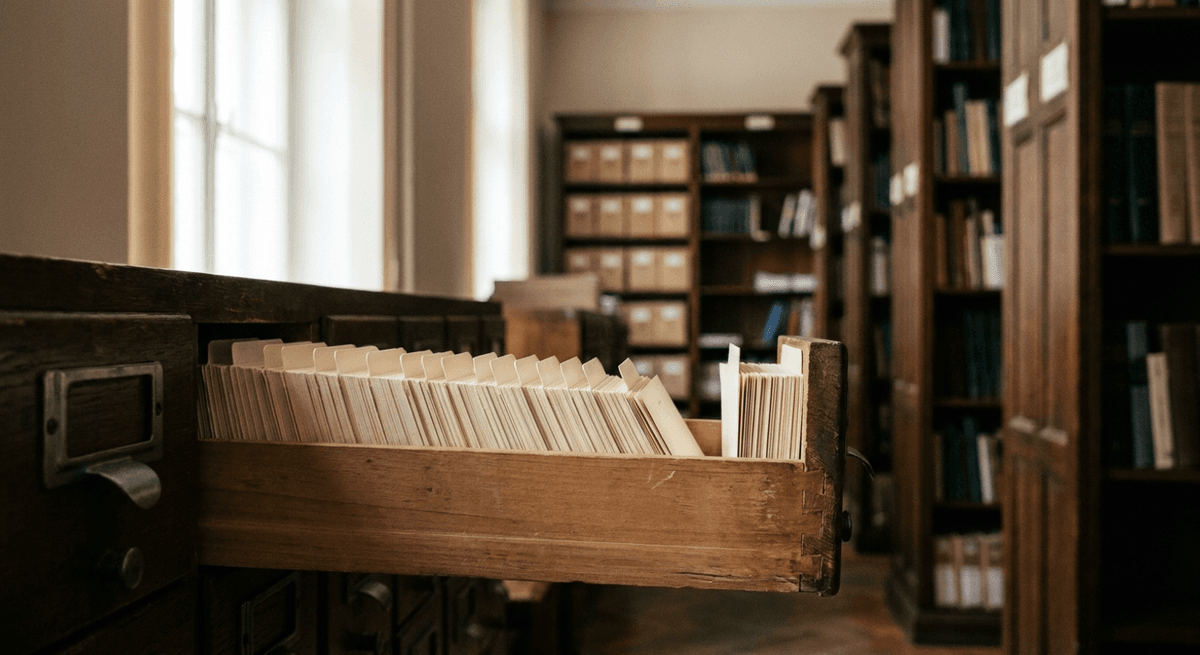
The State Recorder's system is organized into 34 recording districts, each covering a defined geographic area, but those districts are served by only two physical offices. As the State Recorder's Office puts it, the statewide recording system "consists of 34 separate recording districts serviced by a total of two separate offices located throughout Alaska": one in Anchorage and one in Fairbanks. Names like Juneau, Palmer and Kenai are recording district names, not staffed counters. The Anchorage office handles those districts along with most of Southcentral and Southeast Alaska, while the Fairbanks office handles the northern and western districts. A deed still needs to be recorded in the correct district for the property's location, so identifying the right recording district matters even though the underlying database is unified statewide and only two counters exist. The State Recorder's own district list is the starting point for confirming which district covers a given property and which office serves it.
How to Find Out Who Owns a Property in Alaska
Alaska's centralized system makes the first step simpler than in most states. The State Recorder's Office database is searchable online for free, by grantor or grantee name, recording date, document number, or document type, at no charge for the search itself. This is a genuine statewide index, not a county-by-county patchwork, which makes Alaska one of the more consumer-friendly states for a do-it-yourself ownership search. The office also offers a separate Historic Book Search alongside the main index, so a name search that turns up nothing is not proof that an older document was never recorded.

If you are in an organized borough, the borough's own assessor or GIS parcel tool is often the fastest way to attach an owner's name to a specific address or map location. The Matanuska-Susitna Borough's myProperty search is a representative example, letting you look up a parcel by address, tax account number, or owner name and see ownership, assessment, and parcel-map information together. Boroughs without their own online parcel viewer, and properties located in the Unorganized Borough, rely more heavily on the State Recorder's own name-and-document search, since there is no local assessor's office to fall back on in unorganized areas; the State Assessor's Office handles only limited functions there.
For a certified copy of an actual recorded document, order it directly from the State Recorder's Office. The fee schedule sets certification at $5.00 per document. The copy charge depends on when you request it: a conformed copy obtained at the time of recording costs $2.00, while a copy requested later costs $1.25 for the first page plus $0.25 for each additional page. Confirm current figures on the State Recorder's published fee schedule before submitting a request, since fee schedules are updated periodically.
A Statewide System Is the Quirk
Alaska's structure is the notable exception among the states in this guide. Elsewhere, property recording is almost always a county or parish function, sometimes handled by a Recorder of Deeds, sometimes by a Clerk of Court acting as an ex officio recorder. Alaska instead runs one unified state database behind 34 recording districts, a design that exists specifically because so much of the state's land lies in the Unorganized Borough, where no local government exists to run a recorder's office in the first place. For a reader used to searching property records in another state, the practical upshot is that Alaska needs no county-by-county detective work, just identification of the correct recording district.
Deed Scam Mailers and Property Fraud Protection
The deed-solicitation mailer scam that targets homeowners nationally, official-looking letters offering to sell a "certified copy of your deed" for a price far above what the government actually charges, is not unique to Alaska, and the same defenses apply here. A certified document from the State Recorder's Office costs a few dollars in fees, not the inflated amounts these mailers typically charge. There is no obligation to respond to or pay one of these solicitations.
On the more serious question of deed fraud, where a forged document is filed to fraudulently transfer or borrow against a property, the FBI's Internet Crime Complaint Center issued a public service announcement in June 2026 warning that criminals increasingly use identity data pulled from public records or data brokers to impersonate real property owners. Unlike Arizona, which mandated a statewide title-alert notification system by law, or a number of other states building similar programs, Alaska has no confirmed dedicated deed-fraud alert program as of mid-2026; an industry legislative scorecard published in July 2026 listed Alaska among states that have taken no legislative action specifically on deed theft. Alaska property owners who want proactive monitoring should check directly with the State Recorder's Office for any notification option and consider a general third-party monitoring service as a supplement, understanding that state coverage in Alaska is not confirmed the way it is in states with a dedicated government-run alert program.
Not a Substitute for a Title Search
Searching the State Recorder's free database or a borough's parcel viewer is useful for confirming an owner's name or researching a property's history, but it is not equivalent to a professional title search. A title company or closing attorney reviews deeds, mortgages, liens, judgments, and court filings together and evaluates the risk they present, something a self-directed name search does not do. Anyone buying property in Alaska should still engage a licensed title company or real estate attorney rather than relying on a free records search to clear title.
Disclaimer
This article provides general information about how to locate publicly available property records in Alaska. It is not legal advice, and it is not a substitute for a licensed title company's title search or title insurance before a real estate purchase. Fees, recording-district boundaries, and online tools change without notice; verify current details with the Alaska State Recorder's Office. Consult a licensed Alaska attorney for advice about your specific situation.
Last updated: 2026-07-16. Figures and program details reflect their in-force version as of 2026-07-16.
More Alaska Laws
Frequently Asked Questions
Where are property records recorded in Alaska?
Through the State Recorder's Office, part of the Alaska Department of Natural Resources. Unlike most states, Alaska records deeds through a single statewide agency organized into 34 recording districts, not through county offices.
Is there a free way to search Alaska property records online?
Yes. The State Recorder's Office database is searchable online for free by name, date, document number, or document type, with a separate Historic Book Search offered for older records. Fees apply only for certified copies and bulk data.
How many recorder's offices does Alaska have, and where are they?
Two. The State Recorder's Office states that its 34 recording districts are serviced by a total of two separate offices, one in Anchorage and one in Fairbanks. District names such as Juneau, Palmer and Kenai are geographic districts, not separate public counters, so plan any in-person visit around the Anchorage or Fairbanks office.
What does it cost to get a certified copy of a deed in Alaska?
The State Recorder charges a $5.00 certification fee per document. The copy itself costs $2.00 for a conformed copy obtained at recording, or $1.25 for the first page plus $0.25 per additional page if requested later.
Is there a statewide property records search in Alaska?
Yes, and Alaska is unusual in this respect. The State Recorder's Office runs one statewide database rather than separate county systems, though it is organized into 34 recording districts covering different geographic areas.
How do I find out who owns a property in Alaska for free?
Search the State Recorder's Office database by name or document type, or, if the property sits in an organized borough, use that borough's free assessor or GIS parcel viewer, such as the Matanuska-Susitna Borough's myProperty tool, to look up ownership by address or parcel number.
Does Alaska have a property fraud alert program?
No confirmed dedicated statewide program was found as of mid-2026. An industry legislative scorecard published in July 2026 listed Alaska among states with no legislative action specifically addressing deed theft, unlike states such as Arizona that mandate a statewide alert system by law.
Can I use a free property records search instead of a title search when buying a home?
No. A free search of the State Recorder's database is useful for general research, but a licensed title company's title search reviews deeds, liens, judgments, and court records together for risk that a self-directed search does not evaluate. Buyers should engage a title company or real estate attorney.
Updates
Corrected the number and location of Alaska's recorder's offices: all 34 recording districts are served by just two offices, in Anchorage and Fairbanks, and removed an unsourced claim about how far back the online index reaches.
The Law Behind This Article
This article rests on the statutory provisions below, held in our own legal record and retrieved from the official source. Tap a section to read the operative text.
Alaska Statutes, Title 40. Public Records and Recorders, Chapter 17. Recording of Documents
§ 40.17.010Place of recording and access to recordsIn force
(a) The Department of Natural Resources shall provide at each public office designated by the department (1) the documents and indices or alternative document retrieval system of the recording district or districts served by that public office; (2) a machine, device, or system with which to retrieve stored documents; (3) a means for making copies of recorded documents and a person authorized by the recorder to certify the copies; (4) to the extent money is appropriated for the purpose, a machine, device, or system capable of rapidly transmitting a document eligible for recording to a recorder at one place of recording in the state, and a person to operate the machine, device, or system; if the department determines that it is not feasible to provide a machine, device, or system in an office serving a recording district, it shall provide for transmitting documents from the office by other expeditious means; (5) instructions that explain to the public the formal requirements that a document must satisfy to be recorded. (b) The department shall provide the staff and equipment to receive and record documents and to store them permanently.
Official text (excerpt) · last checked 2026-09-07 · Read the full text in our law library · Verify at akleg.gov
Search our full record of US law — 2.1 million sections, every state + federal →
Sources and References
- Alaska Department of Natural Resources, State Recorder's Office(dnr.alaska.gov).gov
- Alaska Department of Natural Resources, State Recorder's Office, Fee Schedule(dnr.alaska.gov).gov
- Matanuska-Susitna Borough, myProperty Search(matsu.gov).gov
- EquityProtect, Q2 2026 Property Protection Scorecard: More States Act on Deed Theft, but Most Americans Remain Unprotected(globenewswire.com)
- FBI Internet Crime Complaint Center, Public Service Announcement I-061626-PSA, "Protect Your Property from Illegal Sales Through Parcel Owner Impersonation" (June 16, 2026)(ic3.gov).gov
- Cornell Law School, Legal Information Institute, "Register of Deeds"(law.cornell.edu)
- Cornell Law School, Legal Information Institute, "Grantor-Grantee Index"(law.cornell.edu)
- Alaska Department of Natural Resources, State Recorder's Office, Recording District List (all 34 districts served by the Anchorage and Fairbanks offices)(dnr.alaska.gov)
- Alaska Department of Natural Resources, State Recorder's Office, Recorder's Office Search Menu(dnr.alaska.gov)