
Alabama
Alabama Laws on Recording in Public: What You Can and Cannot Film
Independently fact-checked against primary sources (last audited August 15, 2026). · Reviewed by the RecordingLaw editorial team. · Law checked current as of August 15, 2026. · 7 primary sources cited on this page. How we verify our legal content
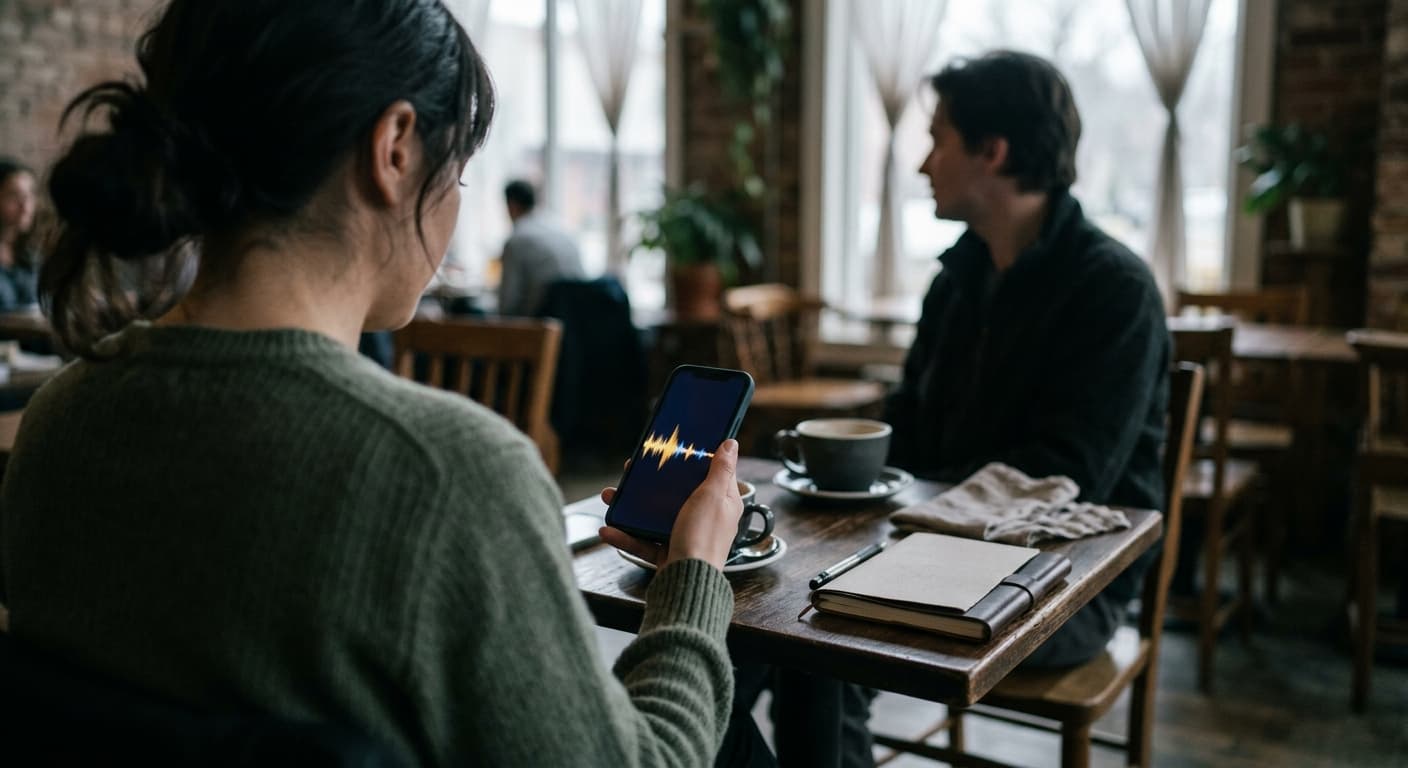
Recording in public places is legal in Alabama. Video of people, buildings, and events in public spaces is unrestricted because no reasonable expectation of privacy exists there. Audio recording of conversations follows the one-party consent rule under Ala. Code 13A-11-30, and the First Amendment protects your right to record government officials and police.
Alabama law is generally permissive when it comes to recording in public places. Because there is no reasonable expectation of privacy in areas open to the public, you are free to photograph and film in most outdoor spaces and publicly accessible locations. The First Amendment to the U.S. Constitution provides additional protection for your right to gather information through recording in public.
This guide covers Alabama's laws on public recording in 2026, including what you can film, where the limits are, how audio recording rules apply in public settings, and what to do if someone confronts you about recording.
The Legal Framework for Public Recording in Alabama
No Expectation of Privacy in Public
Alabama's privacy statutes are built around the concept of "private place." Under Ala. Code 13A-11-30, a "private place" is defined as a place where one may reasonably expect to be safe from casual or hostile intrusion or surveillance, but does not include a place to which the public or a substantial group of the public has access.
This definition effectively excludes public places from the protection of Alabama's surveillance statutes. If you are in a location accessible to the general public, people around you generally cannot claim a reasonable expectation of privacy regarding their visible activities.
First Amendment Protections
The First Amendment to the U.S. Constitution protects your right to record in public. Federal courts, including the Eleventh Circuit Court of Appeals (which covers Alabama), have recognized that the right to photograph and record matters of public interest is a core First Amendment freedom.
This protection extends to:
- Recording government activities and public officials
- Photographing public buildings and infrastructure
- Filming protests, rallies, and public events
- Documenting newsworthy events as they unfold
- Recording police officers performing their duties in public
Alabama Open Meetings Act
The Alabama Open Meetings Act (Ala. Code 36-25A-1 et seq.) requires most government meetings to be open to the public. The act generally allows members of the public to record these meetings, including city council sessions, school board meetings, county commission meetings, and public hearings.
Some governmental bodies may have specific rules about where cameras can be placed or whether flash photography is permitted, but they cannot broadly prohibit recording of public meetings.
What You Can Record in Public Places
Streets, Sidewalks, and Parks
You can freely record video and take photographs on public streets, sidewalks, and in public parks in Alabama. These are traditional public forums where the right to record is at its strongest. You can film:
- Street scenes and city life
- Architecture and public art
- People walking, shopping, or gathering (in public view)
- Traffic, vehicles, and road conditions
- Parks, playgrounds, and recreational areas
Public Events and Gatherings
Recording at public events is generally permitted in Alabama:
- Parades and festivals on public streets
- Protests and demonstrations in public spaces
- Outdoor concerts in public venues (subject to venue rules)
- Sporting events in public facilities (subject to facility rules)
- Political rallies and campaign events in public locations
Government Buildings and Proceedings
You can record in areas of government buildings that are open to the public, such as lobbies, hallways, and public meeting rooms. However:
- Individual agencies may have rules about recording in specific areas
- Courts have specific rules about recording during proceedings
- Some secure government facilities (military installations, certain federal buildings) restrict photography entirely
- Always check with building management if you are unsure about recording policies
People in Public
You can photograph and film people who are in public view in Alabama. People who are walking on the street, sitting in a park, or attending a public event do not have a legal right to prevent you from recording them. However:
- Continuous, targeted recording of a specific individual could raise concerns about stalking or harassment
- Using recordings for commercial purposes without consent may create right-of-publicity issues
- Recording children in public is legal but should be done thoughtfully and respectfully
Audio Recording in Public Places
One-Party Consent Still Applies
While video recording in public is largely unrestricted, audio recording of conversations is governed by Alabama's one-party consent rule under Ala. Code 13A-11-30.
If you are recording a conversation you are participating in, your consent satisfies the one-party requirement. If you are recording a conversation between other people that you are not part of, you may need consent from at least one participant.
Ambient Sound vs. Private Conversations
There is an important distinction between capturing ambient public sound and recording specific private conversations:
- Ambient sound: General background noise, music, traffic sounds, and the hum of public activity are not "private communications" and can be recorded freely.
- Directed conversations: If two people are having a quiet, personal conversation on a park bench and you deliberately position your microphone to capture it, this could potentially be considered eavesdropping even in a public setting.
The key factor is whether the conversation was intended to be private. A casual, quiet exchange between two people may be a private communication even if it occurs in a technically public place.
Places Where Public Recording Is Restricted
Private Property Open to the Public
Shopping malls, restaurants, retail stores, and other private businesses that are open to the public can restrict recording on their premises. The property owner or manager has the right to establish no-recording policies.
If you are asked to stop recording on private property, you must comply or leave. Refusing to leave after being asked is trespassing, which is a separate offense from any recording violation.
Courtrooms
Alabama courts have specific rules about recording during judicial proceedings. Judges have broad discretion to control their courtrooms, and many prohibit or restrict cameras and recording devices during trials and hearings. Always check with court staff before attempting to record any judicial proceeding.
The Alabama Canons of Judicial Ethics and individual court rules govern media access and recording in courtrooms. Some courts allow recording of certain proceedings, while others prohibit it entirely.
Schools and School Property
Public schools in Alabama may restrict recording on campus. While schools are government property, administrators have authority to regulate conduct on school grounds to maintain order and protect student privacy. The Family Educational Rights and Privacy Act (FERPA) adds additional privacy considerations for student records.
Healthcare Facilities
Hospitals and medical facilities can restrict recording in patient care areas and other sensitive locations. While public areas of hospitals (lobbies, cafeterias) may be more permissive, recording in examination rooms, patient rooms, and treatment areas is generally prohibited without consent.
Confrontations While Recording in Public
What to Do if Someone Objects to Being Recorded
If someone in public tells you to stop recording them, you are generally not legally required to comply because there is no expectation of privacy in public. However, consider the following approach:
- Stay calm and polite
- Explain that you are in a public place where recording is legal
- If the person becomes aggressive or threatening, consider stopping and moving away for your own safety
- Do not escalate the confrontation physically
What to Do if a Business Owner Asks You to Stop
On private property, you must comply with the property owner's rules. If a business owner or manager asks you to stop recording:
- Stop recording or leave the premises
- You can continue recording from public property (such as the sidewalk outside)
- Do not argue about your "rights" on someone else's private property
What to Do if Police Ask You to Stop Recording
In a public place, officers cannot lawfully order you to stop recording. You can politely assert your First Amendment right. However:
- Comply with reasonable orders to step back or move to a different location
- Do not physically resist or become confrontational
- If your rights are violated, pursue legal remedies after the fact
- Consider using a live-streaming app so footage is preserved even if your device is seized
Drones and Aerial Photography in Alabama
FAA Regulations
Drone photography in Alabama is primarily governed by Federal Aviation Administration (FAA) regulations rather than state law. Key federal rules include:
- Recreational drones must be registered with the FAA if they weigh more than 0.55 pounds
- Commercial drone operators need a Part 107 Remote Pilot Certificate
- Drones cannot fly higher than 400 feet above ground level
- Operators must maintain visual line of sight with the drone
- Drones cannot fly over people or moving vehicles without a waiver
Alabama-Specific Drone Rules
Alabama does not have comprehensive state drone legislation, but some local ordinances may restrict drone flights in certain areas. Additionally, using a drone to conduct surveillance of a private place could fall under Ala. Code 13A-11-32 (criminal surveillance) only if the drone operator is trespassing while spying on someone in a location where they have a reasonable expectation of privacy; a drone operator flying from public airspace or their own property is not obviously trespassing, so the statute's reach to drone surveillance is narrower than it might first appear.
Alabama Recording Laws by Topic
Phone Call Recording | Audio Recording | Video Recording | Workplace Recording | Recording Police | Security Cameras | Recording in Public | Landlord-Tenant | Dashcam Laws | Schools | Medical Recording | Voyeurism Laws
Back to Alabama Recording Laws
More Alabama Recording Topics
More Alabama Laws
- Alabama AI Meeting Recording Laws
- Alabama Dashcam Laws
- Alabama Data Privacy Laws
- Alabama Deepfake Laws
- Alabama Employee Monitoring Laws
- Alabama GPS Tracking Laws
- Alabama Police Bodycam Laws
- Alabama Smart Glasses Recording Laws
Frequently Asked Questions
Is it legal to record people in public in Alabama?
Yes. There is no reasonable expectation of privacy in public places under Alabama law. You can photograph and film people, buildings, and events in public areas. Audio recording of conversations follows the one-party consent rule under Ala. Code 13A-11-30, so you need to be a participant in any conversation you record.
Can someone tell me to stop filming them in public in Alabama?
Anyone can ask you to stop, but in a public place you are generally not legally required to comply. There is no expectation of privacy in public areas. However, if you are on private property, the property owner can require you to stop recording or leave.
Can I record a public government meeting in Alabama?
Yes. The Alabama Open Meetings Act requires most government meetings to be open to the public, and you can generally record these meetings. Some governmental bodies may have specific rules about camera placement, so check with meeting organizers if you are unsure.
Is it legal to fly a drone and record video in Alabama?
Drone photography is primarily governed by FAA regulations. You must comply with federal rules about registration, altitude limits, and visual line of sight. Using a drone to conduct surveillance of a private place could violate Alabama's criminal surveillance statute under Ala. Code 13A-11-32, but only if the drone operator is trespassing while doing so; the statute requires both surveillance of a private place and trespassing by the person conducting it.
Can a store owner tell me to stop recording inside their store in Alabama?
Yes. Private property owners can set their own recording policies. If a store owner asks you to stop recording, you must comply or leave. Continuing to record after being told to stop and refusing to leave could result in trespassing charges.
Updates
Corrected the description of Crocker v. Beatty to the qualified-immunity holding the Eleventh Circuit actually reached.
Removed an unverifiable case citation from the changelog and replaced a dead Alabama Attorney General link for the Open Meetings Act with a live link to the official Alabama Code.
Independently fact-checked against the cited primary sources; governing law re-checked for recent changes
Added the required trespassing element to the drone-surveillance claim under Ala. Code 13A-11-32, matching how the sibling Alabama recording-law pages correctly state the statute's two-part test.
Governing law re-checked for recent changes
Governing law re-checked for recent changes
Propagated hub refresh to public-recording spoke. Replaced Justia commercial-codifier links with alison.legislature.state.al.us. Added Eleventh Circuit record-the-police chain: Smith v. City of Cumming, 212 F.3d 1332 (11th Cir. 2000) binding; Crocker v. Beatty, 995 F.3d 1232 (11th Cir. 2021), a published decision holding that Smith did not clearly establish a right to photograph the rapidly evolving scene of a fatal highway crash, so the deputy received qualified immunity. Added body-cam Act 2023-507 and Ala. Code 36-21-210 to 36-21-213. Added full four-tier penalty ladder including 13A-11-32.1 and 13A-11-33. Added civil cause of action note (no statutory civil action under Title 13A Chapter 11; plaintiffs route through federal ECPA section 2520 and Alabama common-law invasion of privacy). Added 2024 [deepfake](/us-laws/deepfake-laws) trilogy note.
Reviewed and approved by an editor
The Law Behind This Article
This article rests on the statutory provisions below, held in our own legal record and retrieved from the official source. Tap a section to read the operative text.
Code of Alabama 1975, Title 13A: Criminal Code.
§ 13A-11-31Criminal Eavesdropping.In forcecited in 18 of our articles
(a) A person commits the crime of criminal eavesdropping if he intentionally uses any device to eavesdrop, whether or not he is present at the time. (b) Criminal eavesdropping is a Class A misdemeanor.
Official text (excerpt) · last checked 2026-09-23 · Read the full text in our law library · Verify at alison.legislature.state.al.us
Cited in 4 court opinions in our collectionLatest citing opinion in our collection: 2007
Opinions citing this section in our collection:
- Stinson v. Larson (Court of Civil Appeals of Alabama 2004, 893 So. 2d 462)“…rding of the minor child's telephone conversations violated Ala. Code 1975, § 13A-11-31 (a), which prohibits the use of any dev…”
- Lawson v. Shelby County Sheriff's Office (Court of Civil Appeals of Alabama 2007, 961 So. 2d 158)“…office but also state law prohibiting eavesdropping, see Ala.Code 1975, § 13A-11-31, 1 Chief Deputy Samaniego recommended…”
- Glazner v. Glazner (Court of Appeals for the Eleventh Circuit 2003, 347 F.3d 1212)“…ade wiretapping of the sort in which James engaged a crime. Ala.Code § 13A-11-31 (1994); O.C.G.A. § 16-11-62 (1999); Fl…”
Identified automatically from the court opinions citing this section — not a ranking of which case controls.
Also relied on in: Alabama Phone Call Recording Laws: What You Need to Know, Alabama Audio Recording Laws: Consent Rules and Penalties, Alabama Smart Glasses Recording Laws
§ 13A-11-30Definitions.In forcecited in 22 of our articles
The following definitions apply to this article: (1) EAVESDROP. To overhear, record, amplify or transmit any part of the private communication of others without the consent of at least one of the persons engaged in the communication, except as otherwise provided by law. (2) PRIVATE PLACE. A place where one may reasonably expect to be safe from casual or hostile intrusion or surveillance, but such term does not include a place to which the public or a substantial group of the public has access. (3) SURVEILLANCE. Secret observation of the activities of another person for the purpose of spying upon and invading the privacy of the person observed.
Official text (excerpt) · last checked 2026-07-29 · Read the full text in our law library · Verify at alison.legislature.state.al.us
Cited in 5 court opinions in our collectionLatest citing opinion in our collection: 2024
Opinions citing this section in our collection:
- Stinson v. Larson (Court of Civil Appeals of Alabama 2004, 893 So. 2d 462)“…ons Privacy Act of 1986, 18 U.S.C. §§ 2510 et seq., and Ala. Code 1975, §§ 13A-11-30 and 13A-11-31 (a). We note that the f…”
- Ages Group, LP v. Raytheon Aircraft Co., Inc. (District Court, M.D. Alabama 1998, 22 F. Supp. 2d 1310)“…f at least one of the persons engaged in the communication. Ala. Code § 13A-11-30 (1994). Alabama Code § 13A-11-32, prohi…”
- Bartnicki v. Vopper (Supreme Court of the United States 2001, 532 U.S. 514)“…[1] See 18 U. S. C. § 2511 (1) (1994 ed. and Supp. V); Ala. Code § 13A-11-30 et seq. (1994); Alaska Stat. Ann. §…”
Identified automatically from the court opinions citing this section — not a ranking of which case controls.
Also relied on in: One-Party Consent States: Complete 2026 Guide, Alabama Dashcam Laws: Legality, Mounting Rules, and Evidence Use, Alabama Landlord-Tenant Recording Laws: Rights for Renters and Property Owners
§ 13A-11-32Criminal Surveillance.In forcecited in 14 of our articles
(a) A person commits the crime of criminal surveillance if he intentionally engages in surveillance while trespassing in a private place. (b) Criminal surveillance is a Class B misdemeanor.
Official text (excerpt) · last checked 2026-08-31 · Read the full text in our law library · Verify at alison.legislature.state.al.us
Cited in 2 court opinions in our collectionLatest citing opinion in our collection: 2026
Opinions citing this section in our collection:
- Ages Group, LP v. Raytheon Aircraft Co., Inc. (District Court, M.D. Alabama 1998, 22 F. Supp. 2d 1310)“…rvation from a public street” does not violate the statute. Ala.Code § 13A-11-32, Commentary. However, AGES argues that…”
- United States v. Watkins (Court of Appeals for the Tenth Circuit 2026)“…ohibit the conduct in this case are noted in bold. Ala. Code § 13A-11-32;1 Ala. Code § 13A-11-32.1;2 Ariz. Rev.…”
Identified automatically from the court opinions citing this section — not a ranking of which case controls.
Also relied on in: Alabama Recording Laws (2026): One-Party Consent Rules, Alabama Voyeurism Laws: Hidden Cameras, Penalties, and Victim Rights, Alabama Workplace Recording Laws: Employee and Employer Rights
Code of Alabama 1975, Title 36: Public Officers and Employees.
§ 36-25A-1Purpose; Open Meetings Requirement; Short Title.In forcecited in 2 of our articles
(a) It is the policy of this state that the deliberative process of governmental bodies shall be open to the public during meetings as defined in Section 36-25A-2(6). Except for executive sessions permitted in Section 36-25A-7(a) or as otherwise expressly provided by other federal or state laws or statutes, all meetings of a governmental body shall be open to the public and no meetings of a governmental body may be held without providing notice pursuant to the requirements of Section 36-25A-3. No executive sessions are required by this chapter to be held under any circumstances. Serial meetings or electronic communications shall not be utilized to circumvent any of the provisions of this chapter. (b) This chapter shall be known and may be cited as the “Alabama Open Meetings Act.”
Official text (excerpt) · last checked 2026-07-29 · Read the full text in our law library · Verify at alison.legislature.state.al.us
Cited in 10 court opinions in our collectionLatest citing opinion in our collection: 2024
Opinions citing this section in our collection:
- Wilson v. City Council of the City of Saraland, 1091509 (Ala. 4-15-2011) (Supreme Court of Alabama 2011, 72 So. 3d 1190)“…olated various provisions of the Alabama Open Meetings Act, Ala.Code 1975, § 36-25A-1 et seq. Wilson requested r…”
- Pizzato v. Alabama Educational Television Commission (Supreme Court of Alabama 2013, 151 So. 3d 283)“…30 , 119 L.Ed.2d 351 (1992), on the Open Meetings Act, Ala.Code 1975, § 36-25A-1 et seq., would effectively neuter the A…”
- Health Care Authority for Baptist Health v. Davis (Supreme Court of Alabama 2013, 158 So. 3d 397)“…subject to the provisions of the Alabama Open Meetings Act, Ala.Code 1975, § 36-25A-1 et seq. See Ala.Code 1975, § 22-21-316(…”
Identified automatically from the court opinions citing this section — not a ranking of which case controls.
Also relied on in: Alabama School Recording Laws: Rules for Students, Parents, and Teachers
Search our full record of US law — 2.1 million sections, every state + federal →
Sources and References
- Alabama Code of Alabama(alison.legislature.state.al.us).gov
- Ala. Code 13A-11-30 - Definitions(law.justia.com)
- Ala. Code 36-25A-1 et seq. - Open Meetings Act (Alabama Code of Alabama)(alison.legislature.state.al.us).gov
- FAA - Unmanned Aircraft Systems(faa.gov).gov
- U.S. Courts - First Amendment(uscourts.gov).gov
- FERPA(www2.ed.gov).gov
- Ala. Code 13A-11-30 - Definitions (Offenses Against Privacy)(alison.legislature.state.al.us).gov
- Ala. Code 13A-11-32 - Criminal Surveillance(alison.legislature.state.al.us).gov