
Alabama
Alabama Laws on Recording Police: Your Rights and Limits
Independently fact-checked against primary sources (last audited August 15, 2026). · Reviewed by the RecordingLaw editorial team. · Law checked current as of August 15, 2026. · 8 primary sources cited on this page. How we verify our legal content
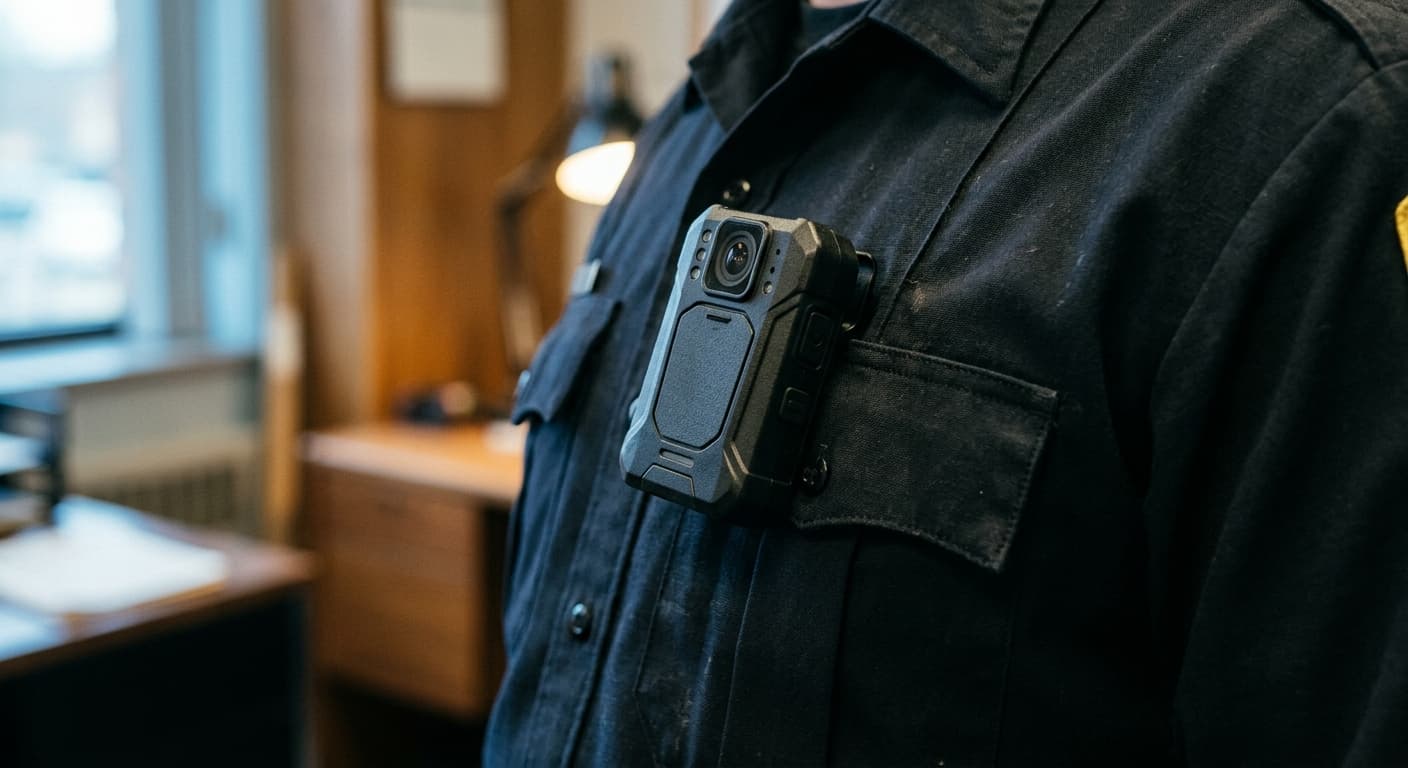
Alabama residents have a First Amendment right to record on-duty police officers in public places, as recognized by the Eleventh Circuit Court of Appeals. State one-party consent law under Ala. Code 13A-11-30 also permits recording any conversation you are a party to, including encounters with law enforcement, without officer consent.
You have the legal right to record police officers in Alabama. The First Amendment to the U.S. Constitution protects your ability to photograph and film law enforcement officers performing their duties in public places. The U.S. Court of Appeals for the Eleventh Circuit, which has jurisdiction over Alabama, Georgia, and Florida, has recognized this right as part of the broader freedom of the press and the public's right to gather information about government activities.
This guide covers everything you need to know about recording police in Alabama in 2026, including the legal basis for your rights, practical guidelines for staying safe, what officers can and cannot do when you record them, and how to handle confrontations.
The Legal Basis for Recording Police in Alabama
First Amendment Protections
The First Amendment states that Congress shall make no law abridging the freedom of speech or of the press. Federal courts have consistently interpreted this to include the right of ordinary citizens to record the activities of government officials, including law enforcement officers, when those officials are performing their duties in public.
The U.S. Department of Justice has taken the position that the First Amendment protects individuals who record police officers in the public discharge of their duties. The DOJ has filed statements of interest in several cases affirming this position.
Eleventh Circuit Court of Appeals
The U.S. Court of Appeals for the Eleventh Circuit covers Alabama, Georgia, and Florida. The court has recognized the right to record law enforcement officers in public. This means that any police officer in Alabama is bound by this precedent, and interfering with your lawful right to record may violate your constitutional rights.
Several federal circuits have reached the same conclusion, though the right to record police is not settled nationwide. The 1st, 3rd, 5th, 7th, 9th, 10th, and 11th Circuits have squarely recognized a First Amendment right to record police performing their duties in public. Other circuits have not ruled on the question, so the right remains unsettled in parts of the country. In Alabama, the controlling authority is the Eleventh Circuit's own precedent, discussed above.
Alabama One-Party Consent Law
In addition to your First Amendment rights, Alabama's one-party consent law under Ala. Code 13A-11-30 supports your right to record police. If you are interacting with an officer and recording the conversation, you are a party to that communication and your consent satisfies the one-party requirement. No additional consent from the officer is needed.
What You Can Legally Record
Traffic Stops
You can record your own traffic stop in Alabama. This includes:
- Using your smartphone to video record the interaction from inside your vehicle
- Using a dashcam that automatically records traffic stops
- Having a passenger record the stop
- Livestreaming the encounter
If you are pulled over, you do not need to inform the officer that you are recording. However, for your own safety, it is generally wise to keep your hands visible and not make sudden movements to reach for a recording device.
Public Arrests and Encounters
You can record police arrests, detentions, and other encounters that occur in public places. You do not need to be involved in the incident to record it. Bystanders have the same First Amendment right to record as the person being stopped.
However, you must maintain a reasonable distance and not interfere with the police operation. Getting too close, blocking officers' path, or physically inserting yourself into the situation can result in lawful charges for obstruction or interference.
Police Stations and Government Buildings
Recording inside police stations and other government buildings is more restricted. While these are public buildings, the government can impose reasonable time, place, and manner restrictions on recording. Many police departments have policies restricting recording inside the station, and these policies are generally enforceable.
Protests and Public Demonstrations
You have a clear right to record police activity at public protests and demonstrations in Alabama. This right applies whether you are a protester, a journalist, or a bystander. The U.S. Department of Homeland Security and the DOJ's Community Relations Service have both acknowledged the importance of recording rights during public demonstrations.
What You Cannot Do While Recording Police
Interfering With Police Operations
The most important limitation on your recording right is that you cannot interfere with police operations. Interference includes:
- Physically blocking an officer from performing their duties
- Getting so close to a scene that you create a safety hazard
- Shouting or making noise that prevents officers from communicating
- Touching or reaching toward an officer or their equipment
- Entering an active crime scene or secured area
Alabama's obstruction statute makes it a crime to interfere with law enforcement officers performing their duties. Even if you have a right to record, you can be lawfully arrested for obstruction if your recording activity crosses the line into interference.
Trespassing
You cannot trespass on private property to record police activity. If police are conducting an operation on private property and you enter that property without authorization, you can be charged with trespassing regardless of your intent to record.
Recording Undercover Operations
Recording undercover police operations can create serious legal and safety issues. If you inadvertently record an undercover officer and distribute the footage, you could compromise an active investigation. While there is no specific Alabama statute prohibiting this, law enforcement may argue that your recording interfered with official operations.
What Police Can and Cannot Do
Officers Cannot Order You to Stop Recording
In a public place, a police officer cannot lawfully order you to stop recording. If an officer tells you to put your phone away or stop filming, you can politely decline and assert your First Amendment right. However, always prioritize your personal safety in any encounter with law enforcement.
Officers Cannot Seize or Delete Your Footage
Police cannot take your phone or camera and delete your recordings without a warrant. The U.S. Supreme Court ruled in Riley v. California (2014) that police generally need a warrant to search a cell phone. This protection extends to the recordings stored on your device.
If an officer seizes your device or deletes your footage without a warrant, this may violate your Fourth Amendment rights against unreasonable search and seizure, and you may have grounds for a civil rights lawsuit under 42 U.S.C. 1983.
Officers Can Order You to Move Back
Officers can issue lawful orders for you to move back from a scene for safety reasons. A reasonable order to maintain distance is enforceable, and refusing to comply can result in charges for obstruction or failure to obey a lawful order. The key is that the order must be reasonable and related to legitimate safety or operational concerns, not a pretext to stop you from recording.
Officers Can Restrict Access to Crime Scenes
Police have the authority to establish perimeters around active crime scenes and restrict public access. You can record from outside the perimeter, but you cannot cross into a secured crime scene to get closer footage.
Practical Guidelines for Recording Police in Alabama
Before You Record
- Make sure your phone has enough battery and storage space
- Consider using a cloud-syncing app that automatically uploads footage so it is preserved even if your phone is seized
- Know the ACLU's recommended practices for recording police
- Understand that recording may escalate an already tense situation
While Recording
- Keep a safe distance from the officers and the scene
- Do not yell, provoke, or attempt to direct the situation
- Hold your phone steady and keep it visible so officers can see what you are doing
- If an officer approaches you, remain calm and respectful
- State clearly that you are exercising your First Amendment right to record if questioned
- Do not physically resist if an officer attempts to stop you; comply and pursue legal remedies afterward
After Recording
- Secure your footage immediately by saving copies to cloud storage
- Note the date, time, location, and the officers' badge numbers if visible
- Do not post footage that could compromise an active investigation or endanger someone's safety without careful consideration
- If your rights were violated, contact a civil rights attorney or the ACLU of Alabama
Police Body Camera Laws in Alabama
No Statewide Mandate
Alabama does not have a statewide law requiring police officers to wear body cameras. Individual law enforcement agencies set their own body camera policies. Some Alabama departments have adopted body cameras voluntarily, while others have not.
A 2023 state law, Act 2023-507, does not require cameras. It governs who can see the recordings an agency already has, as described below.
Public Access to Body Camera Footage
Access to police body camera and dashboard camera footage in Alabama is governed by a dedicated statute, Ala. Code 36-21-210 through 36-21-214, enacted as Act 2023-507. Under Ala. Code 36-21-212, an agency may disclose a recording only to a person whose image or voice is the subject of the recording, or to that person's personal representative (such as a parent, spouse, court-appointed guardian, or attorney, with added rules for adults, minors, and deceased individuals). Disclosure means viewing or listening at a time and place the agency chooses, not receiving a copy, and the person who views it may not record or copy it.
To request disclosure, you must send a written request to the head of the custodial law enforcement agency that states the date and approximate time of the recorded activity, or otherwise identifies it with reasonable particularity. Under Ala. Code 36-21-213, the agency must, as promptly as possible, either disclose the relevant portion or notify you that it will not. It may decline if disclosure would affect an ongoing active law enforcement investigation or prosecution, and it may charge a reasonable fee for redaction and editing. The statute states that it does not limit the Alabama Rules of Civil Procedure, including subpoenas under Rule 45.
The Agent Billy Clardy III Act
In 2022, the Alabama Legislature passed the Agent Billy Clardy III Act, creating a law enforcement wiretapping program for investigating serious crimes. In 2025, HB137 extended this program by removing the sunset clause. This act governs law enforcement's authority to intercept communications during criminal investigations and is separate from body camera policies.
Penalties for Interfering With Police
If you cross the line from lawful recording to interference with police operations, you may face:
- Obstructing governmental operations: A Class A misdemeanor under Alabama law, punishable by up to 1 year in jail and a $6,000 fine
- Resisting arrest: If the situation escalates, additional charges may apply
- Trespassing: A violation or misdemeanor depending on the circumstances
- Disorderly conduct: If your behavior during recording creates a public disturbance
Filing a Complaint if Your Rights Are Violated
If a police officer in Alabama violates your right to record, you have several options:
- File an internal complaint with the officer's department
- Contact the ACLU of Alabama for legal guidance
- File a civil rights complaint with the U.S. Department of Justice Civil Rights Division
- Pursue a federal civil rights lawsuit under 42 U.S.C. 1983 against the officer and potentially the department
- File a complaint with the Alabama Peace Officers Standards and Training Commission (APOSTC)
Alabama Recording Laws by Topic
Phone Call Recording | Audio Recording | Video Recording | Workplace Recording | Recording Police | Security Cameras | Recording in Public | Landlord-Tenant | Dashcam Laws | Schools | Medical Recording | Voyeurism Laws
Back to Alabama Recording Laws
Alabama's eavesdropping chapter has no statutory civil cause of action. Title 13A, Chapter 11, Article 2 is criminal-only. Plaintiffs route through federal ECPA at 18 U.S.C. section 2520, which authorizes actual damages or statutory damages of $100 per day of violation or $10,000 (whichever is greater), plus punitive damages, attorney fees, and equitable relief. The parallel state remedy is common-law intrusion upon seclusion, which the Alabama Supreme Court recognized in Phillips v. Smalley Maintenance Servs., 435 So. 2d 705 (Ala. 1983).
More Alabama Recording Topics
More Alabama Laws
- Alabama AI Meeting Recording Laws
- Alabama Dashcam Laws
- Alabama Data Privacy Laws
- Alabama Deepfake Laws
- Alabama Employee Monitoring Laws
- Alabama GPS Tracking Laws
- Alabama Police Bodycam Laws
- Alabama Smart Glasses Recording Laws
Frequently Asked Questions
Can I record police officers in Alabama?
Yes. The First Amendment protects your right to record law enforcement officers performing their duties in public places. The Eleventh Circuit Court of Appeals, which covers Alabama, has recognized this right. You can record traffic stops, arrests, and other police activity in public.
Can a police officer tell me to stop recording in Alabama?
An officer cannot lawfully order you to stop recording in a public place. If an officer tells you to stop, you can politely assert your First Amendment right. However, officers can order you to move back for legitimate safety reasons, and you should comply with reasonable distance orders.
Can police delete my recordings in Alabama?
No. Police cannot take your phone or camera and delete your recordings without a warrant. The U.S. Supreme Court ruled in Riley v. California (2014) that police generally need a warrant to search a cell phone. Deleting your footage without a warrant may violate your Fourth Amendment rights.
Can I be arrested for recording police in Alabama?
You cannot be lawfully arrested solely for recording police in a public place. However, if your recording activity crosses into interference with police operations, obstruction, or trespassing, you can face charges for those separate offenses. Always maintain a safe distance and do not physically interfere.
Do Alabama police officers have to wear body cameras?
Alabama does not have a statewide law requiring police officers to wear body cameras. Individual law enforcement agencies set their own body camera policies. Some departments have voluntarily adopted body cameras, while others have not. Where footage exists, Ala. Code 36-21-212 limits viewing to the person recorded or that person's personal representative, and the agency provides a viewing, not a copy.
Updates
Corrected the body camera section to explain Alabama's 2023 recordings statute (Ala. Code 36-21-210 through 36-21-214), which limits viewing of police body camera and dashcam footage to the person recorded or their representative.
Corrected the description of Crocker v. Beatty to the qualified-immunity holding the Eleventh Circuit actually reached.
Removed an unverifiable case citation from the changelog, rewrote the description of how many federal circuits recognize a right to record police to reflect the actual circuit split, and fixed a dead U.S. Supreme Court citation link for Riley v. California.
Independently fact-checked against the cited primary sources; governing law re-checked for recent changes
Governing law re-checked for recent changes
Propagated hub refresh to police spoke. Replaced Justia commercial-codifier links with alison.legislature.state.al.us. Added full Eleventh Circuit record-the-police chain: Smith v. City of Cumming, 212 F.3d 1332 (11th Cir. 2000) as binding published precedent; Crocker v. Beatty, 995 F.3d 1232 (11th Cir. 2021), a published decision holding that Smith's right to record did not apply with obvious clarity to a bystander photographing the rapidly evolving scene of a fatal crash from the median of I-95, so the deputy who seized his phone received qualified immunity. Added body-cam statute: Ala. Code sections 36-21-210 to 36-21-213, enacted as Alabama Act 2023-507 (HB 289, 2023RS), effective June 13, 2023; body-cam footage is not a default public record in Alabama. Added full four-tier penalty ladder (13A-11-31 Class A misd, 13A-11-32 Class B misd, 13A-11-32.1 Class C felony, 13A-11-33 Class C felony). Added civil cause of action note.
Reviewed and approved by an editor
The Law Behind This Article
This article rests on the statutory provisions below, held in our own legal record and retrieved from the official source. Tap a section to read the operative text.
Code of Alabama 1975, Title 13A: Criminal Code.
§ 13A-11-31Criminal Eavesdropping.In forcecited in 18 of our articles
(a) A person commits the crime of criminal eavesdropping if he intentionally uses any device to eavesdrop, whether or not he is present at the time. (b) Criminal eavesdropping is a Class A misdemeanor.
Official text (excerpt) · last checked 2026-09-23 · Read the full text in our law library · Verify at alison.legislature.state.al.us
Cited in 4 court opinions in our collectionLatest citing opinion in our collection: 2007
Opinions citing this section in our collection:
- Stinson v. Larson (Court of Civil Appeals of Alabama 2004, 893 So. 2d 462)“…rding of the minor child's telephone conversations violated Ala. Code 1975, § 13A-11-31 (a), which prohibits the use of any dev…”
- Lawson v. Shelby County Sheriff's Office (Court of Civil Appeals of Alabama 2007, 961 So. 2d 158)“…office but also state law prohibiting eavesdropping, see Ala.Code 1975, § 13A-11-31, 1 Chief Deputy Samaniego recommended…”
- Glazner v. Glazner (Court of Appeals for the Eleventh Circuit 2003, 347 F.3d 1212)“…ade wiretapping of the sort in which James engaged a crime. Ala.Code § 13A-11-31 (1994); O.C.G.A. § 16-11-62 (1999); Fl…”
Identified automatically from the court opinions citing this section — not a ranking of which case controls.
Also relied on in: Alabama Phone Call Recording Laws: What You Need to Know, Alabama Audio Recording Laws: Consent Rules and Penalties, Alabama Smart Glasses Recording Laws
§ 13A-11-30Definitions.In forcecited in 22 of our articles
The following definitions apply to this article: (1) EAVESDROP. To overhear, record, amplify or transmit any part of the private communication of others without the consent of at least one of the persons engaged in the communication, except as otherwise provided by law. (2) PRIVATE PLACE. A place where one may reasonably expect to be safe from casual or hostile intrusion or surveillance, but such term does not include a place to which the public or a substantial group of the public has access. (3) SURVEILLANCE. Secret observation of the activities of another person for the purpose of spying upon and invading the privacy of the person observed.
Official text (excerpt) · last checked 2026-07-29 · Read the full text in our law library · Verify at alison.legislature.state.al.us
Cited in 5 court opinions in our collectionLatest citing opinion in our collection: 2024
Opinions citing this section in our collection:
- Stinson v. Larson (Court of Civil Appeals of Alabama 2004, 893 So. 2d 462)“…ons Privacy Act of 1986, 18 U.S.C. §§ 2510 et seq., and Ala. Code 1975, §§ 13A-11-30 and 13A-11-31 (a). We note that the f…”
- Ages Group, LP v. Raytheon Aircraft Co., Inc. (District Court, M.D. Alabama 1998, 22 F. Supp. 2d 1310)“…f at least one of the persons engaged in the communication. Ala. Code § 13A-11-30 (1994). Alabama Code § 13A-11-32, prohi…”
- Bartnicki v. Vopper (Supreme Court of the United States 2001, 532 U.S. 514)“…[1] See 18 U. S. C. § 2511 (1) (1994 ed. and Supp. V); Ala. Code § 13A-11-30 et seq. (1994); Alaska Stat. Ann. §…”
Identified automatically from the court opinions citing this section — not a ranking of which case controls.
Also relied on in: Alabama Dashcam Laws: Legality, Mounting Rules, and Evidence Use, Alabama Landlord-Tenant Recording Laws: Rights for Renters and Property Owners, Alabama Medical Recording Laws: Patient Rights and HIPAA Rules
United States Code Title 18
§ 2511Interception and disclosure of wire, oral, or electronic communications prohibitedIn forcecited in 441 of our articles
Except as otherwise specifically provided in this chapter any person who— intentionally intercepts, endeavors to intercept, or procures any other person to intercept or endeavor to intercept, any wire, oral, or electronic communication; intentionally uses, endeavors to use, or procures any other person to use or endeavor to use any electronic, mechanical, or other device to intercept any oral communication when— such device is affixed to, or otherwise transmits a signal through, a wire, cable, or other like connection used in wire communication; or such device transmits communications by radio, or interferes with the transmission of such communication; or such person knows, or has reason to know, that such device or any component thereof has been sent through the mail or transported in interstate or foreign commerce; or such use or endeavor to use (A) takes place on the premises of any business or other commercial establishment the operations of which affect interstate or foreign commerce; or (B) obtains or is for the purpose of obtaining information relating to the operations of any business or other commercial establishment the operations of which affect interstate or foreign…
Official text (excerpt) · last checked 2026-09-17 · Read the full text in our law library · Verify at uscode.house.gov
Cited in 2,045 court opinions in our collectionLatest citing opinion in our collection: 2026
In the courts (editorial summary, independently checked):Griggs-Ryan v. Smith (1990) applied the Section 2511(2)(d) prior-consent exception, treating a tenant repeatedly told that all incoming calls were taped as having impliedly consented. United States v. United States District Court (1972) read the then-current Section 2511(3) as conferring no presidential surveillance power.
Opinions citing this section in our collection:
- Mitchell v. Forsyth (Supreme Court of the United States 1985, 472 U.S. 511)✓The Attorney General authorized a warrantless 1970 national security wiretap that caught the plaintiff's calls; the Court held the since-repealed Section 2511(3) disclaimer left the tap lawful under Title III, and that Mitchell had qualified immunity.
- United States v. United States District Court for the Eastern District of Michigan (Supreme Court of the United States 1972, 407 U.S. 297)✓The Attorney General approved warrantless wiretaps on members of a domestic group accused of bombing a CIA office; the Court read Section 2511(3) as a congressional disclaimer conferring no surveillance power, then held the Fourth Amendment required prior judicial approval.
- Forsyth v. Barr (Court of Appeals for the Fifth Circuit 1994, 19 F.3d 1527)✓Dallas police used, in an internal affairs probe of an officer, calls private parties allegedly intercepted illegally; assuming that was unlawful, the Fifth Circuit held Section 2517(1) and (2) allowed the disclosure and use, defeating the Section 2511(1)(c) and (d) claims.
Identified automatically from the court opinions citing this section — not a ranking of which case controls.
Also relied on in: Connecticut Recording Laws (2026): Hybrid Consent Rules Explained, Oregon Recording Laws (2026): Hybrid One-Party and All-Party Rules, US Recording Laws by State (2026): All 50 States Explained
United States Code Title 42
§ 1983Civil action for deprivation of rightsIn forcecited in 52 of our articles
Every person who, under color of any statute, ordinance, regulation, custom, or usage, of any State or Territory or the District of Columbia, subjects, or causes to be subjected, any citizen of the United States or other person within the jurisdiction thereof to the deprivation of any rights, privileges, or immunities secured by the Constitution and laws, shall be liable to the party injured in an action at law, suit in equity, or other proper proceeding for redress, except that in any action brought against a judicial officer for an act or omission taken in such officer’s judicial capacity, injunctive relief shall not be granted unless a declaratory decree was violated or declaratory relief was unavailable. For the purposes of this section, any Act of Congress applicable exclusively to the District of Columbia shall be considered to be a statute of the District of Columbia.
Official text (excerpt) · last checked 2026-09-16 · Read the full text in our law library · Verify at uscode.house.gov
Cited in 282,365 court opinions in our collectionLatest citing opinion in our collection: 2026
Opinions citing this section in our collection:
- Ashcroft v. Iqbal (Supreme Court of the United States 2009, 556 U.S. 662)“…its brought against state officials under Rev. Stat. §1979, 42 U. S. C. §1983.” Hartman, 547 U. S., at 254, n. 2. Cf.…”
- Celotex Corp. v. Catrett, Administratrix of the Estate of Catrett (Supreme Court of the United States 1986, 477 U.S. 317)“…policeman as she left. Petitioner brought an action under 42 U. S. C. § 1983 claiming that the refusal of service a…”
- Monell v. New York City Dept. of Social Servs. (Supreme Court of the United States 1978, 436 U.S. 658)“…decided less than two decades ago. Focusing new light on 42 U. S. C. § 1983 , that decision widened access to the f…”
Identified automatically from the court opinions citing this section — not a ranking of which case controls.
Also relied on in: Idaho Laws on Recording Police: Your Rights and Limitations (2026), South Dakota Laws on Recording Police, Tennessee Laws on Recording Police: Your Rights and Limits
Search our full record of US law — 2.1 million sections, every state + federal →
Sources and References
- Alabama Code of Alabama - Official Legislature Website(alison.legislature.state.al.us).gov
- Ala. Code 13A-11-30 - Definitions(law.justia.com)
- U.S. DOJ Civil Rights Division(civilrights.justice.gov).gov
- Riley v. California, 573 U.S. 373 (2014)(supremecourt.gov).gov
- 42 U.S.C. 1983 - Civil Rights(law.cornell.edu)
- U.S. Courts - First Amendment(uscourts.gov).gov
- Ala. Code 13A-11-30 - Definitions (Offenses Against Privacy)(alison.legislature.state.al.us).gov
- Federal Wiretap Act - 18 U.S.C. 2511(law.cornell.edu)
- Ala. Code § 36-21-210 (Definitions), Act 2023-507, law enforcement agency recordings(alison.legislature.state.al.us).gov
- Ala. Code § 36-21-212 (Disclosure of Recordings)(alison.legislature.state.al.us).gov
- Ala. Code § 36-21-213 (Disclosure Requests; Fee)(alison.legislature.state.al.us).gov