
Tennessee
Tennessee Laws on Recording Police: Your Rights and Limits
Independently fact-checked against primary sources (last audited August 15, 2026). · Reviewed by the RecordingLaw editorial team. · Law checked current as of August 15, 2026. · 6 primary sources cited on this page. How we verify our legal content
Recording on-duty police in public is protected First Amendment activity in most federal circuits, though the Sixth Circuit (covering Tennessee) has not issued a published holding; Tennessee state law separately lets you audio record any conversation you participate in under Tenn. Code Ann. section 39-13-601, the one-party consent wiretapping statute, without notifying the officer.
Recording police officers in Tennessee is legal and protected by both the First Amendment and state law. Whether you are filming a traffic stop from the sidewalk, recording your own interaction with an officer, or livestreaming a public arrest, Tennessee law supports your right to document law enforcement activity in public settings.
This guide covers the legal framework for recording police in Tennessee, practical guidelines for doing so safely, body camera laws, and what to do if an officer tells you to stop recording.
The Legal Right to Record Police in Tennessee
First Amendment Protection
Recording government officials, including police officers, performing their public duties is widely treated by federal courts as First Amendment activity, though the strength of that protection varies by circuit. Courts across the country have recognized that recording police activity is a form of protected expression and newsgathering that serves the public interest.
The U.S. Supreme Court has not issued a ruling that explicitly establishes a constitutional right to record police, but the overwhelming weight of federal appellate court decisions supports this right. The U.S. Department of Justice has also taken the position in multiple cases that recording police is protected under the First Amendment.
The Sixth Circuit and Tennessee
Tennessee falls within the jurisdiction of the U.S. Court of Appeals for the Sixth Circuit. The Sixth Circuit has not issued a published decision recognizing a First Amendment right to record police. The closest precedent is Crawford v. Geiger, 656 F. App'x 190 (6th Cir. 2016), which is unpublished and therefore not binding precedent in this circuit. Until the Sixth Circuit issues a published ruling, the First Amendment right to record police remains unsettled in Tennessee federal courts. Tennessee's own state one-party consent law under T.C.A. § 39-13-601 independently supports the right to record one's own interactions with officers.
Tennessee's One-Party Consent Law
Under Tenn. Code Ann. section 39-13-601, Tennessee is a one-party consent state for recording communications. When you are interacting with a police officer, you are a party to that conversation. Your own consent satisfies the one-party requirement, making it legal to record the interaction without notifying the officer.
For recording police activity you are not directly involved in, such as filming an arrest from across the street, the wiretapping statute is less relevant because public police activity does not carry a reasonable expectation of privacy. Video recording without audio capture does not implicate the wiretapping statute at all.
What You Can Record

Your Own Police Interactions
You can record any direct interaction you have with law enforcement, including:
- Traffic stops where you are the driver or a passenger
- Encounters on the street or in public spaces
- Questioning by officers at your home (at the doorstep or threshold)
- Interactions at DUI checkpoints
- Conversations during a search of your vehicle (if you are present)
- Any situation where an officer is speaking with you
Police Activity in Public
You can record police activity you observe in public, even when you are not directly involved:
- Arrests taking place on public streets or sidewalks
- Officers responding to incidents in public view
- Police interactions at public events, protests, or demonstrations
- Officers conducting searches or seizures in public
- Police pursuits visible from public property
Protests and Public Demonstrations
Tennessee residents and visitors have the right to record protests, demonstrations, and police responses to these events. This right extends to journalists, activists, bystanders, and anyone else lawfully present. The Tennessee General Assembly has not enacted any laws restricting the recording of public protests.
Practical Guidelines for Recording Police

Do
- Keep your hands visible at all times, especially during traffic stops
- Remain calm and respectful throughout the interaction
- Stay at a safe distance that does not interfere with police operations
- Announce that you are recording if you choose to, though it is not legally required
- Use your phone or camera openly rather than concealing it
- Back up your recording to cloud storage as soon as possible
- Know your rights and be prepared to calmly assert them
Do Not
- Physically interfere with officers performing their duties
- Cross police tape or enter areas that have been restricted for safety
- Ignore lawful orders to move back to a safe distance
- Reach for your phone suddenly during a traffic stop without telling the officer what you are doing
- Touch officers, their equipment, or their vehicles while recording
- Obstruct emergency medical treatment to get a better angle
- Trespass on private property to record police activity
The Interference Standard
The key legal line is between recording and interfering. Recording is protected. Interfering with police operations is not. Tennessee law prohibits obstruction of justice and resisting arrest. Under Tenn. Code Ann. section 39-16-602, it is illegal to intentionally prevent or obstruct a law enforcement officer, or someone acting at an officer's direction, from carrying out a stop, frisk, halt, arrest, or search by using force against the officer or another person.
Simply holding up a phone and recording from a reasonable distance does not constitute obstruction. An officer's discomfort with being recorded is not a legal basis for ordering you to stop.
What If Police Tell You to Stop Recording?

Know Your Rights
If a police officer tells you to stop recording, it is important to understand your rights:
- You are not legally required to stop recording your own interaction with police in Tennessee
- You can politely decline by saying something like "I am exercising my right to record this interaction"
- Do not physically resist if an officer attempts to take your device
- Remember badge numbers and names if possible
- File a complaint afterward through the appropriate channels
Can Police Seize Your Phone?
The U.S. Supreme Court's decision in Riley v. California (2014) established that police generally need a warrant to search the contents of a cell phone seized during an arrest. This protection extends to recordings stored on your device. An officer cannot demand that you delete a recording or unlock your phone to review its contents without a warrant.
If police seize your phone without a warrant and without your consent, the seizure may violate the Fourth Amendment. Any evidence obtained from an illegal seizure could be suppressed in court.
Remedies for Violations
If your right to record is violated by police in Tennessee, you may have several avenues for relief:
- Internal affairs complaint with the officer's department
- Civilian review board if the municipality has one
- Federal civil rights lawsuit under 42 U.S.C. section 1983 for violation of your constitutional rights
- State tort claims for unlawful seizure of your property
- Complaint to the Tennessee Bureau of Investigation if the conduct constitutes a crime
Tennessee Body Camera Laws
The Tennessee Body-Worn Camera Framework
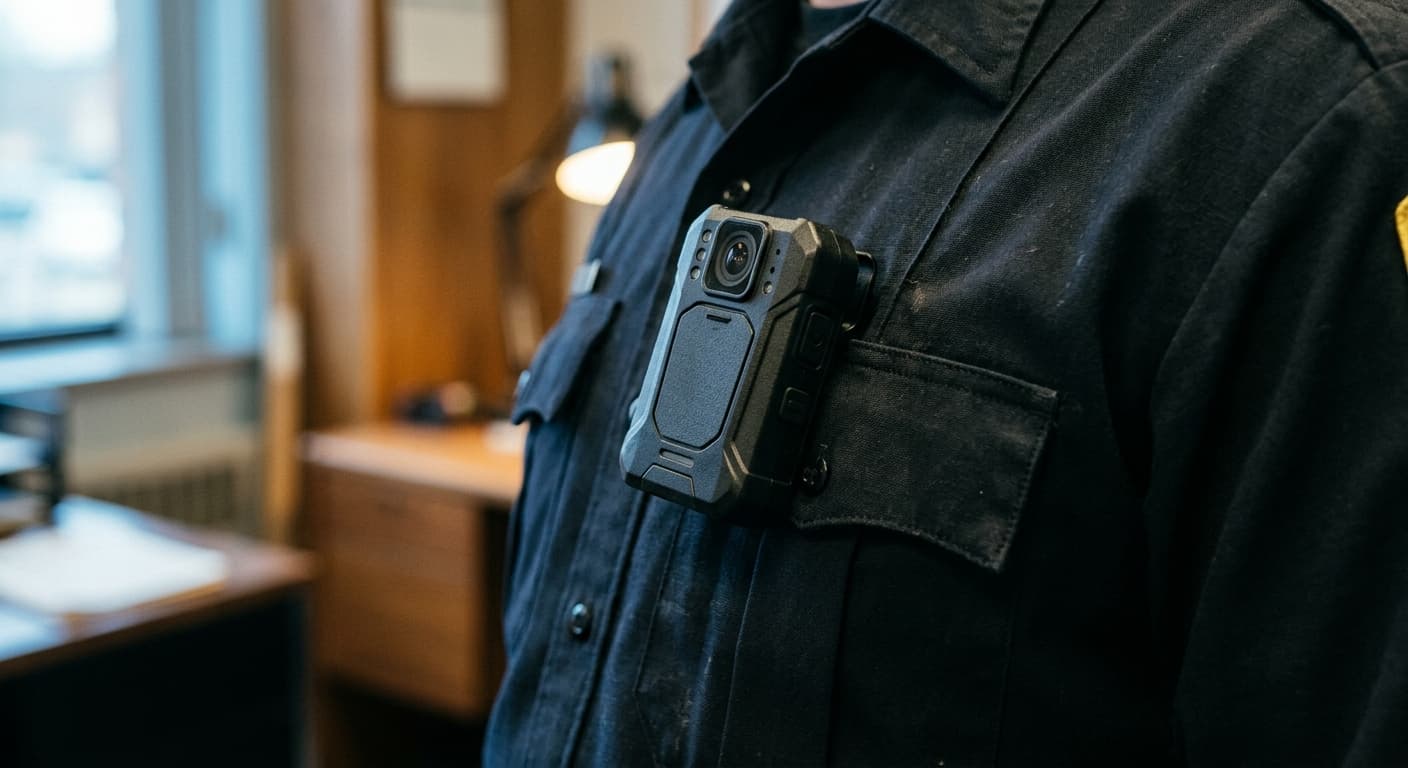
Body camera footage access in Tennessee is governed by T.C.A. § 10-7-504(u), which creates a specific public records exemption for law enforcement body camera recordings while still allowing access under defined circumstances. Tennessee has further addressed body camera use through Attorney General guidance. Key provisions include:
- Law enforcement agencies that choose to use body cameras must establish written policies governing their deployment, operation, and storage
- Officers must activate cameras during all law enforcement encounters, traffic stops, and other specified interactions
- Footage must be retained for a minimum period specified by agency policy
- Agencies must establish procedures for accessing and reviewing footage under T.C.A. § 10-7-504(u)
Public Access to Body Camera Footage
Body camera footage in Tennessee is generally considered a public record under the Tennessee Public Records Act (Tenn. Code Ann. section 10-7-503). However, several exemptions may limit access:
- Active criminal investigation records
- Footage that would compromise an ongoing operation
- Recordings in locations where individuals have a reasonable expectation of privacy
- Footage involving minors or victims of sensitive crimes
To request body camera footage, you can submit a public records request to the law enforcement agency. The Office of Open Records Counsel within the Tennessee Comptroller's Office provides guidance on public records access.
Dashboard Camera Footage
Law enforcement dashboard camera footage is subject to similar rules as body camera footage. It is generally a public record, subject to the same exemptions for ongoing investigations and privacy concerns.
Recording Police in Specific Situations
During a Traffic Stop
You can record a traffic stop in Tennessee, whether you are the driver, a passenger, or an observer:
- As the driver: You can use your phone to record, but avoid reaching for it without telling the officer. Place it on the dashboard before the officer approaches if possible.
- As a passenger: You have the same right to record as the driver.
- As a bystander: You can film from the sidewalk or your own vehicle at a safe distance.
During an Arrest
You can record an arrest in progress, whether it is your own arrest or someone else's. If you are being arrested, continuing to hold your phone may not be practical. Consider activating a livestream before the arrest so the recording is preserved even if your phone is seized.
At Your Home
When police come to your door, you can record the interaction. If police enter your home with a warrant, you can continue recording as long as you do not physically obstruct the search. If officers enter without a warrant and without consent, recording the interaction provides important evidence for any later legal challenge.
At Protests and Public Events
Recording police at protests is protected activity. Law enforcement agencies in Tennessee cannot single out people recording for arrest or detention solely because of their recording activity. If police issue a dispersal order, you must comply with the order, but you can continue recording while doing so.
Penalties for Interfering With Police
While recording is legal, interfering with police operations is not. Relevant Tennessee statutes include:
| Offense | Statute | Classification | Penalty |
|---|---|---|---|
| Resisting stop, frisk, halt, arrest, or search | Tenn. Code Ann. 39-16-602 | Class B Misdemeanor (Class A if a deadly weapon is used) | Class B: up to 6 months, up to $500 fine. Class A: up to 11 months 29 days, up to $2,500 fine |
| Evading arrest | Tenn. Code Ann. 39-16-603 | Class A Misdemeanor | Up to 11 months 29 days, up to $2,500 fine |
Recording alone does not constitute any of these offenses. An officer who arrests someone solely for recording may face civil liability.
Tennessee Recording Laws by Topic
Phone Call Recording | Audio Recording | Video Recording | Workplace Recording | Recording Police | Security Cameras | Recording in Public | Landlord-Tenant | Dashcam Laws | Schools | Medical Recording | Voyeurism & Hidden Cameras
Back to Tennessee Recording Laws
More Tennessee Recording Topics
More Tennessee Laws
Frequently Asked Questions
Can I legally record police officers in Tennessee?
Yes. You have the right to record police officers performing public duties in Tennessee under the First Amendment and the state one-party consent law. You can record your own interactions with police and film officers in public from a safe distance.
Do I have to tell a police officer I am recording in Tennessee?
No. Tennessee is a one-party consent state, so you do not need to notify the officer that you are recording your interaction. However, announcing that you are recording can sometimes help de-escalate a situation.
Can police confiscate my phone for recording them in Tennessee?
It depends. Officers can seize your phone without a warrant in some situations, such as incident to a lawful arrest, but under Riley v. California they need a warrant before they can search its contents, including reviewing or deleting a recording. An officer cannot demand that you delete a recording or unlock your phone without a warrant or a recognized exception. If your phone is searched unlawfully, the evidence may be suppressed and you may have a civil rights claim.
Can I be arrested for recording police in Tennessee?
Recording alone is not a crime in Tennessee. However, if you physically interfere with police operations, obstruct an officer, or trespass while recording, you could be arrested for those separate offenses. Simply holding up a phone and recording from a reasonable distance is protected activity.
How do I obtain police body camera footage in Tennessee?
You can submit a public records request to the law enforcement agency under the Tennessee Public Records Act. Body camera footage is generally a public record, though exemptions may apply for active investigations, privacy concerns, and footage involving minors.
Updates
Corrected a Fourth Amendment framing error in the KeyTakeaways and FAQ: police generally do not need a warrant to seize a phone (for example, incident to an arrest), only to search its contents, per Riley v. California, matching the more precise rule already stated in the article body.
Independently fact-checked against the cited primary sources; governing law re-checked for recent changes
Governing law re-checked for recent changes
Corrected the Tenn. Code Ann. 39-16-602 description and penalty table: the statute defines ONE offense (force against a law enforcement officer to resist a stop/frisk/halt/arrest/search) classified by whether a deadly weapon was used (Class B by default, Class A only with a deadly weapon) -- not two separately named/classified offenses ('obstruction of justice' vs. 'resisting arrest'), and the prevent-or-obstruct paraphrase had dropped the statute's force element and its scope limitation to law enforcement stops/frisks/halts/arrests/searches.
Governing law re-checked for recent changes
Reviewed and approved by an editor
The Law Behind This Article
This article rests on the statutory provisions below, held in our own legal record and retrieved from the official source. Tap a section to read the operative text.
Tennessee Code Annotated
§ 39-13-601Wiretapping and electronic surveillance — Prohibited acts — Exceptions.In forcecited in 20 of our articles
(a)(1) Except as otherwise specifically provided in §§ 39-13-601 — [former] 39-13-603 [repealed] and title 40, chapter 6, part 3, a person commits an offense who: (A) Intentionally intercepts, endeavors to intercept, or procures any other person to intercept or endeavor to intercept, any wire, oral
Official text (excerpt) · last checked 2026-08-31 · Read the full text in our law library · Verify at publications.tnsosfiles.com
Cited in 25 court opinions in our collectionLatest citing opinion in our collection: 2026
In the courts (editorial summary, independently checked):Lawrence v. Lawrence held a parent may vicariously consent under Section 39-13-601 to recording a 2 1/2-year-old child's phone call with the other parent. State of Tennessee v. Henry Floyd Sanders noted that a body-wire recording made with one party's consent is lawful under the section's exceptions.
Opinions citing this section in our collection:
- Lawrence v. Lawrence (Court of Appeals of Tennessee 2010, 360 S.W.3d 416)“…called upon to construe the term “consent” as it is used in Tenn. Code Ann. § 39-13-601 to determine whether Mother had an “unr…”
- Harold Dean McDaniel v. Kimberly Ruth McDaniel (Court of Appeals of Tennessee 2010)“…ourt: I have had an opportunity to look at T.C.A. 39-13-601(a)(1), (A) and (B), and…”
- State of Tennessee v. Henry Floyd Sanders (Tennessee Supreme Court 2014, 452 S.W.3d 300)✓Police recorded a front yard conversation in which a man admitted touching his ex-partner's daughter; the court upheld admission of the recording as a voluntary statement to a confidante and noted that this type of recording is sanctioned as lawful by 39-13-601(b)(4)-(5).
Identified automatically from the court opinions citing this section — not a ranking of which case controls.
Also relied on in: Tennessee Recording Laws (2026): One-Party Consent Rules, Tennessee Voyeurism and Hidden Camera Laws: Statutes and Penalties, Tennessee Audio Recording Laws: One-Party Consent Rules and Penalties
§ 10-7-504Confidential records — Exceptions.In forcecited in 4 of our articles
(a)(1)(A) The medical records of patients in state, county, and municipal hospitals and medical facilities, and the medical records of persons receiving medical treatment, in whole or in part, at the expense of the state, county, or municipality, shall be treated as confidential and shall not be…
Official text (excerpt) · last checked 2021-05-21 · Read the full text in our law library
Cited in 67 court opinions in our collectionLatest citing opinion in our collection: 2026
Opinions citing this section in our collection:
- Stephen Michael West v. Derrick D. Schofield (Tennessee Supreme Court 2015, 460 S.W.3d 113)“…not waive any protection, privilege or defense afforded by Tenn. Code Ann. § 10-7-504(h) by agreement to this protective orde…”
- Cleveland Newspapers, Inc. v. Bradley County Memorial Hospital Board of Directors (Court of Appeals of Tennessee 1981, 621 S.W.2d 763)“…t all times be held in the strictest of confidence . . .. ” T.C.A. § 10-7-504 lists a number of types of records whic…”
- Patterson v. Convention Center Authority of the Metropolitan Government (Court of Appeals of Tennessee 2013, 421 S.W.3d 597)“…ate records” of a utility shall not be open for inspection. Tenn.Code Ann. § 10-7-504(a)(20)(B)(2012). Home addresses, howeve…”
Identified automatically from the court opinions citing this section — not a ranking of which case controls.
§ 39-16-602Resisting stop, frisk, halt, arrest or search — Prevention or obstruction of service of legal writ or process.In force
(a) It is an offense for a person to intentionally prevent or obstruct anyone known to the person to be a law enforcement officer, or anyone acting in a law enforcement officer's presence and at the officer's direction, from effecting a stop, frisk, halt, arrest or search of any person, including…
Official text (excerpt) · last checked 2021-05-21 · Read the full text in our law library
Cited in 75 court opinions in our collectionLatest citing opinion in our collection: 2026
Opinions citing this section in our collection:
- State of Tennessee v. Austin Forkpa (Court of Criminal Appeals of Tennessee 2020)“…sing force against the law enforcement officer or another.” Tenn. Code Ann. § 39-16-602(a). Force…”
- State of Tennessee v. Sangria Venturia Baker, Jr. (Court of Criminal Appeals of Tennessee 2019)“…see T.C.A.§ 39-17-417; and resisting arrest in Count 8, see T.C.A. § 39-16-602. After a sentencing hearing, the trial…”
- State of Tennessee v. Cecilia Williams (Court of Criminal Appeals of Tennessee 2015)“…sing force against the law enforcement officer or another. Tenn. Code Ann. § 39-16-602(a) (2011). Force is defined as “compuls…”
Identified automatically from the court opinions citing this section — not a ranking of which case controls.
§ 39-16-603Evading arrest.In force
(a)(1) Except as provided in subsection (b), it is unlawful for any person to intentionally conceal themselves or flee by any means of locomotion from anyone the person knows to be a law enforcement officer if the person: (A) Knows the officer is attempting to arrest the person;…
Official text (excerpt) · last checked 2021-05-21 · Read the full text in our law library
Cited in 153 court opinions in our collectionLatest citing opinion in our collection: 2026
Opinions citing this section in our collection:
- State v. Cross (Tennessee Supreme Court 2012, 362 S.W.3d 512)“…t two charged Mr. Cross with evading arrest in violation of Tenn. Code Ann. § 39-16-603 (2006) and doing so in a manner that cr…”
- State of Tennessee v. Brandon Lee May (Court of Criminal Appeals of Tennessee 2025)“…attempting to arrest the person; or... has been arrested.” Tenn. Code Ann. § 39-16-603(a)(1). The Defendant concedes that Offi…”
- State of Tennessee v. Dale Steven White (Court of Criminal Appeals of Tennessee 2025)“…0,000 in relation to events occurring on June 13, 2021. See Tenn. Code Ann. §§ 39-16-603, 39-14-103. The trial court appointed c…”
Identified automatically from the court opinions citing this section — not a ranking of which case controls.
Tennessee Code Annotated, Title 47, Chapter 25, Part 11: Protection of Personal Rights (Ensuring Likeness, Voice, and Image Security Act of 2024)
§ 47-25-1101Short titleIn forcecited in 50 of our articles
This part shall be known and may be cited as the “Ensuring Likeness, Voice, and Image Security Act of 2024.” History Acts 1984, ch. 945, § 1; 2024, ch. 588, § 1.
Official text (excerpt) · last checked 2021-05-21 · Read the full text in our law library
Cited in 5 court opinions in our collectionLatest citing opinion in our collection: 2011
In the courts (editorial summary, independently checked):Courts cite 47-25-1101 et seq. as the Personal Rights Protection Act of 1984. Gibbons v. Schwartz-Nobel (1996) applied a one-year limitations period because the Act supplies none, and STATE EX REL. ELVIS PRESLEY INTL. MEMORIAL FOUNDATION v. Crowell (1987) said nothing in the Act limits publicity rights vested before its effective date.
Opinions citing this section in our collection:
- Gracey v. Maddin (Court of Appeals of Tennessee 1989, 769 S.W.2d 497)✓A widow sued her late husband's law firm under the Personal Rights Protection Act to stop its use of his surname; the Court of Appeals affirmed an injunction on partnership and name-assignment grounds, and the majority opinion never applied the Act's own provisions.
- STATE EX REL. ELVIS PRESLEY INTL. MEMORIAL FOUNDATION v. Crowell (Court of Appeals of Tennessee 1987, 733 S.W.2d 89)✓Two nonprofits fought over using Elvis Presley's name in their corporate names; the court rested his descendible right of publicity on Tennessee common law rather than the Personal Rights Protection Act, and said nothing in the Act limits rights vested before its effective date.
- State ex rel. Elvis Presley International Memorial Foundation v. Crowell (Court of Appeals of Tennessee 1987, 733 S.W.2d 89)“…General Assembly undertook to do so in 1984 when it enacted Tenn.Code Ann. § 47-25-1101 et seq. which is known as “The Person…”
Identified automatically from the court opinions citing this section — not a ranking of which case controls.
Also relied on in: Tennessee Laws on Recording in Public: What You Can and Cannot Film, Tennessee Video Recording Laws: What Is Legal and What Is Not, Tennessee Workplace Recording Laws: Employee and Employer Rights
United States Code Title 18
§ 2511Interception and disclosure of wire, oral, or electronic communications prohibitedIn forcecited in 422 of our articles
Except as otherwise specifically provided in this chapter any person who— intentionally intercepts, endeavors to intercept, or procures any other person to intercept or endeavor to intercept, any wire, oral, or electronic communication; intentionally uses, endeavors to use, or procures any other person to use or endeavor to use any electronic, mechanical, or other device to intercept any oral communication when— such device is affixed to, or otherwise transmits a signal through, a wire, cable, or other like connection used in wire communication; or such device transmits communications by radio, or interferes with the transmission of such communication; or such person knows, or has reason to know, that such device or any component thereof has been sent through the mail or transported in interstate or foreign commerce; or such use or endeavor to use (A) takes place on the premises of any business or other commercial establishment the operations of which affect interstate or foreign commerce; or (B) obtains or is for the purpose of obtaining information relating to the operations of any business or other commercial establishment the operations of which affect interstate or foreign…
Official text (excerpt) · last checked 2026-09-17 · Read the full text in our law library · Verify at uscode.house.gov
Cited in 2,045 court opinions in our collectionLatest citing opinion in our collection: 2026
In the courts (editorial summary, independently checked):Griggs-Ryan v. Smith (1990) applied the Section 2511(2)(d) prior-consent exception, treating a tenant repeatedly told that all incoming calls were taped as having impliedly consented. United States v. United States District Court (1972) read the then-current Section 2511(3) as conferring no presidential surveillance power.
Opinions citing this section in our collection:
- Mitchell v. Forsyth (Supreme Court of the United States 1985, 472 U.S. 511)✓The Attorney General authorized a warrantless 1970 national security wiretap that caught the plaintiff's calls; the Court held the since-repealed Section 2511(3) disclaimer left the tap lawful under Title III, and that Mitchell had qualified immunity.
- United States v. United States District Court for the Eastern District of Michigan (Supreme Court of the United States 1972, 407 U.S. 297)✓The Attorney General approved warrantless wiretaps on members of a domestic group accused of bombing a CIA office; the Court read Section 2511(3) as a congressional disclaimer conferring no surveillance power, then held the Fourth Amendment required prior judicial approval.
- Forsyth v. Barr (Court of Appeals for the Fifth Circuit 1994, 19 F.3d 1527)✓Dallas police used, in an internal affairs probe of an officer, calls private parties allegedly intercepted illegally; assuming that was unlawful, the Fifth Circuit held Section 2517(1) and (2) allowed the disclosure and use, defeating the Section 2511(1)(c) and (d) claims.
Identified automatically from the court opinions citing this section — not a ranking of which case controls.
Also relied on in: Connecticut Recording Laws (2026): Hybrid Consent Rules Explained, Oregon Recording Laws (2026): Hybrid One-Party and All-Party Rules, US Recording Laws by State (2026): All 50 States Explained
United States Code Title 42
§ 1983Civil action for deprivation of rightsIn forcecited in 50 of our articles
Every person who, under color of any statute, ordinance, regulation, custom, or usage, of any State or Territory or the District of Columbia, subjects, or causes to be subjected, any citizen of the United States or other person within the jurisdiction thereof to the deprivation of any rights, privileges, or immunities secured by the Constitution and laws, shall be liable to the party injured in an action at law, suit in equity, or other proper proceeding for redress, except that in any action brought against a judicial officer for an act or omission taken in such officer’s judicial capacity, injunctive relief shall not be granted unless a declaratory decree was violated or declaratory relief was unavailable. For the purposes of this section, any Act of Congress applicable exclusively to the District of Columbia shall be considered to be a statute of the District of Columbia.
Official text (excerpt) · last checked 2026-09-16 · Read the full text in our law library · Verify at uscode.house.gov
Cited in 282,365 court opinions in our collectionLatest citing opinion in our collection: 2026
Opinions citing this section in our collection:
- Ashcroft v. Iqbal (Supreme Court of the United States 2009, 556 U.S. 662)“…its brought against state officials under Rev. Stat. §1979, 42 U. S. C. §1983.” Hartman, 547 U. S., at 254, n. 2. Cf.…”
- Celotex Corp. v. Catrett, Administratrix of the Estate of Catrett (Supreme Court of the United States 1986, 477 U.S. 317)“…policeman as she left. Petitioner brought an action under 42 U. S. C. § 1983 claiming that the refusal of service a…”
- Monell v. New York City Dept. of Social Servs. (Supreme Court of the United States 1978, 436 U.S. 658)“…decided less than two decades ago. Focusing new light on 42 U. S. C. § 1983 , that decision widened access to the f…”
Identified automatically from the court opinions citing this section — not a ranking of which case controls.
Also relied on in: Alabama Laws on Recording Police: Your Rights and Limits, Idaho Laws on Recording Police: Your Rights and Limitations (2026), South Dakota Laws on Recording Police
Search our full record of US law — 2.1 million sections, every state + federal →
Sources and References
- Tenn. Code Ann. section 39-13-601 - Wiretapping and Electronic Surveillance(law.justia.com)
- Tenn. Code Ann. section 39-16-602 - Obstruction of Justice(law.justia.com)
- Tennessee Body-Worn Camera Guidance - Attorney General(tn.gov).gov
- Tennessee Public Records Act Resources(comptroller.tn.gov).gov
- Tennessee Office of Open Records Counsel(comptroller.tn.gov).gov
- 42 U.S.C. section 1983 - Civil Rights Remedies(law.cornell.edu)
- Tennessee Open Meetings Act - Comptroller of the Treasury(comptroller.tn.gov).gov
- U.S. Department of Justice - Civil Rights Division(justice.gov).gov
- ELVIS Act - T.C.A. section 47-25-1101 et seq. - Tennessee Governor signing announcement(tn.gov).gov
- T.C.A. section 10-7-504(u) - Public Records Exemption for Body Camera Footage(law.justia.com)
- Federal Wiretap Act - 18 U.S.C. section 2511(law.cornell.edu)