
Tennessee
Tennessee Police Bodycam Laws: Access & Records Rules
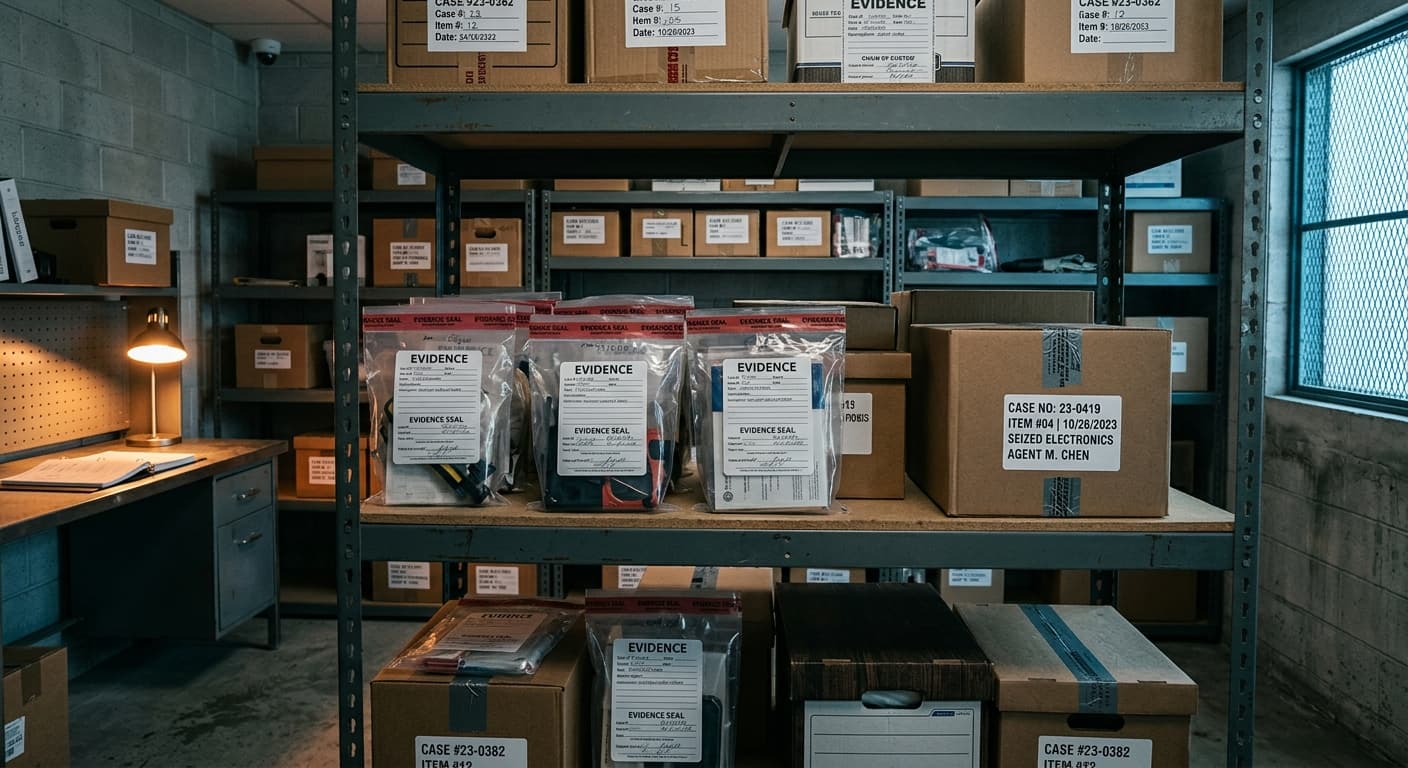
Tennessee has no dedicated body camera statute setting mandate, retention, or access rules. Footage is governed by the general Tennessee Public Records Act, Tenn. Code Ann. § 10-7-503, with one narrow, location-based confidentiality carve-out at § 10-7-504(u) that is scheduled to expire on July 1, 2027.
This page covers whether Tennessee police must use body cameras, what makes footage confidential once it exists, and how the public can request a copy. It does not cover whether a civilian may record an on-duty Tennessee officer, a separate and well-settled question addressed on Recording Law's guide to recording police.
Are Tennessee police required to wear body cameras?
No. Tennessee has never enacted a comprehensive statewide body-worn camera act comparable to neighboring states. Whether officers wear cameras, and under what circumstances they must be turned on, is left entirely to each city, county, or state agency's own policy. Coverage is uneven across the state as a result, with some municipal departments running mature programs and others operating with no cameras at all.
Lawmakers have tried more than once to change that. Sen. Raumesh Akbari and Rep. Sam McKenzie sponsored legislation that would have required agencies using body cameras to adopt written policies and would have streamlined public access, but the bill failed to pass after law enforcement associations raised concerns about cost and officer privacy. As of mid-2026, Tennessee still relies on agency-by-agency policy for activation, storage, and release rather than a single statewide framework.
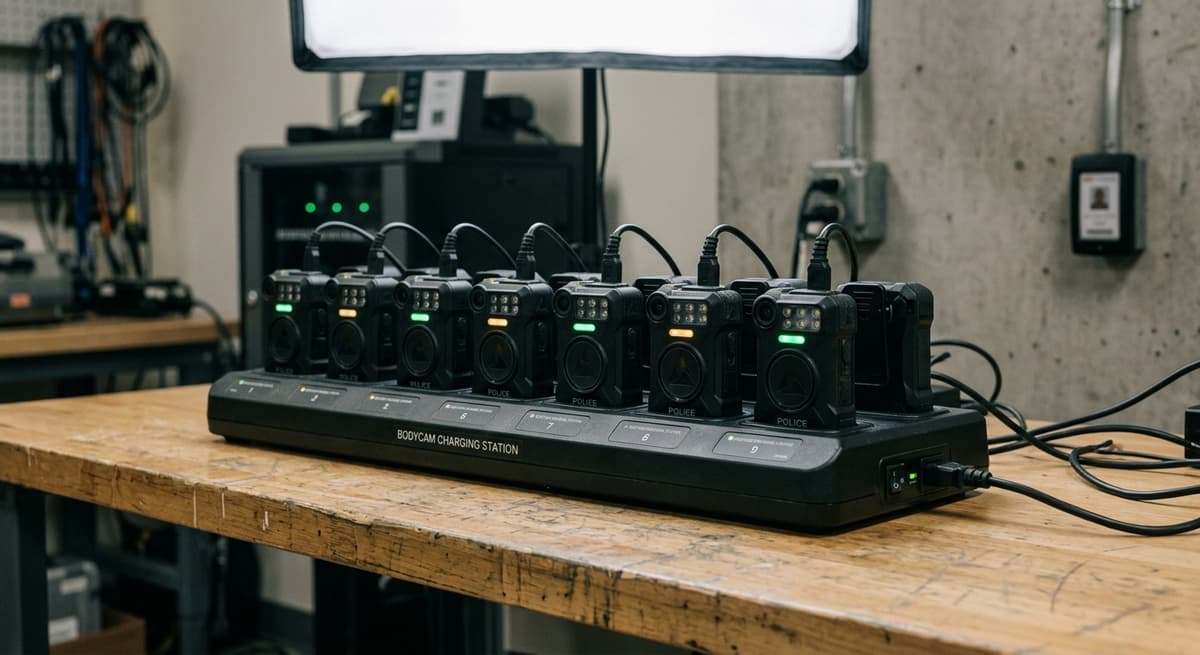
Is police body camera footage a public record in Tennessee?
Generally, yes, subject to important limits. Tennessee has no bodycam-specific access statute the way South Carolina or North Carolina do. Instead, a request for footage is treated like a request for any other government record under the Tennessee Public Records Act, Tenn. Code Ann. § 10-7-503, which starts from a presumption that records held by a state or local government are open for citizen inspection.
That presumption comes with a residency condition that surprises many requesters. Section 10-7-503(a)(2)(A) grants the statutory right to inspect and copy public records only to citizens of Tennessee; a governmental entity may require a requester to present government-issued photo identification showing a Tennessee address, or other proof of residency if the requester lacks such an ID. For most other records, an agency is still free to grant access to an out-of-state requester only as a matter of discretion. But as of July 1, 2026, Tenn. Code Ann. § 10-7-503(i), added by 2026 Public Chapter 711 (SB 1970), gives a non-citizen a statutory right, not just agency discretion, to inspect or receive a copy of a law enforcement record pertaining solely to that individual, including an arrest report, incident report, crash report, citation, or body camera footage, if the requester submits a written request identifying the record, a valid government-issued photo ID, and a signed affidavit that the record pertains solely to them; that right does not reach a record that is otherwise confidential by law. This statutory fix addresses the gap that caused real problems for people arrested in Tennessee who live elsewhere, discussed below.
What actually makes Tennessee bodycam footage confidential?
Tennessee's only provision written specifically for body camera video is Tenn. Code Ann. § 10-7-504(u), added in 2017. It does not create a blanket exemption. Instead, subsection (u)(1) treats video as confidential only when it depicts one of a short list of sensitive settings: minors inside a school serving any grade from kindergarten through 12, a child care agency or program, a preschool, or a nursery school; the interior of a facility licensed under Title 33 (Tennessee's mental health and substance abuse law) or Title 68 (health facilities); or the interior of a private residence that is not being investigated as a crime scene.
Three limits keep the exemption narrow. Subsection (u)(2) preserves the ability of prosecutors and defense counsel to exchange otherwise-confidential footage in a pending criminal case where a defendant's constitutional rights require it. Subsection (u)(3) states the exemption cannot be used to withhold an entire file just because part of it is confidential; agencies must redact the protected portion and release the rest. Subsection (u)(4) leaves access by other law enforcement agencies, courts, and government bodies performing official functions untouched.
The detail most secondary sources miss is the sunset clause. Subsection (u)(5) provides that the whole subsection "is deleted on July 1, 2027, and will no longer be effective on and after that date." Unless the General Assembly reenacts it before then, Tennessee's one dedicated bodycam confidentiality rule will lapse, and footage in those settings would fall back under the Public Records Act's general exemptions, if any apply, rather than this specific carve-out. Anyone relying on this page after mid-2027 should confirm whether the legislature renewed it.
Does the rule change if an officer shoots and kills someone?
Yes, on a separate track. Tenn. Code Ann. § 38-8-311 governs the Tennessee Bureau of Investigation's investigative record of an "officer-involved shooting death," defined as a death from a shooting by an officer who is on duty or performing off-duty activities within the scope of law enforcement duties. That investigative record, which typically includes any body camera footage TBI collected, becomes a public record once the TBI's investigation is complete and the district attorney general has finished the prosecutorial function, meaning a charging decision and, where charges are filed, the case's conclusion. The district attorney general also has discretion to release all or part of the record earlier, before that point is reached.
How long must Tennessee agencies keep body camera footage?
There is no statewide statute setting a minimum or maximum retention period for body camera video, unlike states such as Illinois or Georgia that specify a day count in their bodycam laws. Retention instead runs through the same local government records-retention schedules that cover other municipal and county records, developed under guidance from the Secretary of State's Division of Records Management together with the Municipal Technical Advisory Service and County Technical Assistance Service. In practice that produces significant variation: reporting on Tennessee body camera policies has found retention ranging from near-immediate deletion of routine footage up to indefinite retention, with 1-year, 2-year, and 7-year windows common depending on whether the footage is tied to an arrest, a use of force, or a pending case.
A real access dispute, and why residency mattered
Labreesha Batey, an Alabama resident, was arrested by the Tennessee Highway Patrol on a DUI charge that a judge later dismissed after testing showed no substances in her system. Because she lived out of state, Tennessee's residency requirement under § 10-7-503(a)(2)(A) meant she had no statutory right to request the trooper's body camera footage of her own arrest. She waited more than a year and spent thousands of dollars in legal fees, ultimately filing a federal lawsuit, before the Highway Patrol released the video. The legislature has since addressed cases like hers: effective July 1, 2026, Tenn. Code Ann. § 10-7-503(i) gives an out-of-state resident a statutory right to their own arrest report, incident report, crash report, citation, or body camera footage on the written-request, photo-ID, and affidavit terms described above, so a future Batey-style delay over residency alone should no longer occur. In a separate case highlighting how retention and disclosure decisions play out locally, Rutherford County paid a $90,000 settlement to 78-year-old David Dutton after a "sober DUI" arrest, another episode defense attorneys point to when arguing that faster, more consistent access to body camera footage would resolve wrongful-arrest disputes sooner.
This article provides general legal information about Tennessee body camera and public-records rules as of mid-2026, including a confidentiality provision scheduled to sunset on July 1, 2027. It is not legal advice. For help with a specific records request, consult a Tennessee attorney or the custodian agency's records office.
For how other states handle bodycam mandates and public access, see Recording Law's Police Bodycam Laws hub.
More Tennessee Laws
Frequently Asked Questions
Do Tennessee police officers have to wear body cameras?
No. Tennessee has no statewide law requiring any agency to use body cameras. Adoption, activation, and retention are set by each department's own policy.
Is body camera footage a public record in Tennessee?
Generally yes, under the general presumption of the Tennessee Public Records Act, Tenn. Code Ann. § 10-7-503, unless a specific exemption applies. The main bodycam-specific exemption, § 10-7-504(u), only covers footage from certain sensitive locations.
What footage does Tennessee law keep confidential?
Under Tenn. Code Ann. § 10-7-504(u)(1), only footage showing minors in a K-12 school or certain child care settings, the interior of a Title 33 or Title 68 licensed facility, or the interior of a private residence not under criminal investigation. Footage outside those settings is not shielded by this section.
Is Tennessee's body camera confidentiality law permanent?
No. Tenn. Code Ann. § 10-7-504(u)(5) states the subsection is deleted on July 1, 2027, unless the General Assembly reenacts it before then.
Can an out-of-state resident get Tennessee body camera footage?
As of July 1, 2026, yes for records about their own encounter, as a matter of statutory right, not just agency discretion. Tenn. Code Ann. § 10-7-503(a)(2)(A) still limits the general right to inspect and copy public records to Tennessee citizens, but new subsection (i), added by 2026 Public Chapter 711, entitles a non-citizen to inspect or receive a copy of a law enforcement record pertaining solely to that individual, including body camera footage, by submitting a written request, valid government-issued photo ID, and a signed affidavit that the record pertains solely to them. For records not about the requester, agencies may still extend access at their discretion but are not required to.
How long do Tennessee police have to keep body camera video?
There is no statewide minimum. Retention follows local government records-retention schedules, so it varies significantly by department, with reported ranges from near-immediate deletion to indefinite retention.
What happens to body camera footage after a police shooting death in Tennessee?
Under Tenn. Code Ann. § 38-8-311, the Tennessee Bureau of Investigation's investigative record, which can include body camera video, becomes public once the TBI's investigation and the district attorney general's prosecutorial function are both complete, though the district attorney general may release it earlier.
Updates
Updated for a 2026 law change: effective July 1, 2026, Tennessee gives an out-of-state resident a statutory right (not just agency discretion) to their own law enforcement record, including body camera footage, under new Tenn. Code Ann. § 10-7-503(i) (2026 Public Chapter 711); the page previously described out-of-state access as purely discretionary and presented the residency gap as unresolved.
Independently fact-checked against the cited primary sources; governing law re-checked for recent changes
Governing law re-checked for recent changes
Reviewed and approved by an editor
The Law Behind This Article
This article rests on 3 statutory provisions held in our own legal record, each retrieved from the official source. Tap a section to read the operative text.
Tennessee Code Annotated
§ 10-7-503Records open to public inspection — Schedule of reasonable charges — Costs — Destruction of public records.In forcecited in 2 of our articles
(a)(1) As used in this part and title 8, chapter 4, part 6: (A) “Public record or records” or “state record or records”: (i) Means all documents, papers, letters, maps, books, photographs, microfilms, electronic data processing files and output, films, sound recordings, or other material,…
Official text (excerpt) · as of 2021-05-21 · Read the full section at archive.org
Cited in 132 court opinionsMost recently applied by a court: 2026
Leading cases: The Tennessean v. Metropolitan Government of Nashville and Davidson County (Tennessee Supreme Court 2016, 485 S.W.3d 857) · Swift v. Campbell (Court of Appeals of Tennessee 2004, 159 S.W.3d 565) · Memphis Publishing Co. v. City of Memphis (Tennessee Supreme Court 1994, 871 S.W.2d 681)
Identified automatically from the court opinions citing this section — not a ranking of which case controls.
Also relied on in: Tennessee Public Records Act: Who Can Request and How
§ 10-7-504Confidential records — Exceptions.In forcecited in 4 of our articles
(a)(1)(A) The medical records of patients in state, county, and municipal hospitals and medical facilities, and the medical records of persons receiving medical treatment, in whole or in part, at the expense of the state, county, or municipality, shall be treated as confidential and shall not be…
Official text (excerpt) · as of 2021-05-21 · Read the full section at archive.org
Cited in 67 court opinionsMost recently applied by a court: 2026
Leading cases: Stephen Michael West v. Derrick D. Schofield (Tennessee Supreme Court 2015, 460 S.W.3d 113) · Cleveland Newspapers, Inc. v. Bradley County Memorial Hospital Board of Directors (Court of Appeals of Tennessee 1981, 621 S.W.2d 763) · Patterson v. Convention Center Authority of the Metropolitan Government (Court of Appeals of Tennessee 2013, 421 S.W.3d 597)
Identified automatically from the court opinions citing this section — not a ranking of which case controls.
Also relied on in: Tennessee Laws on Recording Police: Your Rights and Limits, Tennessee Police Report: How to Get a Crash Report, Incident Report, or Body Camera Video
§ 38-8-311Investigative record of officer-involved shooting death.In force
(a) After completion of an investigation into an officer-involved shooting death by the Tennessee bureau of investigation and after the completion of the prosecutorial function by the district attorney general, notwithstanding § 10-7-504 to the contrary, the investigative record of the incident…
Official text (excerpt) · as of 2021-05-21 · Read the full section at archive.org
Search our full record of US law — 2.1 million sections, every state + federal →
Sources and References
- Tenn. Code Ann. § 38-8-311 (investigative record of officer-involved shooting death to be a public record)(tn.gov).gov
- Reporters Committee for Freedom of the Press, Open Government Guide: Tennessee (law enforcement records and body camera access)(rcfp.org)
- MTAS (University of Tennessee Institute for Public Service), "Law Enforcement Records"(mtas.tennessee.edu)
- FOX 17 Investigates, "If you're arrested in Tennessee, will you get to see the body camera video?"(fox17.com)
- FOX 17 Investigates, "New law expands police body camera access for public" (Akbari/McKenzie legislation)(foxchattanooga.com)
- Tennessee General Assembly, SB 1970 (114th General Assembly), enacted as 2026 Public Chapter 711 -- bill status, signed by the Governor April 24, 2026, effective July 1, 2026, adding Tenn. Code Ann. § 10-7-503(i)(capitol.tn.gov).gov