Pennsylvania Act 81: County Probation Officer Body Cameras and Wiretap Law
Independently fact-checked against primary sources (last audited October 26, 2026). · 17 primary sources cited on this page. How we verify our legal content
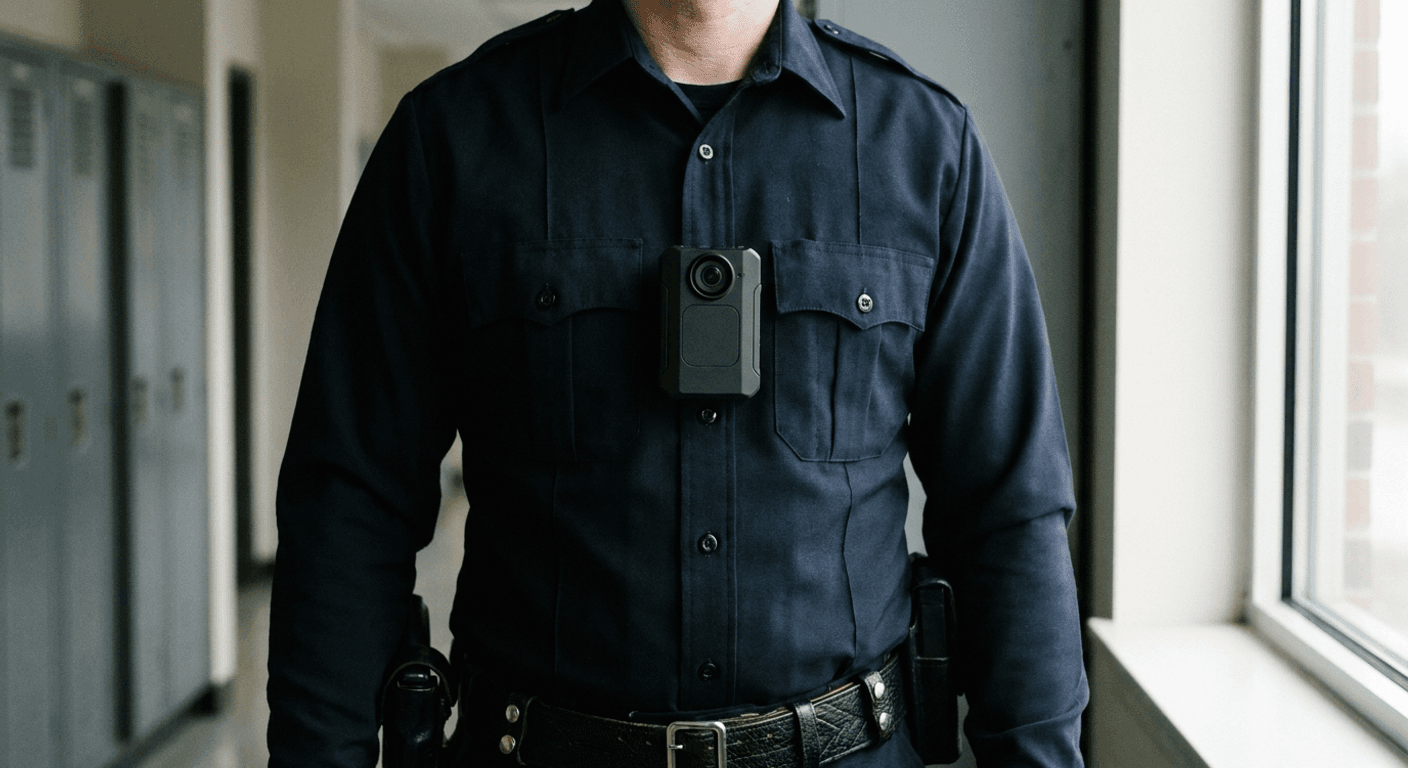
Pennsylvania Act 81 Adds County Probation Officers to the Wiretap Act Body-Camera Exception
Governor Josh Shapiro approved House Bill 2299 on October 22, 2026 as Act 81 of 2026. The act adds county probation and parole officers to the list of officers whose body-camera recordings fall outside the definition of "oral communication" in Pennsylvania's Wiretapping and Electronic Surveillance Control Act. It takes effect December 21, 2026.
Information last verified on October 26, 2026. This is a developing story; we update it as the record changes.
Jurisdiction scope: This article addresses Pennsylvania state law, specifically the Wiretapping and Electronic Surveillance Control Act at 18 Pa.C.S. Ch. 57 and Chapter 67A of Title 42 (recordings by law enforcement officers). It does not address the federal wiretap statute at 18 U.S.C. 2511, the consent rules of any other state, or the content of any individual county probation department's written camera policy.
What Happened
Act 81 of 2026 began as House Bill 2299, introduced March 18, 2026 by Representative Ryan Bizzarro of House District 3 and referred to the House Judiciary Committee the same day. The bill's co-sponsorship memo, listed on the General Assembly's bill page, is titled "Body Cameras for County Probation Officers." The House passed it 195 to 7 on June 17, 2026 after referrals through Judiciary, Rules and Appropriations. The Senate referred it to Judiciary on June 22, re-referred it to Appropriations on September 28, and passed it on third consideration 43 to 7 on October 21, 2026, recording a further final-passage vote of 42 to 8 the same day. The Governor approved it on October 22, 2026, and the General Assembly's bill history records the last action as "Act No. 81 of 2026, Oct. 22, 2026."
The enacted text runs to four pages and contains three sections. Section 1 amends one definition in Title 18, Section 2 amends one definition in Title 42, and Section 3 sets the effective date:
"(x) An officer as defined under 42 Pa.C.S. § 9911 (relating to definitions)." Source: Act 81 of 2026 (H.B. 2299, P.N. 3019), Section 1, amending the definition of "oral communication" in 18 Pa.C.S. 5702
"Section 3. This act shall take effect in 60 days." Source: Act 81 of 2026 (H.B. 2299, P.N. 3019), Section 3
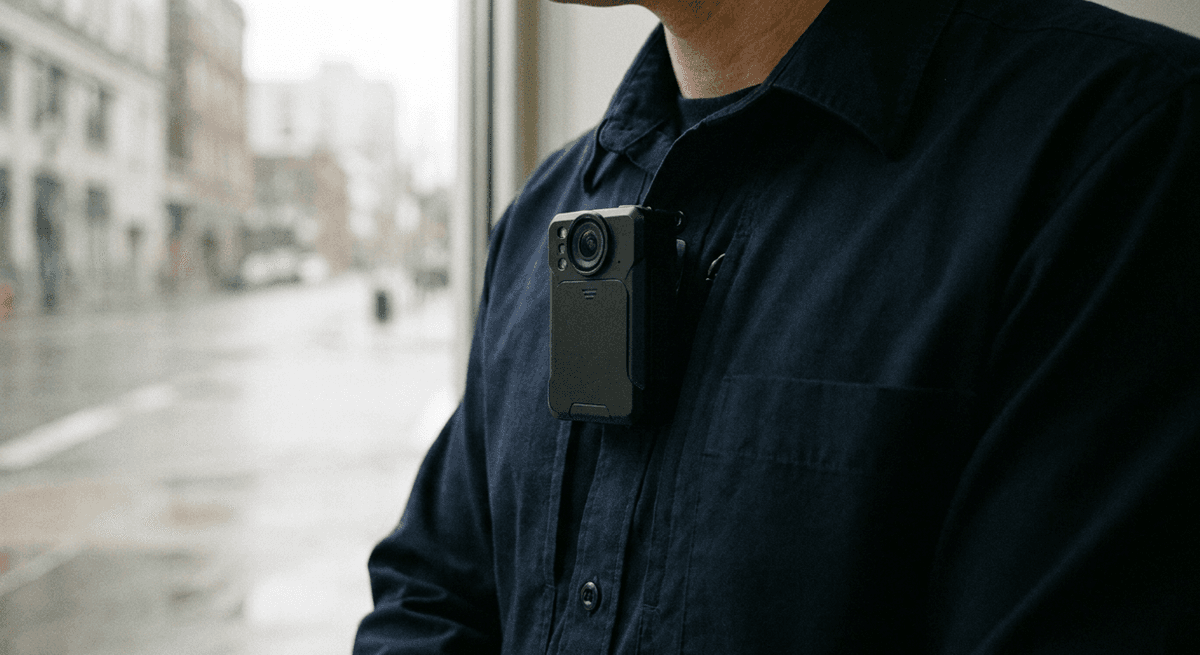
What the Law Actually Says
Start with the baseline the act does not touch. Under 18 Pa.C.S. 5703, and except as otherwise provided in Chapter 57, a person commits a felony of the third degree by intentionally intercepting a wire, electronic or oral communication, by intentionally disclosing the contents of one knowing it came from an interception, or by intentionally using those contents on the same knowledge. The exception readers rely on sits in 18 Pa.C.S. 5704(4). Section 5704 opens by providing that "it shall not be unlawful and no prior court approval shall be required under this chapter for" the conduct it then lists, and paragraph (4) lists "[a] person, to intercept a wire, electronic or oral communication, where all parties to the communication have given prior consent to such interception." That pairing is what makes Pennsylvania an all-party consent state, and it is the framework behind Pennsylvania's all-party consent rules as we cover them for private individuals.
Act 81 operates one level below that, on a definition. The prohibition in 5703 reaches an "oral communication," and paragraph (2) of that definition in 18 Pa.C.S. 5702 removes a specific class of conversation from the term entirely. The paragraph excludes:
"A communication made in the presence of a law enforcement officer on official duty who is in uniform or otherwise clearly identifiable as a law enforcement officer and who is using an electronic, mechanical or other device which has been approved under section 5706(b)(4) (relating to exceptions to prohibitions in possession, sale, distribution, manufacture or advertisement of electronic, mechanical or other devices) to intercept the communication in the course of law enforcement duties." Source: 18 Pa.C.S. 5702, definition of "oral communication," paragraph (2)
Those conditions are conjunctive, and the limiting language matters. An officer who is out of uniform and not otherwise clearly identifiable is outside the paragraph. So is an officer using a device that has not been approved under 18 Pa.C.S. 5706(b)(4), which is the provision directing the Pennsylvania State Police to establish equipment standards annually and publish them in the Pennsylvania Bulletin. The neighboring paragraphs tighten the same screw: 5706(b)(5) requires the State Police to publish annual standards for secure onsite and off-site storage of the audio and any accompanying video, and 42 Pa.C.S. 67A07(a) requires an agency that makes recordings under this paragraph to comply with the guidelines established under 18 Pa.C.S. 5706(b)(4), (5) and (6), the last of which also reaches the vendor that stores the data, and to adopt written, public policies on training, activation periods, equipment handling, retention, facial recognition software, discipline and supervision.
The ten officer categories
Paragraph (2) defines "law enforcement officer" for its own purposes only. As it will read once Act 81 is in force, the categories are:
- (i) a member of the Pennsylvania State Police
- (ii) a police officer holding a current certificate under 53 Pa.C.S. Ch. 21 Subch. D
- (iii) an agent of the Office of Attorney General as described under paragraph (2) of the definition of "enforcement officer" in 71 Pa.C.S. 5102
- (iv) a sheriff or a deputy sheriff
- (v) waterways conservation officers or deputy waterways conservation officers as defined under 30 Pa.C.S. 102
- (vi) an officer as defined under 34 Pa.C.S. 102
- (vii) an employee of the Department of Conservation and Natural Resources vested with powers of arrest under section 302(c) or 303(a)(7) of the Conservation and Natural Resources Act
- (viii) an agent as defined in 61 Pa.C.S. 6101, that is, a State parole agent
- (ix) an employee of the Department of Corrections Bureau of Investigations and Intelligence holding a police officer commission under the act of May 21, 1943 (P.L.469, No.210), "provided that the individual is not intercepting the communication from inside the residence of an employee of the Department of Corrections without the consent of the employee or prior court approval"
- (x) an officer as defined under 42 Pa.C.S. 9911, the category Act 81 adds
Subparagraph (x) borrows its scope wholesale from the county probation chapter. 42 Pa.C.S. 9911, in Subchapter A (County Probation Officers) of Chapter 99 (Other Criminal Provisions), defines "Officer" as "[a] probation or parole officer appointed or employed by any court or by any county department of probation and parole to supervise persons released on county probation or parole." Those officers already hold statutory authority of their own: 42 Pa.C.S. 9913 declares an officer a peace officer with police powers to arrest a supervised person for a violation, and 42 Pa.C.S. 9912(b)(1) authorizes them to search the person and property of their offenders on the grounds that section sets out.
Section 2 and the records-access route
Section 2 of the act adds paragraph (10), "An officer as defined under section 9911 (relating to definitions)," to the definition of "law enforcement officer" in 42 Pa.C.S. 67A01. That definition previously ran to nine paragraphs tracking the same officer categories as the Title 18 list, and was last amended November 24, 2025 by Act 53 of 2025.
The 67A01 definitions carry a consequence by their own terms. "Law enforcement agency" is defined in the same section to include "an agency that employs a law enforcement officer," and 42 Pa.C.S. 67A02(a) provides that Chapter 67A, and not the Right-to-Know Law, applies to any audio or video recording made by a law enforcement agency. The chapter's request mechanics are narrower than a standard records request: under 42 Pa.C.S. 67A03 a requester has 60 days from the date the recording was made to serve a written request on the agency's open-records officer by personal delivery or certified mail, must specify the incident with particularity including date, time and location, must describe their relationship to the incident, and must identify every individual present if the incident occurred inside a residence and those names are known or reasonably ascertainable. Under 42 Pa.C.S. 67A05 the agency has 30 days from receipt to produce the recording or identify in writing the basis for denying the request, unless the requester and the agency agree to a longer period, and silence past whichever window applies is a denial by operation of law. Readers who have worked through requesting Pennsylvania body-camera footage will recognize that route, because it is the same one that applies to police recordings today.
When Act 81 Takes Effect
Section 3 states only that the act takes effect in 60 days, so the date comes from the general computation rule. 1 Pa.C.S. 1908 provides that a period of time referred to in a statute is computed "so as to exclude the first and include the last day of such period," and that where the last day falls on a Saturday, a Sunday or a legal holiday, that day is omitted from the computation. Counting from the October 22, 2026 approval with the first day excluded, the sixtieth day is December 21, 2026. That date is a Monday, so the weekend and holiday adjustment does not move it.
Until December 21, 2026, paragraph (2) of the definition of "oral communication" ends at subparagraph (ix) and 42 Pa.C.S. 67A01 ends at paragraph (9). Nothing in Act 81 is operative before that date.
What Act 81 Does Not Do
The following are read from the four pages of the enacted text, which contain Sections 1 and 2 as the only amendatory provisions and Section 3 as the effective date.
It does not change the consent rule for anyone. Act 81 does not amend 18 Pa.C.S. 5703 or 18 Pa.C.S. 5704. The felony prohibition and the all-party consent exception stand exactly as they read today. A private individual in Pennsylvania has no more recording latitude on December 21, 2026 than on October 21, 2026, which is worth saying plainly because the practical questions readers bring us are about recording a phone call in Pennsylvania and about conversations with officials, and the answers to both are unchanged.
It does not require any camera. The enacted text contains no mandate that a county probation department buy, issue, or activate a recording device, and no appropriation. What Section 1 does is remove a definitional obstacle, so that a recording made under the paragraph's conditions is not an interception of an "oral communication" in the first place. The obligations that attach to an agency that chooses to record come from 42 Pa.C.S. 67A07 and the State Police standards under 18 Pa.C.S. 5706(b)(4) and (5), not from Act 81.
It does not create a right for a supervised person to record an officer. Paragraph (2) of the 5702 definition describes what the officer's approved device captures. It confers nothing on the other party to the conversation, and Act 81 adds no reciprocal provision. The general limits on a citizen recording a government employee are the subject of our page on recording police in Pennsylvania, and Act 81 does not alter them.
It does not add a residence limit for supervised people. The one residence-specific condition in paragraph (2) is the clause inside subparagraph (ix), which bars a Department of Corrections Bureau of Investigations and Intelligence employee from intercepting a communication from inside the residence of a Department of Corrections employee without the employee's consent or prior court approval. Act 81's subparagraph (x) is a single sentence with no proviso of any kind, and no other subparagraph carries a residence clause. A home visit to a person under county supervision is therefore not addressed anywhere in the paragraph's text.
Analysis: Why This Matters
The following is analysis from the Recording Law Editorial Team.
The notable thing about Act 81 is how narrow it is and how familiar the pattern has become. Chapter 67A was added by Act 22 of 2017, the same act that appears in the amendment history of 18 Pa.C.S. 5702 and that amended subsection (b) of 18 Pa.C.S. 5706, the subsection carrying the device-approval provision the carve-out cross-references. The statutory history printed with 18 Pa.C.S. 5702 then records amendments on December 14, 2023 (Act 53 of 2023) and November 24, 2025 (Act 53 of 2025), the latter noted as an amendment to the definition of "oral communication." Act 81 is the next entry in that sequence and will bring the list to ten when it takes effect. The drafting choice worth noticing is the form: the carve-out is an enumerated list rather than a functional test, so it reaches only the officer types the General Assembly has named, and it widens only when the General Assembly returns to it.
The asymmetry in the residence language is the detail we would flag for anyone reading the amended paragraph closely. County probation work is substantially home-visit work. The definitions in 42 Pa.C.S. 9911 reach "Real property," defined as "[a]ny residence or business property of an offender, including all portions of the property to which the offender has access," and 42 Pa.C.S. 9912(b)(1) authorizes officers to search the person and property of their offenders. Yet the only residence protection in the body-camera paragraph runs to the homes of Department of Corrections employees, under subparagraph (ix), and the new subparagraph (x) carries no equivalent. We note the asymmetry as a feature of the enacted text. We do not predict how a court would treat a recording made inside a supervised person's home, and the text of 42 Pa.C.S. 9912(b)(2)(iii) itself preserves the constitutional limits by providing that nothing in that section permits searches or seizures in violation of the United States Constitution or Article I, section 8 of the Pennsylvania Constitution.
There is a quieter consequence on the records side. By adding county probation and parole officers to 42 Pa.C.S. 67A01, Act 81 will pull those recordings into Chapter 67A from December 21, 2026, and 67A02(a) makes that chapter the exclusive route in place of the Right-to-Know Law. For a family member or a defense lawyer, that means a hard 60-day window running from the date of the recording under 67A03, a particularity requirement, and, for anything recorded inside a home, a requirement to name everyone who was present. The exemption and the access regime arrive in the same act, and the access regime is the tighter half.
How This Affects You
If you are a private individual who wants to record a conversation in Pennsylvania, nothing here helps you. 18 Pa.C.S. 5703 and the all-party consent exception at 18 Pa.C.S. 5704(4) are untouched by Act 81, and they continue to govern phone calls and in-person conversations alike.
If you are supervised on county probation or parole, the effect of the amended text from December 21, 2026 is that a conversation held in the presence of a county probation or parole officer who is on official duty, in uniform or otherwise clearly identifiable, and using a device approved under 18 Pa.C.S. 5706(b)(4), is not an "oral communication" for Chapter 57 purposes. Whether your county department records at all is a matter for its own written policy, which 42 Pa.C.S. 67A07(a) requires to be public. Readers often reach this material while working through Pennsylvania record-clearing and supervision questions, and the two are separate regimes; nothing in Act 81 changes eligibility for any form of relief.
If you want a recording that a county probation department holds, the route after the effective date is Chapter 67A of Title 42 rather than an ordinary Right-to-Know request, and its 60-day service clock under 42 Pa.C.S. 67A03 is the trap worth noting.
No court has yet applied subparagraph (x). Act 81 was approved on October 22, 2026 and does not take effect until December 21, 2026, so nothing has been decided under it. Statements about how the paragraph's conditions will be tested in practice are, for now, readings of the text.
This is general legal information, not legal advice. It covers Pennsylvania state law as set out in 18 Pa.C.S. Ch. 57 and 42 Pa.C.S. Ch. 67A and Ch. 99, and reflects primary sources verified on October 26, 2026. Act 81 of 2026 is not in force until December 21, 2026, laws change, and this story is developing. Consult a lawyer licensed in Pennsylvania about your specific situation.
Last updated: 2026-10-26. This is a developing story; details verified as of 2026-10-26.
Frequently Asked Questions
Does Act 81 of 2026 change Pennsylvania's all-party consent rule?
No. Act 81 amends only the definition of 'oral communication' in 18 Pa.C.S. 5702 and the definition of 'law enforcement officer' in 42 Pa.C.S. 67A01. The felony prohibition in 18 Pa.C.S. 5703 and the all-party consent exception in 18 Pa.C.S. 5704(4) are unchanged, so Pennsylvania remains an all-party consent state.
When does Pennsylvania Act 81 of 2026 take effect?
December 21, 2026. Section 3 of the act says it takes effect in 60 days, and 1 Pa.C.S. 1908 computes such a period by excluding the first day and including the last, which runs from the October 22, 2026 approval to December 21, 2026. That date is a Monday, so the weekend and holiday rule in 1908 does not shift it.
Who counts as an 'officer' under 42 Pa.C.S. 9911?
42 Pa.C.S. 9911 defines 'Officer' as a probation or parole officer appointed or employed by any court or by any county department of probation and parole to supervise persons released on county probation or parole. Act 81 will import that definition into 18 Pa.C.S. 5702 as subparagraph (x) and into 42 Pa.C.S. 67A01 as paragraph (10) when it takes effect on December 21, 2026.
Does Act 81 require county probation officers to wear body cameras?
The enacted text does not require it. Act 81 amends two definitions and sets an effective date; it contains no camera mandate and no appropriation. A county agency that chooses to record must meet the Pennsylvania State Police standards under 18 Pa.C.S. 5706(b)(4) and (5) and adopt the written public policies required by 42 Pa.C.S. 67A07.
Does the exception apply if the officer is in plain clothes?
The conditions in paragraph (2) of the 18 Pa.C.S. 5702 definition are conjunctive. The officer must be on official duty, in uniform or otherwise clearly identifiable as a law enforcement officer, using a device approved under 18 Pa.C.S. 5706(b)(4), and intercepting in the course of law enforcement duties. An officer who satisfies none of the identifiability alternatives falls outside the paragraph.
Does Act 81 limit recording inside the home of a person under supervision?
The enacted text contains no such limit. The only residence-specific condition in that paragraph is in subparagraph (ix), which bars a Department of Corrections Bureau of Investigations and Intelligence employee from intercepting a communication from inside the residence of a Department of Corrections employee without consent or prior court approval. Subparagraph (x) carries no proviso.
How would someone request a county probation recording once Act 81 is in force?
Through Chapter 67A of Title 42 rather than the Right-to-Know Law, because 42 Pa.C.S. 67A02(a) makes that chapter exclusive for recordings made by a law enforcement agency. 42 Pa.C.S. 67A03 requires a written request served on the agency's open-records officer within 60 days of the recording, and 42 Pa.C.S. 67A05 gives the agency 30 days to produce it or explain a denial, unless the requester and the agency agree to a longer period.
Updates
Independently fact-checked against the cited primary sources
Sources and References
- House Bill 2299, Printer's No. 3019, enacted text (Act 81 of 2026), amending 18 Pa.C.S. 5702 and 42 Pa.C.S. 67A01(palegis.us).gov
- House Bill 2299 bill status and history, 2025-2026 Regular Session (prime sponsor, vote tallies, approval as Act No. 81 of 2026)(palegis.us).gov
- 18 Pa.C.S. 5702, definitions under the Wiretapping and Electronic Surveillance Control Act, including the definition of 'oral communication'(palegis.us).gov
- 18 Pa.C.S. 5701, short title of the Wiretapping and Electronic Surveillance Control Act(palegis.us).gov
- 18 Pa.C.S. 5703, interception, disclosure or use of wire, electronic or oral communications(palegis.us).gov
- 18 Pa.C.S. 5704, exceptions to the prohibition on interception, including the all-party prior consent exception at paragraph (4)(palegis.us).gov
- 18 Pa.C.S. 5706, device exceptions, including the State Police equipment and storage standards at subsections (b)(4), (b)(5) and (b)(6)(palegis.us).gov
- 42 Pa.C.S. 9911, definitions for county probation officers, including 'Officer' and 'Real property'(palegis.us).gov
- 42 Pa.C.S. 9912, supervisory relationship to offenders and authorized searches and seizures(palegis.us).gov
- 42 Pa.C.S. 9913, peace officer power for probation officers(palegis.us).gov
- 42 Pa.C.S. 67A01, definitions for Chapter 67A (recordings by law enforcement officers), including 'law enforcement officer' and 'law enforcement agency'(palegis.us).gov
- 42 Pa.C.S. 67A02, scope of Chapter 67A and its displacement of the Right-to-Know Law(palegis.us).gov
- 42 Pa.C.S. 67A03, requests for law enforcement audio or video recordings and the 60-day service requirement(palegis.us).gov
- 42 Pa.C.S. 67A05, agency procedure, the 30-day response window and denial by operation of law(palegis.us).gov
- 42 Pa.C.S. 67A07, required audio and video recording policies for law enforcement agencies(palegis.us).gov
- 1 Pa.C.S. 1908, computation of time (first day excluded, last day included)(palegis.us).gov
- Governor Josh Shapiro signs 58 bills into law, October 22, 2026 (Office of the Governor press release listing HB 2299 and SB 806)(pa.gov).gov