Washington Supreme Court: Pixel Tracking Outside RCW 9.73.030(1)(a)
Independently fact-checked against primary sources (last audited October 11, 2026). · 8 primary sources cited on this page. How we verify our legal content
Washington Supreme Court: RCW 9.73.030(1)(a) Does Not Reach Automated Website Pixel Tracking
The Washington Supreme Court held on October 8, 2026 that RCW 9.73.030(1)(a) reaches only a private communication transmitted "between two or more individuals," so a visitor's clicks and searches answered by a corporation's automated website fall outside the Washington privacy act. The court left two questions open.
Information last verified on October 11, 2026. Everything below comes from the slip opinion in Baker v. Seattle Children's Hospital, No. 104590-5 (Wash. Oct. 8, 2026) (en banc), the unpublished Court of Appeals opinion below, the current text of chapter 9.73 RCW, and RAP 12.4, each opened directly on October 11, 2026.
Jurisdiction scope: This article covers Washington State law only: RCW 9.73.030 and the related sections of chapter 9.73 RCW, and the Washington Supreme Court's October 8, 2026 decision in No. 104590-5. It does not cover the federal wiretap act, California's privacy act, or other states' website-tracking rulings. The court said in this opinion that federal and California authority is not instructive here because those statutes differ significantly from Washington's.
What Happened
On October 8, 2026, at 8 a.m., the clerk of the Washington Supreme Court filed the court's en banc opinion in Carly Baker, Janssen Ramos Savoie, and Amber Shavies v. Seattle Children's Hospital, No. 104590-5. Angelis, J., wrote for the court. González, J., filed a separate opinion concurring in the result.
The court stated its conclusion in the second paragraph of the opinion: "RCW 9.73.030(1)(a) governs interception or recording of 'communication' between 'two or more individuals' and therefore excludes searches and clicks that generate an automated response from SCH's website." Slip op. at 2. The formal holding in the conclusion reads: "We hold that the communications at issue do not constitute a communication 'between two or more individuals' under RCW 9.73.030(1)(a)." Slip op. at 10.
The allegations the court accepted as true
Because the case reached the court on a CR 12(b)(6) dismissal, the court took the complaint's factual allegations as true and asked only whether they could support a violation of the statute. On that footing, the alleged facts were these.
Seattle Children's Hospital, a Washington nonprofit corporation, maintains a public website offering general information: a directory of clinicians by specialty, clinic hours, and descriptions of health conditions. Visitors navigate with a search bar or by clicking links. The site also ran Meta Pixel, which the court described as free software that tracks visitors' clicks, text searches and page views and sends that data to Meta "without the user's knowledge." Slip op. at 3.
The opinion gives a concrete example. When a visitor types "depression" into the site's search bar, the site loads a page of resources for that condition, and Pixel "records and relays the content of this search to Meta," which links it to the visitor's Facebook or Instagram account and uses it for targeted advertising. Slip op. at 3. If a visitor has no Meta account or is not logged in, Pixel transmits the activity with a unique identifier that lets Meta attach the history later, when that person logs in to or creates a Meta account.
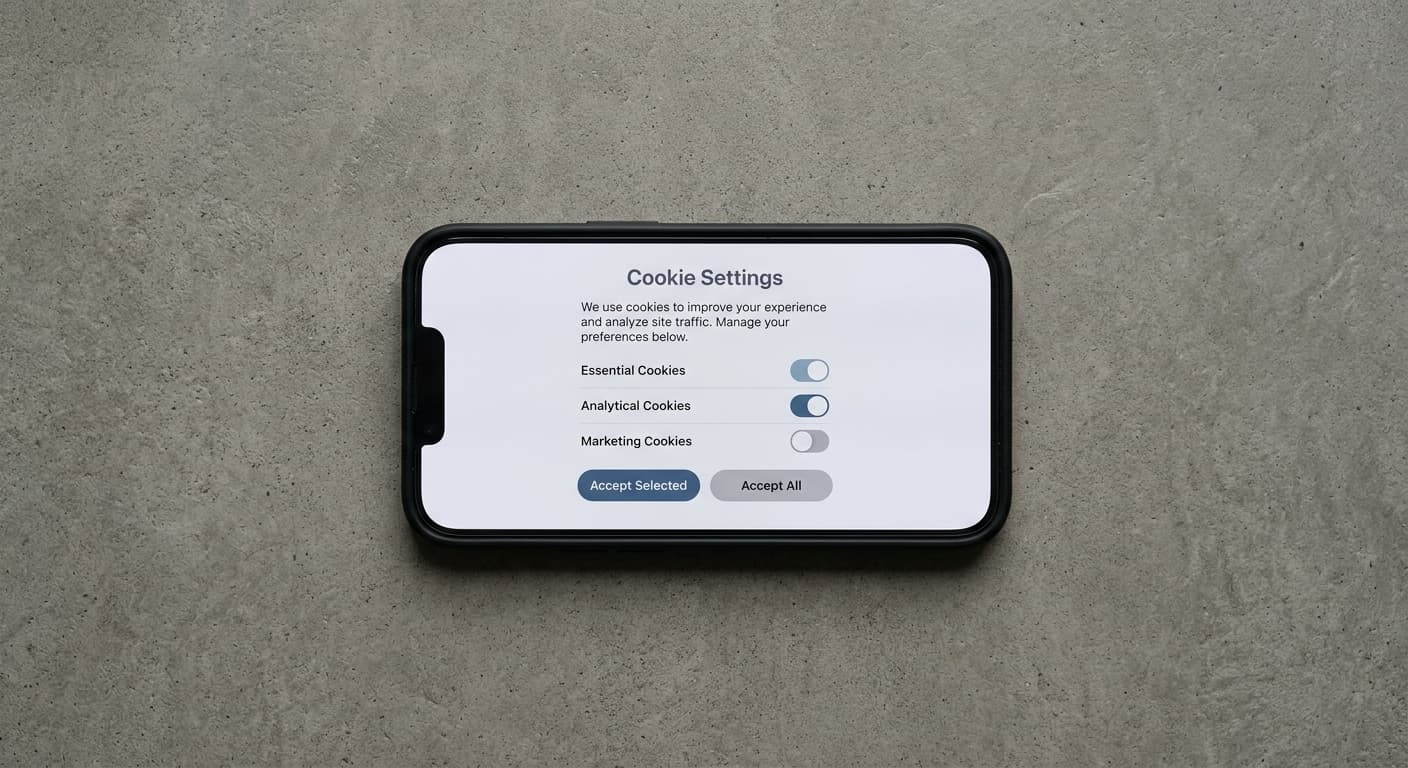
The site did show a cookie pop-up telling visitors that accepting cookies meant agreeing to software storing data that assists marketing. The court noted the limit of that notice directly: "The alert does not, however, identify Pixel or explain the process by which Pixel collects and uses website data." Slip op. at 3-4.
The three named plaintiffs each have a child who was a hospital patient, and each alleged searching the public site for medical conditions, symptoms, providers or urgent-care hours. Concurrence, slip op. at 3; see slip op. at 4.
How the case got to the Supreme Court
The trial court granted the hospital's CR 12(b)(6) motion and dismissed the complaint with prejudice at the close of oral argument.
Division One of the Court of Appeals affirmed in an unpublished opinion by Coburn, J. Baker v. Seattle Children's Hospital, No. 86461-1-I (Wash. Ct. App. Aug. 18, 2025) (unpublished). The Court of Appeals rested on the "communication" element: "Because plaintiffs' alleged navigation of SCH's public website is not 'communication' as contemplated by the privacy act, we reject plaintiffs' argument." Ct. App. slip op. at 6-7. Its reasoning was that the plaintiffs "did not allege that they navigated SCH's public website to transmit a message to or exchange information with another party," and that click-and-search activity is distinguishable from the "back-and-forth" messaging the act plainly protects. Ct. App. slip op. at 10. That court also cabined itself: "our holding should not be read to definitively construe the application of the term 'private communication' for all cases involving website or internet use." Ct. App. slip op. at 11. (Readers comparing documents should note that the Court of Appeals opinion itself bears docket No. 86461-1-I, with "86461-1" in its running header on every page, while the Supreme Court opinion prints the number as No. 86481-1-I, one digit off. The hyperlink in the Supreme Court's own citation resolves to the 864611 opinion, so both refer to the same decision.)
The Supreme Court granted review, 5 Wn.3d 1025 (2026). It received amicus briefs from the Chamber of Commerce of the United States together with the Washington State Hospital Association, and from Interactive Advertising Bureau Inc., all supporting the hospital.
One scope point matters for anyone reading the opinion against their own facts. The plaintiffs' complaint also referenced the hospital's MyChart patient portal, but they later clarified that their claims targeted only Pixel's use on the publicly available website. The court therefore limited review to activity on the public site. Slip op. at 5 n.5. The concurrence reads the same clarification the same way and adds that the plaintiffs did not abandon the allegation that Pixel discloses a user's patient status when the user navigates to the portal's sign-in page. Concurrence, slip op. at 4 n.1.
The two things the court refused to decide
First, the private-communication question. In the paragraph before its conclusion the court wrote: "Because we conclude that the claims, as pleaded, do not satisfy the 'between two or more individuals' requirement, we do not decide whether any communications at issue constitute a 'private communication' under RCW 9.73.030(1)(a)." Slip op. at 10.
Second, the entity-acting-through-people question. Footnote 6 is short and consequential: "The entities listed in RCW 9.73.030(1) will often, of course, communicate through individuals. We need not, and do not, resolve whether the statute would apply when such communications are transmitted by a covered device and are between two or more individuals because those hypothetical facts are not conceivably raised by the complaint." Slip op. at 9 n.6.
Two footnotes also fence off the rest of the lawsuit. The plaintiffs had brought claims under the Washington Consumer Protection Act, ch. 19.86 RCW, and the Washington Uniform Health Care Information Act, ch. 70.02 RCW, plus invasion of privacy, breach of implied contract, conversion and unjust enrichment. They did not appeal the dismissal of those claims, and the court said so twice: "On appeal, the plaintiffs did not raise, and we therefore do not address, the claims in their complaint that SCH's actions violated other Washington laws" (slip op. at 2 n.1), and, because the plaintiffs did not challenge that dismissal, "our opinion does not address the sufficiency of those claims" (slip op. at 9 n.7).
What the Law Actually Says
Washington's privacy act is chapter 9.73 RCW, and the operative prohibition is RCW 9.73.030(1). Quoted in full through its limiting clauses, as it reads on app.leg.wa.gov on October 11, 2026:
(1) Except as otherwise provided in this chapter, it shall be unlawful for any individual, partnership, corporation, association, or the state of Washington, its agencies, and political subdivisions to intercept, or record any:
(a) Private communication transmitted by telephone, telegraph, radio, or other device between two or more individuals between points within or without the state by any device electronic or otherwise designed to record and/or transmit said communication regardless how such device is powered or actuated, without first obtaining the consent of all the participants in the communication;
(b) Private conversation, by any device electronic or otherwise designed to record or transmit such conversation regardless how the device is powered or actuated without first obtaining the consent of all the persons engaged in the conversation.
Two features of that text carried the case.
The first is the consent clause. Washington is an all-party consent jurisdiction: subsection (1)(a) requires "the consent of all the participants in the communication," and subsection (1)(b) requires "the consent of all the persons engaged in the conversation." That is the rule our guide to Washington's recording statute and the state-by-state consent map describe, and this decision did not disturb it. The court in fact reaffirmed where the statute's reputation comes from. When Washington courts have called the act "one of the most restrictive electronic surveillance laws ever promulgated," quoting State v. Roden, 179 Wn.2d 893, 898 (2014), the court said it was "focused primarily on its requirement that all parties consent before a communication may be recorded, which the federal wiretap act does not require, and which most states do not require." Slip op. at 9, citing State v. Kipp, 179 Wn.2d 718, 724-25 (2014).
The second is the phrase the case turned on, "between two or more individuals." The court's move was a standard one in statutory construction. Subsection (1) lists who may violate the act, and that list distinguishes an "individual" from a "partnership," "corporation," "association," or "the state of Washington." When the legislature uses two different terms in the same statute, Washington courts presume different meanings were intended, citing Densley v. Department of Retirement Systems, 162 Wn.2d 210, 219 (2007), and Koenig v. City of Des Moines, 158 Wn.2d 173, 182 (2006). So "individual" in subsection (1)(a) does not pick up the separately listed institutions. Slip op. at 7.
Applied to the pleaded facts, the court reasoned that no party disputed the hospital is a corporation, and that "each communication involved only one of the plaintiffs and a fully automated system SCH owns and operates." The conclusion followed: "Because only one individual was involved in each communication, the plaintiffs do not have a claim under the WPA." Slip op. at 7.
The court also answered the plaintiffs' best textual counterargument. The plaintiffs said the act must reach corporate conduct, since subsection (1) says corporations can be liable. The court agreed that corporations can be liable and said that is beside the point: if lawmakers had meant subsection (1)(a) to cover the whole list of entities, "they could have written .030(1)(a) to mirror the preceding section or could have stated that the WPA protects communications between two or more 'persons,' rather than 'two or more individuals.'" Courts cannot add or delete language from an unambiguous statute, citing State v. J.P., 149 Wn.2d 444, 450 (2003). Slip op. at 8.
The court summarized the rule it was announcing this way: "In sum, RCW 9.73.030(1)(a) applies to a communication between two or more individuals and does not apply to a communication between an individual and another of the entities listed in RCW 9.73.030(1)." Slip op. at 9.
Finally, the remedies in the chapter explain why these cases arrive as class actions. RCW 9.73.060 gives an injured person a civil action for actual damages, including mental pain and suffering, "or liquidated damages computed at the rate of one hundred dollars a day for each day of violation, not to exceed one thousand dollars, and a reasonable attorney's fee and other costs of litigation." RCW 9.73.080(1) makes a violation of RCW 9.73.030 a gross misdemeanor. A per-person cap of one thousand dollars in liquidated damages is modest on its own and substantial multiplied across a statewide class of website visitors, which is the arithmetic the two-or-more-individuals holding now removes from automated-website claims.
For the related settings this statute does clearly reach, see our breakdown of how the all-party rule applies to Washington phone calls and the rules for recording in medical and patient settings.
Analysis: Why This Matters
The following is analysis from the Recording Law Editorial Team.
The single most important thing to understand about this decision is that the Supreme Court reached the same result as the Court of Appeals while rejecting its route; its disposition affirms the trial court's order dismissing the complaint. Slip op. at 10. The Court of Appeals had held that click-and-search activity is not "communication" at all under the privacy act, because the plaintiffs never alleged transmitting a message to or exchanging information with another party. The Supreme Court skipped that question entirely and decided the case on the identity of the parties to the exchange rather than on the nature of the exchange. Slip op. at 10. A reader who comes away thinking the state's highest court has ruled that website searches are not private communications has the holding backwards. That proposition remains undecided in Washington. The Court of Appeals had not reached it either: it held only that the pleaded click-and-search navigation was not "communication" under the act, and cautioned that its holding "should not be read to definitively construe the application of the term 'private communication' for all cases involving website or internet use." Ct. App. slip op. at 11. The Supreme Court described that ruling as having found the communications "unilateral rather than a 'back-and-forth' exchange of information with another party," slip op. at 4, but it did not adopt the reasoning.
That distinction is not academic. It determines how much of the website-tracking field the opinion actually covers.
Why this is not a safe harbor for website tracking in Washington
Footnote 6 and the concurrence, read together, mark out a live and unresolved category: the same technology, deployed where a human being is on the other end.
The majority's rule is about who was communicating. It applies where a visitor's request is answered by an automated system. The court said nothing about an exchange that a person at the organization actually participates in, and footnote 6 says so expressly, observing that listed entities "will often, of course, communicate through individuals" before declining to resolve that case. Slip op. at 9 n.6.
González, J., concurring in the result, filled in what that category might look like. He agreed the complaint failed, and for a specific reason: "the parents' private communications were directed at a server that returned stored content and not at another individual," and it "is not enough to allege, as the parents have, that 'a physical person can review the communication at some point after it is received.'" Concurrence, slip op. at 7-8. But he parted from the majority twice.
First, he would have reached the question the majority skipped and held that the parents sufficiently alleged private communications were transmitted, and that their clicking and searching "could constitute a private communication." Concurrence, slip op. at 1, 7. His analysis is worth reading because the majority left that ground vacant. Under State v. Riley, 121 Wn.2d 22, 33 (1993), a "communication" is "the act . . . of imparting or transmitting" or "facts or information communicated," and on that definition "back-and-forth interactions are not required." Concurrence, slip op. at 5. He drew the analogy to State v. Gunwall, 106 Wn.2d 54 (1986), where the court held that numbers captured by a pen register were a private communication, and contrasted Riley's line trap, which revealed only the dialing party's number. A click or a typed query, he wrote, "each impart information: the user's question or concern," and could convey "what condition or symptom a parent was researching and which physician they were looking for." Concurrence, slip op. at 6-7. On the record before him the expectation of privacy was reasonable, because the hospital's notice told patients it would not share health information beyond listed disclosures and none of those disclosures related to advertising. As to the banner, he wrote that "Whether a general cookie banner defeated that expectation is not resolved by the pleadings." Concurrence, slip op. at 7. Readers tracking consent-interface practice can compare our overview of what cookie banners are expected to do.
Second, and more consequentially for future cases, he would recognize that "private communications transmitted between an individual and individuals working for a corporation are protected by our privacy act," because "A corporation acts only through individuals, and the corporate status of the hospital does not tell us whether a private communication was transmitted between two or more individuals." Concurrence, slip op. at 8. His examples are concrete: a private communication between a patient and the hospital's clinical staff would be protected, and so would "a message left by the patient on a health provider's voice mail or internal messaging system" even if not left for a specific staffer. Concurrence, slip op. at 8.
He also criticized the majority's construction directly. The enumeration in subsection (1) "identifies who may violate the act. It does not tell us who may be a party to the communication the act protects." And the statute's vocabulary is mixed rather than careful: subsection (1)(a) uses "individuals" and then "participants," subsections (2) and (3) use "party" and "parties engaged in the communication or conversation," subsection (4) uses "speakers," and subsection (1)(b) conditions lawfulness on the consent of "all the persons engaged in the conversation." In those circumstances, he wrote, the different-meanings presumption "loses force," and the majority does not explain why a corporation may consent under subsection (1)(b) but cannot be on one end of a communication under subsection (1)(a). Concurrence, slip op. at 9.
That is one justice writing separately, not the law of Washington. But it maps the terrain the majority left open, and it comes with a caution the majority did not contradict. In a footnote, the concurrence notes that "neither the majority nor I define the term 'individual,'" that the court has "consistently interpreted [our privacy act's] terms broadly," and that "the term 'individual' may well include more than a natural person." Concurrence, slip op. at 8 n.3. An opinion that declines to define its own dispositive term is not an opinion to read expansively.
Put plainly: as of October 11, 2026, Washington law says a purely automated public-website interaction is outside RCW 9.73.030(1)(a). It does not say that a session with a live chat agent, a message routed to a person at the organization, or a system that does more than return stored content is outside the statute. The concurrence closes by naming exactly those gaps: "A message to a member of a care team is not before us, nor is the application of our privacy act to a system that does more than return stored content." Concurrence, slip op. at 10.
Washington has deliberately stepped out of the national pixel docket
The plaintiffs argued that courts elsewhere have let similar claims past the pleading stage under the federal wiretap act and California's privacy act. The court declined to follow, quoting its own earlier caution that "[f]ederal cases on [the federal wiretap statute] are not instructive given the significant differences between the state and federal statutory schemes," Roden, 179 Wn.2d at 905, and adding that "The same is true of California's privacy act, which likewise differs significantly from the WPA." Slip op. at 9.
So the practical effect is a divergence that is textual rather than philosophical. Washington's all-party consent requirement, the feature that earned the act its restrictive reputation, sits in the same subsection as a party requirement the court has now read literally. A statute can be unusually demanding about consent and unusually narrow about whose communications it protects at the same time, and this opinion holds that Washington's is both.
What is left standing
The dismissal the plaintiffs did not appeal is the quiet headline. The Consumer Protection Act, the Uniform Health Care Information Act, invasion of privacy, implied contract, conversion and unjust enrichment claims all left this case without any appellate ruling on their merits, and the court twice said its opinion does not address their sufficiency. Nobody should read this decision as holding that health-related website tracking is lawful in Washington. It holds that one subsection of one statute does not reach it on these pleadings.
The Washington My Health My Data Act, ch. 19.373 RCW, is the obvious alternative vehicle and the Court of Appeals pointed at it on the way out, noting that the act "requires additional disclosures and consumer consent regarding the collection, sharing, and use of [health data]," quoting RCW 19.373.005(3). The legislature's own findings in that section describe the gap it was meant to close: HIPAA "only covers health data collected by specific health care entities," while "Health data collected by noncovered entities, including certain apps and websites, are not afforded the same protections." And RCW 19.373.090 declares that a violation of that chapter "is an unfair or deceptive act in trade or commerce" for purposes of the Consumer Protection Act, ch. 19.86 RCW, which is how private enforcement reaches it. None of that was before the Supreme Court in No. 104590-5, and we take no position on how any such claim would come out. Our survey of Washington's data privacy statutes covers that act in more detail.
Finally, the procedural clock. Under RAP 12.4(b), a party "must file the motion for reconsideration within 20 days after the decision the party wants reconsidered is filed in the appellate court," and RAP 12.4(h) allows each party only one such motion, unless the court withdraws its opinion and files a subsequent one, in which case any party adversely affected by the new opinion may move again. The decision was filed October 8, 2026, so that window had not closed as of October 11, 2026. We could not reach the court's docket during this review and have seen no report of a filing, so treat the finality of the opinion as unsettled for now.
How This Affects You
This section is general information, not advice about any particular situation or lawsuit.
If you use websites in Washington. For a public website that answers your clicks and searches with stored content and no human involvement, RCW 9.73.030(1)(a) does not supply a claim under this decision, as the claims in No. 104590-5 were pleaded. That says nothing about the other Washington statutes that were never appealed in this case, and nothing about the My Health My Data Act. It also says nothing about whether the tracking itself was proper; the court decided who the statute protects, not whether the conduct was acceptable.
If you operate a website that serves Washington visitors. The opinion resolves one element of one claim. It does not address the adequacy of a cookie banner, which the concurrence flagged as unresolved on the pleadings, and footnote 6 leaves the entity-through-individuals question open. Session replay, live-agent chat, and any flow where a message reaches a person at the organization sit outside what the court decided. Obligations under the My Health My Data Act, the Consumer Protection Act, the Uniform Health Care Information Act and, for covered entities, HIPAA are untouched by this opinion.
If your question is about recording people. Nothing here changes Washington's core rule. Recording a private communication or conversation between people still requires the consent of all participants under RCW 9.73.030(1), subject to the exceptions and consent mechanisms in subsections (2) through (5) and elsewhere in the chapter. Calls and in-person conversations are the heartland of the statute, and this decision is about the edge of it.
If you follow pixel litigation across states. Washington has now expressly declined to treat federal wiretap act and California privacy act rulings as instructive, on the stated ground that the statutes differ significantly. A result in one of those forums does not predict a Washington result, and this Washington result does not predict theirs.
Not legal advice. This article explains a published Washington Supreme Court decision and the Washington statutes it construes, as verified on October 11, 2026. It covers Washington State law only and does not address the federal wiretap act, California's privacy act, or any other jurisdiction. Recording Law is not a law firm and does not provide individualized legal advice. Court decisions are reconsidered, distinguished and superseded, and statutes are amended. For a decision about your own circumstances, consult a lawyer licensed in the relevant jurisdiction and confirm the current text of any statute or opinion at its official source.
Related articles
- Washington recording laws: the all-party consent rule explained
- Washington data privacy laws, including the My Health My Data Act
- Recording in Washington medical and patient settings
- Recording phone calls in Washington
- Cookie banner requirements and what consent interfaces are expected to do
- United States recording laws: consent rules in every state
Last updated: 2026-10-11. This is a developing story; details verified as of 2026-10-11.
Frequently Asked Questions
Did the Washington Supreme Court rule that website tracking pixels are legal?
No. On October 8, 2026 the court decided a narrower question: whether a visitor's clicks and searches answered by a corporation's automated website are a private communication transmitted 'between two or more individuals' under RCW 9.73.030(1)(a). It held they are not, so the Washington privacy act does not supply a claim on those pleadings. The court did not hold that the tracking was lawful under any other statute, and it did not address the plaintiffs' other claims because those were not appealed.
What exactly did the court hold in Baker v. Seattle Children's Hospital?
In No. 104590-5 (Wash. Oct. 8, 2026) (en banc), Angelis, J., wrote for the court that the communications at issue do not constitute a communication 'between two or more individuals' under RCW 9.73.030(1)(a). The reasoning is that subsection (1) separately lists individuals, partnerships, corporations, associations and the state as potential violators, so 'individual' in subsection (1)(a) does not include a corporation, and each pleaded exchange involved one plaintiff and a fully automated system the hospital owns and operates.
Did the court decide whether website searches are private communications?
No, and this is the point most summaries get wrong. The opinion says that because the court concludes the claims, as pleaded, do not satisfy the two-or-more-individuals requirement, it does not decide whether any communication at issue constitutes a 'private communication' under RCW 9.73.030(1)(a). The Court of Appeals had affirmed on a different and narrower ground in an unpublished opinion, No. 86461-1-I (Aug. 18, 2025): that the pleaded click-and-search navigation was not 'communication' at all under the act. That court expressly declined to definitively construe the term 'private communication' for all cases involving website or internet use. The Supreme Court affirmed the result but did not adopt either court's reasoning as a construction of 'private communication.'
Does the ruling cover a live chat agent or a message that reaches hospital staff?
The court did not decide that question. Footnote 6 of the opinion says the listed entities 'will often, of course, communicate through individuals' and that the court 'need not, and do not, resolve whether the statute would apply' to communications transmitted by a covered device between two or more individuals in that situation. González, J., concurring in result, would recognize that private communications transmitted between an individual and individuals working for a corporation are protected, and gave the examples of a patient exchange with clinical staff and a message left on a provider's voice mail or internal messaging system. That category is unresolved in Washington as of October 11, 2026.
Does Washington still require all-party consent to record a conversation?
Yes. RCW 9.73.030(1)(a) still bars intercepting or recording a private communication 'without first obtaining the consent of all the participants in the communication,' and subsection (1)(b) requires the consent of 'all the persons engaged in the conversation.' The October 8, 2026 decision addressed who counts as a party to a covered communication, not the consent requirement. The court in fact said that the act's reputation as unusually restrictive rests primarily on that all-party consent requirement, which the federal wiretap act does not impose and which most states do not impose.
What happened to the other claims in the lawsuit?
The trial court dismissed claims under the Washington Consumer Protection Act, ch. 19.86 RCW, and the Washington Uniform Health Care Information Act, ch. 70.02 RCW, along with invasion of privacy, breach of implied contract, conversion and unjust enrichment. The plaintiffs did not appeal those dismissals, and the Supreme Court said twice that its opinion does not address their sufficiency. Nothing in the decision speaks to whether those theories work in a website-tracking case.
Does the Washington My Health My Data Act apply to website health tracking?
That act, ch. 19.373 RCW, is a separate statute and was not at issue in No. 104590-5. The legislature's findings in RCW 19.373.005 state that HIPAA 'only covers health data collected by specific health care entities' while health data collected by noncovered entities, 'including certain apps and websites,' lacks the same protections, and that the act requires additional disclosures and consumer consent for the collection, sharing and use of consumer health data. RCW 19.373.090 makes a violation an unfair or deceptive act for purposes of the Consumer Protection Act. How any particular claim under it would be decided is an open question we do not predict.
Does this affect federal wiretap act or California privacy act pixel cases?
Not directly, and the court went out of its way to say so. It quoted State v. Roden, 179 Wn.2d 893, 905 (2014), that federal cases on the federal wiretap statute 'are not instructive given the significant differences between the state and federal statutory schemes,' and added that 'The same is true of California's privacy act, which likewise differs significantly from the WPA.' Washington is construing its own text, so outcomes in those other forums do not follow from this one.
What are the damages under the Washington privacy act?
RCW 9.73.060 gives a person injured in business, person or reputation a civil action for actual damages, including mental pain and suffering, or liquidated damages 'computed at the rate of one hundred dollars a day for each day of violation, not to exceed one thousand dollars, and a reasonable attorney's fee and other costs of litigation.' RCW 9.73.080(1) also makes a violation of RCW 9.73.030 a gross misdemeanor. The per-person liquidated cap is why these matters are typically brought as class actions.
Can the plaintiffs ask the court to reconsider?
RAP 12.4(b) requires a motion for reconsideration to be filed 'within 20 days after the decision the party wants reconsidered is filed in the appellate court,' and RAP 12.4(h) permits each party only one such motion, unless the court withdraws its opinion and files a subsequent one, in which case any party adversely affected by the new opinion may move again. The opinion was filed October 8, 2026, so that window had not closed as of October 11, 2026. We were not able to reach the court's docket during this review and have seen no report of a filing, so the finality of the decision should be treated as unsettled.
Updates
Independently fact-checked against the cited primary sources
Sources and References
- Carly Baker, Janssen Ramos Savoie, and Amber Shavies v. Seattle Children's Hospital, No. 104590-5 (Wash. Oct. 8, 2026) (en banc) (Angelis, J.; Gonzalez, J., concurring in result), slip opinion(www.courts.wa.gov).gov
- Baker v. Seattle Children's Hospital, No. 86461-1-I (Wash. Ct. App. Div. One Aug. 18, 2025) (unpublished) (Coburn, J.), slip opinion(www.courts.wa.gov).gov
- RCW 9.73.030, Intercepting, recording, or divulging private communication; Consent required; Exceptions (Washington State Legislature)(app.leg.wa.gov).gov
- RCW 9.73.060, Violating right of privacy; Civil action; Liability for damages (Washington State Legislature)(app.leg.wa.gov).gov
- RCW 9.73.080, Penalties (Washington State Legislature)(app.leg.wa.gov).gov
- RCW 19.373.005, Finding and Intent, Washington My Health My Data Act (Washington State Legislature)(app.leg.wa.gov).gov
- RCW 19.373.090, Application of consumer protection act, Washington My Health My Data Act (Washington State Legislature)(app.leg.wa.gov).gov
- RAP 12.4, Motion for Reconsideration of Decision Terminating Review (Washington State Courts)(www.courts.wa.gov).gov