New York Bans Smart Glasses From Every State Courthouse
Independently fact-checked against primary sources (last audited July 30, 2026). · 2 primary sources cited on this page. How we verify our legal content
New York Bans Smart Glasses From Every State Courthouse
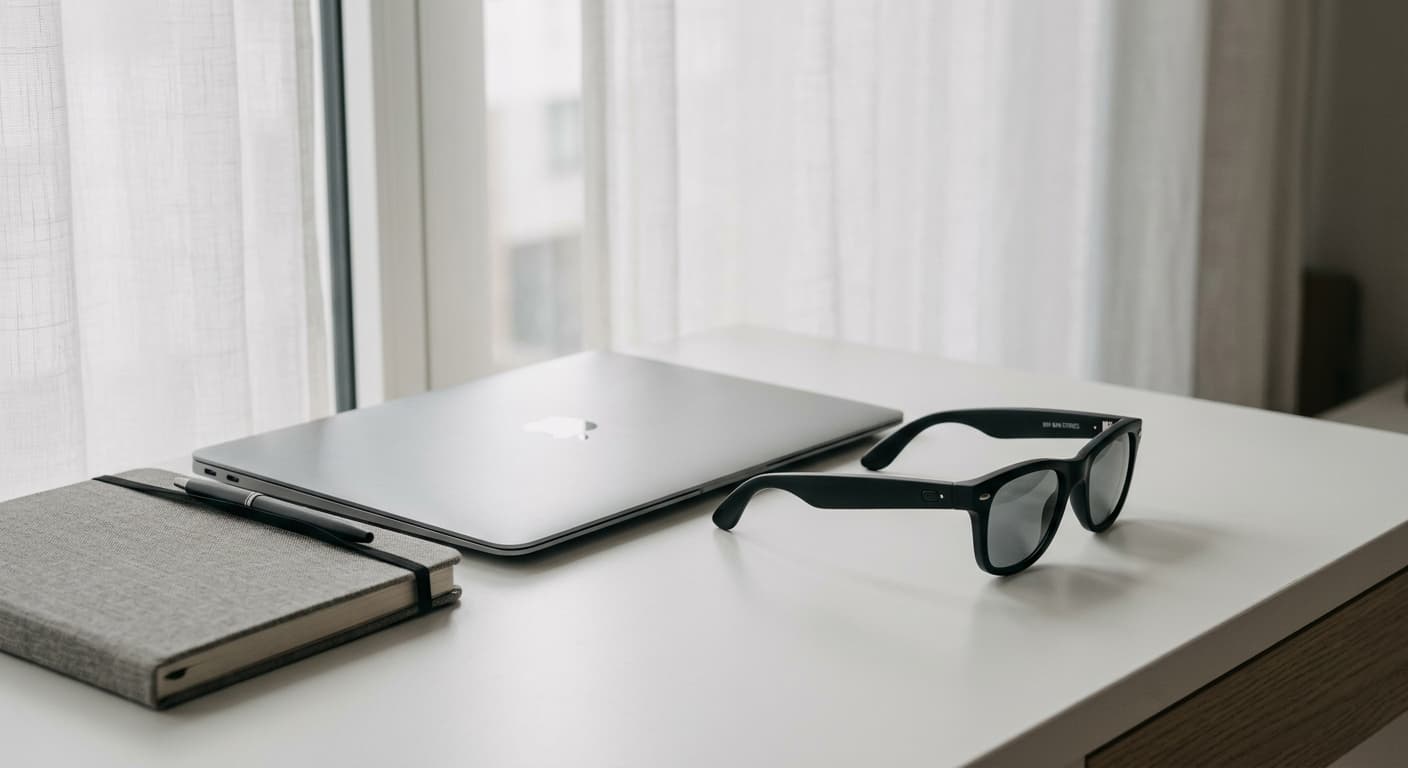
New York's Office of Court Administration has banned camera- and microphone-equipped smart glasses from every state courthouse, effective July 20, 2026, in what is reported as the first statewide ban of its kind in the country.
Information last verified on July 30, 2026.
Jurisdiction scope: This article covers New York State court facilities and New York recording law. Rules vary by state and by venue; always check local courthouse policy before bringing any recording-capable device to court.
What Happened
In a memorandum dated July 1, 2026, OCA Executive Director Justin Barry directed that, beginning July 20, 2026, no eyewear or headwear equipped with a camera, microphone, or other recording technology may be brought into any New York State Unified Court System (UCS) facility. The prohibition is statewide, covering more than 1,240 state, county, city, town, and village courts, according to the memo and outlets including GovTech and the New York State Bar Association that reviewed it.
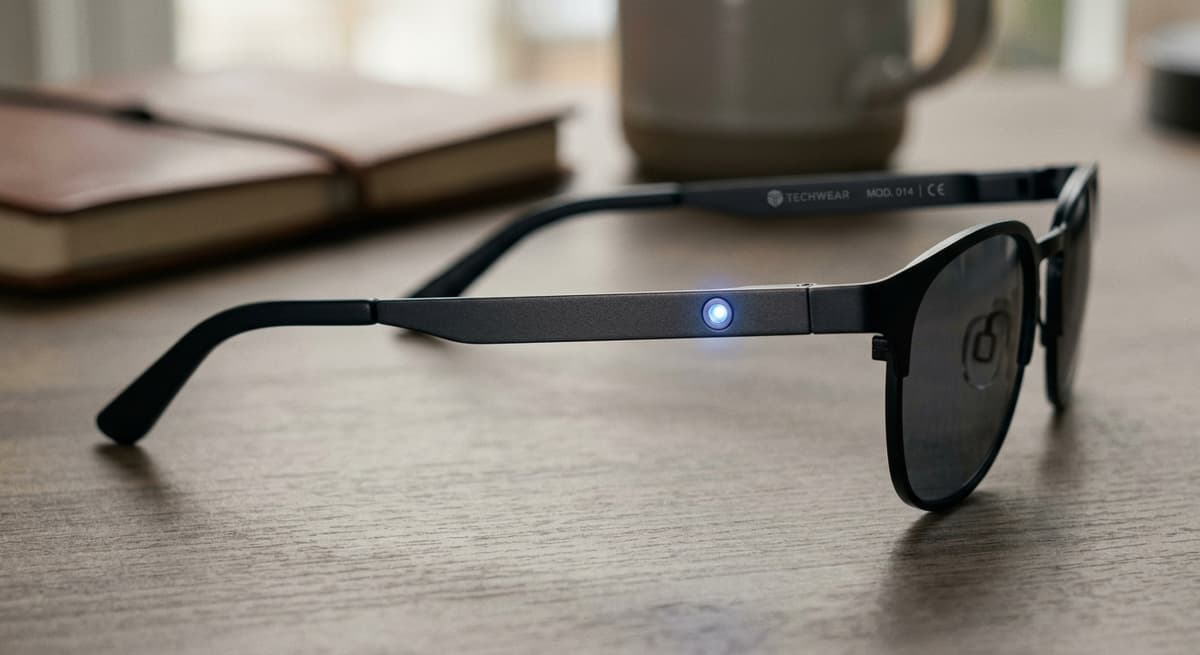
The rule is broad by design. It applies to litigants, attorneys, witnesses, family members accompanying a party, UCS employees, and anyone else entering a courthouse for any reason, per the memo's text, and it reaches prescription glasses with recording hardware built in, not just dedicated smart-glasses products, closing an obvious workaround.
Enforcement happens at the door rather than through confiscation. Someone who arrives wearing covered eyewear must "voucher" the glasses with uniformed court officers, who hold them for safekeeping until the person leaves the building, similar to how many courthouses already handle phones and other restricted items at security screening.
OCA's stated rationale, as reported by GovTech, the National Law Review, and Bloomberg Law, is that AI-enabled smart glasses create a distinct problem: they can capture proceedings, conversations, and the people in a room without anyone nearby realizing it. The memo frames the ban as reinforcing prohibitions that already exist against unauthorized recording in court facilities, rather than creating new legal restrictions from scratch. It is being reported, including by Engadget, as the first statewide courthouse ban targeting this device category in the country; because that framing rests on how outlets have characterized the rollout rather than a comprehensive nationwide count, treat it as the current reporting consensus rather than a settled legal fact.
What the Law Actually Says
New York is a one-party-consent state for audio recording under New York recording law. Under N.Y. Penal Law Section 250.00, a participant in a conversation, or someone with one participant's consent, can generally record it without telling anyone else. Recording a conversation you are not part of, without any participant's consent, is a separate offense: eavesdropping under Penal Law Section 250.05, a class E felony.
Courtrooms have always sat outside that ordinary framework. New York Civil Rights Law Section 52 prohibits televising, broadcasting, or filming court proceedings where witness testimony may be taken under compulsory process, subject to narrow exceptions and judicial discretion. That statute predates smart glasses by decades and was written for cameras and broadcast equipment, but its purpose, protecting the integrity of testimony and the people giving it, applies just as directly to a camera built into a pair of glasses.
The gap OCA's memo closes is a practical one. A visible camera or a reporter's recorder is easy for court officers and judges to spot and address under existing rules; a pair of ordinary-looking glasses with a lens in the frame is not. The general public-recording rules that apply in New York already draw a line between recording something in public view and recording where there is an expectation of privacy or confidentiality, and confidential attorney-client conversations in a courthouse hallway sit squarely on the private side of that line. Smart glasses make the line harder to enforce simply by looking at someone, which is the operational problem the memo addresses.
The same always-on design has already drawn scrutiny outside the courthouse. Recordinglaw.com's overview of New York smart-glasses recording law covers how the devices interact with the state's consent rules more broadly, and the site's guidance on AI meeting-recording tools in New York covers a related question: what happens when a recording device also transcribes or summarizes a conversation with AI. Employers face similar questions; see recordinglaw.com's discussion of employer policies on wearable recording devices for how workplaces are handling smart glasses on the job.
Analysis: Why This Matters
The following is analysis from the Recording Law Editorial Team.
This memo does not create a new crime or change what recording is legal in New York. It gives court officers a concrete, device-level rule they can enforce at the door, instead of relying on people to self-police an always-on camera that looks like ordinary eyewear. That distinction matters because most courthouse recording restrictions were written around visible, deliberate acts, not a passive device someone might forget is even recording.
The timing lines up with a broader reckoning over smart glasses and covert recording. Instagram's decision to start removing harassment videos filmed with Meta Ray-Ban glasses, and to act against accounts built around secretly recording strangers, reflects the same tension: a device marketed for convenience also makes it easier to record someone who has not agreed to it. A platform policy like Instagram's is a private company's content rule, not law, and does not by itself make any recording legal or illegal. But it signals that the "nobody would notice" assumption behind some smart-glasses use is becoming less safe to rely on, in a courthouse or anywhere else.
Other court systems are likely watching how this rollout goes. A security-screening approach, checking the device rather than confiscating it, and applying the rule to everyone including staff, is the kind of policy other administrative offices of the courts can adopt quickly if they conclude the same risk applies to them.
How This Affects You
If you have a hearing, appointment, or business at a New York State courthouse, plan to leave smart glasses or camera-equipped eyewear at home, or be ready to check them with court officers at the entrance, even if the recording feature is secondary to prescription lenses. Attorneys should tell clients and witnesses about the rule in advance so it is not a surprise at security screening.
More broadly, courtroom recording is treated differently than ordinary one-party-consent recording under New York law. Even where state law would allow recording a conversation you are part of, a courthouse can and does impose its own, stricter rules on cameras and recording devices. This article describes the policy generally; it is not legal advice about your specific situation.
This article is provided for general informational purposes only and does not constitute legal advice. Recording and courthouse security rules can change and may vary by county or courthouse. Consult a licensed New York attorney or contact the specific court for guidance on your situation.
Last updated: 2026-07-30. This is a developing story; details verified as of 2026-07-30.
More New York Laws
Frequently Asked Questions
When did New York's smart glasses ban take effect?
OCA issued the memorandum on July 1, 2026, and the ban took effect statewide on July 20, 2026.
Does the ban apply to every New York courthouse?
Yes. It applies to all Unified Court System facilities statewide, reported as more than 1,240 state, county, city, town, and village courts.
Who does the smart glasses ban apply to?
Everyone entering a court facility, including litigants, attorneys, witnesses, family members accompanying a party, and court employees.
Will court officers confiscate my smart glasses?
No. The memo directs that they be vouchered, meaning checked with uniformed court officers for safekeeping and returned when you leave the building.
Does the ban cover prescription glasses with a built-in camera?
Yes. The prohibition covers any eyewear or headwear with recording technology, including prescription glasses with a camera or microphone built in.
Is it already illegal to record in a New York courtroom?
New York Civil Rights Law Section 52 has long restricted televising, broadcasting, or filming court proceedings involving witness testimony under compulsory process. The memo reinforces that restriction against a device category that is hard to spot visually.
Is New York a one-party-consent state for recording conversations generally?
Yes, under New York Penal Law Section 250.00, a participant in a conversation can generally record it without telling the other party. Recording a conversation you are not part of, without any participant's consent, is eavesdropping under Penal Law Section 250.05.
Is New York the first state to ban smart glasses from courthouses?
It is being reported by multiple outlets as the first statewide ban of its kind in the country, though that reflects current news coverage rather than a comprehensive nationwide survey.
How does this relate to Instagram's smart-glasses harassment policy?
Separately, in late July 2026, Instagram announced it would remove harassment videos filmed with Meta Ray-Ban smart glasses. That is a platform content policy, not law, but it reflects the same concern about covert recording behind New York's rule.
Updates
Independently fact-checked against the cited primary sources
The Law Behind This Article
This article rests on the statutory provisions below, held in our own legal record and retrieved from the official source. Tap a section to read the operative text.
New York Civil Rights Law
§ 52Televising, broadcasting or taking motion pictures of certain proceedings prohibitedIn forcecited in 2 of our articles
Televising, broadcasting or taking motion pictures of certain proceedings prohibited. No person, firm, association or corporation shall televise, broadcast, take motion pictures or arrange for the televising, broadcasting, or taking of motion pictures within this state of proceedings, in which the testimony of witnesses by subpoena or other compulsory process is or may be taken, conducted by a court, commission, committee, administrative agency or other tribunal in this state; except that the prohibition contained in this section shall not apply to public hearings conducted by the public service commission with regard to rates charged by utilities, or to proceedings by either house of the state legislature or committee or joint committee of the legislature or by a temporary state commission which includes members of the legislature, so long as any testimony of witnesses which is taken is taken without resort to subpoena or other compulsory process, if (1) the consent of the temporary president of the senate or the speaker of the assembly, in the case of the respective houses of the state legislature, or the chairman, in the case of such a committee or commission, and a majority of…
Official text (excerpt) · last checked 2026-07-29 · Read the full text in our law library · Verify at legislation.nysenate.gov
Cited in 24 court opinions in our collectionLatest citing opinion in our collection: 2025
Opinions citing this section in our collection:
- Courtroom Television Network LLC v. State (New York Court of Appeals 2005, 5 N.Y.3d 222)“…rney of New York County seeking a declaratory judgment that Civil Rights Law § 52 is unconstitutional and enjoining the p…”
- Heckstall v. McGrath (Appellate Division of the Supreme Court of the State of New York 2005, 15 A.D.3d 824)“…coverage of petitioner’s trial, narrowly interpreting *825 Civil Rights Law § 52 as precluding audiovisual coverage only…”
- Clear Channel Communications, Inc. v. Rosen (Appellate Division of the Supreme Court of the State of New York 1999, 263 A.D.2d 663)“…nty Court on March 10, 1999. They sought a declaration that Civil Rights Law § 52 was violative of the State Constitution…”
Identified automatically from the court opinions citing this section — not a ranking of which case controls.
Also relied on in: New York Laws on Recording in Public: Rights, Limits, and Privacy Rules
Search our full record of US law — 2.1 million sections, every state + federal →
Sources and References
- NY Office of Court Administration, Amended Prohibition Against Smart Glasses in Court Facilities (memo, July 1, 2026)(webfiles.nycourts.gov).gov
- N.Y. Civil Rights Law Section 52(nysenate.gov).gov
- New York Will Ban Smart Glasses From All Courthouses(govtech.com)
- New York Bans Smart Glasses From Courthouses Across the State(news.bloomberglaw.com)
- Instagram cracks down on hidden-camera videos filmed with Meta Ray-Ban smart glasses(fortune.com)