
New York
New York Recording Laws (2026): One-Party Consent Rules
Independently fact-checked against primary sources (last audited August 15, 2026). · Reviewed by the RecordingLaw editorial team. · Law checked current as of August 15, 2026. · 41 primary sources cited on this page. How we verify our legal content
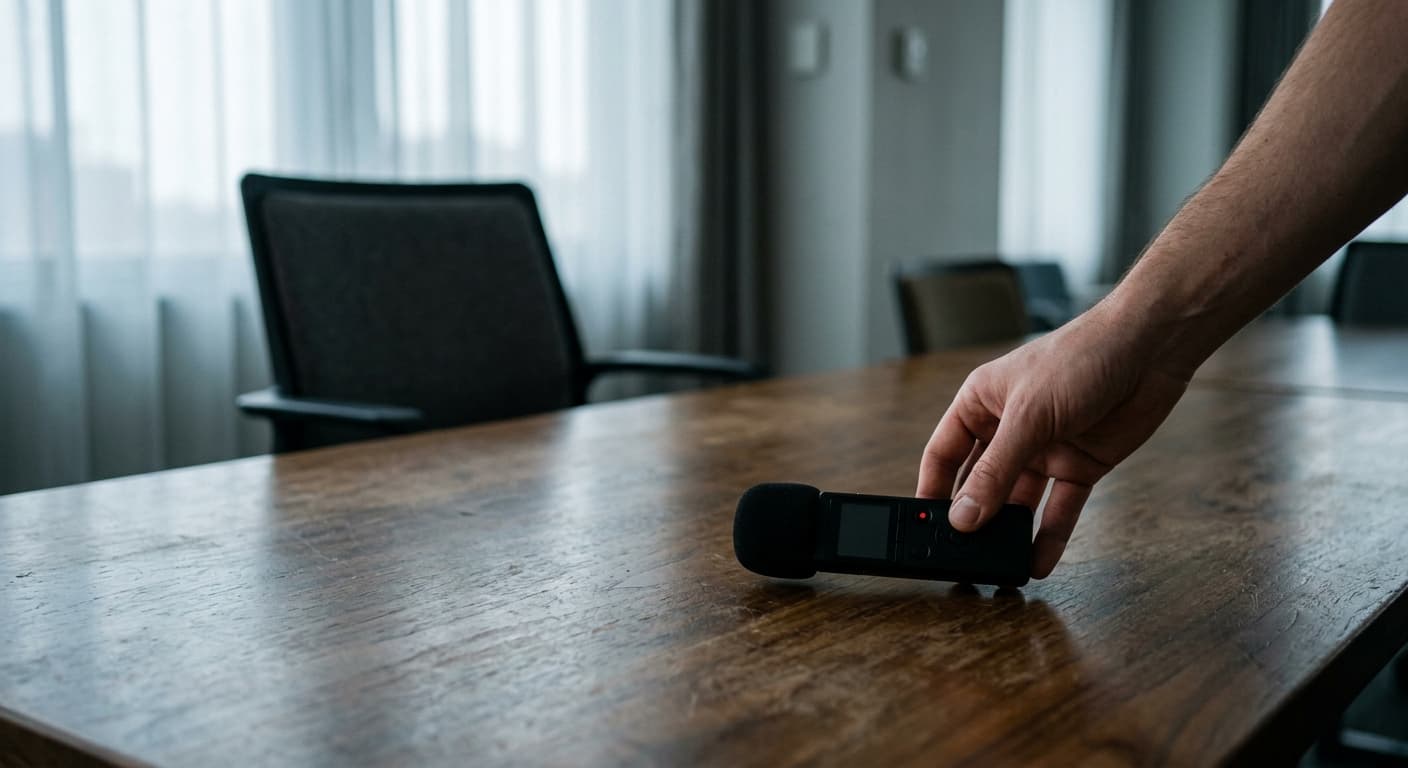
New York is a one-party consent state under N.Y. Penal Law section 250.05. If you are part of a conversation, you can record it without telling anyone else. Recording a conversation you are not part of is a class E felony. Illegal recording also exposes you to federal civil liability under 18 U.S.C. section 2520.
New York recording law at a glance
| Question | Answer |
|---|---|
| Consent rule | One-party: any participant may record |
| Main statute | N.Y. Penal Law section 250.05 |
| When illegal | Recording a conversation you are not part of, without any participant's consent |
| Criminal penalty | Class E felony: up to 4 years, fine up to $5,000 or 2x gain |
| Civil remedy | Federal: 18 U.S.C. section 2520 (actual or statutory damages, attorney fees). State: no Penal Law civil action; separate remedies under sections 79-p, 52-c, 52-b |
| Hidden cameras | Class E felony under section 250.45 in bathrooms, bedrooms, fitting rooms, hotel rooms |
| Recording police | Lawful; private right of action under Civil Rights Law section 79-p |
For in-depth analysis of each topic, see the New York recording laws in depth index below.
Recording in-person conversations in New York
New York's eavesdropping statute, section 250.05, incorporates the definitions in section 250.00. "Mechanical overhearing of a conversation" is the intentional overhearing or recording of a conversation without the consent of at least one party, by a person not present. A participant in the conversation is plainly present and counts as the consenting party, so recording your own conversations is lawful.
The New York Court of Appeals confirmed this in People v. McGee, 49 N.Y.2d 48 (1979). The court held that a consenting participant satisfies section 250.00's requirement, and the recording is not eavesdropping. McGee remains good law.
New York courts also recognize vicarious consent on behalf of a minor child. In People v. Badalamenti, 27 N.Y.3d 423 (2016), the Court of Appeals held that a parent or guardian may consent to recording a conversation their child is party to, but only where the parent has a good faith belief, with an objectively reasonable basis, that the recording is necessary to serve the child's best interests. This exception arises most often in custody disputes and suspected child abuse; it does not authorize a parent to record conversations the child is not part of.
Planting a device in a room and leaving so it records other people is the textbook fact pattern for illegal mechanical overhearing. Recording a conversation between two other people, with no participant's consent, is a class E felony. In public spaces, where there is no reasonable expectation of privacy, the analysis rarely changes the outcome for a participating recorder: you are still a party.

Recording phone calls in New York
The same one-party rule applies to phone calls. If you are on the call, you can record it. New York courts apply section 250.05 to landlines, cell calls, and VoIP services such as Zoom, Microsoft Teams, and Google Meet, all of which are "telephonic" or "electronic" communications under section 250.00.
Interstate calls carry an important caveat. If the other party is in California, Florida, Maryland, Massachusetts, Pennsylvania, Connecticut, New Hampshire, Illinois, Montana, or Washington, the most-restrictive-state rule generally applies. Get all-party consent before recording any call into one of those jurisdictions.
General Business Law section 399-z(2) is a narrow disclosure obligation for telemarketers making B2C sales calls into New York. It does not change the general one-party rule for ordinary recordings.
For the full phone-call analysis, see New York Phone Call Recording Laws.
Hidden cameras, doorbells, and nanny cams
Audio is governed by section 250.05. Surreptitious video is governed by N.Y. Penal Law section 250.45, unlawful surveillance in the second degree, a separate class E felony. There is no participant-consent escape valve for video.
Section 250.45 covers surreptitiously installing or using an imaging device to view, broadcast, or record a person dressing or undressing, or to capture intimate body parts, in a place with a reasonable expectation of privacy. It also covers recording with no legitimate purpose in bedrooms, changing rooms, restrooms, bathrooms, showers, and hotel or inn rooms. A nanny cam in a common living area is generally outside this statute; one in a bathroom or bedroom is not.
Section 250.50, aggravated unlawful surveillance (first degree), is a class D felony triggered by a prior unlawful-surveillance conviction within ten years: up to seven years in prison and mandatory sex-offender registration. Section 250.55 separately criminalizes disseminating unlawful-surveillance images.
For security cameras on your property and doorbell cameras, see New York Security Camera Laws. For the full voyeurism and hidden-camera statute analysis, see New York Voyeurism and Hidden Camera Laws.
Penalties for illegal recording in New York
Eavesdropping under section 250.05 is a class E felony: up to four years in prison under section 70.00(2)(e), and a fine of up to $5,000 or twice the defendant's gain under section 80.00. Possession of eavesdropping devices with intent to use under section 250.10 is a class A misdemeanor: up to 364 days in jail and a $1,000 fine.
| Offense | Statute | Class | Max Prison | Max Fine |
|---|---|---|---|---|
| Eavesdropping | section 250.05 | Class E felony | 4 years | $5,000 (or 2x gain) |
| Possession of eavesdropping devices | section 250.10 | Class A misdemeanor | 364 days | $1,000 |
| Unlawful surveillance, 2nd degree | section 250.45 | Class E felony | 4 years | $5,000 |
| Unlawful surveillance, 1st degree | section 250.50 | Class D felony | 7 years | $5,000 + sex-offender registration |
| Divulging eavesdropping warrant | section 250.20 | Class A misdemeanor | 364 days | $1,000 |
The Penal Law section 250 series is criminal only. There is no state civil cause of action attached to section 250.05. Federal law fills the gap: 18 U.S.C. section 2520 provides a civil cause of action for unlawful interception of wire, oral, or electronic communications, available in federal or state court. State-specific civil remedies exist under section 79-p (police interference), section 52-c (AG enforcement for workplace monitoring), and section 52-b (intimate-image dissemination). A complaint claiming a "civil cause of action under Penal Law 250.05" is a common drafting error and will draw a motion to dismiss.
Recording the police in New York
The lead authority in New York is state statute. N.Y. Civil Rights Law section 79-p, the Right to Record Act, was signed June 14, 2020 as Chapter 100 of the Laws of 2020 and took effect July 14, 2020, the thirtieth day after it became law. It gives any non-detained person the right to record law-enforcement activity and to keep custody of that recording. A person whose right is violated has a private cause of action against the officer and the employing agency for compensatory and punitive damages, declaratory and injunctive relief, and attorney fees. The statute of limitations is three years.
New York City has a parallel ordinance: NYC Admin Code section 14-189 (Local Law 67 of 2020), which creates a city right to record police in public, with a private right of action against the NYPD. Section 14-189 applies only within the five boroughs; section 79-p covers the rest of the state.
The Second Circuit has not issued a published First Amendment decision squarely holding that the Constitution protects recording police outdoors. Lead with section 79-p when asserting this right. The certified question from Reyes v. City of New York, No. 23-7640 (2d Cir. June 18, 2025) about whether section 79-p and section 14-189 extend to indoor police-facility recording is pending before the New York Court of Appeals.
For your full rights and practical tips, see New York Laws on Recording Police.
Special topics in New York
Workplace electronic monitoring (Civil Rights Law section 52-c)
N.Y. Civil Rights Law section 52-c, effective May 7, 2022, requires private employers monitoring employee phone, email, or internet to give written notice on hire, obtain written acknowledgment, and post a conspicuous workplace notice. Penalties escalate: $500, $1,000, then $3,000. The Attorney General is the sole enforcer; there is no private right of action. An employee who records a meeting they attend is not covered by section 52-c; that is protected one-party recording, not employer monitoring. NLRB Stericycle, Inc., 372 NLRB No. 113 (Aug. 2, 2023), remains binding Board precedent and holds that a blanket no-recording policy risks being unlawful if it could reasonably chill section 7 activity. For the full workplace analysis, see New York Workplace Recording Laws.
Deepfakes and digital intimate images (Penal Law section 245.15; Civil Rights Law section 52-b)
N.Y. Penal Law section 245.15 criminalizes intentionally disseminating or publishing an intimate image of an identifiable person without consent. The 2023 Hinchey amendment (S.1042-A, Chapter 513 of the Laws of 2023, signed September 29, 2023, effective approximately November 28, 2023) added "images created or altered by digitization," bringing AI-generated and deepfake intimate imagery within the statute. Section 245.15 is a class A misdemeanor. Civil Rights Law section 52-b provides a parallel civil cause of action for compensatory damages, punitive damages, injunctive relief, and reasonable attorney fees and court costs. Section 52-b does not provide statutory damages.
Right of publicity and AI replicas (Civil Rights Law section 50-f)
N.Y. Civil Rights Law section 50-f, most recently amended December 11, 2025, covers commercial uses of a deceased personality's voice or likeness via digital replica, without consent. The 2025 amendment removed the prior likelihood-of-deception requirement and the disclaimer exemption. This governs commercial AI-voice and AI-likeness exploitation, not ordinary conversation recording.
Federal TAKE IT DOWN Act
The TAKE IT DOWN Act, Pub. L. 119-12, signed May 19, 2025, criminalizes knowing publication of nonconsensual intimate visual depictions (including AI-generated digital forgeries) with maximum penalties of two years (adult victim) or three years (minor victim). Covered platforms must remove flagged content within 48 hours; that platform-removal obligation took effect May 19, 2026. The FTC enforces the platform obligations.
Body-worn cameras and FOIL
Civil Rights Law section 50-a, which shielded police personnel records, was repealed by Chapter 96 of the Laws of 2020 (signed June 12, 2020). Body-worn-camera footage is now subject to disclosure under N.Y. Public Officers Law section 87 (FOIL), subject to standard exemptions for ongoing investigations and personal-safety risk. N.Y. Executive Law section 234, enacted June 16, 2020, mandates body-worn cameras for New York State Police troopers.
Courtroom and public-meeting recording
Recording inside a New York trial court is generally barred without prior judicial approval under 22 NYCRR section 29.1. Public governmental meetings, governed by the Open Meetings Law (N.Y. Public Officers Law Article 7), are generally open to recording; a public body may regulate equipment placement but cannot prohibit recording outright.
Court admissibility (CPLR 4506)
N.Y. CPLR 4506 bars admission of communications obtained in violation of section 250.05 in any New York proceeding, and extends to derived evidence. The counter-exception: an unlawful recording is admissible against the person who made it in a section 250.05 prosecution or related civil proceeding.
Federal ECPA overlay
The federal Electronic Communications Privacy Act, 18 U.S.C. sections 2510 to 2522, establishes a federal one-party floor under section 2511(2)(d). New York's one-party rule is consistent with ECPA; stricter all-party states provide more protection than the federal floor.
Recent legal developments
- December 11, 2025: Governor Hochul signs amendments to Civil Rights Law section 50-f, removing the likelihood-of-deception requirement and disclaimer exemption from the AI/digital-replica right-of-publicity provision.
- May 19, 2025: TAKE IT DOWN Act (Pub. L. 119-12) signed. Criminal penalties for nonconsensual intimate digital forgeries take effect immediately; covered-platform notice-and-removal obligation takes effect May 19, 2026.
- June 18, 2025: Second Circuit in Reyes v. City of New York certifies to the New York Court of Appeals whether sections 79-p and 14-189 extend to indoor police-facility recording. Question pending.
- September 29, 2023: Governor Hochul signs S.1042-A (Hinchey), amending Penal Law section 245.15 to cover AI-generated and deepfake intimate images (eff. approx. Nov. 28, 2023).
- May 7, 2022: N.Y. Civil Rights Law section 52-c (employer electronic monitoring notice) takes effect.
- June 12-14, 2020: Right to Record Act (section 79-p) signed; section 50-a repealed; Executive Law section 234 (state trooper body-cam mandate) enacted.
- S.5070 and S.5077 (2025-2026 Session): Both pending in Senate Codes Committee. Reintroductions of bills that have failed since 2018. New York remains one-party consent.

New York recording laws in depth
Want to know more? Each guide below covers a specific context in greater depth than this hub can.
By type of recording
- New York Audio Recording Laws: One-Party Consent Rules and Penalties
- New York Video Recording Laws: Surveillance Rules and Privacy Limits
- New York Phone Call Recording Laws: Consent Rules for Landline, Cell, and VoIP
- New York Dashcam Laws: Legality, Mounting Rules, and Evidence Use
- New York Voyeurism and Hidden Camera Laws: Penalties and Protections
- New York Security Camera Laws: Rules for Homes, Businesses, and Rentals
By place or relationship
- New York Laws on Recording Police: Your Rights and Limits
- New York Workplace Recording Laws: Employee Rights and Employer Rules
- New York Laws on Recording in Public: Rights, Limits, and Privacy Rules
- New York School Recording Laws: Student, Parent, and Teacher Rights
- New York Medical Recording Laws: Patient Rights and Healthcare Privacy
- New York Landlord-Tenant Recording Laws: Rights for Renters and Property Owners
More New York laws
- New York Alimony Laws
- New York At-Will Employment Laws
- New York Child Custody Laws
- New York Data Privacy Laws
- New York Landlord-Tenant Laws
This article is general legal information, not legal advice. Recording laws change and apply differently to each situation. For advice about your situation, consult a licensed New York attorney.
More New York Laws
Frequently Asked Questions
Is New York a one-party or two-party consent state?
One-party. Under N.Y. Penal Law section 250.05, any participant in a conversation can record it without telling the other party. Section 250.00 defines illegal recording as overhearing a conversation without the consent of at least one party by a person not present. A participating recorder satisfies both conditions, as the Court of Appeals confirmed in People v. McGee, 49 N.Y.2d 48 (1979).
Can I record a phone call in New York without telling the other person?
Yes, if you are on the call. New York applies the same one-party rule to phone calls, VoIP, and video conferencing. The caveat: if the other party is in an all-party state such as California, Florida, or Illinois, the most-restrictive-state rule applies and you should get their consent first.
Is illegal recording a felony in New York?
Yes. Eavesdropping under section 250.05, meaning recording a conversation you are not part of without any participant's consent, is a class E felony carrying up to four years in prison. Unlawful video surveillance under section 250.45 is also a class E felony. A repeat unlawful-surveillance offense under section 250.50 is a class D felony with up to seven years and mandatory sex-offender registration.
What can I sue for if someone illegally recorded me in New York?
There is no civil cause of action attached to Penal Law section 250.05. Your federal remedy is 18 U.S.C. section 2520 (actual damages or statutory damages of the greater of $100 per day or $10,000, plus attorney fees). If the recording involved intimate images, Civil Rights Law section 52-b provides a state cause of action for compensatory and punitive damages, plus injunctive relief and attorney fees. Section 52-b does not provide statutory damages. If the interference was by police, Civil Rights Law section 79-p allows suit for compensatory and punitive damages.
Are Ring doorbells and nanny cams legal in New York?
Doorbells and outdoor cameras are legal. A camera recording inside a bathroom, bedroom, changing room, or hotel room without the occupant's consent is a class E felony under Penal Law section 250.45 regardless of who owns the property. Nanny cams in common living areas are generally lawful; nanny cams in private spaces are not.
Can I record my boss or an HR meeting in New York?
Yes. As a participant in the conversation, you may record it under the one-party rule without telling your employer. An employer cannot lawfully fire you solely for recording your own workplace conversations about wages, working conditions, or harassment, because that is protected concerted activity under the NLRA per Stericycle, 372 NLRB No. 113 (2023). A blanket no-recording policy that could chill such activity risks invalidation.
Can I record the police in New York?
Yes. N.Y. Civil Rights Law section 79-p, effective July 14, 2020, gives non-detained people the right to record law-enforcement activity. If an officer interferes, you have a private right of action for compensatory and punitive damages, injunctive relief, and attorney fees. New York City residents also have parallel rights under NYC Admin Code section 14-189.
Will S.5070 or S.5077 change New York to two-party consent?
Not yet. Both bills are pending in the Senate Codes Committee. They are reintroductions of bills that have failed in every session since 2018. Until one is enacted and signed, New York remains one-party consent under Penal Law section 250.05. This page will be updated if either bill advances.
Updates
Corrected the effective date of the Right to Record Act (Civil Rights Law section 79-p) to July 14, 2020, the thirtieth day after it was signed into law on June 14, 2020, replacing an incorrect November 14, 2020 date.
Corrected an overstated damages claim for Civil Rights Law 52-b (it provides compensatory and punitive damages, injunctive relief, and attorney fees, not statutory damages), and replaced two dead citation links (a stale federal-court URL and a broken NYC Council legislation link) with a working NYC Administrative Code source.
Independently fact-checked against the cited primary sources; governing law re-checked for recent changes
Governing law re-checked for recent changes
Competitive gap-check vs. #1 organic result (Megan Thomas Law, PLLC employment-law blog). Fixed dead citation URL for People v. McGee, 49 N.Y.2d 48 (1979): the nycourts.gov archive link 404'd, replaced with CourtListener (opinion/5683996). Added vicarious-consent doctrine for recordings involving a minor child under People v. Badalamenti, 27 N.Y.3d 423 (2016), verified against the official NY Slip Op reporter (nycourts.gov/reporter/3dseries/2016/2016_02556.htm). Competitor's workplace-policy and interstate-call points were already covered here; no other gaps found.
Reviewed and approved by an editor
Restructure: Rewrote page to the recording-redo spec. Condensed 12,000-word hub into clean scannable sections. Added at-a-glance table, re-ordered core sections (in-person, phone, hidden cameras, penalties, police), compressed special topics (workplace, deepfakes, AI replicas, TAKE IT DOWN, body-cams, courtroom, CPLR 4506, ECPA) into tight subsections, added dated recent-developments list, added in-depth subpage index, refreshed FAQ (8 Qs), and added inline images from meta pool. Audit-and-fix pass June 2026: all load-bearing facts re-verified against nysenate.gov primary sources. One fix: replaced fabricated ca2.uscourts.gov URL for Reyes v. City of New York, No. 23-7640 (2d Cir. June 18, 2025) with correct CourtListener citation (courtlistener.com/opinion/9889178). All statutes confirmed: section 250.05 class E felony, section 250.45 class E felony, section 250.50 class D felony (prior unlawful-surveillance conviction within 10 years; mandatory SORA registration per COR 168-a confirmed), section 79-p right to record, section 52-c employer monitoring penalties ($500/$1,000/$3,000), S.1042-A deepfake amendment Sept 29 2023, S.5070/S.5077 still in Senate Codes Committee. Zero em-dashes, zero banlist links.
Refresh: Added N.Y. Penal Law section 245.15 deepfake amendment via Hinchey S.1042-A, signed October 2, 2023 and effective December 1, 2023 (60-day delay), with Civil Rights Law section 52-b parallel civil cause of action. Added N.Y. Civil Rights Law section 50-f digital-replica amendments signed December 11, 2025 (removing prior likelihood-of-deception requirement and disclaimer exemption). Added N.Y. Civil Rights Law section 79-p Right to Record Act (signed June 14, 2020; effective approximately November 14, 2020) as the lead authority for recording New York police, ahead of any Second Circuit First Amendment doctrine. Added Reyes v. City of New York (2d Cir. June 18, 2025) procedural framing and certified statutory question pending in the New York Court of Appeals. Reframed S.5070 and S.5077 as pending only in the Senate Codes Committee, with multi-session reintroductions failing since 2018 (S.9173). Added N.Y. General Business Law section 399-z(2) telemarketing-disclosure carve-out disambiguation against the main one-party rule. Updated FCC 24-24 status to vacated (Insurance Marketing Coalition Ltd. v. FCC, 11th Cir. Jan. 24, 2025; mandate April 30, 2025; FCC formal final-rule elimination September 2025); removed stale 47 C.F.R. section 64.501 reference. Added FCC 24-17 (AI-voice robocalls under TCPA) in force. Added NLRB Stericycle plus GC 25-05 (February 14, 2025) and GC 25-07 (June 26, 2025) workplace overlay. Added federal TAKE IT DOWN Act (Pub. L. 119-12, signed May 19, 2025; covered-platform notice-and-removal effective May 19, 2026). Added CPLR 4506 admissibility framework, Public Officers Law Article 7 Open Meetings Law, and 22 NYCRR section 29.1 trial-court recording rule for the courtroom-and-public-meetings section. Added section 50-a repeal context (Chapter 96 of the Laws of 2020, signed June 12, 2020) and FOIL access mechanism under Public Officers Law section 87. Added Executive Law section 234 state-trooper body-cam mandate and Executive Law section 75 LEMIO oversight. Removed off-topic /types-of-ankle-monitors internal cross-link. Replaced commercial-codifier and Justia URLs with nysenate.gov, nycourts.gov, ca2.uscourts.gov, ca11.uscourts.gov, uscode.house.gov, ecfr.gov, federalregister.gov, fcc.gov, nlrb.gov, ftc.gov, justice.gov, congress.gov, courtlistener.com (docket only), and legistar.council.nyc.gov primary sources.
Refresh: Added N.Y. Penal Law section 245.15 deepfake amendment via Hinchey S.1042-A, signed September 29, 2023 and effective approximately November 28, 2023 (60-day delay), with Civil Rights Law section 52-b parallel civil cause of action. Added N.Y. Civil Rights Law section 50-f digital-replica amendments signed December 11, 2025 (removing prior likelihood-of-deception requirement and disclaimer exemption). Added N.Y. Civil Rights Law section 79-p Right to Record Act (signed June 14, 2020; effective July 14, 2020) as the lead authority for recording New York police, ahead of any Second Circuit First Amendment doctrine. Added Reyes v. City of New York (2d Cir. June 18, 2025) procedural framing and certified statutory question pending in the New York Court of Appeals. Reframed S.5070 and S.5077 as pending only in the Senate Codes Committee, with multi-session reintroductions failing since 2018 (S.9173). Added N.Y. General Business Law section 399-z(2) telemarketing-disclosure carve-out disambiguation against the main one-party rule. Updated FCC 24-24 status to vacated (Insurance Marketing Coalition Ltd. v. FCC, 11th Cir. Jan. 24, 2025; mandate April 30, 2025; FCC formal final-rule elimination September 2025); removed stale 47 C.F.R. section 64.501 reference. Added FCC 24-17 (AI-voice robocalls under [TCPA](/us-laws/tcpa)) in force. Added NLRB Stericycle plus GC 25-05 (February 14, 2025) and GC 25-07 (June 25, 2025) workplace overlay. Added federal TAKE IT DOWN Act (Pub. L. 119-12, signed May 19, 2025; covered-platform notice-and-removal effective May 19, 2026). Added CPLR 4506 admissibility framework, Public Officers Law Article 7 Open Meetings Law, and 22 NYCRR section 29.1 trial-court recording rule for the courtroom-and-public-meetings section. Added section 50-a repeal context (Chapter 96 of the Laws of 2020, signed June 12, 2020) and FOIL access mechanism under Public Officers Law section 87. Added Executive Law section 234 state-trooper body-cam mandate and Executive Law section 75 LEMIO oversight. Removed off-topic /types-of-ankle-monitors internal cross-link. Replaced commercial-codifier and Justia URLs with nysenate.gov, nycourts.gov, ca2.uscourts.gov, ca11.uscourts.gov, uscode.house.gov, ecfr.gov, federalregister.gov, fcc.gov, nlrb.gov, ftc.gov, justice.gov, congress.gov, courtlistener.com (docket only), and legistar.council.nyc.gov primary sources.
Added wearable recording device guidance covering AI voice recorders (Plaud), smart glasses (Meta Ray-Bans), and New York employer notification requirements under CVR \u00a7 52-c.
The Law Behind This Article
This article rests on the statutory provisions below, held in our own legal record and retrieved from the official source. Tap a section to read the operative text.
New York Penal Law
§ 250.05EavesdroppingIn forcecited in 14 of our articles
Eavesdropping. A person is guilty of eavesdropping when he unlawfully engages in wiretapping, mechanical overhearing of a conversation, or intercepting or accessing of an electronic communication. Eavesdropping is a class E felony.
Official text (excerpt) · last checked 2026-08-31 · Read the full text in our law library · Verify at legislation.nysenate.gov
Cited in 39 court opinions in our collectionLatest citing opinion in our collection: 2025
In the courts (editorial summary, independently checked):New York courts recognize a vicarious consent exception to the eavesdropping offense. The Appellate Term adopted it in People v. Clark (2008). The Court of Appeals then held in People v. Badalamenti (2016) that consent covers a parent with a good faith, objectively reasonable belief that recording serves the child's best interests.
Opinions citing this section in our collection:
- The People v. Anthony Badalamenti (New York Court of Appeals 2016, 27 N.Y.3d 423)✓A father's call to the mother's phone connected with no one speaking, and he recorded her boyfriend threatening to beat his five year old son; the court held that consent under Penal Law 250.05 includes a parent's vicarious consent, so the recording was admissible.
- People v. Badalamenti (Appellate Division of the Supreme Court of the State of New York 2015, 124 A.D.3d 672)✓Reviewing the same recording of a boyfriend threatening the father's young son, the Appellate Division adopted a vicarious consent exemption to Penal Law 250.05 where a parent has a good faith, objectively reasonable basis to believe recording serves the child's welfare.
- People v. Clark (Appellate Terms of the Supreme Court of New York 2008, 19 Misc. 3d 6)✓A mother slipped an audio recorder into the backpack of her nonverbal autistic eight year old before he boarded the school bus, capturing his bus matron; the Appellate Term held she could vicariously consent for him, so the recording did not violate Penal Law 250.05.
Identified automatically from the court opinions citing this section — not a ranking of which case controls.
Also relied on in: New York Audio Recording Laws: One-Party Consent Rules and Penalties, New York Smart Glasses Recording Laws 2026, New York AI Meeting Recording Laws (2026)
§ 250.00Eavesdropping; definitions of termsIn forcecited in 19 of our articles
Eavesdropping; definitions of terms. The following definitions are applicable to this article: 1. "Wiretapping" means the intentional overhearing or recording of a telephonic or telegraphic communication by a person other than a sender or receiver thereof, without the consent of either the sender or receiver, by means of any instrument, device or equipment. The normal operation of a telephone or telegraph corporation and the normal use of the services and facilities furnished by such corporation pursuant to its tariffs or necessary to protect the rights or property of said corporation shall not be deemed "wiretapping." 2. "Mechanical overhearing of a conversation" means the intentional overhearing or recording of a conversation or discussion, without the consent of at least one party thereto, by a person not present thereat, by means of any instrument, device or equipment. 3.
Official text (excerpt) · last checked 2026-07-29 · Read the full text in our law library · Verify at legislation.nysenate.gov
Cited in 56 court opinions in our collectionLatest citing opinion in our collection: 2023
Opinions citing this section in our collection:
- People v. Fata (New York County Courts 1988, 139 Misc. 2d 979)“…Fata had a justifiable expectation of privacy; and (c) that Penal Law § 250.00 et seq. prohibit the mechanical overh…”
- The People v. Anthony Badalamenti (New York Court of Appeals 2016, 27 N.Y.3d 423)“…t of “mechanical overhearing of a conversation” pursuant to Penal Law § 250.00 (2), includes vicarious consent, on beh…”
- Gurevich v. Gurevich (New York Supreme Court 2009, 24 Misc. 3d 808)“…11 ing” as they relate to Penal Law § 250.05 are defined in Penal Law § 250.00 (6) as: “the intentional acquiring, r…”
Identified automatically from the court opinions citing this section — not a ranking of which case controls.
Also relied on in: New York Dashcam Laws: Legality, Mounting Rules, and Evidence Use, New York Landlord-Tenant Recording Laws: Rights for Renters and Property Owners, New York Medical Recording Laws: Patient Rights and Healthcare Privacy
§ 250.45Unlawful surveillance in the second degreeIn forcecited in 18 of our articles
Unlawful surveillance in the second degree. A person is guilty of unlawful surveillance in the second degree when: 1. For his or her own, or another person's amusement, entertainment, or profit, or for the purpose of degrading or abusing a person, he or she intentionally uses or installs, or permits the utilization or installation of an imaging device to surreptitiously view, broadcast or record a person dressing or undressing or the sexual or other intimate parts of such person at a place and time when such person has a reasonable expectation of privacy, without such person's knowledge or consent; or 2. For his or her own, or another person's sexual arousal or sexual gratification, he or she intentionally uses or installs, or permits the utilization or installation of an imaging device to surreptitiously view, broadcast or record a person dressing or undressing or the sexual or other intimate parts of such person at a place and time when such person has a reasonable expectation of privacy, without such person's knowledge or consent; or 3.
Official text (excerpt) · last checked 2026-08-31 · Read the full text in our law library · Verify at legislation.nysenate.gov
Cited in 51 court opinions in our collectionLatest citing opinion in our collection: 2025
In the courts (editorial summary, independently checked):People v. Piznarski (2013) held Penal Law 250.45 reaches a participant who secretly records consensual sex, that the victim kept a reasonable expectation of privacy, and that the one-party consent rule for eavesdropping does not apply. People v. Evans (2006) applied section 250.45(3) to a camera hidden in a bedroom.
Opinions citing this section in our collection:
- People v. Evans (Appellate Division of the Supreme Court of the State of New York 2006, 27 A.D.3d 905)✓A man placed a video camera in his girlfriend's 12-year-old daughter's bedroom and recorded her undressing, then pleaded guilty under Section 250.45(3); the court affirmed, holding the plea needed no express admission of no legitimate purpose given the statutory presumption.
- People v. Lema (Appellate Division of the Supreme Court of the State of New York 2017, 152 A.D.3d 440)✓A man used a phone camera to record under women's skirts on a subway train, but dark lighting produced no image of intimate parts; the court affirmed, holding Section 250.45(4) is satisfied when a device is used for the purpose of making such a recording.
- People v. Piznarski (Appellate Division of the Supreme Court of the State of New York 2013, 113 A.D.3d 166)✓A student secretly recorded sex with two women using a camera left in view on his bedroom desk; the court affirmed under Section 250.45, holding the statute reaches a participant who records a consensual encounter and that a visible camera can still be used surreptitiously.
Identified automatically from the court opinions citing this section — not a ranking of which case controls.
Also relied on in: New York Laws on Recording in Public: Rights, Limits, and Privacy Rules, New York School Recording Laws: Student, Parent, and Teacher Rights, New York Workplace Recording Laws: Employee Rights and Employer Rules
§ 250.50Unlawful surveillance in the first degreeIn forcecited in 6 of our articles
Unlawful surveillance in the first degree. A person is guilty of unlawful surveillance in the first degree when he or she commits the crime of unlawful surveillance in the second degree and has been previously convicted within the past ten years of unlawful surveillance in the first or second degree. Unlawful surveillance in the first degree is a class D felony.
Official text (excerpt) · last checked 2026-07-29 · Read the full text in our law library · Verify at legislation.nysenate.gov
Cited in 3 court opinions in our collectionLatest citing opinion in our collection: 2018
Opinions citing this section in our collection:
- People v. Diaz (New York Court of Appeals 2018, 32 N.Y.3d 538)“…stration for first-degree unlawful surveillance pursuant to Penal Law § 250.50]). Thus, SORA's overall purpose of "pro…”
- People v. Williams (Appellate Division of the Supreme Court of the State of New York 2005, 20 A.D.3d 72)“…into the statutory definition of criminal assistance under Penal Law § 250.50 (4). We also think a proper distincti…”
- People v. Morriale (Criminal Court of the City of New York 2008, 20 Misc. 3d 558)“…of the crime of unlawful surveillance in the first degree, Penal Law § 250.50 cannot serve as a predicate for the one…”
Identified automatically from the court opinions citing this section — not a ranking of which case controls.
Also relied on in: New York Video Recording Laws: Surveillance Rules and Privacy Limits, New York Voyeurism and Hidden Camera Laws: Penalties and Protections, Is It Illegal to Video Record Someone Without Their Consent? (2026)
§ 250.10Possession of eavesdropping devicesIn forcecited in 5 of our articles
Possession of eavesdropping devices. A person is guilty of possession of eavesdropping devices when, under circumstances evincing an intent to use or to permit the same to be used in violation of section 250.05, he possesses any instrument, device or equipment designed for, adapted to or commonly used in wiretapping or mechanical overhearing of a conversation. Possession of eavesdropping devices is a class A misdemeanor.
Official text (excerpt) · last checked 2026-07-29 · Read the full text in our law library · Verify at legislation.nysenate.gov
Cited in 1 court opinions in our collectionLatest citing opinion in our collection: 2022
Opinions citing this section in our collection:
- The People v. Marc Mitchell (New York Court of Appeals 2022)“…ther person” (Bartlett Commission, Staff Notes on Proposed Penal Law § 250.10, at 387-390 [1964]). It is inconceivab…”
Identified automatically from the court opinions citing this section — not a ranking of which case controls.
Also relied on in: How to Detect and Block Listening Devices in Your Home (2026), New York Ring Doorbell Laws: What You Need to Know in 2026, New York Phone Call Recording Laws: Consent Rules for Landline, Cell, and VoIP
§ 250.20Divulging an eavesdropping warrantIn force
Divulging an eavesdropping warrant. A person is guilty of divulging an eavesdropping warrant when, possessing information concerning the existence or content of an eavesdropping warrant issued pursuant to article seven hundred of the criminal procedure law, or concerning any circumstances attending an application for such a warrant, he discloses such information to another person; except that such disclosure is not criminal or unlawful when permitted by section 700.65 of the criminal procedure law or when made to a state or federal agency specifically authorized by law to receive reports concerning eavesdropping warrants, or when made in a legal proceeding, or to a law enforcement officer or agency connected with the application for such warrant, or to a legislative committee or temporary state commission, or to the telephone or telegraph corporation whose facilities are involved, or to any entity operating an electronic communications service whose facilities are involved. Divulging an eavesdropping warrant is a class A misdemeanor.
Official text (excerpt) · last checked 2026-07-29 · Read the full text in our law library · Verify at legislation.nysenate.gov
Cited in 7 court opinions in our collectionLatest citing opinion in our collection: 2022
Opinions citing this section in our collection:
- People v. Tansey (New York Supreme Court 1992, 156 Misc. 2d 233)“…ounts charging him with divulging an eavesdropping warrant (Penal Law § 250.20). THE CRIMINAL POSSESSION AND LARCENY…”
- Matter of County of Nassau v. Nassau County Investigators Police Benevolent Assn., Inc. (Appellate Division of the Supreme Court of the State of New York 2022, 203 A.D.3d 824)“…he arbitrator explained, inter alia, that the NCDA violated Penal Law § 250.20 by divulging the existence and the cont…”
- People v. Dennison (Appellate Division of the Supreme Court of the State of New York 1981, 83 A.D.2d 754)“…enal Law, § 205.55) and divulging an eavesdropping warrant (Penal Law, § 250.20). The jury acquitted him of companion c…”
Identified automatically from the court opinions citing this section — not a ranking of which case controls.
§ 70.00Sentence of imprisonment for felonyIn forcecited in 4 of our articles
Sentence of imprisonment for felony. * 1. Indeterminate sentence. Except as provided in subdivisions four, five and six of this section or section 70.80 of this article, a sentence of imprisonment for a felony, other than a felony defined in article two hundred twenty or two hundred twenty-one of this chapter, shall be an indeterminate sentence. When such a sentence is imposed, the court shall impose a maximum term in accordance with the provisions of subdivision two of this section and the minimum period of imprisonment shall be as provided in subdivision three of this section. * NB Effective until September 1, 2027 * 1. Indeterminate sentence. Except as provided in subdivisions four and five of this section or section 70.80 of this article, a sentence of imprisonment for a felony, other than a felony defined in article two hundred twenty or two hundred twenty-one of this chapter, shall be an indeterminate sentence. When such a sentence is imposed, the court shall impose a maximum term in accordance with the provisions of subdivision two of this section and the minimum period of imprisonment shall be as provided in subdivision three of this section.
Official text (excerpt) · last checked 2026-07-29 · Read the full text in our law library · Verify at legislation.nysenate.gov
Cited in 760 court opinions in our collectionLatest citing opinion in our collection: 2026
Opinions citing this section in our collection:
- People v. Taylor (New York Court of Appeals 2007, 9 N.Y.3d 129)“…automatically results in a sentence of life without parole (Penal Law § 70.00 [3] [a] [i]; §§ 60.06, 70.00 [5]). [4]…”
- People v. Sparber (New York Court of Appeals 2008, 10 N.Y.3d 457)“…nsequence of his plea and status as a second violent felon, Penal Law § 70.00 (6) and § 70.45 (1) and (2) required de…”
- People v. Rivera (New York Court of Appeals 2005, 5 N.Y.3d 61)“…hich carries a maximum sentence of four years imprisonment (Penal Law § 70.00 [2] [e]). The People moved for a persis…”
Identified automatically from the court opinions citing this section — not a ranking of which case controls.
Also relied on in: First, Second, and Third Degree Murder: Key Differences, Manslaughter Degrees Explained: First, Second, and Third
§ 80.00Fine for felonyIn force
Fine for felony. 1. A sentence to pay a fine for a felony shall be a sentence to pay an amount, fixed by the court, not exceeding the higher of a. five thousand dollars; or b. double the amount of the defendant's gain from the commission of the crime or, if the defendant is convicted of a crime defined in article four hundred ninety-six of this chapter, any higher amount not exceeding three times the amount of the defendant's gain from the commission of such offense; or c. if the conviction is for any felony defined in article two hundred twenty or two hundred twenty-one of this chapter, according to the following schedule: (i) for A-I felonies, one hundred thousand dollars; (ii) for A-II felonies, fifty thousand dollars; (iii) for B felonies, thirty thousand dollars; (iv) for C felonies, fifteen thousand dollars.
Official text (excerpt) · last checked 2026-07-29 · Read the full text in our law library · Verify at legislation.nysenate.gov
Cited in 38 court opinions in our collectionLatest citing opinion in our collection: 2025
Opinions citing this section in our collection:
- People v. Kozlowski (New York Court of Appeals 2008, 11 N.Y.3d 223)“…e do not reach the question whether the fines imposed under Penal Law § 80.00 violated Apprendi v New Jersey ( 530…”
- People v. Carrillo (Appellate Division of the Supreme Court of the State of New York 1999, 258 A.D.2d 780)“…contention that the $25,000 fine imposed on him pursuant to Penal Law § 80.00 was improper in that County Court faile…”
- People v. Furnia (Appellate Division of the Supreme Court of the State of New York 1996, 223 A.D.2d 887)“…o probation for one of the crimes and failed to comply with Penal Law § 80.00 (1) (c) in imposing the subject fines.…”
Identified automatically from the court opinions citing this section — not a ranking of which case controls.
§ 245.15Unlawful dissemination or publication of an intimate imageIn forcecited in 4 of our articles
Unlawful dissemination or publication of an intimate image. 1. A person is guilty of unlawful dissemination or publication of an intimate image when: (a) with intent to cause harm to the emotional, financial or physical welfare of another person, they intentionally disseminate or publish a still or video image depicting such other person with one or more intimate parts exposed or engaging in sexual conduct with another person, including an image created or altered by digitization, where such person may reasonably be identified from the still or video image itself or from information displayed in connection with the still or video image; and (b) the actor knew or reasonably should have known that the person depicted did not consent to such dissemination or publication, including the dissemination or publication of an image taken with the consent of the person depicted when such person had a reasonable expectation that the image would remain private, regardless of whether the actor was present when such image was taken. 2.
Official text (excerpt) · last checked 2026-08-30 · Read the full text in our law library · Verify at legislation.nysenate.gov
Cited in 3 court opinions in our collectionLatest citing opinion in our collection: 2025
Opinions citing this section in our collection:
- Matter of Samah DD. v. Mark VV. (Appellate Division of the Supreme Court of the State of New York 2025, 2025 NY Slip Op 01018)“…fter his conduct took place ( see L 2019, ch 109, § [*2]1; Penal Law § 245.15). [FN3] That argument misses the mar…”
- People v. Ramos (Tomas) (Appellate Terms of the Supreme Court of New York 2025, 2025 NY Slip Op 50634(U))“…l dissemination or publication of an intimate image (former Penal Law § 245.15 [1] [a] [i], [ii]), both in connection…”
- Marseet v. Rochester Institute of Technology (District Court, W.D. New York 2023)“…se the use of Sensitive Depictions is permitted by New York Penal Law Section 245.15(3) and because the Court’s July 8, 202…”
Identified automatically from the court opinions citing this section — not a ranking of which case controls.
Also relied on in: New York Deepfake Laws: AI Images, Voice Cloning & Penalties (2026), New York Pornography Laws (2026): Legality and Penalties
New York Civil Practice Law and Rules
§ 4506Eavesdropping evidence; admissibility; motion to suppress in certain casesIn forcecited in 8 of our articles
Eavesdropping evidence; admissibility; motion to suppress in certain cases. 1. The contents of any overheard or recorded communication, conversation or discussion, or evidence derived therefrom, which has been obtained by conduct constituting the crime of eavesdropping, as defined by section 250.05 of the penal law, may not be received in evidence in any trial, hearing or proceeding before any court or grand jury, or before any legislative committee, department, officer, agency, regulatory body, or other authority of the state, or a political subdivision thereof; provided, however, that such communication, conversation, discussion or evidence, shall be admissible in any civil or criminal trial, hearing or proceeding against a person who has, or is alleged to have, committed such crime of eavesdropping. 2.
Official text (excerpt) · last checked 2026-07-29 · Read the full text in our law library · Verify at legislation.nysenate.gov
Also relied on in: Recordings as Evidence: US Court Rules by State
United States Code Title 18
§ 2520Recovery of civil damages authorizedIn forcecited in 115 of our articles
Except as provided in section 2511(2)(a)(ii), any person whose wire, oral, or electronic communication is intercepted, disclosed, or intentionally used in violation of this chapter may in a civil action recover from the person or entity, other than the United States, which engaged in that violation such relief as may be appropriate. In an action under this section, appropriate relief includes— such preliminary and other equitable or declaratory relief as may be appropriate; damages under subsection (c) and punitive damages in appropriate cases; and a reasonable attorney’s fee and other litigation costs reasonably incurred.
Official text (excerpt) · last checked 2026-07-28 · Read the full text in our law library · Verify at uscode.house.gov
Cited in 860 court opinions in our collectionLatest citing opinion in our collection: 2026
In the courts (editorial summary, independently checked):Walker v. Darby (1990) held a 2520 plaintiff need not prove the contents of intercepted conversations, only interception and a justified expectation against it. Bartnicki v. Vopper (2001) barred 2520 damages against defendants who took no part in the interception, obtained the tape lawfully, and disclosed a matter of public concern.
Opinions citing this section in our collection:
- Jessie Walker v. Thomas E. Darby, Hugh L. Robinson, Jr., and Kenneth Day (Court of Appeals for the Eleventh Circuit 1990, 911 F.2d 1573)✓A postal letter carrier said three supervisors wired an intercom near his workstation to listen in. Reversing summary judgment, the Eleventh Circuit held a section 2520 plaintiff can show interception without proving the contents of specific conversations.
- Gelbard v. United States (Supreme Court of the United States 1972, 408 U.S. 41)“…disclosure, or use is entitled to recover civil damages, 18 U. S. C. § 2520 . Title III also bars the use as eviden…”
- DirecTV, Inc. v. Hoa Huynh (Court of Appeals for the Ninth Circuit 2007, 503 F.3d 847)“…7 U.S.C. § 605 (e)(4), or alternatively, for violations of 18 U.S.C. § 2520 (a), or alternatively, for violations o…”
Identified automatically from the court opinions citing this section — not a ranking of which case controls.
Also relied on in: US Recording Laws by State (2026): All 50 States Explained, One-Party Consent States: Complete 2026 Guide, Alabama Audio Recording Laws: Consent Rules and Penalties
New York Executive Law
§ 234New York state police body-worn cameras programIn forcecited in 4 of our articles
New York state police body-worn cameras program. 1. There is hereby created within the division of state police a New York state police body-worn cameras program. The purpose of the program is to increase accountability and evidence for law enforcement and the residents of the state by providing body-worn cameras to all state police officers while on patrol. 2. The division of state police shall provide body-worn cameras, to be worn by officers at all times, while on patrol. Such cameras shall record: (a) immediately before an officer exits a patrol vehicle to interact with a person or situation, even if there is a dash camera inside such vehicle which might also be recording the interaction; (b) all uses of force, including any physical aggression and use of a non-lethal or lethal weapon; (c) all arrests and summonses; (d) all interactions with people suspected of criminal activity; (e) all searches of persons and property; (f) any call to a crime in progress; (g) investigative actions where there are interactions with members of the public; (h) any interaction with an emotionally disturbed person; and (i) any instances where officers feel any imminent danger or the…
Official text (excerpt) · last checked 2026-08-31 · Read the full text in our law library · Verify at legislation.nysenate.gov
Cited in 1 court opinions in our collectionLatest citing opinion in our collection: 2024
Opinions citing this section in our collection:
- Matter of N.J. (S.H) (New York Family Court, Kings County 2024, 2024 NY Slip Op 24318)“…ways related to criminal investigation and arrest. See 22 NY Executive Law §234. [FN3] In Matter of Patrolmen's…”
Identified automatically from the court opinions citing this section — not a ranking of which case controls.
Also relied on in: New York Laws on Recording Police: Your Rights and Limits, New York Police Reports: How to Get a Crash Report, Incident Report, or Bodycam Video, New York Police Body Camera Laws: State Police & NYPD
§ 75Law enforcement misconduct investigative officeIn force
Law enforcement misconduct investigative office. 1. Jurisdiction. This section shall, subject to the limitations contained in this section, confer upon the law enforcement misconduct investigative office jurisdiction over all covered agencies. For the purposes of this section "covered agency" means an agency of any political subdivision within the state maintaining a police force or police forces of individuals defined as police officers in section 1.20 of the criminal procedure law, provided however, covered agency does not include any agency, public authority, or other entity under the jurisdiction of the state inspector general pursuant to article four-A of the executive law, the metropolitan transportation authority inspector general pursuant to section one thousand two hundred seventy-nine of the public authorities law, or the port authority inspector general pursuant to chapter one hundred fifty-four of the laws of nineteen twenty-one. 2. Establishment and organization. (a) There is hereby established the law enforcement misconduct investigative office in the department of law.
Official text (excerpt) · last checked 2026-07-29 · Read the full text in our law library · Verify at legislation.nysenate.gov
New York Public Officers Law
§ 87Access to agency recordsIn forcecited in 4 of our articles
Access to agency records. 1. (a) Within sixty days after the effective date of this article, the governing body of each public corporation shall promulgate uniform rules and regulations for all agencies in such public corporation pursuant to such general rules and regulations as may be promulgated by the committee on open government in conformity with the provisions of this article, pertaining to the administration of this article. (b) Each agency shall promulgate rules and regulations, in conformity with this article and applicable rules and regulations promulgated pursuant to the provisions of paragraph (a) of this subdivision, and pursuant to such general rules and regulations as may be promulgated by the committee on open government in conformity with the provisions of this article, pertaining to the availability of records and procedures to be followed, including, but not limited to: i. the times and places such records are available; ii. the persons from whom such records may be obtained, and iii.
Official text (excerpt) · last checked 2026-09-02 · Read the full text in our law library · Verify at legislation.nysenate.gov
Also relied on in: New York FOIL: Freedom of Information Law Requests (2026), Are Police Reports Public Record? What's Open and What's Not
New York Vehicle and Traffic Law
§ 375EquipmentIn forcecited in 5 of our articles
Equipment. 1. (a) Every motor vehicle, operated or driven upon the public highways of the state, shall be provided with adequate brakes and steering mechanism in good working order and sufficient to control such vehicle at all times when the same is in use, and a suitable and adequate horn or other device for signaling, which horn or device shall produce a sound sufficiently loud to serve as a danger warning but shall not be used other than as a reasonable warning nor be unnecessarily loud or harsh. (b) Every such motor vehicle shall be equipped with suitable wipers or other device which shall clear a sufficient area of the windshields to provide reasonable driving vision. (i) The use or placing of posters or stickers on windshields or rear windows of motor vehicles other than those authorized by the commissioner, is hereby prohibited. Notwithstanding any other provision of law, a summons for operating a motor vehicle in violation of this subparagraph shall only be issued when there is reasonable cause to believe that the person operating such motor vehicle has committed a violation of the laws of this state other than a violation of this subparagraph.
Official text (excerpt) · last checked 2026-09-08 · Read the full text in our law library · Verify at legislation.nysenate.gov
Cited in 254 court opinions in our collectionLatest citing opinion in our collection: 2026
In the courts (editorial summary, independently checked):New York courts apply section 375 mainly in suppression rulings. People v. Biggs (2022) applied the tint provision, section 375(12-a)(b), and stated the test is whether the officer reasonably believed the windows were over-tinted; People v. Bookman (2015) found probable cause under section 375(30) for an ornament hung from the mirror.
Opinions citing this section in our collection:
- The People v. Rebecca Guthrie (New York Court of Appeals 2015, 25 N.Y.3d 130)“…ng that its windows were excessively tinted in violation of Vehicle and Traffic Law § 375 (12-a) (b) (4) (People v Estrella,…”
- People v. Pealer (New York Court of Appeals 2013, 20 N.Y.3d 447)✓An officer following a gray Subaru stopped it for an illegal rear window sticker under section 375(1)(b)(i) and arrested the driver for DWI; a footnote rejected the suppression claim, stating that no exception exists for infractions characterized as de minimis.
- People v. Biggs (Appellate Division of the Supreme Court of the State of New York 2022, 175 N.Y.S.3d 117)✓Officers stopped a Nissan at night for dark rear window tint and a marijuana odor; the majority held the officer's testimony that he could not see into the car met the test of a reasonable belief the windows were over-tinted under section 375(12-a)(b).
Identified automatically from the court opinions citing this section — not a ranking of which case controls.
Also relied on in: Window Tint Laws by State (2026): Legal VLT Limits, New York Window Tint Laws (2026): Legal VLT Limits, New York Windshield Mounting Laws (2026 Guide)
Search our full record of US law — 2.1 million sections, every state + federal →
Sources and References
- nysenate.gov.gov
- nysenate.gov.gov
- nysenate.gov.gov
- nysenate.gov.gov
- nysenate.gov.gov
- nysenate.gov.gov
- nysenate.gov.gov
- nysenate.gov.gov
- nysenate.gov.gov
- nysenate.gov.gov
- nysenate.gov.gov
- nysenate.gov.gov
- nysenate.gov.gov
- nysenate.gov.gov
- NYC Administrative Code Title 14 (Police) - American Legal Publishing code library(codelibrary.amlegal.com)
- nysenate.gov.gov
- nysenate.gov.gov
- nysenate.gov.gov
- courtlistener.com
- courtlistener.com
- nycourts.gov.gov
- nysenate.gov.gov
- nysenate.gov.gov
- nycourts.gov.gov
- nysenate.gov.gov
- nysenate.gov.gov
- uscode.house.gov.gov
- uscode.house.gov.gov
- docs.fcc.gov.gov
- ca11.uscourts.gov.gov
- federalregister.gov.gov
- justice.gov.gov
- uscode.house.gov.gov
- congress.gov.gov
- nlrb.gov.gov
- nlrb.gov.gov
- nlrb.gov.gov
- ftc.gov.gov
- ecfr.gov.gov
- ecfr.gov.gov
- nysenate.gov.gov
- nysenate.gov.gov
- nysenate.gov.gov
- courtlistener.com
- nycourts.gov.gov
- N.Y. S3253A (2019-2020), Right to Record Act, signed June 14, 2020 as Chapter 100 of the Laws of 2020; effective on the thirtieth day after becoming law(nysenate.gov)