
New York
New York AI Meeting Recording Laws (2026)
Independently fact-checked against primary sources (last audited August 16, 2026). · Reviewed by the RecordingLaw editorial team. · Law checked current as of August 16, 2026. · 7 primary sources cited on this page. How we verify our legal content
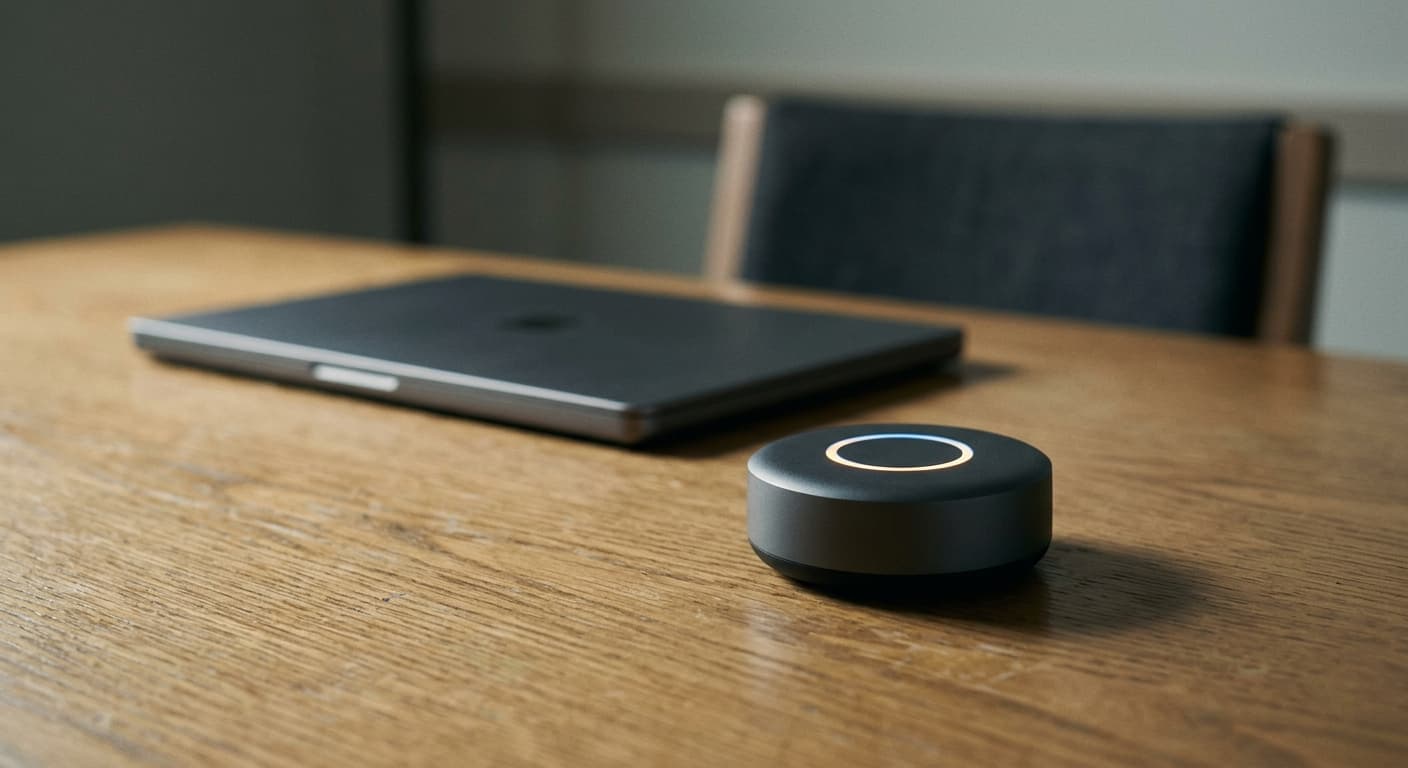
New York is a one-party consent state under N.Y. Penal Law 250.00, so a meeting participant may lawfully activate an AI recording tool without notifying others. Recording without any party's consent is eavesdropping, a Class E felony under Penal Law 250.05.
New York is one of the most consequential states for AI meeting recording law, and the legal landscape is shifting. Under the current one-party consent framework established by N.Y. Penal Law 250.00, a conversation participant may record without telling anyone else. That framework has made AI meeting tools like Otter.ai, Fireflies, and Microsoft Copilot technically legal for participants to use in New York. But several converging developments are challenging this status quo.
Senate Bill S5077, introduced in February 2025, would fundamentally change New York's consent standard from one-party to all-party, requiring everyone in a conversation to agree before any recording begins. NYC Bar Formal Opinion 2025-6, issued in December 2025, established new ethical guardrails for attorneys using AI recording tools that go far beyond what the criminal statute requires, and Formal Opinion 2026-2, issued in August 2026, extended those guardrails to conversations with non-clients such as opposing counsel and witnesses. And NYC's existing regulation of automated employment decision tools under Local Law 144 has created a regulatory precedent that could expand to AI meeting recorders.
Whether you are a business deploying AI meeting tools, an attorney navigating new ethical obligations, or an employee being recorded by a colleague's AI assistant, New York's AI meeting recording rules demand close attention.
New York's Current Recording Consent Framework
N.Y. Penal Law 250.00: Definitions
New York's wiretapping and eavesdropping laws are codified in Article 250 of the Penal Law, titled "Offenses Against the Right to Privacy." The framework begins with Section 250.00, which defines key terms.
Under Section 250.00(1), "wiretapping" means the intentional overhearing or recording of a telephonic or telegraphic communication by a person other than a sender or receiver thereof, without the consent of either the sender or receiver. The critical word is "either." Because the statute requires only the consent of either party, not both, New York operates as a one-party consent state.
Section 250.00(2) defines "mechanical overhearing of a conversation" as the intentional overhearing or recording of a conversation or discussion without the consent of at least one party, by a person not present, through the use of a device. This definition similarly follows a one-party consent model for in-person conversations.
How One-Party Consent Works in Practice
Under the current framework, a person who is a party to a conversation may record it without telling the other participants. The consent requirement is satisfied by the recording party's own participation. This applies to telephone calls, in-person conversations, and electronic communications.
For AI meeting tools, this means a meeting participant who activates a recording tool like Otter.ai is providing the necessary consent through their own participation. No notification to other attendees is required under the criminal statute.
However, New York's one-party consent rule applies to the person doing the recording, not to third-party tools acting independently. If an AI tool joins and records a meeting without any participant activating it or consenting to its presence, the one-party consent exception may not apply. The tool itself is not a "party" to the conversation.

Criminal Penalties for Unlawful Recording
Eavesdropping: Class E Felony (Penal Law 250.05)
A person is guilty of eavesdropping when they unlawfully engage in wiretapping, mechanical overhearing of a conversation, or intercepting or accessing an electronic communication. Under N.Y. Penal Law 250.05, eavesdropping is a Class E felony.
A Class E felony in New York carries a maximum sentence of four years in state prison and fines up to $5,000. For first-time offenders without a prior record, courts may impose probation or a conditional discharge instead of incarceration, but the felony classification means a conviction carries lasting consequences including loss of certain civil rights and professional licensing implications.
Possession of Eavesdropping Devices: Class A Misdemeanor (Penal Law 250.10)
Under Section 250.10, a person is guilty of possession of eavesdropping devices when they possess any instrument, device, or equipment designed for, adapted to, or commonly used in wiretapping or mechanical overhearing of a conversation, under circumstances evincing an intent to use or permit its use in violation of Section 250.05.
This is a Class A misdemeanor, punishable by up to 364 days in jail and a $1,000 fine. New York amended Penal Law 70.15 in 2019 to cap Class A misdemeanor sentences at 364 days rather than a full year, keeping convictions under the one-year threshold federal immigration law uses to define an aggravated felony. The statute could theoretically apply to AI meeting recording software configured to record without authorization, though no published New York decision has applied Section 250.10 to AI recording tools.
Failure to Report Wiretapping (Penal Law 250.15)
Section 250.15 makes it a Class B misdemeanor for a telephone or telegraph corporation, not an individual employee, to fail to report wiretapping. Under the statute, a corporation that has knowledge of unlawful wiretapping and does not report it to an appropriate law enforcement officer or agency is subject to a fine of up to $15,000 under Penal Law 80.10. Corporations cannot be sentenced to imprisonment, so no individual jail exposure attaches to this particular offense.
Civil Consequences: CPLR 4506 and Federal Remedies
New York Civil Practice Law and Rules Section 4506 provides that evidence obtained through illegal eavesdropping is generally inadmissible in any trial, hearing, or proceeding. This exclusionary rule applies in both criminal and civil cases, but it contains a statutory exception: such evidence is admissible in any civil or criminal trial, hearing, or proceeding against a person who committed, or is alleged to have committed, the eavesdropping itself.
New York state law does not provide a statutory private cause of action with fixed damages for eavesdropping violations. However, victims may pursue common law claims for invasion of privacy or seek remedies under the federal Wiretap Act (18 U.S.C. 2520), which authorizes civil damages equal to the greater of actual damages and profits, or statutory damages of $100 per day for each day of violation or $10,000, whichever is greater. The prevailing party may also recover reasonable attorney's fees and litigation costs under federal law.
Senate Bill S5077: The Push for All-Party Consent
What the Bill Would Change
Senate Bill S5077, introduced on February 18, 2025, by Senator Joseph Griffo, would amend the definition of "wiretapping" in Penal Law 250.00 to require the consent of both the sender and receiver for a recording to be lawful. The bill would change the word "either" to "both the sender and receiver," transforming New York from a one-party consent state to an all-party consent state.
If enacted, S5077 would make New York the 13th all-party consent state in the country, joining California, Connecticut, Florida, Illinois, Maryland, Massachusetts, Montana, Nevada, New Hampshire, Oregon, Pennsylvania, and Washington.
Impact on AI Meeting Recorders
The shift to all-party consent would fundamentally change how AI meeting tools operate in New York. Under the current framework, a single participant's activation of an AI recorder satisfies the consent requirement. Under S5077, every participant in the meeting would need to consent before the recording could begin.
This would require AI meeting tools to implement explicit consent mechanisms, such as pop-up notifications that require affirmative opt-in from each participant before recording starts. Tools that record by default or that rely on passive notification (like a small recording indicator icon) would likely not satisfy the all-party consent standard.
For organizations that routinely record meetings, S5077 would create significant operational changes. Any participant who declines to consent would prevent the recording from proceeding, effectively giving each participant a veto over AI recording tools.
Legislative History and Prospects
Senator Griffo has introduced versions of this bill across multiple legislative sessions: the 2017-18, 2019-20, 2021-22, 2023-24, and now the 2025-26 session. The bill has not advanced out of committee in any previous session.
A companion bill, S5070, introduced the same day, would require anyone recording a conversation where there is a reasonable expectation of privacy to state their intentions to use a recording device so all parties know the device is being used. S5070 would add a disclosure requirement without changing the underlying consent standard.
As of early 2026, both bills remain in the Senate Committee on Codes. While the bills have not gained traction in past sessions, the rapid proliferation of AI meeting recording tools may create new legislative momentum. Organizations should monitor these bills and prepare compliance plans in case the consent standard changes.

NYC Bar Formal Opinions 2025-6 and 2026-2: AI Recording Ethics for Attorneys
Overview
On December 22, 2025, the New York City Bar Association's Committee on Professional Ethics issued Formal Opinion 2025-6, titled "Ethical Issues Affecting Use of AI to Record, Transcribe, and Summarize Conversations with Clients." The opinion addresses how the New York Rules of Professional Conduct apply when attorneys or their clients use AI tools to record, transcribe, and summarize legal conversations.
This opinion is significant because it establishes a consent standard for attorneys that is stricter than what the criminal statute requires. While New York's one-party consent law allows recording without notification, the ethics rules effectively prohibit attorneys from secretly recording their clients.
Client Consent Requirement
The opinion states that attorneys should obtain client consent before recording calls with AI tools. The basis for this requirement is Rule 8.4 of the New York Rules of Professional Conduct, which prohibits conduct involving dishonesty, fraud, deceit, or misrepresentation. The NYC Bar's position is that secretly recording a client conversation, even though legally permitted under the one-party consent statute, constitutes deceptive conduct that violates an attorney's duty of loyalty.
This creates a two-tier system in New York: the criminal law allows one-party consent recording, but professional ethics rules require attorneys to obtain client permission before using AI recording tools.
Confidentiality and Privilege Under Rule 1.6
Formal Opinion 2025-6 instructs attorneys to treat AI recorders and speech-to-text transcription services as third-party vendors receiving client confidential information. Under Rule 1.6, attorneys must make "reasonable efforts" to prevent unauthorized disclosure of client information, including implementing strong contractual and technical protections.
The opinion identifies specific factors attorneys must evaluate when selecting AI recording tools: where data will be stored and for how long, how data might be retrievable through discovery, whether the tool uses conversation data for model training, whether there is a right to data deletion, and what privacy and security safeguards protect the data.
Competence Under Rule 1.1
The opinion also invokes Rule 1.1's competence requirement. Attorneys must understand how their AI recording tools work, including the tool's limitations and risks. The opinion specifically warns against relying on raw AI transcripts or summaries without independent verification, noting that AI-generated transcripts may contain errors that could affect legal analysis.
When Clients Record Their Attorneys
The opinion addresses the reverse scenario: clients who use AI tools to record their attorneys. When an attorney knows that a client is recording with an AI tool, the opinion recommends that the attorney advise the client about the disadvantages of doing so, including risks to confidentiality and privilege.
The opinion suggests that attorneys include provisions in retainer agreements that bar clients from recording without advance notice and warn clients about the confidentiality and privilege risks of using their own AI recording tools.
Formal Opinion 2026-2: Recording Non-Client Conversations
On August 5, 2026, the New York City Bar Association's Professional Ethics Committee issued Formal Opinion 2026-2, titled "Ethical Use of AI for Recording, Transcribing, and Summarizing Non-Client Conversations." The opinion builds on Formal Opinion 2025-6 rather than replacing it, explaining that the principles set out in the earlier opinion apply well beyond the attorney-client relationship. It covers conversations with co-counsel and aligned counsel, prospective clients, opposing counsel, witnesses, and an attorney's own employees or agents such as investigators.
For AI meeting recording specifically, 2026-2 is the more directly applicable authority, because most meetings and calls include people who are not the recording attorney's client. The opinion states that as part of their duties under Rule 8.4, attorneys must not surreptitiously record conversations, including videoconferences, with any third parties, and that attorneys must disclose the intention to record the conversation and obtain permission from all participants.
The opinion also sets a default against recording at all. It advises that absent a good reason to record a particular conversation, the default practice should be not to use AI tools to record, transcribe, or summarize it. Alongside Rule 8.4, the opinion analyzes Rule 1.1 (competence), Rule 1.18 (duties to prospective clients), Rule 3.4 (fairness to opposing party and counsel), Rule 4.2 (communication with represented persons), and Rule 4.3 (dealing with unrepresented persons).
The practical effect is that New York attorneys now operate under an all-participant consent practice for AI meeting recording as a matter of professional ethics, even though the criminal statute still requires the consent of only one party.
Broader Implications
While Formal Opinions 2025-6 and 2026-2 apply directly only to attorneys, their analysis of AI recording risks is relevant to any professional subject to ethical or regulatory obligations. Healthcare providers subject to HIPAA, financial advisors governed by SEC regulations, and other professionals who handle confidential information face similar concerns when AI meeting tools transmit sensitive conversations to third-party servers.
NYC Local Law 144: AI Regulation Precedent
Automated Employment Decision Tools
New York City's Local Law 144, effective July 5, 2023, regulates automated employment decision tools (AEDT) used in hiring and promotion decisions. The law requires employers to conduct annual bias audits of AEDT tools, publicly disclose audit results, and notify candidates at least ten business days before using an AEDT.
The NYC Department of Consumer and Worker Protection (DCWP) enforces the law and can impose civil penalties of $500 to $1,500 per day for violations.
Relevance to AI Meeting Recorders
While Local Law 144 applies specifically to automated employment decision tools, it establishes a regulatory framework that could extend to AI meeting recorders. If AI meeting tools are used to evaluate employee performance, assess job candidates during interviews, or generate metrics that influence employment decisions, they may already fall within Local Law 144's scope.
More broadly, Local Law 144 demonstrates New York City's willingness to regulate AI tools through transparency and accountability requirements. Organizations using AI meeting recorders in New York City should anticipate that similar regulatory frameworks could be applied to meeting recording tools in the future.

Attorney-Client Privilege and AI Meeting Tools
The Privilege Risk
Attorney-client privilege protects communications made in confidence between an attorney and client for the purpose of obtaining legal advice. The privilege can be waived if the communication is disclosed to a third party.
AI meeting recording tools that transmit conversation data to external servers create a potential waiver risk. If the AI tool's provider can access the content of attorney-client communications, a court could find that the privilege has been waived because the communication was voluntarily disclosed to a third party.
Minimizing Privilege Risk
To preserve attorney-client privilege when using AI meeting tools, attorneys in New York should select tools that process data locally rather than transmitting it to external servers when possible, review the tool's privacy policy and data handling practices to confirm that the provider cannot access conversation content, negotiate contractual provisions that restrict the tool's provider from accessing, using, or disclosing conversation data, implement technical safeguards such as encryption in transit and at rest, and document their due diligence process to demonstrate reasonable efforts under Rule 1.6.
The Open Question
No New York court has ruled on whether using a specific AI meeting recording tool waives attorney-client privilege. The answer will likely depend on the specific tool's data handling practices, the contractual relationship between the attorney and the tool provider, and whether the attorney took reasonable steps to protect confidentiality.
The Otter.ai Litigation and NY Context
Brewer v. Otter.ai
The August 2025 class action against Otter.ai (Brewer v. Otter.ai, N.D. Cal., No. 5:25-cv-06911) alleged that the company's AI meeting tools recorded conversations of non-users without proper consent and used conversation data to train machine learning models. The plaintiff, who was not an Otter.ai user, claimed his conversations were captured during meetings because another participant's Otter tool was running.
The case was filed under California law, but its core allegations resonate in New York. Under New York's current one-party consent framework, Otter's recording practices would likely be lawful from a consent perspective if activated by a meeting participant. But the allegations about using conversation data for model training raise separate concerns about data processing that go beyond the recording consent question.
The Ambriz "Capability Test"
The February 2025 decision in Ambriz v. Google established that a company's technical capability to use intercepted communications data for AI training can state a privacy claim, regardless of whether the company actually uses the data that way. While decided under California law, this reasoning could influence New York courts evaluating similar claims about AI meeting tools.
Federal Law and Cross-State Issues
Federal Wiretap Act Alignment
The federal Wiretap Act (18 U.S.C. 2511) follows one-party consent, aligning with New York's current framework. If S5077 passes and New York shifts to all-party consent, New York's standard would become stricter than the federal baseline, meaning that a recording lawful under federal law could still violate New York state law.
Cross-State Calls
When AI meeting tools record conversations involving participants in multiple states, the most restrictive consent standard among all represented states generally applies. New York's current one-party consent framework means New York participants do not add a consent burden to multi-state calls. If S5077 passes, New York participants would require all-party consent, potentially complicating recordings for organizations with distributed teams.
Organizations should maintain policies that account for the consent requirements of all states where meeting participants may be located, regardless of where the recording is initiated.
This article is for informational purposes only and does not constitute legal advice. New York's recording laws and AI regulations are actively evolving, with pending legislation that could change the consent framework. Consult an attorney licensed in New York for advice specific to your situation. Information is current as of August 2026.
More New York Laws
- New York Data Privacy Laws
- New York Deepfake Laws
- New York Employee Monitoring Laws
- New York Recording Laws
Frequently Asked Questions
Is it legal to use an AI meeting recorder in New York without telling other participants?
Under New York's current one-party consent framework (N.Y. Penal Law 250.00), a meeting participant may record without notifying others. However, Senate Bill S5077, if enacted, would require all-party consent. Attorneys face a stricter standard under NYC Bar Opinion 2025-6, which requires client consent before using AI recording tools regardless of the criminal statute, and under NYC Bar Opinion 2026-2 (August 2026), which directs attorneys not to record third parties surreptitiously and to obtain permission from all participants on calls with non-clients such as opposing counsel and witnesses.
What are the penalties for illegal recording in New York?
Eavesdropping is a Class E felony under Penal Law 250.05, carrying up to four years in prison and a $5,000 fine. Possession of eavesdropping devices is a Class A misdemeanor under 250.10, with up to 364 days in jail and a $1,000 fine. Victims may also pursue civil remedies under the federal Wiretap Act (18 U.S.C. 2520), with statutory damages up to $10,000 plus attorney's fees.
Would Bill S5077 make AI meeting recorders illegal in New York?
S5077 would not make AI meeting recorders illegal. It would require that all participants consent before recording begins, rather than just one. AI tools that implement explicit consent mechanisms (such as requiring each participant to opt in) would still be usable. Tools that record by default without affirmative consent from all parties would not comply.
What do the NYC Bar opinions require for attorneys using AI recording tools?
Formal Opinion 2025-6 requires attorneys to obtain client consent before recording, treat AI transcription services as third-party vendors receiving confidential information under Rule 1.6, understand how the tool works (Rule 1.1 competence), independently verify AI-generated transcripts for accuracy, and evaluate the tool's data storage, retention, and training practices. Formal Opinion 2026-2 (August 2026) extends the same principles to non-client conversations, barring surreptitious recording of third parties, requiring disclosure of the intent to record and permission from all participants, and advising that the default practice should be not to record absent a good reason.
Can using an AI meeting recorder waive attorney-client privilege in New York?
No New York court has directly ruled on this question. However, if an AI tool transmits attorney-client communications to external servers where the provider can access the content, a court could find that the privilege has been waived through voluntary disclosure to a third party. Attorneys should select tools with strong confidentiality protections and document their due diligence.
Updates
Added the New York City Bar Association’s Formal Opinion 2026-2 (August 5, 2026), which extends the earlier AI-recording ethics guidance to conversations with non-clients and tells attorneys to disclose recording and obtain permission from all participants.
Independently fact-checked against the cited primary sources; governing law re-checked for recent changes
Governing law re-checked for recent changes
Corrected the description of CPLR 4506's evidentiary exclusion rule to note its statutory exception: illegally obtained eavesdropping evidence remains admissible against the person who committed (or is alleged to have committed) the eavesdropping.
Governing law re-checked for recent changes
Corrected two factual errors verified against nysenate.gov. (1) Penal Law 250.10 possession of eavesdropping devices is a Class A misdemeanor with a maximum sentence of 364 days in jail, not a full year: New York's 2019 amendment to Penal Law 70.15 capped all Class A misdemeanor sentences at 364 days to avoid triggering the federal one-year aggravated-felony immigration threshold. The Criminal Penalties section and the FAQ answer both stated up to one year in jail. (2) Penal Law 250.15 (failure to report wiretapping) applies to a telephone or telegraph corporation, not an individual employee, and its Class B misdemeanor penalty is a fine of up to $15,000 under Penal Law 80.10 since corporations cannot be imprisoned; the article incorrectly described an individual employee facing up to three months in jail. The Class E felony eavesdropping classification under 250.05 (up to 4 years, $5,000 fine), the CPLR 4506 evidentiary-exclusion citation, and the S5077/S5070 pending-in-committee status were all independently verified against nysenate.gov and left unchanged.
Reviewed and approved by an editor
The Law Behind This Article
This article rests on the statutory provisions below, held in our own legal record and retrieved from the official source. Tap a section to read the operative text.
New York Penal Law
§ 250.05EavesdroppingIn forcecited in 15 of our articles
Eavesdropping. A person is guilty of eavesdropping when he unlawfully engages in wiretapping, mechanical overhearing of a conversation, or intercepting or accessing of an electronic communication. Eavesdropping is a class E felony.
Official text (excerpt) · last checked 2026-09-24 · Read the full text in our law library · Verify at legislation.nysenate.gov
Cited in 39 court opinions in our collectionLatest citing opinion in our collection: 2025
In the courts (editorial summary, independently checked):New York courts recognize a vicarious consent exception to the eavesdropping offense. The Appellate Term adopted it in People v. Clark (2008). The Court of Appeals then held in People v. Badalamenti (2016) that consent covers a parent with a good faith, objectively reasonable belief that recording serves the child's best interests.
Opinions citing this section in our collection:
- The People v. Anthony Badalamenti (New York Court of Appeals 2016, 27 N.Y.3d 423)✓A father's call to the mother's phone connected with no one speaking, and he recorded her boyfriend threatening to beat his five year old son; the court held that consent under Penal Law 250.05 includes a parent's vicarious consent, so the recording was admissible.
- People v. Badalamenti (Appellate Division of the Supreme Court of the State of New York 2015, 124 A.D.3d 672)✓Reviewing the same recording of a boyfriend threatening the father's young son, the Appellate Division adopted a vicarious consent exemption to Penal Law 250.05 where a parent has a good faith, objectively reasonable basis to believe recording serves the child's welfare.
- People v. Clark (Appellate Terms of the Supreme Court of New York 2008, 19 Misc. 3d 6)✓A mother slipped an audio recorder into the backpack of her nonverbal autistic eight year old before he boarded the school bus, capturing his bus matron; the Appellate Term held she could vicariously consent for him, so the recording did not violate Penal Law 250.05.
Identified automatically from the court opinions citing this section — not a ranking of which case controls.
Also relied on in: New York Audio Recording Laws: One-Party Consent Rules and Penalties, New York Smart Glasses Recording Laws 2026, New York Ring Doorbell Laws: What You Need to Know in 2026
§ 250.00Eavesdropping; definitions of termsIn forcecited in 20 of our articles
Eavesdropping; definitions of terms. The following definitions are applicable to this article: 1. "Wiretapping" means the intentional overhearing or recording of a telephonic or telegraphic communication by a person other than a sender or receiver thereof, without the consent of either the sender or receiver, by means of any instrument, device or equipment. The normal operation of a telephone or telegraph corporation and the normal use of the services and facilities furnished by such corporation pursuant to its tariffs or necessary to protect the rights or property of said corporation shall not be deemed "wiretapping." 2. "Mechanical overhearing of a conversation" means the intentional overhearing or recording of a conversation or discussion, without the consent of at least one party thereto, by a person not present thereat, by means of any instrument, device or equipment. 3.
Official text (excerpt) · last checked 2026-07-29 · Read the full text in our law library · Verify at legislation.nysenate.gov
Cited in 56 court opinions in our collectionLatest citing opinion in our collection: 2023
Opinions citing this section in our collection:
- People v. Fata (New York County Courts 1988, 139 Misc. 2d 979)“…Fata had a justifiable expectation of privacy; and (c) that Penal Law § 250.00 et seq. prohibit the mechanical overh…”
- The People v. Anthony Badalamenti (New York Court of Appeals 2016, 27 N.Y.3d 423)“…t of “mechanical overhearing of a conversation” pursuant to Penal Law § 250.00 (2), includes vicarious consent, on beh…”
- Gurevich v. Gurevich (New York Supreme Court 2009, 24 Misc. 3d 808)“…11 ing” as they relate to Penal Law § 250.05 are defined in Penal Law § 250.00 (6) as: “the intentional acquiring, r…”
Identified automatically from the court opinions citing this section — not a ranking of which case controls.
Also relied on in: New York Dashcam Laws: Legality, Mounting Rules, and Evidence Use, New York Landlord-Tenant Recording Laws: Rights for Renters and Property Owners, New York Medical Recording Laws: Patient Rights and Healthcare Privacy
§ 250.10Possession of eavesdropping devicesIn forcecited in 6 of our articles
Possession of eavesdropping devices. A person is guilty of possession of eavesdropping devices when, under circumstances evincing an intent to use or to permit the same to be used in violation of section 250.05, he possesses any instrument, device or equipment designed for, adapted to or commonly used in wiretapping or mechanical overhearing of a conversation. Possession of eavesdropping devices is a class A misdemeanor.
Official text (excerpt) · last checked 2026-07-29 · Read the full text in our law library · Verify at legislation.nysenate.gov
Cited in 1 court opinions in our collectionLatest citing opinion in our collection: 2022
Opinions citing this section in our collection:
- The People v. Marc Mitchell (New York Court of Appeals 2022)“…ther person” (Bartlett Commission, Staff Notes on Proposed Penal Law § 250.10, at 387-390 [1964]). It is inconceivab…”
Identified automatically from the court opinions citing this section — not a ranking of which case controls.
Also relied on in: How to Detect and Block Listening Devices in Your Home (2026), New York Recording Laws (2026): One-Party Consent Rules, New York Phone Call Recording Laws: Consent Rules for Landline, Cell, and VoIP
§ 250.15Failure to report wiretappingIn force
Failure to report wiretapping. A telephone or telegraph corporation is guilty of failure to report wiretapping when, having knowledge of the occurrence of unlawful wiretapping, it does not report such matter to an appropriate law enforcement officer or agency. Failure to report wiretapping is a class B misdemeanor.
Official text (excerpt) · last checked 2026-07-29 · Read the full text in our law library · Verify at legislation.nysenate.gov
Cited in 1 court opinions in our collectionLatest citing opinion in our collection: 2022
Opinions citing this section in our collection:
- Kelsey v. Duwe (District Court, S.D. New York 2022)“…plicable here. Plaintiff admits that his prosecution under N.Y. Penal Law § 250.15 for violation of an order of protectio…”
Identified automatically from the court opinions citing this section — not a ranking of which case controls.
§ 70.15Sentences of imprisonment for misdemeanors and violationIn forcecited in 3 of our articles
Sentences of imprisonment for misdemeanors and violation. 1. Class A misdemeanor. A sentence of imprisonment for a class A misdemeanor shall be a definite sentence. When such a sentence is imposed the term shall be fixed by the court, and shall not exceed three hundred sixty-four days. 1-a. (a) Notwithstanding the provisions of any other law, whenever the phrase "one year" or "three hundred sixty-five days" or "365 days" or any similar phrase appears in any provision of this chapter or any other law in reference to the definite sentence or maximum definite sentence of imprisonment that is imposed, or has been imposed, or may be imposed after enactment of this subdivision, for a misdemeanor conviction in this state, such phrase shall mean, be interpreted and be applied as three hundred sixty-four days. (b) The amendatory provisions of this subdivision are ameliorative and shall apply to all persons who are sentenced before, on or after the effective date of this subdivision, for a crime committed before, on or after the effective date of this subdivision.
Official text (excerpt) · last checked 2026-07-29 · Read the full text in our law library · Verify at legislation.nysenate.gov
Cited in 209 court opinions in our collectionLatest citing opinion in our collection: 2026
Opinions citing this section in our collection:
- People v. Janvier (Appellate Division of the Supreme Court of the State of New York 2020, 186 A.D.3d 1247)“…n note that the New York State Legislature recently amended Penal Law § 70.15. The amendment requires that one-year o…”
- People v. Archer (Appellate Division of the Supreme Court of the State of New York 1986, 121 A.D.2d 730)“…e Governor approved the Laws of 1984 (ch 673) which amended Penal Law § 70.15 (1) so that, inter alia, the maximum…”
- People v. Kirkland (New York Supreme Court 1986, 131 Misc. 2d 487)“…The so-called "Misdemeanor Reclassification Act” amended Penal Law § 70.15 and CPL 340.40 and added a new section…”
Identified automatically from the court opinions citing this section — not a ranking of which case controls.
Also relied on in: Queens Council Candidate Charged With Forgery Over AI-Faked Endorsements, New York Restraining Order Laws (2026): Orders of Protection Explained
New York Civil Practice Law and Rules
§ 4506Eavesdropping evidence; admissibility; motion to suppress in certain casesIn forcecited in 9 of our articles
Eavesdropping evidence; admissibility; motion to suppress in certain cases. 1. The contents of any overheard or recorded communication, conversation or discussion, or evidence derived therefrom, which has been obtained by conduct constituting the crime of eavesdropping, as defined by section 250.05 of the penal law, may not be received in evidence in any trial, hearing or proceeding before any court or grand jury, or before any legislative committee, department, officer, agency, regulatory body, or other authority of the state, or a political subdivision thereof; provided, however, that such communication, conversation, discussion or evidence, shall be admissible in any civil or criminal trial, hearing or proceeding against a person who has, or is alleged to have, committed such crime of eavesdropping. 2.
Official text (excerpt) · last checked 2026-07-29 · Read the full text in our law library · Verify at legislation.nysenate.gov
Also relied on in: New York Surveillance Camera Laws (2026 Guide)
United States Code Title 18
§ 2511Interception and disclosure of wire, oral, or electronic communications prohibitedIn forcecited in 441 of our articles
Except as otherwise specifically provided in this chapter any person who— intentionally intercepts, endeavors to intercept, or procures any other person to intercept or endeavor to intercept, any wire, oral, or electronic communication; intentionally uses, endeavors to use, or procures any other person to use or endeavor to use any electronic, mechanical, or other device to intercept any oral communication when— such device is affixed to, or otherwise transmits a signal through, a wire, cable, or other like connection used in wire communication; or such device transmits communications by radio, or interferes with the transmission of such communication; or such person knows, or has reason to know, that such device or any component thereof has been sent through the mail or transported in interstate or foreign commerce; or such use or endeavor to use (A) takes place on the premises of any business or other commercial establishment the operations of which affect interstate or foreign commerce; or (B) obtains or is for the purpose of obtaining information relating to the operations of any business or other commercial establishment the operations of which affect interstate or foreign…
Official text (excerpt) · last checked 2026-09-17 · Read the full text in our law library · Verify at uscode.house.gov
Cited in 2,045 court opinions in our collectionLatest citing opinion in our collection: 2026
In the courts (editorial summary, independently checked):Griggs-Ryan v. Smith (1990) applied the Section 2511(2)(d) prior-consent exception, treating a tenant repeatedly told that all incoming calls were taped as having impliedly consented. United States v. United States District Court (1972) read the then-current Section 2511(3) as conferring no presidential surveillance power.
Opinions citing this section in our collection:
- Mitchell v. Forsyth (Supreme Court of the United States 1985, 472 U.S. 511)✓The Attorney General authorized a warrantless 1970 national security wiretap that caught the plaintiff's calls; the Court held the since-repealed Section 2511(3) disclaimer left the tap lawful under Title III, and that Mitchell had qualified immunity.
- United States v. United States District Court for the Eastern District of Michigan (Supreme Court of the United States 1972, 407 U.S. 297)✓The Attorney General approved warrantless wiretaps on members of a domestic group accused of bombing a CIA office; the Court read Section 2511(3) as a congressional disclaimer conferring no surveillance power, then held the Fourth Amendment required prior judicial approval.
- Forsyth v. Barr (Court of Appeals for the Fifth Circuit 1994, 19 F.3d 1527)✓Dallas police used, in an internal affairs probe of an officer, calls private parties allegedly intercepted illegally; assuming that was unlawful, the Fifth Circuit held Section 2517(1) and (2) allowed the disclosure and use, defeating the Section 2511(1)(c) and (d) claims.
Identified automatically from the court opinions citing this section — not a ranking of which case controls.
Also relied on in: Connecticut Recording Laws (2026): Hybrid Consent Rules Explained, Oregon Recording Laws (2026): Hybrid One-Party and All-Party Rules, US Recording Laws by State (2026): All 50 States Explained
§ 2520Recovery of civil damages authorizedIn forcecited in 130 of our articles
Except as provided in section 2511(2)(a)(ii), any person whose wire, oral, or electronic communication is intercepted, disclosed, or intentionally used in violation of this chapter may in a civil action recover from the person or entity, other than the United States, which engaged in that violation such relief as may be appropriate. In an action under this section, appropriate relief includes— such preliminary and other equitable or declaratory relief as may be appropriate; damages under subsection (c) and punitive damages in appropriate cases; and a reasonable attorney’s fee and other litigation costs reasonably incurred.
Official text (excerpt) · last checked 2026-07-28 · Read the full text in our law library · Verify at uscode.house.gov
Cited in 860 court opinions in our collectionLatest citing opinion in our collection: 2026
In the courts (editorial summary, independently checked):Walker v. Darby (1990) held a 2520 plaintiff need not prove the contents of intercepted conversations, only interception and a justified expectation against it. Bartnicki v. Vopper (2001) barred 2520 damages against defendants who took no part in the interception, obtained the tape lawfully, and disclosed a matter of public concern.
Opinions citing this section in our collection:
- Jessie Walker v. Thomas E. Darby, Hugh L. Robinson, Jr., and Kenneth Day (Court of Appeals for the Eleventh Circuit 1990, 911 F.2d 1573)✓A postal letter carrier said three supervisors wired an intercom near his workstation to listen in. Reversing summary judgment, the Eleventh Circuit held a section 2520 plaintiff can show interception without proving the contents of specific conversations.
- Gelbard v. United States (Supreme Court of the United States 1972, 408 U.S. 41)“…disclosure, or use is entitled to recover civil damages, 18 U. S. C. § 2520 . Title III also bars the use as eviden…”
- DirecTV, Inc. v. Hoa Huynh (Court of Appeals for the Ninth Circuit 2007, 503 F.3d 847)“…7 U.S.C. § 605 (e)(4), or alternatively, for violations of 18 U.S.C. § 2520 (a), or alternatively, for violations o…”
Identified automatically from the court opinions citing this section — not a ranking of which case controls.
Also relied on in: Alabama Audio Recording Laws: Consent Rules and Penalties, Alabama Phone Call Recording Laws: What You Need to Know, Alaska Phone Call Recording Laws: Rules for Landline, Cell, and VoIP (2026)
Search our full record of US law — 2.1 million sections, every state + federal →
Sources and References
- N.Y. Penal Law 250.00 - Definitions (Wiretapping)(nysenate.gov).gov
- N.Y. Penal Law 250.05 - Eavesdropping(nysenate.gov).gov
- NY Senate Bill S5077 (2025-2026)(nysenate.gov).gov
- NY Senate Bill S5070 (2025-2026)(nysenate.gov).gov
- NYC Bar Formal Opinion 2025-6 - AI Recording Ethics(nycbar.org)
- NYC Local Law 144 - Automated Employment Decision Tools(nyc.gov).gov
- CPLR 4506 - Eavesdropping Evidence; Admissibility; Motion to Suppress(nysenate.gov).gov
- Brewer v. Otter.ai Class Action (N.D. Cal. No. 5:25-cv-06911)(courtlistener.com)
- 18 U.S.C. 2511 - Federal Wiretap Act(law.cornell.edu)
- NY Comptroller Audit of Local Law 144 Enforcement(osc.ny.gov).gov
- NYC Bar Formal Opinion 2026-2 - Ethical Use of AI for Recording, Transcribing, and Summarizing Non-Client Conversations (Aug. 5, 2026)(nycbar.org)