
New York
New York Ring Doorbell Laws: What You Need to Know in 2026
Independently fact-checked against primary sources (last audited August 17, 2026). · Reviewed by the RecordingLaw editorial team. · Law checked current as of August 17, 2026. · 10 primary sources cited on this page. How we verify our legal content
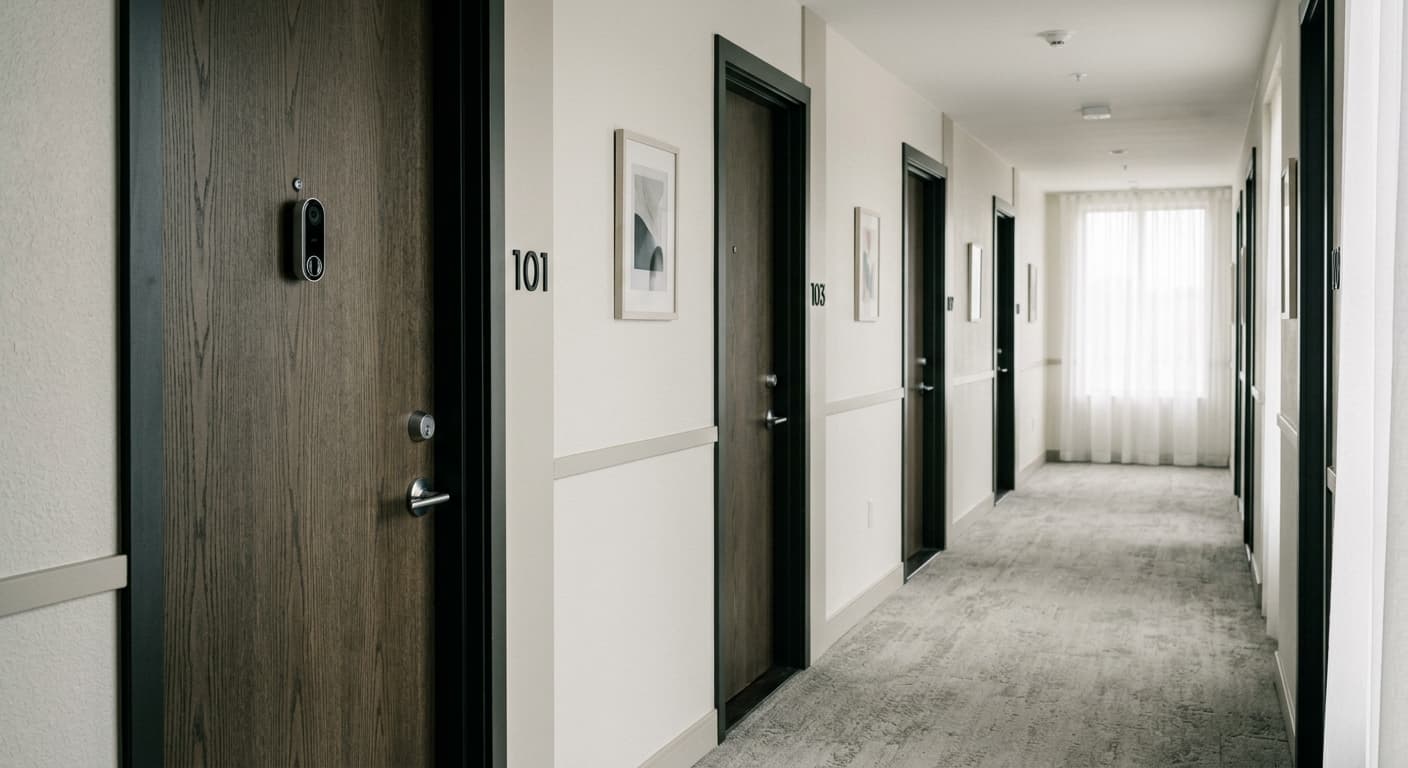
Ring doorbells are legal in New York. Audio recording is lawful when the owner takes part in the conversation, because New York's eavesdropping offense (N.Y. Penal Law 250.05) reaches a recorded conversation only where no participant consented and the person recording was not present at it. Recording a conversation you are neither part of nor present at, without any participant's consent, is eavesdropping, a Class E felony under Penal Law 250.05.
Ring doorbells record both video and audio of activity near your front door. In New York, the legality of that recording depends on consent rules for audio, where your camera points, and whether you live in a building governed by a co-op board or condo association. New York combines strong privacy protections in its Penal Law with unique tenant rules that affect millions of apartment dwellers, particularly in New York City.
The state's one-party consent framework allows Ring doorbell owners to record conversations they participate in. But pointing a Ring camera at the wrong place, or recording audio of conversations you are not part of, can trigger felony charges. NYC tenants face additional layers of regulation from co-op boards, condo associations, and lease provisions. This guide covers every relevant New York statute, explains how the rules differ for homeowners and apartment residents, and provides practical steps for legal compliance.
Audio Recording Laws and Ring Doorbells
New York's audio recording rules come from a pair of provisions working together: the definitions in Penal Law 250.00 and the eavesdropping offense in Penal Law 250.05.
Penal Law 250.00: Key Definitions
Penal Law 250.00 defines "wiretapping" as the intentional overhearing or recording of a telephonic or telegraphic communication by a person other than a sender or receiver, without the consent of either the sender or receiver, by means of any instrument, device, or equipment.
The statute also defines "mechanical overhearing of a conversation" as the intentional overhearing or recording of a conversation or discussion, without the consent of at least one party thereto, by a person not present thereat, by means of any instrument, device, or equipment.
Section 250.00 is a definitions section. It opens by stating that its terms apply to the rest of Article 250, and it does not by itself make any recording lawful or unlawful. The operative rule is Penal Law 250.05, which makes it a crime to engage in wiretapping or mechanical overhearing as those terms are defined. The practical effect of the two read together is a one-party consent baseline: for wiretapping, consent from either the sender or receiver satisfies the law, and for mechanical overhearing, consent from at least one party to the conversation is enough. Mechanical overhearing carries a second limit as well, because it reaches only recordings made by a person not present at the conversation.
One-Party Consent and Ring Doorbells
When you answer your Ring doorbell and speak with a visitor through the two-way talk feature, you are a participant in that conversation. Your consent as one party makes the audio recording legal under New York law.
The risk arises when your Ring doorbell records conversations between other people near your door while you are neither participating nor present. If two delivery workers have a private discussion on your porch, you are not part of that conversation, and you are not present at it, your Ring doorbell capturing that audio without any participant's consent could constitute eavesdropping under Penal Law 250.05.
Penal Law 250.05: Eavesdropping
A person is guilty of eavesdropping when they unlawfully engage in wiretapping, mechanical overhearing of a conversation, or intercepting or accessing an electronic communication. Eavesdropping is a Class E felony in New York.
For Ring doorbell owners, the "mechanical overhearing" definition is most relevant. If your device records a conversation between third parties without any participant's consent, and you are not present at the conversation, this statute could apply.
Practical Audio Considerations for Ring Owners
As of April 2026, Ring devices allow users to disable audio recording in the app settings. New York homeowners and tenants concerned about eavesdropping liability have two practical options:
- Disable audio recording entirely through the Ring app settings
- Post a visible notice near the doorbell informing visitors that audio and video recording is in progress
Posting a notice helps establish that visitors are aware of the recording, which can support an argument of implied consent. While New York courts have not specifically ruled on whether a posted notice satisfies the consent requirement for Ring doorbells, reducing any expectation of privacy strengthens the homeowner's legal position.

Video Recording Laws and Ring Doorbells
New York does not have a blanket statute prohibiting outdoor video surveillance. Video recording from a Ring doorbell pointed at public areas, sidewalks, and your own property is legal. However, the state's unlawful surveillance statutes set firm boundaries.
Penal Law 250.45: Unlawful Surveillance in the Second Degree
Penal Law 250.45 is a voyeurism statute, not a general prohibition on surveillance cameras. Every subdivision requires substantially more than the presence of a camera.
Subdivisions 1 and 2 require both an improper purpose and a specific subject. The purpose must be the actor's or another person's amusement, entertainment, or profit, the purpose of degrading or abusing a person, or sexual arousal or gratification. The recording must surreptitiously view, broadcast, or record "a person dressing or undressing or the sexual or other intimate parts of such person," at a place and time when that person has a reasonable expectation of privacy, and without that person's knowledge or consent.
Subdivision 3 takes a different route. It requires that the imaging device be used "for no legitimate purpose" and that the space be a bedroom, changing room, fitting room, restroom, toilet, bathroom, washroom, shower, or a room assigned to guests in a hotel, motel, or inn. Installing an imaging device in one of those rooms creates a rebuttable presumption that it was done for no legitimate purpose.
Subdivision 4 covers using an imaging device to surreptitiously view or record under the clothing a person is wearing, without their knowledge or consent. Subdivision 5 covers recording a person in an identifiable manner engaging in sexual conduct in the same image with another person's intimate parts.
Unlawful surveillance in the second degree is a Class E felony, punishable by up to 4 years in prison.
What "Reasonable Expectation of Privacy" Means in This Statute
The phrase does not carry its ordinary Fourth Amendment meaning here. Penal Law 250.40(1) defines it, for sections 250.45, 250.50, 250.55, and 250.60 only, as "a place and time when a reasonable person would believe that he or she could fully disrobe in privacy."
That is a far narrower standard than the general privacy analysis courts apply in search-and-seizure cases, and it is the main reason an ordinary doorbell camera pointed at a porch, walkway, yard, or hallway does not raise a 250.45 problem. Those are not places where a reasonable person would expect to be able to fully disrobe.
Penal Law 250.50: Unlawful Surveillance in the First Degree
Penal Law 250.50 elevates the offense to a Class D felony (unlawful surveillance in the first degree) when the offender commits unlawful surveillance in the second degree and has been convicted of unlawful surveillance in the first or second degree within the past ten years. A Class D felony carries up to 7 years in prison.
Pointing Your Camera: Key Boundaries
Penal Law 250.45 reaches only surveillance that meets its purpose and subject-matter elements, in a place and time meeting the narrow statutory privacy definition above. Outside that zone, where a camera may point is governed by building rules, nuisance and harassment principles, and civil claims rather than by the surveillance felony. A Ring doorbell that captures:
- Your own porch, driveway, and walkway: Legal
- The public sidewalk and street: Legal
- A neighbor's front yard visible from the street: Generally legal
- Through a neighbor's window: Not unlawful surveillance on its own. A doorbell camera serving an ordinary security purpose does not meet 250.45's purpose element, whatever happens to fall within its frame. Deliberately aiming or repositioning a camera to record a neighbor dressing or undressing, or to view into a bedroom or bathroom for no legitimate purpose, is a different matter and can be a Class E felony. Incidental capture can still draw civil claims or a landlord or board complaint.
- Another tenant's apartment entrance in a hallway: Subject to building rules and privacy limits
Penal Law 250.45 reaches cameras used to record a person dressing or undressing, their intimate parts, or the inside of the enumerated private rooms. It does not turn an ordinary doorbell camera into a felony because of what happens to appear in frame. Even so, positioning your Ring doorbell to avoid interior views of neighboring homes and apartments keeps you clear of both the criminal question and the civil and building-rule disputes that follow neighbor complaints.
HOA, Co-op, and Condo Rules for Ring Doorbells
New York's housing landscape includes a large number of cooperatives (co-ops) and condominiums, particularly in New York City. These building structures add significant regulatory layers to Ring doorbell installation.
Co-op Board Authority
Co-op boards in New York have broad authority over building operations and resident behavior through proprietary leases and house rules. Most co-op boards require written approval before a shareholder installs any device in common areas, including Ring doorbells on apartment doors that face shared hallways.
Co-op boards can:
- Require board approval before installation
- Restrict camera angles to prevent recording of other residents' doors
- Set rules about audio recording in common areas
- Regulate the size, color, and placement of devices
- Ban doorbell cameras entirely from hallway-facing installations
Board decisions on these matters are typically protected under New York's business judgment rule, which shields officers and directors from liability for decisions made in good faith with reasonable skill and prudence.
Condominium Rules
Condominium bylaws typically prohibit unit owners from altering common elements without board approval. The exterior side of an apartment door is generally considered a common element in most New York condominiums. Installing a Ring doorbell on this surface without permission could violate the building's governing documents.
Condo boards can draft policies that:
- Permit or prohibit doorbell cameras
- Limit camera angles to cover only the owner's doorway and immediate area
- Restrict how long recorded footage can be stored
- Require that cameras not directly face another resident's unit
NYC-Specific Considerations
New York City does not have a municipal law specifically prohibiting residents from installing doorbell cameras in apartment building hallways. However, building-level rules (co-op proprietary leases, condo bylaws, and house rules) frequently address the issue. Before installing a Ring doorbell in any NYC multi-unit building, tenants and owners should:
- Review the proprietary lease (co-op) or bylaws (condo) for provisions on exterior modifications
- Check house rules for camera or surveillance device policies
- Submit a written request to the board if approval is required
- Confirm that the camera angle covers only the immediate area in front of the unit's door

Landlord and Tenant Rights
New York has strong tenant protections under the Real Property Law, and these protections intersect with Ring doorbell installation in several ways.
Tenant Installation Rights
Tenants in New York can typically install a Ring doorbell if they:
- Obtain written permission from the landlord before making modifications to the exterior of their unit
- Use damage-free adhesive mounts or attach to existing door hardware to avoid alterations to common areas
- Agree to restore the property to its original condition upon move-out
- Ensure the camera covers only their own doorway and immediate area, not other tenants' entrances
In multi-unit buildings, the landlord or management company may have policies governing surveillance devices. Many NYC landlords now include specific provisions about doorbell cameras in lease agreements.
Landlord Surveillance Obligations
New York landlords can install security cameras in shared spaces like lobbies, hallways, and building entrances. Under Real Property Law 235-b (warranty of habitability), landlords have a duty to maintain premises that are safe and fit for habitation. Courts have interpreted this to include reasonable security measures.
However, landlord-installed cameras cannot be hidden or used to invade tenant privacy. Cameras may not point into rental units or capture areas where tenants have a reasonable expectation of privacy.
Landlord Entry and Ring Footage
New York law requires landlords to provide reasonable notice before entering a rental unit, except in emergencies. While the statute does not specify exact hours, courts have generally held that 24 hours constitutes reasonable notice. Ring doorbell footage can document whether a landlord provided proper notice before entry, which can serve as evidence in tenant-landlord disputes.

Law Enforcement Access to Ring Footage
How police access Ring doorbell footage in New York involves the Fourth Amendment, the New York Constitution, and Amazon's corporate policies.
Warrant Requirements
The Fourth Amendment protects against unreasonable searches and seizures. The New York Constitution, Article I, Section 12, provides independent privacy protections that New York courts have sometimes interpreted more broadly than the federal standard.
The U.S. Supreme Court's decision in Carpenter v. United States (2018) established that law enforcement needs a warrant to access certain types of digital records. While Carpenter addressed cell-site location data, legal scholars have argued its logic extends to persistent surveillance data like Ring doorbell footage.
Law enforcement seeking Ring footage generally needs:
- A valid search warrant issued by a New York court based on probable cause
- Homeowner consent to voluntarily share footage
- A subpoena or court order in certain circumstances
Amazon Ring's Policy
As of 2024, Amazon discontinued the "Request for Assistance" tool that allowed police to ask Ring users for footage through the Neighbors app. In 2025, Ring partnered with Axon to launch a "Community Requests" feature, allowing law enforcement to request camera footage from users who opt in. Participation remains voluntary.
Amazon can still disclose footage without user permission in emergency situations involving imminent danger of death or serious physical injury. The FTC's 2023 settlement with Ring required the company to strengthen its privacy protections after findings that employees had improperly accessed customer videos.
Ring Footage as Court Evidence
Ring doorbell footage is admissible as evidence in New York courts when properly authenticated. Under CPLR 4506, evidence obtained through illegal eavesdropping is inadmissible in court proceedings. This means that if Ring audio was captured in violation of Penal Law 250.05, it could be suppressed. Legally obtained Ring footage, however, is routinely admitted in both criminal and civil cases.
Penalties for Illegal Recording in New York
Violating New York's recording and surveillance laws carries serious consequences.
Criminal Penalties
| Offense | Classification | Penalty |
|---|---|---|
| Eavesdropping (Penal Law 250.05) | Class E felony | Up to 4 years in prison |
| Possession of eavesdropping devices (Penal Law 250.10) | Class A misdemeanor | Up to 364 days in jail |
| Unlawful surveillance, 2nd degree (Penal Law 250.45) | Class E felony | Up to 4 years in prison |
| Unlawful surveillance, 1st degree (Penal Law 250.50) | Class D felony | Up to 7 years in prison |
Each of these offenses carries the elements described earlier. Eavesdropping reaches a conversation only where no participant consented and the recorder was not present at it, and the unlawful surveillance charges require the improper purpose and the specific subject matter or enumerated room that Penal Law 250.45 spells out.
Civil Liability
Victims of illegal recording in New York can bring civil lawsuits seeking:
- Actual damages including emotional distress, lost wages, and reputational harm
- Punitive damages for willful or egregious violations
- Injunctive relief ordering the removal of illegally placed recording devices
- Attorney's fees and court costs
Under CPLR 4506, illegally obtained recordings are inadmissible in proceedings, except in cases brought against the person who committed the eavesdropping.
How to Use a Ring Doorbell Legally in New York
Following these guidelines helps New York residents operate Ring doorbells within the bounds of state law.
1. Position the camera carefully. Aim your Ring doorbell at your own property and public-facing areas. In apartment buildings, cover only your doorway and the immediate area in front of your unit. Never angle cameras toward another resident's entrance or through neighbors' windows.
2. Consider disabling audio. Turning off audio recording in the Ring app eliminates exposure to Penal Law 250.05 eavesdropping charges. This is the most conservative approach, especially in multi-unit buildings where conversations in hallways may carry a higher expectation of privacy.
3. Post a visible notice. A sign near your Ring doorbell stating "Audio and Video Recording in Progress" helps establish that visitors are aware of the recording. This supports an argument of implied consent.
4. Check your building rules. Co-op shareholders and condo owners should review proprietary leases, bylaws, and house rules. Submit board approval requests before installation. Tenants should check lease provisions and building policies.
5. Get landlord permission if renting. Tenants in multi-unit buildings should obtain written approval before installing any device on exterior surfaces or in common areas.
6. Secure your Ring account. Enable two-factor authentication, use a strong password, and review shared access regularly. The FTC's 2023 findings highlighted that weak security practices at Ring led to unauthorized access to users' footage.
7. Understand your rights with police. You are not legally required to share Ring footage with law enforcement without a warrant or court order. Sharing is voluntary unless compelled by legal process.
More New York Laws
New York has additional laws covering related topics that affect residents:
- New York Recording Laws cover the full scope of audio and video recording rules in the state.
- New York Hit and Run Laws explain reporting requirements and penalties for leaving the scene of an accident.
- New York Lemon Law outlines protections for consumers who purchase defective vehicles.
This article provides general legal information about New York Ring doorbell laws as of April 2026. Laws and their interpretations can change. Consult an attorney licensed in New York for advice specific to your situation.
Frequently Asked Questions
Can I record audio with my Ring doorbell in New York?
New York's eavesdropping offense, Penal Law 250.05, sets a one-party consent baseline. If you are a participant in the conversation (for example, speaking through Ring's two-way talk feature), your consent satisfies the law. The offense reaches a recorded conversation only where no participant consented and the person recording was not present at the conversation, and doing that is a Class E felony. Penal Law 250.00 supplies the definitions the offense uses.
Can my NYC co-op board ban Ring doorbells?
Yes. Co-op boards in New York have broad authority through proprietary leases and house rules to regulate or prohibit exterior devices, including Ring doorbells. Board decisions on these matters are typically protected under New York's business judgment rule. Check your building's house rules and submit a written request before installation.
Is it legal to point my Ring doorbell at the hallway in my NYC apartment building?
There is no New York City law specifically prohibiting hallway-facing doorbell cameras, but your building's co-op or condo rules may restrict it. Cameras should cover only your own doorway and the immediate area in front of your unit, not other tenants' doors or the broader hallway. Disable audio recording for hallway-facing cameras to reduce eavesdropping risk.
Do police in New York need a warrant to access my Ring footage?
Generally, yes. Both the Fourth Amendment and the New York Constitution (Article I, Section 12) protect against unreasonable searches. Law enforcement typically needs a warrant, court order, or your voluntary consent to access Ring footage. Amazon's policy requires a valid warrant or court order, though the 2025 Axon partnership allows voluntary Community Requests.
What are the penalties for illegal surveillance with a Ring doorbell in New York?
Eavesdropping under Penal Law 250.05 is a Class E felony carrying up to 4 years in prison, though it reaches a conversation only where no participant consented and the recorder was not present at it. Unlawful surveillance in the second degree under Penal Law 250.45 is also a Class E felony with the same penalty, but it requires an improper purpose plus recording of a person dressing, undressing, or their intimate parts, or camera use for no legitimate purpose in a bedroom, bathroom, or similar enumerated room. An ordinary doorbell camera aimed at an entrance does not meet those elements. If the offender has a prior unlawful-surveillance conviction within the past ten years, a repeat offense becomes unlawful surveillance in the first degree, a Class D felony with up to 7 years in prison.
Updates
Corrected the New York analysis: attributed the one-party consent rule to the eavesdropping offense at Penal Law 250.05 rather than the definitions section, added the "not present at the conversation" element that the statute requires, and rewrote the unlawful surveillance discussion to state the purpose and subject-matter elements of Penal Law 250.45 along with the narrow statutory definition of "reasonable expectation of privacy" in Penal Law 250.40.
Removed an unsupported claim that New York law changed in 2017 to strengthen protections against cameras pointed into a neighbor's private areas; the surveillance statute that actually governs this (Penal Law 250.45) was last revised in 2014, and no 2017 amendment exists.
Independently fact-checked against the cited primary sources; governing law re-checked for recent changes
Corrected two errors in the criminal-penalties section: possession of eavesdropping devices under Penal Law 250.10 is a Class A misdemeanor (up to 364 days in jail), not a Class E felony, and Penal Law 250.50's escalation to unlawful surveillance in the first degree is triggered by a prior conviction within ten years, not by the victim's age.
Governing law re-checked for recent changes
Reviewed and approved by an editor
The Law Behind This Article
This article rests on the statutory provisions below, held in our own legal record and retrieved from the official source. Tap a section to read the operative text.
New York Penal Law
§ 250.05EavesdroppingIn forcecited in 15 of our articles
Eavesdropping. A person is guilty of eavesdropping when he unlawfully engages in wiretapping, mechanical overhearing of a conversation, or intercepting or accessing of an electronic communication. Eavesdropping is a class E felony.
Official text (excerpt) · last checked 2026-09-24 · Read the full text in our law library · Verify at legislation.nysenate.gov
Cited in 39 court opinions in our collectionLatest citing opinion in our collection: 2025
In the courts (editorial summary, independently checked):New York courts recognize a vicarious consent exception to the eavesdropping offense. The Appellate Term adopted it in People v. Clark (2008). The Court of Appeals then held in People v. Badalamenti (2016) that consent covers a parent with a good faith, objectively reasonable belief that recording serves the child's best interests.
Opinions citing this section in our collection:
- The People v. Anthony Badalamenti (New York Court of Appeals 2016, 27 N.Y.3d 423)✓A father's call to the mother's phone connected with no one speaking, and he recorded her boyfriend threatening to beat his five year old son; the court held that consent under Penal Law 250.05 includes a parent's vicarious consent, so the recording was admissible.
- People v. Badalamenti (Appellate Division of the Supreme Court of the State of New York 2015, 124 A.D.3d 672)✓Reviewing the same recording of a boyfriend threatening the father's young son, the Appellate Division adopted a vicarious consent exemption to Penal Law 250.05 where a parent has a good faith, objectively reasonable basis to believe recording serves the child's welfare.
- People v. Clark (Appellate Terms of the Supreme Court of New York 2008, 19 Misc. 3d 6)✓A mother slipped an audio recorder into the backpack of her nonverbal autistic eight year old before he boarded the school bus, capturing his bus matron; the Appellate Term held she could vicariously consent for him, so the recording did not violate Penal Law 250.05.
Identified automatically from the court opinions citing this section — not a ranking of which case controls.
Also relied on in: New York Audio Recording Laws: One-Party Consent Rules and Penalties, New York Smart Glasses Recording Laws 2026, New York AI Meeting Recording Laws (2026)
§ 250.45Unlawful surveillance in the second degreeIn forcecited in 19 of our articles
Unlawful surveillance in the second degree. A person is guilty of unlawful surveillance in the second degree when: 1. For his or her own, or another person's amusement, entertainment, or profit, or for the purpose of degrading or abusing a person, he or she intentionally uses or installs, or permits the utilization or installation of an imaging device to surreptitiously view, broadcast or record a person dressing or undressing or the sexual or other intimate parts of such person at a place and time when such person has a reasonable expectation of privacy, without such person's knowledge or consent; or 2. For his or her own, or another person's sexual arousal or sexual gratification, he or she intentionally uses or installs, or permits the utilization or installation of an imaging device to surreptitiously view, broadcast or record a person dressing or undressing or the sexual or other intimate parts of such person at a place and time when such person has a reasonable expectation of privacy, without such person's knowledge or consent; or 3.
Official text (excerpt) · last checked 2026-08-31 · Read the full text in our law library · Verify at legislation.nysenate.gov
Cited in 51 court opinions in our collectionLatest citing opinion in our collection: 2025
In the courts (editorial summary, independently checked):People v. Piznarski (2013) held Penal Law 250.45 reaches a participant who secretly records consensual sex, that the victim kept a reasonable expectation of privacy, and that the one-party consent rule for eavesdropping does not apply. People v. Evans (2006) applied section 250.45(3) to a camera hidden in a bedroom.
Opinions citing this section in our collection:
- People v. Evans (Appellate Division of the Supreme Court of the State of New York 2006, 27 A.D.3d 905)✓A man placed a video camera in his girlfriend's 12-year-old daughter's bedroom and recorded her undressing, then pleaded guilty under Section 250.45(3); the court affirmed, holding the plea needed no express admission of no legitimate purpose given the statutory presumption.
- People v. Lema (Appellate Division of the Supreme Court of the State of New York 2017, 152 A.D.3d 440)✓A man used a phone camera to record under women's skirts on a subway train, but dark lighting produced no image of intimate parts; the court affirmed, holding Section 250.45(4) is satisfied when a device is used for the purpose of making such a recording.
- People v. Piznarski (Appellate Division of the Supreme Court of the State of New York 2013, 113 A.D.3d 166)✓A student secretly recorded sex with two women using a camera left in view on his bedroom desk; the court affirmed under Section 250.45, holding the statute reaches a participant who records a consensual encounter and that a visible camera can still be used surreptitiously.
Identified automatically from the court opinions citing this section — not a ranking of which case controls.
Also relied on in: New York Dashcam Laws: Legality, Mounting Rules, and Evidence Use, New York Landlord-Tenant Recording Laws: Rights for Renters and Property Owners, New York Medical Recording Laws: Patient Rights and Healthcare Privacy
§ 250.50Unlawful surveillance in the first degreeIn forcecited in 6 of our articles
Unlawful surveillance in the first degree. A person is guilty of unlawful surveillance in the first degree when he or she commits the crime of unlawful surveillance in the second degree and has been previously convicted within the past ten years of unlawful surveillance in the first or second degree. Unlawful surveillance in the first degree is a class D felony.
Official text (excerpt) · last checked 2026-07-29 · Read the full text in our law library · Verify at legislation.nysenate.gov
Cited in 3 court opinions in our collectionLatest citing opinion in our collection: 2018
Opinions citing this section in our collection:
- People v. Diaz (New York Court of Appeals 2018, 32 N.Y.3d 538)“…stration for first-degree unlawful surveillance pursuant to Penal Law § 250.50]). Thus, SORA's overall purpose of "pro…”
- People v. Williams (Appellate Division of the Supreme Court of the State of New York 2005, 20 A.D.3d 72)“…into the statutory definition of criminal assistance under Penal Law § 250.50 (4). We also think a proper distincti…”
- People v. Morriale (Criminal Court of the City of New York 2008, 20 Misc. 3d 558)“…of the crime of unlawful surveillance in the first degree, Penal Law § 250.50 cannot serve as a predicate for the one…”
Identified automatically from the court opinions citing this section — not a ranking of which case controls.
Also relied on in: New York Video Recording Laws: Surveillance Rules and Privacy Limits, New York Voyeurism and Hidden Camera Laws: Penalties and Protections, Is It Illegal to Video Record Someone Without Their Consent? (2026)
§ 250.10Possession of eavesdropping devicesIn forcecited in 6 of our articles
Possession of eavesdropping devices. A person is guilty of possession of eavesdropping devices when, under circumstances evincing an intent to use or to permit the same to be used in violation of section 250.05, he possesses any instrument, device or equipment designed for, adapted to or commonly used in wiretapping or mechanical overhearing of a conversation. Possession of eavesdropping devices is a class A misdemeanor.
Official text (excerpt) · last checked 2026-07-29 · Read the full text in our law library · Verify at legislation.nysenate.gov
Cited in 1 court opinions in our collectionLatest citing opinion in our collection: 2022
Opinions citing this section in our collection:
- The People v. Marc Mitchell (New York Court of Appeals 2022)“…ther person” (Bartlett Commission, Staff Notes on Proposed Penal Law § 250.10, at 387-390 [1964]). It is inconceivab…”
Identified automatically from the court opinions citing this section — not a ranking of which case controls.
Also relied on in: How to Detect and Block Listening Devices in Your Home (2026), New York Recording Laws (2026): One-Party Consent Rules, New York Phone Call Recording Laws: Consent Rules for Landline, Cell, and VoIP
§ 250.00Eavesdropping; definitions of termsIn forcecited in 20 of our articles
Eavesdropping; definitions of terms. The following definitions are applicable to this article: 1. "Wiretapping" means the intentional overhearing or recording of a telephonic or telegraphic communication by a person other than a sender or receiver thereof, without the consent of either the sender or receiver, by means of any instrument, device or equipment. The normal operation of a telephone or telegraph corporation and the normal use of the services and facilities furnished by such corporation pursuant to its tariffs or necessary to protect the rights or property of said corporation shall not be deemed "wiretapping." 2. "Mechanical overhearing of a conversation" means the intentional overhearing or recording of a conversation or discussion, without the consent of at least one party thereto, by a person not present thereat, by means of any instrument, device or equipment. 3.
Official text (excerpt) · last checked 2026-07-29 · Read the full text in our law library · Verify at legislation.nysenate.gov
Cited in 56 court opinions in our collectionLatest citing opinion in our collection: 2023
Opinions citing this section in our collection:
- People v. Fata (New York County Courts 1988, 139 Misc. 2d 979)“…Fata had a justifiable expectation of privacy; and (c) that Penal Law § 250.00 et seq. prohibit the mechanical overh…”
- The People v. Anthony Badalamenti (New York Court of Appeals 2016, 27 N.Y.3d 423)“…t of “mechanical overhearing of a conversation” pursuant to Penal Law § 250.00 (2), includes vicarious consent, on beh…”
- Gurevich v. Gurevich (New York Supreme Court 2009, 24 Misc. 3d 808)“…11 ing” as they relate to Penal Law § 250.05 are defined in Penal Law § 250.00 (6) as: “the intentional acquiring, r…”
Identified automatically from the court opinions citing this section — not a ranking of which case controls.
Also relied on in: New York Laws on Recording Police: Your Rights and Limits, New York Laws on Recording in Public: Rights, Limits, and Privacy Rules, New York School Recording Laws: Student, Parent, and Teacher Rights
§ 250.40Unlawful surveillance; definitionsIn forcecited in 4 of our articles
Unlawful surveillance; definitions. The following definitions shall apply to sections 250.45, 250.50, 250.55 and 250.60 of this article: 1. "Place and time when a person has a reasonable expectation of privacy" means a place and time when a reasonable person would believe that he or she could fully disrobe in privacy. 2. "Imaging device" means any mechanical, digital or electronic viewing device, camera, cellular phone or any other instrument capable of recording, storing or transmitting visual images that can be utilized to observe a person. 3. "Sexual or other intimate parts" means the human male or female genitals, pubic area or buttocks, or the female breast below the top of the nipple, and shall include such part or parts which are covered only by an undergarment. 4. "Broadcast" means electronically transmitting a visual image with the intent that it be viewed by a person. 5. "Disseminate" means to give, provide, lend, deliver, mail, send, forward, transfer or transmit, electronically or otherwise to another person. 6.
Official text (excerpt) · last checked 2026-07-29 · Read the full text in our law library · Verify at legislation.nysenate.gov
Cited in 9 court opinions in our collectionLatest citing opinion in our collection: 2024
Opinions citing this section in our collection:
- People v. Morriale (Criminal Court of the City of New York 2008, 20 Misc. 3d 558)“…Practice Commentary, McKinney’s Cons Laws of NY, Book 39, Penal Law § 250.40, 2008 Supp Pamph, at 247.) As there are…”
- People v. Evans (Appellate Division of the Supreme Court of the State of New York 2006, 27 A.D.3d 905)“…he intentional use or installation of any “imaging device” (Penal Law § 250.40 [2]) to “surreptitiously view, broadcas…”
- Foster v. Svenson (Appellate Division of the Supreme Court of the State of New York 2015, 128 A.D.3d 150)“…does not implicate the type of criminal conduct covered by Penal Law § 250.40 et seq., prohibiting unlaw…”
Identified automatically from the court opinions citing this section — not a ranking of which case controls.
Also relied on in: New York Nursing Home Camera Laws: Three Bills, No Statute Yet
New York Civil Practice Law and Rules
§ 4506Eavesdropping evidence; admissibility; motion to suppress in certain casesIn forcecited in 9 of our articles
Eavesdropping evidence; admissibility; motion to suppress in certain cases. 1. The contents of any overheard or recorded communication, conversation or discussion, or evidence derived therefrom, which has been obtained by conduct constituting the crime of eavesdropping, as defined by section 250.05 of the penal law, may not be received in evidence in any trial, hearing or proceeding before any court or grand jury, or before any legislative committee, department, officer, agency, regulatory body, or other authority of the state, or a political subdivision thereof; provided, however, that such communication, conversation, discussion or evidence, shall be admissible in any civil or criminal trial, hearing or proceeding against a person who has, or is alleged to have, committed such crime of eavesdropping. 2.
Official text (excerpt) · last checked 2026-07-29 · Read the full text in our law library · Verify at legislation.nysenate.gov
Also relied on in: Recordings as Evidence: US Court Rules by State, New York Surveillance Camera Laws (2026 Guide)
New York Real Property Law
§ 235-bWarranty of habitabilityIn forcecited in 2 of our articles
Warranty of habitability. 1. In every written or oral lease or rental agreement for residential premises the landlord or lessor shall be deemed to covenant and warrant that the premises so leased or rented and all areas used in connection therewith in common with other tenants or residents are fit for human habitation and for the uses reasonably intended by the parties and that the occupants of such premises shall not be subjected to any conditions which would be dangerous, hazardous or detrimental to their life, health or safety. When any such condition has been caused by the misconduct of the tenant or lessee or persons under his direction or control, it shall not constitute a breach of such covenants and warranties. 2. Any agreement by a lessee or tenant of a dwelling waiving or modifying his rights as set forth in this section shall be void as contrary to public policy. 3.
Official text (excerpt) · last checked 2026-07-29 · Read the full text in our law library · Verify at legislation.nysenate.gov
Cited in 206 court opinions in our collectionLatest citing opinion in our collection: 2026
Opinions citing this section in our collection:
- Solow v. Wellner (New York Court of Appeals 1995, 86 N.Y.2d 582)“…landlord’s breach of the implied warranty of habitability (Real Property Law § 235-b). The tenants also counterclaimed,…”
- Frisch v. Bellmarc Management, Inc. (Appellate Division of the Supreme Court of the State of New York 1993, 190 A.D.2d 383)“…ss, J. The only issue presented on this appeal is whether Real Property Law § 235-b, the statutory warranty of habitability…”
- Edge Management Consulting, Inc. v. Blank (Appellate Division of the Supreme Court of the State of New York 2006, 25 A.D.3d 364)“…the warranty of habitability, a statutory obligation under Real Property Law § 235-b. In Elkman (supra) a landlord s…”
Identified automatically from the court opinions citing this section — not a ranking of which case controls.
Also relied on in: New York Landlord-Tenant Laws (2026): Deposits, Notice, and Tenant Rights
Search our full record of US law — 2.1 million sections, every state + federal →
Sources and References
- N.Y. Penal Law 250.00 - Eavesdropping; definitions(nysenate.gov).gov
- N.Y. Penal Law 250.05 - Eavesdropping(nysenate.gov).gov
- N.Y. Penal Law 250.45 - Unlawful surveillance in the second degree(nysenate.gov).gov
- N.Y. Penal Law 250.50 - Unlawful surveillance in the first degree(nysenate.gov).gov
- N.Y. Penal Law 250.10 - Possession of eavesdropping devices(nysenate.gov).gov
- N.Y. Real Property Law 235-b - Warranty of habitability(nysenate.gov).gov
- N.Y. CPLR 4506 - Eavesdropping evidence; admissibility(nysenate.gov).gov
- New York Constitution, Article I, Section 12(nysenate.gov).gov
- FTC - Ring employees illegally surveilled customers, failed to stop hackers(ftc.gov).gov
- FTC Blog - Ring lax practices led to privacy and security violations(ftc.gov).gov
- NPR - Ring will no longer allow police to request doorbell camera footage(npr.org)
- N.Y. Penal Law 250.40 - Unlawful surveillance; definitions(nysenate.gov)