
Tennessee
Tennessee Laws on Recording in Public: What You Can and Cannot Film
Independently fact-checked against primary sources (last audited August 15, 2026). · Reviewed by the RecordingLaw editorial team. · Law checked current as of August 15, 2026. · 4 primary sources cited on this page. How we verify our legal content
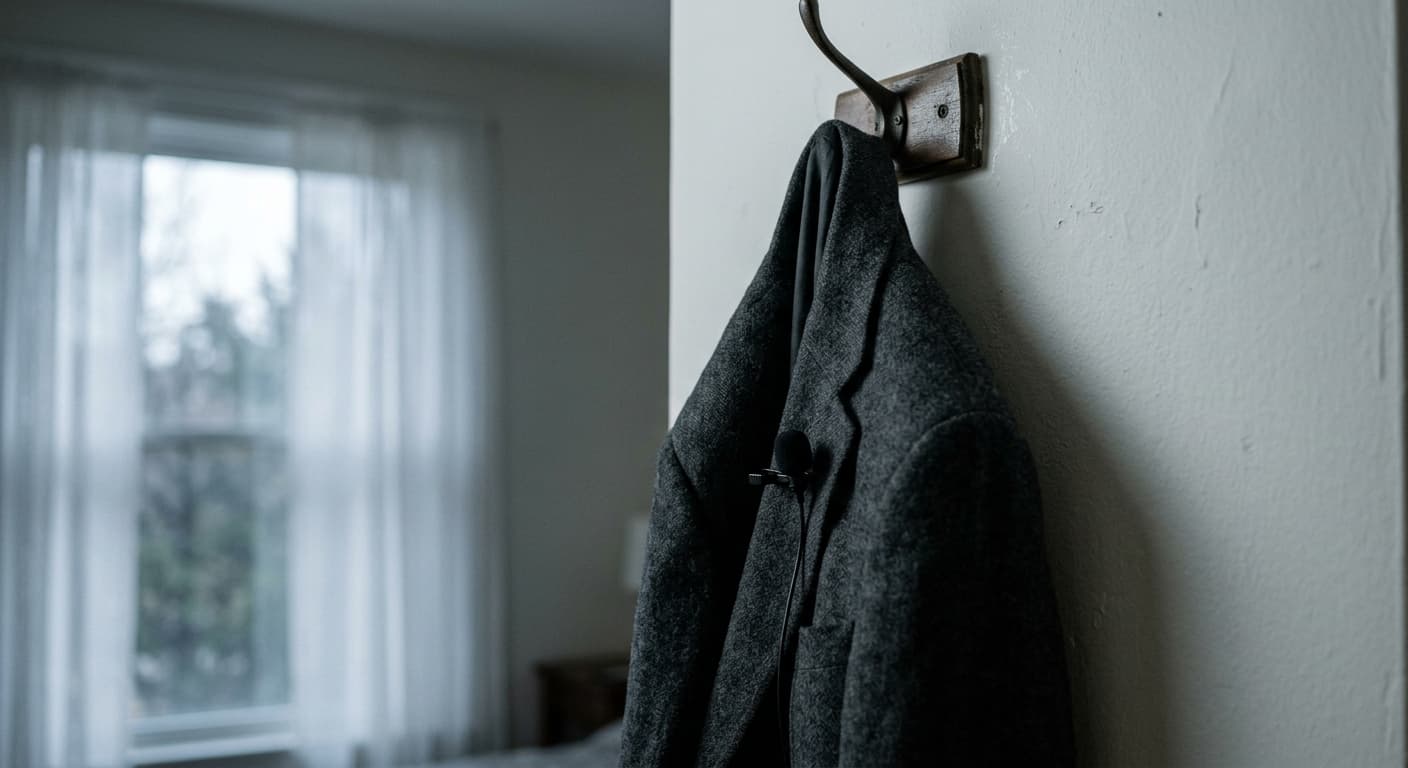
Recording in public is legal in Tennessee. No state law prohibits video or audio recording in places where people lack a reasonable expectation of privacy, and the First Amendment protects your right to record. Under Tenn. Code Ann. section 39-13-601, audio recording in public requires no consent because public conversations carry no such expectation.
Tennessee broadly permits recording in public places. The state has no general statute that prohibits photography, video recording, or audio recording in locations where people do not have a reasonable expectation of privacy. Your right to record in public is grounded in the First Amendment and reinforced by Tennessee's permissive one-party consent wiretapping law.
This guide covers the rules for recording in public throughout Tennessee, including what spaces count as "public," where the limits are, and how specific locations like government buildings, parks, and shopping centers are treated.
The Legal Framework for Public Recording
First Amendment Protections
The First Amendment to the United States Constitution protects the right to gather information in public, including through photography and video recording. Courts have recognized that recording in public serves important functions:
- Documenting government activity and promoting accountability
- Newsgathering and journalism
- Artistic expression and creative work
- Personal record-keeping and evidence preservation
- Monitoring public safety and community events
These protections apply to everyone, not just professional journalists. You do not need press credentials, a media affiliation, or any special license to record in public in Tennessee.
Tennessee's Wiretapping Law and Public Recording
Under Tenn. Code Ann. section 39-13-601, the wiretapping statute only protects "oral communications" where the speaker has a reasonable expectation of privacy. In most public settings, speakers do not have this expectation. A conversation on a busy sidewalk, a speech at a rally, or a loud exchange in a park is not a protected "oral communication" under the statute.
This means that in many public recording situations, you do not even need to rely on the one-party consent exception. The wiretapping law simply does not apply to communications that lack a reasonable expectation of privacy.
When you are part of a conversation in public and recording it, you have double protection: the lack of reasonable privacy expectation and your own one-party consent.
Where You Can Record in Tennessee
Public Streets, Sidewalks, and Parks
You can freely record on:
- City and county streets
- Public sidewalks and walkways
- Public parks, playgrounds, and greenways
- Public plazas and town squares
- Public parking lots owned by government entities
- Public beaches and waterways
- Public transportation stops and stations
These are traditional public forums where First Amendment protections are strongest.
Government Buildings and Offices
Recording in government buildings varies by location and context:
Generally permitted:
- Public lobbies and waiting areas of government offices
- Public meetings governed by the Tennessee Open Meetings Act (Tenn. Code Ann. section 8-44-101 et seq.)
- Exterior areas of government buildings
- Courtroom proceedings, subject to the presiding judge's rules and Tennessee Supreme Court Rule 30
May be restricted:
- Security-sensitive areas within courthouses
- Areas behind counters in government offices
- Secure facilities such as jails, prisons, and juvenile detention centers
- Military installations
- Restricted areas posted with clear signage
Government entities cannot impose blanket bans on recording in areas open to the public. Any restrictions must be content-neutral, narrowly tailored, and serve a legitimate government interest.
Public Events and Gatherings
You can record at any public event in Tennessee, including:
- Concerts in public parks
- Street festivals and parades
- Farmers markets
- Sporting events in public spaces
- Community gatherings and town halls
- Political rallies and campaign events
- Protests and demonstrations
Public Transportation
Recording on public transportation in Tennessee, including city buses, light rail, and publicly operated transit, is generally permitted. Riders in public transportation have a limited expectation of privacy. Some transit agencies may have their own policies about recording, but these policies cannot override your constitutional rights in a public forum.
Where Public Recording Gets Complicated
Semi-Public Spaces: Retail Stores and Restaurants
Private businesses open to the public occupy a gray area. While customers are in a space accessible to the public, the space is still private property. Key principles:
- The property owner can restrict or prohibit recording
- If you are asked to stop recording and refuse, you can be asked to leave
- Remaining after being asked to leave constitutes trespass under Tenn. Code Ann. section 39-14-405
- Recording before being asked to stop is not illegal, but the property owner sets the rules going forward
Private Property Visible From Public
You can record what is visible from a public vantage point, even if it involves private property. If you are standing on a public sidewalk and can see something happening in a yard or through a window, you can generally photograph or film it. However:
- Using zoom lenses or other equipment to see things not visible to the naked eye from a public location may raise privacy concerns
- Persistently surveilling a private residence from public property could constitute stalking or harassment
- Recording through windows into areas where people have a reasonable expectation of privacy crosses legal boundaries
Schools and Childcare Facilities
Recording near schools is legal from public property, but may draw attention from administrators or law enforcement. Recording on school property is governed by the school district's policies. School administrators can restrict recording inside school buildings and on school grounds during school hours for safety and privacy reasons.
Audio Recording in Public

When Consent Is Not Required
Audio recording in public often does not require any party's consent because public conversations lack a reasonable expectation of privacy. Specific scenarios where consent is typically not needed:
- Recording a street performer or public speaker
- Capturing audio at a public protest or demonstration
- Recording conversations at normal volume in crowded public spaces
- Documenting public altercations or incidents
- Recording at public government meetings
When Consent May Be Required
Even in public, some conversations may carry a reasonable expectation of privacy:
- Two people speaking quietly on a bench in a secluded area of a park
- A conversation in a relatively private corner of a restaurant
- Discussions in a semi-enclosed public space like a phone booth or vestibule
The determination depends on the specific circumstances. Courts look at whether a reasonable person in the speaker's position would expect their words to be private.
Recording Protests and Demonstrations
Your Right to Record
Tennessee law protects your right to record protests and public demonstrations. This right extends to:
- Recording the protesters themselves
- Filming law enforcement responses to protests
- Documenting counter-protesters
- Livestreaming events in real time
- Photographing signs, activities, and participants in public
Limitations During Civil Unrest
During declared emergencies or periods of civil unrest, the Governor may impose curfews or other restrictions under Tennessee's emergency management laws. These restrictions apply to your physical presence in an area, not specifically to recording. If you are lawfully present, you can record. If a curfew order requires you to leave, you must comply regardless of your desire to record.
Photography and Commercial Use
Street Photography
Casual street photography is legal in Tennessee. You can photograph people in public places without their consent. However, using someone's likeness for commercial purposes, such as advertising or product endorsement, may require consent under Tennessee's right of publicity law (Tenn. Code Ann. section 47-25-1105).
Tennessee has one of the most protective right of publicity statutes in the country. The original Personal Rights Protection Act was significantly strengthened by the Ensuring Likeness Voice and Image Security (ELVIS) Act (T.C.A. § 47-25-1101 et seq.), Public Chapter 588 of 2024, which became effective July 1, 2024 and made Tennessee the first state in the nation to extend right-of-publicity protections specifically to a person's voice against unauthorized AI imitation. This law protects individuals' rights to control the commercial use of their name, image, and likeness, including AI-generated reproductions.
Journalism and News Reporting
News reporting and journalism are strongly protected under the First Amendment. Journalists in Tennessee can record in public, interview people on the street, and photograph or film any newsworthy event occurring in a public place. Tennessee has a shield law (Tenn. Code Ann. section 24-1-208) that provides journalists with certain protections against being compelled to reveal confidential sources.
Penalties for Illegal Recording in Public Settings
Trespassing
If you refuse to stop recording on private property after being asked and refuse to leave, you face trespass charges:
| Offense | Classification | Penalty |
|---|---|---|
| Criminal trespass | Class C Misdemeanor | Up to 30 days, up to $50 fine |
| Aggravated criminal trespass | Class B Misdemeanor | Up to 6 months, up to $500 fine |
Stalking and Harassment
Using recording as a tool for stalking or harassment carries more serious penalties under Tenn. Code Ann. section 39-17-315:
| Offense | Classification | Penalty |
|---|---|---|
| Stalking | Class A Misdemeanor | Up to 11 months 29 days, up to $2,500 fine |
| Aggravated stalking | Class E Felony | 1 to 6 years imprisonment |
Wiretapping
If audio recording in a public setting crosses into illegal wiretapping territory, penalties under Tenn. Code Ann. section 39-13-602 apply: Class D felony, 2 to 12 years imprisonment, and fines up to $5,000.
Tennessee Recording Laws by Topic
Phone Call Recording | Audio Recording | Video Recording | Workplace Recording | Recording Police | Security Cameras | Recording in Public | Landlord-Tenant | Dashcam Laws | Schools | Medical Recording | Voyeurism & Hidden Cameras
Back to Tennessee Recording Laws
More Tennessee Recording Topics
More Tennessee Laws
Frequently Asked Questions
Is it legal to record in public in Tennessee?
Yes. Tennessee has no law prohibiting video or audio recording in public places. You can film on public streets, sidewalks, parks, and at public events. The First Amendment and Tennessee's one-party consent law both support your right to record in public.
Can I record someone in a store or restaurant in Tennessee?
You can record in a business open to the public, but the property owner can ask you to stop. If you refuse to stop recording and refuse to leave when asked, you could face trespassing charges. The business sets the rules on its own private property.
Do I need permission to record audio in a public place in Tennessee?
Generally no. Tennessee's wiretapping law only protects oral communications where the speaker has a reasonable expectation of privacy. In most public settings, there is no such expectation, so audio recording does not require consent from anyone.
Can I record public government meetings in Tennessee?
Yes. The Tennessee Open Meetings Act requires most government body meetings to be open to the public. You can video and audio record city council meetings, school board meetings, state legislative proceedings, and other public government meetings.
Can someone sue me for recording them in public in Tennessee?
It is unlikely if the recording was made in a public place where the person had no reasonable expectation of privacy. However, if you use someone's likeness for commercial purposes without consent, you may face a claim under Tennessee's Personal Rights Protection Act. Recording that constitutes stalking or harassment can also lead to legal action.
Updates
Fixed a mislinked citation: the inline reference to Tenn. Code Ann. section 39-13-602 (wiretapping penalty) now links to 39-13-602 instead of 39-13-601.
Independently fact-checked against the cited primary sources; governing law re-checked for recent changes
Governing law re-checked for recent changes
Governing law re-checked for recent changes
Reviewed and approved by an editor
The Law Behind This Article
This article rests on the statutory provisions below, held in our own legal record and retrieved from the official source. Tap a section to read the operative text.
Tennessee Code Annotated
§ 39-13-601Wiretapping and electronic surveillance — Prohibited acts — Exceptions.In forcecited in 20 of our articles
(a)(1) Except as otherwise specifically provided in §§ 39-13-601 — [former] 39-13-603 [repealed] and title 40, chapter 6, part 3, a person commits an offense who: (A) Intentionally intercepts, endeavors to intercept, or procures any other person to intercept or endeavor to intercept, any wire, oral
Official text (excerpt) · last checked 2026-08-31 · Read the full text in our law library · Verify at publications.tnsosfiles.com
Cited in 25 court opinions in our collectionLatest citing opinion in our collection: 2026
In the courts (editorial summary, independently checked):Lawrence v. Lawrence held a parent may vicariously consent under Section 39-13-601 to recording a 2 1/2-year-old child's phone call with the other parent. State of Tennessee v. Henry Floyd Sanders noted that a body-wire recording made with one party's consent is lawful under the section's exceptions.
Opinions citing this section in our collection:
- Lawrence v. Lawrence (Court of Appeals of Tennessee 2010, 360 S.W.3d 416)“…called upon to construe the term “consent” as it is used in Tenn. Code Ann. § 39-13-601 to determine whether Mother had an “unr…”
- Harold Dean McDaniel v. Kimberly Ruth McDaniel (Court of Appeals of Tennessee 2010)“…ourt: I have had an opportunity to look at T.C.A. 39-13-601(a)(1), (A) and (B), and…”
- State of Tennessee v. Henry Floyd Sanders (Tennessee Supreme Court 2014, 452 S.W.3d 300)✓Police recorded a front yard conversation in which a man admitted touching his ex-partner's daughter; the court upheld admission of the recording as a voluntary statement to a confidante and noted that this type of recording is sanctioned as lawful by 39-13-601(b)(4)-(5).
Identified automatically from the court opinions citing this section — not a ranking of which case controls.
Also relied on in: Tennessee Recording Laws (2026): One-Party Consent Rules, Tennessee Voyeurism and Hidden Camera Laws: Statutes and Penalties, Tennessee Audio Recording Laws: One-Party Consent Rules and Penalties
§ 24-1-208Persons gathering information for publication or broadcast — Disclosure.In force
(a) A person engaged in gathering information for publication or broadcast connected with or employed by the news media or press, or who is independently engaged in gathering information for publication or broadcast, shall not be required by a court, a grand jury, the general assembly, or any…
Official text (excerpt) · last checked 2021-05-21 · Read the full text in our law library
Cited in 16 court opinions in our collectionLatest citing opinion in our collection: 2025
Opinions citing this section in our collection:
- State v. Kendrick (Court of Criminal Appeals of Tennessee 2005, 178 S.W.3d 734)“…information procured for publication or broadcast. Tenn. Code Ann. § 24-1-208(a). Our supreme court interpreted this…”
- Austin v. Memphis Publishing Co. (Tennessee Supreme Court 1983, 655 S.W.2d 146)“…ews media under Tennessee’s Shield Law, *147 T.C.A. § 24-1-208, 1 is contingent upon a fi…”
- Glenn R. Funk v. Scripps Media, Inc. (Tennessee Supreme Court 2019, 570 S.W.3d 205)“…f the people of the state of Tennessee in the information. Tenn. Code Ann. § 24-1-208(c)(2) (2017). The other of those circum…”
Identified automatically from the court opinions citing this section — not a ranking of which case controls.
§ 39-14-405Criminal trespass.In forcecited in 2 of our articles
(a) A person commits criminal trespass if the person enters or remains on property, or any portion of property, without the consent of the owner. Consent may be inferred in the case of property that is used for commercial activity available to the general public or in the case of other property…
Official text (excerpt) · last checked 2021-05-21 · Read the full text in our law library
Cited in 53 court opinions in our collectionLatest citing opinion in our collection: 2026
Opinions citing this section in our collection:
- State v. Mikie Ash (Court of Criminal Appeals of Tennessee 1999, 12 S.W.3d 800)“…(d) Criminal trespass is a Class C misdemeanor. Tenn. Code Ann. § 39-14-405. The trial court acknowledged that the…”
- State v. Hollingsworth (Court of Criminal Appeals of Tennessee 1996, 944 S.W.2d 625)“…the owner’s effective consent before entering the property. Tenn.Code Ann. § 39-14-405(a). The term “enter,” as used in the st…”
- State of Tennessee v. Sergei A. Novikov (Court of Criminal Appeals of Tennessee 2016)“…any portion of property, without the consent of the owner.” T.C.A. § 39-14-405(a). “It is a defense to prosecution” of…”
Identified automatically from the court opinions citing this section — not a ranking of which case controls.
Also relied on in: Tennessee Video Recording Laws: What Is Legal and What Is Not
§ 39-17-315Stalking, aggravated stalking, and especially aggravated stalking.In forcecited in 2 of our articles
(a) As used in this section, unless the context otherwise requires: (1) “Course of conduct” means a pattern of conduct composed of a series of two (2) or more separate, noncontinuous acts evidencing a continuity of purpose, including, but not limited to, acts in which the defendant directly,…
Official text (excerpt) · last checked 2021-05-21 · Read the full text in our law library
Cited in 54 court opinions in our collectionLatest citing opinion in our collection: 2026
Opinions citing this section in our collection:
- Shayla Nicole Purifoy v. Devine Mafa (Court of Appeals of Tennessee 2017, 556 S.W.3d 170)“…rightened, intimidated, threatened, harassed, or molested.” Tenn. Code Ann. § 39-17-315(a)(4).16 At the time of the acts and pr…”
- State of Tennessee v. Christopher Michael Vigil (Court of Criminal Appeals of Tennessee 2001, 65 S.W.3d 26)“…fear of being assaulted, suffering bodily injury or death.” Tenn. Code Ann. § 39-17-315(a)(1). Further, (A) “Follows” m…”
- State of Tennessee v. Bradley J. Cooper (Court of Criminal Appeals of Tennessee 2026)“…v. Vigil, 65 S.W.3d 26, 35 (Tenn. Crim. App. 2001) (citing T.C.A. § 39-17-315(a)(2)(C)) (emphasis in original). Becau…”
Identified automatically from the court opinions citing this section — not a ranking of which case controls.
Also relied on in: Tennessee Surveillance Camera Laws (2026 Guide)
Tennessee Code Annotated, Title 47, Chapter 25, Part 11: Protection of Personal Rights (Ensuring Likeness, Voice, and Image Security Act of 2024)
§ 47-25-1101Short titleIn forcecited in 50 of our articles
This part shall be known and may be cited as the “Ensuring Likeness, Voice, and Image Security Act of 2024.” History Acts 1984, ch. 945, § 1; 2024, ch. 588, § 1.
Official text (excerpt) · last checked 2021-05-21 · Read the full text in our law library
Cited in 5 court opinions in our collectionLatest citing opinion in our collection: 2011
In the courts (editorial summary, independently checked):Courts cite 47-25-1101 et seq. as the Personal Rights Protection Act of 1984. Gibbons v. Schwartz-Nobel (1996) applied a one-year limitations period because the Act supplies none, and STATE EX REL. ELVIS PRESLEY INTL. MEMORIAL FOUNDATION v. Crowell (1987) said nothing in the Act limits publicity rights vested before its effective date.
Opinions citing this section in our collection:
- Gracey v. Maddin (Court of Appeals of Tennessee 1989, 769 S.W.2d 497)✓A widow sued her late husband's law firm under the Personal Rights Protection Act to stop its use of his surname; the Court of Appeals affirmed an injunction on partnership and name-assignment grounds, and the majority opinion never applied the Act's own provisions.
- STATE EX REL. ELVIS PRESLEY INTL. MEMORIAL FOUNDATION v. Crowell (Court of Appeals of Tennessee 1987, 733 S.W.2d 89)✓Two nonprofits fought over using Elvis Presley's name in their corporate names; the court rested his descendible right of publicity on Tennessee common law rather than the Personal Rights Protection Act, and said nothing in the Act limits rights vested before its effective date.
- State ex rel. Elvis Presley International Memorial Foundation v. Crowell (Court of Appeals of Tennessee 1987, 733 S.W.2d 89)“…General Assembly undertook to do so in 1984 when it enacted Tenn.Code Ann. § 47-25-1101 et seq. which is known as “The Person…”
Identified automatically from the court opinions citing this section — not a ranking of which case controls.
Also relied on in: Tennessee Workplace Recording Laws: Employee and Employer Rights, Deepfake & AI Voice Cloning Laws by State (2026), Alaska Deepfake Laws: AI Images, Voice Cloning & Penalties (2026)
§ 47-25-1105Unauthorized use prohibitedIn forcecited in 5 of our articles
(a) (1) Any person who knowingly uses or infringes upon the use of an individual's name, photograph, voice, or likeness in any medium, in any manner directed to any person other than such individual, for purposes of advertising products, merchandise, goods, or services, or for purposes of fundraising, solicitation of donations, purchases of products, merchandise, goods, or services, without such individual's prior consent, or, in the case of a minor, the prior consent of such minor's parent or legal guardian, or in the case of a deceased individual, the consent of the executor or administrator, heirs, or devisees of such deceased individual, is liable to a civil action. (2) A person is liable to a civil action if the person publishes, performs, distributes, transmits, or otherwise make
Official text (excerpt) · last checked 2026-09-03 · Read the full text in our law library · Verify at publications.tnsosfiles.com
Cited in 10 court opinions in our collectionLatest citing opinion in our collection: 2019
In the courts (editorial summary, independently checked):Apple Corps Ltd. v. A.D.P.R., Inc. (1993) held that a Beatles tribute act's use of the members' names in advertising violated section 47-25-1105(a), while use of the names in the performance itself did not. Gibbons v. Schwartz-Nobel (1996) applied Tennessee's one-year limitations period to claims under the Act.
Opinions citing this section in our collection:
- Gracey v. Maddin (Court of Appeals of Tennessee 1989, 769 S.W.2d 497)“…y must prove that the defendants' conduct is proscribed by Tenn. Code Ann. § 47-25-1105 (a). This section provides that Any p…”
- Crystal BLACKWELL, as Next Friend to Jacob Blackwell, a Minor v. SKY HIGH SPORTS NASHVILLE OPERATIONS, LLC (Court of Appeals of Tennessee 2017, 523 S.W.3d 624)“…iving a parent authority to consent to a minor’s marriage); Tenn. Code Ann. § 47-25-1105 (giving parents the authority to solici…”
- Wells v. Chattanooga Bakery, Inc. (Court of Appeals of Tennessee 2014, 448 S.W.3d 381)✓Wells, photographed as a boy in the 1970s, sued when the image was used decades later to market MoonPie and RC Cola. Finding nothing in the photo identified him, the court held his 47-25-1105 right-of-publicity claim was preempted by the Copyright Act and affirmed dismissal.
Identified automatically from the court opinions citing this section — not a ranking of which case controls.
Also relied on in: Tennessee Data Privacy Laws: TIPA Consumer Rights Guide (2026), Tennessee Deepfake Laws: AI Images, Voice Cloning & Penalties (2026), AI Voice Cloning Laws: The ELVIS Act and the States That Followed (2026)
United States Code Title 18
§ 2511Interception and disclosure of wire, oral, or electronic communications prohibitedIn forcecited in 422 of our articles
Except as otherwise specifically provided in this chapter any person who— intentionally intercepts, endeavors to intercept, or procures any other person to intercept or endeavor to intercept, any wire, oral, or electronic communication; intentionally uses, endeavors to use, or procures any other person to use or endeavor to use any electronic, mechanical, or other device to intercept any oral communication when— such device is affixed to, or otherwise transmits a signal through, a wire, cable, or other like connection used in wire communication; or such device transmits communications by radio, or interferes with the transmission of such communication; or such person knows, or has reason to know, that such device or any component thereof has been sent through the mail or transported in interstate or foreign commerce; or such use or endeavor to use (A) takes place on the premises of any business or other commercial establishment the operations of which affect interstate or foreign commerce; or (B) obtains or is for the purpose of obtaining information relating to the operations of any business or other commercial establishment the operations of which affect interstate or foreign…
Official text (excerpt) · last checked 2026-09-17 · Read the full text in our law library · Verify at uscode.house.gov
Cited in 2,045 court opinions in our collectionLatest citing opinion in our collection: 2026
In the courts (editorial summary, independently checked):Griggs-Ryan v. Smith (1990) applied the Section 2511(2)(d) prior-consent exception, treating a tenant repeatedly told that all incoming calls were taped as having impliedly consented. United States v. United States District Court (1972) read the then-current Section 2511(3) as conferring no presidential surveillance power.
Opinions citing this section in our collection:
- Mitchell v. Forsyth (Supreme Court of the United States 1985, 472 U.S. 511)✓The Attorney General authorized a warrantless 1970 national security wiretap that caught the plaintiff's calls; the Court held the since-repealed Section 2511(3) disclaimer left the tap lawful under Title III, and that Mitchell had qualified immunity.
- United States v. United States District Court for the Eastern District of Michigan (Supreme Court of the United States 1972, 407 U.S. 297)✓The Attorney General approved warrantless wiretaps on members of a domestic group accused of bombing a CIA office; the Court read Section 2511(3) as a congressional disclaimer conferring no surveillance power, then held the Fourth Amendment required prior judicial approval.
- Forsyth v. Barr (Court of Appeals for the Fifth Circuit 1994, 19 F.3d 1527)✓Dallas police used, in an internal affairs probe of an officer, calls private parties allegedly intercepted illegally; assuming that was unlawful, the Fifth Circuit held Section 2517(1) and (2) allowed the disclosure and use, defeating the Section 2511(1)(c) and (d) claims.
Identified automatically from the court opinions citing this section — not a ranking of which case controls.
Also relied on in: Connecticut Recording Laws (2026): Hybrid Consent Rules Explained, Oregon Recording Laws (2026): Hybrid One-Party and All-Party Rules, US Recording Laws by State (2026): All 50 States Explained
Search our full record of US law — 2.1 million sections, every state + federal →
Sources and References
- Tenn. Code Ann. section 39-13-601 - Wiretapping and Electronic Surveillance(law.justia.com)
- Tennessee Open Meetings Act - Comptroller of the Treasury(comptroller.tn.gov).gov
- Tennessee Supreme Court Rule 30 - Media Coverage(tncourts.gov).gov
- Tenn. Code Ann. section 47-25-1105 - Personal Rights Protection Act(law.justia.com)
- Tennessee Office of Open Records Counsel(comptroller.tn.gov).gov
- ELVIS Act - T.C.A. section 47-25-1101 et seq. - Tennessee Governor signing announcement(tn.gov).gov
- Tenn. Code Ann. section 24-1-208 - Journalist Shield Law(law.justia.com)
- Tenn. Code Ann. section 39-14-405 - Criminal Trespass(law.justia.com)
- Tenn. Code Ann. section 39-17-315 - Stalking(law.justia.com)
- Federal Wiretap Act - 18 U.S.C. section 2511(law.cornell.edu)