Ohio HB 492 Makes It a Crime for Drivers and Passengers to Refuse to Identify Themselves at Traffic Stops
Independently fact-checked against primary sources (last audited July 21, 2026). · 5 primary sources cited on this page. How we verify our legal content
Ohio HB 492 Makes It a Crime for Drivers and Passengers to Refuse to Identify Themselves at Traffic Stops
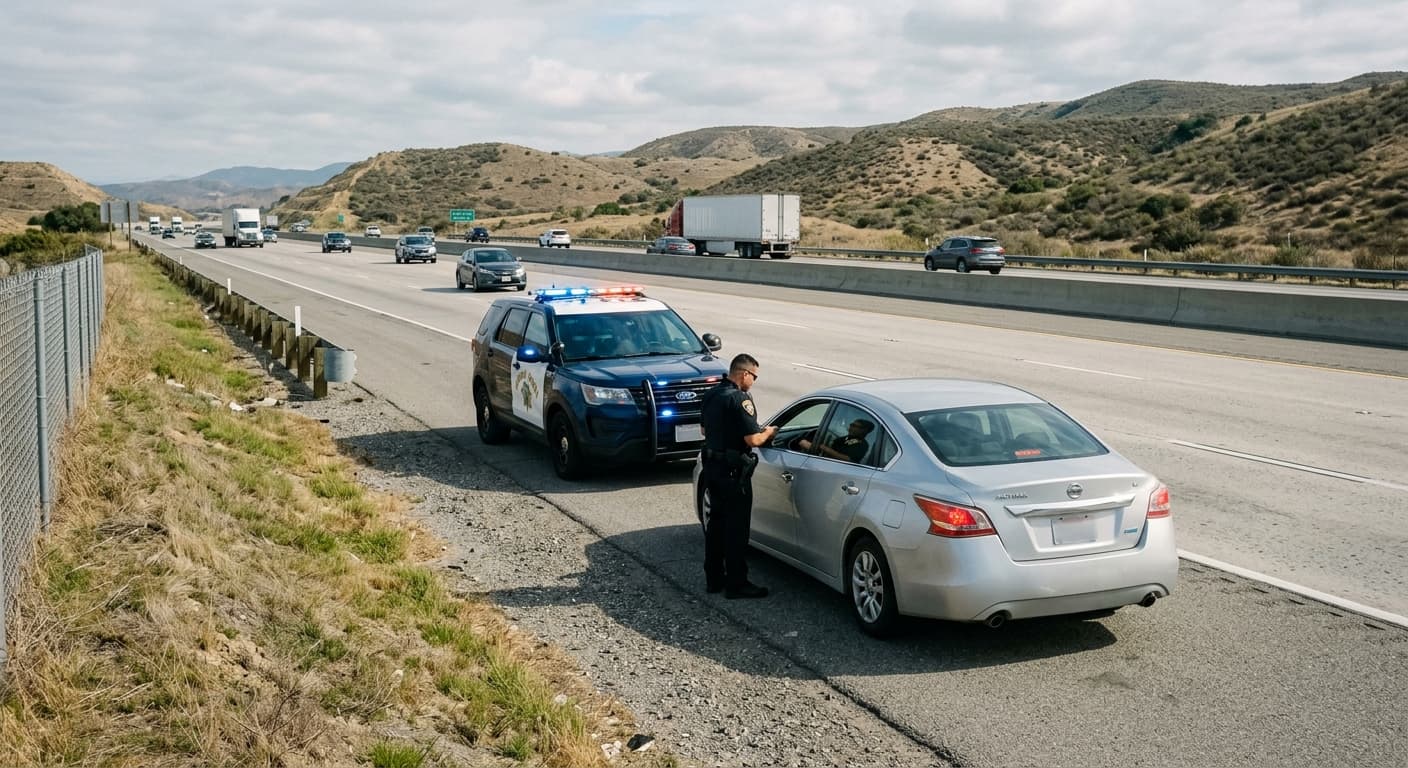
Ohio Gov. Mike DeWine signed House Bill 492 on July 7, 2026, creating a new misdemeanor for drivers and passengers who refuse to give their name, address, or date of birth when an officer reasonably suspects a motor-vehicle-law violation. The law takes effect October 5, 2026.
Information last verified on July 21, 2026. This article is based on the enrolled text of Ohio House Bill 492 (136th General Assembly), the Ohio House of Representatives' July 7, 2026 signing announcements, and the Governor's Office media release, corroborated against Police1 and Cleveland 19 (WOIO) reporting.
Jurisdiction scope: This article covers Ohio state law only. House Bill 492 is not yet in force as of this article's July 21, 2026 verification date; it becomes enforceable October 5, 2026, 90 days after Gov. DeWine's July 7, 2026 signature. It has no effect in any other state.
What Happened
Ohio Gov. Mike DeWine signed House Bill 492 into law on July 7, 2026, according to the Ohio House of Representatives and the Governor's Office. The bill, sponsored by Reps. Sharon Ray (R-Wadsworth) and Cindy Abrams (R-Harrison), passed the Ohio House 59-21 in November 2025 and the Ohio Senate 24-9 in June 2026. It amends Ohio Revised Code 4513.36, part of the motor vehicle title, to add a disclosure duty for both drivers and passengers during traffic stops and to raise the penalty for interfering with an officer under the motor vehicle code. The law takes effect 90 days after the governor's signature, placing its effective date at October 5, 2026.
Rep. Ray said in the Ohio House of Representatives news release announcing the signing that House Bill 492 "will make sure basic cooperation during traffic stops is the norm, not the exception." Rep. Abrams said the bill "provides our law enforcement with an extra tool in the toolbox as they work to keep our communities safe."
What the Law Actually Says
HB 492 makes two changes inside R.C. 4513.36, Ohio's motor vehicle interference statute.
First, the bill adds a disclosure duty. When a peace officer reasonably suspects that a person has committed a violation of Ohio's motor vehicle laws, both the driver and any passenger in the vehicle must give the officer their name, address, and date of birth on request. A person is not required to answer any other questions, and an officer cannot demand information that would reveal a person's age unless age is relevant to the suspected offense. Refusing to provide the required name, address, or date of birth becomes a fourth-degree misdemeanor, carrying up to 30 days in jail and a fine of up to $250.
Second, HB 492 broadens and raises the penalty for interference with an officer under the motor vehicle code. Interference tied to a motor-vehicle-law violation moves from a minor misdemeanor, a fine-only offense with no jail exposure, to a second-degree misdemeanor, punishable by up to 90 days in jail and a fine of up to $750.
The new duty sits alongside, but is legally distinct from, Ohio's existing general failure-to-disclose statute, R.C. 2921.29, which already made it a fourth-degree misdemeanor to refuse to give a name, address, or date of birth when an officer reasonably suspects a criminal offense. A routine traffic violation is not classified as a criminal offense under Ohio law, so R.C. 2921.29 did not clearly reach a stop based only on suspicion of a motor vehicle violation, as distinct from a separate crime such as OVI. HB 492 closes that gap by writing the same category of disclosure duty directly into the motor vehicle code.
The provision drawing the most questions is the passenger expansion. A driver was already required to produce a license on request under separate Ohio traffic law, but a passenger not personally suspected of a crime had no comparable statutory duty to identify themselves during a stop. HB 492 extends the same disclosure duty to a passenger once an officer reasonably suspects a motor-vehicle-law violation, regardless of which occupant is suspected of committing it.
The disclosure duty and the interference provision are separate from, and do not change, Ohio's rules on when a bystander or vehicle occupant may record a traffic stop; readers researching that separate question can see how Ohio treats recording of police and the state's broader one-party consent recording law.
Analysis: Why This Matters
The following is analysis from the Recording Law Editorial Team.
HB 492 reads as a narrow statutory fix rather than a broad new identification regime. Ohio already punished refusal to identify oneself when an officer suspected a crime under R.C. 2921.29, but the motor vehicle code and that general statute did not line up cleanly for a stop based only on a suspected traffic violation. Legislators and law enforcement groups framed that gap as an officer-safety issue: an officer who cannot confirm who they are dealing with cannot check for outstanding warrants or a relevant history before extending a stop.
The passenger provision is the part most likely to draw questions once the law takes effect, because it moves the disclosure duty beyond the person actually suspected of the violation. The statute's own text limits that expansion: a passenger's duty is triggered by reasonable suspicion of a motor-vehicle-law violation, and the required disclosure stops at name, address, and date of birth. It is also worth being precise about what HB 492 is not: it is a state statute passed by the Ohio General Assembly and signed by the governor, not a court ruling interpreting the Fourth Amendment or the Ohio Constitution. How the disclosure duty interacts with existing search-and-seizure law in specific encounters is a question courts will resolve as the law is applied after October 5, 2026, and this article does not predict how that will go.
How This Affects You
Once HB 492 takes effect on October 5, 2026, an Ohio driver or passenger asked for their name, address, and date of birth in connection with a suspected motor vehicle law violation is subject to a fourth-degree misdemeanor charge if they refuse. A separate, more serious second-degree misdemeanor charge applies to conduct that meets the broadened definition of interference with an officer under the motor vehicle code. The new duty is limited to those three categories of information; on its text, it does not require answering substantive questions about where a person is going or what they are doing.
Readers with questions about a specific stop, charge, or encounter should consult a licensed Ohio attorney, since how the law applies can depend on the specific facts involved. For related Ohio traffic-law context, see how the state handles hit-and-run charges and police body camera footage from traffic stops, or how Ohio's public recording rules apply to bystanders at the scene.
This article summarizes Ohio House Bill 492 for general informational purposes and is not legal advice. Laws change, and how a statute applies can depend on specific facts. Consult a licensed Ohio attorney about your situation. Verified against primary Ohio state sources as of July 21, 2026.
Last updated: 2026-07-21. This article will be reviewed again as Ohio HB 492 approaches its October 5, 2026 effective date.
Frequently Asked Questions
What does Ohio House Bill 492 require?
Starting October 5, 2026, HB 492 requires a driver and any passenger in a vehicle to give their name, address, and date of birth to a peace officer who reasonably suspects a violation of Ohio's motor vehicle laws. Refusing is a fourth-degree misdemeanor.
When does HB 492 take effect?
HB 492 takes effect October 5, 2026, which is 90 days after Gov. Mike DeWine signed it on July 7, 2026. It was not yet in force as of this article's verification date.
Does HB 492 apply to passengers, not just the driver?
Yes. HB 492 applies to both the driver and any passenger in the vehicle, and either can be charged with a fourth-degree misdemeanor for refusing to give their name, address, or date of birth when an officer reasonably suspects a motor-vehicle-law violation.
What is the penalty for refusing to identify yourself under HB 492?
Refusing to disclose your name, address, or date of birth during a covered stop is a fourth-degree misdemeanor, carrying up to 30 days in jail and a fine of up to $250.
What changed for interference with an officer under HB 492?
HB 492 raises interference with an officer under Ohio's motor vehicle code from a minor misdemeanor, which carries no jail time, to a second-degree misdemeanor, punishable by up to 90 days in jail and a fine of up to $750.
How is HB 492 different from Ohio's existing failure-to-disclose law?
R.C. 2921.29 already required disclosure of name, address, and date of birth when an officer reasonably suspected a criminal offense, but traffic violations are not criminal offenses under Ohio law. HB 492 adds the same disclosure duty directly into the motor vehicle code so it applies to a suspected traffic violation.
Who sponsored HB 492 and how did it pass?
HB 492 was sponsored by Reps. Sharon Ray (R-Wadsworth) and Cindy Abrams (R-Harrison). It passed the Ohio House 59-21 and the Ohio Senate 24-9 before Gov. Mike DeWine signed it into law on July 7, 2026.
Updates
Independently fact-checked against the cited primary sources
The Law Behind This Article
This article rests on the statutory provisions below, held in our own legal record and retrieved from the official source. Tap a section to read the operative text.
Ohio Revised Code
§ 2921.29Failure to disclose personal informationIn force
(A) No person who is in a public place shall refuse to disclose the person's name, address, or date of birth, when requested by a law enforcement officer who reasonably suspects either of the following: (1) The person is committing, has committed, or is about to commit a criminal offense.
Official text (excerpt) · last checked 2026-07-31 · Read the full text in our law library · Verify at codes.ohio.gov
Cited in 67 court opinionsMost recently applied by a court: 2026
Leading cases:
- State v. Davis (Ohio Court of Appeals 2017, 94 N.E.3d 194)“…C. 2921.13), and failure to disclose personal information (R.C. 2921.29). Davis addresses the issue of probable…”
- State v. Mitchem (Ohio Court of Appeals 2014, 2014 Ohio 2366)“…ure to disclose one’s personal information in violation of R.C. 2921.29. R.C. 2921.29(A)(1) provides, in relev…”
- State v. Deacey (Ohio Court of Appeals 2017, 2017 Ohio 8102)“…date of birth, which he was not required to disclose under R.C. 2921.29. Deacey, therefore, contends that…”
Identified automatically from the court opinions citing this section — not a ranking of which case controls.
Search our full record of US law — 2.1 million sections, every state + federal →
Sources and References
- Ohio Governor Signs House Bill 492 into Law (House Republican Caucus news release, July 7, 2026)(ohiohouse.gov).gov
- Ohio Governor Signs House Bill 492 into Law (House Democratic Caucus news release, July 7, 2026)(ohiohouse.gov).gov
- House Bill 492, 136th General Assembly, bill text and status(legislature.ohio.gov).gov
- Governor DeWine Signs Bills Into Law, July 7, 2026(governor.ohio.gov).gov
- Ohio Revised Code Section 2921.29, Failure to disclose personal information(codes.ohio.gov).gov
- New Ohio law requires drivers, passengers to identify themselves during traffic stops or face charges(police1.com)
- Gov. DeWine signs law requiring anyone pulled over to disclose name, address, date of birth(cleveland19.com)