
Ohio
Ohio Recording Laws (2026): One-Party Consent Rules
Independently fact-checked against primary sources (last audited August 15, 2026). · Reviewed by the RecordingLaw editorial team. · Law checked current as of August 15, 2026. · 24 primary sources cited on this page. How we verify our legal content
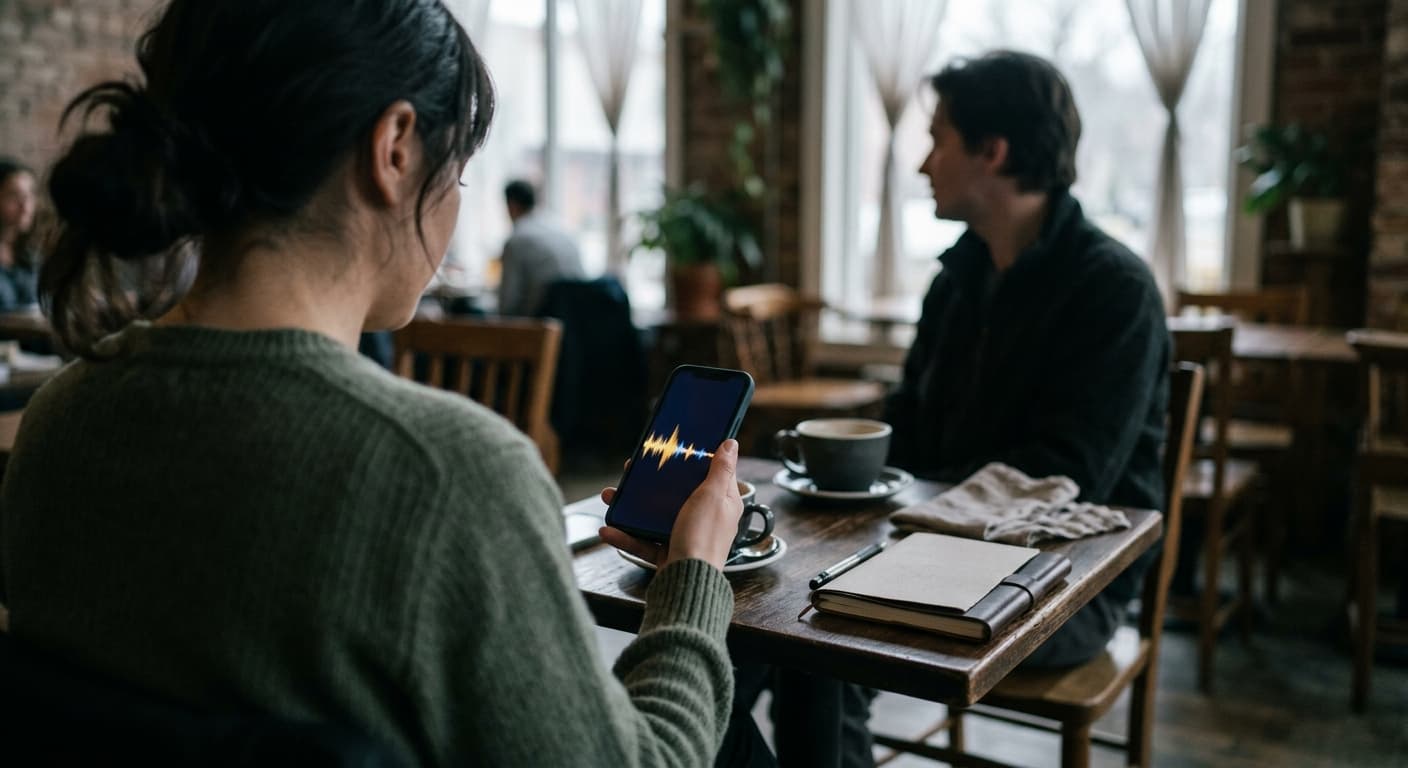
Ohio is a one-party consent state under Ohio Rev. Code 2933.52(B)(4). Any participant in a phone call or in-person conversation may record it without telling the other parties. Recording without any party's consent is a fourth-degree felony carrying up to 18 months in prison, and the victim can sue for civil damages plus attorney fees.
Ohio recording law at a glance
| Question | Answer |
|---|---|
| Consent rule | One-party consent |
| Main statute | Ohio Rev. Code 2933.52(B)(4) |
| When recording is illegal | No party to the conversation has consented, or the recording is for a criminal, tortious, or injurious purpose |
| Criminal penalty | Fourth-degree felony: 6 to 18 months prison, up to $5,000 fine |
| Civil remedy | Whichever is greater: liquidated damages ($200/day or $10,000) OR actual damages + profits, plus equitable relief, punitive damages if appropriate, and attorney fees (ORC 2933.65(A)) |
| Hidden cameras | Lawful in areas you control; voyeurism statute (ORC 2907.08) bars surreptitious recording in a place of reasonable privacy expectation when it is done for the purpose of viewing private areas or for sexual gratification |
| Recording police | Generally protected First Amendment activity in public; Sixth Circuit has no published binding decision on the right |
For a full breakdown of each topic, jump to the Ohio recording laws in depth section below.
Recording in-person conversations in Ohio
Ohio's one-party rule means that any participant in a conversation can record it. The controlling provision is Ohio Rev. Code 2933.52(B)(4), which exempts a non-law-enforcement person from the wiretap prohibition if the person is a party to the communication, or if one party has given prior consent, and the recording is not made for a criminal, tortious, or injurious purpose.
The threshold question is whether the conversation was a protected "oral communication" at all. Under Ohio Rev. Code 2933.51, an "oral communication" is one uttered by a person who had a reasonable expectation that it would not be intercepted. If the speaker had no reasonable expectation of privacy, the wiretap statute may not apply at all. A loud argument in a public park, for example, may fall outside ORC 2933.52 entirely. A closed-door meeting in a private office generally falls within it.
The injurious-purpose carve-out is Ohio's most distinctive feature. Congress deleted "or for the purpose of committing any other injurious act" from the federal one-party exception in 1986. Ohio kept it. As the Sixth Circuit analyzed in Boddie v. American Broadcasting Cos., 881 F.2d 267 (6th Cir. 1989), the question is case-specific: recording to document a transaction or preserve a workplace dispute is not injurious; recording to extort, defame, or facilitate stalking can be.
Recording phone calls in Ohio
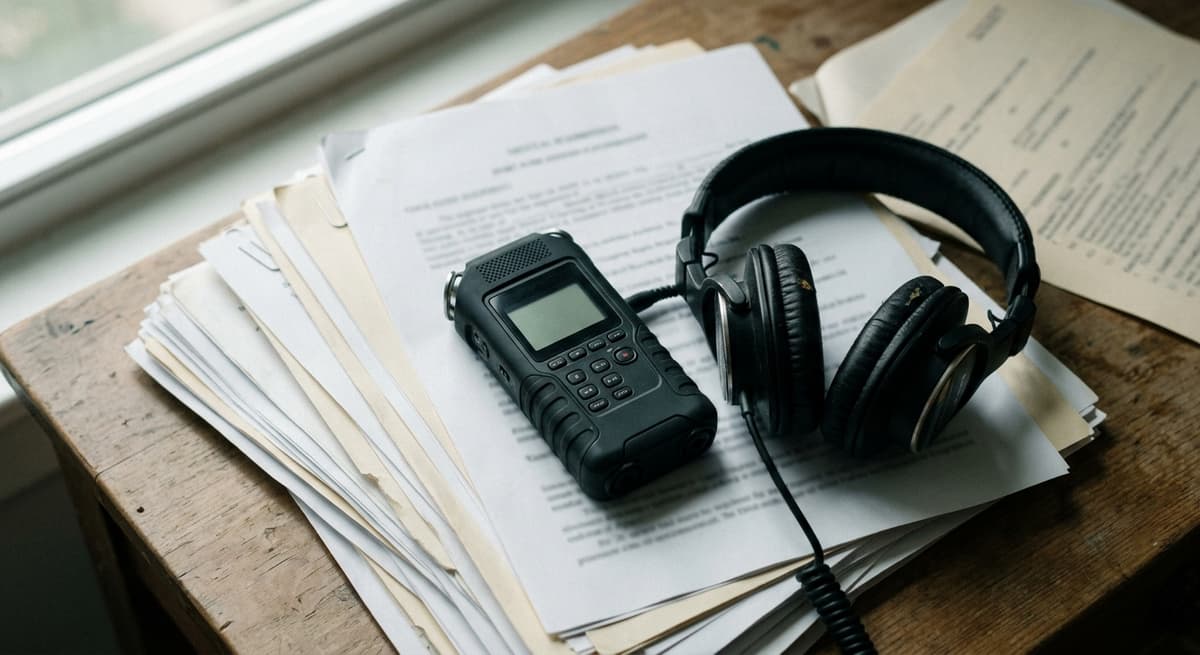
The same one-party rule applies to landline, cell, VoIP, and SIP-trunked calls. A party to the call may record without notifying the other side. No beep tone or recorded announcement is required of individual callers. The former FCC carrier-disclosure rule at 47 CFR Part 64, Subpart E was removed effective November 20, 2017; ECPA and state law now govern.
Interstate calls introduce a choice-of-law question. California, Florida, Pennsylvania, Massachusetts, Washington, and several other states require all-party consent. The conservative approach when calling someone in those states is to get explicit consent before recording, because some courts apply the stricter state's rule regardless of where the recorder sits. See Ohio Phone Call Recording Laws for a full state-by-state cross-reference.
Hidden cameras, doorbells, and nanny cams
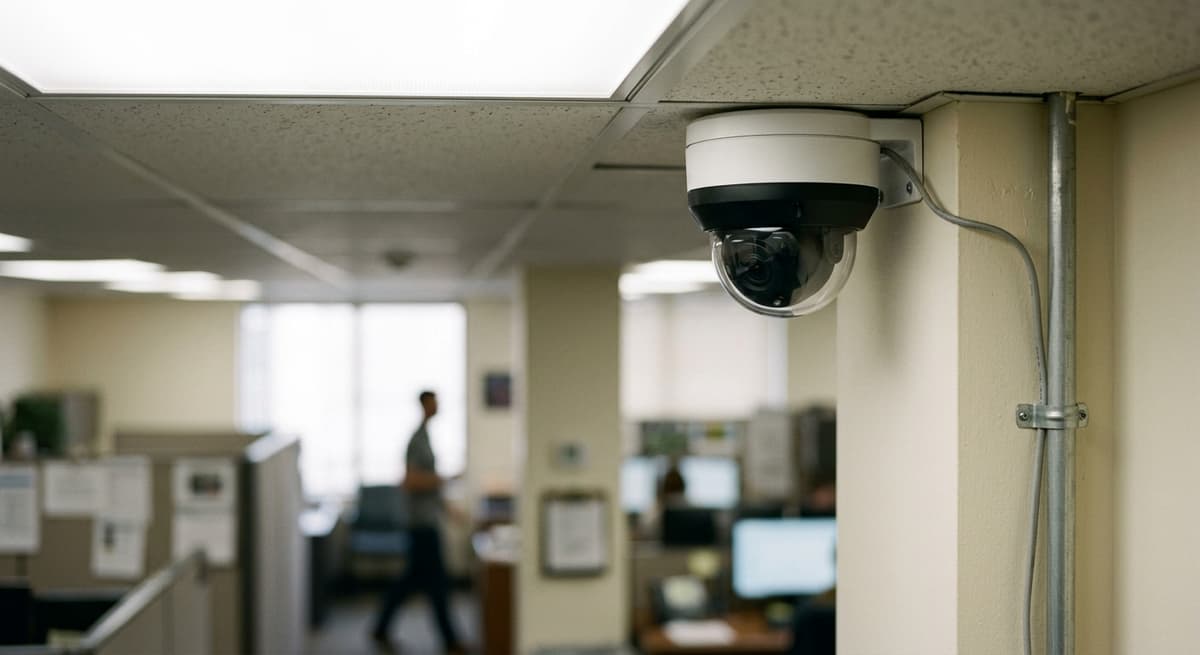
Pure video recording (no audio) is not "interception" of a "communication" under ORC 2933.52, but Ohio Rev. Code 2907.08 fills the gap. The voyeurism statute is narrower than it first appears, because every division carries a purpose element. Division (A) reaches trespass or surreptitious invasion of another person's privacy to spy or eavesdrop, but only when done "for the purpose of sexually arousing or gratifying the person's self." Division (B) reaches secretly or surreptitiously recording another person in a place where a person has a reasonable expectation of privacy only "for the purpose of viewing the private areas of that person," and division (D) covers upskirt-type recordings above, under, or through clothing. Division (C) applies that same private-areas purpose element to a minor victim; that offense is a fifth-degree felony with mandatory Tier I sex-offender registration.
Home security cameras pointed at your own driveway or yard are generally lawful. A nanny cam in a shared living area is lawful for video; the audio component is governed by ORC 2933.52, so it is best practice to disclose recording in any employment agreement. A camera in a restroom, locker room, or other place where people reasonably expect privacy is voyeurism under ORC 2907.08 when it is placed there for the purpose of viewing private areas or for sexual gratification. A hidden camera installed in such a space without that purpose falls outside 2907.08, but it can still trigger tort liability for intrusion upon seclusion, and any audio it captures remains governed by ORC 2933.52.
Doorbell cameras (Ring, Nest, Arlo) are lawful in Ohio. The audio they capture follows ORC 2933.52. The 2023 FTC v. Ring LLC settlement limits manufacturer access to customer videos, which is relevant for anyone using smart-doorbell services.
See Ohio Voyeurism and Hidden Camera Laws and Ohio Security Camera Laws for deeper coverage.

Penalties for illegal recording in Ohio
Violating ORC 2933.52(A) is a fourth-degree felony. The sentencing ranges come from Ohio Rev. Code 2929.14(A)(4) and Ohio Rev. Code 2929.18(A)(3)(d).
| Offense | Statute | Class | Prison | Fine |
|---|---|---|---|---|
| Unlawful interception, use, or disclosure | ORC 2933.52 | F4 | 6 to 18 months | Up to $5,000 |
| Voyeurism (spying or eavesdropping for sexual arousal or gratification) | ORC 2907.08(A) | M3 | Up to 60 days | Up to $500 |
| Voyeurism (recording for the purpose of viewing private areas) | ORC 2907.08(B) | M2 | Up to 90 days | Up to $750 |
| Voyeurism - minor victim | ORC 2907.08(C) | F5 + Tier I SO | 6 to 12 months | Up to $2,500 |
| Voyeurism - upskirt/under-clothing | ORC 2907.08(D) | M1 | Up to 180 days | Up to $1,000 |
| Nonconsensual intimate images, first offense (eff. Sept. 30, 2025) | ORC 2917.211 | F5 | 6 to 12 months | Up to $2,500 |
| Nonconsensual intimate images, subsequent offense | ORC 2917.211 | F4 | 6 to 18 months | Up to $5,000 |
There is a statutory presumption against prison for non-violent F4 offenses under ORC 2929.13(B), but the court may impose prison for prior felony records or other enumerated factors. A first-time, non-violent ORC 2933.52 conviction more often results in community-control sanctions than prison, but the felony record carries lasting consequences in employment, licensing, and immigration.
Civil remedies. Ohio Rev. Code 2933.65 provides a private cause of action. Division (A) authorizes any relief that is appropriate, including preliminary, equitable, or declaratory relief under (A)(1); under (A)(2), whichever is greater of liquidated damages computed at the greater of $200 per day of violation or $10,000, or the sum of actual damages suffered plus any profits the violator made from the violation; punitive damages if appropriate under (A)(3); and reasonable attorney fees and litigation expenses under (A)(4). Under division (C), the civil action must be filed within two years from the date the plaintiff first had a reasonable opportunity to discover the violation. The complete defense is in division (B) of the same section: good-faith reliance on an interception warrant or an extension of one, another court order, a grant of an oral order for an interception, a grand jury subpoena, or a legislative or statutory authorization, or a good-faith determination that divisions (A) and (B) of ORC 2933.521 permitted the conduct.
For nonconsensual intimate-image cases, a parallel civil claim is available under Ohio Rev. Code 2307.66, which provides injunctive relief, compensatory damages, punitive damages, and attorney fees.

Recording the police in Ohio
The First Amendment protects the right to record law enforcement performing public duties in public spaces. Seven federal circuits have issued published, binding decisions recognizing that right: the First, Third, Fifth, Seventh, Ninth, Tenth, and Eleventh Circuits. Ohio sits in the Sixth Circuit, which has not issued a comparable published decision. The most-cited Sixth Circuit case in this area, Crawford v. Geiger, 656 F. App'x 190 (6th Cir. 2016), is unpublished and persuasive only under Sixth Circuit Rule 32.1. That gap means qualified-immunity arguments for officers who seize phones or arrest recorders are somewhat stronger in Ohio than in circuits with binding authority.
As a practical matter, filming officers in a public space from a non-interfering distance is generally protected. Ohio's one-party rule independently permits the audio component because you are a participant in the encounter or the setting is public. An officer may lawfully order you to step back to a safe distance; refusing that order is a separate issue from the recording itself.
Body-worn-camera footage collected by Ohio officers is a public record under ORC 149.43 and ORC 149.435, subject to exceptions for children, victims of sexual offenses, deceased persons, and similar protected categories. Production costs are capped at $75 per hour and $750 total.
See Ohio Laws on Recording Police for a full analysis of qualified immunity, practical tips, and public-records requests.
Special topics in Ohio
Workplace recording and NLRB rules
Ohio's one-party rule permits an employee to record a disciplinary meeting or HR conversation without notifying supervisors or coworkers. An employer who is a party to a conversation has the same right. Three federal overlays qualify that baseline. The NLRB held in Stericycle, Inc., 372 NLRB No. 113 (Aug. 2, 2023) that blanket no-recording rules are presumptively unlawful unless narrowly tailored to a substantial business interest. NLRB GC Memorandum 25-05 (Feb. 2025) has tempered Stericycle enforcement but has not overruled it. NLRB GC Memorandum 25-07 (June 25, 2025) treats surreptitious recording of collective-bargaining sessions as per se bad-faith bargaining; it does not apply to ordinary HR meetings. Even a lawful recording can trigger employment discipline under a valid workplace policy, because Ohio is an at-will employment state.
See Ohio Workplace Recording Laws for a full treatment.
Deepfakes, intimate images, and the TAKE IT DOWN Act
Ohio's nonconsensual-intimate-image statute, ORC 2917.211, was elevated from a misdemeanor to a fifth-degree felony for first offenses by H.B. 96 of the 136th General Assembly, effective September 30, 2025. The companion civil statute is ORC 2307.66. Deepfake impersonation for financial benefit can also be charged as identity fraud under ORC 2913.49. Ohio S.B. 163 of the 136th General Assembly, a comprehensive AI/deepfake bill that would add watermarking requirements and a civil action with statutory damages up to $10,000, passed the Ohio Senate unanimously on May 20, 2026, and was referred to the House Technology and Innovation Committee, which held its first hearing on June 2, 2026; it has not yet passed the House.
The federal TAKE IT DOWN Act (S. 146, 119th Cong.), signed May 19, 2025, criminalizes knowing publication of nonconsensual intimate depictions including AI-generated fakes and requires covered platforms to honor removal requests within 48 hours (covered-platform obligation effective May 19, 2026).
Federal overlays: ECPA, TCPA, and FCC
ECPA's federal one-party exception at 18 U.S.C. 2511(2)(d) parallels Ohio's rule, but the federal version lacks Ohio's "injurious act" language (Congress deleted it in 1986). An Ohio state claim under ORC 2933.52 can therefore reach conduct that a federal claim cannot. The FCC's Declaratory Ruling FCC 24-17 (Feb. 8, 2024) classifies AI-generated voices in robocalls as "artificial or prerecorded" under TCPA, requiring prior express consent. FCC Order 24-24 (the One-to-One Consent Rule) was vacated by the Eleventh Circuit on January 24, 2025 and is not in force. HIPAA does not bar patients from recording their own medical appointments; patients are not covered entities.
Recent legal developments
- May 20, 2026: Ohio S.B. 163 of the 136th General Assembly (deepfake / AI / identity-fraud package) passed the Ohio Senate unanimously and was referred to the House Technology and Innovation Committee, which held its first hearing on June 2, 2026; it has not yet passed the House.
- Sept. 30, 2025: Ohio H.B. 96 of the 136th General Assembly elevated nonconsensual dissemination of private sexual images (ORC 2917.211) from a third-degree misdemeanor to a fifth-degree felony for first offenses, and to a fourth-degree felony for subsequent offenses.
- May 19, 2025: Federal TAKE IT DOWN Act signed; criminal prohibition effective immediately; covered-platform notice-and-takedown obligation effective May 19, 2026.
- June 25, 2025: NLRB GC Memorandum 25-07 issued, treating surreptitious recording of collective-bargaining sessions as per se bad-faith bargaining.
- Jan. 24, 2025: Eleventh Circuit vacated FCC Order 24-24 (One-to-One Consent Rule); rule is not in force.
- Apr. 4, 2023: Ohio S.B. 16 of the 134th General Assembly amended ORC 2907.08 to add "broadcast" and "stream" as covered verbs, reaching livestreamed surveillance.
Ohio recording laws in depth
The pages below cover specific Ohio recording-law contexts in greater depth.
By type of recording
- Ohio Audio Recording Laws: Consent, Devices, and Penalties
- Ohio Phone Call Recording Laws: Rules, Penalties, and Compliance
- Ohio Video Recording Laws: Public Filming, Privacy, and Penalties
- Ohio Dashcam Laws: Mounting Rules, Audio Recording, and Evidence
- Ohio Voyeurism and Hidden Camera Laws: Offenses, Penalties, and Protections
- Ohio Security Camera Laws: Residential, Commercial, and Privacy Rules
By place or relationship
- Ohio Laws on Recording Police: Your Rights and Limitations
- Ohio Workplace Recording Laws: Employee and Employer Rights
- Ohio Landlord-Tenant Recording Laws: Privacy, Cameras, and Rights
- Ohio Medical Recording Laws: Patient Rights, HIPAA, and Consent
- Ohio School Recording Laws: Classrooms, IEP Meetings, and Surveillance
- Ohio Laws on Recording in Public: Rights, Limits, and Privacy
More Ohio laws
- Ohio Alimony Laws
- Ohio At-Will Employment Laws
- Ohio Child Custody Laws
- Ohio Child Support Laws
- Ohio Divorce Laws
This article is general legal information, not legal advice. Recording laws change and apply differently to each situation. For advice about your situation, consult a licensed Ohio attorney.
More Ohio Laws
Frequently Asked Questions
Is Ohio a one-party or two-party consent state?
Ohio is a one-party consent state. Under Ohio Rev. Code 2933.52(B)(4), you may record any conversation you participate in, or that one party has consented to, as long as you are not a law enforcement officer and your purpose is not criminal, tortious, or injurious.
Can I record a phone call in Ohio without telling the other person?
Yes, if you are a party to the call and your purpose is not criminal, tortious, or injurious. The rule applies equally to landline, cell, VoIP, and video calls. If the other party is in an all-party-consent state such as California or Florida, follow the stricter rule to be safe.
Is recording a conversation a felony in Ohio?
Recording without any party's consent is a fourth-degree felony under ORC 2933.52, punishable by 6 to 18 months in prison and a fine up to $5,000. Some sources call it a misdemeanor. That is incorrect.
What can I sue for if someone recorded me illegally in Ohio?
Under ORC 2933.65(A) you can recover whichever is greater: liquidated damages of the greater of $200 per day of violation or $10,000, or your actual damages plus any profits the violator made. The statute also allows equitable or declaratory relief, punitive damages if appropriate, and reasonable attorney fees and litigation expenses. The deadline to sue is two years from when you could reasonably have discovered the violation.
Are Ring cameras and nanny cams legal in Ohio?
Video-only recording in areas you control is generally lawful. The audio component is governed by ORC 2933.52 and requires at least one party's consent when conversations carry a reasonable expectation of privacy. Pointing a camera into a space of reasonable privacy expectation (a bathroom or bedroom) is voyeurism under ORC 2907.08 when it is done for the purpose of viewing private areas or for sexual gratification, and it can create tort liability even when that purpose is absent.
Can I record the police in Ohio?
Generally yes when filming officers performing public duties in public. Ohio sits in the Sixth Circuit, which has no published, binding decision on the First Amendment right to record police. Sister circuits (1st, 3d, 5th, 7th, 9th, 10th, 11th) all have binding authority recognizing that right, and federal district courts within the Sixth Circuit generally follow them.
Can my employer fire me for recording an HR meeting in Ohio?
The recording itself is lawful under Ohio's one-party rule, but a private employer may discipline employees who violate workplace recording policies. The NLRB Stericycle decision (2023) makes blanket no-recording rules presumptively unlawful, but NLRB GC Memorandum 25-05 has shifted enforcement priorities. The answer turns on the specific policy and the facts.
What is the penalty for sharing someone's intimate images in Ohio in 2026?
Since September 30, 2025, nonconsensual dissemination of private sexual images under ORC 2917.211 is a fifth-degree felony for a first offense (6 to 12 months prison, up to $2,500 fine) and a fourth-degree felony for a second or subsequent offense. Civil remedies under ORC 2307.66 include compensatory damages, punitive damages, injunction, and attorney fees.
Updates
Corrected the civil-remedies section to track the divisions of Ohio Rev. Code 2933.65 itself (adding the equitable relief and punitive damages the page had omitted), replaced a mis-cited good-faith-reliance defense that pointed at ORC 2933.58 (a provision about prosecutors' instructions to officers, which contains no defense) with the actual defense in ORC 2933.65(B) and its cross-reference to ORC 2933.521, and added the statutory purpose elements that narrow Ohio's voyeurism statute (ORC 2907.08) so the page no longer states that any hidden camera in a private space is voyeurism.
Removed a case citation (State v. Bidinost) that, on independent review, turned out to be an unrelated case with no connection to wiretap law, and repointed two dead Sixth Circuit court links (Boddie v. ABC and a Rule 32.1 reference) to working sources.
Independently fact-checked against the cited primary sources; governing law re-checked for recent changes
Corrected four restatements (KeyTakeaways, at-a-glance table, Civil remedies section, FAQ) of ORC 2933.65's civil-damages structure, which said the statute awards liquidated damages AND actual-damages-plus-profits cumulatively — it awards whichever of the two is greater, not both. Attorney fees remain a separate, additional recovery.
Corrected the 2026-06-05 changelog entry, which described the ORC 2933.65 civil-damages fix backwards (said 'cumulative...not whichever-is-greater' when the actual correction made it whichever-is-greater); the changelog text now matches the article body and the statute.
Governing law re-checked for recent changes
Competitive gap-check against the top Google result (Chandra Law Firm FAQ) found no genuine content gap; our one-party rule, workplace/NLRA overlay, and interstate-call caution already match or exceed that coverage. Re-verified ORC 2933.52(B)(4) and the fourth-degree-felony penalty against primary sources. Corrected a stale legislative-status claim: Ohio S.B. 163 (136th GA) passed the Ohio Senate unanimously on May 20, 2026 and moved to the House Technology and Innovation Committee (first hearing June 2, 2026); the prior text incorrectly said it remained in Senate Judiciary Committee as of June 2026.
Reviewed and approved by an editor
Restructure: Rewrote page into clean hub format per recording-redo spec. Corrected two errors: (1) one-party consent exception is ORC 2933.52(B)(4) (non-LEO persons), not (B)(3) (law enforcement provision); (2) ORC 2933.65 civil damages are a whichever-is-greater choice between liquidated damages and actual damages plus profits, not cumulative remedies. Added AEO lede, at-a-glance table, condensed special-topics subsections, in-depth links index, 8-question FAQ. Preserved all verified statutes, cases, and federal overlays from the 2026-05-09 audit. All primary sources confirmed against codes.ohio.gov.
Refresh: Added H.B. 96 of 136th General Assembly elevation of Ohio Rev. Code 2917.211 nonconsensual-intimate-image dissemination from M3 to F5 felony, effective Sept. 30, 2025. Corrected controlling Sixth Circuit cite to Boddie II, 881 F.2d 267 (6th Cir. 1989); historical Boddie I (731 F.2d 333, 1984) noted only for context. Reframed Crawford v. Geiger as unpublished and persuasive only under 6th Cir. R. 32.1, not controlling. Added federal TAKE IT DOWN Act (S. 146, 119th Cong., signed May 19, 2025; covered-platform notice-and-takedown effective May 19, 2026). Added Eleventh Circuit vacatur of FCC 24-24 One-to-One Consent Rule (Insurance Marketing Coalition Ltd. v. FCC, decided Jan. 24, 2025; mandate Apr. 30, 2025). Added NLRB GC 25-05 (Feb. 2025) and GC 25-07 (June 26, 2025) workplace overlay. Corrected ORC 2907.08 amendment vehicle to S.B. 16 of 134th GA (April 4, 2023). Added pending Ohio S.B. 163 of 136th GA (deepfake / AI bill in Senate Judiciary Committee). Replaced commercial-codifier and Justia URLs with codes.ohio.gov, supremecourt.ohio.gov, uscode.house.gov, ecfr.gov, congress.gov, fcc.gov, nlrb.gov, ftc.gov, and ca11.uscourts.gov primary sources. Added Bidinost reasonable-expectation framework, civil-damages 'whichever is greater' floor explainer, and cross-state choice-of-law section.
Refresh: Added H.B. 96 of 136th General Assembly elevation of Ohio Rev. Code 2917.211 nonconsensual-intimate-image dissemination from M3 to F5 felony, effective Sept. 30, 2025. Corrected controlling Sixth Circuit cite to Boddie II, 881 F.2d 267 (6th Cir. 1989); historical Boddie I (731 F.2d 333, 1984) noted only for context. Reframed Crawford v. Geiger as unpublished and persuasive only under 6th Cir. R. 32.1, not controlling. Added federal TAKE IT DOWN Act (S. 146, 119th Cong., signed May 19, 2025; covered-platform notice-and-takedown effective May 19, 2026). Added Eleventh Circuit vacatur of FCC 24-24 One-to-One Consent Rule (Insurance Marketing Coalition Ltd. v. FCC, decided Jan. 24, 2025; mandate Apr. 30, 2025). Added NLRB GC 25-05 (Feb. 2025) and GC 25-07 (June 25, 2025) workplace overlay. Corrected ORC 2907.08 amendment vehicle to S.B. 16 of 134th GA (April 4, 2023). Added pending Ohio S.B. 163 of 136th GA (deepfake / AI bill in Senate Judiciary Committee). Replaced commercial-codifier and secondary-source URLs with codes.ohio.gov, supremecourt.ohio.gov, uscode.house.gov, ecfr.gov, congress.gov, fcc.gov, nlrb.gov, ftc.gov, and ca11.uscourts.gov primary sources.
Added wearable recording devices section and 2 new FAQs about AI voice recorders and smart glasses
The Law Behind This Article
This article rests on the statutory provisions below, held in our own legal record and retrieved from the official source. Tap a section to read the operative text.
Ohio Revised Code
§ 2933.52Interception of wire, oral or electronic communicationsIn forcecited in 19 of our articles
(A) No person purposely shall do any of the following: (1) Intercept, attempt to intercept, or procure another person to intercept or attempt to intercept a wire, oral, or electronic communication; (2) Use, attempt to use, or procure another person to use or attempt to use an interception device to…
Official text (excerpt) · last checked 2026-07-31 · Read the full text in our law library · Verify at codes.ohio.gov
Cited in 64 court opinions in our collectionLatest citing opinion in our collection: 2025
In the courts (editorial summary, independently checked):State v. Bidinost (1994) held R.C. 2933.52(A)'s ban on purposeful interception applies to cordless telephone conversations intercepted and recorded on a baby monitor, requiring suppression. State v. Childs (2000) held the party seeking to suppress bears the burden of proving a 2933.52(A)(1) violation.
Opinions citing this section in our collection:
- State v. Robb (Ohio Supreme Court 2000, 88 Ohio St. 3d 59)✓During a prison siege, FBI agents used tunnel microphones to record rioting inmates' conversations without a warrant; the court held those interceptions were exempt under former Section 2933.52(B)(1), Ohio's exception for interceptions made under federal wiretap law.
- State v. Childs (Ohio Supreme Court 2000, 88 Ohio St. 3d 558)✓A defendant sought to suppress tapes of her own conversations as intercepted in violation of Section 2933.52(A)(1), but no one proved whether the other party consented; the court held the party seeking suppression carries the burden of proof, so the motion failed.
- State v. Bidinost (Ohio Supreme Court 1994, 71 Ohio St. 3d 449)✓A neighbor's baby monitor began picking up the defendant's cordless phone calls, and at police direction she recorded them; the court held that was a purposeful interception barred by Section 2933.52(A) and that the recordings had to be suppressed.
Identified automatically from the court opinions citing this section — not a ranking of which case controls.
Also relied on in: Ohio Audio Recording Laws: Consent, Devices, and Penalties, Ohio Landlord-Tenant Recording Laws: Privacy, Cameras, and Rights, Ohio Video Recording Laws: Public Filming, Privacy, and Penalties
§ 2933.51Wiretapping, electronic surveillance definitionsIn forcecited in 4 of our articles
As used in sections 2933.51 to 2933.66 of the Revised Code: (A) "Wire communication" means an aural transfer that is made in whole or in part through the use of facilities for the transmission of communications by the aid of wires or similar methods of connecting the point of origin of the…
Official text (excerpt) · last checked 2026-07-31 · Read the full text in our law library · Verify at codes.ohio.gov
Cited in 37 court opinions in our collectionLatest citing opinion in our collection: 2023
Opinions citing this section in our collection:
- State v. Robb (Ohio Supreme Court 2000, 88 Ohio St. 3d 59)“…s, violated inmates’ rights to private communications under R.C. 2933.51 et seq. as it existed before the 1996…”
- State v. Bidinost (Ohio Supreme Court 1994, 71 Ohio St. 3d 449)“…of "wire communication[s]" or "oral communication[s]." R.C. 2933.51(A) defines "wire communication" as "any…”
- State v. Raber (Ohio Court of Appeals 2010, 189 Ohio App. 3d 396)“…ext messages in compliance with the warrant requirements of R.C. 2933.51 et seq. According to Raber, the state n…”
Identified automatically from the court opinions citing this section — not a ranking of which case controls.
Also relied on in: Ohio AI Meeting Recording Laws (2026), Ohio Ring Doorbell Laws: What You Need to Know in 2026
§ 2933.65Civil and criminal actions for wiretapping and electronic surveillance violationsIn forcecited in 11 of our articles
(A) A person whose wire, oral, or electronic communications are intercepted, disclosed, or intentionally used in violation of sections 2933.51 to 2933.66 of the Revised Code may bring a civil action to recover from the person or entity that engaged in the violation any relief that may be…
Official text (excerpt) · last checked 2026-07-31 · Read the full text in our law library · Verify at codes.ohio.gov
Cited in 5 court opinions in our collectionLatest citing opinion in our collection: 2020
Opinions citing this section in our collection:
- State v. Bidinost (Ohio Supreme Court 1994, 71 Ohio St. 3d 449)“…se of an interception warrant. See R.C. 2933.52(B)(1). 8 R.C. 2933.65 provides, in part: "(A) Any person…”
- Choby v. Aylsworth, 2006-L-144 (6-29-2007) (Ohio Court of Appeals 2007, 2007 Ohio 3375)“…ity), R.C. 2307.60 (civil recovery for criminal act), and R.C. 2933.65 (civil remedy for interception of wire…”
- John H. Nix v. Patrick J. O'Malley Weston, Hurd, Fallon, Paisley & Howley (Court of Appeals for the Sixth Circuit 1998, 160 F.3d 343)“…parties to the intercepted communications. See Ohio Rev.Code Ann. § 2933.65 (Banks-Baldwin 1998) (reprinting the pr…”
Identified automatically from the court opinions citing this section — not a ranking of which case controls.
Also relied on in: Ohio Phone Call Recording Laws: Rules, Penalties, and Compliance, Ohio Security Camera Laws: Residential, Commercial, and Privacy Rules, Ohio Workplace Recording Laws: Employee and Employer Rights
§ 2907.08VoyeurismIn forcecited in 13 of our articles
(A) No person, for the purpose of sexually arousing or gratifying the person's self, shall commit trespass or otherwise surreptitiously invade the privacy of another, to spy or eavesdrop upon another.
Official text (excerpt) · last checked 2026-07-31 · Read the full text in our law library · Verify at codes.ohio.gov
Cited in 97 court opinions in our collectionLatest citing opinion in our collection: 2026
In the courts (editorial summary, independently checked):Ohio courts have applied R.C. 2907.08 to conduct concealed from the victim. State v. Sipple (2021) held the state need not prove an image was actually captured to sustain an attempted-voyeurism conviction. State v. Goldblum (2014) held that acts committed while the victims slept satisfied the surreptitious-invasion element.
Opinions citing this section in our collection:
- State v. Sipple (Ohio Court of Appeals 2021, 170 N.E.3d 1273)✓Sipple put his phone under a woman's dress at an event without her knowledge. The court affirmed his attempted voyeurism conviction under R.C. 2907.08(D), holding the state need not prove a photo was taken and that stealth without her authority was surreptitious.
- State v. Goldblum (Ohio Court of Appeals 2014, 2014 Ohio 5068)✓Goldblum lifted the covers and clothing off girls sleeping at his home and stared at their genitals. Affirming convictions under R.C. 2907.08(C), the court held acts done while the victims slept surreptitiously invaded their privacy and that sexual purpose could be inferred.
- State v. Huffman (Ohio Court of Appeals 2006, 165 Ohio App. 3d 518)✓Huffman hid wireless cameras in his tanning salon rooms and recorded patrons, including a minor. Affirming convictions under R.C. 2907.08(B) and (C), the court held digital video is a series of photographs, so recording video counted as photographing under the statute.
Identified automatically from the court opinions citing this section — not a ranking of which case controls.
Also relied on in: Ohio Laws on Recording in Public: Rights, Limits, and Privacy, Ohio School Recording Laws: Classrooms, IEP Meetings, and Surveillance, Ohio Voyeurism and Hidden Camera Laws: Offenses, Penalties, and Protections
§ 2917.211Dissemination of image of another personIn forcecited in 8 of our articles
(A) As used in this section: (1) "Child-victim oriented offense" and "sexually oriented offense" have the same meanings as in section 2950.01 of the Revised Code.
Official text (excerpt) · last checked 2026-07-31 · Read the full text in our law library · Verify at codes.ohio.gov
Cited in 5 court opinions in our collectionLatest citing opinion in our collection: 2026
In the courts (editorial summary, independently checked):Ohio's Fifth District Court of Appeals has twice found the evidence sufficient under this section for person-to-person sends. State v. Allison (2021) upheld a conviction where nude photographs of the victim were texted to her daughter, and State v. Gilmore (2024) did the same where nude images of an ex-girlfriend were emailed.
Opinions citing this section in our collection:
- State v. Hudson (Ohio Court of Appeals 2022, 2022 Ohio 3253)“…ssemination of private sexual images, each in violation of R.C. 2917.211, misdemeanors of the second degree. The…”
- State v. Gilmore (Ohio Court of Appeals 2024, 2024 Ohio 2095)✓A man emailed nude and sexually explicit photos of his ex-girlfriend to her brother-in-law with taunting messages after she refused to reconcile; the court held the evidence sufficient on the elements of R.C. 2917.211 and affirmed the conviction.
- State v. Bradley (Ohio Court of Appeals 2026, 2026 Ohio 232)✓After a breakup, a man stalked his ex, broke into her home, and sent nude photos and a video of her to her new boyfriend; the court held the R.C. 2917.211(B) dissemination count was committed separately from the stalking counts, so the offenses did not merge.
Identified automatically from the court opinions citing this section — not a ranking of which case controls.
Also relied on in: Ohio Smart Glasses Recording Laws: One-Party Consent Guide
§ 2307.66Civil action for dissemination of imagesIn forcecited in 4 of our articles
(A) A victim of a violation of section 2917.211 of the Revised Code has and may commence a civil cause of action against the offender for any of the following, in addition to reasonable attorney's fees and the costs of bringing the civil action: (1) An injunction or a temporary restraining order…
Official text (excerpt) · last checked 2026-07-31 · Read the full text in our law library · Verify at codes.ohio.gov
§ 2929.14Definite prison termsIn forcecited in 4 of our articles
(A) Except as provided in division (B)(1), (B)(2), (B)(3), (B)(4), (B)(5), (B)(6), (B)(7), (B)(8), (B)(9), (B)(10), (B)(11), (E), (G), (H), (J), or (K) of this section or in division (D)(6) of section 2919.25 of the Revised Code and except in relation to an offense for which a sentence of death or…
Official text (excerpt) · last checked 2026-07-31 · Read the full text in our law library · Verify at codes.ohio.gov
Cited in 10,995 court opinions in our collectionLatest citing opinion in our collection: 2026
Opinions citing this section in our collection:
- State v. Foster (Ohio Supreme Court 2006, 109 Ohio St. 3d 1)“…ts reasons for imposing the maximum sentence as required by R.C. 2929.14(C) and 2929.19(B)(2)(d), Quinones’s sen…”
- State v. Marcum (Slip Opinion) (Ohio Supreme Court 2016, 146 Ohio St. 3d 516)“…n-year prison term. The maximum possible term was 11 years. R.C. 2929.14(A)(1). {¶ 5} Marcum appealed her…”
- State v. Bonnell (Slip Opinion) (Ohio Supreme Court 2014, 140 Ohio St. 3d 209)“…use the trial court failed to make the findings required by R.C. 2929.14(C)(4). 2012-0hio-5150, ¶ 5. The appella…”
Identified automatically from the court opinions citing this section — not a ranking of which case controls.
Also relied on in: Ohio Surveillance Camera Laws (2026 Guide)
§ 2929.18Financial sanctions - felonyIn force
(A) Except as otherwise provided in this division and in addition to imposing court costs pursuant to section 2947.23 of the Revised Code, the court imposing a sentence upon an offender for a felony may sentence the offender to any financial sanction or combination of financial sanctions authorized…
Official text (excerpt) · last checked 2026-07-31 · Read the full text in our law library · Verify at codes.ohio.gov
Cited in 1,482 court opinions in our collectionLatest citing opinion in our collection: 2026
Opinions citing this section in our collection:
- State v. Gipson (Ohio Supreme Court 1998, 80 Ohio St. 3d 626)“…R.C. 2925.11(E)(5) and the phrase “prior to sentencing” in R.C. 2929.18(B)(1) could be interpreted to mean that…”
- State v. Martin (Ohio Court of Appeals 2000, 140 Ohio App. 3d 326)“…y economic loss as a result of the offenses. 1 R.C. 2929.18(A)(1). The record shows that the trial…”
- State v. Hacker (Ohio Court of Appeals 2020, 161 N.E.3d 112)“…pay court costs, the costs of prosecution, and fees under R.C. 2929.18. (Id.). {¶6} On February 7, 2…”
Identified automatically from the court opinions citing this section — not a ranking of which case controls.
§ 2929.13Sanction imposed by degree of felonyIn force
(A) Except as provided in division (E), (F), or (G) of this section and unless a specific sanction is required to be imposed or is precluded from being imposed pursuant to law, a court that imposes a sentence upon an offender for a felony may impose any sanction or combination of sanctions on the…
Official text (excerpt) · last checked 2026-07-31 · Read the full text in our law library · Verify at codes.ohio.gov
Cited in 2,842 court opinions in our collectionLatest citing opinion in our collection: 2026
Opinions citing this section in our collection:
- State v. Foster (Ohio Supreme Court 2006, 109 Ohio St. 3d 1)“…he statutory factors. Presumptions, Guidance, and Ranges: R.C. 2929.13 and 2929.14 {¶ 43} R.C. 2929.13, whic…”
- State v. Mathis (Ohio Supreme Court 2006, 109 Ohio St. 3d 54)“…a court refuses to impose the presumptive prison term under R.C. 2929.13(D) or when a court grants a judicial re…”
- State v. Jones (Slip Opinion) (Ohio Supreme Court 2020, 163 Ohio St. 3d 242)“…statutory provisions listed in R.C. 2953.08(G)(2)(a). Only R.C. 2929.13(B) and (D), 2929.14(B)(2)(e) and (C)(4)…”
Identified automatically from the court opinions citing this section — not a ranking of which case controls.
§ 149.43Availability of public records for inspection and copyingIn forcecited in 14 of our articles
(A) As used in this section: (1) "Public record" means records kept by any public office, including, but not limited to, state, county, city, village, township, and school district units, and records pertaining to the delivery of educational services by an alternative school in this state kept by…
Official text (excerpt) · last checked 2026-09-08 · Read the full text in our law library · Verify at codes.ohio.gov
Also relied on in: Ohio Dashcam Laws: Mounting Rules, Audio Recording, and Evidence, Ohio Laws on Recording Police: Your Rights and Limitations, Ohio Death Records: Are They Public + How to Get Them
§ 2933.58Prosecutor's instructions to investigative officersIn forcecited in 2 of our articles
(A) Upon the issuance of an interception warrant pursuant to section 2933.54 of the Revised Code and prior to the execution of the warrant or upon a grant of an oral order for an interception under section 2933.57 of the Revised Code, the prosecuting attorney or assistant prosecuting attorney who…
Official text (excerpt) · last checked 2026-07-31 · Read the full text in our law library · Verify at codes.ohio.gov
Cited in 4 court opinions in our collectionLatest citing opinion in our collection: 2018
Opinions citing this section in our collection:
- State v. Geraldo (Ohio Supreme Court 1981, 68 Ohio St. 2d 120)“…to be read in pari materia with the consent provision of R. C. 2933.58.” R. C. 2933.58 provides: “(A) Except…”
- State v. Nettles (Ohio Court of Appeals 2018, 2018 Ohio 4908)“…ce.” (Citations omitted.) Id. at 547. 1 R.C. 2933.58(C) provides: An interception wa…”
- William G. Brooks v. American Broadcasting Companies, Inc. Geraldo Rivera Charles C. Thompson and Maravilla Productions Company, Inc. (Court of Appeals for the Sixth Circuit 1991, 932 F.2d 495)“…e contends that ABC violated a now-repealed Ohio statute, O.R.C. § 2933.58. 1 Section 2933.58 provide…”
Identified automatically from the court opinions citing this section — not a ranking of which case controls.
§ 2933.53Application for interception warrantIn forcecited in 5 of our articles
(A) The prosecuting attorney of the county in which an interception is to take place or in which an interception device is to be installed, or an assistant to the prosecuting attorney of that county who is specifically designated by the prosecuting attorney to exercise authority under this section,…
Official text (excerpt) · last checked 2026-07-31 · Read the full text in our law library · Verify at codes.ohio.gov
Cited in 11 court opinions in our collectionLatest citing opinion in our collection: 2024
Opinions citing this section in our collection:
- State v. Nettles (Slip Opinion) (Ohio Supreme Court 2020, 159 Ohio St. 3d 180)“…Nettles, Slip Opinion No. 2020-Ohio-768.] For purposes of R.C. 2933.53, an interception of a cell-phone call t…”
- State v. Nettles (Ohio Court of Appeals 2018, 2018 Ohio 4908)“…ls. The court next determined that the state complied with R.C. 2933.53(B)(9), by providing 3. the affidav…”
- Ohio Domestic Violence Network v. Public Utilities Commission (Ohio Supreme Court 1994, 70 Ohio St. 3d 311)“…s interception. See Section 2511(2)(c), Title 18, U.S.Code; R.C. 2933.53(B)(4). See, also, Hamm, supra.…”
Identified automatically from the court opinions citing this section — not a ranking of which case controls.
§ 2933.63Motion to suppress evidence from intercepted wire, oral, or electronic communicationIn forcecited in 5 of our articles
(A) Any aggrieved person in any trial, hearing, or proceeding in or before any court, department, officer, agency, regulatory body, or other authority of this state or of a political subdivision of this state, other than a grand jury, may request the involved court, department, officer, agency,…
Official text (excerpt) · last checked 2026-07-31 · Read the full text in our law library · Verify at codes.ohio.gov
Cited in 16 court opinions in our collectionLatest citing opinion in our collection: 2024
Opinions citing this section in our collection:
- State v. Davies (Ohio Court of Appeals 2001, 145 Ohio App. 3d 630)“…rial court did not expressly address the issue of standing. R.C. 2933.63(A) allows any “aggrieved person” to req…”
- State v. Robb (Ohio Supreme Court 2000, 88 Ohio St. 3d 59)“…not suppressing evidence from the tunnel tapes under former R.C. 2933.63. The court of appeals *66 agreed that…”
- State v. Bidinost (Ohio Supreme Court 1994, 71 Ohio St. 3d 449)“…ted by the terms of R.C. 2933.52(A). Therefore, pursuant to R.C. 2933.63, the trial court was required to suppre…”
Identified automatically from the court opinions citing this section — not a ranking of which case controls.
§ 2913.49Identity fraudIn forcecited in 4 of our articles
(A) As used in this section, "personal identifying information" includes, but is not limited to, the following: the name, address, telephone number, driver's license, driver's license number, commercial driver's license, commercial driver's license number, state identification card, state…
Official text (excerpt) · last checked 2026-07-31 · Read the full text in our law library · Verify at codes.ohio.gov
Cited in 198 court opinions in our collectionLatest citing opinion in our collection: 2026
In the courts (editorial summary, independently checked):State v. Schmitz (2012) applied R.C. 2913.49(B)(1) outside a financial-fraud setting, sustaining an identity fraud conviction for creating a social media page in another person's name and rejecting the argument that acquaintances knowing the page was not really hers defeated the intent to hold her out as its author.
Opinions citing this section in our collection:
- Jacobson v. Kaforey (Slip Opinion) (Ohio Supreme Court 2016, 149 Ohio St. 3d 398)“…307.60. {¶ 48} In 1999, the General Assembly enacted R.C. 2913.49, thereby making it a crime in Ohio to t…”
- State v. Nichter (Ohio Court of Appeals 2019, 129 N.E.3d 984)“…theft under R.C. 2913.02, 22 counts of identity fraud under R.C. 2913.49, 20 counts of forgery under R.C. 2913.3…”
- State v. Schmitz (Ohio Court of Appeals 2012, 2012 Ohio 2979)✓A man created a MySpace page in a woman's name and signed every post as her; the Ohio appeals court held the evidence supported his Section 2913.49(B)(1) identity fraud conviction because a reader lacking background knowledge could assume she wrote the posts.
Identified automatically from the court opinions citing this section — not a ranking of which case controls.
Also relied on in: Ohio Data Privacy Laws: Safe Harbor & Consumer Rights (2026), Ohio Statute of Limitations: Filing Deadlines by Case Type, Ohio Identity Theft Laws: Penalties, Minor Freeze Rights, and the Identity Theft Unit
United States Code Title 18
§ 2511Interception and disclosure of wire, oral, or electronic communications prohibitedIn forcecited in 422 of our articles
Except as otherwise specifically provided in this chapter any person who— intentionally intercepts, endeavors to intercept, or procures any other person to intercept or endeavor to intercept, any wire, oral, or electronic communication; intentionally uses, endeavors to use, or procures any other person to use or endeavor to use any electronic, mechanical, or other device to intercept any oral communication when— such device is affixed to, or otherwise transmits a signal through, a wire, cable, or other like connection used in wire communication; or such device transmits communications by radio, or interferes with the transmission of such communication; or such person knows, or has reason to know, that such device or any component thereof has been sent through the mail or transported in interstate or foreign commerce; or such use or endeavor to use (A) takes place on the premises of any business or other commercial establishment the operations of which affect interstate or foreign commerce; or (B) obtains or is for the purpose of obtaining information relating to the operations of any business or other commercial establishment the operations of which affect interstate or foreign…
Official text (excerpt) · last checked 2026-08-28 · Read the full text in our law library · Verify at uscode.house.gov
Cited in 2,045 court opinions in our collectionLatest citing opinion in our collection: 2026
In the courts (editorial summary, independently checked):Griggs-Ryan v. Smith (1990) applied the Section 2511(2)(d) prior-consent exception, treating a tenant repeatedly told that all incoming calls were taped as having impliedly consented. United States v. United States District Court (1972) read the then-current Section 2511(3) as conferring no presidential surveillance power.
Opinions citing this section in our collection:
- Mitchell v. Forsyth (Supreme Court of the United States 1985, 472 U.S. 511)✓The Attorney General authorized a warrantless 1970 national security wiretap that caught the plaintiff's calls; the Court held the since-repealed Section 2511(3) disclaimer left the tap lawful under Title III, and that Mitchell had qualified immunity.
- United States v. United States District Court for the Eastern District of Michigan (Supreme Court of the United States 1972, 407 U.S. 297)✓The Attorney General approved warrantless wiretaps on members of a domestic group accused of bombing a CIA office; the Court read Section 2511(3) as a congressional disclaimer conferring no surveillance power, then held the Fourth Amendment required prior judicial approval.
- Forsyth v. Barr (Court of Appeals for the Fifth Circuit 1994, 19 F.3d 1527)✓Dallas police used, in an internal affairs probe of an officer, calls private parties allegedly intercepted illegally; assuming that was unlawful, the Fifth Circuit held Section 2517(1) and (2) allowed the disclosure and use, defeating the Section 2511(1)(c) and (d) claims.
Identified automatically from the court opinions citing this section — not a ranking of which case controls.
Also relied on in: Connecticut Recording Laws (2026): Hybrid Consent Rules Explained, Oregon Recording Laws (2026): Hybrid One-Party and All-Party Rules, US Recording Laws by State (2026): All 50 States Explained
Search our full record of US law — 2.1 million sections, every state + federal →
Sources and References
- codes.ohio.gov.gov
- codes.ohio.gov.gov
- codes.ohio.gov.gov
- codes.ohio.gov.gov
- codes.ohio.gov.gov
- Boddie v. American Broadcasting Cos., 881 F.2d 267 (6th Cir. 1989)(courtlistener.com)
- codes.ohio.gov.gov
- codes.ohio.gov.gov
- codes.ohio.gov.gov
- codes.ohio.gov.gov
- legislature.ohio.gov.gov
- congress.gov.gov
- codes.ohio.gov.gov
- codes.ohio.gov.gov
- codes.ohio.gov.gov
- codes.ohio.gov.gov
- uscode.house.gov.gov
- nlrb.gov.gov
- nlrb.gov.gov
- nlrb.gov.gov
- docs.fcc.gov.gov
- media.ca11.uscourts.gov.gov
- ftc.gov.gov
- legislature.ohio.gov.gov
- legislature.ohio.gov.gov
- Ohio Rev. Code 2933.521 - Divulging content of electronic communications service(codes.ohio.gov)