
Ohio
Ohio Audio Recording Laws: Consent, Devices, and Penalties
Independently fact-checked against primary sources (last audited August 15, 2026). · Reviewed by the RecordingLaw editorial team. · Law checked current as of August 15, 2026. · 6 primary sources cited on this page. How we verify our legal content
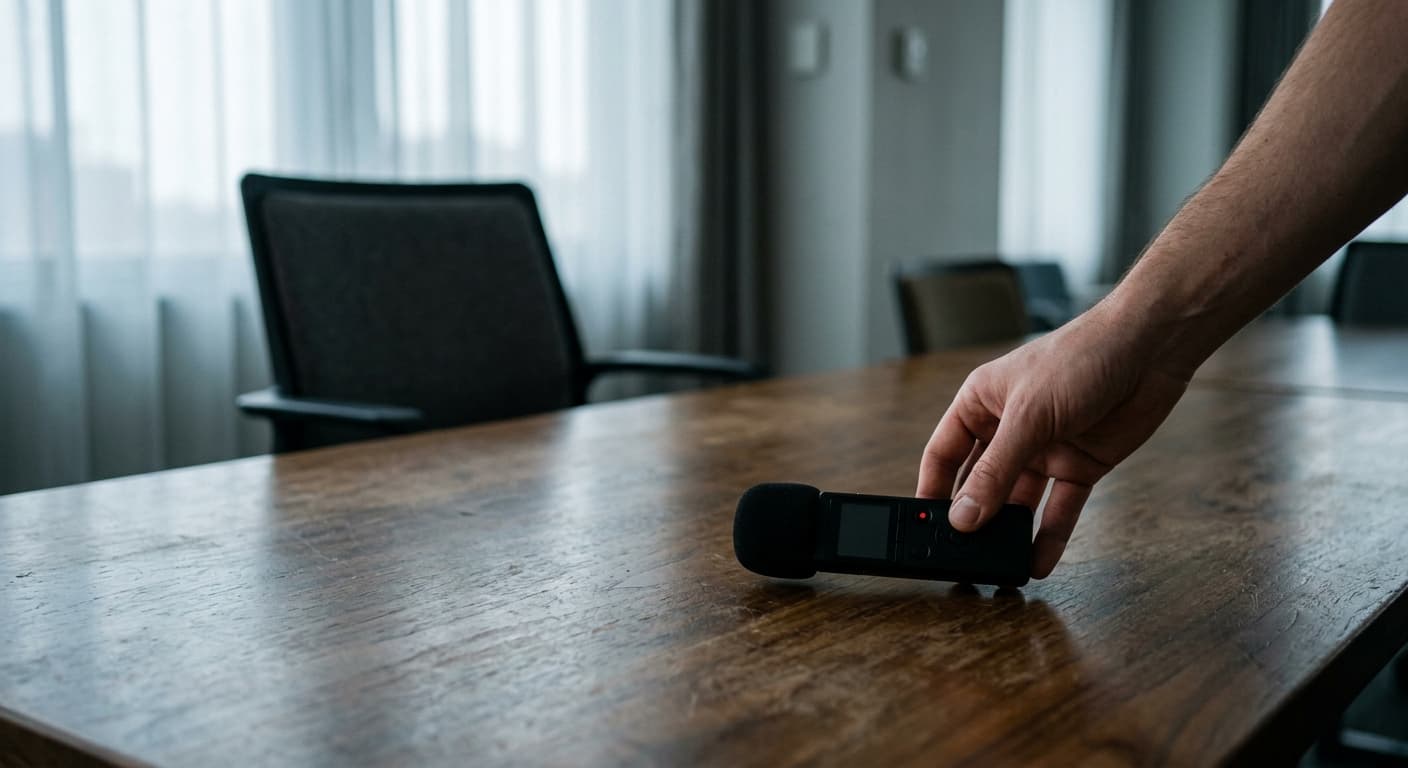
Ohio follows one-party consent for audio recording under Ohio Rev. Code 2933.52, meaning any participant in a conversation may record it without notifying the other parties. This applies to in-person conversations, phone calls, and electronic communications, as long as the recording party is an active participant.
Quick Answer
You can legally audio-record conversations in Ohio as long as you are a participant. Ohio follows a one-party consent framework under ORC 2933.52. This means one person in the conversation, which can be you, must consent to the recording. You do not need to tell the other person, use a beep tone, or get written permission.
Ohio's audio recording law covers three types of communication: wire communications (phone calls), oral communications (in-person conversations), and electronic communications (digital transmissions). This page focuses on audio recording across all these categories, with particular attention to in-person conversations and the devices used to capture them.
How Ohio Defines Protected Audio Communications
Wire Communications
Wire communications include any audio transmission made through a wired system. Under ORC 2933.51, this covers landline phone calls, cellular calls, and VoIP conversations. These communications receive automatic protection regardless of where the speakers are located.
For more detail on phone-specific rules, see our Ohio Phone Call Recording Laws page.
Oral Communications
Oral communications are in-person spoken words where the speaker exhibits an expectation that the communication is not subject to interception, under circumstances that justify that expectation. This is the "reasonable expectation of privacy" standard.
The expectation of privacy must be both subjective (the speaker actually believes the conversation is private) and objective (society recognizes that belief as reasonable). A whispered conversation in a private office qualifies. A shout across a crowded parking lot does not.
Electronic Communications
Electronic communications cover digital transmissions that are not wire or oral communications. This includes email in transit, text-based messaging, and data transfers. Audio content transmitted through electronic means (such as a voice message sent through an app) falls under this category.
The Reasonable Expectation of Privacy Standard

When Privacy Is Expected
Ohio courts evaluate whether a speaker had a reasonable expectation of privacy by examining the totality of the circumstances. Factors include:
- Location: Private homes, offices with closed doors, hotel rooms, and vehicles with windows up generally carry a reasonable expectation of privacy
- Volume: Speakers who lower their voices or whisper demonstrate an expectation of privacy
- Audience: A conversation limited to specific individuals suggests privacy expectations
- Precautions: Steps taken to prevent overhearing, such as closing doors or moving away from others, support a privacy claim
When Privacy Is Not Expected
You generally do not need consent to record audio in situations where there is no reasonable expectation of privacy:
- Conversations in public parks, on sidewalks, or in open areas
- Statements made in loud voices where passersby can overhear
- Speeches, lectures, or presentations delivered to a group
- Comments made in the common areas of businesses open to the public
- Conversations at public meetings or government proceedings
The Sensitive Equipment Exception
Even in public settings, using specialized equipment to capture conversations you could not otherwise hear may violate Ohio law. A parabolic microphone, long-range listening device, or high-gain amplifier used to intercept a whispered conversation across a park could constitute illegal interception. The standard is whether you needed technological enhancement beyond normal human hearing to capture the communication.
Legal Audio Recording Devices in Ohio
Smartphones and Cell Phones
Your smartphone is the most common audio recording tool. Ohio law places no restrictions on using your phone's built-in voice recorder or a third-party recording app to capture conversations you participate in. Both iPhone and Android devices offer native recording features, and numerous apps provide enhanced features like automatic transcription.
Dedicated Voice Recorders
Digital voice recorders, dictation devices, and portable audio recorders are all legal to use in Ohio for conversations you participate in. These devices are often used in professional settings for meeting notes, interviews, and documentation.
AI Voice Recorders
Newer AI-powered recording devices like the Plaud NotePin and similar products automatically record, transcribe, and summarize conversations. Ohio law treats these devices identically to any other recording tool. The statute focuses on the act of interception and the consent of the parties, not the capabilities of the recording device.
Wearable Recording Devices
Body-worn cameras, smartwatches with microphones, smart glasses (like Meta Ray-Bans), and lapel recorders are all legal in Ohio when used to record conversations you participate in. The form factor of the device does not change the legal analysis.
However, wearable devices that record video alongside audio raise additional considerations under Ohio's voyeurism statute, ORC 2907.08. See our Ohio Voyeurism and Hidden Camera Laws page for details.
Hidden Microphones and Bugs
Planting a hidden microphone or listening device to record conversations that you are not participating in is illegal under ORC 2933.52. The one-party consent exception requires that you either be a party to the conversation or have prior consent from at least one party. Leaving a hidden recorder in a room and departing does not satisfy this requirement.
Audio Recording in Specific Settings

In Your Home
You can audio-record conversations in your own home when you are present and participating. This is straightforward under one-party consent. However, you cannot:
- Plant a hidden recorder and leave the room to capture conversations between other people
- Record in areas where guests have a reasonable expectation of privacy, such as bathrooms or guest bedrooms
- Record intimate activities without consent, which may violate ORC 2907.08
In Someone Else's Home
If you are invited into someone else's home and engage in a conversation, you can record that conversation under one-party consent. The property owner's control over their home does not override the state wiretapping statute. However, if the property owner asks you to leave, continuing to remain on the property while recording could raise trespassing issues.
In Vehicles
Conversations inside vehicles typically carry a reasonable expectation of privacy when windows are closed and the occupants are speaking at normal volume. If you are a passenger or driver participating in a conversation, you can record it. Dashcam audio recording follows the same one-party consent rules. See our Ohio Dashcam Laws page for details.
In Public Spaces
Audio recording in truly public settings where there is no reasonable expectation of privacy does not require consent from anyone. You can record ambient sounds, public announcements, and conversations occurring in open public areas. See our Ohio Laws on Recording in Public page for comprehensive coverage.
At Government Meetings
Ohio's Open Meetings Act under ORC 121.22 requires most government meetings to be open to the public. Audio recording at public meetings is generally permitted, and these proceedings do not carry a reasonable expectation of privacy.
Third-Party Recording and Consent
When You Are Not a Party
If you are not a participant in the conversation, you need prior consent from at least one party before recording. This applies to:
- Overhearing and recording a neighbor's conversation through a wall
- Recording a conversation between two colleagues when you are not involved
- Using a hidden device to capture someone else's phone call
- Hiring a private investigator to record someone else's conversations without their knowledge
Parental Recording of Children's Conversations
Ohio law does not contain a specific statutory exception for parents recording their minor children's conversations. Federal courts have recognized a "vicarious consent" doctrine in some circuits, where a parent may consent on behalf of a minor child. However, Ohio courts have not definitively adopted this position. Parents should exercise caution and consult an attorney before recording their children's conversations with third parties.
Consent from Employees or Agents
A business can authorize an employee to record calls on behalf of the company. In this scenario, the employee acts as a party to the conversation and provides the one-party consent. The business does not need to be a direct participant as long as its authorized agent is on the call.
Criminal Penalties
Under ORC 2933.52, illegal audio interception carries the following penalties:
| Offense | Classification | Prison | Fine |
|---|---|---|---|
| Illegal interception | Fourth-degree felony | 6 to 18 months | Up to $5,000 |
| Using illegal interception device | Fourth-degree felony | 6 to 18 months | Up to $5,000 |
| Disclosing illegally intercepted audio | Fourth-degree felony | 6 to 18 months | Up to $5,000 |
Federal penalties under 18 U.S.C. 2511 are more severe, with up to five years in prison and fines up to $250,000.
Civil Liability
ORC 2933.65 provides civil remedies for victims of illegal audio recording. A successful plaintiff recovers whichever is greater of:
- Liquidated damages: $200 per day of violation or $10,000, whichever is greater, or
- Actual damages plus profit disgorgement: Provable financial and emotional harm plus any gains the violator derived from the illegal recording
The plaintiff also recovers attorney fees (reasonable litigation costs) and equitable relief (injunctions against further violations).
The two-year statute of limitations begins when the victim first had a reasonable opportunity to discover the illegal recording.
Audio Recordings as Evidence in Ohio Courts
Authentication Requirements
To use an audio recording as evidence in Ohio courts, you must authenticate it. This typically involves testimony from the person who made the recording establishing:
- When and where the recording was made
- Who was present during the conversation
- That the recording device was functioning properly
- That the recording has not been altered or edited
Chain of Custody
Maintaining a clear chain of custody strengthens the admissibility of an audio recording. Document who has had access to the recording file, where it has been stored, and any copies that have been made.
Digital Forensics
Courts may permit expert testimony regarding the integrity of digital audio files. Forensic analysis can detect editing, splicing, or other manipulation of recordings. Keeping the original file in its native format helps preserve its evidentiary value.
Suppression Motions
Under ORC 2933.63, illegally obtained audio recordings may be suppressed in criminal proceedings. Defendants can file motions to exclude recordings that were captured in violation of the wiretapping statute.
Recent Developments
House Bill 531 (Braden's Law)
Effective April 9, 2025, ORC 2933.523 requires electronic communication service providers operating in Ohio to comply with court-issued search warrants and interception warrants. This law affects how law enforcement obtains stored audio communications from service providers, regardless of where the data is physically stored.
Public Meetings and Audio Recording
ORC 121.22, Ohio's Open Meetings Act, requires that all meetings of a public body be open to the public at all times. The statute's 24-hour advance-notice requirement runs to the news media ahead of special meetings; it does not require a private citizen to give advance notice before recording a meeting, and a public body cannot condition a citizen's right to record on prior notice.
Explore More Ohio Recording Law Topics
Ohio Phone Call Recording Laws | Ohio Video Recording Laws | Ohio Workplace Recording Laws | Ohio Dashcam Laws | Ohio Security Camera Laws | Ohio School Recording Laws | Ohio Landlord-Tenant Recording Laws | Ohio Medical Recording Laws | Ohio Laws on Recording Police | Ohio Laws on Recording in Public | Ohio Voyeurism and Hidden Camera Laws
More Ohio Recording Topics
More Ohio Laws
Frequently Asked Questions
Can I audio-record a conversation in Ohio without the other person knowing?
Yes. Ohio is a one-party consent state under ORC 2933.52(B)(4). You can record any conversation you participate in without informing the other person. Your consent as a participant satisfies the legal requirement.
What recording devices are legal to use in Ohio?
Ohio law does not restrict the type of recording device. Smartphones, dedicated voice recorders, AI recorders like the Plaud NotePin, wearable devices, body cameras, and smart glasses are all legal for recording conversations you participate in. The law focuses on consent, not the device used.
Can I leave a hidden recorder in a room to capture other people's conversations in Ohio?
No. Ohio's one-party consent exception requires that you either be a party to the conversation or have prior consent from at least one party. Planting a hidden recorder and leaving the room to capture conversations between other people is illegal and constitutes a fourth-degree felony.
Does Ohio's audio recording law apply to conversations in public places?
Ohio's wiretapping statute protects oral communications only when the speaker has a reasonable expectation of privacy. Conversations in public parks, on sidewalks, or in crowded areas where others can overhear generally do not carry a reasonable expectation of privacy and can be recorded without consent.
What are the penalties for illegally audio-recording someone in Ohio?
Illegal audio recording is a fourth-degree felony under ORC 2933.52, punishable by 6 to 18 months in prison and fines up to $5,000. Victims can also file civil suits under ORC 2933.65 for whichever is greater of liquidated damages (at least $10,000, or $200 per day of violation if greater) or actual damages plus the violator's profits, along with attorney fees and equitable relief.
Updates
Corrected a mislabeled statute citation: Ohio's one-party consent exception for audio recording is ORC 2933.52(B)(4), not ORC 2933.53 (a law-enforcement warrant-application procedure statute), fixed in the citations list and the FAQ.
Independently fact-checked against the cited primary sources; governing law re-checked for recent changes
Governing law re-checked for recent changes
Corrected the ORC 2933.65 civil-damages framing on this sub-page (FAQ and Civil Liability section stated liquidated damages and actual-damages-plus-profits as cumulative; the statute awards whichever is greater), and removed an unsupported claim that a 2025 ORC 121.22 amendment requires citizens to give 24-hour notice before recording a public meeting — the statute's 24-hour notice requirement runs to news media ahead of special meetings, not to citizen recorders.
Governing law re-checked for recent changes
Reviewed and approved by an editor
The Law Behind This Article
This article rests on the statutory provisions below, held in our own legal record and retrieved from the official source. Tap a section to read the operative text.
Ohio Revised Code
§ 2933.52Interception of wire, oral or electronic communicationsIn forcecited in 19 of our articles
(A) No person purposely shall do any of the following: (1) Intercept, attempt to intercept, or procure another person to intercept or attempt to intercept a wire, oral, or electronic communication; (2) Use, attempt to use, or procure another person to use or attempt to use an interception device to…
Official text (excerpt) · last checked 2026-07-31 · Read the full text in our law library · Verify at codes.ohio.gov
Cited in 64 court opinions in our collectionLatest citing opinion in our collection: 2025
In the courts (editorial summary, independently checked):State v. Bidinost (1994) held R.C. 2933.52(A)'s ban on purposeful interception applies to cordless telephone conversations intercepted and recorded on a baby monitor, requiring suppression. State v. Childs (2000) held the party seeking to suppress bears the burden of proving a 2933.52(A)(1) violation.
Opinions citing this section in our collection:
- State v. Robb (Ohio Supreme Court 2000, 88 Ohio St. 3d 59)✓During a prison siege, FBI agents used tunnel microphones to record rioting inmates' conversations without a warrant; the court held those interceptions were exempt under former Section 2933.52(B)(1), Ohio's exception for interceptions made under federal wiretap law.
- State v. Childs (Ohio Supreme Court 2000, 88 Ohio St. 3d 558)✓A defendant sought to suppress tapes of her own conversations as intercepted in violation of Section 2933.52(A)(1), but no one proved whether the other party consented; the court held the party seeking suppression carries the burden of proof, so the motion failed.
- State v. Bidinost (Ohio Supreme Court 1994, 71 Ohio St. 3d 449)✓A neighbor's baby monitor began picking up the defendant's cordless phone calls, and at police direction she recorded them; the court held that was a purposeful interception barred by Section 2933.52(A) and that the recordings had to be suppressed.
Identified automatically from the court opinions citing this section — not a ranking of which case controls.
Also relied on in: Ohio Landlord-Tenant Recording Laws: Privacy, Cameras, and Rights, Ohio Video Recording Laws: Public Filming, Privacy, and Penalties, Ohio Voyeurism and Hidden Camera Laws: Offenses, Penalties, and Protections
§ 121.22Public meetings - exceptionsIn forcecited in 2 of our articles
(A) This section shall be liberally construed to require public officials to take official action and to conduct all deliberations upon official business only in open meetings unless the subject matter is specifically excepted by law.
Official text (excerpt) · last checked 2026-07-31 · Read the full text in our law library · Verify at codes.ohio.gov
Also relied on in: Ohio Laws on Recording in Public: Rights, Limits, and Privacy
§ 2907.08VoyeurismIn forcecited in 13 of our articles
(A) No person, for the purpose of sexually arousing or gratifying the person's self, shall commit trespass or otherwise surreptitiously invade the privacy of another, to spy or eavesdrop upon another.
Official text (excerpt) · last checked 2026-07-31 · Read the full text in our law library · Verify at codes.ohio.gov
Cited in 97 court opinions in our collectionLatest citing opinion in our collection: 2026
In the courts (editorial summary, independently checked):Ohio courts have applied R.C. 2907.08 to conduct concealed from the victim. State v. Sipple (2021) held the state need not prove an image was actually captured to sustain an attempted-voyeurism conviction. State v. Goldblum (2014) held that acts committed while the victims slept satisfied the surreptitious-invasion element.
Opinions citing this section in our collection:
- State v. Sipple (Ohio Court of Appeals 2021, 170 N.E.3d 1273)✓Sipple put his phone under a woman's dress at an event without her knowledge. The court affirmed his attempted voyeurism conviction under R.C. 2907.08(D), holding the state need not prove a photo was taken and that stealth without her authority was surreptitious.
- State v. Goldblum (Ohio Court of Appeals 2014, 2014 Ohio 5068)✓Goldblum lifted the covers and clothing off girls sleeping at his home and stared at their genitals. Affirming convictions under R.C. 2907.08(C), the court held acts done while the victims slept surreptitiously invaded their privacy and that sexual purpose could be inferred.
- State v. Huffman (Ohio Court of Appeals 2006, 165 Ohio App. 3d 518)✓Huffman hid wireless cameras in his tanning salon rooms and recorded patrons, including a minor. Affirming convictions under R.C. 2907.08(B) and (C), the court held digital video is a series of photographs, so recording video counted as photographing under the statute.
Identified automatically from the court opinions citing this section — not a ranking of which case controls.
Also relied on in: Ohio Recording Laws (2026): One-Party Consent Rules, Ohio School Recording Laws: Classrooms, IEP Meetings, and Surveillance, Ohio Security Camera Laws: Residential, Commercial, and Privacy Rules
§ 2933.51Wiretapping, electronic surveillance definitionsIn forcecited in 4 of our articles
As used in sections 2933.51 to 2933.66 of the Revised Code: (A) "Wire communication" means an aural transfer that is made in whole or in part through the use of facilities for the transmission of communications by the aid of wires or similar methods of connecting the point of origin of the…
Official text (excerpt) · last checked 2026-07-31 · Read the full text in our law library · Verify at codes.ohio.gov
Cited in 37 court opinions in our collectionLatest citing opinion in our collection: 2023
Opinions citing this section in our collection:
- State v. Robb (Ohio Supreme Court 2000, 88 Ohio St. 3d 59)“…s, violated inmates’ rights to private communications under R.C. 2933.51 et seq. as it existed before the 1996…”
- State v. Bidinost (Ohio Supreme Court 1994, 71 Ohio St. 3d 449)“…of "wire communication[s]" or "oral communication[s]." R.C. 2933.51(A) defines "wire communication" as "any…”
- State v. Raber (Ohio Court of Appeals 2010, 189 Ohio App. 3d 396)“…ext messages in compliance with the warrant requirements of R.C. 2933.51 et seq. According to Raber, the state n…”
Identified automatically from the court opinions citing this section — not a ranking of which case controls.
Also relied on in: Ohio AI Meeting Recording Laws (2026), Ohio Ring Doorbell Laws: What You Need to Know in 2026
§ 2933.523Electronic search warrantIn forcecited in 2 of our articles
(A) A provider of an electronic communication service or a provider of remote computing service operating in the state shall comply with any court-issued search warrant or interception warrant issued for wire communications, electronic communications, an electronic communications system, or other…
Official text (excerpt) · last checked 2026-07-31 · Read the full text in our law library · Verify at codes.ohio.gov
§ 2933.53Application for interception warrantIn forcecited in 5 of our articles
(A) The prosecuting attorney of the county in which an interception is to take place or in which an interception device is to be installed, or an assistant to the prosecuting attorney of that county who is specifically designated by the prosecuting attorney to exercise authority under this section,…
Official text (excerpt) · last checked 2026-07-31 · Read the full text in our law library · Verify at codes.ohio.gov
Cited in 11 court opinions in our collectionLatest citing opinion in our collection: 2024
Opinions citing this section in our collection:
- State v. Nettles (Slip Opinion) (Ohio Supreme Court 2020, 159 Ohio St. 3d 180)“…Nettles, Slip Opinion No. 2020-Ohio-768.] For purposes of R.C. 2933.53, an interception of a cell-phone call t…”
- State v. Nettles (Ohio Court of Appeals 2018, 2018 Ohio 4908)“…ls. The court next determined that the state complied with R.C. 2933.53(B)(9), by providing 3. the affidav…”
- Ohio Domestic Violence Network v. Public Utilities Commission (Ohio Supreme Court 1994, 70 Ohio St. 3d 311)“…s interception. See Section 2511(2)(c), Title 18, U.S.Code; R.C. 2933.53(B)(4). See, also, Hamm, supra.…”
Identified automatically from the court opinions citing this section — not a ranking of which case controls.
Also relied on in: Ohio Phone Call Recording Laws: Rules, Penalties, and Compliance
§ 2933.63Motion to suppress evidence from intercepted wire, oral, or electronic communicationIn forcecited in 5 of our articles
(A) Any aggrieved person in any trial, hearing, or proceeding in or before any court, department, officer, agency, regulatory body, or other authority of this state or of a political subdivision of this state, other than a grand jury, may request the involved court, department, officer, agency,…
Official text (excerpt) · last checked 2026-07-31 · Read the full text in our law library · Verify at codes.ohio.gov
Cited in 16 court opinions in our collectionLatest citing opinion in our collection: 2024
Opinions citing this section in our collection:
- State v. Davies (Ohio Court of Appeals 2001, 145 Ohio App. 3d 630)“…rial court did not expressly address the issue of standing. R.C. 2933.63(A) allows any “aggrieved person” to req…”
- State v. Robb (Ohio Supreme Court 2000, 88 Ohio St. 3d 59)“…not suppressing evidence from the tunnel tapes under former R.C. 2933.63. The court of appeals *66 agreed that…”
- State v. Bidinost (Ohio Supreme Court 1994, 71 Ohio St. 3d 449)“…ted by the terms of R.C. 2933.52(A). Therefore, pursuant to R.C. 2933.63, the trial court was required to suppre…”
Identified automatically from the court opinions citing this section — not a ranking of which case controls.
§ 2933.65Civil and criminal actions for wiretapping and electronic surveillance violationsIn forcecited in 11 of our articles
(A) A person whose wire, oral, or electronic communications are intercepted, disclosed, or intentionally used in violation of sections 2933.51 to 2933.66 of the Revised Code may bring a civil action to recover from the person or entity that engaged in the violation any relief that may be…
Official text (excerpt) · last checked 2026-07-31 · Read the full text in our law library · Verify at codes.ohio.gov
Cited in 5 court opinions in our collectionLatest citing opinion in our collection: 2020
Opinions citing this section in our collection:
- State v. Bidinost (Ohio Supreme Court 1994, 71 Ohio St. 3d 449)“…se of an interception warrant. See R.C. 2933.52(B)(1). 8 R.C. 2933.65 provides, in part: "(A) Any person…”
- Choby v. Aylsworth, 2006-L-144 (6-29-2007) (Ohio Court of Appeals 2007, 2007 Ohio 3375)“…ity), R.C. 2307.60 (civil recovery for criminal act), and R.C. 2933.65 (civil remedy for interception of wire…”
- John H. Nix v. Patrick J. O'Malley Weston, Hurd, Fallon, Paisley & Howley (Court of Appeals for the Sixth Circuit 1998, 160 F.3d 343)“…parties to the intercepted communications. See Ohio Rev.Code Ann. § 2933.65 (Banks-Baldwin 1998) (reprinting the pr…”
Identified automatically from the court opinions citing this section — not a ranking of which case controls.
Also relied on in: Ohio Workplace Recording Laws: Employee and Employer Rights, Ohio Smart Glasses Recording Laws: One-Party Consent Guide, Ohio Surveillance Camera Laws (2026 Guide)
United States Code Title 18
§ 2511Interception and disclosure of wire, oral, or electronic communications prohibitedIn forcecited in 422 of our articles
Except as otherwise specifically provided in this chapter any person who— intentionally intercepts, endeavors to intercept, or procures any other person to intercept or endeavor to intercept, any wire, oral, or electronic communication; intentionally uses, endeavors to use, or procures any other person to use or endeavor to use any electronic, mechanical, or other device to intercept any oral communication when— such device is affixed to, or otherwise transmits a signal through, a wire, cable, or other like connection used in wire communication; or such device transmits communications by radio, or interferes with the transmission of such communication; or such person knows, or has reason to know, that such device or any component thereof has been sent through the mail or transported in interstate or foreign commerce; or such use or endeavor to use (A) takes place on the premises of any business or other commercial establishment the operations of which affect interstate or foreign commerce; or (B) obtains or is for the purpose of obtaining information relating to the operations of any business or other commercial establishment the operations of which affect interstate or foreign…
Official text (excerpt) · last checked 2026-09-17 · Read the full text in our law library · Verify at uscode.house.gov
Cited in 2,045 court opinions in our collectionLatest citing opinion in our collection: 2026
In the courts (editorial summary, independently checked):Griggs-Ryan v. Smith (1990) applied the Section 2511(2)(d) prior-consent exception, treating a tenant repeatedly told that all incoming calls were taped as having impliedly consented. United States v. United States District Court (1972) read the then-current Section 2511(3) as conferring no presidential surveillance power.
Opinions citing this section in our collection:
- Mitchell v. Forsyth (Supreme Court of the United States 1985, 472 U.S. 511)✓The Attorney General authorized a warrantless 1970 national security wiretap that caught the plaintiff's calls; the Court held the since-repealed Section 2511(3) disclaimer left the tap lawful under Title III, and that Mitchell had qualified immunity.
- United States v. United States District Court for the Eastern District of Michigan (Supreme Court of the United States 1972, 407 U.S. 297)✓The Attorney General approved warrantless wiretaps on members of a domestic group accused of bombing a CIA office; the Court read Section 2511(3) as a congressional disclaimer conferring no surveillance power, then held the Fourth Amendment required prior judicial approval.
- Forsyth v. Barr (Court of Appeals for the Fifth Circuit 1994, 19 F.3d 1527)✓Dallas police used, in an internal affairs probe of an officer, calls private parties allegedly intercepted illegally; assuming that was unlawful, the Fifth Circuit held Section 2517(1) and (2) allowed the disclosure and use, defeating the Section 2511(1)(c) and (d) claims.
Identified automatically from the court opinions citing this section — not a ranking of which case controls.
Also relied on in: Connecticut Recording Laws (2026): Hybrid Consent Rules Explained, Oregon Recording Laws (2026): Hybrid One-Party and All-Party Rules, US Recording Laws by State (2026): All 50 States Explained
Search our full record of US law — 2.1 million sections, every state + federal →
Sources and References
- Ohio Rev. Code 2933.52 - Interception of wire, oral, or electronic communications(codes.ohio.gov).gov
- Ohio Rev. Code 2933.51 - Definitions for wiretapping chapter(codes.ohio.gov).gov
- Ohio Rev. Code 2933.65 - Civil liability for unlawful interception(codes.ohio.gov).gov
- Ohio Rev. Code 2933.63 - Suppression of illegally intercepted communications(codes.ohio.gov).gov
- Ohio Rev. Code 2933.523 - Service provider warrant compliance (HB 531)(codes.ohio.gov).gov
- Ohio Rev. Code 121.22 - Open Meetings Act(codes.ohio.gov).gov
- 18 U.S.C. 2511 - Federal wiretapping statute(law.cornell.edu)