
Rhode Island
Rhode Island Laws on Recording Police: First Circuit Protections (2026)
Independently fact-checked against primary sources (last audited August 15, 2026). · Reviewed by the RecordingLaw editorial team. · Law checked current as of August 15, 2026. · 8 primary sources cited on this page. How we verify our legal content
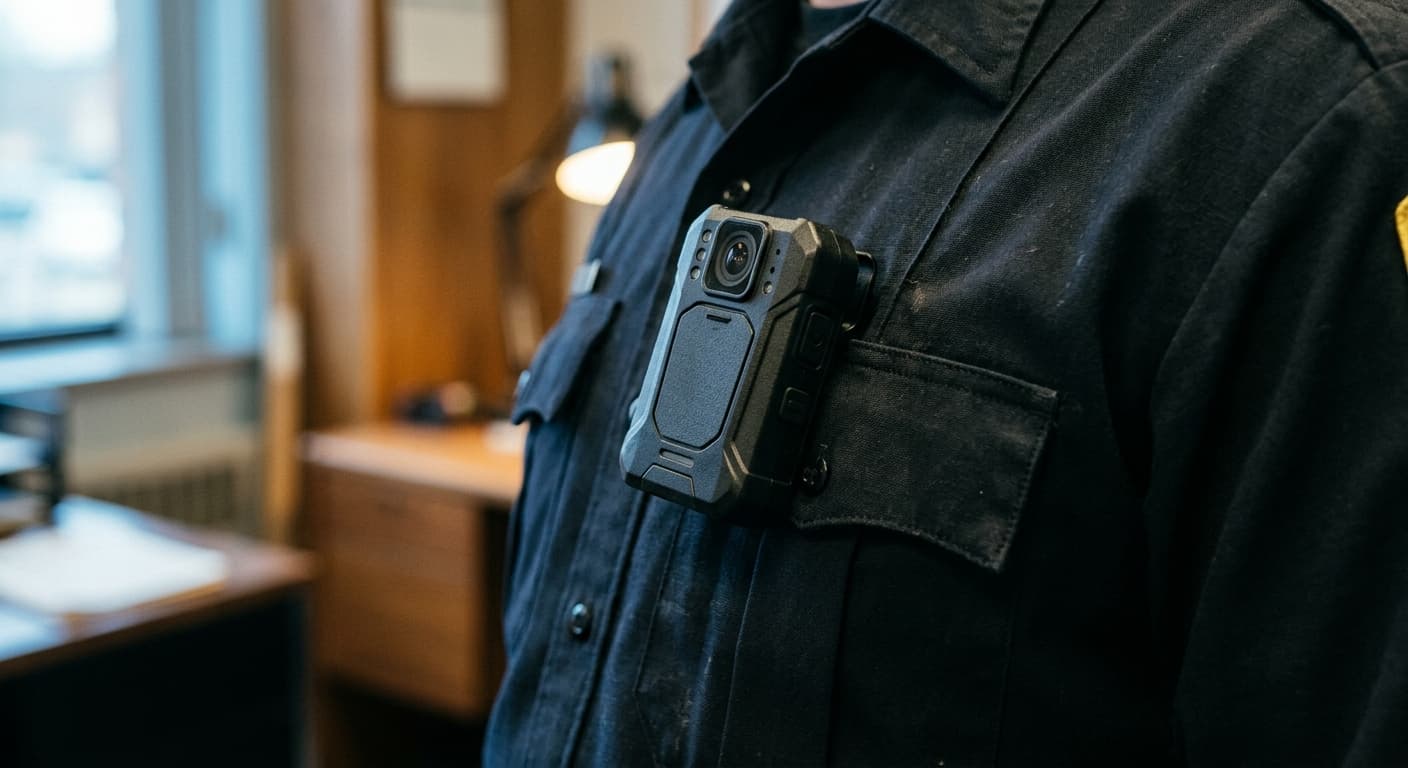
Rhode Island residents may record on-duty police officers in public as a First Amendment right recognized by the First Circuit Court of Appeals. Audio recording of encounters you participate in is lawful under one-party consent rules in R.I. Gen. Laws § 11-35-21. Officers cannot order you to stop or seize your device without a warrant.
Rhode Island residents have a clearly established right to record police. The First Circuit Court of Appeals, which directly covers Rhode Island, has affirmed the First Amendment right to film law enforcement in public. Combined with one-party consent under R.I. Gen. Laws § 11-35-21, residents have strong protections.
This guide covers your constitutional recording rights, what officers can and cannot do, safe recording practices, body camera policies, and legal remedies.
First Circuit Recognition
The First Circuit directly covers Rhode Island. In Glik v. Cunniffe, 655 F.3d 78 (1st Cir. 2011), the court held that a citizen has a clearly established First Amendment right to openly film on-duty officers in public; the arresting officers lost qualified immunity. Project Veritas Action Fund v. Rollins, 982 F.3d 813 (1st Cir. 2020) extended that protection to secret audio recording of officers performing official duties in public spaces, holding the Massachusetts wiretap statute unconstitutional as applied. Both decisions are binding precedent in Rhode Island.
What You Can Record
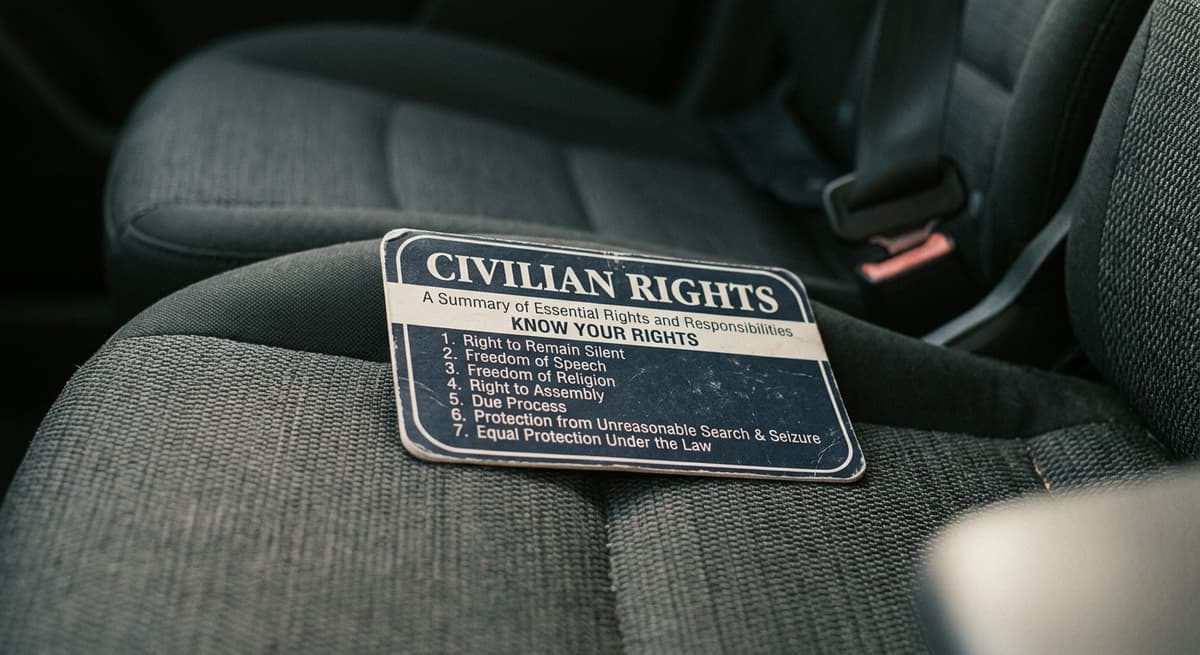
Traffic stops, arrests, police interactions, protests, and misconduct. Audio recording of conversations you participate in follows one-party consent.
What Officers Cannot Do
Order you to stop recording, delete recordings, seize devices without a warrant, arrest you solely for recording, or retaliate.
What Officers Can Do
Order you to step back for safety, restrict crime scene access, arrest for separate offenses.
Safe Recording Practices
Stay on public property, keep a safe distance, do not interfere, enable cloud backup, state your First Amendment right if challenged.
Body Camera Policies
Rhode Island's statewide body-worn camera framework is R.I. Gen. Laws Chapter 42-161 (enacted P.L. 2021 ch. 228 and 229, effective July 8, 2021) and the implementing regulation at 270-RICR-60-00-2 (current effective July 22, 2025). The regulation states that consent to record is not required for body-worn camera operation. Footage release requests run through the Access to Public Records Act (R.I. Gen. Laws Chapter 38-2).
Legal Remedies
File 42 U.S.C. § 1983 lawsuits, department complaints, or contact the ACLU of Rhode Island.
More Rhode Island Recording Laws
Audio Recording | Video Recording | Voyeurism & Hidden Cameras | Workplace Recording | Recording Police | Phone Call Recording | Security Cameras | Recording in Public | Landlord-Tenant | Dashcam Laws | Schools | Medical Recording
Back to Rhode Island Recording Laws
More Rhode Island Recording Topics
More Rhode Island Laws
Frequently Asked Questions
Can I record police officers in Rhode Island?
Yes. The First Circuit has affirmed this First Amendment right. You can film from any public location.
Can a police officer tell me to stop recording in Rhode Island?
No. Officers cannot order you to stop recording unless you are interfering with operations.
Can police seize my phone for recording them?
Not without a warrant. Riley v. California protects your device.
Can I request body camera footage in Rhode Island?
Yes. File a request under the Access to Public Records Act (R.I. Gen. Laws Chapter 38-2). Rhode Island's statewide body-worn camera program under Chapter 42-161 and 270-RICR-60-00-2 requires use-of-force recordings to be released upon substantial completion of investigation, typically within 30 days, unless prohibited by law or court order.
What should I do if police violate my recording rights?
Document the encounter, file a complaint, and contact the ACLU of Rhode Island or a civil rights attorney.
Updates
Independently fact-checked against the cited primary sources; governing law re-checked for recent changes
Governing law re-checked for recent changes
Reviewed and approved by an editor
The Law Behind This Article
This article rests on the statutory provisions below, held in our own legal record and retrieved from the official source. Tap a section to read the operative text.
Rhode Island General Laws, Title 11: Criminal Offenses, Chapter 11-35: Public Utilities
§ 11-35-21Unauthorized interception, disclosure or use of wire, electronic, or oral communicationIn forcecited in 17 of our articles
(a) Except as otherwise specifically provided in chapter 5.1 of title 12, any person: (1) who willfully intercepts, attempts to intercept, or procures any other person to intercept or attempt to intercept, any wire, electronic, or oral communication; (2) who willfully discloses or attempts to disclose to any person the contents of any wire, electronic, or oral communication, knowing, or having reason to know that the information was obtained through interception of a wire, electronic, or oral communication in violation of this section; or (3) who willfully uses or attempts to use the contents of any wire, electronic, or oral communication, knowing, or having reason to know, that the information was obtained through interception of a wire, electronic, or oral communication in violation of this section; shall be imprisoned for not more than five (5) years. (b) The provisions of subdivisions (a)(2) and (3) of this section shall not apply to the contents of any wire, electronic, or oral communication, or evidence derived from those contents, which has become common knowledge or public information.
Official text (excerpt) · last checked 2026-08-31 · Read the full text in our law library · Verify at webserver.rilegislature.gov
Cited in 5 court opinions in our collectionLatest citing opinion in our collection: 2023
In the courts (editorial summary, independently checked):Walden v. CITY OF PROVIDENCE, RI (2010) held municipalities are not persons who may be sued under sections 11-35-21 and 12-5.1-13. The earlier Walden v. City of Providence (2007) held this section is criminal but that R.I. Gen. Laws 9-1-2 supplies a civil right of action for its violation.
Opinions citing this section in our collection:
- Bartnicki v. Vopper (Supreme Court of the United States 2001, 532 U.S. 514)“…Stat. § 165.540 (1997); 18 Pa. Cons. Stat. § 5703 (2000); R. I. Gen. Laws § 11-35-21 (2000); Tenn. Code Ann. § 39-13-601 (…”
- Walden v. CITY OF PROVIDENCE, RI (Court of Appeals for the First Circuit 2010, 596 F.3d 38)“…te, 18 U.S.C. § 2511 et seq.; Rhode Island's wiretap laws, R.I. Gen. Laws §§ 11-35-21, 12-5.1-13; and the state'…”
- Boehner, John A. v. McDermott, James A. (Court of Appeals for the D.C. Circuit 1999, 191 F.3d 463)“…43 (1998); 18 Pa Cons Stat. Ann. §§ 5703, 5725 (West 1999); R.I. Gen. Laws § 11-35-21 (1998); Tenn.Code Ann. §§ 39-13-601 to…”
Identified automatically from the court opinions citing this section — not a ranking of which case controls.
Also relied on in: Rhode Island Audio Recording Laws: One-Party Consent Rules and Penalties (2026), Rhode Island Dashcam Laws: Mounting, Audio, and Evidence Rules (2026), Rhode Island Medical Recording Laws: Patient Rights and HIPAA Rules (2026)
United States Code Title 42
§ 1983Civil action for deprivation of rightsIn forcecited in 50 of our articles
Every person who, under color of any statute, ordinance, regulation, custom, or usage, of any State or Territory or the District of Columbia, subjects, or causes to be subjected, any citizen of the United States or other person within the jurisdiction thereof to the deprivation of any rights, privileges, or immunities secured by the Constitution and laws, shall be liable to the party injured in an action at law, suit in equity, or other proper proceeding for redress, except that in any action brought against a judicial officer for an act or omission taken in such officer’s judicial capacity, injunctive relief shall not be granted unless a declaratory decree was violated or declaratory relief was unavailable. For the purposes of this section, any Act of Congress applicable exclusively to the District of Columbia shall be considered to be a statute of the District of Columbia.
Official text (excerpt) · last checked 2026-09-16 · Read the full text in our law library · Verify at uscode.house.gov
Cited in 282,365 court opinions in our collectionLatest citing opinion in our collection: 2026
Opinions citing this section in our collection:
- Ashcroft v. Iqbal (Supreme Court of the United States 2009, 556 U.S. 662)“…its brought against state officials under Rev. Stat. §1979, 42 U. S. C. §1983.” Hartman, 547 U. S., at 254, n. 2. Cf.…”
- Celotex Corp. v. Catrett, Administratrix of the Estate of Catrett (Supreme Court of the United States 1986, 477 U.S. 317)“…policeman as she left. Petitioner brought an action under 42 U. S. C. § 1983 claiming that the refusal of service a…”
- Monell v. New York City Dept. of Social Servs. (Supreme Court of the United States 1978, 436 U.S. 658)“…decided less than two decades ago. Focusing new light on 42 U. S. C. § 1983 , that decision widened access to the f…”
Identified automatically from the court opinions citing this section — not a ranking of which case controls.
Also relied on in: Alabama Laws on Recording Police: Your Rights and Limits, Alaska Laws on Recording Police: Your Rights and Limits (2026), Arkansas Laws on Recording Police: Your Rights and Limits (2026)
Explore the law
This article also draws on these acts and chapters (opening at their first section): Rhode Island General Laws, Title 42: State Affairs and Government, Chapter 42-161: Statewide Body-Worn Camera Program § 42-161-1 (Short title) · Rhode Island General Laws, Title 38: Public Records, Chapter 38-2: Access to Public Records § 38-2-1 (Purpose)
Related law for further reading — not part of this article’s citations.
Search our full record of US law — 2.1 million sections, every state + federal →
Sources and References
- R.I. § 11-35-21(law.justia.com)
- DOJ Civil Rights(justice.gov).gov
- RI General Assembly(rilegislature.gov).gov
- R.I. Gen. Laws § 11-35-21 - Unauthorized Interception(webserver.rilegislature.gov).gov
- 42 U.S.C. § 1983 - Civil Rights Actions(law.cornell.edu)
- ACLU of Rhode Island(riaclu.org)
- R.I. Gen. Laws Chapter 38-2 - Access to Public Records Act(webserver.rilegislature.gov).gov
- R.I. Gen. Laws Chapter 42-161 - Statewide Body-Worn Camera Program (P.L. 2021 ch. 228 and 229, effective July 8, 2021)(webserver.rilegislature.gov).gov
- 270-RICR-60-00-2 - Body-Worn Camera Rules (current effective July 22, 2025; consent to record not required)(rules.sos.ri.gov).gov
- Glik v. Cunniffe, 655 F.3d 78 (1st Cir. 2011) - clearly established First Amendment right to record police in public(media.ca1.uscourts.gov).gov
- Project Veritas Action Fund v. Rollins, 982 F.3d 813 (1st Cir. 2020) - First Amendment protects secret audio recording of on-duty officers in public(media.ca1.uscourts.gov).gov