
Rhode Island
Rhode Island Audio Recording Laws: One-Party Consent Rules and Penalties (2026)
Independently fact-checked against primary sources (last audited August 15, 2026). · Reviewed by the RecordingLaw editorial team. · Law checked current as of August 15, 2026. · 4 primary sources cited on this page. How we verify our legal content
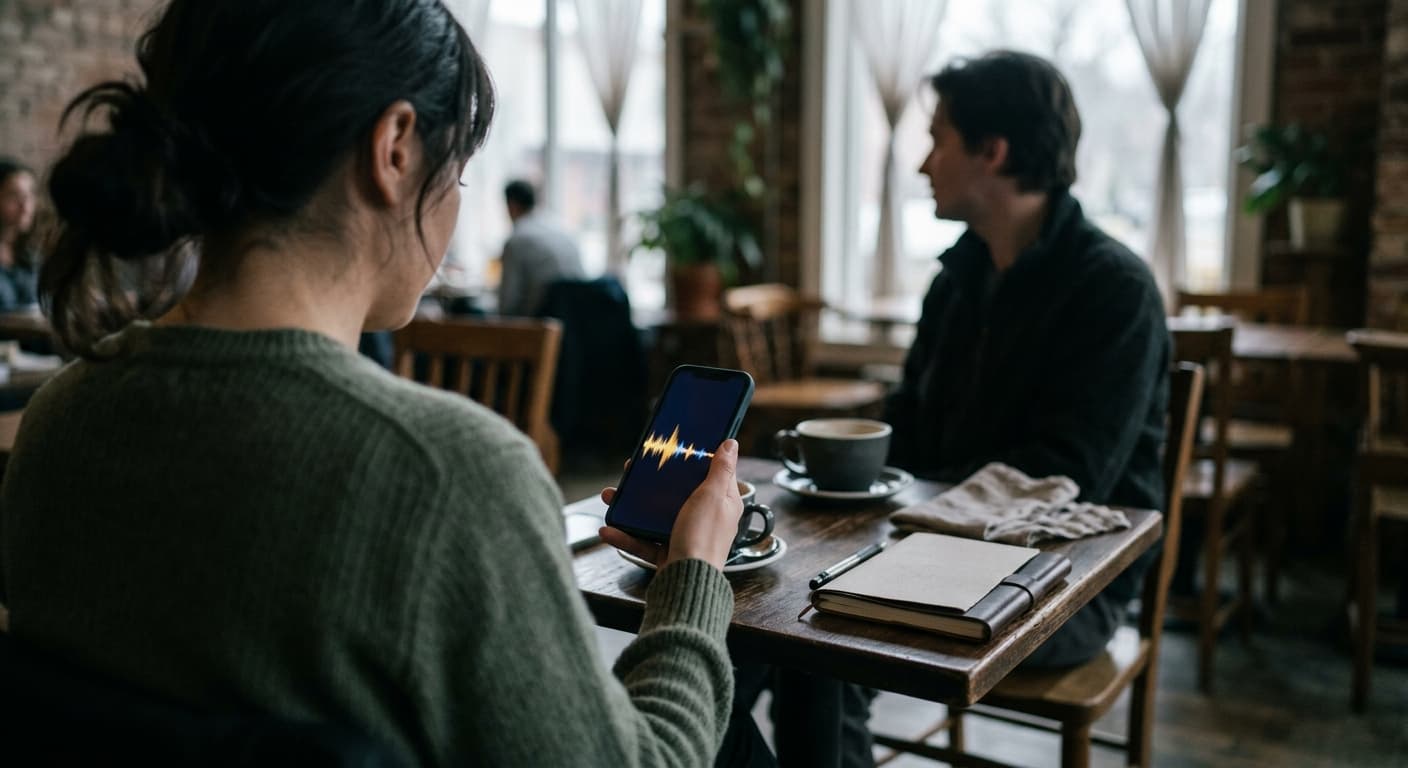
Rhode Island is a one-party consent state for audio recording under R.I. Gen. Laws § 11-35-21, which covers wire, oral, and electronic communications. Any participant in a conversation may record it without notifying others, provided the recording is not made for criminal, tortious, or injurious purposes.
Rhode Island is a one-party consent state for audio recording. Under R.I. Gen. Laws § 11-35-21, you can legally record any phone call or in-person conversation you participate in without informing other parties. The statute covers wire communications, oral communications, and electronic communications. The critical limitation is that the recording must not be for criminal, tortious, or otherwise injurious purposes.
How Rhode Island's Audio Recording Law Works
The Statutory Framework
Rhode Island's audio recording rules come from two parts of the Rhode Island General Laws:
- R.I. Gen. Laws § 11-35-21 establishes the criminal offense of unauthorized interception, disclosure, or use of wire, electronic, or oral communications.
- R.I. Gen. Laws § 12-5.1-13 creates a civil cause of action for victims of illegal interception.
Under § 11-35-21, it is illegal to willfully intercept wire, electronic, or oral communications without consent. The one-party consent exception allows recording when you are a party or one party has given prior consent, unless the recording is for criminal, tortious, or injurious purposes.
Three Types of Communications Covered
Rhode Island's law covers all three categories:
| Communication Type | Examples | Consent Rule |
|---|---|---|
| Wire communications | Phone calls, landlines, cell phones | One-party consent |
| Oral communications | In-person, face-to-face conversations | One-party consent |
| Electronic communications | VoIP, video calls, text messages | One-party consent |
This broader scope means Rhode Island's law covers more types of communication than states like New Mexico, where only telephone communications are addressed.
The "Criminal, Tortious, or Injurious" Limitation
Rhode Island's one-party consent exception includes broader language than many states. The statute prohibits recording "for the purpose of committing any criminal or tortious act" or "for the purpose of committing any other injurious act." This means:
- Recording for blackmail, extortion, or fraud is illegal
- Recording to tortiously interfere with business relationships is illegal
- Recording to cause harm that is not technically criminal or tortious may still violate the law
- Recording for harassment or stalking purposes is not protected
The Rhode Island Supreme Court applied this exception in State v. O'Brien, 774 A.2d 89 (R.I. 2001). A hidden camera's built-in microphone recorded a private encounter without the other person's knowledge, and the court upheld the wiretapping conviction, holding that a video camera's audio component qualifies as an "intercepting device" under the statute and that the recording fell outside the one-party consent exception because making it was itself a tortious invasion of privacy. The case shows Rhode Island courts read the injurious-purpose carve-out broadly: consent from one participant does not protect a recording made to violate someone else's legal rights.
Recording Phone Calls in Rhode Island

Personal Phone Calls
You can record any personal phone call you participate in. This applies to cell phones, landlines, VoIP calls (Zoom, Teams, Meet), video call audio, and messaging app calls.
Interstate Calls to Neighboring States
Rhode Island borders Massachusetts and Connecticut, both of which are two-party consent states. This is especially important for Rhode Island residents:
- Massachusetts requires all-party consent under Mass. Gen. Laws ch. 272, § 99
- Connecticut requires all-party consent for telephone communications under Conn. Gen. Stat. § 52-570d (civil)
When calling someone in either state, inform all parties or get explicit consent before recording. The stricter rule generally controls when a call touches a two-party state.
Business Phone Call Recording
Rhode Island businesses can record calls for quality assurance, training, and compliance. One-party consent applies. The federal FCC recommends notification for interstate calls.
Recording In-Person Conversations

You can record in-person conversations when you are a participant, in a public place, and the recording is not for criminal, tortious, or injurious purposes. Recording is illegal when you have no party's consent, when done for unlawful purposes, or in areas with a reasonable expectation of privacy (bathrooms, changing rooms).
Penalties for Illegal Audio Recording

Criminal Penalties
Illegal wiretapping under R.I. Gen. Laws § 11-35-21 is a felony:
| Offense | Classification | Maximum Penalty |
|---|---|---|
| Illegal interception | Felony | Up to 5 years prison |
| Disclosure of intercepted communications | Felony | Up to 5 years prison |
| Use of illegally obtained communications | Felony | Up to 5 years prison |
Civil Liability
Under R.I. Gen. Laws § 12-5.1-13, victims can recover:
- Actual damages, but not less than $100 per day of violation or $1,000, whichever is higher
- Punitive damages
- Attorney fees and litigation costs
Federal Penalties
The federal Wiretap Act (18 U.S.C. § 2511) provides additional criminal penalties of up to 5 years in prison. A separate federal provision, 18 U.S.C. § 2520, creates a private civil cause of action for victims of illegal interception.
Using Audio Recordings as Evidence
Lawfully recorded audio is generally admissible in Rhode Island courts. Authentication, relevance, hearsay rules, and the balance between probative and prejudicial value are evaluated. Preserve originals without editing and provide recordings to your attorney promptly.
Common Audio Recording Scenarios
Can I Record My Landlord?
Yes, during conversations you participate in.
Can I Record My Doctor?
Yes. One-party consent applies to in-person and telemedicine visits.
Can I Record My Boss?
Yes, as a participant. Be aware of company recording policies.
Can I Record Government Officials?
Yes. Rhode Island's Open Meetings Act (R.I. Gen. Laws Chapter 42-46) also permits recording of public government meetings.
More Rhode Island Recording Laws
Audio Recording | Video Recording | Voyeurism & Hidden Cameras | Workplace Recording | Recording Police | Phone Call Recording | Security Cameras | Recording in Public | Landlord-Tenant | Dashcam Laws | Schools | Medical Recording
Back to Rhode Island Recording Laws
More Rhode Island Recording Topics
More Rhode Island Laws
Frequently Asked Questions
Is it legal to audio record a conversation in Rhode Island without the other person knowing?
Yes, if you are a participant and the recording is not for criminal, tortious, or injurious purposes. Rhode Island is a one-party consent state under R.I. Gen. Laws § 11-35-21.
Can I record a phone call in Rhode Island?
Yes. You can record any phone call you participate in. For interstate calls to Massachusetts or Connecticut, all-party consent is required.
What is the penalty for illegal audio recording in Rhode Island?
Illegal wiretapping is a felony punishable by up to 5 years in prison. Civil damages include $100 per day or $1,000 minimum, plus punitive damages and attorney fees.
What does the 'injurious purpose' limitation mean in Rhode Island?
Rhode Island prohibits recording for criminal, tortious, or any other injurious purpose. This broader language means recording that causes harm, even if not technically criminal, may violate the law.
Can audio recordings be used as evidence in Rhode Island courts?
Yes. Lawfully recorded audio is generally admissible. The recording must be authenticated, relevant, and not unfairly prejudicial.
Updates
No substantive correction needed on this page: the State v. O'Brien case citation and its description were re-verified against the actual court opinion and found accurate.
Independently fact-checked against the cited primary sources; governing law re-checked for recent changes
Governing law re-checked for recent changes
Corrected a federal penalty misattribution: 18 U.S.C. § 2511 supports the 5-year criminal penalty, but its only dollar figure is an unrelated $500 satellite/radio fine; the general federal civil-damages remedy is a separate provision, 18 U.S.C. § 2520.
Governing law re-checked for recent changes
Reviewed and approved by an editor
The Law Behind This Article
This article rests on the statutory provisions below, held in our own legal record and retrieved from the official source. Tap a section to read the operative text.
Rhode Island General Laws, Title 11: Criminal Offenses, Chapter 11-35: Public Utilities
§ 11-35-21Unauthorized interception, disclosure or use of wire, electronic, or oral communicationIn forcecited in 17 of our articles
(a) Except as otherwise specifically provided in chapter 5.1 of title 12, any person: (1) who willfully intercepts, attempts to intercept, or procures any other person to intercept or attempt to intercept, any wire, electronic, or oral communication; (2) who willfully discloses or attempts to disclose to any person the contents of any wire, electronic, or oral communication, knowing, or having reason to know that the information was obtained through interception of a wire, electronic, or oral communication in violation of this section; or (3) who willfully uses or attempts to use the contents of any wire, electronic, or oral communication, knowing, or having reason to know, that the information was obtained through interception of a wire, electronic, or oral communication in violation of this section; shall be imprisoned for not more than five (5) years. (b) The provisions of subdivisions (a)(2) and (3) of this section shall not apply to the contents of any wire, electronic, or oral communication, or evidence derived from those contents, which has become common knowledge or public information.
Official text (excerpt) · last checked 2026-08-31 · Read the full text in our law library · Verify at webserver.rilegislature.gov
Cited in 5 court opinions in our collectionLatest citing opinion in our collection: 2023
In the courts (editorial summary, independently checked):Walden v. CITY OF PROVIDENCE, RI (2010) held municipalities are not persons who may be sued under sections 11-35-21 and 12-5.1-13. The earlier Walden v. City of Providence (2007) held this section is criminal but that R.I. Gen. Laws 9-1-2 supplies a civil right of action for its violation.
Opinions citing this section in our collection:
- Bartnicki v. Vopper (Supreme Court of the United States 2001, 532 U.S. 514)“…Stat. § 165.540 (1997); 18 Pa. Cons. Stat. § 5703 (2000); R. I. Gen. Laws § 11-35-21 (2000); Tenn. Code Ann. § 39-13-601 (…”
- Walden v. CITY OF PROVIDENCE, RI (Court of Appeals for the First Circuit 2010, 596 F.3d 38)“…te, 18 U.S.C. § 2511 et seq.; Rhode Island's wiretap laws, R.I. Gen. Laws §§ 11-35-21, 12-5.1-13; and the state'…”
- Boehner, John A. v. McDermott, James A. (Court of Appeals for the D.C. Circuit 1999, 191 F.3d 463)“…43 (1998); 18 Pa Cons Stat. Ann. §§ 5703, 5725 (West 1999); R.I. Gen. Laws § 11-35-21 (1998); Tenn.Code Ann. §§ 39-13-601 to…”
Identified automatically from the court opinions citing this section — not a ranking of which case controls.
Rhode Island General Laws, Title 12: Criminal Procedure, Chapter 12-5.1: Interception of Wire and Oral Communications
§ 12-5.1-13Civil remedyIn forcecited in 6 of our articles
(a) Any person whose wire, electronic, or oral communication is intercepted, disclosed, or used in violation of this chapter shall have a civil cause of action against any person who intercepts, discloses, or uses the communications, and shall be entitled to recover from that person: (1) Actual damages, but not less than liquidated damages, computed at the rate of one hundred dollars ($100) per day for each day of violation, or one thousand dollars ($1,000), whichever is higher; (2) Punitive damages; and (3) Reasonable attorneys’ fees and other litigation disbursements reasonably incurred. (b) Good faith reliance on a court order issued under this chapter shall constitute a complete defense to any civil or criminal action brought under this section or any other law. Any communications common carrier and its employees shall be deemed to have acted in good faith upon receipt of a certified copy of the court order issued under this chapter and the representations of the attorney general or an assistant attorney general specially designated by the attorney general.
Official text (excerpt) · last checked 2026-07-30 · Read the full text in our law library · Verify at webserver.rilegislature.gov
Cited in 2 court opinions in our collectionLatest citing opinion in our collection: 2010
Opinions citing this section in our collection:
- Walden v. City of Providence (District Court, D. Rhode Island 2007, 495 F. Supp. 2d 245)“…son who intercepts, discloses, or uses the communications.” R.I. Gen. Laws § 12-5.1-13. Thus, where an interception is made in…”
- Walden v. CITY OF PROVIDENCE, RI (Court of Appeals for the First Circuit 2010, 596 F.3d 38)“…scloses, or uses the communications" at issue. R.I. Gen. Laws § 12-5.1-13(a). Further, recovery is "from that pe…”
Identified automatically from the court opinions citing this section — not a ranking of which case controls.
United States Code Title 18
§ 2511Interception and disclosure of wire, oral, or electronic communications prohibitedIn forcecited in 422 of our articles
Except as otherwise specifically provided in this chapter any person who— intentionally intercepts, endeavors to intercept, or procures any other person to intercept or endeavor to intercept, any wire, oral, or electronic communication; intentionally uses, endeavors to use, or procures any other person to use or endeavor to use any electronic, mechanical, or other device to intercept any oral communication when— such device is affixed to, or otherwise transmits a signal through, a wire, cable, or other like connection used in wire communication; or such device transmits communications by radio, or interferes with the transmission of such communication; or such person knows, or has reason to know, that such device or any component thereof has been sent through the mail or transported in interstate or foreign commerce; or such use or endeavor to use (A) takes place on the premises of any business or other commercial establishment the operations of which affect interstate or foreign commerce; or (B) obtains or is for the purpose of obtaining information relating to the operations of any business or other commercial establishment the operations of which affect interstate or foreign…
Official text (excerpt) · last checked 2026-09-17 · Read the full text in our law library · Verify at uscode.house.gov
Cited in 2,045 court opinions in our collectionLatest citing opinion in our collection: 2026
In the courts (editorial summary, independently checked):Griggs-Ryan v. Smith (1990) applied the Section 2511(2)(d) prior-consent exception, treating a tenant repeatedly told that all incoming calls were taped as having impliedly consented. United States v. United States District Court (1972) read the then-current Section 2511(3) as conferring no presidential surveillance power.
Opinions citing this section in our collection:
- Mitchell v. Forsyth (Supreme Court of the United States 1985, 472 U.S. 511)✓The Attorney General authorized a warrantless 1970 national security wiretap that caught the plaintiff's calls; the Court held the since-repealed Section 2511(3) disclaimer left the tap lawful under Title III, and that Mitchell had qualified immunity.
- United States v. United States District Court for the Eastern District of Michigan (Supreme Court of the United States 1972, 407 U.S. 297)✓The Attorney General approved warrantless wiretaps on members of a domestic group accused of bombing a CIA office; the Court read Section 2511(3) as a congressional disclaimer conferring no surveillance power, then held the Fourth Amendment required prior judicial approval.
- Forsyth v. Barr (Court of Appeals for the Fifth Circuit 1994, 19 F.3d 1527)✓Dallas police used, in an internal affairs probe of an officer, calls private parties allegedly intercepted illegally; assuming that was unlawful, the Fifth Circuit held Section 2517(1) and (2) allowed the disclosure and use, defeating the Section 2511(1)(c) and (d) claims.
Identified automatically from the court opinions citing this section — not a ranking of which case controls.
§ 2520Recovery of civil damages authorizedIn forcecited in 115 of our articles
Except as provided in section 2511(2)(a)(ii), any person whose wire, oral, or electronic communication is intercepted, disclosed, or intentionally used in violation of this chapter may in a civil action recover from the person or entity, other than the United States, which engaged in that violation such relief as may be appropriate. In an action under this section, appropriate relief includes— such preliminary and other equitable or declaratory relief as may be appropriate; damages under subsection (c) and punitive damages in appropriate cases; and a reasonable attorney’s fee and other litigation costs reasonably incurred.
Official text (excerpt) · last checked 2026-07-28 · Read the full text in our law library · Verify at uscode.house.gov
Cited in 860 court opinions in our collectionLatest citing opinion in our collection: 2026
In the courts (editorial summary, independently checked):Walker v. Darby (1990) held a 2520 plaintiff need not prove the contents of intercepted conversations, only interception and a justified expectation against it. Bartnicki v. Vopper (2001) barred 2520 damages against defendants who took no part in the interception, obtained the tape lawfully, and disclosed a matter of public concern.
Opinions citing this section in our collection:
- Jessie Walker v. Thomas E. Darby, Hugh L. Robinson, Jr., and Kenneth Day (Court of Appeals for the Eleventh Circuit 1990, 911 F.2d 1573)✓A postal letter carrier said three supervisors wired an intercom near his workstation to listen in. Reversing summary judgment, the Eleventh Circuit held a section 2520 plaintiff can show interception without proving the contents of specific conversations.
- Gelbard v. United States (Supreme Court of the United States 1972, 408 U.S. 41)“…disclosure, or use is entitled to recover civil damages, 18 U. S. C. § 2520 . Title III also bars the use as eviden…”
- DirecTV, Inc. v. Hoa Huynh (Court of Appeals for the Ninth Circuit 2007, 503 F.3d 847)“…7 U.S.C. § 605 (e)(4), or alternatively, for violations of 18 U.S.C. § 2520 (a), or alternatively, for violations o…”
Identified automatically from the court opinions citing this section — not a ranking of which case controls.
Search our full record of US law — 2.1 million sections, every state + federal →
Sources and References
- R.I. Gen. Laws § 11-35-21(law.justia.com)
- RI General Assembly(rilegislature.gov).gov
- FCC Recording Guide(fcc.gov).gov
- R.I. Gen. Laws § 11-35-21 - Unauthorized Interception(webserver.rilegislature.gov).gov
- R.I. Gen. Laws § 12-5.1-13 - Civil Remedy(webserver.rilegislature.gov).gov
- 18 U.S.C. § 2511 - Federal Wiretap Act(law.cornell.edu)
- State v. O'Brien, 774 A.2d 89 (R.I. 2001)(casemine.com)