
Rhode Island
Rhode Island Landlord-Tenant Recording Laws: Renter and Landlord Rights (2026)
Independently fact-checked against primary sources (last audited November 1, 2026). · Reviewed by the RecordingLaw editorial team. · Law checked current as of November 1, 2026. · 4 primary sources cited on this page. How we verify our legal content
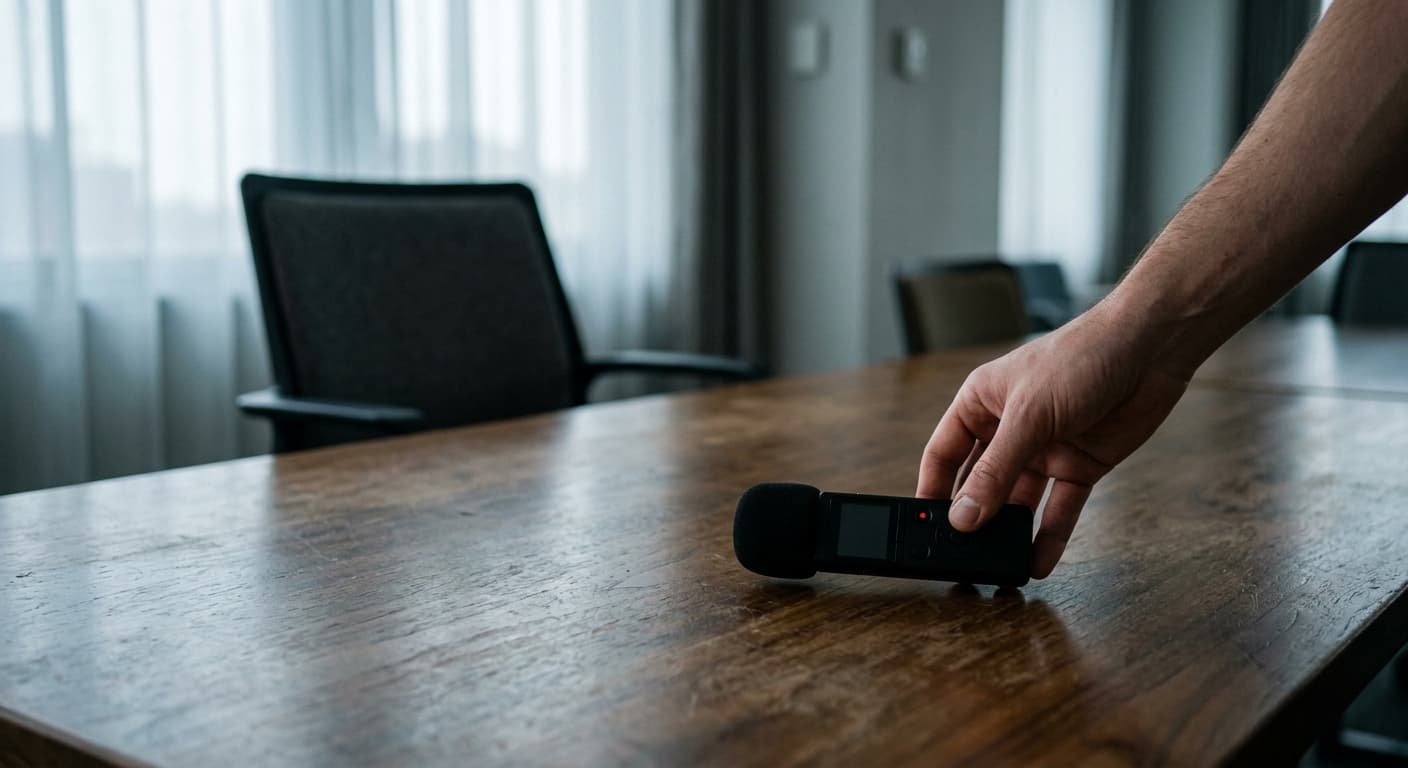
Rhode Island's one-party consent law, R.I. Gen. Laws § 11-35-21, allows either a tenant or landlord to record any conversation they personally join. No statute names cameras inside a rental unit, but a landlord who puts one there runs into the access limits of the Landlord-Tenant Act, the wiretap law, and the privacy statute. Cameras in common areas such as hallways and lobbies are treated differently.
Rhode Island's one-party consent law under R.I. Gen. Laws § 11-35-21 allows tenants to record conversations with landlords. Both in-person and phone interactions can be recorded as long as the tenant participates and the recording is not for criminal, tortious, or injurious purposes.
This guide covers tenant recording rights, landlord surveillance rules, using recordings in Rhode Island District Court, and hidden camera protections.
Tenant Recording Rights
Record conversations about repairs, lease terms, harassment, and security deposits. Phone calls follow one-party consent. Rhode Island's Residential Landlord and Tenant Act (R.I. Gen. Laws Chapter 34-18) governs the landlord-tenant relationship.
Landlord Surveillance
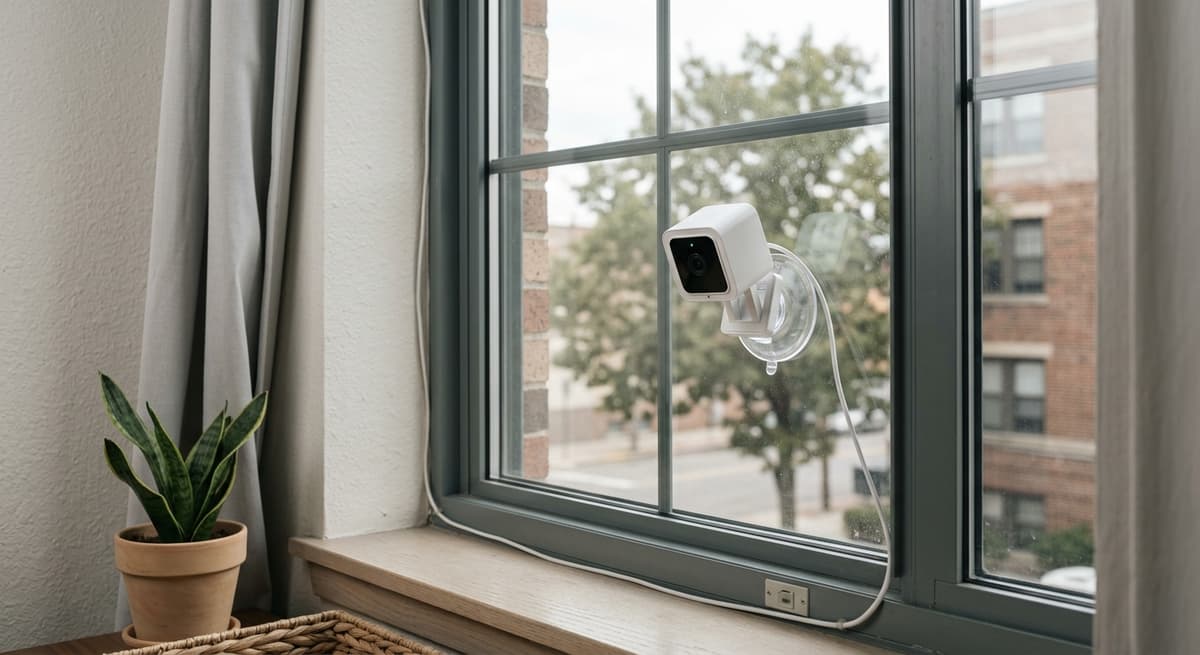
No Rhode Island statute expressly lists where a landlord may place cameras. Cameras in shared areas such as hallways, lobbies, and parking lots are common. Inside a tenant's unit, several laws stand in the way. The Landlord-Tenant Act limits a landlord's right to enter the unit and bars using access to harass the tenant (R.I. Gen. Laws § 34-18-26). Recording tenants' conversations the landlord is not part of, without a participant's consent, violates § 11-35-21. An unreasonable intrusion into a tenant's private space can support a civil claim under R.I. Gen. Laws § 9-1-28.1.

A hidden camera in a unit is video voyeurism under § 11-64-2 when it is used for sexual arousal, gratification or stimulation to capture a person's intimate areas without their knowledge and consent, where they reasonably expect privacy.
Using Recordings as Evidence
Eviction, habitability, and security deposit cases between landlords and tenants are heard in the Rhode Island District Court, which has exclusive original jurisdiction over them under R.I. Gen. Laws § 8-8-3. Lawfully made recordings can be offered there as evidence, subject to authentication and the rules of evidence. The Rhode Island Legal Services provides free legal help.
More Rhode Island Recording Laws
Audio Recording | Video Recording | Voyeurism & Hidden Cameras | Workplace Recording | Recording Police | Phone Call Recording | Security Cameras | Recording in Public | Landlord-Tenant | Dashcam Laws | Schools | Medical Recording
Back to Rhode Island Recording Laws
More Rhode Island Recording Topics
More Rhode Island Laws
- Rhode Island AI Meeting Recording Laws
- Rhode Island Dashcam Laws
- Rhode Island Data Privacy Laws
- Rhode Island Deepfake Laws
- Rhode Island Employee Monitoring Laws
- Rhode Island GPS Tracking Laws
- Rhode Island Police Bodycam Laws
- Rhode Island Smart Glasses Recording Laws
Frequently Asked Questions
Can I record my landlord in Rhode Island?
Yes, under one-party consent, for conversations you participate in. Not for criminal, tortious, or injurious purposes.
Can my landlord put cameras inside my apartment?
No statute names it directly, but it is a serious legal risk for a landlord. The Landlord-Tenant Act limits a landlord's access to your unit (R.I. Gen. Laws 34-18-26), recording your conversations the landlord is not part of, without a participant's consent, violates 11-35-21, and an unreasonable intrusion into your private space can support a claim under 9-1-28.1. Cameras in common areas are treated differently.
Can I use a recording in an eviction case?
Usually. Evictions are heard in Rhode Island District Court, and lawfully made recordings can be offered there as evidence, subject to authentication and the rules of evidence.
Can I install a doorbell camera at my rental?
Generally yes, subject to your lease's rules on alterations. Video of the area outside your door is usually fine, but if the camera records audio, avoid capturing conversations you are not part of, which 11-35-21 can make illegal.
What if I find a hidden camera in my rental?
Document it, contact police, and consult an attorney. Contact the Rhode Island Attorney General for resources.
Updates
Clarified that a landlord's recording of tenant conversations violates the wiretap law when no participant has consented.
We corrected the court for eviction and deposit cases to the Rhode Island District Court (there is no Housing Court for these cases), explained which laws limit landlord cameras inside a unit instead of stating an unsourced ban, and rewrote the doorbell-camera answer.
Independently fact-checked against the cited primary sources; governing law re-checked for recent changes
Clarified that Rhode Island video voyeurism law (R.I. Gen. Laws § 11-64-2) applies to hidden cameras used for sexual gratification to capture intimate areas without consent, rather than to every hidden camera in a unit.
Independently fact-checked against the cited primary sources; governing law re-checked for recent changes
Governing law re-checked for recent changes
Reviewed and approved by an editor
The Law Behind This Article
This article rests on the statutory provisions below, held in our own legal record and retrieved from the official source. Tap a section to read the operative text.
Rhode Island General Laws, Title 11: Criminal Offenses, Chapter 11-35: Public Utilities
§ 11-35-21Unauthorized interception, disclosure or use of wire, electronic, or oral communicationIn forcecited in 18 of our articles
(a) Except as otherwise specifically provided in chapter 5.1 of title 12, any person: (1) who willfully intercepts, attempts to intercept, or procures any other person to intercept or attempt to intercept, any wire, electronic, or oral communication; (2) who willfully discloses or attempts to disclose to any person the contents of any wire, electronic, or oral communication, knowing, or having reason to know that the information was obtained through interception of a wire, electronic, or oral communication in violation of this section; or (3) who willfully uses or attempts to use the contents of any wire, electronic, or oral communication, knowing, or having reason to know, that the information was obtained through interception of a wire, electronic, or oral communication in violation of this section; shall be imprisoned for not more than five (5) years. (b) The provisions of subdivisions (a)(2) and (3) of this section shall not apply to the contents of any wire, electronic, or oral communication, or evidence derived from those contents, which has become common knowledge or public information.
Official text (excerpt) · last checked 2026-09-24 · Read the full text in our law library · Verify at webserver.rilegislature.gov
Cited in 5 court opinions in our collectionLatest citing opinion in our collection: 2023
In the courts (editorial summary, independently checked):Walden v. CITY OF PROVIDENCE, RI (2010) held municipalities are not persons who may be sued under sections 11-35-21 and 12-5.1-13. The earlier Walden v. City of Providence (2007) held this section is criminal but that R.I. Gen. Laws 9-1-2 supplies a civil right of action for its violation.
Opinions citing this section in our collection:
- Bartnicki v. Vopper (Supreme Court of the United States 2001, 532 U.S. 514)“…Stat. § 165.540 (1997); 18 Pa. Cons. Stat. § 5703 (2000); R. I. Gen. Laws § 11-35-21 (2000); Tenn. Code Ann. § 39-13-601 (…”
- Walden v. CITY OF PROVIDENCE, RI (Court of Appeals for the First Circuit 2010, 596 F.3d 38)“…te, 18 U.S.C. § 2511 et seq.; Rhode Island's wiretap laws, R.I. Gen. Laws §§ 11-35-21, 12-5.1-13; and the state'…”
- Boehner, John A. v. McDermott, James A. (Court of Appeals for the D.C. Circuit 1999, 191 F.3d 463)“…43 (1998); 18 Pa Cons Stat. Ann. §§ 5703, 5725 (West 1999); R.I. Gen. Laws § 11-35-21 (1998); Tenn.Code Ann. §§ 39-13-601 to…”
Identified automatically from the court opinions citing this section — not a ranking of which case controls.
Also relied on in: Rhode Island Enacts AI Recording Consent Laws for Health Care, Rhode Island Smart Glasses Recording Laws 2026, Rhode Island Recording Laws (2026): One-Party Consent Rules
Rhode Island General Laws, Title 11: Criminal Offenses, Chapter 11-64: Electronic Imaging Devices
§ 11-64-2Video voyeurismIn forcecited in 12 of our articles
(1) A person is guilty of video voyeurism when, for the purpose of sexual arousal, gratification or stimulation, such person: (a) Uses, installs or permits the use or installation of an imaging device to capture, record, store or transmit visual images of the intimate areas of another person without that other person’s knowledge and consent, and under circumstances in which that other person would have a reasonable expectation of privacy. (b) Intentionally, and with knowledge that the image was obtained in violation of subsection (a), disseminates, publishes, or sells such image of the captured representation of another person or persons depicted in the representation or reproduction, and who did not consent to the dissemination, publication or sale. (2) A person is also guilty of video voyeurism when that person, for the purpose of sexual arousal, gratification or stimulation, looks into an occupied dwelling or other building by use of an imaging device that provides images of the interior of a dwelling.
Official text (excerpt) · last checked 2026-08-31 · Read the full text in our law library · Verify at webserver.rilegislature.gov
Cited in 1 court opinions in our collectionLatest citing opinion in our collection: 2014
Opinions citing this section in our collection:
- United States v. Thoms (U S Coast Guard Court of Criminal Appeals 2014)“…2C:14-9 (West 2013); 18 Pa. Cons. Stat. § 7507.1 (2012); R.I. Gen. Laws § 11-64-2 (2004); S.C. Code Ann. § 16-17-470 (201…”
Identified automatically from the court opinions citing this section — not a ranking of which case controls.
Also relied on in: Rhode Island School Recording Laws: Students, Parents, and Teacher Rights (2026), Rhode Island Security Camera Laws: Home, Business, and HOA Rules (2026), Rhode Island Video Recording Laws: Surveillance, Filming, and Privacy Rules (2026)
Explore the law
This article also draws on these acts and chapters (opening at their first section): Rhode Island General Laws, Title 34: Property, Chapter 34-18: Residential Landlord and Tenant Act § 34-18-1 (Short title)
Related law for further reading — not part of this article’s citations.
Sources and References
- R.I. § 11-35-21(law.justia.com)
- RI AG(riag.ri.gov).gov
- RI Legislature(rilegislature.gov).gov
- R.I. Gen. Laws § 11-35-21(webserver.rilegislature.gov).gov
- R.I. Gen. Laws Chapter 34-18 - Landlord-Tenant Act(webserver.rilegislature.gov).gov
- Rhode Island Legal Services(rils.org)