
Rhode Island
Rhode Island Security Camera Laws: Home, Business, and HOA Rules (2026)
Independently fact-checked against primary sources (last audited November 1, 2026). · Reviewed by the RecordingLaw editorial team. · Law checked current as of November 1, 2026. · 3 primary sources cited on this page. How we verify our legal content
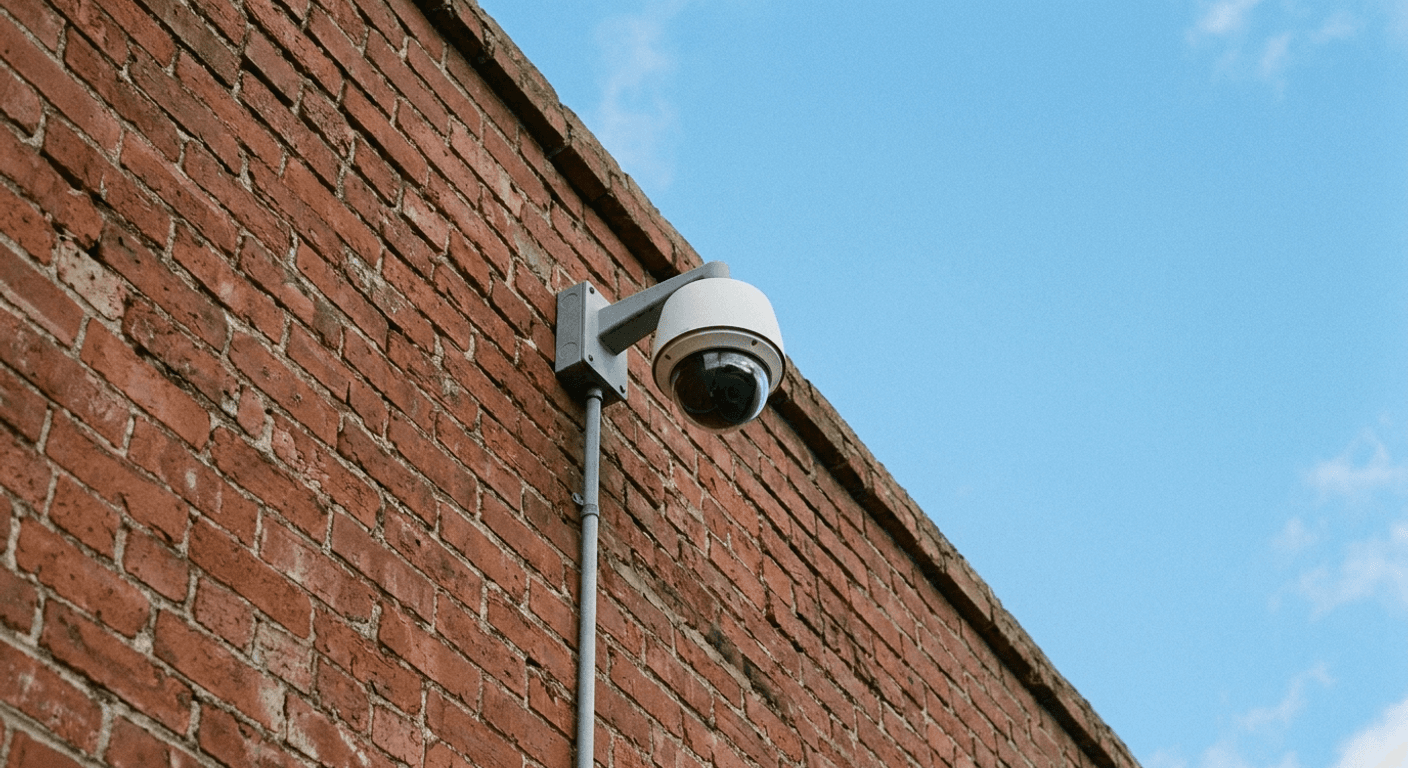
Rhode Island allows security cameras on your own property without permits or registration. Video-only cameras are generally lawful, but a camera in a bathroom, bedroom, or similar private space can be a crime or lead to a privacy lawsuit. Audio is riskier: recording conversations you are not part of, without a participant's consent, can be a felony under R.I. Gen. Laws § 11-35-21.
Rhode Island has no permit or registration requirement for security cameras. Residents and businesses can install cameras without permits. The limits come from several laws: the video voyeurism statute, R.I. Gen. Laws § 11-64-2; the wiretap law for audio, § 11-35-21; the state privacy statute, R.I. Gen. Laws § 9-1-28.1; and, for employers, a ban on recording employees in restrooms, locker rooms, and changing rooms, R.I. Gen. Laws § 28-6.12-1.
The voyeurism statute is not a general placement rule. It makes it a crime, for a sexual purpose, to capture images of someone's intimate areas without their knowledge and consent where they expect privacy. A camera in a bathroom or a guest bedroom can lead to a civil lawsuit under the privacy statute even without a sexual purpose.
This guide covers residential cameras, business surveillance, audio recording, HOA rules, neighbor disputes, and smart camera technology.
Residential Security Cameras
Install cameras on your own property without permission. Avoid aiming at neighbors' private areas, which can support a privacy lawsuit under § 9-1-28.1. A video-only nanny cam in a common area is generally lawful. Do not place one in a bathroom or a guest bedroom, and turn audio off unless you will be part of the conversations it records.

Business Cameras
Cameras in lobbies, sales floors, warehouses, and parking lots. Not in bathrooms, locker rooms, or changing areas: Rhode Island law bars employers from making any audio or video recording of employees in a restroom, locker room, or employer-designated changing room unless a court authorizes it, and an employee can sue for damages, attorney's fees, and an injunction (R.I. Gen. Laws § 28-6.12-1).
Audio Recording
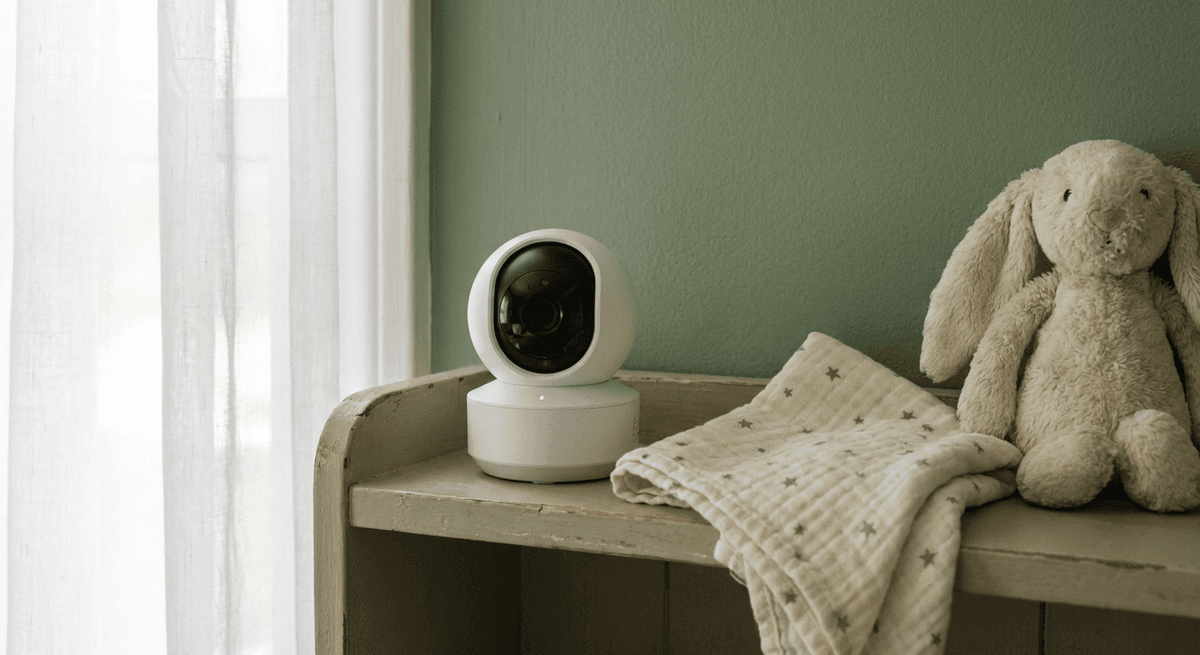
One-party consent protects you when you are a participant in the conversation, or when a participant has given prior consent. Being in the room is not enough. A camera that records audio of conversations between other people, such as a nanny and a visitor or guests talking on your porch, is capturing conversations you are not part of. Doing that without a participant's consent can be a felony under R.I. Gen. Laws § 11-35-21, even on your own property. Video-only cameras, or cameras with audio turned off, avoid this risk.
Smart Cameras and Law Enforcement
Ring, Nest, and Arlo cameras are legal to own and use within the limits above. Police can generally get footage with your consent, or compel it with a subpoena or a warrant. You can decline a voluntary request. A subpoena can be challenged in court, so talk to a lawyer before responding to one. A warrant must be complied with.
More Rhode Island Recording Laws
Audio Recording | Video Recording | Voyeurism & Hidden Cameras | Workplace Recording | Recording Police | Phone Call Recording | Security Cameras | Recording in Public | Landlord-Tenant | Dashcam Laws | Schools | Medical Recording
Back to Rhode Island Recording Laws
More Rhode Island Recording Topics
See Also
- Rhode Island Surveillance Camera Laws covers home, HOA, neighbor, workplace, and landlord camera rules in Rhode Island.
More Rhode Island Laws
- Rhode Island AI Meeting Recording Laws
- Rhode Island Dashcam Laws
- Rhode Island Data Privacy Laws
- Rhode Island Deepfake Laws
- Rhode Island Employee Monitoring Laws
- Rhode Island GPS Tracking Laws
- Rhode Island Police Bodycam Laws
- Rhode Island Smart Glasses Recording Laws
Frequently Asked Questions
Do I need a permit for security cameras in Rhode Island?
No. Rhode Island does not require permits or registration.
Can my neighbor point a camera at my house?
A camera may incidentally capture your property. Cameras aimed at your private areas may give rise to a claim under Rhode Island's privacy statute, R.I. Gen. Laws § 9-1-28.1, for unreasonable intrusion upon seclusion.
Do security cameras with audio violate Rhode Island wiretapping laws?
Not if you are a party to the conversation and are not recording for a criminal, tortious, or other injurious purpose. They can if the camera records conversations between other people without a participant's consent. One-party consent protects a person who is part of the conversation. Being nearby is not enough. A camera that records audio of conversations between other people, without a participant's consent, can be a felony under R.I. Gen. Laws § 11-35-21. Video-only cameras avoid this risk.
Can my landlord install cameras inside my apartment?
Generally no. Tenants have a reasonable expectation of privacy inside their units, and a landlord camera there can support a lawsuit under Rhode Island's privacy statute (R.I. Gen. Laws § 9-1-28.1), which lets a court award attorney fees. A camera that captures intimate areas for a sexual purpose is also video voyeurism (§ 11-64-2).
Can police access my camera footage without a warrant?
In some cases, yes. Police can get footage with your consent, and they can compel it with a subpoena or a warrant. You can decline a voluntary request. A subpoena can be challenged in court, so talk to a lawyer before responding to one. A warrant must be complied with.
Updates
Clarified that Rhode Island's one-party rule also covers a non-participant who records with a participant's prior consent.
Clarified that a camera recording other people's conversations can be a felony when no participant has consented.
We corrected this page to say that one-party consent covers only a participant (so a camera recording other people's conversations can be a felony), that the voyeurism law requires a sexual purpose while privacy suits and an employer restroom-recording ban also apply, and that police can obtain footage by consent, subpoena or warrant rather than only by warrant. Corrected the FAQ answer on audio cameras, which wrongly suggested being a participant creates liability (a participant is protected; recording other people's conversations is the risk), and clarified that a search warrant must be complied with while a subpoena can be challenged in court.
Independently fact-checked against the cited primary sources; governing law re-checked for recent changes
Independently fact-checked against the cited primary sources; governing law re-checked for recent changes
Governing law re-checked for recent changes
Governing law re-checked for recent changes
Reviewed and approved by an editor
The Law Behind This Article
This article rests on the statutory provisions below, held in our own legal record and retrieved from the official source. Tap a section to read the operative text.
Rhode Island General Laws, Title 11: Criminal Offenses, Chapter 11-35: Public Utilities
§ 11-35-21Unauthorized interception, disclosure or use of wire, electronic, or oral communicationIn forcecited in 18 of our articles
(a) Except as otherwise specifically provided in chapter 5.1 of title 12, any person: (1) who willfully intercepts, attempts to intercept, or procures any other person to intercept or attempt to intercept, any wire, electronic, or oral communication; (2) who willfully discloses or attempts to disclose to any person the contents of any wire, electronic, or oral communication, knowing, or having reason to know that the information was obtained through interception of a wire, electronic, or oral communication in violation of this section; or (3) who willfully uses or attempts to use the contents of any wire, electronic, or oral communication, knowing, or having reason to know, that the information was obtained through interception of a wire, electronic, or oral communication in violation of this section; shall be imprisoned for not more than five (5) years. (b) The provisions of subdivisions (a)(2) and (3) of this section shall not apply to the contents of any wire, electronic, or oral communication, or evidence derived from those contents, which has become common knowledge or public information.
Official text (excerpt) · last checked 2026-09-24 · Read the full text in our law library · Verify at webserver.rilegislature.gov
Cited in 5 court opinions in our collectionLatest citing opinion in our collection: 2023
In the courts (editorial summary, independently checked):Walden v. CITY OF PROVIDENCE, RI (2010) held municipalities are not persons who may be sued under sections 11-35-21 and 12-5.1-13. The earlier Walden v. City of Providence (2007) held this section is criminal but that R.I. Gen. Laws 9-1-2 supplies a civil right of action for its violation.
Opinions citing this section in our collection:
- Bartnicki v. Vopper (Supreme Court of the United States 2001, 532 U.S. 514)“…Stat. § 165.540 (1997); 18 Pa. Cons. Stat. § 5703 (2000); R. I. Gen. Laws § 11-35-21 (2000); Tenn. Code Ann. § 39-13-601 (…”
- Walden v. CITY OF PROVIDENCE, RI (Court of Appeals for the First Circuit 2010, 596 F.3d 38)“…te, 18 U.S.C. § 2511 et seq.; Rhode Island's wiretap laws, R.I. Gen. Laws §§ 11-35-21, 12-5.1-13; and the state'…”
- Boehner, John A. v. McDermott, James A. (Court of Appeals for the D.C. Circuit 1999, 191 F.3d 463)“…43 (1998); 18 Pa Cons Stat. Ann. §§ 5703, 5725 (West 1999); R.I. Gen. Laws § 11-35-21 (1998); Tenn.Code Ann. §§ 39-13-601 to…”
Identified automatically from the court opinions citing this section — not a ranking of which case controls.
Also relied on in: Rhode Island Enacts AI Recording Consent Laws for Health Care, Rhode Island Smart Glasses Recording Laws 2026, Rhode Island Recording Laws (2026): One-Party Consent Rules
Rhode Island General Laws, Title 11: Criminal Offenses, Chapter 11-64: Electronic Imaging Devices
§ 11-64-2Video voyeurismIn forcecited in 12 of our articles
(1) A person is guilty of video voyeurism when, for the purpose of sexual arousal, gratification or stimulation, such person: (a) Uses, installs or permits the use or installation of an imaging device to capture, record, store or transmit visual images of the intimate areas of another person without that other person’s knowledge and consent, and under circumstances in which that other person would have a reasonable expectation of privacy. (b) Intentionally, and with knowledge that the image was obtained in violation of subsection (a), disseminates, publishes, or sells such image of the captured representation of another person or persons depicted in the representation or reproduction, and who did not consent to the dissemination, publication or sale. (2) A person is also guilty of video voyeurism when that person, for the purpose of sexual arousal, gratification or stimulation, looks into an occupied dwelling or other building by use of an imaging device that provides images of the interior of a dwelling.
Official text (excerpt) · last checked 2026-08-31 · Read the full text in our law library · Verify at webserver.rilegislature.gov
Cited in 1 court opinions in our collectionLatest citing opinion in our collection: 2014
Opinions citing this section in our collection:
- United States v. Thoms (U S Coast Guard Court of Criminal Appeals 2014)“…2C:14-9 (West 2013); 18 Pa. Cons. Stat. § 7507.1 (2012); R.I. Gen. Laws § 11-64-2 (2004); S.C. Code Ann. § 16-17-470 (201…”
Identified automatically from the court opinions citing this section — not a ranking of which case controls.
Also relied on in: Rhode Island Landlord-Tenant Recording Laws: Renter and Landlord Rights (2026), Rhode Island School Recording Laws: Students, Parents, and Teacher Rights (2026), Rhode Island Video Recording Laws: Surveillance, Filming, and Privacy Rules (2026)
Sources and References
- R.I. § 11-35-21(law.justia.com)
- RI AG(riag.ri.gov).gov
- R.I. Gen. Laws § 11-35-21(webserver.rilegislature.gov).gov
- R.I. Gen. Laws § 11-64-2 - Video Voyeurism(webserver.rilegislature.gov).gov