
Rhode Island
Rhode Island Recording Laws (2026): One-Party Consent Rules
Independently fact-checked against primary sources (last audited August 15, 2026). · Reviewed by the RecordingLaw editorial team. · Law checked current as of August 15, 2026. · 23 primary sources cited on this page. How we verify our legal content
Rhode Island is a one-party consent state under R.I. Gen. Laws 11-35-21. A participant in a wire, electronic, or oral communication may record it without notifying the other parties; a non-participant may record only if at least one party gives prior consent. Illegal interception is a felony carrying up to five years in prison, and the civil cause of action under R.I. Gen. Laws 12-5.1-13 can yield actual damages or $100 per day or $1,000 minimum (whichever is highest), plus punitive damages and attorney fees.
Rhode Island recording law at a glance
| Question | Answer |
|---|---|
| Consent rule | One-party (participant consent) |
| Main statute | R.I. Gen. Laws 11-35-21 |
| When recording is illegal | Non-participant records with no consenting party; or any party records to facilitate a criminal, tortious, or injurious act |
| Criminal penalty | Felony, up to 5 years imprisonment, no statutory fine |
| Civil penalty | Greater of actual damages, $100/day, or $1,000 minimum; plus punitive damages and attorney fees (12-5.1-13) |
| Hidden cameras / voyeurism | Up to 3 years and/or $5,000 fine if recording is for sexual arousal (11-64-2); AI deepfakes of intimate images covered under 11-64-3 |
| Recording police | Yes, both openly and secretly, per First Circuit precedent (Glik 2011; Rollins 2020) |
For a deeper treatment of every topic, jump to the in-depth guides section below.

Recording in-person conversations in Rhode Island
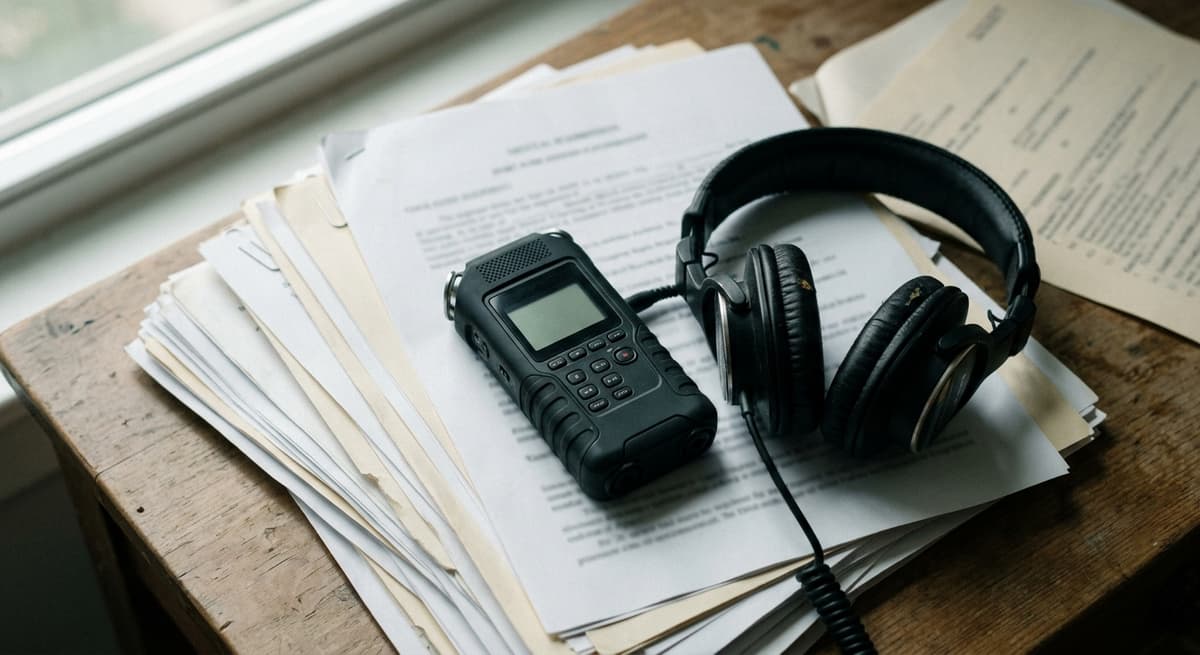
Rhode Island's core rule is in subsection (c)(3) of R.I. Gen. Laws 11-35-21. A person who is a party to a wire, electronic, or oral communication may record it, or may let a third party record it with the party's prior consent. Everyone in a conversation need not know about the recording.
The operative definitions live at R.I. Gen. Laws 12-5.1-1. An "oral communication" is "any oral communication uttered by a person exhibiting an expectation that the communication is not subject to interception under circumstances justifying that expectation," which mirrors the Katz reasonable-expectation-of-privacy standard. A loud conversation in a public square is not an "oral communication" protected by the statute; a private discussion in a closed office is.
The single most-missed rule is the carve-out at the end of (c)(3). The private-actor one-party rule disappears when "the communication is intercepted for the purpose of committing any criminal or tortious act in the violation of the constitution or laws of the United States or of any state or for the purpose of committing any other injurious act." Recording a coworker to support an HR complaint for harassment does not invoke the carve-out. Recording that same coworker to extort money from them does, and the person is exposed to the full felony charge at 11-35-21(a).
State v. O'Brien, 774 A.2d 89 (R.I. 2001), is the Rhode Island Supreme Court's leading interpretation of 11-35-21. In that case, the defendant arranged for a hidden video camera to secretly record him with another person, without her knowledge. The court held that a video camera's audio component qualifies as an "intercepting device" under the statute, and that "willfully" in subsection (a) means "intentional," not that the defendant acted with a bad purpose. Because the recording was made to accomplish a tortious invasion of privacy, the one-party consent defense at (c)(3) was unavailable to him even though he was a party to the encounter. If the purpose behind an interception is criminal, tortious, or otherwise injurious, the exception is unavailable.
There is also a structural asymmetry worth knowing. The color-of-law exception at (c)(2), which authorizes law enforcement recording, does not carry the same criminal-tortious-or-injurious-act carve-out. Only the private-actor exception is restricted by that language.
Recording phone calls in Rhode Island
The same 11-35-21(c)(3) one-party rule governs phone calls. "Wire communication" covers landline calls, cellular calls, and voice-over-IP audio. "Electronic communication" reaches the text-message and video-call channels. A Rhode Island resident may record their own calls without telling the other party, subject to the carve-out.
The interstate wrinkle matters for calls that touch neighboring states. Massachusetts (Mass. Gen. Laws ch. 272, section 99), Connecticut (Conn. Gen. Stat. section 52-570d for telephone calls), and New Hampshire (N.H. Rev. Stat. Ann. section 570-A:2) all require all-party consent in at least some circumstances. The general default is that the stricter rule applies when a call touches a stricter state. A Rhode Island resident calling a Massachusetts contact should obtain consent from every party before recording. The federal ECPA floor at 18 U.S.C. 2511(2)(d) is one-party only and does not preempt stricter state law.
For a complete treatment of phone-call recording rules, see the Rhode Island phone calls guide.
Hidden cameras, doorbells, and nanny cams
Rhode Island's audio and video statutes run in parallel. Chapter 11-64 governs visual recording; R.I. Gen. Laws 11-35-21 governs any audio the camera also picks up.
R.I. Gen. Laws 11-64-2 prohibits video voyeurism. The offense requires using an imaging device to capture intimate areas of another person without their knowledge, in a place where they have a reasonable expectation of privacy, "for the purpose of sexual arousal, gratification or stimulation." Knowingly disseminating images obtained that way is a separate count under the same provision. A second, independent prong at 11-64-2(2) applies to looking into an occupied dwelling or other building with an imaging device that provides images of the interior, for a sexual purpose, even without capturing a specific person's intimate areas. The penalty is up to three years imprisonment and/or a fine up to $5,000.
The sexual-purpose element is load-bearing. Surreptitious recording of intimate areas for a non-sexual motive does not fall under 11-64-2, though it can give rise to common-law intrusion-upon-seclusion.
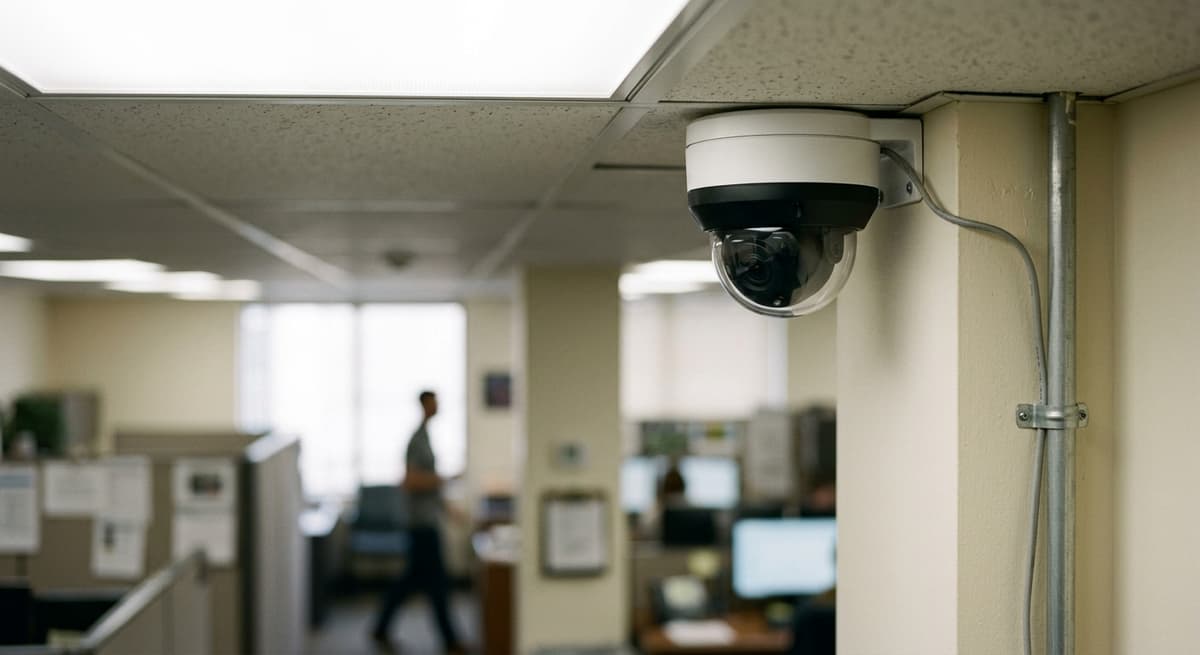
Doorbell cameras with audio. The audio track is subject to 11-35-21 once a visitor speaks. The homeowner-party satisfies the one-party rule for any conversation they are part of. A camera aimed at a public sidewalk or driveway approach is generally fine because there is no reasonable expectation of privacy in a public area. A camera angled into a bathroom or bedroom for a sexual purpose violates 11-64-2.
Nanny cams. In-home video is lawful. The homeowner-party satisfies 11-35-21 for audio of conversations they are part of. Recording a nanny's private phone call with a third party, where the homeowner is not on the call, falls outside the one-party rule.
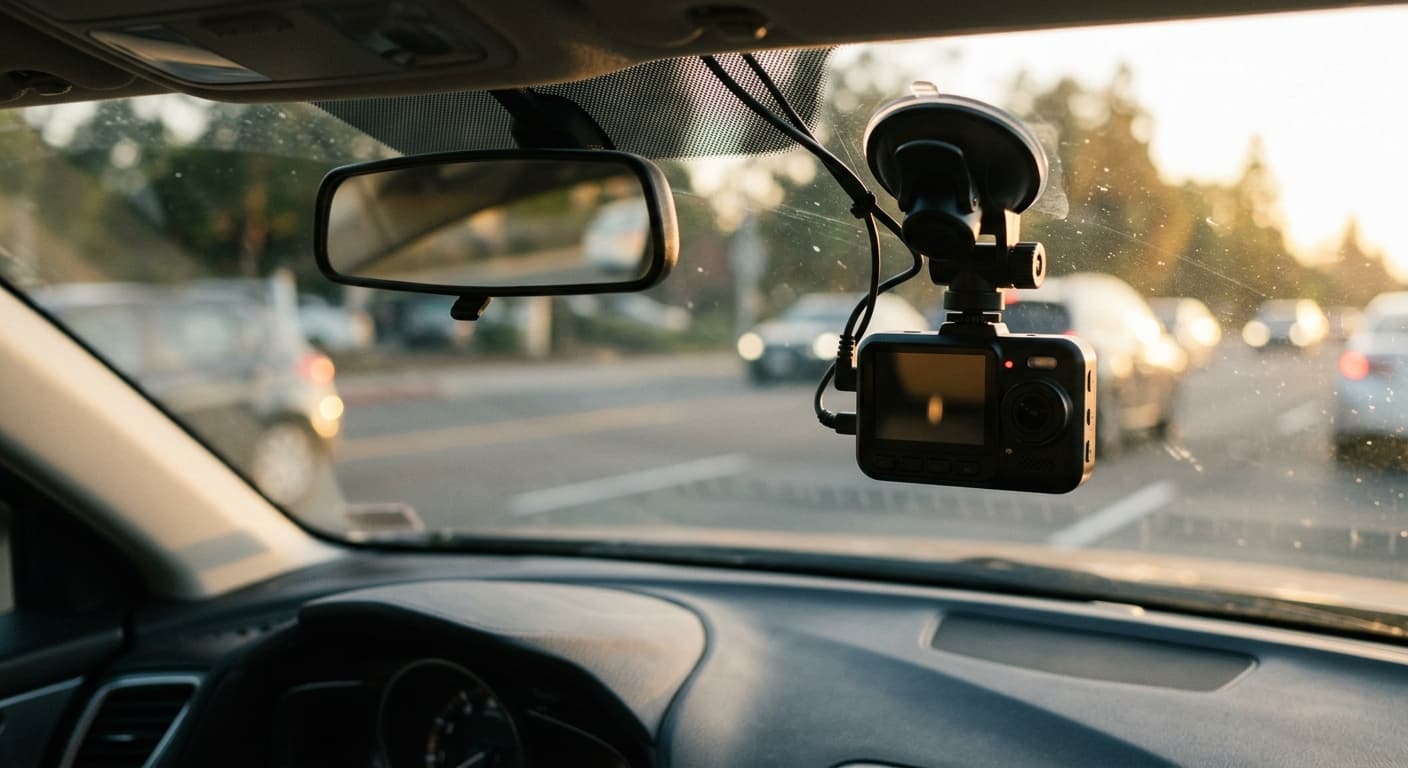
Dashcams. Cabin audio is governed by 11-35-21, with the driver as the consenting party. Video of a public roadway does not implicate 11-64-2 because there is no reasonable expectation of privacy on a public street.
For security camera rules in more depth, see the Rhode Island security cameras guide and the Rhode Island voyeurism guide.
Penalties for illegal recording in Rhode Island
Rhode Island recording violations carry criminal and civil exposure across three statutes.
Criminal penalties
| Offense | Statute | Penalty |
|---|---|---|
| Willful interception, disclosure, or use | R.I. Gen. Laws 11-35-21 | Felony: up to 5 years imprisonment, no statutory fine |
| Video voyeurism (sexual-arousal purpose) | R.I. Gen. Laws 11-64-2 | Up to 3 years and/or $5,000 fine |
| NCII dissemination, first offense | R.I. Gen. Laws 11-64-3(d) | Misdemeanor: up to 1 year and $1,000 |
| NCII dissemination, second or subsequent | R.I. Gen. Laws 11-64-3(d) | Felony: up to 3 years and $3,000 |
| Sextortion (threat to disclose for benefit) | R.I. Gen. Laws 11-64-3(e) | Felony: up to 5 years and $5,000 |
| Removal-extortion (payment to remove) | R.I. Gen. Laws 11-64-3(f) | Felony: up to 5 years and $5,000 |
Note on 11-35-21: the statute specifies no monetary fine in the criminal subsection. Any prior reference to a $10,000 fine for wiretap violations under 11-35-21 is incorrect.
The disclosure and use prohibitions in 11-35-21(a)(2) and (a)(3) do not apply once the contents of a communication have become common knowledge or public information, per R.I. Gen. Laws 11-35-21(b). Federal law adds a further protection for republication: under Bartnicki v. Vopper, 532 U.S. 514 (2001), a person who played no part in an illegal interception generally cannot be held liable for publishing the resulting recording when it involves a matter of public concern.
Civil remedy under R.I. Gen. Laws 12-5.1-13
The civil cause of action is plaintiff-favorable. The damages formula at subsection (a)(1) awards the greatest of: (i) actual damages, (ii) $100 per day of violation, or (iii) $1,000 minimum. On top of that, the plaintiff also recovers punitive damages under subsection (a)(2) and reasonable attorney fees and other litigation disbursements under subsection (a)(3). Good-faith reliance on a court order issued under Chapter 12-5.1 is a complete defense at subsection (b).
The civil cause runs independently of any criminal prosecution. The three-year personal-injury limitations period at R.I. Gen. Laws 9-1-14(b) governs; Boudreau v. Automatic Temperature Controls, Inc., 212 A.3d 594 (R.I. 2019), holds that for a Wiretap Act claim the clock runs from the discrete act of interception, not from any later use or disclosure of the recording. The Rhode Island Supreme Court rejected a continuing-violation theory and affirmed summary judgment against a plaintiff whose suit, filed more than three years after his employer installed covert monitoring software, was time-barred.
A plaintiff may also stack the federal ECPA civil cause at 18 U.S.C. 2520, which provides the greater of actual damages or $100 per day or $10,000, plus punitives and attorney fees. The federal floor preempts nothing in Rhode Island law.
Recording the police in Rhode Island
Rhode Island citizens have a clearly established First Amendment right to record on-duty law enforcement in public, including secret audio recording. The First Circuit is the most plaintiff-protective federal circuit on this question, and it binds Rhode Island.
Glik v. Cunniffe, 655 F.3d 78 (1st Cir. 2011). Simon Glik used his cell phone to openly record Boston police officers on the Boston Common. The First Circuit held that "a citizen's right to film government officials, including law enforcement officers, in the discharge of their duties in a public space is a basic, vital, and well-established liberty safeguarded by the First Amendment." The right was clearly established in 2007, so the officers lost qualified immunity. An officer who arrests a Rhode Island resident for openly filming a police encounter risks personal section 1983 liability.
Project Veritas Action Fund v. Rollins, 982 F.3d 813 (1st Cir. 2020). The court extended Glik to secret recording of on-duty police officers in public spaces, holding the Massachusetts all-party wiretap rule unconstitutional as applied on intermediate-scrutiny grounds. The First Circuit declined to reach the broader question of secretly recording government officials generally, vacating that part of the district court ruling on ripeness grounds. Because Rhode Island is already a one-party state, 11-35-21 already allows secret recording; Rollins additionally confirms that any future Rhode Island effort to require "notify before recording police" would face the same constitutional barrier.
Both cases are scoped to public spaces. Recording police on private property, interfering physically with an arrest, or ignoring a lawful order to step back removes the First Amendment protection and can support independent charges.
For a full treatment, see the Rhode Island police recording guide.
Special topics in Rhode Island
Body-worn cameras
R.I. Gen. Laws Chapter 42-161 (enacted P.L. 2021 ch. 228 and 229, effective July 8, 2021) is the statewide body-worn camera enabling statute. The Attorney General and the Department of Public Safety jointly administer the program. The implementing regulation at 270-RICR-60-00-2 (current effective July 22, 2025) requires officers to activate cameras upon responding to a call for service or during investigative or enforcement activity, and expressly states that consent to record is not required for body-worn camera operation. Use-of-force recordings must typically be released within 30 days of substantial completion of the related investigation. (Note: the section number 42-28-37 that some sources cite for body cameras is actually the accident-report-fee statute and is unrelated.)
AI deepfakes and NCII
R.I. Gen. Laws 11-64-3 was amended on July 2, 2025 (H 5046 / S 0136, signed by Governor McKee) to add "including any image created by a digital device or altered by digitization" to the definition of covered images. AI-generated and digitally altered intimate images of identifiable adults are now expressly within scope. Violators do not face sex-offender registration under subsection (g). The federal TAKE IT DOWN Act (Pub. L. 119-12, signed May 19, 2025) adds a criminal prohibition on knowing publication of non-consensual intimate visual depictions and a 48-hour covered-platform notice-and-removal duty effective May 19, 2026. Rhode Island victims may invoke both tracks simultaneously.
Election deepfakes
R.I. Gen. Laws Chapter 17-30 (created by H 5872 / S 0816, also signed July 2, 2025) prohibits distributing deceptive synthetic media within 90 days of a primary or general election without a clear AI disclosure. The remedy is civil only, standing is limited to the depicted candidate, and the burden is clear-and-convincing evidence. Satire, parody, and news media are exempt.
Workplace recording and NLRB
Rhode Island's one-party rule applies at work: an employee who is a party to a meeting may record it. The employer's no-recording policy can still be lawful if narrowly tailored, under the controlling standard of Stericycle, Inc., 372 NLRB No. 113 (Aug. 2, 2023). NLRB GC 25-07 (June 25, 2025) declared surreptitious recording of collective-bargaining sessions a per se unfair labor practice under Bartlett-Collins Co., 237 NLRB 770 (1978); the ruling is scoped narrowly to bargaining sessions. Stericycle otherwise remains controlling. For a full workplace analysis, see the Rhode Island workplace recording guide.
Federal overlay
The federal Electronic Communications Privacy Act (18 U.S.C. 2510-2522) sets a one-party consent floor and does not preempt Rhode Island's rule. FCC Declaratory Ruling 24-17 (Feb. 2024) treats AI-generated voices in calls as "artificial or prerecorded voice" under the TCPA, requiring prior express consent. The one-to-one TCPA consent rule (FCC 24-24) was vacated by the Eleventh Circuit, and the FCC reinstated the prior version effective August 29, 2025. The HIPAA Privacy Rule (45 C.F.R. Part 164) lets patients record their own provider conversations under 11-35-21; providers disclosing recordings must comply with HIPAA's minimum-necessary and authorization rules. FDCPA Regulation F (12 C.F.R. Part 1006) leaves Rhode Island consumers free to record their own debt-collection calls under the one-party rule.
Open meetings
Rhode Island citizens have an implied right to audio and video record open meetings of public bodies under R.I. Gen. Laws Chapter 42-46 (Open Meetings Act), subject to narrowly tailored restrictions for orderly conduct. Closed executive sessions under section 42-46-5 are the exception. The Rhode Island AG Open Government portal is the canonical resource.

Recent legal developments
- July 2, 2025: Governor McKee signed H 5046 / S 0136 amending R.I. Gen. Laws 11-64-3 to expressly cover AI-generated and digitally altered intimate images.
- July 2, 2025: Governor McKee signed H 5872 / S 0816 creating Chapter 17-30, the election-deepfake civil-only framework.
- May 19, 2025: TAKE IT DOWN Act (Pub. L. 119-12) signed. Platform 48-hour removal duty effective May 19, 2026.
- July 22, 2025: 270-RICR-60-00-2 (body-worn camera regulation) took effect in its current version.
- Aug. 29, 2025: FCC reinstated prior version of 47 C.F.R. 64.1200(f)(9) after FCC 24-24 one-to-one consent rule was vacated by the Eleventh Circuit.
- June 25, 2025: NLRB GC 25-07 declared surreptitious recording of collective-bargaining sessions a per se unfair labor practice; Stericycle remains the controlling standard for all other no-recording policies.
Rhode Island recording laws in depth
Want to know more? Each page below covers a specific context in greater depth.
By type of recording
- Rhode Island Audio Recording Laws: One-Party Consent Rules and Penalties (2026)
- Rhode Island Phone Call Recording Laws: One-Party Consent Guide (2026)
- Rhode Island Video Recording Laws: Surveillance, Filming, and Privacy Rules (2026)
- Rhode Island Voyeurism and Hidden Camera Laws: Penalties and 2025 Deepfake Update (2026)
- Rhode Island Dashcam Laws: Mounting, Audio, and Evidence Rules (2026)
By place or relationship
- Rhode Island Laws on Recording Police: First Circuit Protections (2026)
- Rhode Island Workplace Recording Laws: Employee and Employer Rights (2026)
- Rhode Island School Recording Laws: Students, Parents, and Teacher Rights (2026)
- Rhode Island Medical Recording Laws: Patient Rights and HIPAA Rules (2026)
- Rhode Island Landlord-Tenant Recording Laws: Renter and Landlord Rights (2026)
- Rhode Island Security Camera Laws: Home, Business, and HOA Rules (2026)
- Rhode Island Public Recording Laws: Filming Rights in Public Spaces (2026)
More Rhode Island laws
- Rhode Island Alimony Laws
- Rhode Island At-Will Employment Laws
- Rhode Island Child Custody Laws
- Rhode Island Landlord-Tenant Laws
- Rhode Island Data Privacy Laws
This article is general legal information, not legal advice. Recording laws change and apply differently to each situation. For advice about your situation, consult a licensed Rhode Island attorney.
More Rhode Island Laws
Frequently Asked Questions
Is Rhode Island a one-party or two-party consent state?
Rhode Island is a one-party consent state under R.I. Gen. Laws 11-35-21(c)(3). A participant in a wire, electronic, or oral communication may record without notifying anyone else. A non-participant may record only if at least one party gives prior consent. The private-actor rule is subject to one carve-out: recording to commit a criminal, tortious, or other injurious act forfeits the consent defense.
Can I record a phone call in Rhode Island without telling the other person?
Yes, if you are a party to the call. R.I. Gen. Laws 11-35-21(c)(3) applies to wire and electronic communications, covering landline, cellular, and VoIP calls. If the other party is in Massachusetts, Connecticut, or New Hampshire (all stricter states), the safer approach is to get consent from everyone on the call before recording.
Is illegal recording a felony in Rhode Island?
Yes. Willful interception, disclosure, or use of a wire, electronic, or oral communication under R.I. Gen. Laws 11-35-21 is a felony carrying up to five years imprisonment. The statute does not impose a monetary fine in the criminal subsection. Any prior reference to a $10,000 criminal fine for 11-35-21 violations is incorrect.
What can I sue for if someone records me illegally in Rhode Island?
Under R.I. Gen. Laws 12-5.1-13, the civil remedy is the greatest of actual damages, $100 per day of violation, or $1,000 minimum, plus punitive damages, plus reasonable attorney fees and litigation costs. The civil cause runs independently of any criminal prosecution, and the three-year limitations period runs from the date of the interception itself, not from when the recording is later used or disclosed (Boudreau v. Automatic Temperature Controls, R.I. 2019, which rejected a continuing-violation theory and held a plaintiff's claim time-barred).
Are Ring doorbells and nanny cams legal in Rhode Island?
Generally yes. The homeowner-party satisfies 11-35-21's one-party rule for audio of any conversation they are part of. Public-facing video is permissible because visitors to a driveway or front door lack a reasonable expectation of privacy. A camera aimed at an intimate area of the home for a sexual purpose would violate R.I. Gen. Laws 11-64-2 (video voyeurism, up to three years and $5,000).
Can I record my boss or an HR meeting without telling them?
Generally yes under R.I. Gen. Laws 11-35-21(c)(3), because the employee is a party to the meeting. The carve-out still applies: recording to extort, blackmail, or otherwise harm the employer forfeits the defense. An employer handbook that prohibits recording can lead to at-will termination for policy violation, subject to NLRA Section 7 protections under Stericycle, 372 NLRB No. 113 (2023).
Can I record the police in Rhode Island?
Yes, both openly and secretly. Rhode Island is in the First Circuit, where Glik v. Cunniffe, 655 F.3d 78 (1st Cir. 2011), established a clearly established First Amendment right to openly film on-duty officers in public. Project Veritas Action Fund v. Rollins, 982 F.3d 813 (1st Cir. 2020), extends that protection to secret audio recording. Maintain a safe distance and comply with lawful orders.
Are AI-generated deepfake intimate images illegal in Rhode Island?
Yes. R.I. Gen. Laws 11-64-3 was amended on July 2, 2025 (H 5046 / S 0136) to expressly cover images 'created by a digital device or altered by digitization.' Creating or distributing a synthesized intimate image of an identifiable adult without consent is a crime with a tiered penalty: first offense misdemeanor (up to 1 year and $1,000), base repeat felony (up to 3 years and $3,000), and aggravated extortion felonies (up to 5 years and $5,000 each). Violators are not required to register as sex offenders under subsection (g).
Does Rhode Island require all-party consent for recording at work?
No. Rhode Island is a one-party consent state for all settings, including the workplace. An employee who is party to a meeting may record it without telling the employer. However, a no-recording policy in a handbook may be enforced as a condition of at-will employment (unless the policy violates NLRA Section 7 rights under Stericycle), and recording for a wrongful purpose still forfeits the 11-35-21(c)(3) defense.
Updates
Corrected the description of Project Veritas Action Fund v. Rollins to match what the First Circuit actually decided: it protected secret audio recording of on-duty police officers in public and left the broader question of recording government officials generally undecided.
Corrected a case citation that had the wrong name (State v. O'Brien, not 'State v. Brien') and fixed a mischaracterized ruling: Boudreau v. Automatic Temperature Controls actually held that a civil wiretap claim's three-year deadline runs from the act of interception itself, not from whenever the recording is later discovered or used.
Independently fact-checked against the cited primary sources; governing law re-checked for recent changes
Governing law re-checked for recent changes
Reviewed and approved by an editor
Restructured page for readability: added AEO lede, at-a-glance table, and dedicated H2 sections for in-person recording, phone calls, hidden cameras, penalties, police recording, and special topics. Condensed special-topics material (body cams, deepfakes, election synthetic media, workplace NLRB, federal overlay, open meetings) into tight subsections. Added in-depth index linking all 12 real sub-pages. Refreshed FAQ to 8 plain-language questions. Preserved all verified statutes, case citations, and penalty figures from the 2026-05-13 audit. Re-verified R.I. Gen. Laws 11-35-21 criminal penalty (5 years imprisonment, no statutory fine confirmed), 12-5.1-13 civil remedy formula confirmed, and 11-64-3 four-tier penalty ladder confirmed against primary webserver.rilegislature.gov sources. Zero fact corrections: all load-bearing facts from prior audit remain accurate.
Refreshed for 2026. Corrected the R.I. Gen. Laws 11-35-21 felony framing to imprisonment up to five (5) years only; the statute specifies no monetary fine in the criminal subsection, and the prior $10,000 figure carried over from a baseline error has been removed. Corrected 11-35-21(c) to the three statutory exceptions ((c)(1) common-carrier in the normal course of employment, (c)(2) color-of-law law-enforcement with no criminal-tortious-or-injurious-act carve-out, and (c)(3) private-actor one-party consent with that carve-out); removed any reference to a fourth (c)(4) FCC-regulated radio exception, which the statute does not contain. Anchored the civil-remedy H2 on R.I. Gen. Laws 12-5.1-13 with the verbatim damages formula of actual damages or $100 per day of violation or $1,000 minimum (whichever is higher), plus punitive damages, plus reasonable attorneys' fees and other litigation disbursements, with a complete good-faith court-order defense at subsection (b). Added Boudreau v. Automatic Temperature Controls, Inc., 212 A.3d 594 (R.I. 2019), as the workplace-monitoring continuing-tort authority alongside R.I. Gen. Laws 9-1-14's three-year personal-injury limitations period. Anchored the record-the-police H2 on the First Circuit pair Glik v. Cunniffe, 655 F.3d 78 (1st Cir. 2011), and Project Veritas Action Fund v. Rollins, 982 F.3d 813 (1st Cir. 2020), both controlling in Rhode Island; Rollins extends First Amendment protection to secret audio recording of on-duty officers in public spaces. Replaced the prior section 42-28-37 body-worn camera framing (which is the accident-report-fee section) with R.I. Gen. Laws Chapter 42-161 (sections 42-161-1 through 42-161-5, enacted P.L. 2021 ch. 228 and 229 effective July 8, 2021) and the implementing regulation at 270-RICR-60-00-2 (current effective date July 22, 2025). Added Rhode Island's 2025 deepfake legislative package: H 5872 and S 0816 (Reps. Baginski and Sen. DiPalma) creating R.I. Gen. Laws Chapter 17-30 (Deceptive and Fraudulent Synthetic Media in Election Communications, civil remedies only, candidate-only standing, clear-and-convincing evidence, 90-day pre-election window), signed by Governor Daniel J. McKee on July 2, 2025; and H 5046 and S 0136 (Rep. Knight and Sen. Morgan) amending R.I. Gen. Laws 11-64-3 to add 'including any image created by a digital device or altered by digitization,' also signed by the Governor on July 2, 2025. Corrected the 11-64-3 penalty ladder to its four discrete tiers: first offense misdemeanor 1 year and $1,000, base second-or-subsequent felony 3 years and $3,000 under subsection (d), sextortion felony 5 years and $5,000 under subsection (e), and removal-extortion felony 5 years and $5,000 under subsection (f). Updated the federal overlay: FCC 24-17 (AI voices in calls under TCPA) remains in force; FCC 24-24 was vacated by the Eleventh Circuit in Insurance Marketing Coalition Ltd. v. FCC with the mandate issued April 30, 2025; 47 C.F.R. 64.501 was removed and reserved effective November 20, 2017; the TAKE IT DOWN Act, Pub. L. 119-12, was signed May 19, 2025, with the covered-platform 48-hour notice-and-takedown duty effective May 19, 2026. Reframed NLRB GC 25-05 (Feb. 14, 2025) as a housekeeping rescission of prior General Counsel memoranda, not a Boeing reinstatement; Stericycle, 372 NLRB No. 113 (Aug. 2, 2023), remains controlling. Replaced commercial-codifier and law.justia.com URLs with webserver.rilegislature.gov, courts.ri.gov, riag.ri.gov, rules.sos.ri.gov, media.ca1.uscourts.gov, uscode.house.gov, and ecfr.gov primaries.
Refreshed for 2026. Corrected the R.I. Gen. Laws 11-35-21 felony framing to imprisonment up to five (5) years only; the statute specifies no monetary fine in the criminal subsection, and the prior $10,000 figure carried over from a baseline error has been removed. Corrected 11-35-21(c) to the three statutory exceptions ((c)(1) common-carrier in the normal course of employment, (c)(2) color-of-law law-enforcement with no criminal-tortious-or-injurious-act carve-out, and (c)(3) private-actor one-party consent with that carve-out); removed any reference to a fourth (c)(4) FCC-regulated radio exception, which the statute does not contain. Anchored the civil-remedy H2 on R.I. Gen. Laws 12-5.1-13 with the verbatim damages formula of actual damages or $100 per day of violation or $1,000 minimum (whichever is higher), plus punitive damages, plus reasonable attorneys' fees and other litigation disbursements, with a complete good-faith court-order defense at subsection (b). Added Boudreau v. Automatic Temperature Controls, Inc., 212 A.3d 594 (R.I. 2019), which holds the Wiretap Act limitations clock runs from the discrete act of interception (rejecting a continuing-violation theory), alongside R.I. Gen. Laws 9-1-14's three-year personal-injury limitations period. Anchored the record-the-police H2 on the First Circuit pair Glik v. Cunniffe, 655 F.3d 78 (1st Cir. 2011), and Project Veritas Action Fund v. Rollins, 982 F.3d 813 (1st Cir. 2020), both controlling in Rhode Island; Rollins extends First Amendment protection to secret audio recording of on-duty officers in public spaces. Replaced the prior section 42-28-37 body-worn camera framing (which is the accident-report-fee section) with R.I. Gen. Laws Chapter 42-161 (sections 42-161-1 through 42-161-5, enacted P.L. 2021 ch. 228 and 229 effective July 8, 2021) and the implementing regulation at 270-RICR-60-00-2 (current effective date July 22, 2025). Added Rhode Island's 2025 deepfake legislative package: H 5872 and S 0816 creating R.I. Gen. Laws Chapter 17-30 (election civil remedies), signed July 2, 2025; and H 5046 and S 0136 amending R.I. Gen. Laws 11-64-3 to add AI-generated and digitally altered images, also signed July 2, 2025. Corrected the 11-64-3 penalty ladder to its four discrete tiers. Updated the federal overlay including TAKE IT DOWN Act, FCC 24-17, FCC 24-24 vacatur, and NLRB GC 25-05 and GC 25-07.
Added wearable recording devices section and 2 new FAQs about AI voice recorders and smart glasses
The Law Behind This Article
This article rests on the statutory provisions below, held in our own legal record and retrieved from the official source. Tap a section to read the operative text.
Rhode Island General Laws, Title 11: Criminal Offenses, Chapter 11-35: Public Utilities
§ 11-35-21Unauthorized interception, disclosure or use of wire, electronic, or oral communicationIn forcecited in 17 of our articles
(a) Except as otherwise specifically provided in chapter 5.1 of title 12, any person: (1) who willfully intercepts, attempts to intercept, or procures any other person to intercept or attempt to intercept, any wire, electronic, or oral communication; (2) who willfully discloses or attempts to disclose to any person the contents of any wire, electronic, or oral communication, knowing, or having reason to know that the information was obtained through interception of a wire, electronic, or oral communication in violation of this section; or (3) who willfully uses or attempts to use the contents of any wire, electronic, or oral communication, knowing, or having reason to know, that the information was obtained through interception of a wire, electronic, or oral communication in violation of this section; shall be imprisoned for not more than five (5) years. (b) The provisions of subdivisions (a)(2) and (3) of this section shall not apply to the contents of any wire, electronic, or oral communication, or evidence derived from those contents, which has become common knowledge or public information.
Official text (excerpt) · last checked 2026-08-31 · Read the full text in our law library · Verify at webserver.rilegislature.gov
Cited in 5 court opinions in our collectionLatest citing opinion in our collection: 2023
In the courts (editorial summary, independently checked):Walden v. CITY OF PROVIDENCE, RI (2010) held municipalities are not persons who may be sued under sections 11-35-21 and 12-5.1-13. The earlier Walden v. City of Providence (2007) held this section is criminal but that R.I. Gen. Laws 9-1-2 supplies a civil right of action for its violation.
Opinions citing this section in our collection:
- Bartnicki v. Vopper (Supreme Court of the United States 2001, 532 U.S. 514)“…Stat. § 165.540 (1997); 18 Pa. Cons. Stat. § 5703 (2000); R. I. Gen. Laws § 11-35-21 (2000); Tenn. Code Ann. § 39-13-601 (…”
- Walden v. CITY OF PROVIDENCE, RI (Court of Appeals for the First Circuit 2010, 596 F.3d 38)“…te, 18 U.S.C. § 2511 et seq.; Rhode Island's wiretap laws, R.I. Gen. Laws §§ 11-35-21, 12-5.1-13; and the state'…”
- Boehner, John A. v. McDermott, James A. (Court of Appeals for the D.C. Circuit 1999, 191 F.3d 463)“…43 (1998); 18 Pa Cons Stat. Ann. §§ 5703, 5725 (West 1999); R.I. Gen. Laws § 11-35-21 (1998); Tenn.Code Ann. §§ 39-13-601 to…”
Identified automatically from the court opinions citing this section — not a ranking of which case controls.
Also relied on in: Rhode Island Audio Recording Laws: One-Party Consent Rules and Penalties (2026), Rhode Island Dashcam Laws: Mounting, Audio, and Evidence Rules (2026), Rhode Island Medical Recording Laws: Patient Rights and HIPAA Rules (2026)
Rhode Island General Laws, Title 12: Criminal Procedure, Chapter 12-5.1: Interception of Wire and Oral Communications
§ 12-5.1-13Civil remedyIn forcecited in 6 of our articles
(a) Any person whose wire, electronic, or oral communication is intercepted, disclosed, or used in violation of this chapter shall have a civil cause of action against any person who intercepts, discloses, or uses the communications, and shall be entitled to recover from that person: (1) Actual damages, but not less than liquidated damages, computed at the rate of one hundred dollars ($100) per day for each day of violation, or one thousand dollars ($1,000), whichever is higher; (2) Punitive damages; and (3) Reasonable attorneys’ fees and other litigation disbursements reasonably incurred. (b) Good faith reliance on a court order issued under this chapter shall constitute a complete defense to any civil or criminal action brought under this section or any other law. Any communications common carrier and its employees shall be deemed to have acted in good faith upon receipt of a certified copy of the court order issued under this chapter and the representations of the attorney general or an assistant attorney general specially designated by the attorney general.
Official text (excerpt) · last checked 2026-07-30 · Read the full text in our law library · Verify at webserver.rilegislature.gov
Cited in 2 court opinions in our collectionLatest citing opinion in our collection: 2010
Opinions citing this section in our collection:
- Walden v. City of Providence (District Court, D. Rhode Island 2007, 495 F. Supp. 2d 245)“…son who intercepts, discloses, or uses the communications.” R.I. Gen. Laws § 12-5.1-13. Thus, where an interception is made in…”
- Walden v. CITY OF PROVIDENCE, RI (Court of Appeals for the First Circuit 2010, 596 F.3d 38)“…scloses, or uses the communications" at issue. R.I. Gen. Laws § 12-5.1-13(a). Further, recovery is "from that pe…”
Identified automatically from the court opinions citing this section — not a ranking of which case controls.
Also relied on in: Rhode Island Smart Glasses Recording Laws 2026, Rhode Island AI Meeting Recording Laws (2026), Rhode Island Phone Call Recording Laws: One-Party Consent Guide (2026)
§ 12-5.1-1DefinitionsIn forcecited in 2 of our articles
As used in this chapter: (1) “Aggrieved person” means an individual who was a party to any intercepted wire, electronic, or oral communication or against whom the interception was directed. (2) “Communications common carrier” has the same meaning given the term “common carrier” by 47 U.S.C. § 153(11). (3) “Contents,” when used with respect to any wire, electronic, or oral communication, includes any information concerning the identity of the parties to that communication or the existence, substance, purport, or meaning of that communication.
Official text (excerpt) · last checked 2026-07-30 · Read the full text in our law library · Verify at webserver.rilegislature.gov
Cited in 4 court opinions in our collectionLatest citing opinion in our collection: 2010
Opinions citing this section in our collection:
- State v. Picerno, P1-02-3047b (r.I.super. 2004) (Superior Court of Rhode Island 2004)“…that the State violated the Rhode Island Wiretap Statute, R.I. Gen. Laws §§ 12-5.1-1 et seq ., by (1) failing to establi…”
- Walden v. City of Providence (District Court, D. Rhode Island 2007, 495 F. Supp. 2d 245)“…ed summary judgment on this claim will be denied. 3. R.I. Gen. Laws § 12-5.1-1 The Rhode Island wiretap statute…”
- Huguenin v. Ponte (District Court, D. Rhode Island 1998, 29 F. Supp. 2d 57)“…s. Plaintiffs also assert that Defendants’ conduct violated R.I.Gen.Laws §§ 12-5.1-1 to 12-5.1-13 (1994 Reenactment), the Ac…”
Identified automatically from the court opinions citing this section — not a ranking of which case controls.
Also relied on in: Rhode Island Ring Doorbell Laws: What You Need to Know in 2026
Rhode Island General Laws, Title 11: Criminal Offenses, Chapter 11-64: Electronic Imaging Devices
§ 11-64-2Video voyeurismIn forcecited in 9 of our articles
(1) A person is guilty of video voyeurism when, for the purpose of sexual arousal, gratification or stimulation, such person: (a) Uses, installs or permits the use or installation of an imaging device to capture, record, store or transmit visual images of the intimate areas of another person without that other person’s knowledge and consent, and under circumstances in which that other person would have a reasonable expectation of privacy. (b) Intentionally, and with knowledge that the image was obtained in violation of subsection (a), disseminates, publishes, or sells such image of the captured representation of another person or persons depicted in the representation or reproduction, and who did not consent to the dissemination, publication or sale. (2) A person is also guilty of video voyeurism when that person, for the purpose of sexual arousal, gratification or stimulation, looks into an occupied dwelling or other building by use of an imaging device that provides images of the interior of a dwelling.
Official text (excerpt) · last checked 2026-08-31 · Read the full text in our law library · Verify at webserver.rilegislature.gov
Cited in 1 court opinions in our collectionLatest citing opinion in our collection: 2014
Opinions citing this section in our collection:
- United States v. Thoms (U S Coast Guard Court of Criminal Appeals 2014)“…2C:14-9 (West 2013); 18 Pa. Cons. Stat. § 7507.1 (2012); R.I. Gen. Laws § 11-64-2 (2004); S.C. Code Ann. § 16-17-470 (201…”
Identified automatically from the court opinions citing this section — not a ranking of which case controls.
Also relied on in: Rhode Island Video Recording Laws: Surveillance, Filming, and Privacy Rules (2026), Rhode Island Security Camera Laws: Home, Business, and HOA Rules (2026), Rhode Island Drone Laws: Privacy, Trespass, and Voyeurism Rules
§ 11-64-3Unauthorized dissemination of indecent materialIn forcecited in 7 of our articles
(a) A person is guilty of unauthorized dissemination of a sexually explicit visual image of another person when the person intentionally, by any means, disseminates, publishes, or sells: (1) A visual image that depicts another identifiable person eighteen (18) years or older engaged in sexually explicit conduct or of the intimate areas of that person including any image created by a digital device or altered by digitization; (2) The visual image was made, captured, recorded, or obtained under circumstances in which a reasonable person would know or understand that the image was to remain private or created without the consent of the person; (3) The visual image was disseminated, published, or sold without the consent of the depicted person; and (4) With knowledge or with reckless disregard for the likelihood that the depicted person will suffer harm, or with the intent to harass, intimidate, threaten, or coerce the depicted person.
Official text (excerpt) · last checked 2026-08-30 · Read the full text in our law library · Verify at webserver.rilegislature.gov
Also relied on in: Rhode Island Voyeurism and Hidden Camera Laws: Penalties and 2025 Update (2026), Rhode Island Surveillance Camera Laws (2026 Guide)
§ 11-64-1DefinitionsIn forcecited in 2 of our articles
For the purposes of this chapter the following definitions apply: (1) “Disseminate” means to make available by any means to any person. (2) “Harm” means bodily injury, emotional distress, financial loss, or reputational injury. (3) “Identifiable” means identifiable by any person from the visual image or information offered in connection with the visual material. (4) “Imaging device” means any electronic instrument capable of capturing, recording, storing, or transmitting visual images. (5) “Intimate areas” means the naked or undergarment clad genitals, pubic area, buttocks, or any portion of the female breast below the top of the areola of a person that the person intended to be protected from public view. (6) “Legal entity” means any partnership, firm, association, corporation, or any agent or servant thereof.
Official text (excerpt) · last checked 2026-07-30 · Read the full text in our law library · Verify at webserver.rilegislature.gov
Rhode Island General Laws, Title 9: Courts and Civil Procedure
§ 9-1-14Limitation of actions for words spoken or personal injuriesIn forcecited in 8 of our articles
(a) Actions for words spoken shall be commenced and sued within one year next after the words spoken, and not after. (b) Actions for injuries to the person shall be commenced and sued within three (3) years next after the cause of action shall accrue, and not after, except as provided for otherwise in subsection (c) herein. Notwithstanding anything herein, any claim based on sexual abuse or exploitation of a child shall be governed by § 9-1-51. (c) As to an action for personal injuries wherein an injured party is entitled to proceed against an insurer pursuant to § 27-7-2, where an action is otherwise properly filed against an insured within the time limitations provided for by this section, and process against the insured tortfeasor has been returned “non estinventus” and filed with the court, then the statutory limitation for filing an action under § 27-7-2 directly against an insurer shall be extended an additional one hundred twenty (120) days after the expiration of the time limitation provided for in subsection (b) herein.
Official text (excerpt) · last checked 2026-07-30 · Read the full text in our law library · Verify at webserver.rilegislature.gov
Cited in 44 court opinions in our collectionLatest citing opinion in our collection: 2025
Opinions citing this section in our collection:
- Kelly v. Marcantonio (Supreme Court of Rhode Island 1996, 678 A.2d 873)“…xual abuse of a minor governed by R.I.Gen. Laws § 9-1-51 or R.I.Gen.Laws § 9-1-14(b) when the claim is asserted against s…”
- Sanzi v. Shetty, 00-4523 (2002) (Superior Court of Rhode Island 2002)“…tatute of limitation applicable to personal injury actions, R.I. Gen. Laws § 9-1-14 , applies to an action for wrongful dea…”
- Rowey v. Children's Friend and Service, 98-0136 (2003) (Superior Court of Rhode Island 2003)“…atute of Limitations Plaintiffs and Defendant agree that R.I. Gen. Laws § 9-1-14 (b), the three-year statute of limitati…”
Identified automatically from the court opinions citing this section — not a ranking of which case controls.
United States Code Title 18
§ 2511Interception and disclosure of wire, oral, or electronic communications prohibitedIn forcecited in 422 of our articles
Except as otherwise specifically provided in this chapter any person who— intentionally intercepts, endeavors to intercept, or procures any other person to intercept or endeavor to intercept, any wire, oral, or electronic communication; intentionally uses, endeavors to use, or procures any other person to use or endeavor to use any electronic, mechanical, or other device to intercept any oral communication when— such device is affixed to, or otherwise transmits a signal through, a wire, cable, or other like connection used in wire communication; or such device transmits communications by radio, or interferes with the transmission of such communication; or such person knows, or has reason to know, that such device or any component thereof has been sent through the mail or transported in interstate or foreign commerce; or such use or endeavor to use (A) takes place on the premises of any business or other commercial establishment the operations of which affect interstate or foreign commerce; or (B) obtains or is for the purpose of obtaining information relating to the operations of any business or other commercial establishment the operations of which affect interstate or foreign…
Official text (excerpt) · last checked 2026-08-28 · Read the full text in our law library · Verify at uscode.house.gov
Cited in 2,045 court opinions in our collectionLatest citing opinion in our collection: 2026
In the courts (editorial summary, independently checked):Griggs-Ryan v. Smith (1990) applied the Section 2511(2)(d) prior-consent exception, treating a tenant repeatedly told that all incoming calls were taped as having impliedly consented. United States v. United States District Court (1972) read the then-current Section 2511(3) as conferring no presidential surveillance power.
Opinions citing this section in our collection:
- Mitchell v. Forsyth (Supreme Court of the United States 1985, 472 U.S. 511)✓The Attorney General authorized a warrantless 1970 national security wiretap that caught the plaintiff's calls; the Court held the since-repealed Section 2511(3) disclaimer left the tap lawful under Title III, and that Mitchell had qualified immunity.
- United States v. United States District Court for the Eastern District of Michigan (Supreme Court of the United States 1972, 407 U.S. 297)✓The Attorney General approved warrantless wiretaps on members of a domestic group accused of bombing a CIA office; the Court read Section 2511(3) as a congressional disclaimer conferring no surveillance power, then held the Fourth Amendment required prior judicial approval.
- Forsyth v. Barr (Court of Appeals for the Fifth Circuit 1994, 19 F.3d 1527)✓Dallas police used, in an internal affairs probe of an officer, calls private parties allegedly intercepted illegally; assuming that was unlawful, the Fifth Circuit held Section 2517(1) and (2) allowed the disclosure and use, defeating the Section 2511(1)(c) and (d) claims.
Identified automatically from the court opinions citing this section — not a ranking of which case controls.
Also relied on in: Connecticut Recording Laws (2026): Hybrid Consent Rules Explained, Oregon Recording Laws (2026): Hybrid One-Party and All-Party Rules, US Recording Laws by State (2026): All 50 States Explained
§ 2520Recovery of civil damages authorizedIn forcecited in 115 of our articles
Except as provided in section 2511(2)(a)(ii), any person whose wire, oral, or electronic communication is intercepted, disclosed, or intentionally used in violation of this chapter may in a civil action recover from the person or entity, other than the United States, which engaged in that violation such relief as may be appropriate. In an action under this section, appropriate relief includes— such preliminary and other equitable or declaratory relief as may be appropriate; damages under subsection (c) and punitive damages in appropriate cases; and a reasonable attorney’s fee and other litigation costs reasonably incurred.
Official text (excerpt) · last checked 2026-07-28 · Read the full text in our law library · Verify at uscode.house.gov
Cited in 860 court opinions in our collectionLatest citing opinion in our collection: 2026
In the courts (editorial summary, independently checked):Walker v. Darby (1990) held a 2520 plaintiff need not prove the contents of intercepted conversations, only interception and a justified expectation against it. Bartnicki v. Vopper (2001) barred 2520 damages against defendants who took no part in the interception, obtained the tape lawfully, and disclosed a matter of public concern.
Opinions citing this section in our collection:
- Jessie Walker v. Thomas E. Darby, Hugh L. Robinson, Jr., and Kenneth Day (Court of Appeals for the Eleventh Circuit 1990, 911 F.2d 1573)✓A postal letter carrier said three supervisors wired an intercom near his workstation to listen in. Reversing summary judgment, the Eleventh Circuit held a section 2520 plaintiff can show interception without proving the contents of specific conversations.
- Gelbard v. United States (Supreme Court of the United States 1972, 408 U.S. 41)“…disclosure, or use is entitled to recover civil damages, 18 U. S. C. § 2520 . Title III also bars the use as eviden…”
- DirecTV, Inc. v. Hoa Huynh (Court of Appeals for the Ninth Circuit 2007, 503 F.3d 847)“…7 U.S.C. § 605 (e)(4), or alternatively, for violations of 18 U.S.C. § 2520 (a), or alternatively, for violations o…”
Identified automatically from the court opinions citing this section — not a ranking of which case controls.
Also relied on in: Alabama Audio Recording Laws: Consent Rules and Penalties, Alabama Phone Call Recording Laws: What You Need to Know, Alaska Phone Call Recording Laws: Rules for Landline, Cell, and VoIP (2026)
Code of Federal Regulations Title 47
§ 64.1200Delivery restrictions.In forcecited in 12 of our articles
(a) No person or entity may: (1) Except as provided in paragraph (a)(2) of this section, initiate any telephone call (other than a call made for emergency purposes or is made with the prior express consent of the called party) using an automatic telephone dialing system or an artificial or prerecorded voice; (i) To any emergency telephone line, including any 911 line and any emergency line of a hospital, medical physician or service office, health care facility, poison control center, or fire protection or law enforcement agency; (ii) To the telephone line of any guest room or patient room of a hospital, health care facility, elderly home, or similar establishment; or (iii) To any telephone number assigned to a paging service, cellular telephone service, specialized mobile radio service, or other radio common carrier service, or any service for which the called party is charged for the call.
Official text (excerpt) · last checked 2026-07-28 · Read the full text in our law library · Verify at ecfr.gov
Cited in 840 court opinions in our collectionLatest citing opinion in our collection: 2026
Opinions citing this section in our collection:
- Samuel Zean v. Fairview Health Services (Court of Appeals for the Eighth Circuit 2017, 858 F.3d 520)“…with . . . the prior express consent of the called party.” 47 C.F.R. § 64.1200(a)(2). Under the Hobbs Act, 28 U.S.C. §…”
- Krakauer v. Dish Network, L. L.C. (Court of Appeals for the Fourth Circuit 2019, 925 F.3d 643)“…ing regulations was the national Do-Not-Call registry. See 47 C.F.R. § 64.1200(c)(2). Within the federal government’s…”
- ACA Int'l v. Fed. Commc'ns Comm'n (Court of Appeals for the D.C. Circuit 2018, 885 F.3d 687)“…C. Compare 16 C.F.R. §§ 310.4(b)(1)(iii)(B), 310.4(c), with 47 C.F.R. § 64.1200(c). But the agencies’ initiatives also…”
Identified automatically from the court opinions citing this section — not a ranking of which case controls.
Also relied on in: Michigan Recording Laws (2026): Consent Rules and Participant Exception, TCPA Explained: Robocall, Text, and Telemarketing Law (2026), TCPA Damages and Lawsuits: Penalties, Settlements (2026)
Explore the law
This article also draws on these acts and chapters (opening at their first section): Rhode Island General Laws, Title 42: State Affairs and Government, Chapter 42-161: Statewide Body-Worn Camera Program § 42-161-1 (Short title) · Rhode Island General Laws, Title 17: Elections, Chapter 17-30: Deceptive and Fraudulent Synthetic Media in Election Communications § 17-30-1 (Deceptive synthetic media) · Rhode Island General Laws, Title 42: State Affairs and Government, Chapter 42-46: Open Meetings § 42-46-1 (Public policy)
Related law for further reading — not part of this article’s citations.
Search our full record of US law — 2.1 million sections, every state + federal →
Sources and References
- R.I. Gen. Laws 11-35-21 (Unauthorized interception, disclosure, or use of wire, electronic, or oral communication; felony imprisonment up to 5 years; three exceptions at (c)(1) common carrier, (c)(2) color-of-law one-party, (c)(3) private-actor one-party with criminal-tortious-or-injurious-act carve-out)(webserver.rilegislature.gov).gov
- R.I. Gen. Laws 12-5.1-1 (Statutory definitions of wire, oral, and electronic communications and intercept; reasonable-expectation-of-privacy element for oral communications)(webserver.rilegislature.gov).gov
- R.I. Gen. Laws 12-5.1-13 (Civil cause for unlawful interception; actual or $100 per day or $1,000 minimum whichever is higher; punitive damages; reasonable attorneys' fees and litigation disbursements; good-faith court-order defense at (b))(webserver.rilegislature.gov).gov
- R.I. Gen. Laws 9-1-14 (Three-year personal-injury limitations period governing 12-5.1-13 civil wiretap claims)(webserver.rilegislature.gov).gov
- R.I. Gen. Laws 11-64-1 (Chapter 11-64 definitions; imaging device, intimate areas, publish)(webserver.rilegislature.gov).gov
- R.I. Gen. Laws 11-64-2 (Video voyeurism; sexual-arousal element required; up to 3 years and $5,000)(webserver.rilegislature.gov).gov
- R.I. Gen. Laws 11-64-3 (Unauthorized dissemination of indecent material; amended July 2, 2025 by H 5046 and S 0136 to cover AI-generated and digitally altered intimate images; four-tier penalty ladder; no sex-offender registration under (g))(webserver.rilegislature.gov).gov
- Rhode Island H 5046 (2025) (NCII deepfake amendment to R.I. Gen. Laws 11-64-3; signed July 2, 2025 by Governor McKee)(webserver.rilegislature.gov).gov
- Rhode Island H 5872 (2025) (Election deepfake legislation creating R.I. Gen. Laws Chapter 17-30; signed July 2, 2025 by Governor McKee)(webserver.rilegislature.gov).gov
- R.I. Gen. Laws Chapter 17-30 (Deceptive and Fraudulent Synthetic Media in Election Communications; civil-only; candidate-only standing; clear-and-convincing-evidence burden; 90-day pre-election window)(webserver.rilegislature.gov).gov
- R.I. Gen. Laws Chapter 42-161 (Statewide Body-Worn Camera Program; P.L. 2021 ch. 228 and 229, effective July 8, 2021)(webserver.rilegislature.gov).gov
- 270-RICR-60-00-2 (Body-Worn Camera regulation; current effective July 22, 2025; consent to record not required)(rules.sos.ri.gov).gov
- R.I. Gen. Laws Chapter 42-46 (Open Meetings Act; implied public right to record open meetings of public bodies)(webserver.rilegislature.gov).gov
- Rhode Island Attorney General Open Government Unit(riag.ri.gov).gov
- Glik v. Cunniffe, 655 F.3d 78 (1st Cir. 2011) (First Amendment right to openly record on-duty police in public)(media.ca1.uscourts.gov).gov
- Project Veritas Action Fund v. Rollins, 982 F.3d 813 (1st Cir. 2020) (First Amendment protects secret audio recording of on-duty police in public)(media.ca1.uscourts.gov).gov
- Rhode Island Supreme Court published opinions (State v. O'Brien, 774 A.2d 89, R.I. 2001; Boudreau v. Automatic Temperature Controls, Inc., 212 A.3d 594, R.I. 2019)(courts.ri.gov).gov
- 18 U.S.C. 2510-2522 (Electronic Communications Privacy Act; one-party floor at 2511(2)(d); civil cause at 2520)(uscode.house.gov).gov
- TAKE IT DOWN Act, Pub. L. No. 119-12 (May 19, 2025; platform 48-hour removal duty effective May 19, 2026)(congress.gov).gov
- FCC Declaratory Ruling 24-17 (Feb. 2024; AI-generated voices in calls require prior express consent under TCPA)(docs.fcc.gov).gov
- Insurance Marketing Coalition Ltd. v. FCC, 127 F.4th 303 (11th Cir. 2025) (vacating FCC 24-24 one-to-one consent rule; mandate April 30, 2025)(media.ca11.uscourts.gov).gov
- Stericycle, Inc., 372 NLRB No. 113 (Aug. 2, 2023) (controlling NLRB standard for workplace no-recording policies)(nlrb.gov).gov
- United States v. Ring LLC (FTC settlement, May 2023; $5.8 million consumer redress for unauthorized access to customer recordings)(ftc.gov).gov