
South Carolina
South Carolina Recording Laws (2026): One-Party Consent Rules
Independently fact-checked against primary sources (last audited August 15, 2026). · Reviewed by the RecordingLaw editorial team. · Law checked current as of August 15, 2026. · 17 primary sources cited on this page. How we verify our legal content
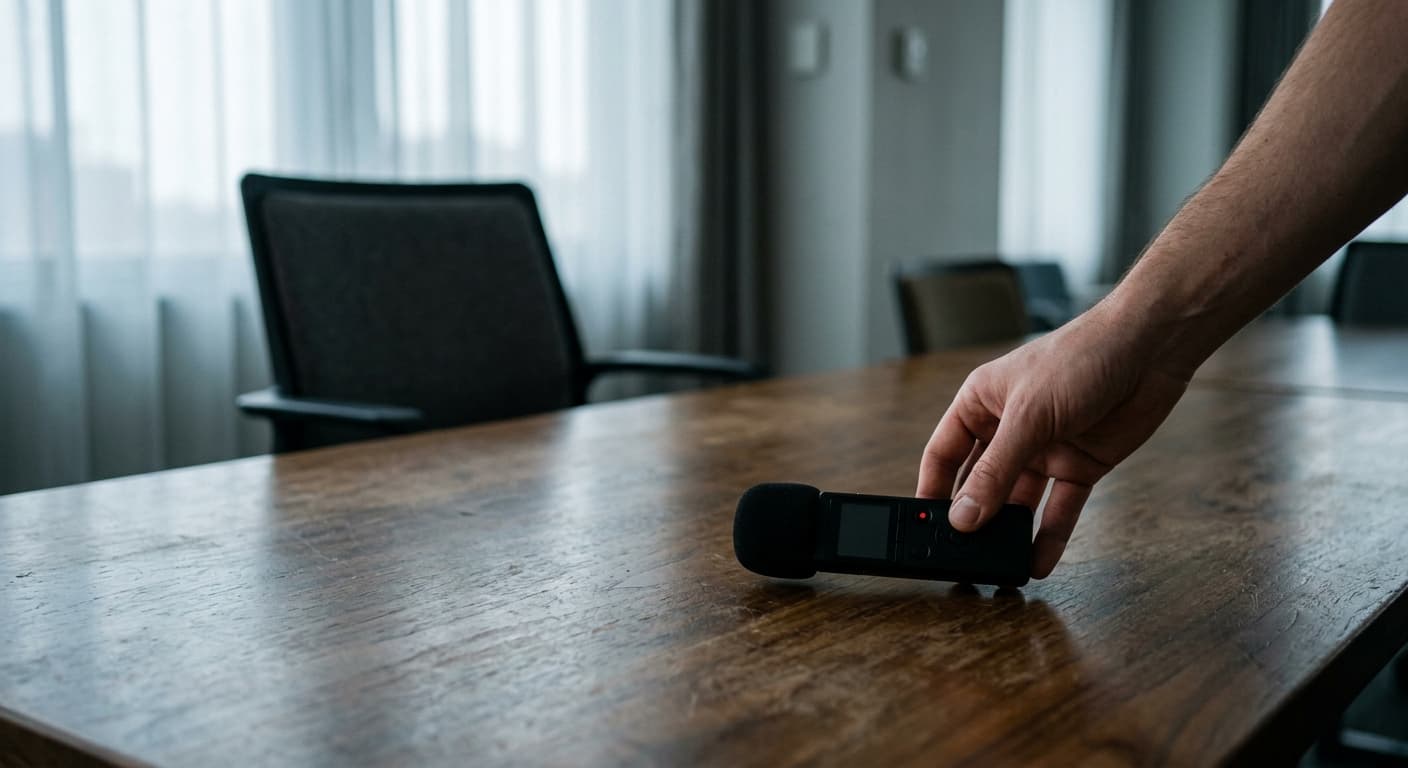
South Carolina is a one-party consent state under S.C. Code Ann. § 17-30-30(C): if you are a party to the conversation, you may record it without notifying anyone else. Recording without consent is a felony punishable by up to five years in prison, and the victim can sue a private defendant for at least $25,000 in statutory damages, one of the highest civil floors in the country. A claim against a government agency runs through the South Carolina Tort Claims Act instead, which caps the award and bars punitive damages.
South Carolina recording law at a glance
| Question | Answer |
|---|---|
| Consent rule | One-party consent |
| Primary statute | S.C. Code Ann. § 17-30-30(C) |
| When recording is illegal | When no party consents (third-party interception) |
| Criminal penalty | Felony: up to 5 years / $5,000 (§ 17-30-50(A)) |
| Civil damages floor | Greater of $500/day, $25,000, or actual damages against a private defendant (§ 17-30-135); Tort Claims Act caps apply to government defendants (§ 17-30-135(F)) |
| Hidden cameras / voyeurism | § 16-17-470 (sexual-gratification intent required for (B); forfeiture mandatory) |
| Recording police | Livestreaming your own stop is protected speech per Sharpe (4th Cir. 2023); no general right to record police yet recognized |
For the full breakdown of each rule, see the in-depth guides below.
Recording in-person conversations in South Carolina
South Carolina's one-party consent rule comes from S.C. Code § 17-30-30(C), which reads: "It is lawful under this chapter for a person not acting under color of law to intercept a wire, oral, or electronic communication where the person is a party to the communication or where one of the parties to the communication has given prior consent to the interception."
Either branch is independently sufficient. You can record your own conversation without asking anyone; you can also record a conversation after one participant (including yourself) gives consent. There is no beep-tone requirement and no advance-notice obligation for civilian recordings.
The statute covers wire, oral, and electronic communications as defined in § 17-30-15. Oral communication is an utterance made under circumstances justifying a reasonable expectation of privacy. A loud argument on a public sidewalk receives little protection; a quiet conversation in a closed office or medical exam room is covered. A third party who is not a participant and has no consent from any party commits a felony by intercepting the communication.

One South Carolina-specific doctrine to know: in State v. Whitner, 399 S.C. 547, 732 S.E.2d 861 (2012), the South Carolina Supreme Court recognized that a parent or guardian may give vicarious consent on behalf of a minor child, but only with a "good faith, objectively reasonable basis" that the recording is in the child's best interest. Tactical use in a custody dispute does not qualify.
South Carolina's safe harbor notably lacks the federal "criminal or tortious purpose" qualifier found in 18 U.S.C. § 2511(2)(d). On its face, a one-party recording made with a tortious motive may still clear the criminal statute, though common-law tort remedies (intrusion upon seclusion, public disclosure of private facts) can still apply.
Recording phone calls in South Carolina
Phone calls are wire communications under § 17-30-15 and follow the same one-party rule. If you are on the call, you may record it. The rule applies equally to landlines, cell phones, VoIP services (Zoom, Teams, Google Meet, WhatsApp, FaceTime audio), and conference calls in which you are a participant.
Voicemails left for you are also covered: you, as the called party, are a party to the message, so saving and forwarding an incoming voicemail falls within the one-party safe harbor.
For interstate calls, federal ECPA at 18 U.S.C. § 2511(2)(d) sets a one-party floor, but the all-party-consent states (California, Connecticut, Florida, Illinois, Maryland, Massachusetts, Montana, New Hampshire, Pennsylvania, and Washington) may assert jurisdiction when one party is in their state. Connecticut's criminal wiretap law is one-party, but C.G.S. 52-570d imposes civil liability for recording a call without all-party consent. Oregon is one-party consent for telecommunications under ORS 165.540(1)(a); its all-party notice rule applies only to in-person conversations, not calls. The practical rule: if you may use the recording in litigation, obtain on-the-record consent so no state's law is at issue.
For a deeper treatment, see South Carolina Phone Call Recording Laws.
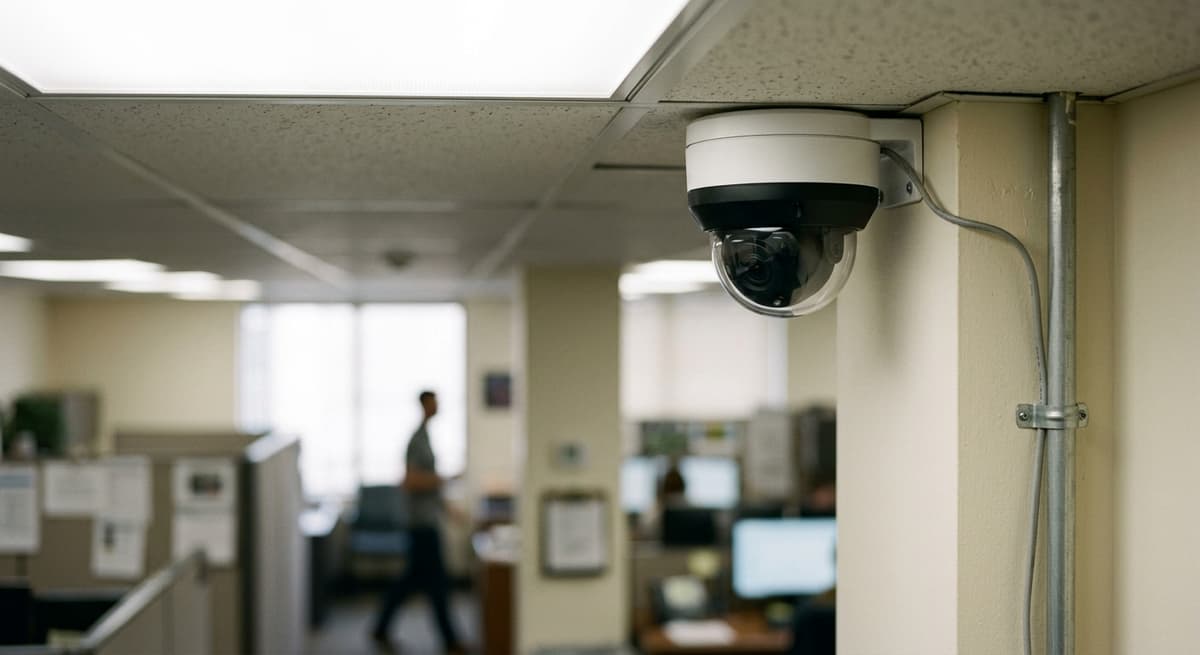
Hidden cameras, doorbells, and nanny cams
Title 17, Chapter 30 covers audio interception. Surreptitious visual capture is handled separately by S.C. Code § 16-17-470.
Subsection (A) (peeping): It is unlawful to be a peeping tom on or about the premises of another, including any person who employs video or audio equipment for that purpose. Penalty: misdemeanor, up to 3 years and $500.
Subsection (B) (voyeurism): A person commits voyeurism by knowingly photographing, audio recording, video recording, producing, or creating a digital file of another person for the purpose of arousing or gratifying sexual desire, without that person's consent, in a place where the person has a reasonable expectation of privacy (bathrooms, dressing rooms, locker rooms, bedrooms, hotel rooms). The sexual-gratification purpose is a required element. First offense: misdemeanor, up to 3 years and $500. Second or subsequent offense: felony, up to 5 years and $500 to $5,000.
Subsection (C) (aggravated voyeurism): Knowingly selling, distributing, or disseminating any image or recording taken in violation of the section. Penalty: felony, up to 10 years and $500 to $5,000.
Forfeiture: Materials procured in violation must be forfeited and destroyed when no longer required for evidentiary purposes (§ 16-17-470(F)).
Exceptions: Subsection (E) exempts several categories of conduct from the subsection (A) peeping-tom offense only, including correctional-facility security monitoring, bona fide business security surveillance, official law enforcement activity under § 16-17-480, private investigators conducting routine surveillance in the ordinary course of business, and bona fide news gathering. Read the opening words carefully: (E) says "the provisions of subsection (A) do not apply to" those categories, so the carve-outs do not reach subsection (B) voyeurism or subsection (C) aggravated voyeurism. A business, an investigator, or a news gatherer who records a person for sexual gratification in a place carrying a reasonable expectation of privacy, or who sells or distributes such a recording, has no safe harbor under (E). Separately, the "premises of another" element in subsection (A) has been read narrowly: in Herald Publishing Co. v. Barnwell, 291 S.C. 4, 351 S.E.2d 878 (S.C. Ct. App. 1986), the court held the peeping-tom statute did not reach reporters who waited in a public press area to overhear a closed city council session, since they were on public property, not the "premises of another."
For your home, a doorbell or nanny camera pointed at your own property (yard, entryway, driveway) is lawful. Pointing it into a neighbor's bedroom or bathroom implicates § 16-17-470 even on your own property. An audio-capable camera that records conversations inside the home falls under § 17-30-30; the one-party rule applies to any audio captured while you are present in the conversation.
For deeper guidance, see South Carolina Security Camera Laws and South Carolina Voyeurism Laws.
Penalties for illegal recording in South Carolina
Criminal
Under § 17-30-50(A), intentionally intercepting, disclosing, or using a wire, oral, or electronic communication in violation of the chapter is a felony: up to 5 years in prison or a $5,000 fine, or both. A narrow misdemeanor reduction (up to 1 year and $1,000) applies only to first-offense, non-commercial interceptions of unscrambled radio-band communications. Ordinary phone or in-person interceptions carry only the felony.
Civil
S.C. Code § 17-30-135 entitles the victim to recover the greater of actual damages, $500 per day of violation, or $25,000, whichever is highest. Against a private defendant the floor is not a cap: a six-month violation produces $90,000 in per-day damages, and the plaintiff recovers that higher figure. On top of the floor, the statute gives a plaintiff suing a private defendant:
| Element | What the statute gives |
|---|---|
| Liquidated damages floor | Greater of $500/day, $25,000, or actual damages |
| Punitive damages | Available |
| Attorney fees | Part of the statute's entitled relief (17-30-135(A)(4)) |
| Litigation costs | Recoverable |
| Equitable relief | Available (injunction, destruction of recordings) |
| Statute of limitations | 5 years from discovery (discovery rule, not date of recording) |
| Jury trial | Statutory right |
Government defendants are the exception. The liquidated-damages provision in subsection (A)(2) carries its own proviso, "not to exceed the limits on liability provided in subsection (F)(3)," and subsection (F) rewrites every line of the table above when the defendant is the State, an agency, a political subdivision, or a governmental entity or employee acting within the scope of official duty. Subsection (F)(1) treats the violation as a tort under the South Carolina Tort Claims Act, Chapter 78 of Title 15. Subsection (F)(3) applies the Tort Claims Act damages caps in § 15-78-120(a), currently $300,000 per person per occurrence and $600,000 in the aggregate, to the liquidated-damages award, so the floor becomes a ceiling. Subsection (F)(4) applies the Tort Claims Act bar on punitive damages in § 15-78-120(b) in place of subsection (A)(3). Subsection (F)(2) substitutes the Tort Claims Act limitations period in § 15-78-110, two years from discovery (three if a claim was filed first), for the 5-year discovery rule in subsection (C). Anyone weighing a wiretap claim against a law enforcement agency should work from those numbers, not the ones above.
For comparison, federal ECPA at 18 U.S.C. § 2520 caps statutory damages at the greater of $100 per day or $10,000, with discretionary (not mandatory) attorney fees. South Carolina's $25,000 floor is two and a half times higher; its per-day rate is five times higher; attorney's fees are part of the plaintiff's entitled relief rather than a purely discretionary award; and the SoL is a 5-year discovery rule rather than two years. South Carolina's civil package is one of the strongest wiretap remedies in any U.S. jurisdiction.
Recording the police in South Carolina
South Carolina sits in the Fourth Circuit. The controlling precedent is Sharpe v. Winterville Police Dep't, 59 F.4th 674 (4th Cir. 2023), which held that a passenger livestreaming his own traffic stop engages in speech protected by the First Amendment. The panel applied a burden-shifting test: the government must show a weighty enough interest, that its policy furthers that interest, and that the policy is sufficiently tailored to it, then vacated and remanded the question of whether the town's livestreaming ban survives that test, so the underlying policy dispute remains open. In footnote 5, the panel expressly declined to recognize a general First Amendment right to record police officers performing their duties in public, holding that Sharpe lacked standing to seek that broader declaration. The U.S. Supreme Court denied certiorari on December 11, 2023, leaving the Fourth Circuit's narrower holding in force throughout South Carolina.
A note on qualified immunity: the Sharpe panel held that the individual officer who acted in 2018 had qualified immunity because it was not yet clearly established that barring a passenger from livestreaming his own traffic stop violated the First Amendment. Sharpe established, going forward, that livestreaming one's own traffic stop is protected speech; it did not establish a general right to record police in public. The panel also vacated the district court's judgment for the town on the official-capacity claim and remanded it, holding that the town had not yet shown its officer-safety rationale justified the livestreaming ban on the existing record; municipal liability under Sharpe is not automatic and turns on that remand proceeding.
Practical limits: record from a reasonable distance, do not physically obstruct the officer, and comply with lawful orders to step back. Under § 17-30-30(C), any participant in the encounter (including the person being stopped) may record audio without notifying the officer.
For more, see South Carolina Laws on Recording Police.
Special topics in South Carolina
Intimate images and AI deepfakes (Act 37 of 2025)
Act No. 37 of 2025 (H. 3058), signed by Governor Henry McMaster on May 12, 2025, and effective immediately, created S.C. Code §§ 16-15-330 and 16-15-332. Section 16-15-332 criminalizes intentional dissemination of an intimate image or a digitally forged intimate image (AI-generated content that "appears to a reasonable person to be indistinguishable from an authentic visual depiction") of an identifiable person without effective consent. Aggravated first offense (intent to harm or profit): felony, up to 5 years and $5,000. Subsequent aggravated offense: mandatory felony of 1 to 10 years and $10,000 (no suspension or probation). Non-aggravated first offense: misdemeanor, up to 1 year and $5,000. South Carolina was the last state without such a statute before Act 37 closed the gap.
TAKE IT DOWN Act federal overlay
The TAKE IT DOWN Act, Pub. L. 119-12 (signed May 19, 2025), criminalizes knowing publication of non-consensual intimate imagery including AI-generated forgeries and requires covered platforms to remove flagged content within 48 hours (platform obligation effective May 19, 2026). The federal Act layers on top of § 16-15-332 without preempting state law.
Body-worn cameras: the Walter L. Scott Body Camera Law
S.C. Code § 23-1-240, named for Walter Scott (fatally shot during a 2015 North Charleston traffic stop), requires state and local agencies to implement body-worn cameras under Law Enforcement Training Council guidelines. Body-camera data is explicitly excluded from the Freedom of Information Act; access is limited to a closed statutory list (criminal defendants, civil litigants, the subject of the recording, owners of affected property, and their attorneys), proceeding through the Rules of Criminal or Civil Procedure or a court order. A general FOIA request will be denied.
Workplace recording and the NLRB
Under § 17-30-30(C), an employee who is a party to a workplace conversation may record it without telling management. However, South Carolina employers can adopt narrowly tailored no-recording policies; violating a company rule is not a state crime but can be a basis for at-will termination. Federal NLRA coverage still applies to most South Carolina major employers. Under Stericycle, Inc., 372 NLRB No. 113 (Aug. 2, 2023), a blanket no-recording rule is presumptively unlawful. NLRB GC 25-05 (Feb. 14, 2025) is a housekeeping rescission of prior GC guidance, not an overruling of Stericycle. GC 25-07 (June 25, 2025) narrowly bars surreptitious recording of collective-bargaining sessions as a per se bad-faith-bargaining violation. For detail, see South Carolina Workplace Recording Laws.
Federal overlay: ECPA, FCC, and HIPAA
ECPA, 18 U.S.C. §§ 2510-2522, is the federal one-party-consent floor; South Carolina's § 17-30-30(C) generally meets or exceeds it. The FCC's old "beep tone" rule at 47 C.F.R. § 64.501 was removed effective November 20, 2017 and is no longer live law. FCC Declaratory Ruling 24-17 (Feb. 8, 2024) classifies AI-generated voices as "artificial or prerecorded voice" under the TCPA, requiring prior express written consent for marketing robocalls. HIPAA's Privacy Rule, 45 C.F.R. Part 164, binds South Carolina providers, not patients; a patient may record their own medical visit under the one-party rule.
Recent legal developments
- May 12, 2025: Governor McMaster signs Act 37 of 2025 (H. 3058), creating §§ 16-15-330 and 16-15-332. South Carolina becomes the last state to enact a non-consensual intimate-image statute; the law expressly covers AI deepfakes.
- May 19, 2025: TAKE IT DOWN Act signed federally; criminal prohibition immediate; platform 48-hour takedown obligation effective May 19, 2026.
- February 14, 2025: NLRB GC 25-05 issued, rescinding certain Biden-era GC memoranda and returning to Boeing-era enforcement priorities. Does not overrule Stericycle.
- January 24, 2025: Eleventh Circuit vacates FCC One-to-One Consent Rule (FCC 24-24); mandate April 30, 2025. Pre-existing TCPA consent rules under 47 C.F.R. § 64.1200(a)(2)-(3) remain in force.
- December 11, 2023: U.S. Supreme Court denies certiorari in Winterville Police Dep't v. Sharpe, No. 23-272. The Fourth Circuit's narrower Sharpe holding (a passenger livestreaming his own traffic stop is protected speech; no general right to record police recognized) remains controlling in South Carolina.
- June 25, 2025: NLRB GC 25-07 issued, taking position that surreptitious recording of collective-bargaining sessions is a per se bad-faith-bargaining violation.
South Carolina recording laws in depth
Want to know more? Each page below covers a specific recording context in depth.
By type of recording
- South Carolina Audio Recording Laws: One-Party Consent Rules and Penalties (2026)
- South Carolina Phone Call Recording Laws: Consent Rules for Calls (2026)
- South Carolina Video Recording Laws: Where You Can and Cannot Record (2026)
- South Carolina Voyeurism Laws: Hidden Cameras, Peeping, and Penalties (2026)
- South Carolina Dashcam Laws: Mounting Rules, Audio Recording, and Evidence (2026)
By place or relationship
- South Carolina Workplace Recording Laws: Employee and Employer Rights (2026)
- South Carolina Laws on Recording Police: Your Rights and Limits (2026)
- South Carolina Laws on Recording in Public: Your Rights Explained (2026)
- South Carolina Security Camera Laws: Home, Business, and HOA Rules (2026)
- South Carolina Medical Recording Laws: Patient Rights, HIPAA, and Consent (2026)
- South Carolina Landlord-Tenant Recording Laws: Rights for Renters and Landlords (2026)
- South Carolina School Recording Laws: Student, Parent, and Teacher Rights (2026)
More South Carolina laws
- South Carolina Common Law Marriage Laws
- South Carolina At-Will Employment Laws
- South Carolina Data Privacy Laws
- South Carolina Divorce Laws
- South Carolina Expungement Laws
This article is general legal information, not legal advice. Recording laws change and apply differently to each situation. For advice about your situation, consult a licensed South Carolina attorney.
More South Carolina Laws
Frequently Asked Questions
Is South Carolina a one-party or two-party consent state?
South Carolina is a one-party consent state. Under S.C. Code Ann. § 17-30-30(C), a person not acting under color of law may lawfully record a wire, oral, or electronic communication when that person is a party to the communication or when one party has given prior consent. State v. Whitner, 399 S.C. 547, 732 S.E.2d 861 (2012), recognizes vicarious parental consent for a minor child within an objective good-faith limit.
Can I record a phone call in South Carolina without telling the other person?
Yes, if you are a party to the call. Section 17-30-30(C) requires only one party's consent, and that party can be you. There is no beep-tone or advance-notice requirement. For calls touching California, Connecticut, Florida, Illinois, Maryland, Massachusetts, Montana, New Hampshire, Pennsylvania, or Washington (all-party states, with Connecticut's all-party rule civil rather than criminal), the safe practice is to disclose and obtain consent, especially if you may use the recording as evidence.
What is the penalty for illegally recording someone in South Carolina?
Criminal interception under § 17-30-50(A) is a felony: up to 5 years in prison or a $5,000 fine, or both. A reduced misdemeanor (up to 1 year, $1,000) applies only to first-offense non-commercial interceptions of unscrambled radio-band communications. Voyeurism under § 16-17-470 carries up to 3 years (misdemeanor) to 10 years (felony aggravated) depending on the offense. Unauthorized intimate-image disclosure under § 16-15-332 carries up to 5 years (aggravated first offense) to mandatory 1-10 years (subsequent aggravated).
Can I sue someone for illegally recording me in South Carolina?
Yes. S.C. Code § 17-30-135 entitles a victim to the greater of actual damages, $500 per day of violation, or $25,000 (whichever is highest), plus punitive damages, attorney's fees as part of the entitled relief, litigation costs, equitable relief, a 5-year discovery-rule statute of limitations, and a statutory jury-trial right. This compares favorably to federal ECPA at 18 U.S.C. § 2520 ($100/day or $10,000 floor, court-discretionary fees, 2-year SoL). Those terms describe a suit against a private defendant. If the defendant is the State, an agency, a political subdivision, or a government employee acting within the scope of official duty, § 17-30-135(F) routes the claim through the South Carolina Tort Claims Act: the liquidated-damages award is capped under § 15-78-120(a), punitive damages are barred under § 15-78-120(b), and the Tort Claims Act limitations period in § 15-78-110 replaces the 5-year discovery rule.
Are Ring doorbells and nanny cams legal in South Carolina?
Yes, for cameras pointed at your own property (yard, driveway, entryway). Pointing a camera into a space where someone has a reasonable expectation of privacy (bathroom, bedroom, dressing room) can violate § 16-17-470 regardless of whose property the camera is on. Audio-capable cameras inside the home recording conversations in which you are a participant are lawful under § 17-30-30(C).
Can I record my boss or an HR meeting in South Carolina?
Yes under state law. Section 17-30-30(C) lets you record any conversation you are participating in without notifying the other parties. An employer can impose a no-recording policy under the handbook, and violating that policy can be a basis for at-will termination, but it is not a state criminal offense. Under NLRB Stericycle, Inc., 372 NLRB No. 113 (2023), a blanket no-recording rule is presumptively unlawful; a narrowly tailored rule with Section 7 carve-outs generally survives.
Can I record the police in South Carolina?
Generally yes, though the ruling is narrower than it is sometimes described. Sharpe v. Winterville Police Dep't, 59 F.4th 674 (4th Cir. 2023), held that a passenger livestreaming his own traffic stop is protected First Amendment speech, but the panel declined to recognize a general right to record police in public and remanded the question of whether the town's livestreaming ban is constitutional. The U.S. Supreme Court denied certiorari on December 11, 2023, leaving that narrower holding in place. Record from a reasonable distance, do not interfere with police activity, and comply with lawful orders.
What does South Carolina Act 37 of 2025 cover?
Act 37 of 2025 (signed May 12, 2025) created S.C. Code §§ 16-15-330 and 16-15-332, criminalizing intentional non-consensual dissemination of intimate images and AI-generated deepfakes that appear to a reasonable person to be indistinguishable from authentic depictions. Aggravated first offense is a felony up to 5 years and $5,000; subsequent aggravated offense carries mandatory 1-10 years with no suspension. The federal TAKE IT DOWN Act (Pub. L. 119-12, signed May 19, 2025) adds a parallel criminal prohibition and requires platforms to take down flagged content within 48 hours (effective May 19, 2026).
Updates
Corrected two statutory scope errors: the § 16-17-470(E) exceptions apply only to the subsection (A) peeping-tom offense and not to the voyeurism offenses in (B) and (C), and the § 17-30-135 civil remedies section now explains that claims against the State, an agency, or a government employee run through the South Carolina Tort Claims Act, which caps damages, bars punitive damages, and shortens the limitations period.
Corrected the Supreme Court's certiorari-denial date in Winterville Police Dep't v. Sharpe (December 11, 2023, not June 24, 2024) and removed a fabricated note that Justice Kagan did not participate; narrowed the description of the Sharpe ruling itself to reflect that it protects a passenger livestreaming his own traffic stop, not a general right to record police, with the underlying town policy still on remand; fixed the interstate all-party-consent list (Oregon is one-party for phone calls; Connecticut has the all-party civil-liability rule); replaced a dead citation link for State v. Whitner with a working source; and softened "mandatory" attorney's fees language to match the civil statute's actual entitlement wording.
Independently fact-checked against the cited primary sources; governing law re-checked for recent changes
Governing law re-checked for recent changes
Reviewed and approved by an editor
Restructured for readability: condensed 10,000+ word page into scannable sections with short paragraphs, at-a-glance table, and in-depth index. Preserved all verified statutes, cases, and citations. Corrected § 16-17-470(B) description: the voyeurism subsection requires 'for the purpose of arousing or gratifying sexual desire' as an essential element, which the prior version omitted. Corrected § 23-1-240 body-cam subsection reference (prior version cited a 'subsection (J)' tampering penalty not found in the current statute text). Refreshed FAQ with new questions on deepfakes and nanny cams. Added Recent Legal Developments section. All load-bearing facts re-verified against scstatehouse.gov and ca4.uscourts.gov primary sources.
Refreshed for 2026: anchored S.C. Code § 17-30-30(C) one-party consent rule for civilians; documented S.C. Code § 17-30-135 civil cause of action as one of the strongest statutory wiretap remedies in the country (greater of $500/day or $25,000, plus punitive damages, attorney fees, costs, equitable relief, 5-year discovery-rule SoL, statutory jury-trial right); corrected baseline mislabeling of § 17-30-50 as the civil cause (it is the criminal penalty section); added S.C. Code § 16-15-332 NCII / deepfake statute (Act No. 37 of 2025, H. 3058, signed by Governor Henry McMaster on May 12, 2025, effective immediately) covering both authentic and digitally forged intimate images; flagged H. 3517 election-deepfake bill as introduced-only (no live S.C. Code § 7-25-230); added Sharpe v. Winterville Police Dep't, 59 F.4th 674 (4th Cir. 2023), cert denied June 24, 2024 (Justice Kagan took no part), as the controlling 4th Circuit record-the-police precedent; added State v. Whitner, 399 S.C. 547, 732 S.E.2d 861 (2012), parental vicarious-consent doctrine; corrected body-cam citation to S.C. Code § 23-1-240 (Walter L. Scott Body Camera Law); reframed NLRB GC 25-05 as a housekeeping rescission of prior GC guidance (NOT a Boeing-era reinstatement of Stericycle); updated FCC 24-24 vacatur with both decision date (Jan. 24, 2025) and mandate (Apr. 30, 2025); removed stale 47 C.F.R. § 64.501 reference (rule was removed Nov. 20, 2017); added TAKE IT DOWN Act federal compliance overlay (Pub. L. 119-12, signed May 19, 2025); replaced commercial-codifier URLs with scstatehouse.gov, sccourts.org, ca4.uscourts.gov, governor.sc.gov, and uscode.house.gov primary sources.
Refreshed for 2026: anchored S.C. Code § 17-30-30(C) one-party consent rule for civilians; documented S.C. Code § 17-30-135 civil cause of action as one of the strongest statutory wiretap remedies in the country (greater of $500/day or $25,000, plus punitive damages, attorney fees, costs, equitable relief, 5-year discovery-rule SoL, statutory jury-trial right); corrected baseline mislabeling of § 17-30-50 as the civil cause (it is the criminal penalty section); added S.C. Code § 16-15-332 NCII/deepfake statute (Act No. 37 of 2025, H. 3058, signed by Governor Henry McMaster on May 12, 2025, effective immediately) covering both authentic and digitally forged intimate images; flagged H. 3517 election-[deepfake](/us-laws/deepfake-laws) bill as introduced-only; added Sharpe v. Winterville Police Dep't, 59 F.4th 674 (4th Cir. 2023) (a passenger livestreaming his own traffic stop is protected speech; no general right to record police recognized), cert denied December 11, 2023, as the controlling 4th Circuit record-the-police precedent; added State v. Whitner, 399 S.C. 547, 732 S.E.2d 861 (2012), parental vicarious-consent doctrine; corrected body-cam citation to S.C. Code § 23-1-240; reframed NLRB GC 25-05 as a housekeeping rescission of prior GC guidance; updated FCC 24-24 vacatur; removed stale 47 C.F.R. § 64.501 reference; added TAKE IT DOWN Act federal compliance overlay; replaced commercial-codifier URLs with primary sources.
Added wearable recording devices section and 2 new FAQs about AI voice recorders and smart glasses
The Law Behind This Article
This article rests on the statutory provisions below, held in our own legal record and retrieved from the official source. Tap a section to read the operative text.
South Carolina Code of Laws, Title 17: CRIMINAL PROCEDURES
§ 17-30-30Interception by employee of Federal Communications Commission, by person acting under color or law, and when party has given prior consentIn forcecited in 16 of our articles
(A) It is lawful under this chapter for an officer, employee, or agent of the Federal Communications Commission, in the normal course of his employment and in discharge of the monitoring responsibilities exercised by the commission in the enforcement of 47 U.S.C. Chapter 5, to intercept a wire, oral, or electronic communication transmitted by radio or to disclose or use the information thereby obtained. (B) It is lawful under this chapter for a person acting under color of law to intercept a wire, oral, or electronic communication, where the person is a party to the communication or one of the parties to the communication has given prior consent to the interception. (C) It is lawful under this chapter for a person not acting under color of law to intercept a wire, oral, or electronic communication where the person is a party to the communication or where one of the parties to the communication has given prior consent to the interception.
Official text (excerpt) · last checked 2026-08-31 · Read the full text in our law library · Verify at scstatehouse.gov
Cited in 1 court opinions in our collectionLatest citing opinion in our collection: 2025
Opinions citing this section in our collection:
- McNeely (District Court, D. South Carolina 2025)“…a showing. The South Carolina statute cited by Plaintiff—S.C. Code § 17-30-30—provides “it is lawful . . . for a per…”
Identified automatically from the court opinions citing this section — not a ranking of which case controls.
Also relied on in: South Carolina AI Meeting Recording Laws (2026), South Carolina Smart Glasses Recording Laws 2026, South Carolina Workplace Recording Laws: Employee and Employer Rights (2026)
United States Code Title 18
§ 2511Interception and disclosure of wire, oral, or electronic communications prohibitedIn forcecited in 422 of our articles
Except as otherwise specifically provided in this chapter any person who— intentionally intercepts, endeavors to intercept, or procures any other person to intercept or endeavor to intercept, any wire, oral, or electronic communication; intentionally uses, endeavors to use, or procures any other person to use or endeavor to use any electronic, mechanical, or other device to intercept any oral communication when— such device is affixed to, or otherwise transmits a signal through, a wire, cable, or other like connection used in wire communication; or such device transmits communications by radio, or interferes with the transmission of such communication; or such person knows, or has reason to know, that such device or any component thereof has been sent through the mail or transported in interstate or foreign commerce; or such use or endeavor to use (A) takes place on the premises of any business or other commercial establishment the operations of which affect interstate or foreign commerce; or (B) obtains or is for the purpose of obtaining information relating to the operations of any business or other commercial establishment the operations of which affect interstate or foreign…
Official text (excerpt) · last checked 2026-08-28 · Read the full text in our law library · Verify at uscode.house.gov
Cited in 2,045 court opinions in our collectionLatest citing opinion in our collection: 2026
In the courts (editorial summary, independently checked):Griggs-Ryan v. Smith (1990) applied the Section 2511(2)(d) prior-consent exception, treating a tenant repeatedly told that all incoming calls were taped as having impliedly consented. United States v. United States District Court (1972) read the then-current Section 2511(3) as conferring no presidential surveillance power.
Opinions citing this section in our collection:
- Mitchell v. Forsyth (Supreme Court of the United States 1985, 472 U.S. 511)✓The Attorney General authorized a warrantless 1970 national security wiretap that caught the plaintiff's calls; the Court held the since-repealed Section 2511(3) disclaimer left the tap lawful under Title III, and that Mitchell had qualified immunity.
- United States v. United States District Court for the Eastern District of Michigan (Supreme Court of the United States 1972, 407 U.S. 297)✓The Attorney General approved warrantless wiretaps on members of a domestic group accused of bombing a CIA office; the Court read Section 2511(3) as a congressional disclaimer conferring no surveillance power, then held the Fourth Amendment required prior judicial approval.
- Forsyth v. Barr (Court of Appeals for the Fifth Circuit 1994, 19 F.3d 1527)✓Dallas police used, in an internal affairs probe of an officer, calls private parties allegedly intercepted illegally; assuming that was unlawful, the Fifth Circuit held Section 2517(1) and (2) allowed the disclosure and use, defeating the Section 2511(1)(c) and (d) claims.
Identified automatically from the court opinions citing this section — not a ranking of which case controls.
Also relied on in: Connecticut Recording Laws (2026): Hybrid Consent Rules Explained, Oregon Recording Laws (2026): Hybrid One-Party and All-Party Rules, US Recording Laws by State (2026): All 50 States Explained
§ 2520Recovery of civil damages authorizedIn forcecited in 115 of our articles
Except as provided in section 2511(2)(a)(ii), any person whose wire, oral, or electronic communication is intercepted, disclosed, or intentionally used in violation of this chapter may in a civil action recover from the person or entity, other than the United States, which engaged in that violation such relief as may be appropriate. In an action under this section, appropriate relief includes— such preliminary and other equitable or declaratory relief as may be appropriate; damages under subsection (c) and punitive damages in appropriate cases; and a reasonable attorney’s fee and other litigation costs reasonably incurred.
Official text (excerpt) · last checked 2026-07-28 · Read the full text in our law library · Verify at uscode.house.gov
Cited in 860 court opinions in our collectionLatest citing opinion in our collection: 2026
In the courts (editorial summary, independently checked):Walker v. Darby (1990) held a 2520 plaintiff need not prove the contents of intercepted conversations, only interception and a justified expectation against it. Bartnicki v. Vopper (2001) barred 2520 damages against defendants who took no part in the interception, obtained the tape lawfully, and disclosed a matter of public concern.
Opinions citing this section in our collection:
- Jessie Walker v. Thomas E. Darby, Hugh L. Robinson, Jr., and Kenneth Day (Court of Appeals for the Eleventh Circuit 1990, 911 F.2d 1573)✓A postal letter carrier said three supervisors wired an intercom near his workstation to listen in. Reversing summary judgment, the Eleventh Circuit held a section 2520 plaintiff can show interception without proving the contents of specific conversations.
- Gelbard v. United States (Supreme Court of the United States 1972, 408 U.S. 41)“…disclosure, or use is entitled to recover civil damages, 18 U. S. C. § 2520 . Title III also bars the use as eviden…”
- DirecTV, Inc. v. Hoa Huynh (Court of Appeals for the Ninth Circuit 2007, 503 F.3d 847)“…7 U.S.C. § 605 (e)(4), or alternatively, for violations of 18 U.S.C. § 2520 (a), or alternatively, for violations o…”
Identified automatically from the court opinions citing this section — not a ranking of which case controls.
Also relied on in: Alabama Audio Recording Laws: Consent Rules and Penalties, Alabama Phone Call Recording Laws: What You Need to Know, Alaska Phone Call Recording Laws: Rules for Landline, Cell, and VoIP (2026)
Code of Federal Regulations Title 47
§ 64.1200Delivery restrictions.In forcecited in 12 of our articles
(a) No person or entity may: (1) Except as provided in paragraph (a)(2) of this section, initiate any telephone call (other than a call made for emergency purposes or is made with the prior express consent of the called party) using an automatic telephone dialing system or an artificial or prerecorded voice; (i) To any emergency telephone line, including any 911 line and any emergency line of a hospital, medical physician or service office, health care facility, poison control center, or fire protection or law enforcement agency; (ii) To the telephone line of any guest room or patient room of a hospital, health care facility, elderly home, or similar establishment; or (iii) To any telephone number assigned to a paging service, cellular telephone service, specialized mobile radio service, or other radio common carrier service, or any service for which the called party is charged for the call.
Official text (excerpt) · last checked 2026-07-28 · Read the full text in our law library · Verify at ecfr.gov
Cited in 840 court opinions in our collectionLatest citing opinion in our collection: 2026
Opinions citing this section in our collection:
- Samuel Zean v. Fairview Health Services (Court of Appeals for the Eighth Circuit 2017, 858 F.3d 520)“…with . . . the prior express consent of the called party.” 47 C.F.R. § 64.1200(a)(2). Under the Hobbs Act, 28 U.S.C. §…”
- Krakauer v. Dish Network, L. L.C. (Court of Appeals for the Fourth Circuit 2019, 925 F.3d 643)“…ing regulations was the national Do-Not-Call registry. See 47 C.F.R. § 64.1200(c)(2). Within the federal government’s…”
- ACA Int'l v. Fed. Commc'ns Comm'n (Court of Appeals for the D.C. Circuit 2018, 885 F.3d 687)“…C. Compare 16 C.F.R. §§ 310.4(b)(1)(iii)(B), 310.4(c), with 47 C.F.R. § 64.1200(c). But the agencies’ initiatives also…”
Identified automatically from the court opinions citing this section — not a ranking of which case controls.
Also relied on in: Michigan Recording Laws (2026): Consent Rules and Participant Exception, TCPA Explained: Robocall, Text, and Telemarketing Law (2026), TCPA Damages and Lawsuits: Penalties, Settlements (2026)
Search our full record of US law — 2.1 million sections, every state + federal →
Sources and References
- Primary civilian one-party consent statute(scstatehouse.gov).gov
- Visual capture and physical peeping statute; sexual-gratification element required for (B)(scstatehouse.gov).gov
- NCII and AI deepfake statute(scstatehouse.gov).gov
- Act 37 of 2025 bill page(scstatehouse.gov).gov
- Act 37 of 2025 signing(governor.sc.gov).gov
- Body-worn camera statute; FOIA exclusion(scstatehouse.gov).gov
- State v. Whitner opinion (CourtListener): vicarious parental consent doctrine under § 17-30-30(courtlistener.com)
- Controlling 4th Circuit record-the-police precedent (livestreaming own traffic stop is protected speech; town policy remanded; cert denied Dec. 11, 2023)(ca4.uscourts.gov).gov
- Federal ECPA interception prohibition(uscode.house.gov).gov
- Federal civil remedy ($100/day or $10,000 floor)(uscode.house.gov).gov
- Federal NCII and deepfake criminal and platform-takedown statute(congress.gov).gov
- Controlling NLRB workplace no-recording-rule standard(nlrb.gov).gov
- Housekeeping rescission of prior GC guidance(nlrb.gov).gov
- Per se bar on surreptitious bargaining-session recording(nlrb.gov).gov
- AI-voice TCPA overlay(docs.fcc.gov).gov
- Vacatur of FCC One-to-One Consent Rule(media.ca11.uscourts.gov).gov
- Federal health-information privacy framework(ecfr.gov).gov
- Federal investigator default for District of South Carolina(justice.gov).gov
- South Carolina Tort Claims Act (Ch. 78, Title 15): § 15-78-110 limitations period and § 15-78-120 damages caps and punitive-damages bar, applied to wiretap claims against governmental defendants by § 17-30-135(F)(scstatehouse.gov)