
South Carolina
South Carolina Video Recording Laws: Where You Can and Cannot Record (2026)
Independently fact-checked against primary sources (last audited August 15, 2026). · Reviewed by the RecordingLaw editorial team. · Law checked current as of August 15, 2026. · 7 primary sources cited on this page. How we verify our legal content
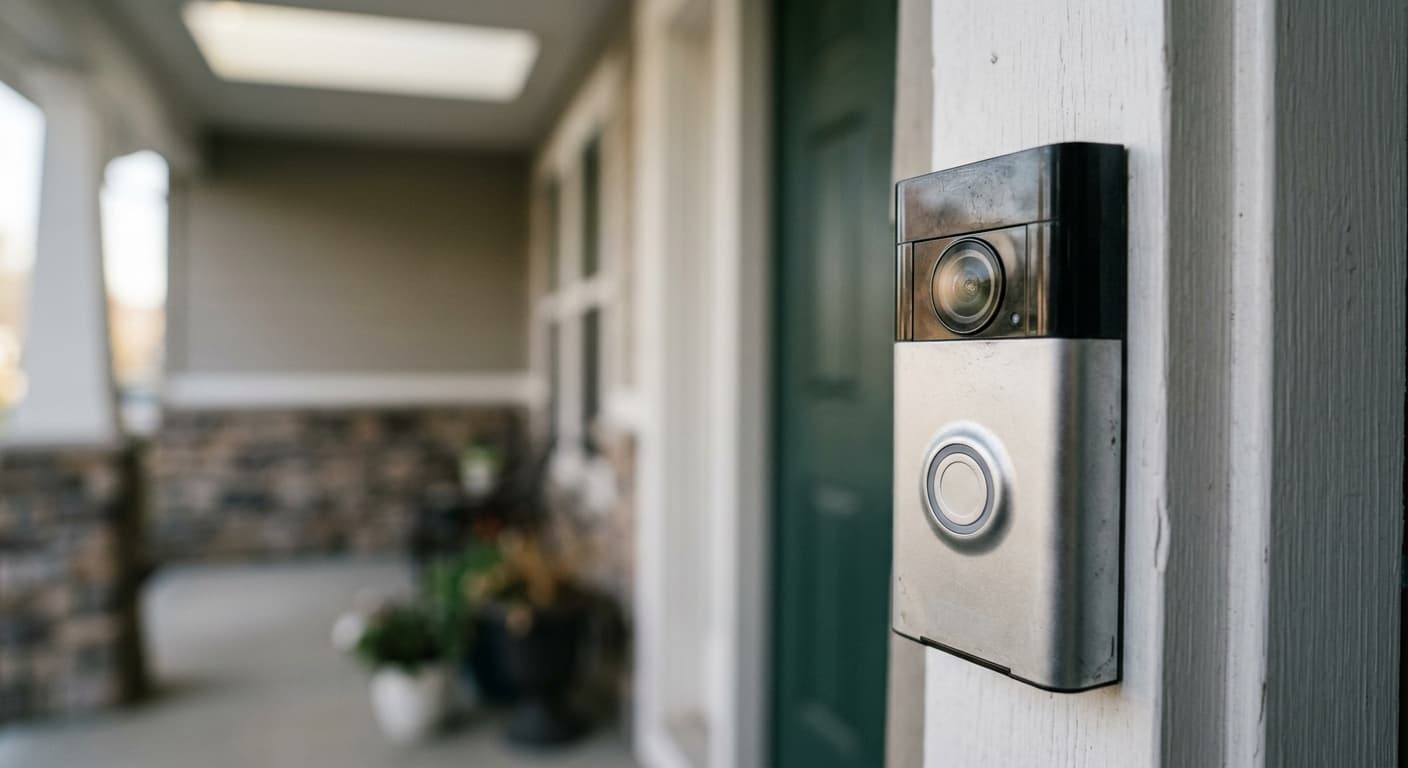
In South Carolina, video recording is legal wherever people lack a reasonable expectation of privacy, including public streets, parks, and government buildings. Recording in private spaces such as bathrooms violates the voyeurism statute at S.C. Code Ann. 16-17-470. When your video also captures audio, one-party consent applies under S.C. Code Ann. 17-30-30.
South Carolina law does not have a single comprehensive statute governing all video recording. Instead, the legality of video recording depends on where you are filming, whether you are capturing audio along with video, and the purpose of the recording. Public spaces are generally open to filming, while private spaces are protected by both the wiretapping statute and the voyeurism law.
This guide explains the rules that apply to video recording across different settings in South Carolina, including the criminal penalties you face for violations and how courts treat video evidence.
Video Recording in Public Spaces
General Rule: Public Filming Is Legal
South Carolina has no statute that prohibits video recording in public spaces. You are free to record video on:
- Public streets, sidewalks, and crosswalks
- Public parks and recreational areas
- Government buildings open to the public
- Public transportation facilities
- Public protests, rallies, and demonstrations
- Outdoor areas visible from public vantage points
This right is grounded in the First Amendment to the U.S. Constitution, which protects the right to gather information in public settings. Federal courts have consistently recognized that recording in public spaces is a form of protected expression.
Video Without Audio vs. Video With Audio
An important distinction exists in South Carolina law between video-only recording and video with audio:
Video-only recording in public does not implicate the wiretapping statute at S.C. Code Ann. 17-30-20. The wiretapping law specifically covers "wire, oral, or electronic communications." Video footage that does not capture oral communications falls outside its scope.
Video with audio recording is subject to the one-party consent rule under S.C. Code Ann. 17-30-30. If your video captures conversations, you must be a party to the conversation or have consent from at least one participant to comply with the wiretapping statute.
In public spaces where people do not have a reasonable expectation of privacy, even audio recording is generally permissible because the wiretapping statute only protects "oral communications" made with a reasonable privacy expectation.
Recording on Government Property
South Carolina's Freedom of Information Act (S.C. Code Ann. 30-4-10 et seq.) requires most government meetings to be open to the public. You can bring recording equipment to:
- City and county council meetings
- School board meetings
- Planning and zoning hearings
- State legislative sessions
- Other public hearings and government proceedings
Government bodies cannot prohibit recording at meetings that are legally required to be open to the public, although they may impose reasonable time, place, and manner restrictions (such as requiring cameras to be stationary or positioned so they do not block other attendees' views).
Video Recording on Private Property
Property Owner Rights
Private property owners in South Carolina have broad authority to control video recording on their premises. A business, homeowner, or property manager can:
- Prohibit all video recording on their property
- Require visitors to put away cameras and phones
- Ask someone to leave if they refuse to stop recording
- Post signs stating that recording is not permitted
If you continue recording after being asked to stop on private property, you may face trespassing charges under S.C. Code Ann. 16-11-620, which criminalizes entering or remaining on property after being warned not to or after being asked to leave. The property owner does not need to cite a specific recording law because their authority comes from general property rights.
Recording in Your Own Home
You can install video cameras in your own home in South Carolina. However, certain limitations apply:
- Common areas such as living rooms, kitchens, and hallways can be monitored with video cameras
- Private areas such as bathrooms, bedrooms used by guests, and changing areas should not be recorded, as this may violate the voyeurism statute
- Audio capture is subject to one-party consent rules. If you are not present during recorded conversations, capturing audio may violate the wiretapping statute
- Tenant rights apply if you rent out part of your home. You cannot place cameras in areas where tenants have a reasonable expectation of privacy
Recording in Rented or Leased Properties
If you rent a home or apartment, you generally can install video cameras inside your own unit in common areas. You should not install cameras that capture footage of other tenants' private spaces. Landlords are prohibited from placing cameras inside rental units without tenant consent, particularly in private areas.
South Carolina's Voyeurism Statute: S.C. Code Ann. 16-17-470
What the Law Prohibits
South Carolina's voyeurism law at S.C. Code Ann. 16-17-470 makes it illegal to engage in peeping, voyeurism, or eavesdropping. Specifically, the statute prohibits:
- Peeping into a dwelling or building occupied by another person by looking through windows, doors, or other openings
- Using electronic devices to observe or record someone in a place where they have a reasonable expectation of privacy
- Video voyeurism involving the use of a camera or recording device to capture images of someone in a state of undress without their knowledge or consent
Penalties for Voyeurism
| Offense | Classification | Maximum Penalty |
|---|---|---|
| First offense peeping/voyeurism | Misdemeanor | Up to 3 years in prison and/or up to $500 fine |
| Second or subsequent voyeurism offense | Felony | Up to 5 years in prison and/or $500-$5,000 fine |
| Aggravated voyeurism (selling or distributing the recording) | Felony | Up to 10 years in prison and/or $500-$5,000 fine |
Courts take voyeurism offenses seriously, and a conviction may require registration as a sex offender depending on the circumstances of the case and the victim's age.
Where You Cannot Record Video
Under the voyeurism statute, you cannot record video in places where people have a reasonable expectation of privacy, including:
- Bathrooms and restrooms
- Locker rooms and changing rooms
- Fitting rooms in retail stores
- Hotel rooms and bedrooms (without occupant consent)
- Anywhere someone is in a state of undress and expects privacy
The 2025 Intimate Images Law: S.C. Code Ann. 16-15-332
Background
On May 12, 2025, Governor Henry McMaster signed S.C. Code Ann. 16-15-332 into law. South Carolina had been the last state in the country without a law specifically addressing the non-consensual distribution of intimate images, sometimes referred to as "revenge porn."
What the Law Covers
The statute makes it a crime to distribute intimate or sexually explicit images of another person without their consent. Key provisions include:
- First offense without intent to harm: Misdemeanor, up to $5,000 fine and 1 year in prison
- Second or subsequent offense: Felony, up to $5,000 fine and 5 years in prison
- Distribution with intent to harm: Felony, regardless of whether it is a first offense
- AI-generated deepfakes: The law covers digitally forged or AI-altered images that falsely depict someone in intimate situations
This law applies to both images and video. Recording intimate content with consent but later distributing it without consent is now a criminal offense in South Carolina.
Civil Remedies
In addition to criminal penalties, victims can pursue civil remedies including injunctions to stop distribution and monetary damages for harm caused by the unauthorized sharing of intimate images.
Video Recording and Law Enforcement
Recording Police Officers
You have the right to record law enforcement officers performing their duties in public spaces in South Carolina. The First Amendment protects this activity, and South Carolina courts have not imposed restrictions on public recording of police.
You can record:
- Traffic stops, including your own
- Arrests happening in public
- Officer interactions at public events
- Police activity visible from public spaces
Limitations: You must not physically interfere with police operations, obstruct an officer's duties, or trespass to obtain a better recording angle. If an officer asks you to move back from an active scene, comply with reasonable requests.
Police Body Camera Footage
South Carolina's Law Enforcement Body Camera Act (S.C. Code Ann. 23-1-240) governs how police departments use body-worn cameras. Under this law:
- Officers must activate body cameras during law enforcement actions
- Footage must be retained for a minimum period
- Data recorded by a body-worn camera is not a public record subject to disclosure under the Freedom of Information Act
- Law enforcement agencies must establish written policies for body camera use
Access to body camera footage is instead limited to an enumerated list: SLED, the Attorney General, and a circuit solicitor for any legitimate criminal justice purpose; a law enforcement agency for an internal misconduct or disciplinary investigation; and, under the state's rules of criminal or civil procedure or a court order, the person who is the subject of the recording, a criminal defendant or civil litigant in a related case, a person whose property was seized or damaged in connection with the recording, a parent or guardian of a minor or incapacitated subject, and attorneys for those people. An ordinary Freedom of Information Act request does not entitle a member of the public to body camera footage.
Using Video Recordings as Evidence
Admissibility Standards
Video recordings are admissible as evidence in South Carolina courts if they meet the following requirements:
Authentication. The offering party must demonstrate that the video is an accurate representation of what it purports to show. This can be done through testimony from the person who made the recording, testimony from someone who witnessed the events depicted, or through technical evidence about the recording device and its reliability.
Relevance. The video must be relevant to a material issue in the case.
No unfair prejudice. Under Rule 403 of the South Carolina Rules of Evidence, a court may exclude video evidence if its prejudicial effect substantially outweighs its probative value.
Chain of custody. For criminal cases, the prosecution must typically establish a chain of custody showing that the video has not been tampered with since it was recorded.
Video Evidence in Specific Contexts
- Personal injury cases: Surveillance video and dashcam footage are routinely admitted in personal injury and automobile accident cases
- Criminal cases: Security camera footage, body camera footage, and bystander recordings are commonly used as prosecution evidence
- Family court: Video recordings documenting a parent's behavior may be admitted in custody proceedings
- Employment disputes: Workplace video may be used to support claims of harassment, discrimination, or unsafe conditions
Drones and Aerial Video Recording
Current South Carolina Law
South Carolina does not have a comprehensive drone privacy statute, but several laws apply to drone operations:
- Federal Aviation Administration (FAA) regulations govern where and how drones can fly. The FAA requires registration for drones weighing more than 0.55 pounds and imposes altitude and airspace restrictions.
- Local ordinances in some South Carolina cities and counties may restrict drone operations in certain areas.
- Voyeurism laws still apply to drone-mounted cameras. Using a drone to record someone in a place where they have a reasonable expectation of privacy could violate S.C. Code Ann. 16-17-470.
- Trespass law may apply if a drone is flown at very low altitudes over private property.
Best Practices for Drone Recording
If you operate a drone with a camera in South Carolina:
- Follow all FAA regulations and obtain necessary certifications
- Do not fly over private property at low altitudes to capture footage of people in private settings
- Avoid recording through windows or into fenced backyards
- Be aware that capturing audio from a drone may implicate the wiretapping statute if the audio captures private conversations
Pending Legislation Affecting Video Recording
Bill 3042: Updated Voyeurism Statute
Bill 3042 in the 2025-2026 legislative session would update S.C. Code Ann. 16-17-470 to cover AI-generated deepfake images and increase penalties for voyeurism-related offenses. As of March 2026, this bill has not been enacted.
Bill 4675: Surveillance Regulation
Bill 4675, the South Carolina Community Data Protection and Responsible Surveillance Act, would impose new rules on law enforcement surveillance systems, including video surveillance. The bill would establish data storage and retention limits for government surveillance footage. This bill is also pending as of March 2026.
Practical Guidelines for Video Recording in South Carolina
When You Can Record Video
- In any public space where you have a right to be
- On your own property (with privacy limitations for guest areas)
- At public government meetings and hearings
- During interactions with police officers in public
- For security purposes on your business premises
When You Cannot Record Video
- In private areas where people have a reasonable expectation of privacy (bathrooms, changing rooms, locker rooms)
- On private property after being told to stop by the owner
- Using hidden cameras to capture intimate images without consent
- Through windows or other openings into private dwellings
- Using drones to surveil private spaces from above
South Carolina Recording Law Sub-Topics
Audio Recording | Video Recording | Voyeurism Laws | Workplace Recording | Recording Police | Phone Call Recording | Security Cameras | Recording in Public | Landlord-Tenant | Dashcam Laws | School Recording | Medical Recording
Back to South Carolina Recording Laws
More South Carolina Recording Topics
More South Carolina Laws
Frequently Asked Questions
Is it legal to record video in public in South Carolina?
Yes. South Carolina has no law prohibiting video recording in public spaces. You can film on public streets, in parks, at government buildings, and at public events. Video-only recording in public does not fall under the state wiretapping statute, which covers oral and wire communications. If your video also captures audio of private conversations, one-party consent rules apply.
Can I record video on someone else's private property in South Carolina?
Only if the property owner allows it. Private property owners can prohibit video recording and ask you to leave if you refuse to stop. Continuing to record after being told to stop could result in trespassing charges under S.C. Code Ann. 16-11-620. Some businesses and venues post signs prohibiting recording.
What are the penalties for video voyeurism in South Carolina?
Video voyeurism is punished under S.C. Code Ann. 16-17-470. A first offense is a misdemeanor with up to 3 years in prison. A second or subsequent voyeurism offense is a felony with up to 5 years in prison. Selling or distributing the unlawfully made recording is aggravated voyeurism, a felony with up to 10 years in prison. Convictions may also require sex offender registration.
Is it illegal to share intimate videos without consent in South Carolina?
Yes. Since May 2025, S.C. Code Ann. 16-15-332 makes it a crime to distribute intimate or sexually explicit images or video without the depicted person's consent. A first offense is a misdemeanor (up to 1 year in prison and $5,000 fine), while repeat offenses or distribution with intent to harm are felonies (up to 5 years and $5,000 fine). The law also covers AI-generated deepfakes.
Can I install security cameras on my property in South Carolina?
Yes. You can install video security cameras on your own property in South Carolina. Cameras should be pointed at your own property and common areas, not at neighbors' private spaces. You should avoid placing cameras in areas where guests or household members have a reasonable expectation of privacy, such as bathrooms and bedrooms. If cameras capture audio, one-party consent rules apply.
Updates
Independently fact-checked against the cited primary sources; governing law re-checked for recent changes
Corrected the S.C. Code 16-17-470 voyeurism penalty table and matching FAQ answer. The felony tiers are triggered by a second-or-subsequent offense (5 years) and by selling/distributing the unlawfully made recording -- aggravated voyeurism (10 years) -- not by 'using a device' (which is intrinsic to the base offense definition) or by a minor victim (the statute has no separate minor-victim tier).
Corrected two errors: body-worn camera data is expressly NOT a public record under S.C. Code Ann. 23-1-240(G)(1) (access is limited to an enumerated list, not ordinary FOIA requests); and the refuse-to-leave trespass citation was corrected from S.C. Code Ann. 16-11-610 (a hunting/fishing/timber trespass statute) to 16-11-620 (the actual entering-after-warning/refusing-to-leave trespass statute).
Governing law re-checked for recent changes
Reviewed and approved by an editor
The Law Behind This Article
This article rests on the statutory provisions below, held in our own legal record and retrieved from the official source. Tap a section to read the operative text.
South Carolina Code of Laws, Title 16: CRIMES AND OFFENSES
§ 16-17-470Eavesdropping, peeping, voyeurismIn forcecited in 9 of our articles
(A) It is unlawful for a person to be an eavesdropper or a peeping tom on or about the premises of another or to go upon the premises of another for the purpose of becoming an eavesdropper or a peeping tom. The term "peeping tom", as used in this section, is defined as a person who peeps through windows, doors, or other like places, on or about the premises of another, for the purpose of spying upon or invading the privacy of the persons spied upon and any other conduct of a similar nature, that tends to invade the privacy of others. The term "peeping tom" also includes any person who employs the use of video or audio equipment for the purposes set forth in this section. A person who violates the provisions of this section is guilty of a misdemeanor and, upon conviction, must be fined not more than five hundred dollars or imprisoned not more than three years, or both.
Official text (excerpt) · last checked 2026-08-31 · Read the full text in our law library · Verify at scstatehouse.gov
Cited in 8 court opinions in our collectionLatest citing opinion in our collection: 2026
In the courts (editorial summary, independently checked):United States v. Anthony Helton (2019) read the section's voyeurism subsection to require knowingly viewing a person without consent, where privacy is expected, for sexual arousal or gratification, and held that conviction a sex offense requiring federal registration. State v. Harris (1987) held peeping tom a crime of moral turpitude.
Opinions citing this section in our collection:
- State v. Holmes (Supreme Court of South Carolina 1995, 320 S.C. 259)✓At a capital murder trial the defense was barred from impeaching a jailhouse witness with his 1984 Peeping Tom conviction; the court held that was error because a section 16-17-470 violation is a crime of moral turpitude, but found the error harmless.
- State v. Harris (Supreme Court of South Carolina 1987, 293 S.C. 75)✓A man tried for assault with intent to commit sexual conduct with a minor was impeached with a prior Peeping Tom conviction; the court held the section 16-17-470 offense is a crime of moral turpitude, so using it to attack his credibility was proper.
- In re Parrott (Supreme Court of South Carolina 2017, 421 S.C. 105)“…ondent was arrested and charged with voyeurism pursuant to S.C. Code Ann. § 16-17-470 (B) (2015) after he used a cell phone t…”
Identified automatically from the court opinions citing this section — not a ranking of which case controls.
Also relied on in: South Carolina Medical Recording Laws: Patient Rights, HIPAA, and Consent (2026), South Carolina Smart Glasses Recording Laws 2026, South Carolina Drone Laws: 2027 Prison-Drone Act & Privacy Rules
South Carolina Code of Laws, Title 23: LAW ENFORCEMENT AND PUBLIC SAFETY
§ 23-1-240Body-worn cameras; definition; guidelines; policies and procedures; fund; data releaseIn forcecited in 5 of our articles
(A) For purposes of this section, "body-worn camera" means an electronic device worn on a person's body that records both audio and video data. (B) State and local law enforcement agencies, under the direction of the Law Enforcement Training Council, shall implement the use of body-worn cameras pursuant to guidelines established by the Law Enforcement Training Council. (C) Within one hundred eighty days after the effective date of this section, the Law Enforcement Training Council shall conduct a thorough study of the use, implementation procedures, costs, and other related aspects associated with body-worn cameras in jurisdictions with body-worn cameras currently in use or which begin their use during this period. The Law Enforcement Training Council shall develop guidelines for the use of body-worn cameras by state and local law enforcement agencies within one hundred eighty days of the effective date of this act.
Official text (excerpt) · last checked 2026-08-31 · Read the full text in our law library · Verify at scstatehouse.gov
Also relied on in: South Carolina Audio Recording Laws: One-Party Consent Rules and Penalties (2026), South Carolina Police Body Camera Laws: Mandate & FOIA Exemption, South Carolina Freedom of Information Act: How to Request Public Records
Explore the law
This article also draws on these acts and chapters (opening at their first section): South Carolina Code of Laws, Title 17: CRIMINAL PROCEDURES § 17-30-10 (Interception of wire, electronic, or oral communications authorized) · South Carolina Code of Laws, Title 16: CRIMES AND OFFENSES § 16-17-10 (Barratry prohibited)
Related law for further reading — not part of this article’s citations.
Search our full record of US law — 2.1 million sections, every state + federal →
Sources and References
- South Carolina Code of Laws, Title 17, Chapter 30 -- Interception of Wire, Electronic, or Oral Communications(scstatehouse.gov).gov
- South Carolina Code of Laws, Title 16, Chapter 17 -- Offenses Against Public Policy (Voyeurism)(scstatehouse.gov).gov
- Gov. McMaster Signs Unauthorized Disclosure of Intimate Images Bill Into Law (May 2025)(governor.sc.gov).gov
- South Carolina Freedom of Information Act, Title 30, Chapter 4(scstatehouse.gov).gov
- South Carolina Law Enforcement Body Camera Act (S.C. Code Ann. 23-1-240)(scstatehouse.gov).gov
- 2025-2026 Bill 3042: Eavesdropping, Peeping, and Voyeurism Updates(scstatehouse.gov).gov
- FAA Drone Registration and Rules(faa.gov).gov