
Maryland
Maryland Police Bodycam Laws (2026): Mandate, Retention & Access
Independently fact-checked against primary sources (last audited August 20, 2026). · Reviewed by the RecordingLaw editorial team. · Law checked current as of August 20, 2026. · 5 primary sources cited on this page. How we verify our legal content
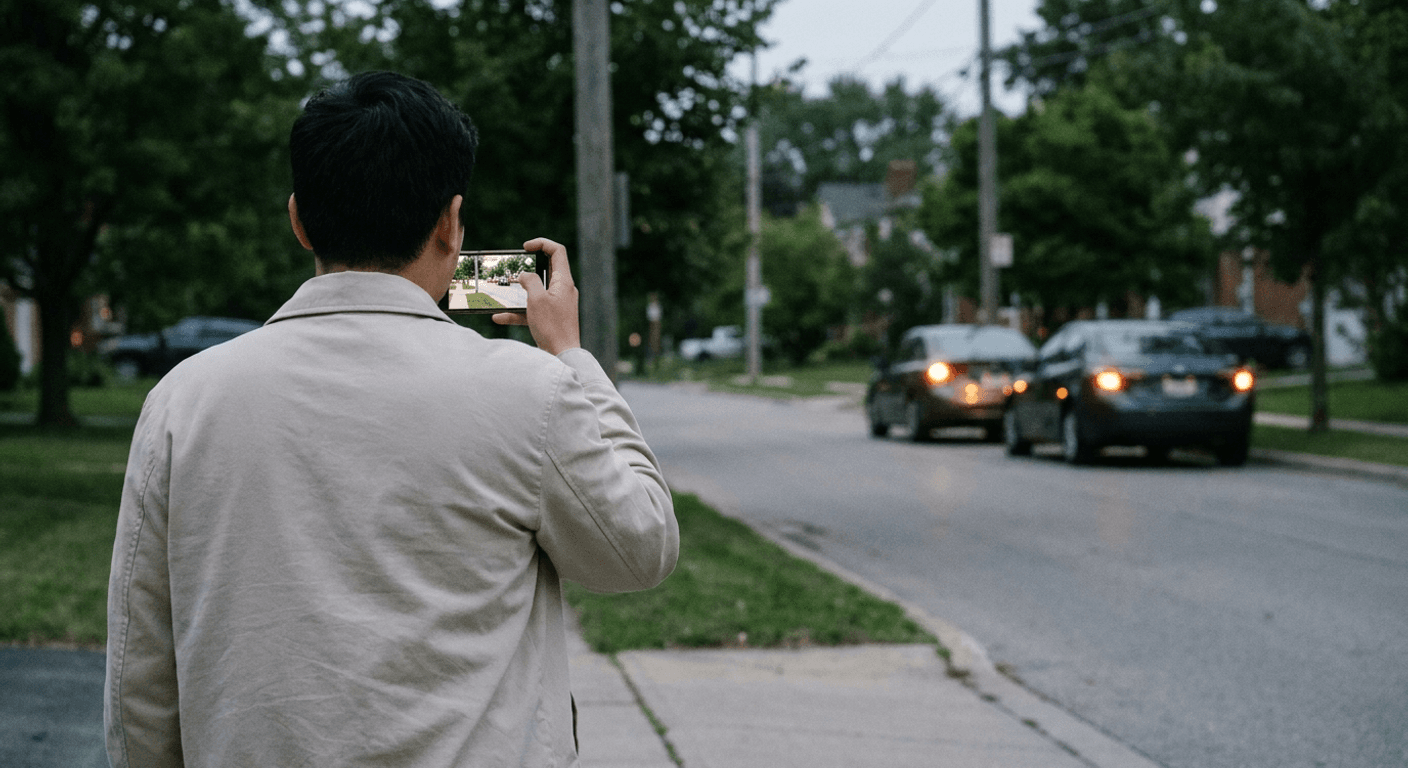
Maryland is one of a small group of states that require police to wear body cameras statewide. Every county law enforcement agency had to equip its public-facing officers by July 1, 2025 under Md. Code, Public Safety § 3-511, though retention periods and release timing still run through agency policy and the state's Public Information Act.
Jurisdiction scope: This article addresses Maryland's statewide body-worn camera statute, Md. Code, Public Safety § 3-511, the related wiretap carve-out at Cts. & Jud. Proc. § 10-402(c)(11), and general access rules under the Maryland Public Information Act. It does not address whether a civilian may record a Maryland police officer, a separate question governed by Maryland's two-party consent wiretap law; see Is It Illegal to Record Someone?. For the state-by-state landscape, see the Police Bodycam Laws hub.
Does Maryland require police to wear body cameras?
Yes. Maryland is one of a small group of states, including Colorado, Connecticut, Delaware, Illinois, Nevada, New Jersey, New Mexico, and South Carolina, that mandate body-worn camera use statewide rather than leaving adoption to local discretion. The scope of those mandates varies: Nevada requires every law enforcement agency to have uniformed officers who routinely interact with the public wear a recording device on duty (Nev. Rev. Stat. § 289.830(1)), while South Carolina's requirement is tied to money, because an agency there is not required to implement cameras until it has received full funding (S.C. Code § 23-1-240(E)(2)).
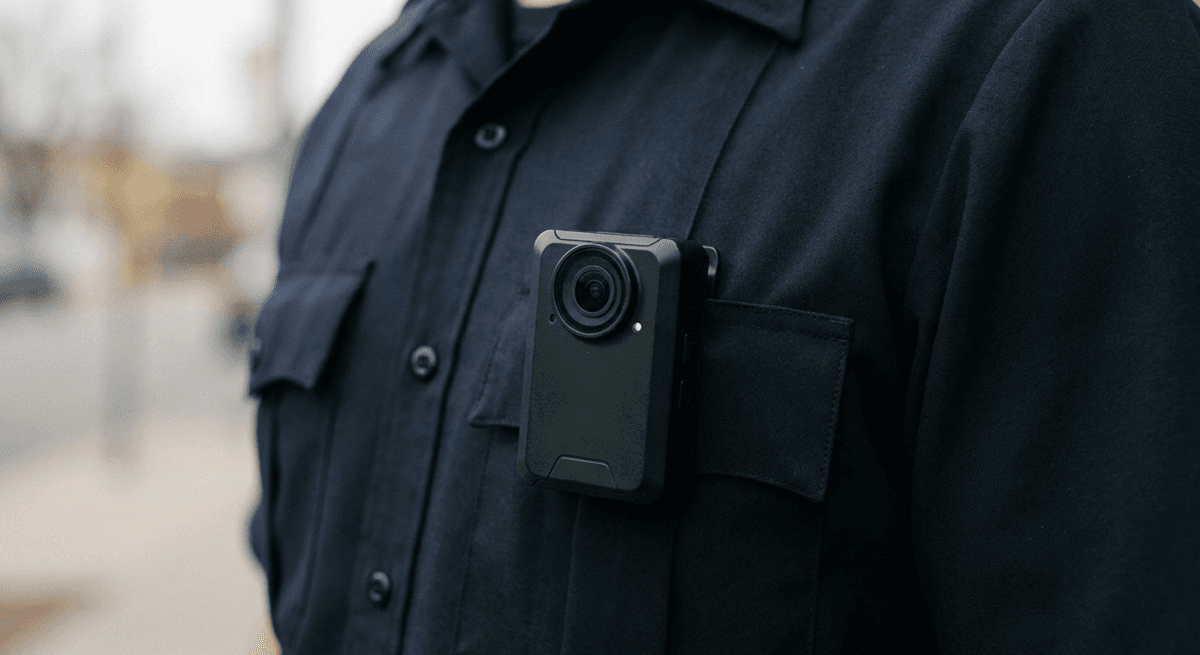
Maryland's own requirement traces to the Maryland Police Accountability Act of 2021, which built out Public Safety § 3-511's phased rollout: the Department of State Police and the police departments or sheriff's office of Anne Arundel, Howard, and Harford Counties had to require body cameras by July 1, 2023, and every other county law enforcement agency had to do so by July 1, 2025, for officers who regularly interact with members of the public as part of their official duties. Each agency's written policy must specify which of its officers are covered.
A law enforcement agency cannot bargain its way out of the requirement. Section 3-511 expressly bars altering the statute's requirements or the policies adopted under it through collective bargaining.
What must Maryland's body-camera policy cover?
Public Safety § 3-511 does not let each department write its rules from scratch. It directs the Maryland Police Training and Standards Commission (MPTSC) to develop and publish online a single statewide model policy addressing 17 specified areas, including testing procedures, what to do when a camera fails, when recording is mandatory, prohibited, or discretionary, consent and notice practices, secure data storage, confidentiality, review and use of footage, retention, and dissemination and release. Every agency's own written policy must be consistent with that MPTSC model.
Cameras deployed under the statute must also meet a technical standard: models capable of doing so must automatically record and save at least 60 seconds of video immediately before an officer presses the record button, a buffer meant to capture the moments leading into an encounter that an officer might not think to record in time.
How long does Maryland require agencies to keep body-camera footage?
Section 3-511 lists retention of recordings as one of the 17 topics the MPTSC model policy and each agency's own policy must address, but the statute itself does not fix a single statewide number of days. That leaves the specific retention period, and how much longer footage is kept once it is tied to a complaint, a use of force, or a pending case, to the model policy and each agency's implementing policy rather than to the Public Safety Article directly. A reader who needs the exact number for a specific department, such as Baltimore County Police or the Maryland State Police, should request that agency's current written body-worn camera policy, since § 3-511 sends that question to agency policy rather than answering it directly.
Can the public get a copy of Maryland body-camera footage?
Maryland routes bodycam requests through its general Public Information Act (Md. Code, General Provisions §§ 4-101 et seq.) rather than a camera-specific access statute; § 3-511 governs when agencies must record and how they must set policy, not when the public can see the result. Under the PIA's ordinary framework, an agency may withhold or redact portions of footage under exemptions covering active investigatory records and unwarranted invasions of personal privacy, and may charge a fee for the search, preparation, and redaction time a request requires.
For the subset of cases the Attorney General's Independent Investigations Division (IID) investigates statewide, meaning any police-involved incident resulting in a death or an injury likely to result in death, the IID has followed a protocol of releasing body-worn camera footage within about 20 business days of the incident, once investigators have gathered other physical evidence and witness interviews. For example, after Baltimore County police fatally shot 31-year-old Howard Sye in Essex on December 3, 2025, the IID released body-worn camera footage of the encounter on January 2, 2026, roughly a month later. That timeline is IID protocol, not a number written into the Public Safety Article, and county agencies handling less serious incidents on their own set their own release timing under the PIA.
Do Maryland police need my consent to record me with a body camera?
No. Maryland is normally a two-party, or all-party, consent state for recording private oral communications under Cts. & Jud. Proc. § 10-402, but a 2015 amendment added a body-camera-specific carve-out at § 10-402(c)(11). A uniformed officer, or one prominently displaying a badge, who is making reasonable efforts to conform to the Public Safety § 3-511 policy may lawfully record an oral communication with a body-worn camera without the other party's consent, because the officer is a party to the conversation. Recording consent is therefore not the live legal question for Maryland body cameras, in contrast to the separate and already-settled question of whether a member of the public may record a Maryland officer. See Is It Illegal to Record Someone? for that side of the issue.
This article provides general legal information about Maryland's body-worn camera statute and public-records law. It is not legal advice. Maryland law was reviewed as of July 2026; consult a Maryland-licensed attorney or file a Public Information Act request directly with the agency that holds the footage for guidance on a specific case.
More Maryland Laws
Frequently Asked Questions
Is Maryland a body camera mandate state?
Yes. Maryland requires local law enforcement agencies to equip public-facing officers with body-worn cameras under Md. Code, Public Safety § 3-511. The Maryland State Police and three counties had to comply by July 1, 2023, and all remaining county law enforcement agencies had to comply by July 1, 2025.
When did Maryland's body camera mandate take full effect?
July 1, 2025, for county law enforcement agencies not already covered by the earlier deadline. The Department of State Police and the agencies serving Anne Arundel, Howard, and Harford Counties had an earlier deadline of July 1, 2023.
What must a Maryland agency's body camera policy include?
It must be consistent with the statewide model policy the Maryland Police Training and Standards Commission publishes, which covers 17 areas including when recording is mandatory, prohibited, or discretionary, secure storage, confidentiality, retention, and dissemination and release of footage.
How long do Maryland police keep body camera footage?
Public Safety § 3-511 does not set a fixed statewide number of days. Retention is addressed in the MPTSC model policy and in each agency's own written policy, so the exact period depends on the department and, often, on whether the footage is tied to a complaint or serious incident.
How do I request Maryland police body-camera footage?
Submit a request to the agency that made the recording under the Maryland Public Information Act. The agency may withhold or redact portions under the PIA's investigatory-records or privacy exemptions and may charge a fee for search, preparation, and redaction time.
Do Maryland officers need my consent before recording with a body camera?
No. A 2015 amendment to Maryland's wiretap law, Cts. & Jud. Proc. § 10-402(c)(11), lets a uniformed officer following the Public Safety § 3-511 policy record without consent, since the officer is a party to the conversation.
Who investigates and releases footage when Maryland police cause a death?
The Attorney General's Independent Investigations Division (IID) investigates every police-involved death or likely-fatal injury statewide and, as a matter of protocol, has released body-worn camera footage within about 20 business days of the incident in recent cases.
Updates
Corrected the citation for Maryland’s body-camera exception to the wiretap consent law, which is at Cts. & Jud. Proc. § 10-402(c)(11) rather than (c)(16), and updated the list of states with statewide body-camera mandates to include Nevada and to note that South Carolina’s requirement depends on funding.
Independently fact-checked against the cited primary sources; governing law re-checked for recent changes
Governing law re-checked for recent changes
Governing law re-checked for recent changes
Reviewed and approved by an editor
The Law Behind This Article
This article rests on the statutory provisions below, held in our own legal record and retrieved from the official source. Tap a section to read the operative text.
Maryland Code, Public Safety Article
§ 3-511In forcecited in 4 of our articles
§3–511. (a) In this section, “law enforcement agency” has the meaning stated in § 3–201 of this title. (b) On or before January 1, 2016, the Maryland Police Training and Standards Commission shall develop and publish online a policy for the issuance and use of a body–worn camera by a law enforcement officer that addresses: (1) the testing of body–worn cameras to ensure adequate functioning; (2) the procedure for the law enforcement officer to follow if the camera fails to properly operate at the beginning of or during the law enforcement officer’s shift; (3) when recording is mandatory; (4) when recording is prohibited; (5) when recording is discretionary; (6) when recording may require consent of a subject being recorded; (7) when a recording may be ended; (8) providing notice of recording; (9) access to and confidentiality of recordings; (10) the secure storage of data from a body–worn camera; (11) review and use of recordings; (12) retention of recordings; (13) dissemination and release of recordings; (14) consequences for violations of the agency’s body–worn camera policy; (15) notification requirements when another individual becomes a party to the…
Official text (excerpt) · last checked 2026-08-31 · Read the full text in our law library · Verify at mgaleg.maryland.gov
Also relied on in: How to Get a Police Report in Maryland (2026 Guide), Maryland Public Information Act: Deadlines, Fees, and the Two-Stage Appeal, Maryland Recording Laws (2026): All-Party Consent Rules
Maryland Code, Courts and Judicial Proceedings Article
§ 10-402In forcecited in 26 of our articles
§10–402. (a) Except as otherwise specifically provided in this subtitle it is unlawful for any person to: (1) Willfully intercept, endeavor to intercept, or procure any other person to intercept or endeavor to intercept, any wire, oral, or electronic communication; (2) Willfully disclose, or endeavor to disclose, to any other person the contents of any wire, oral, or electronic communication, knowing or having reason to know that the information was obtained through the interception of a wire, oral, or electronic communication in violation of this subtitle; or (3) Willfully use, or endeavor to use, the contents of any wire, oral, or electronic communication, knowing or having reason to know that the information was obtained through the interception of a wire, oral, or electronic communication in violation of this subtitle. (b) Any person who violates subsection (a) of this section is guilty of a felony and is subject to imprisonment for not more than 5 years or a fine of not more than $10,000, or both.
Official text (excerpt) · last checked 2026-09-23 · Read the full text in our law library · Verify at mgaleg.maryland.gov
Cited in 12 court opinions in our collectionLatest citing opinion in our collection: 2026
In the courts (editorial summary, independently checked):Applying section 10-402, Fearnow v. Chesapeake & Potomac Telephone Co. (1995) held that liability under the Maryland Wiretap Act requires proof the defendant acted willfully, an intentional violation or reckless disregard of a known legal duty; an employee's failure to check for a court order was only a jury factor on willfulness.
Opinions citing this section in our collection:
- Fearnow v. Chesapeake & Potomac Telephone Co. (Court of Special Appeals of Maryland 1995, 104 Md. App. 1)✓Police hid a tape recorder on an officer's headquarters phone line with a phone company employee's help and no court order; the court held a section 10-402(a) claim requires proof of willful interception, and failing to ask about a court order went only to willfulness.
- Maryland Attorney General Opinion 110OAG60 (Maryland Attorney General Reports 2025)“…or wire communications without the consent of all parties. Md. Code Ann., Cts. & Jud. Proc. § 10-402(a). However, the Wiretap Act contains e…”
- Boehner, John A. v. McDermott, James A. (Court of Appeals for the D.C. Circuit 1999, 191 F.3d 463)“…1992); Me.Rev.Stat. Ann. tit. 15, §§ 710, 711 (West 1998); Md.Code Ann., Cts & Jud. Proc. § 10-402 (1998); Mass. Gen. Laws Ann. ch. 272,…”
Identified automatically from the court opinions citing this section — not a ranking of which case controls.
Also relied on in: US Recording Laws by State (2026): All 50 States Explained, Is Plaud HIPAA Compliant? Kind Of. Here's What to Know (2026), Maryland Audio Recording Laws: Two-Party Consent Rules and Penalties (2026)
Nevada Revised Statutes, Chapter 289: PEACE OFFICERS AND OTHER LAW ENFORCEMENT PERSONNEL
§ 289.830Certain law enforcement agencies shall require certain peace officers to wear portable event recording device while on duty; adoption of policies and procedures governing use; request for and inspection of record made by device.In forcecited in 6 of our articles
1. A law enforcement agency shall require uniformed peace officers that it employs and who routinely interact with the public to wear a portable event recording device while on duty. Each law enforcement agency shall adopt policies and procedures governing the use of portable event recording devices, which must include, without limitation: (a) Except as otherwise provided in paragraph (d), requiring activation of a portable event recording device whenever a peace officer is responding to a call for service or at the initiation of any other law enforcement or investigative encounter between a uniformed peace officer and a member of the public; (b) Except as otherwise provided in paragraph (d), prohibiting deactivation of a portable event recording device until the conclusion of a law enforcement or investigative encounter; (c) Prohibiting the recording of general activity; (d) Protecting the privacy of persons: (1) In a private residence; (2) Seeking to report a crime or provide information regarding a crime or ongoing investigation anonymously; or (3) Claiming to be a victim of a crime; (e) Requiring that any video recorded by a portable event recording…
Official text (excerpt) · last checked 2026-08-31 · Read the full text in our law library · Verify at leg.state.nv.us
Cited in 4 court opinions in our collectionLatest citing opinion in our collection: 2023
Opinions citing this section in our collection:
- REPUBLICAN ATTORNEYS GEN. ASS'N VS. LAS VEGAS METRO. POLICE DEP'T (Nevada Supreme Court 2020, 458 P.3d 328)“…formation from disclosure. RAGA points to NRS 289.830(2), which states:…”
- Conrad v. Reno Police Dep't (Nevada Supreme Court 2023)“…a footage constitutes a public record under NRS 289.830(2), an officer's _photograph is…”
- Las Vegas Metro. Police Dep't v. Dist. Ct. (Am. Broad. Co.'s, Inc.) (Nevada Supreme Court 2018)“…footage, as opposed to inspection of the footage, as NRS 289.830 requires inspection if…”
Identified automatically from the court opinions citing this section — not a ranking of which case controls.
Also relied on in: Nevada Laws on Recording Police: Your Rights Under NRS 171.1233 (2026), Nevada Police Body Camera Laws: Access & Retention, Nevada Police Reports: How to Get a Crash Report, Incident Report, or Bodycam Video
South Carolina Code of Laws, Title 23: LAW ENFORCEMENT AND PUBLIC SAFETY
§ 23-1-240Body-worn cameras; definition; guidelines; policies and procedures; fund; data releaseIn forcecited in 8 of our articles
(A) For purposes of this section, "body-worn camera" means an electronic device worn on a person's body that records both audio and video data. (B) State and local law enforcement agencies, under the direction of the Law Enforcement Training Council, shall implement the use of body-worn cameras pursuant to guidelines established by the Law Enforcement Training Council. (C) Within one hundred eighty days after the effective date of this section, the Law Enforcement Training Council shall conduct a thorough study of the use, implementation procedures, costs, and other related aspects associated with body-worn cameras in jurisdictions with body-worn cameras currently in use or which begin their use during this period. The Law Enforcement Training Council shall develop guidelines for the use of body-worn cameras by state and local law enforcement agencies within one hundred eighty days of the effective date of this act.
Official text (excerpt) · last checked 2026-08-31 · Read the full text in our law library · Verify at scstatehouse.gov
Also relied on in: South Carolina Audio Recording Laws: One-Party Consent Rules and Penalties (2026), South Carolina Video Recording Laws: Where You Can and Cannot Record (2026), South Carolina Police Body Camera Laws: Mandate & FOIA Exemption
Search our full record of US law — 2.1 million sections, every state + federal →
Sources and References
- Md. Code, Public Safety § 3-511 (Development and publication of policy for issuance and use of body-worn camera by law enforcement officer)(mgaleg.maryland.gov).gov
- Md. Code, Cts. & Jud. Proc. § 10-402(c)(16) (body-worn camera exception to Maryland's wiretap consent requirement)(mgaleg.maryland.gov).gov
- Office of the Attorney General of Maryland, Independent Investigations Division overview(oag.maryland.gov).gov
- Office of the Attorney General of Maryland, "Independent Investigations Division Provides Update in Baltimore County Police Use of Force Incident" (March 2, 2026 statement describing the 20-business-day body-worn camera release protocol)(oag.maryland.gov).gov
- Office of the Attorney General of Maryland, "Body-Worn Camera Footage from Fatal Police-Involved Shooting in Baltimore County Released" (Essex, Dec. 3, 2025 incident; footage released Jan. 2, 2026)(oag.maryland.gov).gov
- National Conference of State Legislatures, Body-Worn Camera Laws Database (listing Maryland among the states with a statewide body-camera mandate)(ncsl.org)
- Md. Code, Cts. & Jud. Proc. § 10-402(c)(11) (body-worn digital recording device exception to Maryland’s wiretap consent requirement)(mgaleg.maryland.gov)
- Maryland General Assembly, HB 533 (2015 Regular Session), enacted as Chapter 129 (adding the body-worn camera exception to the wiretap consent requirement)(mgaleg.maryland.gov)
- Nev. Rev. Stat. § 289.830(1) (requiring law enforcement agencies to have uniformed peace officers who routinely interact with the public wear a portable event recording device on duty)(leg.state.nv.us)
- S.C. Code § 23-1-240(E)(2) (South Carolina agencies not required to implement body-worn cameras until they have received full funding)(scstatehouse.gov)