
South Carolina
South Carolina Smart Glasses Recording Laws 2026
Independently fact-checked against primary sources (last audited August 24, 2026). · Reviewed by the RecordingLaw editorial team. · Law checked current as of August 24, 2026. How we verify our legal content
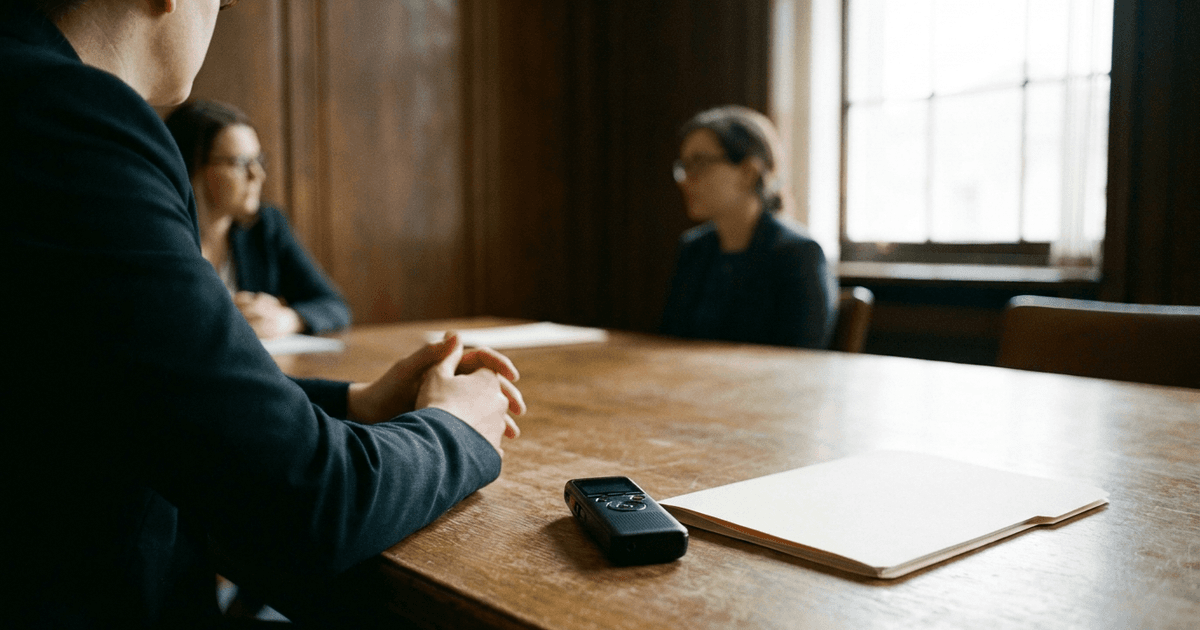
Yes, smart glasses are legal to own and wear in South Carolina, but recording with them carries legal responsibilities tied to the state's one-party consent rule. Under South Carolina's Homeland Security Act (S.C. Code § 17-30-30(C)), you may record any conversation you are a party to without notifying the other participants. The parallel federal one-party rule (18 U.S.C. § 2511(2)(d)) does not protect a recording made for the purpose of committing a criminal or tortious act. Secretly viewing or recording someone in a private place can also be a separate crime under South Carolina's peeping and voyeurism statute.
Are Smart Glasses Legal to Own and Wear in South Carolina?
Yes. South Carolina has no statute that restricts owning, purchasing, or wearing smart glasses such as Meta Ray-Ban AI glasses. The device is freely sold throughout the state and its mere possession raises no legal issue under South Carolina or federal law.
The legal analysis begins only when the glasses are used to capture audio or video. The outcome depends on the content being recorded, the location, your role in any conversation being captured, and the purpose of the recording.
Recording Video in Public vs. Private Spaces
Public spaces
Recording video in a public space is lawful in South Carolina under both state and federal law. When a person is in public, whether on a street, sidewalk, in a park, at a festival, or in any location generally accessible to the public, they have a diminished reasonable expectation of privacy from being seen or filmed. The federal Wiretap Act defines "oral communication" under 18 U.S.C. § 2510(2) as speech uttered under circumstances justifying a reasonable expectation against interception. Silent video capture in public does not trigger that statute. South Carolina law tracks this same principle.
Justice Harlan's concurrence in Katz v. United States, 389 U.S. 347 (1967), described a twofold requirement for Fourth Amendment privacy protection: that a person have exhibited an actual (subjective) expectation of privacy, and that the expectation be one that society is prepared to recognize as reasonable. Persons on a public sidewalk, at an outdoor market, or inside a retail store generally cannot claim a reasonable expectation of privacy from being seen or recorded on camera. Smart glasses worn in those environments generate no legal exposure from video capture alone.
Semi-public and private spaces
The legal picture shifts in semi-public or fully private spaces. A private home, a medical office, a hotel room, or a closed meeting room carries a strong reasonable expectation of privacy. Even spaces that are technically accessible to the public, such as a workplace break room during a quiet one-on-one conversation or a restaurant booth during a personal discussion, can give rise to a reasonable expectation of privacy in the content of spoken words exchanged there.
These hybrid semi-public spaces are where smart glasses create real legal risk, not because of video capture, but because the simultaneous audio recording of private conversations triggers South Carolina's wiretap statute.
Recording in private places
S.C. Code § 16-17-470 makes it a crime to be a peeping tom or eavesdropper on another's premises, and makes it voyeurism to view or record another person, without that person's knowledge and consent, for the purpose of arousing or gratifying sexual desire, while the person is in a place where he or she would have a reasonable expectation of privacy. Using smart glasses to secretly film someone inside their home, a locker room, or any other private location can implicate that statute alongside the wiretap prohibition.
Recording Audio and South Carolina's One-Party Consent Rule
This is the load-bearing legal issue for smart glasses users in South Carolina.
The statute: S.C. Code §§ 17-30-20 and 17-30-30
South Carolina's Homeland Security Act governs the interception of wire, oral, and electronic communications. S.C. Code § 17-30-20 sets out the general prohibition on unlawfully intercepting wire, oral, or electronic communications. Section 17-30-30(C) provides the one-party consent exception for private individuals: interception is not unlawful when a person who is a party to the communication, or when one of the parties to the communication, consents to the interception. (Subsection (B) covers persons acting under color of law, such as law enforcement officers; subsection (C) is the provision that applies to ordinary private citizens.)
In practice, a person wearing smart glasses who is part of a conversation, whether an employee speaking with a supervisor, a consumer talking with a business representative, or a person having an in-person discussion with a neighbor, may lawfully record that conversation in South Carolina without disclosing the recording to the other participants.
South Carolina's consent framework mirrors the federal baseline established by 18 U.S.C. § 2511(2)(d). Because South Carolina has not enacted a stricter all-party consent requirement, the federal one-party rule and the state rule operate in parallel, both permitting the recording participant to capture the conversation without notification.
What one-party consent does not cover
The one-party exception applies only when the recorder is a genuine participant in the communication. It does not protect:
- Using smart glasses to record a private conversation between two other people that the wearer is not part of.
- Secretly capturing oral communications of others in a private space where the wearer has no legitimate presence.
- Under federal law, recording for the purpose of committing a criminal or tortious act, such as blackmail. South Carolina's own § 17-30-30(C) contains no purpose limitation, but the federal one-party exception in 18 U.S.C. § 2511(2)(d) does.
Recording private conversations of others without participation is an unlawful interception under S.C. Code § 17-30-20 and carries the same criminal penalties as any other wiretap violation.
Practical application
For a smart glasses wearer in South Carolina, the one-party consent rule means:
- Recording a conversation you are actively having with someone, at work, at home, over the phone, or in a public setting, is lawful. You are a party. No disclosure is required.
- Recording the private conversation of two other people you are not participating in is unlawful.
- Recording your own video content in public with no conversation being captured raises no consent issue at all.
For a complete analysis of South Carolina's consent framework, see the South Carolina Recording Laws page.
Where You Cannot Record: Voyeurism Under S.C. Code § 16-17-470
Separately from the wiretap consent rules, S.C. Code § 16-17-470 targets peeping and voyeurism. The statute defines a place where a person would have a reasonable expectation of privacy as a place where a reasonable person would believe he or she could disrobe in privacy without being photographed or filmed, or a place where one would reasonably expect to be safe from hostile intrusion or surveillance. The elements of each offense are described below, and subsection (E) exempts certain activity from the peeping-tom provision in subsection (A), including security surveillance in bona fide business establishments, private detectives and investigators conducting surveillance in the ordinary course of business, and bona fide news gathering.
The three tiers of South Carolina's voyeurism statute
S.C. Code § 16-17-470 distinguishes three categories of prohibited conduct:
Eavesdropping or peeping: Peeping through windows, doors, or other openings, or using video or audio equipment for the purpose of spying upon or invading the privacy of persons inside, is a first-offense misdemeanor carrying a fine of up to $500 or up to 3 years imprisonment, or both. The statute expressly encompasses the use of "any video, still camera, or audio recording device" to accomplish the prohibited purpose, making smart glasses a covered device.
Voyeurism: Knowingly viewing, photographing, recording, or filming another person without consent while that person is in a location where they would have a reasonable expectation of privacy, and doing so for purposes of sexual gratification, is also a first-offense misdemeanor carrying a fine of up to $500 or up to 3 years imprisonment. A second or subsequent offense is a felony carrying a fine of $500 to $5,000 or up to 5 years imprisonment.
Aggravated voyeurism: Selling, distributing, or otherwise disseminating any photograph, recording, or film obtained through a voyeurism violation is a felony carrying a fine of $500 to $5,000 or up to 10 years imprisonment. This tier directly addresses the downstream sharing of covertly obtained footage.
Locations where the risk is highest
The risk is clearest in restrooms, locker rooms, gym changing areas, fitting rooms, private residences, and hotel rooms, where people reasonably expect to disrobe in privacy. The statute does not treat smart glasses differently from any other camera.
Federal law adds a parallel floor: 18 U.S.C. § 1801, the Video Voyeurism Prevention Act, separately prohibits recording a person's private areas on federal property without consent where they have a reasonable expectation of privacy.
The covert appearance of smart glasses does not create any exception to the voyeurism prohibition. Voyeurism under § 16-17-470(B) requires recording "without that person's knowledge and consent," and a device that looks like ordinary eyewear can make it harder to show the person knew they were being recorded.
Nonconsensual intimate images
South Carolina separately criminalizes the disclosure of intimate images under S.C. Code § 16-15-332. Disseminating intimate images without consent and with intent to cause harm or for profit is a first-offense crime carrying a fine of up to $5,000 or up to 5 years imprisonment; a subsequent offense carries a fine of up to $10,000 or 1 to 10 years imprisonment with no suspension of the minimum. Smart glasses that capture intimate content covertly and are then used to record or distribute that content create exposure under both § 16-17-470 and § 16-15-332.
Facial Recognition and Biometric Privacy
South Carolina does not have a dedicated biometric privacy statute equivalent to Illinois's Biometric Information Privacy Act (BIPA), Texas's Capture or Use of Biometric Identifier Act (CUBI), or Washington's biometric identifier law (RCW Chapter 19.375).
South Carolina has not enacted a comprehensive consumer privacy law as of June 2026. There is no South Carolina statute requiring prior written consent before scanning a person's face geometry, and there is no per-person statutory damages regime equivalent to Illinois BIPA's $1,000 to $5,000 per violation. The state Attorney General has no dedicated biometric enforcement authority analogous to the Texas AG's CUBI enforcement power.
That does not mean South Carolina residents are without recourse. Common-law privacy torts, particularly intrusion upon seclusion under Restatement (Second) of Torts § 652B, apply regardless of any statute. An intentional intrusion upon someone's solitude or private affairs in a manner highly offensive to a reasonable person creates civil liability even if no footage is ever shared. The act of covert recording itself is the intrusion.
The practical risk is greatest through third-party software integrations. Meta's Ray-Ban AI glasses provide a camera but do not natively run facial recognition. The legal exposure arises when a user pairs the glasses with a third-party reverse facial-recognition application. In October 2024, Harvard students demonstrated the "I-XRAY" system by pairing Meta Ray-Ban glasses with a facial-recognition search engine to identify strangers in real time and retrieve home addresses and partial Social Security numbers within minutes. That demonstration used third-party software, not Meta's own systems. South Carolina users who build or use similar integrations face civil tort liability and, if the footage is used to stalk or harass, criminal exposure under South Carolina's stalking statutes.
If a South Carolina smart glasses user captures the face of an Illinois, Texas, or Washington resident, those states' biometric laws may reach the conduct regardless of where the recording occurs. Consulting an attorney is warranted before any commercial deployment of facial recognition technology in South Carolina.
Penalties Summary
| Offense | Statute | Classification | Maximum Penalty |
|---|---|---|---|
| Unlawful interception of wire, oral, or electronic communication | S.C. Code § 17-30-20 / § 17-30-50 | Felony | Up to 5 years / up to $5,000 fine |
| Eavesdropping / peeping (first offense) | S.C. Code § 16-17-470 | Misdemeanor | Up to 3 years / up to $500 fine |
| Voyeurism (first offense) | S.C. Code § 16-17-470 | Misdemeanor | Up to 3 years / up to $500 fine |
| Voyeurism (second or subsequent offense) | S.C. Code § 16-17-470 | Felony | Up to 5 years / $500-$5,000 fine |
| Aggravated voyeurism (distributing recorded content) | S.C. Code § 16-17-470 | Felony | Up to 10 years / $500-$5,000 fine |
| Disseminating intimate images without consent (first offense, with intent to harm) | S.C. Code § 16-15-332 | Felony | Up to 5 years / up to $5,000 fine |
| Disseminating intimate images without consent (subsequent offense) | S.C. Code § 16-15-332 | Felony | 1-10 years / up to $10,000 fine |
Civil remedies under S.C. Code § 17-30-135 are independent of criminal prosecution. A plaintiff may recover actual damages of not less than the greater of $500 per day of violation or $25,000, punitive damages, and attorney fees and litigation costs. Against a governmental defendant, damages are capped by the South Carolina Tort Claims Act limits under subsection (F)(3), and subsection (B) makes good faith reliance on a court order, subpoena, or a qualifying SLED request a complete defense. Civil claims must be filed within five years from the date the plaintiff first had a reasonable opportunity to discover the violation.
At the federal level, the Wiretap Act (18 U.S.C. § 2511) imposes up to 5 years imprisonment for criminal violations and civil liability of at least $10,000 in statutory damages for each unlawful interception.
Practical Tips for Smart Glasses Users in South Carolina
Confirm you are a participant before recording audio. South Carolina's one-party consent rule protects only genuine participants in a conversation. If the other person is addressing you directly and you are exchanging words with them, you are a participant and the one-party rule applies. If you are positioning the glasses to capture a nearby conversation that does not involve you, you are outside the exception and face felony exposure under § 17-30-20.
Keep the purpose lawful. South Carolina's own one-party exception contains no purpose limitation, but the federal one-party exception in 18 U.S.C. § 2511(2)(d) does not cover a recording made for the purpose of committing a criminal or tortious act. A recording used for blackmail, harassment, or stalking can also create exposure under other criminal laws. Keep the purpose of any recording within lawful bounds.
Keep the LED active. Meta's Ray-Ban AI glasses include a built-in white capture LED near the right frame that illuminates whenever the camera is actively recording video, taking a photo, or streaming live. South Carolina law does not currently mandate recording indicators for wearables, but deliberately covering the LED removes the only visible signal that recording is occurring. This strengthens evidence of non-consensual covert recording intent if a dispute arises.
Disclose before sensitive meetings. South Carolina law does not require you to disclose recordings of conversations you are part of, but disclosing the recording at the outset of any formal or sensitive meeting, such as a job interview, a medical appointment, or a legal consultation, eliminates any ambiguity about consent, avoids civil intrusion-upon-seclusion exposure entirely, and protects the admissibility of the recording if you later need to use it.
Never record in private spaces. Recording someone without their knowledge and consent where they reasonably expect privacy can expose you to peeping or voyeurism charges under § 16-17-470, and using smart glasses rather than a phone offers no defense. Remove the glasses before entering locker rooms, restrooms, changing rooms, or any other space where people expect privacy from being observed. The felony-level penalties for repeat voyeurism and for distributing recorded content make these charges extremely consequential.
Watch for cross-border calls. South Carolina's one-party consent rule governs calls where both parties are in South Carolina. When either party to a call is located in an all-party consent state, the stricter law of the other state may apply. Florida, which shares regional proximity with South Carolina, requires all-party consent under Florida Statutes § 934.03. When in doubt, disclose before recording or confirm the other party's location.
Driving caution. No South Carolina statute as of June 2026 specifically addresses wearable display devices while driving. Navigation use through smart glasses is analogous to a mounted GPS unit. Using smart glasses for live streaming, social media posting, or video calls while driving raises the same distracted-driving exposure as any electronic device and remains legally unsettled.
More South Carolina Laws
- South Carolina Data Privacy Laws
- South Carolina Deepfake Laws
- South Carolina Drone Laws
- South Carolina Recording Laws
Frequently Asked Questions
Is South Carolina a one-party or two-party consent state for recording?
South Carolina is a one-party consent state under S.C. Code § 17-30-30(C). If you are a participant in a conversation, you may record it without notifying the other parties. South Carolina's statute contains no purpose limitation, but the federal one-party exception in 18 U.S.C. § 2511(2)(d) does not cover a recording made for the purpose of committing a criminal or tortious act.
Can I record a conversation with my smart glasses in South Carolina without telling the other person?
Yes, provided you are a genuine participant in the conversation. S.C. Code § 17-30-30(C) permits a private person who is a party to the communication to record it without the knowledge of the other participants. You may not use this exception to record conversations you are not part of, and under the parallel federal rule in 18 U.S.C. § 2511(2)(d) the recording must not be made to commit a criminal or tortious act.
What is the penalty for illegal recording in South Carolina?
Unlawfully intercepting a wire, oral, or electronic communication under S.C. Code § 17-30-20 and § 17-30-50 carries up to 5 years imprisonment and a fine of up to $5,000. Civil remedies under § 17-30-135 separately allow a plaintiff to recover the greater of $500 per day of violation or $25,000 in liquidated damages, plus punitive damages, attorney fees, and litigation costs.
Can I secretly film someone with smart glasses in South Carolina?
In public spaces, video-only recording is generally lawful. In places where people have a reasonable expectation of privacy, such as restrooms, locker rooms, and private residences, recording someone without their knowledge and consent can be a crime under S.C. Code § 16-17-470, as peeping or, when done to arouse or gratify sexual desire, voyeurism. A first offense is a misdemeanor carrying up to 3 years; repeat offenses are felonies. The covert appearance of smart glasses does not create any exception.
Does South Carolina have a biometric privacy law for smart glasses?
No. South Carolina has no dedicated biometric privacy statute as of June 2026. There is no equivalent to Illinois BIPA, Texas CUBI, or Washington's biometric identifier law. Using smart glasses with facial recognition in South Carolina does not carry direct statutory-damages exposure, but common-law intrusion-upon-seclusion torts still apply to covert recording.
Are Meta Ray-Ban smart glasses legal to use in South Carolina?
The device is legal to own and wear. The legality of use depends on what you record, where, and your role in any conversation you capture. Meta's capture LED provides an external recording indicator. South Carolina law does not mandate its use, but deliberately covering it strengthens evidence of covert non-consensual recording intent if a dispute arises.
What happens if I record someone in South Carolina who is in Florida?
Florida is an all-party consent state under Florida Statutes § 934.03. When a call or conversation includes a participant located in Florida, Florida's stricter all-party rule may govern the recording. South Carolina's one-party consent does not necessarily insulate you from another state's law if the other party is in an all-party consent state. Disclosing the recording before it begins is the safest approach for any cross-border conversation.
Can I record police officers with smart glasses in South Carolina?
Recording police officers performing their duties in a public space is generally protected under the First Amendment. As a participant in any encounter, such as a traffic stop or a public street interaction, South Carolina's one-party consent rule also permits audio recording. You cannot use the glasses to record in private spaces, and you should not physically interfere with any law enforcement activity.
What are the penalties for sharing recordings made with smart glasses in South Carolina?
If the recording captures intimate content obtained through voyeurism, distributing it is aggravated voyeurism under S.C. Code § 16-17-470, a felony carrying up to 10 years imprisonment and a $500 to $5,000 fine. Separately, disseminating intimate images without consent under S.C. Code § 16-15-332 carries up to 5 years on a first offense and up to 10 years on subsequent offenses when done with intent to harm or for profit.
Does South Carolina's wiretap law cover smart glasses audio recording?
Yes. S.C. Code § 17-30-20 prohibits unlawful interception of oral communications, which includes audio recorded through any device, including smart glasses. The one-party consent exception in § 17-30-30(C) permits recording when you are a participant in the conversation. Recording private conversations of others you are not part of is a felony under § 17-30-50.
Updates
Corrected the description of Katz v. United States to attribute the two-part expectation-of-privacy test to Justice Harlan's concurrence, where the opinion actually states it.
Corrected the page to show that South Carolina's one-party consent statute has no criminal-or-tortious-purpose limit (that limit is in federal law), described the voyeurism statute's actual elements and exemptions, and added the civil-remedy limits for government defendants.
Independently fact-checked against the cited primary sources; governing law re-checked for recent changes
Governing law re-checked for recent changes
Reviewed and approved by an editor
The Law Behind This Article
This article rests on the statutory provisions below, held in our own legal record and retrieved from the official source. Tap a section to read the operative text.
South Carolina Code of Laws, Title 17: CRIMINAL PROCEDURES
§ 17-30-30Interception by employee of Federal Communications Commission, by person acting under color or law, and when party has given prior consentIn forcecited in 19 of our articles
(A) It is lawful under this chapter for an officer, employee, or agent of the Federal Communications Commission, in the normal course of his employment and in discharge of the monitoring responsibilities exercised by the commission in the enforcement of 47 U.S.C. Chapter 5, to intercept a wire, oral, or electronic communication transmitted by radio or to disclose or use the information thereby obtained. (B) It is lawful under this chapter for a person acting under color of law to intercept a wire, oral, or electronic communication, where the person is a party to the communication or one of the parties to the communication has given prior consent to the interception. (C) It is lawful under this chapter for a person not acting under color of law to intercept a wire, oral, or electronic communication where the person is a party to the communication or where one of the parties to the communication has given prior consent to the interception.
Official text (excerpt) · last checked 2026-09-24 · Read the full text in our law library · Verify at scstatehouse.gov
Cited in 1 court opinions in our collectionLatest citing opinion in our collection: 2025
Opinions citing this section in our collection:
- McNeely (District Court, D. South Carolina 2025)“…a showing. The South Carolina statute cited by Plaintiff—S.C. Code § 17-30-30—provides “it is lawful . . . for a per…”
Identified automatically from the court opinions citing this section — not a ranking of which case controls.
Also relied on in: South Carolina AI Meeting Recording Laws (2026), South Carolina Recording Laws (2026): One-Party Consent Rules, South Carolina Surveillance Camera Laws (2026 Guide)
§ 17-30-20Prohibited actsIn forcecited in 9 of our articles
Except as otherwise specifically provided in this chapter, a person who commits any of the following acts is guilty of a felony and, upon conviction, must be punished as provided in Section 17-30-50 of this chapter: (1) intentionally intercepts, attempts to intercept, or procures any other person to intercept or attempt to intercept any wire, oral, or electronic communication; (2) intentionally uses, attempts to use, or procures any other person to use or attempt to use any electronic, mechanical, or other device to intercept any oral communication when: (a) the device is affixed to or otherwise transmits a signal through a wire, cable, or other like connection used in wire communication; or (b) the device transmits communications by radio or interferes with the transmission of the communication; (3) intentionally discloses or attempts to disclose to any other person the contents of any wire, oral, or electronic communication, knowing or having reason to know that the information was obtained through the interception of a wire, oral, or electronic communication in violation of this subsection; (4) intentionally uses or attempts to use the contents of any wire, oral, or…
Official text (excerpt) · last checked 2026-07-29 · Read the full text in our law library · Verify at scstatehouse.gov
Cited in 2 court opinions in our collectionLatest citing opinion in our collection: 2021
Opinions citing this section in our collection:
- Ducharme v. Madewell Concrete LLC (District Court, D. South Carolina 2021)“…the intentional interception of electronic communications. S.C. Code Ann. § 17-30-20; 18 U.S.C. § 2511. The critical inquir…”
- Carson v. Emergency MD LLC (District Court, D. South Carolina 2020)“…SCHSA’s list of prohibited acts require interception. See S.C. Code Ann. § 17-30-20. The SCHSA defines “intercept” as “the…”
Identified automatically from the court opinions citing this section — not a ranking of which case controls.
Also relied on in: South Carolina Ring Doorbell Laws: What You Need to Know in 2026, South Carolina Audio Recording Laws: One-Party Consent Rules and Penalties (2026), South Carolina Phone Call Recording Laws: Consent Rules for Calls (2026)
§ 17-30-50Penalty for violating Sections 17-30-20 through 17-30-45In forcecited in 11 of our articles
(A) Except as provided in subsection (B), whoever violates the provisions of Sections 17-30-20 through 17-30-45, upon conviction, must be imprisoned not more than five years or fined not more than five thousand dollars, or both. (B) If the offense is a first offense under this chapter and is not for any unlawful purpose or for purposes of direct or indirect commercial advantage or private commercial gain, and the wire or electronic communication with respect to which the offense under this chapter was committed is a radio communication that is not scrambled, encrypted, or transmitted using modulation techniques the essential parameters of which have been withheld from the public with the intention of preserving the privacy of the communication, then: (1) if the communication is not the radio portion of a cellular telephone communication, a cordless telephone communication that is transmitted between the cordless telephone handset and the base unit, a public land mobile radio service communication, or a paging service communication, and the conduct is not that described in Section 17-30-35(7), the person committing the offense is guilty of a misdemeanor and, upon conviction, must…
Official text (excerpt) · last checked 2026-07-29 · Read the full text in our law library · Verify at scstatehouse.gov
Also relied on in: Alabama Recording Laws (2026): One-Party Consent Rules, South Carolina Dashcam Laws: Mounting Rules, Audio Recording, and Evidence (2026), South Carolina Landlord-Tenant Recording Laws: Rights for Renters and Landlords (2026)
§ 17-30-135Civil action for wrongful interceptionsIn forcecited in 11 of our articles
(A) Any person whose wire, oral, or electronic communication is intercepted, disclosed, or used in violation of this chapter has a civil cause of action against any person or entity who intercepts, discloses, or uses, or procures any other person or entity to intercept, disclose, or use the communications and is entitled to recover from the person or entity which engaged in that violation relief as may be appropriate, including: (1) preliminary or equitable or declaratory relief as may be appropriate; (2) actual damages, but not less than liquidated damages computed at the rate of five hundred dollars a day for each day of violation or twenty-five thousand dollars, whichever is greater, not to exceed the limits on liability provided in subsection (F)(3); (3) punitive damages, except as may be prohibited in subsection (F)(4); and (4) a reasonable attorney's fee and other litigation costs reasonably incurred.
Official text (excerpt) · last checked 2026-07-29 · Read the full text in our law library · Verify at scstatehouse.gov
Cited in 1 court opinions in our collectionLatest citing opinion in our collection: 2020
Opinions citing this section in our collection:
- Carson v. Emergency MD LLC (District Court, D. South Carolina 2020)“…ation of this chapter has a civil cause of action . . . .” S.C. Code Ann. § 17-30-135(A). Moreover, the SCHSA’s list of proh…”
Identified automatically from the court opinions citing this section — not a ranking of which case controls.
Also relied on in: South Carolina Employee Monitoring Laws: Workplace Surveillance and Social Media (2026), South Carolina Workplace Recording Laws: Employee and Employer Rights (2026)
South Carolina Code of Laws, Title 16: CRIMES AND OFFENSES
§ 16-17-470Eavesdropping, peeping, voyeurismIn forcecited in 14 of our articles
(A) It is unlawful for a person to be an eavesdropper or a peeping tom on or about the premises of another or to go upon the premises of another for the purpose of becoming an eavesdropper or a peeping tom. The term "peeping tom", as used in this section, is defined as a person who peeps through windows, doors, or other like places, on or about the premises of another, for the purpose of spying upon or invading the privacy of the persons spied upon and any other conduct of a similar nature, that tends to invade the privacy of others. The term "peeping tom" also includes any person who employs the use of video or audio equipment for the purposes set forth in this section. A person who violates the provisions of this section is guilty of a misdemeanor and, upon conviction, must be fined not more than five hundred dollars or imprisoned not more than three years, or both.
Official text (excerpt) · last checked 2026-08-31 · Read the full text in our law library · Verify at scstatehouse.gov
Cited in 8 court opinions in our collectionLatest citing opinion in our collection: 2026
In the courts (editorial summary, independently checked):United States v. Anthony Helton (2019) read the section's voyeurism subsection to require knowingly viewing a person without consent, where privacy is expected, for sexual arousal or gratification, and held that conviction a sex offense requiring federal registration. State v. Harris (1987) held peeping tom a crime of moral turpitude.
Opinions citing this section in our collection:
- State v. Holmes (Supreme Court of South Carolina 1995, 320 S.C. 259)✓At a capital murder trial the defense was barred from impeaching a jailhouse witness with his 1984 Peeping Tom conviction; the court held that was error because a section 16-17-470 violation is a crime of moral turpitude, but found the error harmless.
- State v. Harris (Supreme Court of South Carolina 1987, 293 S.C. 75)✓A man tried for assault with intent to commit sexual conduct with a minor was impeached with a prior Peeping Tom conviction; the court held the section 16-17-470 offense is a crime of moral turpitude, so using it to attack his credibility was proper.
- In re Parrott (Supreme Court of South Carolina 2017, 421 S.C. 105)“…ondent was arrested and charged with voyeurism pursuant to S.C. Code Ann. § 16-17-470 (B) (2015) after he used a cell phone t…”
Identified automatically from the court opinions citing this section — not a ranking of which case controls.
Also relied on in: South Carolina Security Camera Laws: Home, Business, and HOA Rules (2026), South Carolina Video Recording Laws: Where You Can and Cannot Record (2026), South Carolina Voyeurism Laws: Hidden Cameras, Peeping, and Penalties (2026)
§ 16-15-332Disseminating intimate images without consentIn forcecited in 10 of our articles
(A) A person who intentionally disseminates an intimate image or a digitally forged intimate image of another person without the effective consent of the depicted person is guilty of the unauthorized disclosure of intimate images. A person intentionally disseminates an intimate image or a digitally forged intimate image if he has knowledge that the image was obtained or created under circumstances when he knew or reasonably should have known the person depicted had a reasonable expectation of privacy. Any dissemination of multiple intimate images of the same individual as part of a common act is a single offense. The fact that the identifiable individual: (1) provided affirmative consent for the creation of the intimate image shall not establish that the individual provided effective consent for the dissemination of the intimate image; and (2) disclosed the intimate image to another individual shall not establish that the identifiable individual provided effective consent for the dissemination of the intimate image by the person alleged to have violated this section.
Official text (excerpt) · last checked 2026-09-03 · Read the full text in our law library · Verify at scstatehouse.gov
Also relied on in: South Carolina Sexting Laws: Legal Consequences and Penalties, South Carolina Deepfake Laws: AI Images, Voice Cloning & Penalties (2026), South Carolina AI Laws and Regulation (2026)
United States Code Title 18
§ 2511Interception and disclosure of wire, oral, or electronic communications prohibitedIn forcecited in 441 of our articles
Except as otherwise specifically provided in this chapter any person who— intentionally intercepts, endeavors to intercept, or procures any other person to intercept or endeavor to intercept, any wire, oral, or electronic communication; intentionally uses, endeavors to use, or procures any other person to use or endeavor to use any electronic, mechanical, or other device to intercept any oral communication when— such device is affixed to, or otherwise transmits a signal through, a wire, cable, or other like connection used in wire communication; or such device transmits communications by radio, or interferes with the transmission of such communication; or such person knows, or has reason to know, that such device or any component thereof has been sent through the mail or transported in interstate or foreign commerce; or such use or endeavor to use (A) takes place on the premises of any business or other commercial establishment the operations of which affect interstate or foreign commerce; or (B) obtains or is for the purpose of obtaining information relating to the operations of any business or other commercial establishment the operations of which affect interstate or foreign…
Official text (excerpt) · last checked 2026-09-17 · Read the full text in our law library · Verify at uscode.house.gov
Cited in 2,045 court opinions in our collectionLatest citing opinion in our collection: 2026
In the courts (editorial summary, independently checked):Griggs-Ryan v. Smith (1990) applied the Section 2511(2)(d) prior-consent exception, treating a tenant repeatedly told that all incoming calls were taped as having impliedly consented. United States v. United States District Court (1972) read the then-current Section 2511(3) as conferring no presidential surveillance power.
Opinions citing this section in our collection:
- Mitchell v. Forsyth (Supreme Court of the United States 1985, 472 U.S. 511)✓The Attorney General authorized a warrantless 1970 national security wiretap that caught the plaintiff's calls; the Court held the since-repealed Section 2511(3) disclaimer left the tap lawful under Title III, and that Mitchell had qualified immunity.
- United States v. United States District Court for the Eastern District of Michigan (Supreme Court of the United States 1972, 407 U.S. 297)✓The Attorney General approved warrantless wiretaps on members of a domestic group accused of bombing a CIA office; the Court read Section 2511(3) as a congressional disclaimer conferring no surveillance power, then held the Fourth Amendment required prior judicial approval.
- Forsyth v. Barr (Court of Appeals for the Fifth Circuit 1994, 19 F.3d 1527)✓Dallas police used, in an internal affairs probe of an officer, calls private parties allegedly intercepted illegally; assuming that was unlawful, the Fifth Circuit held Section 2517(1) and (2) allowed the disclosure and use, defeating the Section 2511(1)(c) and (d) claims.
Identified automatically from the court opinions citing this section — not a ranking of which case controls.
Also relied on in: Connecticut Recording Laws (2026): Hybrid Consent Rules Explained, Oregon Recording Laws (2026): Hybrid One-Party and All-Party Rules, US Recording Laws by State (2026): All 50 States Explained
§ 2510DefinitionsIn forcecited in 137 of our articles
As used in this chapter— “wire communication” means any aural transfer made in whole or in part through the use of facilities for the transmission of communications by the aid of wire, cable, or other like connection between the point of origin and the point of reception (including the use of such connection in a switching station) furnished or operated by any person engaged in providing or operating such facilities for the transmission of interstate or foreign communications or communications affecting interstate or foreign commerce; “oral communication” means any oral communication uttered by a person exhibiting an expectation that such communication is not subject to interception under circumstances justifying such expectation, but such term does not include any electronic communication; “State” means any State of the United States, the District of Columbia, the Commonwealth of Puerto Rico, and any territory or possession of the United States; “intercept” means the aural or other acquisition of the contents of any wire, electronic, or oral communication through the use of any electronic, mechanical, or other device.1 So in original. The period probably should be a semicolon.
Official text (excerpt) · last checked 2026-07-28 · Read the full text in our law library · Verify at uscode.house.gov
Cited in 2,382 court opinions in our collectionLatest citing opinion in our collection: 2026
In the courts (editorial summary, independently checked):United States v. New York Telephone Co. (1977) held that pen registers fall outside Title III because they do not acquire the contents of a communication as Section 2510(4) and (8) define interception. Forsyth v. Barr (1994) applied the same definitions, treating the defendant officers as law enforcement officers under Section 2510(7).
Opinions citing this section in our collection:
- Forsyth v. Barr (Court of Appeals for the Fifth Circuit 1994, 19 F.3d 1527)✓Neighbors tapped an informant's home line and the overheard charges reached Dallas internal affairs; the Fifth Circuit saw no evidence the police defendants intercepted anything and held they were 2510(7) law enforcement officers, so 2517(1) and (2) allowed their use of it.
- Nixon v. Administrator of General Services (Supreme Court of the United States 1977, 433 U.S. 425)“…of the Omnibus Crime Control and Safe Streets Act of 1968, 18 U. S. C. §§ 2510 et seq. 408 F. Supp., at 363 . We…”
- Gannett Co. v. DePasquale (Supreme Court of the United States 1979, 443 U.S. 368)“…of the Omnibus Crime Control and Safe Streets Act of 1968, 18 U. S. C. § 2510 et seq., be preserved prior to the d…”
Identified automatically from the court opinions citing this section — not a ranking of which case controls.
Also relied on in: Surveillance Camera Laws by State (2026 Guide), Georgia Recording Laws (2026): One-Party Audio, All-Party Video, District of Columbia Recording Laws (2026): One-Party Consent Rules
§ 1801Video voyeurismIn forcecited in 81 of our articles
Whoever, in the special maritime and territorial jurisdiction of the United States, has the intent to capture an image of a private area of an individual without their consent, and knowingly does so under circumstances in which the individual has a reasonable expectation of privacy, shall be fined under this title or imprisoned not more than one year, or both. In this section— the term “capture”, with respect to an image, means to videotape, photograph, film, record by any means, or broadcast; the term “broadcast” means to electronically transmit a visual image with the intent that it be viewed by a person or persons; the term “a private area of the individual” means the naked or undergarment clad genitals, pubic area, buttocks, or female breast of that individual; the term “female breast” means any portion of the female breast below the top of the areola; and the term “under circumstances in which that individual has a reasonable expectation of privacy” means— circumstances in which a reasonable person would believe that he or she could disrobe in privacy, without being concerned that an image of a private area of the individual was being captured; or circumstances in which a…
Official text (excerpt) · last checked 2026-07-28 · Read the full text in our law library · Verify at uscode.house.gov
Cited in 53 court opinions in our collectionLatest citing opinion in our collection: 2026
In the courts (editorial summary, independently checked):Courts have applied 18 U.S.C. 1801 mainly at its edges. United States v. Johnson (2010) read it as Congress's answer to secretly filming nudity on federal property, acquitting on a child exploitation charge instead. EPIC v. Department of Homeland Security (2011) applied the Section 1801(c) law enforcement exception to a TSA scanner claim.
Opinions citing this section in our collection:
- United States v. Anthony Helton (Court of Appeals for the Fourth Circuit 2019, 944 F.3d 198)“…from this list of federal offenses is video voyeurism under 18 U.S.C. § 1801. Rather than list this statute as an enu…”
- United States v. Johnson (District Court, W.D. Missouri 2010, 719 F. Supp. 2d 1059)✓A weightlifting coach hid a camera to film minors weighing in nude; acquitting him under the child exploitation statute, the court called that conduct plain video voyeurism under section 1801, but noted the section reaches only federal maritime and territorial jurisdiction.
- Electronic Privacy Information Center v. United States Department of Homeland Security (Court of Appeals for the D.C. Circuit 2011, 653 F.3d 1)✓Privacy groups challenged TSA body scanners under the Video Voyeurism Prevention Act; the D.C. Circuit held the statute's exception for lawful law enforcement, correctional, or intelligence activity applied to airport screening, so the section 1801 claim failed.
Identified automatically from the court opinions citing this section — not a ranking of which case controls.
Also relied on in: South Dakota Voyeurism Laws, Utah Voyeurism Laws, Is It Illegal to Video Record Someone Without Their Consent? (2026)
Search our full record of US law — 2.1 million sections, every state + federal →
Sources and References
- S.C. Code § 17-30-20 (South Carolina Homeland Security Act, Prohibition on unlawful interception of wire, oral, or electronic communications). Sets out the general prohibition on intercepting communications without consent.(scstatehouse.gov)
- S.C. Code § 17-30-30(C) (One-party consent exception for private individuals). A person not acting under color of law may intercept a communication where they are a party or one party has given prior consent. Subsection (B) covers law enforcement. Establishes South Carolina's one-party consent framework for private citizens.(scstatehouse.gov)
- S.C. Code § 17-30-50 (Criminal penalties for unlawful interception). Standard offense: imprisonment up to 5 years or fine up to $5,000, or both.(scstatehouse.gov)
- S.C. Code § 17-30-135 (Civil action for wrongful interceptions). Plaintiff may recover the greater of $500 per day of violation or $25,000 in liquidated damages, plus punitive damages, attorney fees, and costs. Five-year statute of limitations from discovery.(scstatehouse.gov)
- S.C. Code § 16-17-470 (Voyeurism). Prohibits eavesdropping/peeping and surreptitious recording in places where persons have a reasonable expectation of privacy. First offense: misdemeanor, up to 3 years / up to $500 fine. Second+ offense: felony, up to 5 years / $500-$5,000 fine. Aggravated (distribution): felony, up to 10 years / $500-$5,000 fine.(scstatehouse.gov)
- S.C. Code § 16-15-332 (Disseminating intimate images without consent). First offense with intent to harm: up to 5 years / up to $5,000 fine. Subsequent offense: 1-10 years / up to $10,000 fine, no suspension of minimum. Covers digitally forged images.(scstatehouse.gov)
- 18 U.S.C. § 2511 (Federal Wiretap Act). One-party consent exception at § 2511(2)(d); criminal penalty up to 5 years; civil liability of at least $10,000 per unlawful interception.(law.cornell.edu)
- 18 U.S.C. § 2510(2) (Definition of oral communication as speech uttered under circumstances justifying a reasonable expectation against interception). Basis for the rule that silent video-only recording in public is not a Wiretap Act violation.(law.cornell.edu)
- 18 U.S.C. § 1801 (Federal Video Voyeurism Prevention Act). Prohibits recording private areas of individuals on federal property without consent where they have a reasonable expectation of privacy.(law.cornell.edu)
- Meta Ray-Ban AI Glasses official privacy page. Documents the capture LED notification system and Meta's guidance that users should let the LED shine, stop recording if asked, and comply with applicable law.(meta.com)