
New Zealand
New Zealand Recording Laws: One-Party Consent, Privacy Act 2020, and Penalties (2026)
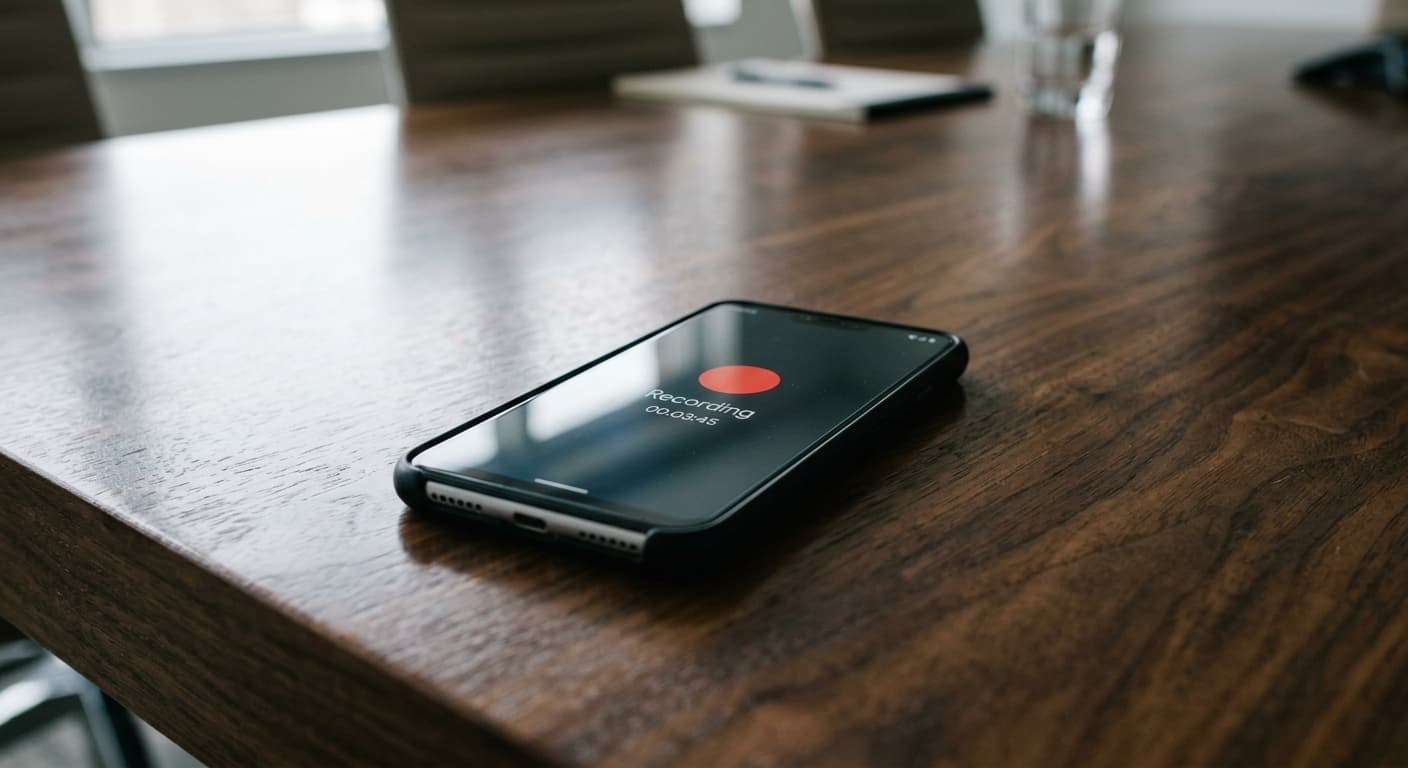
New Zealand is a one-party consent jurisdiction: Section 216B(2) of the Crimes Act 1961 permits any participant in a private communication to record it without notifying the others. Recording a conversation you are not part of is a criminal offense carrying up to two years imprisonment under Section 216B(1).
New Zealand recording law is built on a one-party consent framework under Section 216B of the Crimes Act 1961. Any participant in a private communication may record it without notifying the others. Recording a conversation you are not part of carries up to two years imprisonment. Separate regimes under the Privacy Act 2020, the Search and Surveillance Act 2012, and specific intimate-visual-recording provisions in the Crimes Act overlay the basic consent rule with additional obligations for businesses, government agencies, and individuals.
Information last verified on 2026-05-15. This article has not yet been reviewed by a licensed lawyer.
Jurisdiction scope: This article covers recording law in New Zealand under the Crimes Act 1961 (Part 9A), the Privacy Act 2020, the Search and Surveillance Act 2012, the Harmful Digital Communications Act 2015, the Employment Relations Act 2000, and the New Zealand Bill of Rights Act 1990. It does not address Australian state or US state recording laws in depth; cross-border scenarios are summarised in the final section.
Quick Answer: Is New Zealand One-Party Consent?
Yes. New Zealand operates under a one-party consent framework for audio interception. Section 216B of the Crimes Act 1961 prohibits intentional interception of private communications using an interception device, but the prohibition does not apply to a party to the communication. If you are on the call, in the meeting, or otherwise part of the exchange, you can record it without informing anyone else.
This makes New Zealand one of the more permissive jurisdictions in the English-speaking world for personal recording. However, permissive does not mean unrestricted. The Privacy Act 2020, employment law good-faith obligations, and specific rules around intimate visual content all impose separate requirements that can override the basic Crimes Act position.
The framework rests on three pillars. First, the Crimes Act 1961 sets the criminal floor: what is and is not an offense. Second, the Privacy Act 2020 governs how organisations collect, use, and store recordings as personal information. Third, specific statutes target harm from intimate and synthetic recordings. Understanding where each pillar applies is essential.
Crimes Act 1961, Sections 216A and 216B: The Core Consent Rule
Definitions in Section 216A
Section 216A provides the working definitions for Part 9A of the Crimes Act 1961, titled Crimes Against Personal Privacy.
A private communication is any oral or telecommunication made under circumstances where the parties reasonably expect that the communication is not intercepted by a third party. The test is objective: would a reasonable person in those circumstances expect privacy? A whispered conversation in a quiet office is private. A statement made at a public meeting is not.
An interception device covers any electronic, mechanical, electromagnetic, optical, or electro-optical instrument capable of intercepting a private communication. This encompasses smartphones, dedicated voice recorders, hidden microphones, and software-based recording applications equally.
Intercept is defined broadly to include hearing, listening to, recording, monitoring, acquiring, or receiving a communication. You do not need to retain a recording to intercept. Listening in real-time through an electronic device is enough.
The Section 216B Prohibition and the Party Exception
Section 216B(1) makes it an offense to intentionally intercept any private communication by means of an interception device. The maximum penalty is two years imprisonment.
Section 216B(2) sets out the critical exception. The prohibition in subsection (1) does not apply where the person intercepting the communication is a party to the communication. The definition of party in Section 216A extends to:
- Any originator of the communication
- Any intended recipient
- Any person who intercepts with the express or implied consent of an originator or intended recipient
That third category has practical reach. If you ask a colleague to hold a phone and record a call on your behalf because you are occupied, and you are a party to the call, the colleague is covered by your implied consent.
Section 216B and the Non-Party Rule: A Real-World Illustration
The non-party prohibition has practical bite at the political level. In 2017, police investigated National MP Todd Barclay under Section 216B after his former electorate agent alleged he had left a recording device running in his Gore electorate office to capture conversations among staff members while he was absent. The key legal question was whether Barclay, as a non-participant in those conversations, had intercepted a private communication by means of an interception device. Police investigated but ultimately concluded there was insufficient evidence to proceed, and no charges were laid. The affair illustrated that ownership of the premises or the recording device does not make the owner a party to a conversation; only participation in the communication satisfies the Section 216A definition.
Section 216C: Downstream Disclosure
Recording is one offense. Distribution is another. Section 216C makes it an offense to intentionally disclose the contents or existence of a private communication knowing it was unlawfully intercepted. The maximum penalty is also two years imprisonment.
The practical implication: if a third party slips you a recording that was made without being a party to the conversation, sharing that recording, even without knowing how it was obtained, can expose you once you have reason to believe it was illegally intercepted.
Section 216D: Possession of Interception Device with Intent
Section 216D makes it an offense to possess an interception device intending to use it to commit an offense under Section 216B. This targets preparation: acquiring a hidden recording device for the purpose of unlawfully intercepting another person's private communication is itself a criminal act, even before any recording occurs. The maximum penalty is two years imprisonment.
Section 216E: Forfeiture of Equipment
Section 216E gives courts power to order forfeiture of any interception device used in an offense under Part 9A. For intimate visual recording offenses, the court may also order the recording destroyed within ten working days.
Privacy Act 2020: The Overlay for Organisations
Scope and Relationship to the Crimes Act
The Privacy Act 2020, which replaced the Privacy Act 1993, applies to agencies: businesses, organisations, and government bodies that collect personal information. Natural persons acting in a purely personal or domestic capacity are largely excluded. Audio and video recordings are personal information when they identify or could identify someone.
The Privacy Act and the Crimes Act operate independently. A business employee recording a call is a party to the communication, so no Crimes Act offense occurs. But the business, as an agency, must still meet the Privacy Act obligations that govern how it collects, uses, stores, and discloses that recording.
The Thirteen Information Privacy Principles
The Privacy Act 2020 contains thirteen Information Privacy Principles (IPPs). The ones most relevant to recording are:
| Principle | Requirement |
|---|---|
| IPP 1 | Collection only for a lawful purpose connected to the agency's functions |
| IPP 3 | Tell individuals that recording is occurring, the purpose, and who will receive the information |
| IPP 4 | Collection must be fair, lawful, and not unreasonably intrusive |
| IPP 5 | Recordings must be protected against loss, unauthorized access, and misuse |
| IPP 6 | Individuals have the right to access recordings of themselves |
| IPP 9 | Recordings must not be retained longer than is necessary |
| IPP 10 | Recordings may not be used for a different purpose than that for which they were collected without consent |
IPP 3 is the most frequently litigated in the call-recording context. An agency that records calls without a notification message, such as "this call may be recorded for quality and training purposes," may be acting lawfully under the Crimes Act while breaching IPP 4 (unfair or intrusive collection) or IPP 3 (failure to inform).
New IPP 3A: Indirect Collection Notification (in force 1 May 2026)
The Privacy Amendment Act 2025 introduced a new Information Privacy Principle 3A, which came into force on 1 May 2026. IPP 3A addresses indirect collection of personal information: where an agency collects personal data from a source other than the individual concerned, the agency must take reasonable steps to ensure that individual is aware of the collection. The notification must cover the purpose of collection, who will receive the information, the identity of the collecting agency, whether collection is authorised by law, and the individual's right of access and correction.
IPP 3A fills the gap left by IPP 3, which already required notification when collecting directly from the individual. For agencies that build profiles from third-party data sources, data brokers, or public records without direct contact with the individual, IPP 3A creates a new and independent transparency obligation.
Biometric Processing Privacy Code 2025
The Biometric Processing Privacy Code 2025 was issued on 21 July 2025 and came into force on 3 November 2025. A nine-month transition period applies to agencies already using biometric technology, meaning full compliance is required by 3 August 2026. In March 2026, the Privacy Commissioner issued Amendment No 1 to the Code to reflect the new IPP 3A.
The Code applies to any agency that uses technology to collect and process biometric information, including facial geometry, gait, and voiceprint, to identify individuals. CCTV systems with facial recognition software are covered. Standard CCTV that does not match faces against a database is not.
Key obligations under the Code include:
- Consent or legitimate interest: collecting biometric data requires either consent or a clear legitimate interest that is not overridden by the individual's privacy interest
- Purpose limitation: biometric data may only be used for the purpose for which it was collected
- Retention limits: data must be deleted once the purpose is fulfilled
- Individual notification: individuals must be told that biometric processing is occurring and for what purpose
Penalties for Privacy Act Breaches
The Privacy Commissioner can investigate complaints and, if a complaint proceeds to the Human Rights Review Tribunal, the Tribunal may award damages for humiliation, loss of dignity, and emotional harm. The Commissioner can also issue compliance notices. Failing to comply with a notice is a separate offense carrying fines up to $10,000.
Search and Surveillance Act 2012: Government Surveillance Powers
The Search and Surveillance Act 2012 governs the powers of enforcement officers, including police, to conduct surveillance. It sets the conditions under which government agencies may lawfully intercept private communications or conduct covert surveillance using devices, operating alongside (and in some respects overriding) the Crimes Act framework.
Section 46: When a Surveillance Device Warrant is Required
Section 46 requires enforcement officers to obtain a surveillance device warrant before undertaking any of the following activities:
- Use of an interception device to intercept a private communication
- Use of a tracking device (other than in limited circumstances not involving trespass)
- Observation of private activity in private premises using a visual surveillance device, and any recording of that observation
- Use of a surveillance device that involves trespass to land or trespass to goods
- Observation of private activity in the curtilage of private premises using a visual surveillance device
This warrant requirement is the primary check on law enforcement surveillance. Warrants may be issued by a Judge or, in limited cases, a Registrar, and must specify the offenses under investigation, the premises or persons subject to surveillance, and the duration of the warrant.
Section 47: Activities Not Requiring a Warrant
Section 47 sets out circumstances where surveillance device warrants are not required, including the use of surveillance devices in public places where no reasonable expectation of privacy arises, and observation not involving trespass or recording.
Section 48: Emergency Use Without a Warrant
Section 48 permits enforcement officers to use a surveillance device for up to 48 hours without a warrant in genuine emergencies, provided: (a) the officer is entitled to apply for a warrant; (b) obtaining a warrant within the timeframe is impracticable; (c) there are reasonable grounds to suspect an offense punishable by 14 years or more imprisonment, or a terrorist act offense; and (d) the officer believes the surveillance device will obtain relevant evidential material. An application for a retrospective warrant must be made as soon as practicable after commencing the emergency interception.
Relationship Between the SSA and the Crimes Act
Section 216B(3) of the Crimes Act 1961 expressly excludes from its prohibition any interception conducted under a surveillance device warrant issued pursuant to the Search and Surveillance Act 2012. In other words, a law enforcement officer who obtains a valid Section 46 warrant may legally intercept a private communication even though the officer is not a party to it. The warrant authority displaces the criminal prohibition for that lawfully authorized interception.
The Intelligence and Security Act 2017
The Intelligence and Security Act 2017 governs the powers of the New Zealand Security Intelligence Service (NZSIS) and the Government Communications Security Bureau (GCSB). It replaced the Government Communications Security Bureau Act 2003, which was repealed on 28 September 2017. Intelligence warrants under Part 4 of the Intelligence and Security Act 2017 are the mechanism through which the NZSIS and GCSB may intercept communications for national security purposes; these warrants are subject to ministerial and judicial authorization requirements that reflect the intrusive nature of intelligence-gathering activities.
Phone Call Recording
Recording your own phone calls is lawful under Section 216B. You are a party; the prohibition does not apply.
Personal calls: You may record a phone call you are part of without telling the other person. There is no notification obligation on individuals acting for personal purposes.
Business calls: A business recording calls through its system is lawful under the Crimes Act because its employees are parties. However, the Privacy Act requires the business to notify callers that recording is occurring (IPP 3), explain the purpose, and comply with the retention and access obligations described above. Best practice is an automated message at the start of the call.
Calls with overseas parties: The one-party consent rule applies at the New Zealand end. Whether recording is lawful in the caller's home jurisdiction depends on that jurisdiction's law. A New Zealand person recording a call with someone in New South Wales, for example, is subject to New Zealand law (no offense) but the NSW Surveillance Devices Act 2007 independently applies to the recording in New South Wales and requires all-party consent. Cross-border calls are addressed separately below.
Recording on behalf of someone else: If you hold a phone to record a call for a friend who is the actual party to the conversation, you are covered by the friend's consent under Section 216A's third-party consent provision, provided the consent is express or can reasonably be implied.
In-Person and Face-to-Face Recording
The one-party consent rule applies equally to face-to-face conversations. If you are present in the meeting, you may record it.
What matters is participation, not location. Recording a meeting you attend is lawful. Planting a device in a room and leaving is an offense because you become a non-party interceptor. The Todd Barclay affair, described above, is the most prominent New Zealand illustration of this principle, even though it ended without charges due to insufficient evidence rather than a contested trial.
Public settings: Recording in public spaces where there is no reasonable expectation of privacy is generally lawful, because the definition of private communication requires that expectation. Recording a loud argument in a shopping centre is not an interception of a private communication. Recording a hushed conversation between two people in what they reasonably treat as a private corner of a cafe may fall within the definition.
Covert audio in intimate situations: Section 216B covers audio interception; Sections 216G through 216J cover visual recording. There is a noted gap: covert audio recording in intimate situations does not fall under the intimate visual recording provisions. Following the 2025 resignation of a Prime Minister's press secretary over allegations involving covert audio recordings, Prime Minister Christopher Luxon indicated openness to legislative reform in this area, but no amending bill had passed as of the date of this article.
Recording the Police
There is no New Zealand statute that prohibits filming or recording police officers performing their duties in a public place. The New Zealand Police FAQ acknowledges that individuals can generally take photos or make recordings in public.
Community Law New Zealand confirms that you may film or photograph police in public provided you do not obstruct officers or interfere with their duties. Police can ask you to move for safety or crowd-management reasons, but cannot demand you stop recording solely because they object to being filmed.
Police recording of the public: The Policing Amendment Bill was introduced to the House of Representatives on 18 March 2026. Part 1 of the Bill amends the Policing Act 2008 to make clear that Police may collect or record information for lawful purposes, including intelligence purposes, and may record anything Police can see or hear while lawfully in any private place or in or on a vehicle. The Bill would also authorise continuous recording when it serves lawful purposes, including the safety and integrity of Police officers. The Office of the Privacy Commissioner stated that the Bill, in its introduced form, had the potential to significantly affect people's privacy rights. Submissions on the Bill closed in April 2026 and it remained before Parliament as of May 2026.
Body-worn cameras: The New Zealand Police National Recording Standard (December 2025) sets the framework for police use of body-worn cameras. Officers must activate cameras in defined circumstances; footage is subject to the Privacy Act and official information obligations.
Workplace Recording
Workplace recording sits at the intersection of three legal regimes: the Crimes Act (criminal floor), the Privacy Act (agency obligations), and the Employment Relations Act 2000 (good faith employment).
The Crimes Act Position
An employee recording a workplace conversation they are participating in does not commit a Crimes Act offense. They are a party. An employee who plants a recording device in a meeting room and leaves commits an offense under Section 216B, because they are absent from the conversation and therefore not a party to it.
The Good Faith Duty: Employment Relations Act 2000, Section 4
Section 4 of the Employment Relations Act 2000 requires both employers and employees to deal with each other in good faith. The duty encompasses being active and constructive in maintaining the employment relationship and not engaging in misleading or deceptive conduct.
The Employment Relations Authority has consistently found that covert recording, even when lawful under the Crimes Act, can breach this good faith duty.
Downer v LM Architectural Builders Ltd [2024] NZERA 204
This 2024 decision drew an important line between two types of workplace recording.
The employee, Ms Downer, made two covert recordings. The first captured a conversation between herself and the managing director. The Authority admitted this recording: Downer was a party, no Crimes Act offense occurred, and the employer's claim that the conversation was "without prejudice" was rejected because no formal dispute existed at the time.
The second recording was different. Downer recorded the managing director speaking with a third party on the phone. She was not part of that conversation. The Authority excluded the recording as improperly obtained under Section 216B and noted that admitting improperly obtained recordings does not promote the good faith behavior the Employment Relations Act requires.
Other ERA Cases
Milham v Chief Executive of Waikato Institute of Technology [2016] NZERA Auckland 259: Secret recording damaged trust between parties and was a factor in finding that reinstatement was not practical.
Nicol v Canterbury Concrete Cutting NZ Ltd [2018] NZERA Christchurch 180: An employee won their unjustified dismissal claim but received a $2,000 penalty for breaching the good faith obligation by covertly recording workplace conversations.
Employer-Initiated Monitoring
An employer recording meetings it convenes is lawful under the Crimes Act because employer representatives are parties. However, Privacy Act obligations require the employer to have a policy, inform employees that recording occurs, and handle recordings in accordance with the IPPs. Installing hidden audio devices in common areas to record general staff conversations, where the employer is not a party to those conversations, crosses into Section 216B territory.
CCTV and Surveillance Cameras
New Zealand does not have a dedicated CCTV statute. The framework is the Privacy Act 2020, the Crimes Act, and the Biometric Processing Privacy Code 2025.
The Office of the Privacy Commissioner's CCTV guidance recommends that businesses operating CCTV:
- Identify a clear, documented purpose before installation
- Post visible signage identifying the operator and contact details
- Disable audio capture unless specifically justified, because the Privacy Commissioner notes audio collection is "more invasive"
- Never place cameras in bathrooms, changing rooms, or sleeping areas
- Set and enforce retention schedules and delete footage once the purpose is fulfilled
- Respond to access requests from individuals captured in footage
Audio from CCTV: Where a CCTV system captures private conversations (for example, in a small shop where the camera picks up conversations between staff), Section 216B may apply if the operator is not a party to those conversations. The Privacy Commissioner's guidance is to avoid audio capture from CCTV unless there is a specific, documented operational need.
Harmful Digital Communications Act 2015: The Civil Regime
The Harmful Digital Communications Act 2015 (HDCA) addresses harm caused by digital communications. While it does not regulate recording directly, it provides a civil and criminal framework that can apply once a recording is used to communicate harmfully.
The HDCA's communication principles include that a digital communication should not:
- Disclose sensitive personal facts about an individual
- Cause that individual serious emotional distress
- Contain intimate visual recordings of a person without their consent
The Act established Netsafe as the approved agency for receiving complaints about harmful digital communications. Netsafe can mediate disputes and request that harmful content be taken down. If Netsafe is unable to resolve a matter, complainants can apply to the District Court for a range of orders, including takedown orders and orders restraining further publication.
Intimate Visual Recording: Crimes Act Sections 216G to 216N
These provisions, inserted by the Crimes (Intimate Covert Filming) Amendment Act 2006, operate independently from the audio interception rules. Their structure:
| Section | Offense | Maximum Penalty |
|---|---|---|
| 216H | Making an intimate visual recording | 3 years imprisonment |
| 216I | Possessing an intimate visual recording | 1 year imprisonment |
| 216J | Publishing, distributing, importing, or exporting an intimate visual recording | 3 years imprisonment |
Definition of Intimate Visual Recording (Section 216G)
Section 216G defines an intimate visual recording as a visual recording (photo, video, digital image) made without the knowledge or consent of the person who is the subject, in circumstances where that person has a reasonable expectation of privacy, and where the subject is:
- Naked, or has genitals, pubic area, buttocks, or female breasts exposed or clad solely in undergarments
- Engaged in intimate sexual activity
- Showering, toileting, or engaged in personal bodily activity involving dressing or undressing
The definition covers recordings made with any device and in any medium.
The Recklessness Standard in Section 216H
Section 216H criminalises intentionally or recklessly making an intimate visual recording. Recklessness removes the need to prove intent to capture intimate content. If a person sets up a camera in circumstances where intimate footage was a foreseeable outcome, such as a bathroom-adjacent angle or a changing-room sightline, that can satisfy the recklessness threshold.
The 2022 HDCA Amendment: Unauthorized Online Posting
The Harmful Digital Communications (Unauthorised Posting of Intimate Visual Recording) Amendment Act 2022 added a standalone offense to the HDCA for posting intimate visual recordings online without consent. Penalties under that amendment:
- Individuals: up to 2 years imprisonment or a fine up to $50,000
- Bodies corporate: a fine up to $200,000
This creates two separate offense tracks for distributing intimate visual recordings: Section 216J of the Crimes Act (up to 3 years, for offline distribution as well as online) and the HDCA 2022 amendment (up to 2 years or fine, specifically for online posting).
Section 216K: Innocent Intermediary Protection
Section 216K protects innocent intermediaries, including postal operators, couriers, internet service providers, and network operators, who facilitate access to an intimate visual recording without knowing or suspecting its nature.
Deepfake and Synthetic Intimate Images
The Legislative Gap
As of May 2026, New Zealand does not have a comprehensive enacted law specifically targeting sexually explicit synthetic images (deepfakes). Existing provisions in the Crimes Act cover recordings of real events. A synthetic image that does not involve actual recording may not meet the definition of an "intimate visual recording" under Section 216G.
The HDCA's communication principles can apply to harmful deepfake content in the civil regime; Netsafe can be approached for takedown assistance. But criminal liability for the creation of deepfakes has remained uncertain under existing legislation.
The Deepfake Digital Harm and Exploitation Bill (2025)
The Deepfake Digital Harm and Exploitation Bill 213-1 is a Members' Bill introduced in 2025 by MP Laura McClure. If enacted, it would:
- Criminalise the creation, possession, publication, and sale of sexually explicit deepfakes
- Amend the Harmful Digital Communications Act 2015 to extend the definition of intimate visual recording to include synthetic or AI-altered images that appear to show intimate content
- Cover images "created, synthesised, or altered without the knowledge or consent of the person who is the subject"
As a Members' Bill, its passage depends on the ballot and government support. As of May 2026, the Bill had not been enacted. Individuals affected by deepfake intimate imagery can currently approach Netsafe under the HDCA civil regime for takedown assistance.
New Zealand Bill of Rights Act 1990
Section 14: Freedom of Expression
Section 14 of the New Zealand Bill of Rights Act 1990 provides that everyone has the right to freedom of expression, including the freedom to seek, receive, and impart information and opinions of any kind in any form.
Section 14 underpins the legality of recording as a form of information capture. Courts have used Section 14 to justify admissibility of recordings obtained by private parties in both civil and criminal proceedings. The right is not absolute: Section 5 allows it to be limited by laws that are justified in a free and democratic society. The recording prohibitions in Section 216B represent a justified limit (protecting privacy) on an otherwise broad freedom.
Section 21: Unreasonable Search and Seizure
Section 21 provides that everyone has the right to be secure against unreasonable search or seizure. This provision applies to state actors, not to private individuals. Police-conducted surveillance and interception must conform to Section 21 requirements; warrant provisions in the Search and Surveillance Act 2012 are the primary legislative mechanism through which that conformity is achieved.
Where law enforcement intercepts communications without a valid warrant, evidence obtained may be subject to exclusion under Section 30 of the Evidence Act 2006 (discussed below).
Admissibility of Recordings in New Zealand Courts
Criminal Proceedings: Evidence Act 2006, Section 30
Section 30 of the Evidence Act 2006 provides the framework for dealing with improperly obtained evidence in criminal proceedings. Evidence is improperly obtained if it is obtained in breach of any enactment or rule of law by a person to whom Section 3 of the New Zealand Bill of Rights Act 1990 applies (that is, state actors performing public functions).
Where evidence is found to have been improperly obtained, the court must determine whether exclusion is proportionate to the impropriety. The judge must conduct a balancing exercise giving appropriate weight to: (a) the importance of the right that was breached; (b) the severity and deliberateness of the breach; (c) the reliability of the evidence; and (d) the need for an effective and credible system of justice.
For private parties, Section 30 does not apply directly because private individuals are not subject to the Bill of Rights Act. A recording made by a private person who was a party to the communication is admissible in criminal proceedings on its face.
Employment Proceedings: A Different Admissibility Test
The Employment Relations Authority and Employment Court apply a different test. The Authority has a broad discretion to receive "such evidence and information as in equity and good conscience it thinks fit, whether strictly legal evidence or not." In deciding whether to admit a covert recording, the Authority balances: the investigatory role of the Authority, whether the recording was fairly obtained, whether its admission promotes the good faith behavior the Employment Relations Act requires, and whether the principles of equity and good conscience are satisfied.
The Court of Appeal has held that it is neither unlawful nor necessarily unfair for an employee to record a conversation without the other party's knowledge, where the employee was a party to that conversation. However, courts have also found that in general it will be difficult for an employer to justify covert recording of an employee except in very exceptional circumstances, and covert recordings made in breach of an employment policy or in a context where trust is fundamental to the relationship may be excluded.
Downer v LM Architectural Builders Ltd [2024] NZERA 204 (described above) is the most recent illustration: the Authority drew a clear line between a party recording their own conversation (admitted) and recording a conversation they were not part of (excluded as improperly obtained).
Penalty Summary
| Offense | Statute | Maximum Penalty |
|---|---|---|
| Intercepting a private communication (non-party) | Crimes Act s 216B(1) | 2 years imprisonment |
| Possessing an interception device with intent to commit s 216B offense | Crimes Act s 216D | 2 years imprisonment |
| Disclosing an unlawfully intercepted communication | Crimes Act s 216C | 2 years imprisonment |
| Making an intimate visual recording | Crimes Act s 216H | 3 years imprisonment |
| Possessing an intimate visual recording | Crimes Act s 216I | 1 year imprisonment |
| Publishing or distributing an intimate visual recording | Crimes Act s 216J | 3 years imprisonment |
| Unauthorized online posting of intimate visual recording (individual) | HDCA 2022 Amendment | 2 years or $50,000 fine |
| Unauthorized online posting of intimate visual recording (body corporate) | HDCA 2022 Amendment | $200,000 fine |
| Non-compliance with Privacy Commissioner compliance notice | Privacy Act 2020 | $10,000 fine |
Cross-Border Recording: Australia and the United States
Calls to and from Australia
Australia does not have a single national call-recording consent standard. The Federal Telecommunications (Interception and Access) Act 1979 prohibits interception of communications in transmission; individual state and territory Surveillance Devices Acts govern recording once a communication is received.
The practical split for New Zealand callers:
- New South Wales, Australian Capital Territory, South Australia, Western Australia: All-party consent required for call recording
- Queensland, Victoria, Tasmania, Northern Territory: One-party consent is sufficient
A New Zealand person recording a call with someone in Sydney is lawful under New Zealand law but may breach the NSW Surveillance Devices Act 2007, which requires all parties to consent. A conservative approach when calling into an all-party Australian state is to disclose the recording at the start of the call.
Calls to and from the United States
The United States uses a federal one-party consent rule under 18 U.S.C. § 2511 but eleven states impose all-party (two-party) consent requirements, including California, Florida, and Illinois. A New Zealand caller recording a conversation with a California resident could in principle face liability under California Penal Code § 632 even though the recording is lawful in New Zealand.
Enforcement across borders is rare, but commercial operators, particularly those recording customer service calls, commonly notify all parties regardless of jurisdiction to eliminate the cross-border exposure entirely.
Calls to and from the United Kingdom and European Union
New Zealand-to-UK calls: the UK follows a one-party consent rule under the Investigatory Powers Act 2016 and the Regulation of Investigatory Powers Act 2000 for private individuals, meaning a UK party who is part of the call may record it. New Zealand callers are similarly covered by Section 216B at the New Zealand end.
New Zealand-to-EU calls: organisations subject to the EU General Data Protection Regulation (GDPR) must have a lawful basis to process recordings of personal data. If a New Zealand business records calls with EU persons and those recordings contain personal data, the GDPR's requirements for lawful basis, data minimisation, retention limits, and access rights apply to the EU person's data even if the call originates in New Zealand.
General Principle
Where a call crosses national borders, the recording consent laws of both countries potentially apply. Neither New Zealand nor any other country has enacted conflict-of-laws rules that definitively resolve which jurisdiction governs. The safest approach is to apply the stricter of the two jurisdictions' rules, particularly in a commercial or professional context.
For how New Zealand's recording rules sit alongside its privacy, defamation, and online-harm laws, see our New Zealand law guide.
Disclaimer
This article provides general legal information about recording laws in New Zealand as of 2026-05-15. It is not legal advice. Statutes cited reflect their in-force versions as of that date. Recording law is subject to change; the status of pending legislation described here (including the Deepfake Digital Harm and Exploitation Bill and the Policing Amendment Bill) may have changed after publication. Readers who need advice about their specific circumstances should consult a lawyer licensed to practice in New Zealand.
Frequently Asked Questions
Can I legally record a phone call in New Zealand without telling the other person?
Yes. Under Section 216B(2) of the Crimes Act 1961, a party to a communication can record it without notifying the other participants. If you are on the call, recording it is lawful. However, if you are recording on behalf of a business, the Privacy Act 2020 requires the business to notify callers that the call is being recorded (IPP 3) and to explain the purpose.
What happens if I record a conversation I am not part of?
Recording a private conversation you are not part of is a criminal offense under Section 216B(1) of the Crimes Act 1961, carrying a maximum sentence of two years imprisonment. The court can also order forfeiture of the recording device under Section 216E, and possessing a device with the intent to make such a recording is itself an offense under Section 216D.
Can my employer record me at work in New Zealand?
An employer can record a conversation their representative is part of. Installing hidden recording devices to capture employee conversations without employer participation would violate Section 216B. Employers using CCTV must comply with the Privacy Act 2020, which requires clear signage, a lawful purpose, and justified audio capture. The Biometric Processing Privacy Code 2025 applies if the CCTV system uses facial recognition. Covert surveillance of employees may also breach the good faith obligations under Section 4 of the Employment Relations Act 2000.
Is it legal to film police officers in New Zealand?
Yes. There is no New Zealand law prohibiting filming of police officers in public. You may record police performing their duties provided you do not physically obstruct them or interfere with their activities. New Zealand Police's own FAQ acknowledges the general right of individuals to take photos and recordings in public places.
Are deepfakes illegal in New Zealand?
As of May 2026, New Zealand does not have a specific enacted law criminalising sexually explicit deepfakes. The Deepfake Digital Harm and Exploitation Bill (2025) proposes to fill that gap but had not passed Parliament as of the date of this article. Existing intimate visual recording provisions in the Crimes Act cover real recordings, not synthetic images. Victims of deepfake intimate imagery can currently seek help from Netsafe under the Harmful Digital Communications Act 2015.
Does the Privacy Act 2020 apply if I record personal calls at home?
The Privacy Act 2020 applies to agencies, meaning businesses and organisations, not to natural persons acting for personal or domestic purposes. If you record calls for your own personal use and are not operating in any business capacity, the Privacy Act does not apply. The Crimes Act still applies: recording calls you are a party to is lawful; recording calls you are not part of is a crime regardless of your personal or domestic purpose.
Can a covert workplace recording be used as evidence?
In employment proceedings, the Employment Relations Authority has discretion to admit or exclude covert recordings. A recording made by an employee who was a party to the conversation is generally admissible, even if covert. A recording of a conversation the employee was not part of is excluded as improperly obtained under Section 216B. Admission of a lawfully made covert recording may still result in a good faith penalty if the recording damaged the employment relationship.
When do police need a warrant to intercept communications in New Zealand?
Under Section 46 of the Search and Surveillance Act 2012, enforcement officers must obtain a surveillance device warrant from a Judge before using an interception device to intercept a private communication. Emergency use without a warrant is permitted for up to 48 hours under Section 48 where obtaining a warrant is impracticable and there are reasonable grounds to suspect an offense punishable by 14 years or more imprisonment, but a retrospective warrant application must be made as soon as practicable.
Is New Zealand recording law the same as Australia's?
No. New Zealand uses a single national one-party consent rule under Section 216B of the Crimes Act 1961. Australia has no single national consent rule: individual state and territory Surveillance Devices Acts vary, with New South Wales, the Australian Capital Territory, South Australia, and Western Australia requiring all-party consent for call recording, while Queensland, Victoria, Tasmania, and the Northern Territory allow one-party consent. New Zealanders recording calls with Australian parties should check the law of the Australian state involved.
Updates
Governing law re-checked for recent changes
The Law Behind This Article
This article rests on the statutory provisions below, held in our own legal record and retrieved from the official source. Tap a section to read the operative text.
United States Code Title 18
§ 2511Interception and disclosure of wire, oral, or electronic communications prohibitedIn forcecited in 422 of our articles
Except as otherwise specifically provided in this chapter any person who— intentionally intercepts, endeavors to intercept, or procures any other person to intercept or endeavor to intercept, any wire, oral, or electronic communication; intentionally uses, endeavors to use, or procures any other person to use or endeavor to use any electronic, mechanical, or other device to intercept any oral communication when— such device is affixed to, or otherwise transmits a signal through, a wire, cable, or other like connection used in wire communication; or such device transmits communications by radio, or interferes with the transmission of such communication; or such person knows, or has reason to know, that such device or any component thereof has been sent through the mail or transported in interstate or foreign commerce; or such use or endeavor to use (A) takes place on the premises of any business or other commercial establishment the operations of which affect interstate or foreign commerce; or (B) obtains or is for the purpose of obtaining information relating to the operations of any business or other commercial establishment the operations of which affect interstate or foreign…
Official text (excerpt) · last checked 2026-09-17 · Read the full text in our law library · Verify at uscode.house.gov
Cited in 2,045 court opinions in our collectionLatest citing opinion in our collection: 2026
In the courts (editorial summary, independently checked):Griggs-Ryan v. Smith (1990) applied the Section 2511(2)(d) prior-consent exception, treating a tenant repeatedly told that all incoming calls were taped as having impliedly consented. United States v. United States District Court (1972) read the then-current Section 2511(3) as conferring no presidential surveillance power.
Opinions citing this section in our collection:
- Mitchell v. Forsyth (Supreme Court of the United States 1985, 472 U.S. 511)✓The Attorney General authorized a warrantless 1970 national security wiretap that caught the plaintiff's calls; the Court held the since-repealed Section 2511(3) disclaimer left the tap lawful under Title III, and that Mitchell had qualified immunity.
- United States v. United States District Court for the Eastern District of Michigan (Supreme Court of the United States 1972, 407 U.S. 297)✓The Attorney General approved warrantless wiretaps on members of a domestic group accused of bombing a CIA office; the Court read Section 2511(3) as a congressional disclaimer conferring no surveillance power, then held the Fourth Amendment required prior judicial approval.
- Forsyth v. Barr (Court of Appeals for the Fifth Circuit 1994, 19 F.3d 1527)✓Dallas police used, in an internal affairs probe of an officer, calls private parties allegedly intercepted illegally; assuming that was unlawful, the Fifth Circuit held Section 2517(1) and (2) allowed the disclosure and use, defeating the Section 2511(1)(c) and (d) claims.
Identified automatically from the court opinions citing this section — not a ranking of which case controls.
Also relied on in: Connecticut Recording Laws (2026): Hybrid Consent Rules Explained, Oregon Recording Laws (2026): Hybrid One-Party and All-Party Rules, US Recording Laws by State (2026): All 50 States Explained
Search our full record of US law — 2.1 million sections, every state + federal →
Sources and References
- Crimes Act 1961, Part 9A -- Crimes Against Personal Privacy (ss 216A-216N)(legislation.govt.nz).gov
- Crimes Act 1961, s 216B -- Prohibition on Use of Interception Devices(legislation.govt.nz).gov
- Crimes Act 1961, s 216C -- Prohibition on Disclosure of Unlawfully Intercepted Communications(legislation.govt.nz).gov
- Crimes Act 1961, s 216D -- Possession of Interception Device with Intent(legislation.govt.nz).gov
- Crimes Act 1961, s 216E -- Forfeiture(legislation.govt.nz).gov
- Crimes Act 1961, s 216G -- Intimate Visual Recording Defined(legislation.govt.nz).gov
- Crimes Act 1961, s 216H -- Prohibition on Making Intimate Visual Recording(legislation.govt.nz).gov
- Crimes Act 1961, s 216I -- Prohibition on Possessing Intimate Visual Recording(legislation.govt.nz).gov
- Crimes Act 1961, s 216J -- Prohibition on Publishing Intimate Visual Recording(legislation.govt.nz).gov
- Crimes Act 1961, s 216K -- Exceptions (Innocent Intermediary)(legislation.govt.nz).gov
- Privacy Act 2020(legislation.govt.nz).gov
- Privacy Act 2020 -- Information Privacy Principles (Section 22)(legislation.govt.nz).gov
- Privacy Amendment Act 2025 (IPP 3A, in force 1 May 2026)(legislation.govt.nz).gov
- Search and Surveillance Act 2012(legislation.govt.nz).gov
- Search and Surveillance Act 2012, s 46 -- Activities Requiring Surveillance Device Warrant(legislation.govt.nz).gov
- Search and Surveillance Act 2012, s 48 -- Emergency Surveillance Without Warrant(legislation.govt.nz).gov
- Harmful Digital Communications Act 2015(legislation.govt.nz).gov
- Harmful Digital Communications (Unauthorised Posting of Intimate Visual Recording) Amendment Act 2022(legislation.govt.nz).gov
- New Zealand Bill of Rights Act 1990, s 14 -- Freedom of Expression(legislation.govt.nz).gov
- Employment Relations Act 2000, s 4 -- Good Faith(legislation.govt.nz).gov
- Evidence Act 2006, s 30 -- Improperly Obtained Evidence(legislation.govt.nz).gov
- Intelligence and Security Act 2017(legislation.govt.nz).gov
- Deepfake Digital Harm and Exploitation Bill 213-1 (2025)(legislation.govt.nz).gov
- Office of the Privacy Commissioner -- CCTV Guidance(privacy.org.nz).gov
- Office of the Privacy Commissioner -- Biometric Processing Privacy Code 2025(privacy.org.nz).gov
- Office of the Privacy Commissioner -- IPP 3A Guidance(privacy.org.nz).gov
- Office of the Privacy Commissioner -- Can I Record My Employees?(privacy.org.nz).gov
- New Zealand Police -- What Are the Rules Around Taking Photos or Filming in a Public Place?(police.govt.nz).gov
- New Zealand Police -- National Recording Standard (December 2025)(police.govt.nz).gov
- New Zealand Police -- Proposed Changes to Policing Act 2008(police.govt.nz).gov
- Community Law New Zealand -- Taking Videos and Photos(communitylaw.org.nz)