
Pakistan
Pakistan Recording Laws: Consent, PECA 2025, and Penalties (2026)
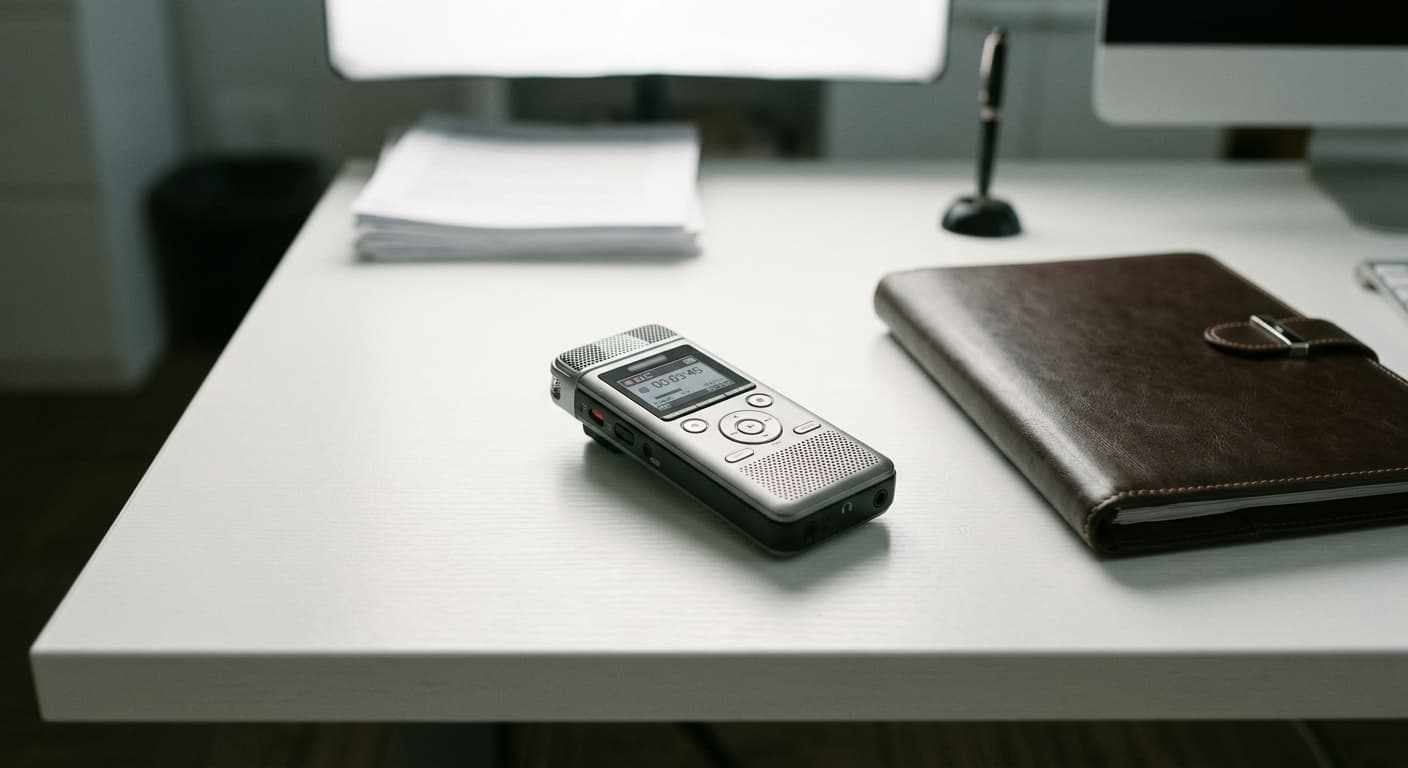
Recording any private phone call or conversation in Pakistan without the consent of every participant is a criminal offence. PECA 2016 Section 19 prohibits unauthorized interception of private transmissions, and the Supreme Court's ruling in PLJ 2026 SC 114 affirmed that all-party consent is constitutionally required under Article 14.
Pakistan requires all-party consent to record private conversations, a position confirmed by the Supreme Court in March 2026 and rooted in Article 14 of the Constitution of Pakistan 1973. Recording a phone call or in-person conversation without the knowledge and consent of all participants is a criminal offence under the Prevention of Electronic Crimes Act 2016 (PECA). Penalties reach 2 to 5 years imprisonment depending on the specific provision violated.
Information verified May 15, 2026. This article covers Pakistani federal law. Laws change; verify current statutes at pakistancode.gov.pk before relying on this for a specific situation.
Quick Answer: Is Pakistan a One-Party or All-Party Consent State?
Pakistan is an all-party consent jurisdiction for recording private communications. This means every person taking part in a phone call or private conversation must know and agree to the recording before it is made. There is no "participant exception" in Pakistani statute that would allow one party to a call to record the other without consent.
The Supreme Court of Pakistan settled this question definitively in PLJ 2026 SC 114 (March 10, 2026). In a five-page judgment authored by Justice Muhammad Hashim Khan Kakar, the court held that secretly recording a private conversation without the consent of those involved violates Article 14 of the Constitution of Pakistan 1973 and constitutes criminal conduct under PECA 2016. The court cited the Quranic command "Do not spy" as an Islamic jurisprudential foundation for the constitutional right to privacy, reinforcing that the protection is both legally and morally grounded.
The court also ruled that audio or video recordings lacking a verified source or identifiable owner cannot be treated as admissible evidence in criminal proceedings.
What this means in practice:
- You may not record a phone call unless every caller on the line has consented.
- You may not secretly record an in-person conversation even if you are a participant.
- Recording in a way intended to harass, coerce, or intimidate triggers separate and more severe PECA offences.
- Sharing a secretly obtained recording publicly can add additional criminal liability under PECA sections covering dignity and cyberstalking.

Constitutional Foundation: Article 14 and Privacy as a Fundamental Right
The right to privacy in Pakistan originates in Article 14(1) of the Constitution of the Islamic Republic of Pakistan 1973, which states:
"The dignity of man and, subject to law, the privacy of home, shall be inviolable."
While the text references "privacy of home," Pakistani courts have consistently interpreted this protection broadly. The Supreme Court in Mohtarma Benazir Bhutto v. President of Pakistan (1998) held that the term "privacy of home" is not limited to the four walls of a physical home but extends to all spaces in which an individual has a reasonable expectation of privacy, including:
- Telephone and electronic communications
- Personal data and correspondence
- Activities in public spaces where a reasonable expectation of privacy exists
Article 14(2) further provides that "No person shall be subjected to torture for the purpose of extracting evidence," reinforcing that the state may not compel evidence through coercive means. Article 8 of the Constitution makes any law inconsistent with fundamental rights void to the extent of that inconsistency.
Article 19 of the Constitution protects freedom of speech and the press but is subject to reasonable restrictions imposed by law, and courts have held that these speech protections do not override the Article 14 privacy guarantees of individuals whose private conversations are being recorded without consent.
How to Obtain Valid Consent to Record
To make a lawful recording of a conversation in Pakistan, consent must be obtained from every participant before the recording begins. Acceptable methods include:
- Written consent signed by each participant before the call or meeting.
- Verbal consent given on the record at the start of the call (for example, stating "This call is being recorded; please say 'I agree' to continue").
- An automated announcement at the start of a business call notifying all participants that the call is being recorded, combined with the participant's affirmative continuation of the call.
Silence or continued participation alone may not constitute unambiguous consent under the all-party framework; explicit acknowledgment is the safer standard.

PECA 2016: The Core Statutory Framework
The Prevention of Electronic Crimes Act 2016 (Act No. XL of 2016), enacted on August 19, 2016, is the primary legislation governing electronic privacy, interception, and digital offences in Pakistan. Key sections bearing on recording and surveillance are:
| PECA Section | Offence | Maximum Punishment |
|---|---|---|
| Section 19 | Unauthorized interception of transmissions or electromagnetic emissions from an information system | 2 years imprisonment or Rs. 500,000 fine, or both |
| Section 20 | Offence against modesty: superimposing face on explicit imagery, distributing intimate images without consent, sexual blackmail, cultivating child sexual exploitation | 5 years imprisonment or Rs. 5 million fine, or both |
| Section 20A | Child sexual abuse material (production, distribution, possession) | 7 years imprisonment or Rs. 5 million fine, or both |
| Section 21 | Offence against dignity: publicly displaying or transmitting false information to intimidate or harm reputation or privacy of a natural person | 3 years imprisonment or Rs. 1 million fine, or both |
| Section 22 | Cyberstalking: using electronic means to monitor, watch, spy upon, photograph, or repeatedly contact a person in a way causing fear, alarm, or distress | 3 years imprisonment or Rs. 1 million fine, or both (5 years or Rs. 10 million if victim is a minor) |
Section 19 -- Unauthorized Interception is the core provision on recording. The statute text provides:
"Whoever with dishonest intention commits unauthorized interception by technical means of -- (a) any transmission that is not intended to be and is not open to the public, from or within an information system; or (b) electromagnetic emissions from an information system that are carrying data, shall be punished with imprisonment of either description for a term which may extend to two years or with fine which may extend to five hundred thousand rupees or with both."
The "dishonest intention" element requires some purposive element; purely accidental interception would not meet this threshold. However, secretly recording a private conversation for any purpose -- including to produce evidence of wrongdoing -- has been held by the Supreme Court to constitute criminal conduct.
Section 22 -- Cyberstalking captures a broader range of surveillance-adjacent conduct and is what former Attorney General Anwar Mansoor Khan referenced when he stated that secretly recording another person is a crime carrying a 3-year jail term and a Rs. 1 million fine. That statement addresses harassment-motivated recording rather than the interception-specific Section 19.

The PECA (Amendment) Act 2025: Major Changes
The Prevention of Electronic Crimes (Amendment) Act 2025 was passed by the National Assembly on January 23, 2025, by the Senate on January 28, 2025, and received presidential assent from President Asif Ali Zardari on January 29, 2025. It was published in the Gazette of Pakistan (Extra.) on the same date.
The 2025 amendments are the most sweeping changes to Pakistan's digital crime law since PECA's original enactment.
New Section 26A: Dissemination of False or Fake Information
Section 26A criminalizes the intentional dissemination online of information a person knows to be "false or fake" where that dissemination could cause "fear, panic, or unrest." The punishment is up to 3 years imprisonment or a fine of up to Rs. 2 million (approximately USD 7,000), or both.
The provision has attracted sharp criticism from civil society and international press freedom organizations:
- The terms "false" and "fake" are not defined in the statute, giving enforcement authorities wide discretion.
- Between January and August 2025, 689 cases were registered under Section 26A, including nine cases against journalists.
- Human Rights Watch called for the amendment's repeal on February 3, 2025, describing it as a "draconian cyber law."
- The International Press Institute found the amendment poses new threats to press freedom in Pakistan.
- Five major Pakistani media bodies (PFUJ, APNS, CPNE, PBA, and AEMEND) opposed the bill before enactment.
Section 26A also has implications for recording: a citizen who records an official or public figure and then shares the recording publicly could face prosecution if authorities characterize the context of the recording as spreading "false" information, even if the recording itself is authentic.
Social Media Protection and Regulatory Authority (SMPRA)
The 2025 Act established the Social Media Protection and Regulatory Authority (SMPRA), a nine-member body (including a chairperson) appointed by the federal government. SMPRA has power to:
- Monitor and regulate social media platforms operating in Pakistan.
- Direct platforms to remove content deemed unlawful or offensive.
- Enlist platforms, issue operational guidelines, and hear complaints about violations.
National Cyber Crime Investigation Agency (NCCIA)
The 2025 Act replaced the FIA Cyber Crime Wing with the National Cyber Crime Investigation Agency (NCCIA) as the exclusive body with authority to investigate PECA offences. Section 30 of PECA was amended to remove FIA and police investigative powers, centralizing all cybercrime investigation in NCCIA.
Social Media Protection Tribunals (SMPTs)
The 2025 Act created Social Media Protection Tribunals with three-member panels drawn from law, journalism, and information technology backgrounds to hear complaints about PECA violations.
Rule-of-law caveat: Multiple legal scholars, the NCHR (National Commission for Human Rights), and international organizations have raised concerns that the 2025 amendments give the executive branch unprecedented power over digital expression. The undefined scope of Section 26A and the government's appointment control over SMPRA members have been identified as structural weaknesses that could facilitate suppression of legitimate journalism, political dissent, and whistleblowing. Readers who publish or share recordings of public officials should be aware that Pakistani law in this area is actively contested and enforcement is uneven.
Other Key Statutes: Historical Framework
Pakistan's recording and surveillance law draws on several additional statutes that predate PECA:
Telegraph Act 1885
This colonial-era law remains in force. Section 5 empowers the federal or provincial government to intercept messages or take possession of licensed telegraphs in the interest of the public or during public emergencies. The Act is the historical basis for government telecommunications interception authority.
Pakistan Telecommunication (Re-organisation) Act 1996
Section 54 provides a national security provision allowing the federal government to authorize individuals or agencies for the "tracing or interception of calls and messages." This provision has been used to authorize surveillance beyond the narrow terrorism-related scope of the Investigation for Fair Trial Act.
Investigation for Fair Trial Act 2013 (IFTA)
The IFTA (Act No. I of 2013) is the primary legislation intended to regularize lawful government surveillance of private communications. Key provisions:
- Only the ISI, Intelligence Bureau, three services intelligence agencies, and police are authorized.
- A judicial warrant from a High Court Judge is required before interception begins.
- The requesting agency must submit a detailed supporting report.
- The warrant must be pre-approved by the Minister of Interior.
- Initial warrants are valid for up to 60 days and may be renewed.
- Authority is limited to scheduled offences related to terrorism and anti-state activities (Schedule I offences).
Critical 2024 development: During the audio leak case proceedings in 2024, the Islamabad High Court was informed that no warrants had been issued under the IFTA during its entire eleven-year operational life, indicating that government surveillance had been occurring outside the legal framework the Act was meant to provide.
Pakistan Penal Code 1860 (Act XLV of 1860)
The PPC contains two provisions directly relevant to privacy violations through recording:
- Section 354 addresses assault or criminal force against a woman with intent to outrage her modesty, punishable by up to 2 years imprisonment, or fine, or both. Covert filming of a woman in a manner that constitutes criminal force falls within scope.
- Section 509 prohibits intruding upon the privacy of any woman and punishes insulting a woman's modesty, carrying simple imprisonment up to 1 year, or fine, or both.
Recording Phone Calls in Pakistan
Recording a phone call in Pakistan is subject to the all-party consent rule. Every person on the call must know and consent before the recording begins.
Business call recording: Companies operating call centers or customer service operations in Pakistan routinely use automated announcements ("This call may be recorded for quality purposes") at the start of calls. Continuation of the call after such notice, combined with explicit acknowledgment, constitutes consent. Where calls involve parties outside Pakistan, the safest approach is to comply with the strictest applicable law -- if any party's jurisdiction requires all-party consent, that standard should govern.
Evidentiary value: The March 2026 Supreme Court ruling (PLJ 2026 SC 114) held that a recording lacking a verified source or identifiable owner cannot be used as criminal evidence. Even a lawfully made recording must establish a clear chain of custody to be admissible.
Recording to document wrongdoing: The former Interior Minister Rana Sanaullah stated in 2022 that "any recording made to expose crime is not against the law," a position that reflects a practical prosecutorial stance rather than a clear statutory exception. Courts have not endorsed a categorical exception for recordings made to document criminal activity, and the March 2026 Supreme Court ruling did not carve one out.
Recording In-Person Conversations
The all-party consent rule applies equally to in-person conversations as to phone calls. Secretly recording a face-to-face meeting violates PECA Section 19 and, following the March 2026 ruling, violates Article 14 of the Constitution.
If a recording is made during an in-person meeting and subsequently used to blackmail or extort the participants, additional PECA offences under Section 20 (modesty-related blackmail) and Section 22 (cyberstalking) may apply, carrying heavier sentences.
Recording a conversation in a genuinely public setting -- such as a public speech, press conference, or protest in a public square -- is generally permissible because participants in those settings have no reasonable expectation of privacy regarding their public statements. The public-setting exception is narrow: moving to a quieter area, lowering your voice, or signaling that a conversation is private restores a reasonable expectation of privacy.
Recording Police and Government Officials
No Pakistani statute expressly grants citizens the right to record police officers in public, nor does any statute expressly prohibit it. The general framework suggests:
- Recording in a public space where the subject has no reasonable expectation of privacy is not inherently illegal under PECA.
- The Supreme Court has ordered police and investigation agencies to collect evidence through video recordings, showing that courts value such recordings as evidence.
- The new PECA 2025 Section 26A creates practical risk for citizens who record police and then share those recordings publicly on social media, if authorities characterize the sharing as causing "fear, panic, or unrest."
Citizens documenting alleged police misconduct are advised to preserve recordings carefully, document the circumstances of the recording (location, time, bystanders), and seek legal advice before sharing recordings broadly online. The contested state of Section 26A means enforcement is inconsistent.
Workplace Recording in Pakistan
Pakistan has no dedicated workplace surveillance statute. The general PECA framework and constitutional privacy principles apply:
Employer Monitoring and CCTV
- Employers may install CCTV cameras in common workplace areas for legitimate security purposes.
- Employees should be notified in writing that CCTV is in operation.
- Cameras in private areas (restrooms, changing rooms, medical rooms) are prohibited.
- Audio recording of workplace conversations without the consent of all participants may violate PECA Section 19.
Employee Recordings
- Employees cannot secretly record conversations with colleagues, supervisors, or clients without consent.
- Recording workplace harassment for documentation purposes is a common practical need, but Pakistani law provides no statutory safe harbor for such recordings. Employees who make such recordings remain technically exposed to PECA liability, even if prosecution in a genuine harassment scenario would be unlikely.
- Evidence gathered through unauthorized workplace recordings may still be considered by courts but the recorder faces separate potential criminal liability.
Best Practices for Employers
- Maintain a written surveillance and recording policy communicated to all staff at onboarding and on update.
- Obtain written acknowledgment from employees.
- Restrict surveillance to legitimate business purposes.
- Store surveillance data securely with access limited to authorized personnel.
- Align data retention periods with PECA Section 29, which requires service providers to retain traffic data for a minimum of one year.
Voyeurism and Non-Consensual Intimate Images
PECA 2016 addresses non-consensual intimate imagery under Section 20, which makes it an offence against modesty to use an information system to:
- Superimpose a person's face onto a sexually explicit image or video (deepfake intimate imagery).
- Include a person's photograph or video in sexually explicit conduct.
- Intimidate a person with sexual acts or sexually explicit imagery.
- Cultivate, entice, or induce a person to engage in sexually explicit conduct.
The punishment for Section 20 offences is up to 5 years imprisonment or a Rs. 5 million fine, or both.
Section 20A separately addresses child sexual abuse material (production, distribution, or possession), carrying up to 7 years imprisonment or a Rs. 5 million fine, or both.
Section 509 of the Pakistan Penal Code 1860 also applies to covert filming of women, carrying up to 1 year of simple imprisonment or a fine.
Deepfakes and AI-Generated Content
PECA 2016 predates widespread deepfake technology and contains no explicit reference to AI-generated media. Coverage comes from two provisions:
PECA Section 20 covers the act of superimposing a person's face onto a sexually explicit image or video, which directly captures deepfake intimate imagery regardless of whether AI or manual editing tools were used.
PECA 2025 Amendment, Section 26A could apply to anyone disseminating a deepfake video presenting it as authentic, since deliberately presenting AI-generated false imagery as real constitutes dissemination of false information. Punjab Police filed three cases under PECA for deepfake content in 2025.
Pakistan's National Commission for Human Rights has noted in its February 2026 report on PECA and the 2025 amendments that the absence of a specific deepfake provision leaves the law dependent on expansive readings of existing sections, which may not adequately protect victims whose deepfake content does not involve sexually explicit material.
Journalist and Media Recording Rights
Journalists in Pakistan operate under a framework that balances constitutional press freedom with significant practical constraints.
Constitutional Protection
Article 19 of the Constitution of Pakistan 1973 provides: "Every citizen shall have the right to freedom of speech and expression, and there shall be freedom of the press, subject to any reasonable restrictions imposed by law in the interest of the glory of Islam or the integrity, security or defence of Pakistan or any part thereof, friendly relations with foreign states, public order, decency or morality, or in relation to contempt of court, commission of or incitement to an offence."
The broad list of permitted restrictions has historically given authorities significant latitude to curtail press activity.
PECA Section 21 Exception for Licensed Broadcast Media
Under PECA Section 21, content aired by a broadcast media or distribution service licensed by the relevant authorities is exempt from certain provisions regarding offences against dignity. This provides some protection for journalistic content lawfully aired by licensed broadcasters, but does not extend to individual journalists publishing independently or online.
PECA 2025 and Journalism
The International Federation of Journalists found that the PECA 2025 amendments further tightened government grip on digital expression. Section 26A's undefined "false or fake information" standard is of particular concern to journalists because:
- Reporting based on information the authorities later dispute could be characterized as dissemination of "false information."
- The NCCIA (replacing FIA's cybercrime wing) has exclusive investigative jurisdiction, centralizing enforcement.
- Nine journalists faced Section 26A cases within the first eight months of the law's operation.
PEMRA Regulations
The Pakistan Electronic Media Regulatory Authority (PEMRA), established under the PEMRA Ordinance 2002, regulates broadcast media. PEMRA can license broadcasters, mandate notification procedures for recorded content, restrict live coverage, and take action against content deemed prejudicial to national security or public order.
International Privacy Obligations
Pakistan is party to several international instruments that protect privacy:
ICCPR: Pakistan ratified the International Covenant on Civil and Political Rights in June 2010. Article 17 prohibits "arbitrary or unlawful interference" with privacy, family, home, or correspondence. The Human Rights Committee has stated that states must adopt legislative measures to give effect to this protection. Pakistan's failure to enact a comprehensive data protection law and the scope of PECA 2025's surveillance powers raise compliance questions under Article 17.
UDHR: Article 12 of the Universal Declaration of Human Rights, which has the status of customary international law, protects individuals from arbitrary interference with their privacy. The UDHR does not create binding treaty obligations but informs international standards.
CRC: Pakistan ratified the Convention on the Rights of the Child in November 1990. Article 16 guarantees children protection from arbitrary interference with their privacy. PECA's enhanced penalties for offences against minors (Sections 20A, 22) reflect this obligation.
Cairo Declaration on Human Rights in Islam: Signed by Pakistan in August 1990, Article 18 explicitly prohibits spying on individuals and declares private residences inviolable.
Are Recordings Admissible as Evidence in Pakistani Courts?
The March 2026 Ruling on Admissibility
PLJ 2026 SC 114 (March 2026) established that secretly obtained recordings face two barriers to admissibility:
- A recording obtained by secretly recording a private conversation without consent may itself be held to violate Article 14 and PECA, meaning its admission could validate a constitutional violation.
- A recording lacking a verified source or identifiable owner cannot be treated as admissible evidence in criminal proceedings.
Courts will still assess recordings on authenticity, absence of tampering, relevance to the case, and circumstances of obtaining.
PECA Evidence Provisions
Section 29 of PECA requires service providers to retain traffic data for at least one year (or such period as the Pakistan Telecommunications Authority may specify) and to provide it to investigation agencies on production of a court warrant.
Section 30 gives courts authority to order search and seizure of information systems or data when there are reasonable grounds that the data was acquired through commission of an offence or is needed for a criminal investigation.
Section 31 empowers courts to order a person in possession of an information system or data to disclose or surrender that data to an authorized officer, subject to the same reasonable-grounds standard.
Electronic Transaction Ordinance 2002
Electronic recordings must meet three foundational requirements for admissibility under the Electronic Transaction Ordinance 2002:
- The contents of the recording remain accessible for subsequent reference.
- The contents and form are as originally generated, sent, or received (no tampering).
- Information enabling identification of origin, destination, date, and time is retained.
Personal Data Protection Bill: Pending as of 2026
Pakistan does not yet have an enacted personal data protection law. Multiple successive drafts of the Personal Data Protection Bill (PDPB) have been prepared but none has cleared Parliament. The bill was approved by the Federal Cabinet and transmitted to the National Assembly and Senate. In January 2025, the Senate Standing Committee on Information Technology and Telecommunication deliberated on the bill, but a private member's bill in the Senate was formally opposed by the Ministry of IT and Telecommunication on constitutional grounds.
Until a PDPB is enacted, Pakistan's data privacy framework rests on:
- PECA 2016 (as amended by the 2025 Act) for digital offences.
- Constitutional Article 14 privacy protections as interpreted by courts.
- Sector-specific provisions (financial sector, health sector) in separate statutes.
- Common law privacy principles.
Businesses operating in Pakistan and handling personal data face significant legal uncertainty. The ICLG Data Protection Laws and Regulations Report 2025-2026 for Pakistan notes this gap as a critical risk for multinationals operating in or transferring data from Pakistan.
Notable Court Cases
Mohtarma Benazir Bhutto v. President of Pakistan (1998)
The Supreme Court's cornerstone privacy judgment. The court found the government had conducted widespread covert surveillance of the superior judiciary, legislators, journalists, and opposition members. Holdings include: surveillance is illegal, immoral, and unconstitutional when conducted without legal justification; phone tapping violates Articles 9 and 14 of the Constitution; "privacy of home" extends to all spaces with a reasonable expectation of privacy; covert judicial surveillance was a sufficient ground for government dissolution.
Manzoor Ahmad v. The State (1990)
The Supreme Court held that eavesdropping, tapping stealthily, and photographing something inside a house are invasions of privacy prohibited under both the Constitution and Islamic principles.
M.D. Tahir v. Director State Bank of Pakistan (2004)
The Supreme Court reaffirmed that telephone conversations are private and protected by the Constitution, extending the Benazir Bhutto case protections to financial sector communications.
Justice Qazi Faez Isa v. President of Pakistan (2021)
The majority held that obtaining tax and property records from public government databases does not constitute an invasion of privacy. Significant dissenting opinions by Justices Mansoor Ali Shah and Maqbool Baqar argued that intelligence agencies have no blank authority to probe citizens' lives and that covert surveillance without legal authorization violates fundamental rights. Note: Justice Qazi Faez Isa was later appointed as the 29th Chief Justice of Pakistan (September 17, 2023 to October 25, 2024), lending additional resonance to the surveillance questions raised in his case.
PLJ 2026 SC 114 -- Secret Recording Ruling (March 10, 2026)
The most recent and most directly applicable ruling. Justice Muhammad Hashim Khan Kakar, in a five-page judgment, held that secretly recording a private conversation violates Article 14 of the Constitution and constitutes criminal conduct under PECA 2016. The ruling arose from a case where a petitioner sought to use a clandestine audio recording of a conversation about a Rs. 5,000 bribe. The court ruled the recording was obtained unconstitutionally and could not be used as evidence. The court also stated that recordings lacking a verified source or identifiable owner are inadmissible in criminal proceedings.
Islamabad High Court Audio Leak Proceedings (2024)
During proceedings involving audio leaks from the Prime Minister's Office, the IHC was informed that a Lawful Intercept Management System (LIMS) was operating in Pakistan without legal backing. The court issued a restraining order in May 2024 prohibiting telecom companies from conducting phone tapping for surveillance. Six members of the Pakistan Bar Council separately challenged mass surveillance in the IHC. In December 2024, a seven-member Supreme Court bench headed by Justice Amin-ud-Din Khan issued notices to all four provincial Advocate Generals regarding the legality of existing phone-tapping laws.
Cross-Border Recording Considerations
When one party to a conversation is in Pakistan and another is in a different country, Pakistani law applies to activity occurring within Pakistan's territory. There is no treaty or statute addressing cross-border call recording consent directly. In practice:
- If the recording is made in Pakistan or by a person subject to Pakistani law, PECA Section 19 and the constitutional all-party consent standard apply regardless of where the other party is located.
- If the call is recorded outside Pakistan by a party in another jurisdiction, that jurisdiction's law governs the recording activity -- but the resulting recording could face admissibility challenges in Pakistani courts if shared or used in Pakistan.
- For businesses with international operations, applying the stricter of the two jurisdictions' consent standards is the safest approach. Since Pakistan requires all-party consent, this standard is already among the more demanding globally.
Summary Table: Pakistan Recording Law by Scenario
| Scenario | Legal Status | Key Rule |
|---|---|---|
| Phone call recording | Requires all-party consent | Every caller must consent before recording begins |
| In-person conversation recording | Requires all-party consent | Every participant must consent |
| Recording in a public setting (public speech, press conference) | Generally permissible | No reasonable expectation of privacy for public statements |
| Secret recording of private conversation | Illegal | Violates PECA s.19 and Constitution Art. 14; PLJ 2026 SC 114 |
| Recording police in public | Not expressly prohibited but high practical risk under PECA 2025 s.26A | No safe-harbor statute; sharing online risks "false information" charges |
| Employer CCTV in common areas | Permitted with employee notice | No cameras in private areas (restrooms, etc.) |
| Non-consensual intimate imagery (including deepfakes) | Illegal | PECA s.20; up to 5 years imprisonment |
| Government interception without warrant | Illegal | IFTA 2013 requires High Court warrant; IHC found no warrants issued in 11 years |
| Journalistic recording for broadcast media | Protected with limitations | PECA s.21 exemption for licensed broadcasters; PECA 2025 s.26A risk for online sharing |
This article provides general legal information about recording laws in Pakistan under federal law as of May 2026. It does not constitute legal advice. Laws may change; verify current statutes at pakistancode.gov.pk before relying on this information for a specific situation. If you need advice on your particular circumstances, consult a lawyer licensed to practise in Pakistan.
Frequently Asked Questions
Is Pakistan a one-party or all-party consent state for recording?
Pakistan is an all-party consent jurisdiction. Every participant in a phone call or private conversation must know and agree to the recording before it begins. There is no statutory participant-exception that allows one party to record others without consent. The Supreme Court confirmed this in PLJ 2026 SC 114 (March 10, 2026), holding that secretly recording a private conversation violates Article 14 of the Constitution of Pakistan 1973 and constitutes criminal conduct under PECA 2016.
What is the penalty for illegally recording a conversation in Pakistan?
The penalty depends on the PECA provision violated. Unauthorized interception of a private transmission under PECA Section 19 carries up to 2 years imprisonment or a fine of up to Rs. 500,000, or both. Cyberstalking-related recording under PECA Section 22 carries up to 3 years imprisonment or a Rs. 1 million fine (5 years or Rs. 10 million if the victim is a minor). Non-consensual intimate imagery under PECA Section 20 carries up to 5 years imprisonment or a Rs. 5 million fine, or both.
What does the PECA 2025 Amendment change about recording laws in Pakistan?
The PECA (Amendment) Act 2025, signed January 29, 2025, does not change the core all-party consent rule for recording. Its primary additions are: a new Section 26A criminalizing intentional dissemination of 'false or fake' information online (up to 3 years or Rs. 2 million fine); a new Social Media Protection and Regulatory Authority (SMPRA) to regulate digital content; replacement of the FIA Cyber Crime Wing with the National Cyber Crime Investigation Agency (NCCIA); and new Social Media Protection Tribunals. Critics including Human Rights Watch warn that Section 26A's undefined terms could be used to target journalists.
Can I record a phone call in Pakistan for my own records?
No. Pakistan requires all-party consent for recording phone calls. You may not record a call even for your own private records without informing and obtaining consent from every other person on the call. The safest approach is to announce at the start of the call that it will be recorded and obtain verbal acknowledgment from all participants.
Can I legally record police officers in Pakistan?
No Pakistani statute expressly grants or denies citizens the right to record police in public. The general PECA framework does not prohibit recording in public spaces where there is no reasonable expectation of privacy. However, the PECA 2025 Amendment's Section 26A creates a practical risk: sharing a recording of police conduct on social media could be characterized by authorities as disseminating information that causes 'fear, panic, or unrest.' No safe-harbor provision exists. Citizens who record police are advised to preserve recordings carefully and seek legal advice before broad public distribution.
Are illegally recorded conversations admissible in Pakistani courts?
The March 2026 Supreme Court ruling (PLJ 2026 SC 114) significantly narrowed the admissibility of secretly obtained recordings. The court held that recordings made without consent violate Article 14 of the Constitution and PECA 2016, and that recordings lacking a verified source or identifiable owner cannot be used as criminal evidence. Courts may still consider recordings in some circumstances but will assess authenticity, chain of custody, absence of tampering, and how the recording was obtained.
What is the status of Pakistan's Personal Data Protection Bill?
As of May 2026, Pakistan's Personal Data Protection Bill has not been enacted. Multiple successive draft versions have been prepared but none has cleared Parliament. The bill was approved by the Federal Cabinet and transmitted to the National Assembly and Senate. In January 2025, the Senate Standing Committee on IT deliberated on the bill, but a private member's bill was formally opposed by the Ministry of IT. Pakistan's data privacy framework currently relies on PECA 2016 (as amended), constitutional Article 14 protections, and sector-specific provisions.
Does PECA 2016 cover deepfakes?
PECA 2016 has no explicit reference to AI-generated deepfakes, but Section 20 covers superimposing a person's face onto a sexually explicit image or video, which applies to deepfake intimate imagery. The PECA 2025 Amendment's Section 26A may also apply to distributing a deepfake presented as authentic footage. Punjab Police filed three cases under PECA for deepfake content in 2025. Victims of non-sexual deepfakes that do not involve explicit content have less clear statutory protection.
Can my employer legally record my workplace conversations in Pakistan?
Pakistani employers may operate CCTV cameras in common workplace areas for legitimate security purposes, with employee notification. Audio recording of workplace conversations without the consent of all participants may violate PECA Section 19. There is no statute specifically authorizing or prohibiting workplace audio monitoring. Employees cannot secretly record conversations with colleagues or supervisors without consent. Employers should implement written surveillance policies and limit recording to legitimate business purposes.
What is the Investigation for Fair Trial Act 2013 and when does it allow recording?
The Investigation for Fair Trial Act 2013 (IFTA) authorizes the ISI, Intelligence Bureau, three services intelligence agencies, and police to intercept electronic communications for criminal investigations, but only with a judicial warrant from a High Court Judge. The warrant must be pre-approved by the Minister of Interior and is limited to terrorism and anti-state offences listed in Schedule I. Warrants are valid up to 60 days and renewable. A critical 2024 disclosure revealed that no IFTA warrants had been issued during the Act's entire 11-year operational life, indicating government surveillance was occurring outside this legal framework.
Updates
Full refresh conducted in May 2026 that added the March 2026 Supreme Court ruling in PLJ 2026 SC 114, which confirmed the all party consent rule and set a new admissibility standard for recordings. Also added coverage of the PECA (Amendment) Act 2025, signed January 29, 2025, including its new Section 26A on dissemination of false or fake information, the Social Media Protection and Regulatory Authority (SMPRA), the National Cyber Crime Investigation Agency (NCCIA), and the Social Media Protection Tribunals (SMPTs). Corrected the PECA section numbering so that unauthorized interception is identified as Section 19 rather than the previously stated Section 17. New sections were added covering recording police, cross border recording, the pending status of the Personal Data Protection Bill, deepfakes, the December 2024 Supreme Court bench proceedings on phone tapping legality, and the Islamabad High Court's 2024 restraining order on telecom tapping. The FAQs were updated to full text, broken WordPress image references and a broken internal link were fixed, an MDX table syntax error was corrected, and the title was updated to include the 2026 date. Word count expanded from about 3,058 words to approximately 5,500 words. The title was also changed from "Pakistan Recording Laws: Consent Rules and Penalties" to "Pakistan Recording Laws: Consent, PECA 2025, and Penalties (2026)", and the meta description was updated to lead with the AEO answer and cite the PLJ 2026 SC 114 case as an anchor.
Sources and References
- PECA 2016, Section 19 (unauthorized interception)(propakistani.pk)
- PLJ 2026 SC 114(propakistani.pk)
- PECA 2016 (Act No. XL of 2016), Section 19(na.gov.pk).gov
- Prevention of Electronic Crimes (Amendment) Act 2025 (Gazette of Pakistan, Extra., Jan. 29, 2025)(na.gov.pk).gov
- Human Rights Watch (Feb. 3, 2025)(hrw.org)
- Constitution of Pakistan 1973, Art. 14(1)(pakistancode.gov.pk).gov
- Mohtarma Benazir Bhutto v. President of Pakistan (1998, Supreme Court of Pakistan)(supremecourt.gov.pk).gov
- Islamabad High Court, audio leak proceedings, 2024(globalvoices.org)
- Supreme Court of Pakistan, seven-member bench proceeding, December 2024(voiceofvienna.org)
- Investigation for Fair Trial Act 2013, Act No. I of 2013 (pakistancode.gov.pk)(pakistancode.gov.pk).gov
- Senate of Pakistan, Standing Committee proceedings, January 2025(iclg.com)
- Pakistan Penal Code 1860, ss. 354, 509 (pakistancode.gov.pk)(pakistancode.gov.pk).gov
- PECA 2016, Section 20(dawn.com)
- Business Recorder report on Qazi Faez Isa oath(brecorder.com)
- Supreme Court order on evidence collection (RSIL Pakistan analysis)(rsilpak.org)
- Telegraph Act 1885, s. 5(pakistancode.gov.pk).gov
- Prevention of Electronic Crimes (Amendment) Act 2025 -- Gazette of Pakistan (Extra., Jan. 29, 2025)(na.gov.pk).gov
- Pakistan Penal Code 1860 (Act XLV of 1860)(pakistani.org)
- SC rules secret recording of private talks illegal -- Pakistan Today (March 10, 2026)(pakistantoday.com.pk)
- 2025 Amendments to PECA -- RSIL Pakistan Introduction(rsilpak.org)
- NCHR Report on PECA and the 2025 Amendments Act (February 2026)(nchr.gov.pk).gov
- Electronic Surveillance and Interception Laws in Pakistan -- RSIL Pakistan (2022)(rsilpak.org)
- The PECA Amendment 2025: A Critical Analysis -- LUMS SAHSOL(sahsol.lums.edu.pk)