South Carolina AI Laws and Regulation (2026)

Overview of South Carolina AI Laws
South Carolina has taken a targeted, sector-specific approach to artificial intelligence regulation. Rather than pursuing comprehensive AI legislation like Colorado or Connecticut, the state has focused on criminalizing specific AI harms, particularly in the areas of child exploitation and nonconsensual intimate imagery.
As of March 2026, South Carolina has three enacted AI-related laws, all signed by Governor Henry McMaster in May 2025. The state has also published a comprehensive AI strategy for state agencies and has a busy pipeline of pending AI bills covering everything from healthcare claims to election deepfakes to algorithmic rent pricing.
Notably, South Carolina remains one of the states that has not restricted AI in elections, though pending legislation aims to change that. This article covers South Carolina's enacted and pending AI legislation, state strategy, and the federal policy landscape. This information is current as of March 2026, but you should consult an attorney for advice specific to your situation.
Enacted AI Laws (May 2025)
Governor McMaster signed three AI-related bills into law in May 2025, establishing South Carolina's first AI-specific criminal provisions.
H 3058: Nonconsensual Intimate Imagery and AI Deepfakes
On May 12, 2025, Governor McMaster signed H 3058 into law, making it a crime to intentionally distribute intimate images or digitally forged intimate images without consent. This was the first time South Carolina officially criminalized this conduct, including images created by AI or other computer-generated means.
The law establishes graduated penalties based on intent:
| Offense | Intent | Penalty |
|---|---|---|
| First offense | Without intent to harm | Misdemeanor: up to $5,000 fine, up to 1 year imprisonment |
| Second+ offense | Without intent to harm | Felony: up to $5,000 fine, up to 5 years imprisonment |
| First offense | With intent to cause harm | Felony: up to $5,000 fine, up to 5 years imprisonment |
| Second+ offense | With intent to cause harm | Felony: up to $10,000 fine, 1 to 10 years imprisonment |
Key features of the law include:
- "Digitally forged intimate images" explicitly includes images created by AI or other computer or machine-generated means
- Consent to create or privately share an image does not imply consent for wider distribution
- Both real photographs and AI-generated synthetic images are covered
- The law provides victims with criminal and potentially civil remedies
S 28: AI Child Abuse (Act No. 57)
Senate Bill 28 was passed on May 27, 2025, as Act No. 57. The bill expanded South Carolina's child sexual exploitation laws to include AI-generated and computer-morphed images, even when no real minor is depicted.
Attorney General Alan Wilson applauded the passage of the bill, which closes a gap in existing law by ensuring that AI-generated child sexual abuse material carries the same criminal penalties as material involving actual children. The law makes possession of such material a felony punishable by up to 10 years per count.
S 29: Harmful Material to Minors (Act No. 58)
Senate Bill 29 was also passed on May 27, 2025, as Act No. 58. This companion bill amends Section 16-15-375 of the South Carolina Code of Laws, updating definitions related to dissemination of harmful material to minors to include AI-generated content.
Together, S 28 and S 29 ensure that South Carolina's child protection statutes apply to synthetic media. In late 2025, one of the first cases under the updated statutes involved a Lexington County man charged for possessing AI-generated child sexual abuse material.
South Carolina State AI Strategy
The South Carolina Department of Administration released the state's first comprehensive AI Strategy in June 2024. Developed in partnership with Gartner and state government IT and security professionals, the 17-page document establishes a framework for how state agencies will adopt and use AI.
The Three Ps Framework
The strategy is built on three core principles:
Protect: Safeguard citizen data, ensure cybersecurity, and mitigate risks associated with AI deployment in government operations.
Promote: Encourage responsible AI adoption across state agencies to improve service delivery and operational efficiency.
Pursue: Actively explore and implement AI technologies that benefit South Carolina residents and state government operations.
Development and Governance
The strategy was developed through meetings with more than 80 separate state agencies and includes:
- An AI Workgroup composed of diverse state agencies
- A Center of Excellence staffed by agency personnel
- A state-led AI Advisory Group for public-private sector collaboration
- The Office of Technology and Information Services (OTIS) and Division of Information Security (DIS) leading execution
The strategy represents a voluntary framework rather than a binding regulation, guiding agencies in AI adoption while allowing flexibility in implementation.
Pending Deepfake and Synthetic Media Bills
Beyond the three enacted laws, South Carolina has several pending bills addressing deepfake and synthetic media concerns.
H 3517: Election Deepfake Disclosure
House Bill 3517 would prohibit the distribution of deceptive deepfake media depicting candidates within 90 days of an election unless the media includes a disclosure statement. The required disclosure reads: "This [image/video/audio] has been manipulated or generated by artificial intelligence."
Penalties for violation include:
- Criminal: Misdemeanor with up to 90 days imprisonment, up to $500 fine, or both
- Civil: Affected candidates may seek injunctive relief and general or special damages
As of March 2026, South Carolina remains one of the states that has not enacted election deepfake restrictions, though H 3517 would change that if passed.
H 3042: Voyeurism Statute Deepfake Update
House Bill 3042 would update South Carolina's voyeurism statute (Section 16-17-470) to cover AI-generated deepfake images created using generative adversarial network techniques or other digital technology.
The bill proposes significant penalties:
| Offense | Classification | Penalty |
|---|---|---|
| Creating deepfake without consent (first offense) | Felony | Up to $1,000 fine, up to 5 years imprisonment |
| Creating deepfake without consent (subsequent) | Felony | $500 to $5,000 fine, up to 10 years imprisonment |
| Selling/distributing deepfake without consent | Felony (aggravated) | $500 to $15,000 fine, up to 15 years imprisonment |
The bill is currently in the Judiciary Committee.
Healthcare AI Legislation
S 443: Physician Review of AI Healthcare Decisions
Senate Bill 443, introduced on March 11, 2025, would add Section 38-59-23 to the South Carolina Code. The bill establishes two key requirements:
- No healthcare coverage decisions may be made based solely on results from AI or automated decision tools
- A licensed healthcare professional must supervise and meaningfully review any coverage decisions made using automated tools when those tools inform decisions to modify or deny healthcare service requests
The bill was referred to the Senate Committee on Banking and Insurance and remains pending.
S 788: AI in Therapy and Psychotherapy
Senate Bill 788, introduced on January 13, 2026, addresses AI use in mental health settings. The bill provides that a licensed professional may not use AI to assist in therapy or psychotherapy where a client's session is recorded unless:
- The patient is informed in writing that AI will be used
- The specific purpose of the AI use is disclosed
- The patient provides written consent
This bill reflects growing concerns about AI transcription and note-taking tools being deployed in therapeutic settings without patient awareness.

AI in Education
South Carolina has introduced two education-focused AI bills in the 2025-2026 session.
H 4582: AI Electives in Schools
House Bill 4582 would allow each school district to provide age-appropriate instruction to students on how to access, utilize, and critically evaluate various artificial intelligence tools.
H 5253: AI Safeguards in Public Schools
House Bill 5253 takes a more protective approach, establishing limitations and safeguards for AI use in public schools. Key provisions include:
- Parental notice and consent requirements before AI is used with students
- Human and teacher oversight of AI tools in educational settings
- Student data collected through AI remains the property of the student and parent
- Data may not be sold, shared, licensed, or used for commercial advertising or profiling
- Data must be deleted within a defined period unless retention is required by law
Right to Compute Act (H 4657)
House Bill 4657, the "Right to Compute Act," takes a pro-innovation approach to AI regulation. The bill focuses on two areas: critical infrastructure risk management and limits on government restrictions of private computational resources.
Critical Infrastructure Requirements
When critical infrastructure facilities are controlled by AI systems, deployers must develop risk management policies that consider guidance from:
- The National Institute of Standards and Technology (NIST) AI Risk Management Framework
- The ISO/IEC 42001 artificial intelligence standard
- Other nationally or internationally recognized AI risk management frameworks
Limits on Government Restrictions
The bill establishes that government actions restricting private computational resources must be limited to narrowly tailored measures addressing:
- Ensuring critical infrastructure AI systems have risk management policies
- Preventing conduct that deceives or defrauds the public
- Protecting individuals (especially minors) from deepfakes and harmful synthetic content
- Abating nuisances from physical data center infrastructure
The bill is modeled on similar legislation in Montana and reflects a libertarian approach to AI governance that prioritizes innovation while maintaining safety guardrails.
AI and Law Enforcement Surveillance (H 4675)
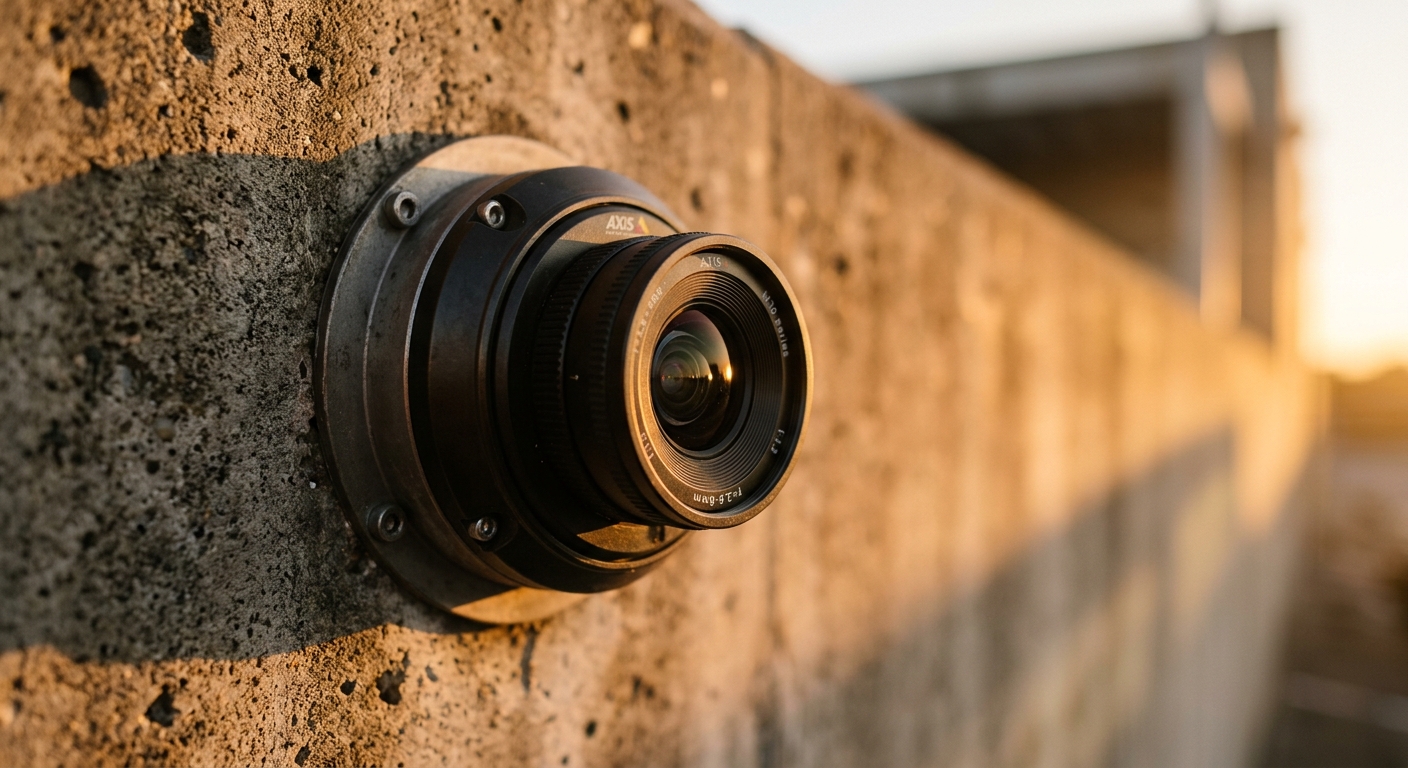
House Bill 4675, the "South Carolina Community Data Protection and Responsible Surveillance Act," would restrict how state and local law enforcement agencies use AI-powered surveillance technology.
Key provisions include:
- Prohibiting AI-powered "Vehicle Feature Recognition" that identifies cars by characteristics other than license plates (body damage, bumper stickers, paint patterns)
- Banning storage of surveillance data on third-party servers
- Requiring warrants for surveillance data access except in imminent threat situations
- Mandating emergency access documentation within 24 hours with judicial review
- Creating criminal penalties and a private right of action for violations
Senate Resolution Supporting Open-Source AI (S 225)
The South Carolina Senate introduced Resolution S 225, a formal statement supporting the development of open-source, decentralized AI technologies. The resolution:
- Acknowledges concerns about closed-source, for-profit AI models from large technology companies
- Supports open-source AI that allows public scrutiny and modification
- Calls for partnerships with universities and research institutions for ethical AI development
- Recommends creating a regulatory environment that attracts AI businesses to South Carolina
While non-binding, the resolution signals the state's policy preference for open and transparent AI development.
Federal AI Policy and South Carolina
Executive Order 14365
President Trump's Executive Order 14365, signed December 11, 2025, establishes mechanisms to challenge state AI laws that may conflict with federal AI policy.
Impact on South Carolina
South Carolina's current legislative approach is relatively well-positioned under the federal framework:
Enacted laws (likely protected): The three enacted laws addressing child exploitation and nonconsensual intimate imagery fall within EO 14365's protected carve-outs for child safety and public safety.
Right to Compute Act (aligned): H 4657's pro-innovation, limited-regulation approach aligns closely with the executive order's emphasis on preventing state regulations that hinder AI development.
Healthcare AI bills (potential friction): S 443's requirements for physician review of AI healthcare decisions could face scrutiny if interpreted as creating compliance burdens that conflict with federal AI development priorities.
Open-source AI resolution (aligned): S 225's support for open-source AI development aligns with the executive order's general pro-innovation stance.
South Carolina's sector-specific approach, rather than comprehensive AI regulation, may shield it from the most aggressive federal preemption challenges.
More South Carolina Laws
Explore other South Carolina law topics on Recording Law:
- South Carolina Recording Laws
- [South Carolina Data Privacy Laws](/us-laws/data-privacy-laws/south-carolina-data-privacy-laws)
- South Carolina Whistleblower Laws
- South Carolina Sexting Laws
- South Carolina Surveillance Camera Laws
Sources and References
- Governor McMaster signs intimate images bill into law(governor.sc.gov).gov
- Attorney General Wilson applauds S.28 and S.29 passage(scag.gov).gov
- South Carolina Department of Administration AI Strategy(admin.sc.gov).gov
- South Carolina AI Strategy PDF (June 2024)(admin.sc.gov).gov
- H 3517 election deepfake bill text(scstatehouse.gov).gov
- H 3042 voyeurism deepfake update bill(scstatehouse.gov).gov
- S 443 healthcare AI physician review bill(scstatehouse.gov).gov
- S 788 AI in therapy consent bill(scstatehouse.gov).gov
- H 4657 Right to Compute Act(scstatehouse.gov).gov
- H 4675 surveillance and AI vehicle tracking bill(scstatehouse.gov).gov
- H 4582 AI electives in schools bill(scstatehouse.gov).gov
- H 5253 AI safeguards in public schools bill(scstatehouse.gov).gov
- S 225 open-source AI resolution(scstatehouse.gov).gov
- SC new law cracks down on AI-generated child exploitation(erinbaileylaw.com)
- SC deep fake intimate imagery law explained(erinbaileylaw.com)
- SC is among states without election AI restrictions(scdailygazette.com)
- Executive Order 14365 on AI state preemption(whitehouse.gov).gov