
South Dakota
South Dakota Recording Laws (2026): One-Party Consent Rules
Independently fact-checked against primary sources (last audited August 15, 2026). · Reviewed by the RecordingLaw editorial team. · Law checked current as of August 15, 2026. · 38 primary sources cited on this page. How we verify our legal content
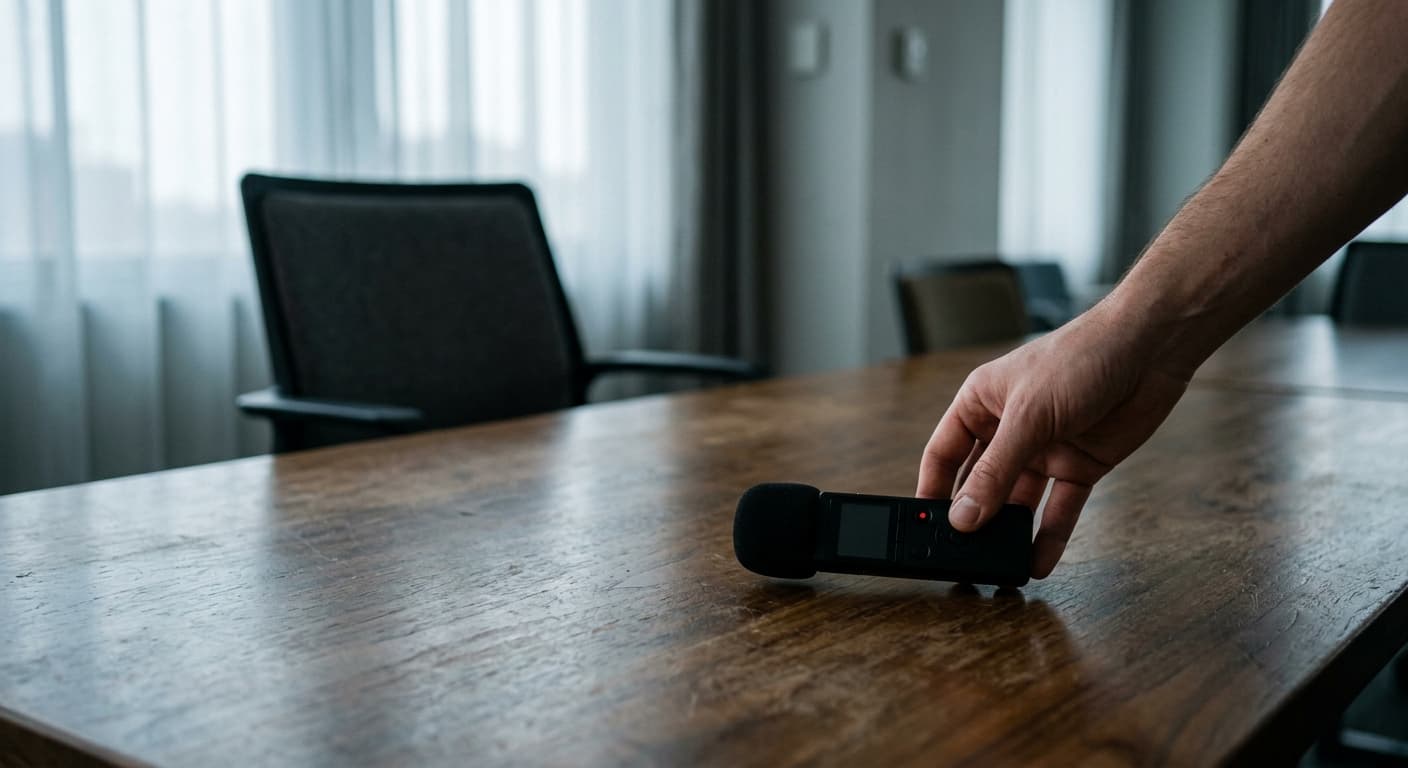
South Dakota is a one-party consent state for recording. Under SDCL 23A-35A-20, any party to a conversation may record it without notifying the other participants. The South Dakota Supreme Court confirmed this rule in State v. Braddock, 452 N.W.2d 785 (S.D. 1990). Recording without consent is a Class 5 felony, and victims may pursue civil relief under federal law and common-law tort.
South Dakota recording law at a glance
| Question | Answer |
|---|---|
| Consent rule | One-party consent |
| Main statute | SDCL 23A-35A-20 |
| When recording is illegal | When done by someone not a party and without any party's consent |
| Criminal penalty | Class 5 felony: up to 5 years and $10,000 (SDCL 22-6-1(8)) |
| Civil remedy | No state statutory cause; federal 18 U.S.C. 2520 + common-law invasion of privacy (Gantvoort) |
| Hidden cameras | SDCL 22-21-1 (Class 1 misdemeanor); SDCL 22-21-4 for intimate/voyeuristic recording |
| Recording police | Legally permissible under state law; no clearly established federal First Amendment right in the 8th Circuit |
For in-depth treatment of every context, see the South Dakota recording laws in depth section below.
Recording in-person conversations in South Dakota
SDCL 23A-35A-20 criminalizes interception only by someone who is not a sender, receiver, or person present at the conversation. The moment one party to the conversation consents (including the recorder themselves), the conduct falls entirely outside the prohibition. There is no notice requirement. If you are part of the conversation, you can record it.
The statute's structure is the inverse of most state wiretap laws. Instead of allowing recording as an exception to a general prohibition, it defines the criminal as an outsider who lacks any party's consent. The South Dakota Supreme Court made this explicit in State v. Braddock, 452 N.W.2d 785, 788 (S.D. 1990), holding that one-party consent removes the communication from the chapter's reach altogether.
For example, if you take a call with your landlord and record it, that is lawful: you are a party. If your neighbor places a listening device on your fence to capture your backyard conversations without your knowledge, that is a Class 5 felony: they are an outsider without any party's consent.
The federal Wiretap Act at 18 U.S.C. 2511(2)(d) sets the same one-party floor for interstate communications, adding one explicit limit: one-party recording done for the purpose of committing a criminal or tortious act is not protected. South Dakota's statute does not repeat that caveat on its face, but the federal floor applies to any interstate wire or electronic communication.
Recording phone calls in South Dakota
South Dakota's one-party rule extends to phone calls. SDCL 23A-35A-20 expressly covers wire and electronic communications, which the chapter's definitions reach across landline, cellular, VoIP, and the audio portion of video calls. A South Dakota party to a call may record without notice.
The cross-border rule matters most for South Dakota callers. When one party is in a stricter all-party consent state, courts and commentators apply the "stricter state governs" default. The all-party states include California, Florida, Illinois, Maryland, Massachusetts, New Hampshire, Pennsylvania, and Washington. Two more states need a hedge rather than a flat listing: Connecticut's criminal eavesdropping law is one-party consent, but a separate civil statute, C.G.S. 52-570d, exposes a recorder to civil liability for recording a phone call without all-party consent. Delaware is contested, with 11 Del. C. 2402(c)(4) permitting interception by a party or with one party's consent while 11 Del. C. 1335(a)(4) requires the consent of all parties, an unresolved tension in the code. If you are calling into any of those states, get explicit consent at the start of the call before recording.
Montana is the most relevant cross-border exception. Under MCA 45-8-213, Montana requires that all parties to a conversation know it is being recorded (MCA 45-8-213 frames the offense around recording without the knowledge of all parties, with narrow notice-based exceptions). A South Dakota resident calling into Montana should announce the recording at the start of the call.
For a full treatment of recording calls from South Dakota, see South Dakota Phone Call Recording Laws.
Hidden cameras, doorbells, and nanny cams
South Dakota's audio-side statute (SDCL 23A-35A-20) and its visual-privacy statute (SDCL 22-21-1) operate independently. A hidden camera that captures audio can trigger both.
SDCL 22-21-1 prohibits two things, both Class 1 misdemeanors. First, trespassing on property with intent to eavesdrop on or surveil someone in a private place. Second, installing or using any unauthorized observing, photographing, recording, amplifying, or broadcasting device in a private place without the consent of persons entitled to privacy there. Installation alone is sufficient: a camera placed in a guest bathroom violates the section even if it never records anyone.
For voyeuristic recording, SDCL 22-21-4 applies. Subdivision (1) covers intentionally using a device to photograph or visually record someone without clothing, under or through clothing, or with a third individual in a sexual act; subdivision (2) covers disclosing, disseminating, distributing, or selling that material. Both reach the conduct only when it is done without the consent or knowledge of the individual depicted and with the intent to self-gratify or to alarm, annoy, embarrass, harass, invade the privacy of, threaten, or cause emotional, financial, physical, psychological, or reputational harm to that individual. The section carries no reasonable-expectation-of-privacy element; that specific intent is what limits its reach, so a recording made without it falls outside 22-21-4. A violation of subdivision (1) or (2) is a Class 1 misdemeanor (up to 1 year, $2,000), rising to a Class 6 felony (up to 2 years, $4,000) on a subsequent violation of those subdivisions or where the victim is 17 or younger and the perpetrator is at least 21 when the photograph or recording is made. Subdivision (3) (digitally fabricated material depicting an identifiable individual in a state of nudity or engaged in sexual conduct) carries no such tiering: it is a flat Class 5 felony (up to 5 years, $10,000), added by SB 41 (2026) and effective July 1, 2026, with no age qualifier in the statutory text (see Special Topics below).
A Ring doorbell aimed at a public-facing porch or driveway is generally lawful. The homeowner is a party to any visitor-directed conversation (one-party rule), and no private place is captured. A camera that sweeps a neighbor's fenced backyard, bathroom window, or other reasonable-expectation-of-privacy area can trigger SDCL 22-21-1 liability. South Dakota also has a dedicated drone-recording statute. SDCL 50-15-5 makes it a Class 1 misdemeanor to intentionally use a drone, except as authorized by law, to photograph, record, or otherwise observe another person in a private place where that person has a reasonable expectation of privacy. It does not apply to law enforcement officers acting in their lawful duties, to a bona fide business or government drone operator who unintentionally or incidentally captures someone in a private place, or to a designated emergency management worker acting within the scope of their duties. SDCL 50-15-5.1 separately makes it a Class 1 misdemeanor to operate a drone for voyeuristic or harassment purposes. FAA Part 107 governs the airspace side.
For more, see South Dakota Security Camera Laws and South Dakota Voyeurism Laws.
Penalties for illegal recording in South Dakota
A violation of SDCL 23A-35A-20 is a Class 5 felony. Under SDCL 22-6-1(8), this means up to 5 years imprisonment in a state correctional facility and a fine of up to $10,000. The court may impose imprisonment, the fine, or both. Many older secondary sources graded this offense at Class 6 (2 years, $4,000); that grading is wrong. The criminal statute of limitations is 7 years under SDCL 23A-42-2.
| Offense | Statute | Class | Max penalty |
|---|---|---|---|
| Interception without consent (audio/wire) | SDCL 23A-35A-20 | Class 5 felony | 5 years, $10,000 |
| Trespass-to-eavesdrop or unauthorized device | SDCL 22-21-1 | Class 1 misdemeanor | 1 year, $2,000 |
| Window-peeking | SDCL 22-21-3 | Class 1 misdemeanor | 1 year, $2,000 |
| Voyeuristic recording or distribution | SDCL 22-21-4(1)-(2) | Class 1 misdemeanor | 1 year, $2,000 |
| Voyeuristic recording or distribution, subsequent violation of subdivision (1) or (2) | SDCL 22-21-4(1)-(2) | Class 6 felony | 2 years, $4,000 |
| Voyeuristic recording or distribution, victim 17 or younger, perpetrator 21+ | SDCL 22-21-4(1)-(2) | Class 6 felony | 2 years, $4,000 |
| Digitally fabricated intimate material, any identifiable individual (no tiering) | SDCL 22-21-4(3) (added by SB 41, effective July 1, 2026) | Class 5 felony | 5 years, $10,000 |
| Drone used to observe a person in a private place | SDCL 50-15-5 | Class 1 misdemeanor | 1 year, $2,000 |
| Drone operated for voyeuristic or harassment purposes | SDCL 50-15-5.1 | Class 1 misdemeanor | 1 year, $2,000 |
| Political deepfake within 90 days of election | SB 164 (2025) | Class 1 misdemeanor | 1 year, $2,000 |
On the civil side, South Dakota has no state statutory civil cause of action under Chapter 23A-35A. SDCL 23A-35A-25 is a pen-register "Contents of application" section, not a civil-recovery section. Victims pursue two paths: (1) common-law invasion of privacy (intrusion upon seclusion) as confirmed by the South Dakota Supreme Court in Gantvoort v. Ranschau, 2022 S.D. 22, and (2) the federal civil cause under 18 U.S.C. 2520, which provides actual damages or statutory damages of the greater of $100 per day or $10,000, punitive damages in appropriate cases, and reasonable attorney fees. The civil statute of limitations is 3 years for the common-law claim under SDCL 15-2-14 and 2 years for the federal claim under 18 U.S.C. 2520(e).
Gantvoort extended civil liability beyond the recorder to third parties who knowingly assist in further processing unlawfully obtained recordings. An attorney or paralegal who receives a clearly unlawful recording from a divorce client and downloads it to process for litigation may face aiding-and-abetting liability for invasion of privacy. For drone-based intrusions the legislature preserved that theory expressly: SDCL 50-15-9 provides that a drone may be the instrumentality by which a tort in violation of privacy rights or trespass laws is committed under federal or state law.
South Dakota has no statute governing the disclosure or publication of a recording once it exists. SDCL 23A-35A-20 criminalizes only the overhearing or recording itself; unlike Alabama (Ala. Code 13A-11-35) or North Dakota (N.D. Cent. Code 12.1-15-02(1)(b)), Chapter 23A-35A does not separately criminalize divulging or using an unlawfully obtained recording. An innocent recipient who played no part in an illegal interception, such as a journalist who receives a leaked recording, is also protected by the First Amendment: in Bartnicki v. Vopper, 532 U.S. 514 (2001), the U.S. Supreme Court held that publishing a lawfully obtained recording of an unlawfully intercepted communication on a matter of public concern cannot be punished under a state or federal wiretap statute, so long as the publisher did not participate in the interception.
Recording the police in South Dakota
Under South Dakota law, recording on-duty officers in public is lawful. SDCL 23A-35A-20 does not reach a recorder who is present at the scene: the recorder is a "person present" acting with at least their own one-party consent.
The federal civil-rights side is more complicated. South Dakota sits in the Eighth Circuit, which has NOT recognized a clearly established First Amendment right to record police. Chestnut v. Wallace, 947 F.3d 1085 (8th Cir. 2020), established a right to passively observe police-citizen interactions from a distance, but expressly did not reach active recording. Robbins v. City of Des Moines, 984 F.3d 673 (8th Cir. 2021), and Molina v. Book, No. 21-1830 (8th Cir. Feb. 2, 2023) (cert. denied Feb. 20, 2024), both granted qualified immunity to officers on First Amendment retaliation claims for recording, declining to extend Chestnut to a recording right.
A South Dakota plaintiff alleging retaliation for recording police faces a qualified-immunity barrier that does not exist in the 1st, 3rd, 5th, 7th, 9th, 10th, or 11th Circuits. Framing the claim under Chestnut (passive observation, not active recording) gives a better path. Practical tips: stay back, do not interfere, do not touch or block officers, and do not refuse lawful orders even while recording.
For more, see South Dakota Laws on Recording Police.
Special topics in South Dakota
Workplace recording and NLRB Stericycle
South Dakota's one-party rule means an employee who is a party to a workplace conversation may record without notifying their employer or coworkers. The federal NLRB overlay applies to covered employers. Stericycle, Inc., 372 NLRB No. 113 (Aug. 2, 2023), remains controlling Board precedent: a blanket no-recording policy that would reasonably chill Section 7 activity (documenting unsafe conditions, gathering wage-and-hour evidence, union organizing) is presumptively unlawful. NLRB GC 25-05 (Feb. 14, 2025) was a housekeeping rescission of 29 prior GC memos and did NOT reinstate Boeing or overrule Stericycle. NLRB GC 25-07 (June 25, 2025) treats surreptitious recording of collective-bargaining negotiation sessions as a per se Section 8 violation, but is narrowly scoped to formal CBA sessions only. South Dakota is a right-to-work state under SD Constitution art. VI, sec. 2.
For detail, see South Dakota Workplace Recording Laws.
Body-worn cameras and open records
South Dakota has no dedicated body-worn camera statute and no SDCL 23-3-45.1. Access to body-cam and dash-cam footage is governed only by the general law-enforcement records exemption at SDCL 1-27-1.5(5), which exempts records from active law-enforcement investigations. The 2020 BWC bill failed; no replacement has passed through the 101st Legislative Assembly. The South Dakota Highway Patrol operates both in-car video and body cameras under departmental policy, with no statewide retention floor, activation mandate, or release framework. Public FOIA-style requests for footage are routinely denied; release happens through discovery in prosecutions.
AI deepfakes and NCII
South Dakota has two active deepfake statutes. SB 164 (2025), signed March 25, 2025, bars dissemination of unlabeled AI-generated political content within 90 days of an election with intent to harm a candidate (Class 1 misdemeanor; exempts broadcasters, satire, parody). SB 41 (2026), signed March 17, 2026, amends SDCL 22-21-4 to add a Class 5 felony (up to 5 years and $10,000 under SDCL 22-6-1(8)) for the creation, possession, or sharing of computer-generated deepfake intimate images depicting an identifiable individual under subdivision (3); the statutory text carries no age qualifier. Effective July 1, 2026. The federal TAKE IT DOWN Act, Pub. L. 119-12 (signed May 19, 2025), adds federal criminal exposure for NCII deepfakes immediately on enactment, with covered-platform 48-hour notice-and-removal obligations effective May 19, 2026.
Federal overlay: ECPA, FCC, and TCPA
The federal Wiretap Act at 18 U.S.C. 2511 is the floor that South Dakota's one-party rule mirrors. On the TCPA side: FCC 23-107's one-to-one consent rule was vacated by the Eleventh Circuit in Insurance Marketing Coalition Ltd. v. FCC, No. 24-10277 (Jan. 24, 2025, mandate Apr. 30, 2025). FCC 24-24 (consent-revocation framework, consumers may revoke by any reasonable means, honored within 10 business days) was NOT vacated and remains in force. FCC 24-17 (AI-generated voices fall within the TCPA's "artificial or prerecorded voice" restriction) also remains in force. The old 47 C.F.R. 64.501 "beep tone" rule was removed in 2017 by FCC 17-95 and is not live federal law.
Recent legal developments
- SB 41 (2026): Signed March 17, 2026 by Governor Rhoden; adds Class 5 felony to SDCL 22-21-4 subdivision (3) for AI-generated fabricated intimate material depicting any identifiable individual, with no age qualifier in the statutory text (up to 5 years and $10,000); effective July 1, 2026.
- SB 164 (2025): Signed March 25, 2025 by Governor Rhoden; political AI deepfake disclosure requirement within 90 days of election; Class 1 misdemeanor; in force.
- TAKE IT DOWN Act (May 2025): Federal criminal coverage for NCII deepfakes live since May 19, 2025; platform takedown obligations live since May 19, 2026.
- FCC 23-107 vacated (Jan. 2025): One-to-one TCPA consent rule eliminated; FCC 24-24 consent-revocation framework remains.
- NLRB GC 25-07 (June 2025): Surreptitious bargaining-session recording treated as per se unfair labor practice; narrowly scoped.
- No BWC bill: The 2020 body-worn camera bill failed; no replacement enacted through the 101st Assembly.
South Dakota recording laws in depth
By type of recording
- South Dakota Audio Recording Laws
- South Dakota Video Recording Laws
- South Dakota Phone Call Recording Laws
- South Dakota Dashcam Laws
By place or relationship
- South Dakota Laws on Recording Police
- South Dakota Laws on Recording in Public
- South Dakota Workplace Recording Laws
- South Dakota Landlord-Tenant Recording Laws
- South Dakota Medical Recording Laws
- South Dakota School Recording Laws
- South Dakota Security Camera Laws
- South Dakota Voyeurism Laws
More South Dakota laws
- South Dakota Alimony Laws
- South Dakota At-Will Employment Laws
- South Dakota Child Custody Laws
- South Dakota Divorce Laws
- South Dakota Landlord-Tenant Laws
This article is general legal information, not legal advice. Recording laws change and apply differently to each situation. For advice about your situation, consult a licensed South Dakota attorney.
More South Dakota Laws
Frequently Asked Questions
Is South Dakota a one-party or two-party consent state?
South Dakota is a one-party consent state under SDCL 23A-35A-20. Any sender, receiver, or person present during a conversation may record it without notifying the other parties. The South Dakota Supreme Court confirmed this rule in State v. Braddock, 452 N.W.2d 785 (S.D. 1990). South Dakota does not require all-party consent.
Is illegal recording a felony in South Dakota?
Yes. Recording without consent under SDCL 23A-35A-20 is a Class 5 felony, punishable by up to 5 years imprisonment in a state correctional facility and a $10,000 fine under SDCL 22-6-1(8). Older guides that list a 2-year Class 6 penalty are incorrect. The criminal statute of limitations is 7 years under SDCL 23A-42-2.
Can I record a phone call in South Dakota without telling the other person?
Yes, if you are a party to the call. South Dakota's one-party rule under SDCL 23A-35A-20 covers phone calls. The exception is cross-border calls: if the other party is in an all-party consent state (California, Florida, Illinois, Maryland, Massachusetts, New Hampshire, Pennsylvania, Washington, or Montana for electronic communications), or in Connecticut (one-party criminally, but civil liability for phone recording without all-party consent under C.G.S. 52-570d) or Delaware (contested, between a one-party interception provision and an all-party privacy provision), the stricter rule applies and you should announce the recording.
Can I sue someone for recording me illegally in South Dakota?
South Dakota has no state statutory civil cause of action under Chapter 23A-35A. You have two civil paths: a common-law invasion-of-privacy claim as recognized in Gantvoort v. Ranschau, 2022 S.D. 22, and a federal claim under 18 U.S.C. 2520 (statutory damages of $100 per day or $10,000, plus punitive damages and attorney fees, with a 2-year limitations period). Both paths can be pursued together.
Can I publish or share a recording I legally made in South Dakota?
Yes. SDCL 23A-35A-20 criminalizes only the act of overhearing or recording without consent; it does not separately restrict disclosing or publishing a recording you lawfully made as a party or with a party's consent. Even someone who innocently receives an illegally recorded conversation, such as a journalist, is generally protected by the First Amendment from wiretap liability for publishing it if the recording concerns a matter of public concern, under Bartnicki v. Vopper, 532 U.S. 514 (2001).
Is a Ring doorbell or home security camera legal in South Dakota?
Generally yes, for cameras aimed at public-facing areas like a porch or driveway. For the audio side, the homeowner is a party to visitor-directed conversations and the one-party rule applies. For the visual side, SDCL 22-21-1 bars cameras pointed into private places: a camera that captures a neighbor's bathroom window or fenced backyard can trigger Class 1 misdemeanor liability. Cameras in your own bathroom or bedroom require the consent of anyone using those spaces.
Can I record police in South Dakota?
Under state law, yes: SDCL 23A-35A-20 does not reach a recorder who is present at the scene. The federal civil-rights side is harder. The Eighth Circuit has not established a clearly recognized First Amendment right to record police. Chestnut v. Wallace (8th Cir. 2020) covers passive observation only; Robbins (2021) and Molina (2023, cert. denied 2024) both declined to extend that right to active recording. A South Dakota plaintiff alleging retaliation for recording police faces a substantial qualified-immunity barrier.
Can my employer ban me from recording in the workplace?
An employer can have a no-recording policy and enforce it through discipline or termination under South Dakota at-will employment rules. But under NLRB Stericycle (2023), a blanket no-recording policy that chills Section 7 activity (documenting safety violations, organizing, gathering wage evidence) is presumptively unlawful for covered employers. NLRB GC 25-05 (Feb. 2025) did not reinstate the old Boeing standard. Narrowly drawn policies tied to legitimate interests such as HIPAA or trade secrets are more defensible.
Does South Dakota have a deepfake law?
Yes, two. SB 164 (2025), signed March 25, 2025, bars unlabeled AI political deepfakes within 90 days of a South Dakota election (Class 1 misdemeanor; media and parody are exempt). SB 41 (2026), signed March 17, 2026, adds a Class 5 felony to SDCL 22-21-4 subdivision (3) for AI-generated fabricated intimate material depicting any identifiable individual, with no age qualifier in the statutory text (up to 5 years and $10,000), effective July 1, 2026. The federal TAKE IT DOWN Act also provides criminal coverage for NCII deepfakes and platform takedown obligations.
Updates
Corrected the drone and voyeurism sections: South Dakota does have a dedicated drone-recording statute (SDCL 50-15-5, alongside 50-15-5.1 and the drone tort provision at 50-15-9), and SDCL 22-21-4 is now stated with its actual elements, including the specific-intent requirement and the fact that its Class 6 felony escalations reach only subdivisions (1) and (2).
Corrected the description of South Dakota's new AI deepfake felony (SDCL 22-21-4(3), added by SB 41) to remove an invented adults-only limitation that the statute's text does not contain, hedged the interstate phone-call consent list to reflect that Connecticut's all-party rule is civil-only (its criminal law is one-party) and Delaware's rule is legally contested, and added the repeat-offense Class 6 felony enhancement for voyeuristic recording that the page had omitted.
Independently fact-checked against the cited primary sources; governing law re-checked for recent changes
Governing law re-checked for recent changes
Governing law re-checked for recent changes
Reviewed and approved by an editor
Restructured page for readability: added AEO lede, at-a-glance table, organized body into canonical sections (in-person, phone, hidden cameras, penalties, police, special topics), condensed SDCL statute deep-dives and federal overlay into tight special-topics subsections, added in-depth sub-page index. All statutes and cases preserved. No substantive fact changes: Class 5 felony grading for SDCL 23A-35A-20 confirmed, SB 41 (2026) deepfake felony confirmed (effective July 1, 2026), SB 164 (2025) political deepfake confirmed, Gantvoort civil pathway confirmed, Eighth Circuit police-recording qualified-immunity gap (Chestnut/Robbins/Molina) confirmed, FCC 23-107 vacatur confirmed, FCC 24-24 survival confirmed, Stericycle still controlling confirmed, no BWC statute confirmed.
Refreshed for 2026. Corrected the SDCL 23A-35A-20 grading to a Class 5 felony (5 years imprisonment and a fine of up to $10,000 under SDCL 22-6-1(7)); the prior Class 6 framing was wrong. Anchored the consent framework on the foundational decision in State v. Braddock, 452 N.W.2d 785 (S.D. 1990), which holds that one-party consent removes a communication from the interception prohibition. Surfaced the load-bearing differentiator that South Dakota has NO state-law statutory civil cause of action under SDCL Chapter 23A-35A; SDCL 23A-35A-25 is the pen-register and trap-and-trace 'Contents of application' section, not a civil-recovery section. The civil pathway is common-law invasion of privacy via Gantvoort v. Ranschau, 2022 S.D. 22, plus federal 18 U.S.C. 2520. Removed any active citation to SDCL 22-21-2, which was repealed by SL 1976, ch 158, section 21-3 and is not active law. Removed any reference to SDCL 23-3-45.1 (does not exist on sdlegislature.gov) and any inherited 'South Dakota body-worn camera statute' framing; access to body-cam and dash-cam footage is governed only by the general law-enforcement records exemption at SDCL 1-27-1.5(5). Dropped the unverified State v. Krebs, State v. Sanchez, and State v. McKnight references that prior copies of this article carried. Added Senate Bill 164 (2025), signed by Governor Larry Rhoden on March 25, 2025, prohibiting unlabeled political AI deepfakes within 90 days of a South Dakota election with intent to harm a candidate (Class 1 misdemeanor). Added Senate Bill 41 (2026), signed by Governor Larry Rhoden on March 17, 2026 and effective July 1, 2026, amending SDCL 22-21-4 to add a Class 6 felony tier for AI-generated NCII deepfakes of non-consenting adults. Reframed the Eighth Circuit record-the-police trio: Chestnut v. Wallace, 947 F.3d 1085 (8th Cir. 2020), clearly established the right of passive observation only; Robbins v. City of Des Moines, 984 F.3d 673 (8th Cir. 2021), and Molina v. Book, No. 21-1830 (8th Cir. 2023, cert. denied Feb. 20, 2024), both expressly declined to extend Chestnut to a clearly-established right to record police. South Dakota plaintiffs alleging First Amendment retaliation for recording police face a qualified-immunity barrier that does not exist in the 1st, 3rd, 5th, 7th, 9th, 10th, or 11th Circuits. Corrected the federal TCPA overlay: FCC 23-107 (one-to-one consent rule) was VACATED by the 11th Circuit in Insurance Marketing Coalition Ltd. v. FCC, No. 24-10277 (Jan. 24, 2025, mandate Apr. 30, 2025); FCC 24-24 (consent-revocation rules) was NOT vacated and REMAINS IN FORCE, with one subsection partially delayed to April 11, 2026. Reframed NLRB GC 25-05 (Feb. 14, 2025) as a housekeeping rescission of 29 prior General Counsel memoranda, NOT a Boeing reinstatement; Stericycle, 372 NLRB No. 113 (Aug. 2, 2023), remains binding Board precedent. Added NLRB GC 25-07 (June 26, 2025) narrowly scoped to surreptitious recording of collective-bargaining sessions as a per se Section 8(a)(5) or 8(b)(3) violation; it does not reach general workplace audio. Updated federal overlay to include 47 C.F.R. 64.501 (REMOVED effective Nov. 20, 2017 by FCC 17-95) and the TAKE IT DOWN Act, Pub. L. 119-12 (signed May 19, 2025; covered-platform 48-hour notice-and-removal duty effective May 19, 2026). Replaced commercial-codifier URLs with sdlegislature.gov, ujs.sd.gov, ecf.ca8.uscourts.gov, media.ca11.uscourts.gov, uscode.house.gov, fcc.gov, docs.fcc.gov, congress.gov, nlrb.gov, federalregister.gov, atg.sd.gov, puc.sd.gov, dps.sd.gov, and justice.gov primaries.
Refreshed for 2026. Corrected the SDCL 23A-35A-20 grading to a Class 5 felony (5 years imprisonment and a fine of up to $10,000 under SDCL 22-6-1(8)); the prior Class 6 framing was wrong. Anchored the consent framework on the foundational decision in State v. Braddock, 452 N.W.2d 785 (S.D. 1990), which holds that one-party consent removes a communication from the interception prohibition. Surfaced the load-bearing differentiator that South Dakota has NO state-law statutory civil cause of action under SDCL Chapter 23A-35A; SDCL 23A-35A-25 is the pen-register and trap-and-trace 'Contents of application' section, not a civil-recovery section. The civil pathway is common-law invasion of privacy via Gantvoort v. Ranschau, 2022 S.D. 22, plus federal 18 U.S.C. 2520. Removed any active citation to SDCL 22-21-2, which was repealed by SL 1976, ch 158, section 21-3 and is not active law. Removed any reference to SDCL 23-3-45.1 (does not exist on sdlegislature.gov) and any inherited 'South Dakota body-worn camera statute' framing; access to body-cam and dash-cam footage is governed only by the general law-enforcement records exemption at SDCL 1-27-1.5(5). Dropped the unverified State v. Krebs, State v. Sanchez, and State v. McKnight references that prior copies of this article carried. Added Senate Bill 164 (2025), signed by Governor Larry Rhoden on March 25, 2025, prohibiting unlabeled political AI deepfakes within 90 days of a South Dakota election with intent to harm a candidate (Class 1 misdemeanor). Added Senate Bill 41 (2026), signed by Governor Larry Rhoden on March 16, 2026 and effective July 1, 2026, amending SDCL 22-21-4 to add a Class 5 felony tier for AI-generated NCII deepfakes, with no age qualifier in the statute. Reframed the Eighth Circuit record-the-police trio: Chestnut v. Wallace, 947 F.3d 1085 (8th Cir. 2020), clearly established the right of passive observation only; Robbins v. City of Des Moines, 984 F.3d 673 (8th Cir. 2021), and Molina v. Book, No. 21-1830 (8th Cir. 2023, cert. denied Feb. 20, 2024), both expressly declined to extend Chestnut to a clearly-established right to record police. South Dakota plaintiffs alleging First Amendment retaliation for recording police face a qualified-immunity barrier that does not exist in the 1st, 3rd, 5th, 7th, 9th, 10th, or 11th Circuits. Corrected the federal TCPA overlay: FCC 23-107 (one-to-one consent rule) was VACATED by the 11th Circuit in Insurance Marketing Coalition Ltd. v. FCC, No. 24-10277 (Jan. 24, 2025, mandate Apr. 30, 2025); FCC 24-24 (consent-revocation rules) was NOT vacated and REMAINS IN FORCE, with one subsection partially delayed to April 11, 2026. Reframed NLRB GC 25-05 (Feb. 14, 2025) as a housekeeping rescission of 29 prior General Counsel memoranda, NOT a Boeing reinstatement; Stericycle, 372 NLRB No. 113 (Aug. 2, 2023), remains binding Board precedent. Added NLRB GC 25-07 (June 25, 2025) narrowly scoped to surreptitious recording of collective-bargaining sessions as a per se Section 8(a)(5) or 8(b)(3) violation; it does not reach general workplace audio. Updated federal overlay to include 47 C.F.R. 64.501 (REMOVED effective Nov. 20, 2017 by FCC 17-95) and the TAKE IT DOWN Act, Pub. L. 119-12 (signed May 19, 2025; covered-platform 48-hour notice-and-removal duty effective May 19, 2026). Replaced commercial-codifier URLs with sdlegislature.gov, ujs.sd.gov, ecf.ca8.uscourts.gov, media.ca11.uscourts.gov, uscode.house.gov, fcc.gov, docs.fcc.gov, congress.gov, nlrb.gov, federalregister.gov, atg.sd.gov, puc.sd.gov, dps.sd.gov, and justice.gov primaries.
Added wearable recording devices section and 2 new FAQs about AI voice recorders and smart glasses
The Law Behind This Article
This article rests on the statutory provisions below, held in our own legal record and retrieved from the official source. Tap a section to read the operative text.
South Dakota Codified Laws, Chapter 23A-35A: INTERCEPTION OF WIRE, ELECTRONIC, OR ORAL COMMUNICATIONS
§ 23A-35A-20Overhearing or recording communications, conversations, or jury deliberations by means of eavesdropping device as felony.In forcecited in 17 of our articles
Except as provided in § 23A-35A-21, a person is guilty of a Class 5 felony who is not: (1) A sender or receiver of a communication who intentionally and by means of an eavesdropping device overhears or records a communication, or aids, authorizes, employs, procures, or permits another to overhear or record, without the consent of either a sender or receiver of the communication; (2) A person present during a conversation or discussion who intentionally and by means of an eavesdropping device overhears or records the conversation or discussion, or aids, authorizes, employs, procures, or permits another to overhear or record, without the consent of a party to the conversation or discussion; or (3) A member of a jury who intentionally records or listens to by means of an eavesdropping device the deliberations of the jury or aids, authorizes, employs, procures, or permits another to record or listen.
Official text (excerpt) · last checked 2026-08-31 · Read the full text in our law library · Verify at sdlegislature.gov
Cited in 3 court opinions in our collectionLatest citing opinion in our collection: 2022
Opinions citing this section in our collection:
- State v. Woods (South Dakota Supreme Court 1985, 361 N.W.2d 620)“…ent fails. We next address the State’s argument that SDCL 23A-35A-20(2) exempts one party consent recordings…”
- State v. Braddock (South Dakota Supreme Court 1990, 452 N.W.2d 785)“…nsent recordings without prior court authorization” because SDCL 23A-35A-20 exempts from criminal liability a perso…”
- Gantvoort v. Ranschau (South Dakota Supreme Court 2022, 2022 S.D. 22)“…ff when no noise was detected in the room. 3. SDCL 23A-35A-20(1)–(2), which criminalizes recordings m…”
Identified automatically from the court opinions citing this section — not a ranking of which case controls.
Also relied on in: South Dakota Security Camera Laws, South Dakota Audio Recording Laws, South Dakota Dashcam Laws
§ 23A-35A-21Exemptions from chapter.In force
The following is exempt from the provisions of this chapter: (1) Wiretapping and eavesdropping pursuant to an ex parte order granted pursuant to § 23A-35A-6; (2) The normal use of services, equipment, and facilities provided by a common carrier pursuant to tariffs on file with the Public Utilities Commission of the State of South Dakota or the federal communications commission; (3) The normal functions of any operator of a switchboard; (4) Any officer, agent, or employee of a communications common carrier engaged in the business of providing service, equipment, and facilities for communication who performs acts otherwise prohibited by this chapter in providing such communication services, equipment, and facilities or in constructing, maintaining, repairing, operating, or using same, including the obtaining of billing and accounting information, the protecting of the communication services, equipment, and facilities from illegal use in violation of tariffs on file with the corporation commission of this state or the federal communications commission and the protecting of the common carrier from the commission of fraud against it; (5) The providing of requested information or…
Official text (excerpt) · last checked 2026-07-30 · Read the full text in our law library · Verify at sdlegislature.gov
§ 23A-35A-1Definition of terms.In forcecited in 2 of our articles
Terms used in this chapter mean: (1) "Aggrieved person," a person who was a party to any intercepted wire, electronic, or oral communication or a person against whom the interception was directed; (2) "Attorney general," the attorney general of the State of South Dakota; (3) "Chapter 119 of the United States Code," Chapter 119 of Part I of Title 18, United States Code, being Public Law 90-351, the Omnibus Crime Control and Safe Streets Act of 1968; (4) "Communications common carrier," the meaning given to the term, common carrier, by section 153 of Title 47 of the United States Code; (5) "Contents," with respect to any wire, electronic, or oral communication, any information concerning the identity of the parties to the communication or the existence, substance, purport, or meaning of that communication; (6) "Eavesdropping device," any electronic, mechanical, or other apparatus which is intentionally used to intercept a wire, electronic, or oral communication other than: (a) Any telephone, telegraph instrument, or electronic communication device, equipment, or facility, or any component thereof, (i) furnished to the subscriber or user by a communications common carrier in…
Official text (excerpt) · last checked 2026-07-30 · Read the full text in our law library · Verify at sdlegislature.gov
Cited in 4 court opinions in our collectionLatest citing opinion in our collection: 2002
Opinions citing this section in our collection:
- State v. Owens (South Dakota Supreme Court 2002, 643 N.W.2d 735)“…ion was a private "oral conversation" within the meaning of SDCL 23A-35A-1(10). [7] Owens argues that the unautho…”
- State v. Woods (South Dakota Supreme Court 1985, 361 N.W.2d 620)“…was illegally “intercepted,” as those terms are defined by SDCL 23A-35A-1(2) and (3). 1 SDCL 23A-35A…”
- State v. Iverson (South Dakota Supreme Court 1985, 364 N.W.2d 518)“…es justifying such expecta tion[.]” (Emphasis added.) SDCL 23A-35A-1(2). Disburg’s failure to obtain…”
Identified automatically from the court opinions citing this section — not a ranking of which case controls.
Also relied on in: South Dakota Surveillance Camera Laws (2026 Guide)
United States Code Title 18
§ 2511Interception and disclosure of wire, oral, or electronic communications prohibitedIn forcecited in 422 of our articles
Except as otherwise specifically provided in this chapter any person who— intentionally intercepts, endeavors to intercept, or procures any other person to intercept or endeavor to intercept, any wire, oral, or electronic communication; intentionally uses, endeavors to use, or procures any other person to use or endeavor to use any electronic, mechanical, or other device to intercept any oral communication when— such device is affixed to, or otherwise transmits a signal through, a wire, cable, or other like connection used in wire communication; or such device transmits communications by radio, or interferes with the transmission of such communication; or such person knows, or has reason to know, that such device or any component thereof has been sent through the mail or transported in interstate or foreign commerce; or such use or endeavor to use (A) takes place on the premises of any business or other commercial establishment the operations of which affect interstate or foreign commerce; or (B) obtains or is for the purpose of obtaining information relating to the operations of any business or other commercial establishment the operations of which affect interstate or foreign…
Official text (excerpt) · last checked 2026-08-28 · Read the full text in our law library · Verify at uscode.house.gov
Cited in 2,045 court opinions in our collectionLatest citing opinion in our collection: 2026
In the courts (editorial summary, independently checked):Griggs-Ryan v. Smith (1990) applied the Section 2511(2)(d) prior-consent exception, treating a tenant repeatedly told that all incoming calls were taped as having impliedly consented. United States v. United States District Court (1972) read the then-current Section 2511(3) as conferring no presidential surveillance power.
Opinions citing this section in our collection:
- Mitchell v. Forsyth (Supreme Court of the United States 1985, 472 U.S. 511)✓The Attorney General authorized a warrantless 1970 national security wiretap that caught the plaintiff's calls; the Court held the since-repealed Section 2511(3) disclaimer left the tap lawful under Title III, and that Mitchell had qualified immunity.
- United States v. United States District Court for the Eastern District of Michigan (Supreme Court of the United States 1972, 407 U.S. 297)✓The Attorney General approved warrantless wiretaps on members of a domestic group accused of bombing a CIA office; the Court read Section 2511(3) as a congressional disclaimer conferring no surveillance power, then held the Fourth Amendment required prior judicial approval.
- Forsyth v. Barr (Court of Appeals for the Fifth Circuit 1994, 19 F.3d 1527)✓Dallas police used, in an internal affairs probe of an officer, calls private parties allegedly intercepted illegally; assuming that was unlawful, the Fifth Circuit held Section 2517(1) and (2) allowed the disclosure and use, defeating the Section 2511(1)(c) and (d) claims.
Identified automatically from the court opinions citing this section — not a ranking of which case controls.
Also relied on in: Connecticut Recording Laws (2026): Hybrid Consent Rules Explained, Oregon Recording Laws (2026): Hybrid One-Party and All-Party Rules, US Recording Laws by State (2026): All 50 States Explained
§ 2520Recovery of civil damages authorizedIn forcecited in 115 of our articles
Except as provided in section 2511(2)(a)(ii), any person whose wire, oral, or electronic communication is intercepted, disclosed, or intentionally used in violation of this chapter may in a civil action recover from the person or entity, other than the United States, which engaged in that violation such relief as may be appropriate. In an action under this section, appropriate relief includes— such preliminary and other equitable or declaratory relief as may be appropriate; damages under subsection (c) and punitive damages in appropriate cases; and a reasonable attorney’s fee and other litigation costs reasonably incurred.
Official text (excerpt) · last checked 2026-07-28 · Read the full text in our law library · Verify at uscode.house.gov
Cited in 860 court opinions in our collectionLatest citing opinion in our collection: 2026
In the courts (editorial summary, independently checked):Walker v. Darby (1990) held a 2520 plaintiff need not prove the contents of intercepted conversations, only interception and a justified expectation against it. Bartnicki v. Vopper (2001) barred 2520 damages against defendants who took no part in the interception, obtained the tape lawfully, and disclosed a matter of public concern.
Opinions citing this section in our collection:
- Jessie Walker v. Thomas E. Darby, Hugh L. Robinson, Jr., and Kenneth Day (Court of Appeals for the Eleventh Circuit 1990, 911 F.2d 1573)✓A postal letter carrier said three supervisors wired an intercom near his workstation to listen in. Reversing summary judgment, the Eleventh Circuit held a section 2520 plaintiff can show interception without proving the contents of specific conversations.
- Gelbard v. United States (Supreme Court of the United States 1972, 408 U.S. 41)“…disclosure, or use is entitled to recover civil damages, 18 U. S. C. § 2520 . Title III also bars the use as eviden…”
- DirecTV, Inc. v. Hoa Huynh (Court of Appeals for the Ninth Circuit 2007, 503 F.3d 847)“…7 U.S.C. § 605 (e)(4), or alternatively, for violations of 18 U.S.C. § 2520 (a), or alternatively, for violations o…”
Identified automatically from the court opinions citing this section — not a ranking of which case controls.
Also relied on in: Alabama Audio Recording Laws: Consent Rules and Penalties, Alabama Phone Call Recording Laws: What You Need to Know, Alaska Phone Call Recording Laws: Rules for Landline, Cell, and VoIP (2026)
South Dakota Codified Laws, Chapter 22-21: INVASIONS OF PRIVACY
§ 22-21-1Eavesdropping--Privacy--Misdemeanor.In forcecited in 14 of our articles
No person may, except as authorized by law: (1) Trespass on property with intent to subject anyone to eavesdropping or other surveillance in a private place; or (2) Install in any private place, without the consent of the person or persons entitled to privacy there, any device for observing, photographing, recording, amplifying, or broadcasting sounds or events in such place, or uses any such unauthorized installation. A person who violates this section is guilty of a Class 1 misdemeanor. Subdivision (2) does not apply to law enforcement officers, or to those acting under the direction of a law enforcement officer, while engaged in the performance of the officer's lawful duties.
Official text (excerpt) · last checked 2026-08-31 · Read the full text in our law library · Verify at sdlegislature.gov
Cited in 3 court opinions in our collectionLatest citing opinion in our collection: 2022
Opinions citing this section in our collection:
- State v. Olson (South Dakota Supreme Court 1981, 305 N.W.2d 852)“…9,1980, appellant was arraigned on four counts of violating SDCL 22-21-1(1) 1 and one count of viol…”
- State v. Reif (South Dakota Supreme Court 1992, 490 N.W.2d 511)“…d to "reasonably satisfy" the court that appellant violated SDCL 22-21-1(1) and that these activities were suffi…”
- Gantvoort v. Ranschau (South Dakota Supreme Court 2022, 2022 S.D. 22)“…Further, placing such a device is a class one misdemeanor. SDCL 22-21-1(2), provides in part that:…”
Identified automatically from the court opinions citing this section — not a ranking of which case controls.
Also relied on in: South Dakota Landlord-Tenant Recording Laws, South Dakota Medical Recording Laws, South Dakota Laws on Recording in Public
§ 22-21-4Prohibited recording or manipulated image--Penalty.In forcecited in 8 of our articles
No individual, without the consent or knowledge of the individual depicted or recorded, and with the intent to self-gratify or alarm, annoy, embarrass, harass, invade the privacy of, threaten, or cause emotional, financial, physical, psychological, or reputational harm to that individual, may: (1) Intentionally use any device to photograph or visually record the individual without clothing or under or through the clothing, or with a third individual depicted in a sexual act, for the purpose of viewing the body of, or the undergarments worn by, the individual; (2) Intentionally disclose, disseminate, distribute, sell, or use, by any means, any recording or photograph described in subdivision (1); or (3) Knowingly and intentionally create, disclose, disseminate, distribute, or sell, by any means, digitally fabricated material depicting the identifiable individual: (a) In a state of nudity, as defined in § 22-24A-2, such that an ordinary person viewing the material would conclude that the depiction is of the identifiable individual in such a state of nudity; or (b) Engaging in sexual contact, sexual intercourse, deviant sexual activity, or sexually explicit conduct such that an…
Official text (excerpt) · last checked 2026-08-30 · Read the full text in our law library · Verify at sdlegislature.gov
Cited in 1 court opinions in our collectionLatest citing opinion in our collection: 2006
Opinions citing this section in our collection:
- State v. Blair (South Dakota Supreme Court 2006, 721 N.W.2d 55)“…w peeking under SDCL 22- 21-3, or with a misdemeanor under SDCL 22-21-4 for taking pictures of someone in 17.…”
Identified automatically from the court opinions citing this section — not a ranking of which case controls.
Also relied on in: South Dakota Video Recording Laws, South Dakota Voyeurism Laws, South Dakota Employee Monitoring Laws: Workplace Surveillance and Social Media (2026)
§ 22-21-3Window peeking on private property of another--Violation as misdemeanor.In forcecited in 2 of our articles
No person may enter the private property of another and peek in the door or window of any inhabited building or structure located thereon, without having lawful purpose with the owner or occupant thereof. A violation of this section is a Class 1 misdemeanor.
Official text (excerpt) · last checked 2026-07-30 · Read the full text in our law library · Verify at sdlegislature.gov
Cited in 1 court opinions in our collectionLatest citing opinion in our collection: 2006
Opinions citing this section in our collection:
- State v. Blair (South Dakota Supreme Court 2006, 721 N.W.2d 55)“…k to provide such predators with these images. 18. SDCL 22-21-3 provides: “No person may enter the priv…”
Identified automatically from the court opinions citing this section — not a ranking of which case controls.
South Dakota Codified Laws, Chapter 22-6: AUTHORIZED PUNISHMENTS
§ 22-6-1Felony classes and penalties--Restitution--Habitual criminal sentences.In forcecited in 8 of our articles
Except as otherwise provided by law, felonies are divided into the following nine classes which are distinguished from each other by the following maximum penalties which are authorized upon conviction: (1) Class A felony: death or life imprisonment in a state correctional facility. A lesser sentence than death or life imprisonment may not be given for a Class A felony. In addition, a fine of fifty thousand dollars may be imposed; (2) Class B felony: life imprisonment in a state correctional facility. A lesser sentence may not be given for a Class B felony. In addition, a fine of fifty thousand dollars may be imposed; (3) Class C felony: life imprisonment in a state correctional facility. In addition, a fine of fifty thousand dollars may be imposed; (4) Class 1 felony: fifty years imprisonment in a state correctional facility. In addition, a fine of fifty thousand dollars may be imposed; (5) Class 2 felony: twenty-five years imprisonment in a state correctional facility. In addition, a fine of fifty thousand dollars may be imposed; (6) Class 3 felony: fifteen years imprisonment in a state correctional facility.
Official text (excerpt) · last checked 2026-07-30 · Read the full text in our law library · Verify at sdlegislature.gov
Cited in 145 court opinions in our collectionLatest citing opinion in our collection: 2026
In the courts (editorial summary, independently checked):State v. Weiker (1983) read SDCL 22-6-1 Class 1 felony penalty, then life imprisonment, as a maximum rather than a mandatory term, and struck the resulting life sentences as disproportionate under the state constitution. State v. Chipps (2016) applied the section class maximums as the yardstick in gross disproportionality review.
Opinions citing this section in our collection:
- State v. Moeller (South Dakota Supreme Court 1996, 548 N.W.2d 465)“…do so, the conviction for murder in the first degree under SDCL 22-6-1 would be life imprisonment in the state…”
- State v. Weiker (South Dakota Supreme Court 1983, 342 N.W.2d 7)✓A man with three prior burglary convictions drew life without parole on three drug distribution counts as a habitual offender; the court read SDCL 22-6-1(2) as fixing life as the maximum, not a mandatory, Class 1 felony penalty and struck the sentences as disproportionate.
- State v. Rice (South Dakota Supreme Court 2016, 2016 S.D. 18)✓Rice organized a robbery that ended in a fatal shooting and received 80 years with 20 suspended for first-degree manslaughter; the court used the life maximum SDCL 22-6-1 sets for a Class C felony as its yardstick and found the term not grossly disproportionate.
Identified automatically from the court opinions citing this section — not a ranking of which case controls.
Also relied on in: South Dakota Expungement Laws: Arrest Records, Suspended Imposition, and What You Can Clear, How Many Years for Second Degree Murder? Sentences by State (2026), South Dakota AI Meeting Recording Laws (2026)
§ 22-6-2Misdemeanor classes and penalties--Restitution--Misdemeanor when no penalty imposed.In forcecited in 3 of our articles
Misdemeanors are divided into two classes which are distinguished from each other by the following maximum penalties which are authorized upon conviction: (1) Class 1 misdemeanor: one year imprisonment in a county jail or two thousand dollars fine, or both; (2) Class 2 misdemeanor: thirty days imprisonment in a county jail or five hundred dollars fine, or both. The court, in imposing sentence on a defendant who has been found guilty of a misdemeanor, shall order, in addition to the sentence that is imposed pursuant to the provisions of this section, that the defendant make restitution to any victim in accordance with the provisions of chapter 23A-28. Except in Titles 1 to 20, inclusive, 22, 25 to 28, inclusive, 32 to 36, inclusive, 40 to 42, inclusive, 47 to 54, inclusive, and 58 to 62, inclusive, if the performance of an act is prohibited by a statute, and no penalty for the violation of such statute is imposed by a statute, the doing of such act is a Class 2 misdemeanor.
Official text (excerpt) · last checked 2026-07-30 · Read the full text in our law library · Verify at sdlegislature.gov
Cited in 39 court opinions in our collectionLatest citing opinion in our collection: 2023
Opinions citing this section in our collection:
- State v. Feiok (South Dakota Supreme Court 1985, 364 N.W.2d 536)“…t of the penalty imposed under SDCL 32-22-55 might warrant. SDCL 22-6-2(2) fixes the maximum penalty for a Clas…”
- State v. Auen (South Dakota Supreme Court 1984, 342 N.W.2d 236)“…imprisonment in a county jail or $100 fine, or both. See SDCL 22-6-2. The South Dakota Unified Judicial Syst…”
- State v. Beck (South Dakota Supreme Court 2000, 619 N.W.2d 247)“…ne of one thousand dollars. See SDCL 22-42-6 (Supp.1997); SDCL 22-6-2(1). After plea bargaining, Beck entered…”
Identified automatically from the court opinions citing this section — not a ranking of which case controls.
South Dakota Codified Laws, Chapter 23A-42: LIMITATION OF CRIMINAL PROSECUTIONS
§ 23A-42-2Seven-year limitation on other prosecutions.In force
In all other prosecutions for a public offense and all proceedings of a quasi-criminal or penal nature, including the forfeiture of existing rights, the proceedings shall be commenced within seven years after the commission of the offense or crime which is the basis of the prosecution or proceedings, except as provided in § 23A-42-3.
Official text (excerpt) · last checked 2026-07-30 · Read the full text in our law library · Verify at sdlegislature.gov
Cited in 2 court opinions in our collectionLatest citing opinion in our collection: 2024
Opinions citing this section in our collection:
- State v. Lodermeier (South Dakota Supreme Court 1992, 481 N.W.2d 614)“…ch 25,1988, nearly eleven years after it was stolen. SDCL 23A-42-2 (1988) provides prosecutions for crimes…”
- Carter v. United States (District Court, D. South Dakota 2024)“…e of limitations set at 7 years[.]” Docket 33 at 2 (citing SDCL § 23A-42-2). Magistrate Judge Duffy denied Carter…”
Identified automatically from the court opinions citing this section — not a ranking of which case controls.
South Dakota Codified Laws, Chapter 15-2: LIMITATION OF ACTIONS GENERALLY
§ 15-2-14Action against sheriff, coroner, or constable--Action for statutory penalty or forfeiture--Action for personal injury.In forcecited in 6 of our articles
Except where, in special cases, a different limitation is prescribed by statute, the following civil actions other than for the recovery of real property can be commenced only within three years after the cause of action shall have accrued: (1) An action against a sheriff, coroner, or constable upon a liability incurred by the doing of an act in his official capacity and in virtue of his office, or by the omission of an official duty, including the nonpayment of money collected upon an execution. But this subdivision shall not apply to an action for an escape; (2) An action upon a statute for a penalty or forfeiture where the action is given to the party aggrieved, or to such party and the state except where the statute imposing it prescribes a different limitation; (3) An action for personal injury.
Official text (excerpt) · last checked 2026-07-30 · Read the full text in our law library · Verify at sdlegislature.gov
Cited in 60 court opinions in our collectionLatest citing opinion in our collection: 2024
Opinions citing this section in our collection:
- Cunningham v. Yankton Clinic, P. A. (South Dakota Supreme Court 1978, 262 N.W.2d 508)“…year statute of limitations for personal injuries found in SDCL 15-2-14(3). The defendant argues that to excl…”
- Pitt-Hart v. Sanford USD Medical Center (South Dakota Supreme Court 2016, 878 N.W.2d 406)“…ake, or failure to cure shall have occurred . . . .”), with SDCL 15-2-14(3) (“[An action for personal injury] c…”
- Stratmeyer v. Stratmeyer (South Dakota Supreme Court 1997, 567 N.W.2d 220)“…barred by the three-year statute of limitation provided in SDCL 15-2-14. 7 The trial court denied his motion,…”
Identified automatically from the court opinions citing this section — not a ranking of which case controls.
Also relied on in: South Dakota Dog Bite Laws: Liability and Victim Rights, South Dakota Car Accident Laws: Fault, Insurance, and Your Claim, South Dakota Motorcycle Accident Laws (2026): Deadlines
South Dakota Codified Laws, Chapter 1-27: PUBLIC RECORDS AND FILES
§ 1-27-1.5Records not open to inspection and copying.In forcecited in 4 of our articles
The following records are not subject to §§ 1-27-1, 1-27-1.1, 1-27-1.3, and § 1-27-1.23: (1) Personal information in records regarding any student, prospective student, or former student of any educational institution, if the records are maintained by and in the possession of a public entity, other than routine directory information specified and made public in accordance with 20 U.S.C. § 1232g (January 1, 2009); (2) Medical records, including all records of drug or alcohol testing, treatment, or counseling, other than records of births and deaths.
Official text (excerpt) · last checked 2026-09-03 · Read the full text in our law library · Verify at sdlegislature.gov
Cited in 7 court opinions in our collectionLatest citing opinion in our collection: 2020
In the courts (editorial summary, independently checked):Argus Leader Media v. Hogstad (2017) read section 1-27-1.5(20) to cover a contract only if its parties are in a civil or criminal action, so a city settlement contract that declared itself confidential stayed open. Mercer v. South Dakota Attorney General Office (2015) applied subdivision (5) to death investigation records.
Opinions citing this section in our collection:
- Mercer v. South Dakota Attorney General Office (South Dakota Supreme Court 2015, 864 N.W.2d 299)✓A pro se requester sought state records on the death of a former state tourism secretary; the court held section 1-27-1.5(5) exempts law enforcement investigation records from disclosure, so the Attorney General could withhold them and no redacted alternative was required.
- In Re the Discipline of Tornow (South Dakota Supreme Court 2013, 2013 S.D. 61)“…ic record “based on the clear and unambiguous provisions of SDCL 1-27-1.5(12).” Tornow characterized the phone ca…”
- Argus Leader Media v. Hogstad (South Dakota Supreme Court 2017, 902 N.W.2d 778)“…emier Center. The city attorney denied the request, citing SDCL 1-27-1.5(20) and the agreement’s confidentiality…”
Identified automatically from the court opinions citing this section — not a ranking of which case controls.
Also relied on in: South Dakota Police Body Camera Laws: No Mandate, No Access Rule, South Dakota Police Report: How to Get a Crash Report, Incident Report, or Body Camera Footage, Are Autopsy Reports Public in South Dakota? (2026)
Code of Alabama 1975, Title 13A: Criminal Code.
§ 13A-11-35Divulging Illegally-Obtained Information.In forcecited in 4 of our articles
(a) A person commits the crime of divulging illegally-obtained information if he knowingly or recklessly uses or divulges information obtained through criminal eavesdropping or criminal surveillance. (b) Divulging illegally-obtained information is a Class B misdemeanor.
Official text (excerpt) · last checked 2026-07-29 · Read the full text in our law library · Verify at alison.legislature.state.al.us
Also relied on in: Alabama Smart Glasses Recording Laws, Alabama Recording Laws (2026): One-Party Consent Rules, Alabama Surveillance Camera Laws (2026 Guide)
Explore the law
This article also draws on these acts and chapters (opening at their first section): South Dakota Codified Laws, Chapter 1-25: MEETINGS OF PUBLIC AGENCIES § 1-25-1 (Official meetings open to public--Exceptions--Notice of quorum--Public comment--Penalty.)
Related law for further reading — not part of this article’s citations.
Search our full record of US law — 2.1 million sections, every state + federal →
Sources and References
- SDCL 23A-35A-20 (Overhearing or recording communications by eavesdropping device as Class 5 felony; senders, receivers, persons present, and actors with one-party consent are outside the prohibition)(sdlegislature.gov).gov
- SDCL 23A-35A-1 (Definition of eavesdropping device; excludes common-carrier equipment, law-enforcement equipment in ordinary course, and hearing aids)(sdlegislature.gov).gov
- SDCL 23A-35A-21 (Six categorical exemptions from Chapter 23A-35A; private one-party consent is built into 23A-35A-20 itself)(sdlegislature.gov).gov
- SDCL Chapter 23A-35A (Interception of Wire, Electronic, or Oral Communications; 34 sections; no statutory civil cause of action; 23A-35A-25 is 'Contents of application' for pen registers)(sdlegislature.gov).gov
- SDCL 22-6-1 (Felony penalty schedule; (8) Class 5 felony: 5 years and $10,000; (9) Class 6 felony: 2 years and $4,000)(sdlegislature.gov).gov
- SDCL 22-6-2(1) (Class 1 misdemeanor: up to 1 year in county jail and $2,000 fine)(sdlegislature.gov).gov
- SDCL 22-21-1 (Trespass-to-eavesdrop and installation of unauthorized recording devices in private places; Class 1 misdemeanor; law-enforcement exemption)(sdlegislature.gov).gov
- SDCL 22-21-3 (Window-peeking on private property; Class 1 misdemeanor)(sdlegislature.gov).gov
- SDCL 22-21-4 (Voyeuristic recording and manipulated-image statute; Class 1 misdemeanor for subdivisions (1)-(2); Class 6 felony for repeat violations of (1)-(2), and separately for victim 17 or younger and perpetrator 21+; amended by SB 41 (2026) to add Class 5 felony for subdivision (3) AI-generated fabricated intimate material depicting any identifiable individual, with no age qualifier in the statutory text, effective July 1, 2026)(sdlegislature.gov).gov
- SDCL 23A-42-2 (7-year catch-all criminal statute of limitations; applies to Class 5 felony interception under SDCL 23A-35A-20)(sdlegislature.gov).gov
- SDCL 15-2-14 (3-year personal-injury civil limitations period; applies to common-law invasion-of-privacy claims based on unlawful recording)(sdlegislature.gov).gov
- SDCL 1-27-1.5(5) (General law-enforcement records exemption; governs access to body-cam and dash-cam footage absent a dedicated BWC statute)(sdlegislature.gov).gov
- SDCL Chapter 37-30A (South Dakota Do Not Call List; administered by the Public Utilities Commission)(sdlegislature.gov).gov
- South Dakota Constitution art. VI, sec. 2 (right-to-work provision; relevant to NLRA workplace-recording overlay)(sdlegislature.gov).gov
- Senate Bill 164 (2025, 100th Legislative Assembly; signed March 25, 2025 by Governor Larry Rhoden; political AI deepfake disclosure within 90 days of election; Class 1 misdemeanor; broadcaster, satire, parody exempt)(sdlegislature.gov).gov
- Gantvoort v. Ranschau, 2022 S.D. 22 (Apr. 6, 2022) (Common-law invasion of privacy available for unlawful recording; aiding-and-abetting liability extends to attorneys and third parties who knowingly process unlawful recordings)(ujs.sd.gov).gov
- State v. Braddock, 452 N.W.2d 785 (S.D. 1990) (Foundational decision: one-party consent removes a communication from the SDCL Chapter 23A-35A interception prohibition)(ujs.sd.gov).gov
- 18 U.S.C. 2511 (Federal Wiretap Act criminal prohibition; section 2511(2)(d) civilian one-party consent floor; congruent with SDCL 23A-35A-20)(uscode.house.gov).gov
- 18 U.S.C. 2520 (Federal civil cause of action; actual damages or $100/day or $10,000 statutory damages; punitive damages; attorney fees; 2-year limitations period; primary civil hook for SD plaintiffs absent a state civil cause)(uscode.house.gov).gov
- Chestnut v. Wallace, 947 F.3d 1085 (8th Cir. Jan. 21, 2020) (Clearly established First Amendment right to passive observation of police-citizen interactions; did NOT clearly establish a right to record)(ecf.ca8.uscourts.gov).gov
- Robbins v. City of Des Moines, 984 F.3d 673 (8th Cir. Jan. 5, 2021) (Qualified immunity on First Amendment retaliation claim for recording; right to record assumed but not clearly established in the Eighth Circuit)(ecf.ca8.uscourts.gov).gov
- Molina v. Book, No. 21-1830 (8th Cir. Feb. 2, 2023, cert. denied Feb. 20, 2024) (Qualified immunity; not clearly established that people have a constitutional right to unobtrusively observe and record police in public)(ecf.ca8.uscourts.gov).gov
- Insurance Marketing Coalition Ltd. v. FCC, No. 24-10277 (11th Cir. Jan. 24, 2025, mandate Apr. 30, 2025) (Vacated FCC 23-107 one-to-one TCPA consent rule; FCC 24-24 consent-revocation framework not affected)(media.ca11.uscourts.gov).gov
- FCC 24-17 (Feb. 2, 2024; AI-generated voice calls fall within TCPA 'artificial or prerecorded voice' restriction; prior express consent required)(docs.fcc.gov).gov
- FCC 24-24 (Feb. 16, 2024; consumer revocation of TCPA consent by any reasonable means within 10 business days; NOT vacated by IMC v. FCC; remains in force)(docs.fcc.gov).gov
- 47 C.F.R. 64.501 (REMOVED effective Nov. 20, 2017 by FCC 17-95; former 'beep tone' obligation is obsolete)(federalregister.gov).gov
- Stericycle, Inc., 372 NLRB No. 113 (Aug. 2, 2023) (Controlling Board precedent; blanket no-recording rules presumptively unlawful if they chill Section 7 activity from the perspective of a reasonable economically-dependent employee)(nlrb.gov).gov
- NLRB GC 25-05 (Feb. 14, 2025; housekeeping rescission of 29 prior GC memos; did NOT reinstate Boeing or overrule Stericycle)(nlrb.gov).gov
- NLRB GC 25-07 (June 25, 2025; surreptitious recording of collective-bargaining sessions as per se Section 8 violation; narrowly scoped to formal CBA sessions only)(nlrb.gov).gov
- TAKE IT DOWN Act, Pub. L. 119-12 (signed May 19, 2025; federal criminal NCII coverage immediate; covered-platform 48-hour notice-and-removal effective May 19, 2026)(congress.gov).gov
- DOJ Justice Manual section 9-7.302 (Federal consensual monitoring approval requirements for sensitive-category subjects)(justice.gov).gov
- MCA 45-8-213 (Montana requires the knowledge of all parties to record a conversation, with narrow notice-based exceptions; controls cross-border calls from South Dakota into Montana)(leg.mt.gov).gov
- South Dakota Department of Public Safety, Highway Patrol (Operates in-car video and body cameras under departmental policy; no statewide BWC statute, retention floor, or release framework)(dps.sd.gov).gov
- South Dakota Public Utilities Commission (Administers the SD Do Not Call List; no rules specifically governing call recording)(puc.sd.gov).gov
- South Dakota Attorney General Marty Jackley (No published AG opinion directly interpreting SDCL 23A-35A-20)(atg.sd.gov).gov
- SDCL 50-15-5 (Eavesdropping--Violation of privacy--Misdemeanor: Class 1 misdemeanor to intentionally use a drone to photograph, record, or otherwise observe another person in a private place with a reasonable expectation of privacy; law enforcement, bona fide business or government, and emergency management exceptions)(sdlegislature.gov).gov
- SDCL 50-15-5.1 (Careless operation, voyeuristic or harassment purposes: Class 1 misdemeanor to operate a drone carelessly so as to endanger persons or property, or for voyeuristic or harassment purposes)(sdlegislature.gov).gov
- SDCL 50-15-9 (Liability for violating privacy or trespass laws: a drone may be the instrumentality by which a tort in violation of privacy rights or trespass laws may be committed under federal or state law)(sdlegislature.gov).gov