
South Dakota
South Dakota Laws on Recording in Public
Independently fact-checked against primary sources (last audited November 1, 2026). · Reviewed by the RecordingLaw editorial team. · Law checked current as of November 1, 2026. · 6 primary sources cited on this page. How we verify our legal content
South Dakota generally permits recording in public places where people have no reasonable expectation of privacy. The Eighth Circuit, which covers South Dakota, has held that recording video in public to inform others is protected by the First Amendment. The main limits are SDCL 22-21-4, which bars recording someone undressed or under their clothing anywhere when it is done without consent and with the intent the statute requires, and the rules for audio of conversations you are not part of. For audio, one-party consent under SDCL 23A-35A-20 applies when you are part of the conversation.
South Dakota broadly permits recording in public places where people have no reasonable expectation of privacy, subject to a few statutes covered below, such as the ban on recording someone undressed or under their clothing. The First Amendment to the U.S. Constitution and South Dakota's Open Meetings Law (SDCL 1-25) provide additional protections for recording public activity and government proceedings.
This guide explains your rights to record in public in South Dakota, the limits on those rights, and how public recordings are treated under state law.
Your Right to Record in Public
Constitutional Protections
The Eighth Circuit, which covers South Dakota, held in Ness v. City of Bloomington (2021) that taking photographs and recording video in a public park to inform the public is protected by the First Amendment. The court noted that recording unrelated to an expressive purpose may not be protected. In practice, this covers:

- Filming on public streets, sidewalks, and highways. These are traditional public forums where recording is broadly protected.
- Recording in public parks and recreational areas. Government-owned parks and open spaces are public property where you can film freely.
- Photographing government buildings. You can photograph the exterior of government buildings from public property.
- Recording public events. Parades, festivals, protests, and community gatherings can be recorded.
- Documenting police activity. Most federal appeals courts have held that recording police doing their jobs in public is protected, but the Eighth Circuit has not decided the question. In Molina v. Book (2023) it held that any such right was not clearly established in 2015, and its Chestnut v. Wallace decision (2020) protected a bystander's right to watch police from a distance under the Fourth Amendment, not a right to record. Recording openly from a lawful spot without interfering is the safer practice. See our recording police page for detailed guidance.
These rights apply equally to professional journalists, independent media creators, and members of the general public. You do not need a press credential or media affiliation to record in public.
No Expectation of Privacy in Public
South Dakota's recording laws hinge on the concept of "reasonable expectation of privacy." In public places, this expectation is minimal or nonexistent.
No expectation of privacy (recording generally permitted):
- Public streets and sidewalks
- Parks, beaches, and public recreational facilities
- Government building lobbies and public areas
- Stores, restaurants, and businesses open to the public (subject to owner's rules)
- Public transportation vehicles and stations
- Parking lots
- Public events, rallies, and protests
Some expectation of privacy (recording may be restricted):
- Private offices with closed doors
- Hospital rooms (as distinguished from emergency areas)
- Private residences
- Areas screened from public view (fenced backyards, enclosed patios)
Recording Government Meetings
South Dakota's Open Meetings Law
South Dakota provides one of the clearest statutory protections for recording government meetings in the country. Under SDCL 1-25-11:
No public body may prevent a person from recording, through audio or video technology, an official meeting as long as the recording is reasonable, obvious, and not disruptive.
The law requires only that your recording be:
- Reasonable in its methods
- Obvious to meeting participants
- Not disruptive to the proceedings
This means you can bring a camera, phone, or audio recorder to any open government meeting and record the proceedings. You do not need prior permission from the public body.
What Meetings Are Covered
The Open Meetings Law applies to all official meetings of public bodies, including:
- City and town council meetings
- County commission meetings
- School board meetings
- Public hearings on zoning, permits, and other matters
- Board and commission meetings at the state and local level
- Special meetings and work sessions of public bodies
The law does not reach the Legislature. SDCL 1-25-12 defines the state bodies it covers as agencies, boards, commissions, and departments, "not including the Legislature," which sets its own rules for its sessions and committee hearings.
An "official meeting" includes any gathering of a quorum of a public body at which discussion or decisions on public business occur, whether in person or via electronic means.
Closed Sessions
Public bodies can close portions of meetings under limited circumstances specified in SDCL 1-25-2, such as discussions of pending litigation, personnel matters, or student disciplinary proceedings. During closed (executive) sessions, the public and their recording devices are excluded.
The public body must cite the specific statutory authority for closing the meeting. A violation of the Open Meetings Law is a Class 2 misdemeanor.
Audio Recording in Public Places
One-Party Consent in Public Settings
South Dakota's one-party consent rule under SDCL 23A-35A-20 applies to audio recording in public. If you are participating in a conversation in a public place, you can record the audio without telling the other person.
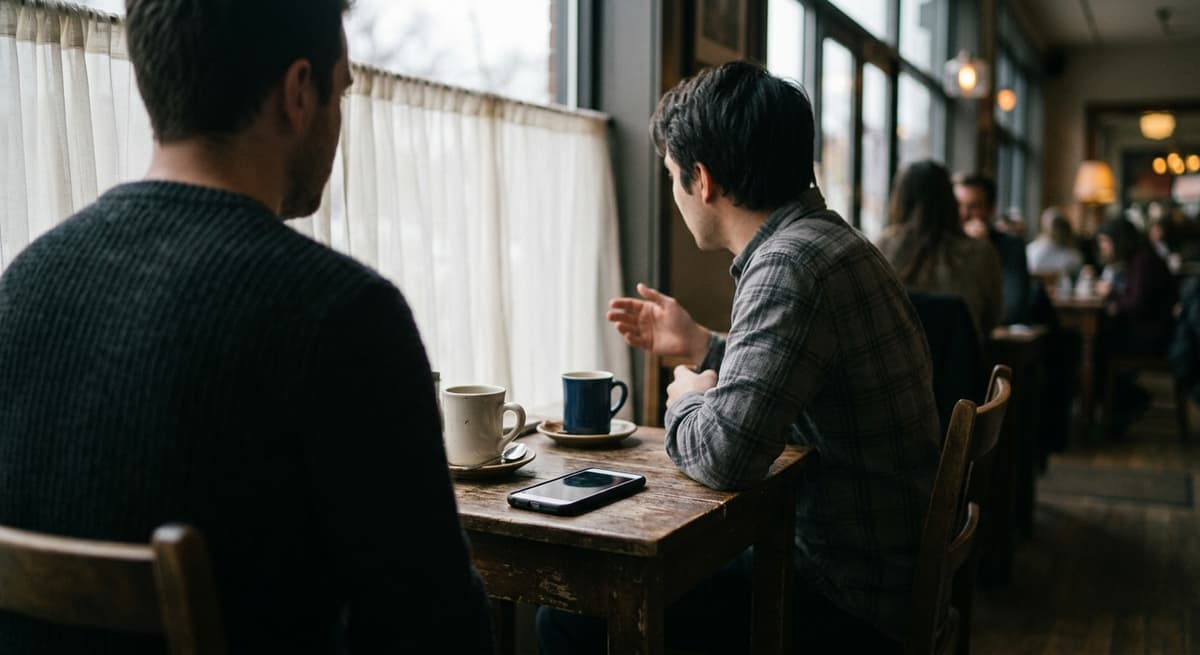
For conversations you are not part of, the analysis depends on whether the speakers have a reasonable expectation of privacy:
- Public conversation at normal volume: No expectation of privacy. Recording is generally permissible.
- Whispered or deliberately private conversation in public: May carry some expectation of privacy. Using a directional microphone or amplification device to capture such a conversation without a participant's consent can violate SDCL 23A-35A-20, a Class 5 felony punishable by up to 5 years in prison.
- Conversation in a secluded area of a public place: Context-dependent. A conversation in a busy restaurant lobby carries less privacy expectation than one in a private dining room.
Street Photography and Video
South Dakota generally allows photography and videography in public, subject to the voyeurism limit below. You can:
- Photograph or film people on public streets
- Record public behavior and events
- Film storefronts and building exteriors from public property
- Use professional camera equipment in public spaces
South Dakota's voyeurism statute SDCL 22-21-4 applies even in public settings. It is a crime to photograph or record someone undressed, or under or through their clothing, without their consent and with intent to gratify yourself or to alarm, embarrass, harass, or invade the privacy of that person.
Recording on Private Property Open to the Public
Business Premises
Stores, restaurants, malls, and other businesses are private property even though they invite the public inside. The property owner or manager has the right to:
- Set rules about recording on their premises
- Ask you to stop recording
- Ask you to leave if you refuse to stop recording
- Call police if you refuse to leave (trespassing)
However, any footage you recorded before being asked to stop is generally legal. Openly recording in a public area of a business does not by itself violate South Dakota's wiretapping or hidden camera statutes, but SDCL 22-21-4 still bars recording someone undressed or under their clothing there without consent and with the intent the statute requires, as it does anywhere.
Houses of Worship
Churches, temples, mosques, and other religious venues are private property. Their leaders can restrict or prohibit recording during services and events. If recording is prohibited and you refuse to comply, you can be asked to leave.
Sports Venues and Entertainment Facilities
Stadiums, arenas, theaters, and concert venues often restrict recording through their terms of entry. These are contractual restrictions, not state law. Breaking these rules may result in ejection from the venue but is not a criminal offense under South Dakota recording statutes.
Recording Public Protests and Demonstrations
Your Rights as a Protester or Bystander
Under Ness, recording public events from public places to inform others is protected expression in the Eighth Circuit. You can generally:
- Film police interactions with protesters from a lawful position without interfering (the Eighth Circuit has not decided whether recording police is itself protected)
- Record crowd activity and protest signs
- Livestream protests to social media
- Photograph participants in public
Press and Media Rights
Journalists and media members have the same recording rights as the general public in South Dakota. There is no special press exemption or enhanced right, but there is also no restriction on media recording that does not apply equally to all people.
The Reporters Committee for Freedom of the Press provides a South Dakota-specific guide for journalists covering their recording rights.
Drone Recording in Public
Drone recording in public airspace is generally permitted in South Dakota, subject to Federal Aviation Administration regulations. However, SDCL 50-15-5 makes it a Class 1 misdemeanor (up to 1 year in jail, a $2,000 fine, or both) to intentionally use a drone to photograph, record, or observe another person in a private place where that person has a reasonable expectation of privacy. It exempts law enforcement, emergency management workers, and business or government operators who capture someone only incidentally. SDCL 50-15-5.1 separately bars flying a drone for voyeuristic or harassment purposes.
For public area drone recording:
- Follow FAA regulations on altitude, line of sight, and no-fly zones
- Do not fly over private property at low altitude to peer into windows or backyards
- Avoid recording in areas where people have a reasonable expectation of privacy
- Be aware of local ordinances that may restrict drone use in certain areas
Using Public Recordings as Evidence
Recordings made in public places are regularly used as evidence in South Dakota courts. Common uses include:
- Traffic accident documentation
- Assault and battery cases
- Property damage claims
- Harassment and stalking prosecutions
- Slip-and-fall and personal injury lawsuits
To use a public recording as evidence, you must authenticate it and establish its relevance. The recording should be preserved in its original form without editing.
Back to South Dakota Recording Laws
More South Dakota Recording Topics
More South Dakota Recording Laws
More South Dakota Laws
- South Dakota AI Meeting Recording Laws
- South Dakota Dashcam Laws
- South Dakota Data Privacy Laws
- South Dakota Deepfake Laws
- South Dakota Employee Monitoring Laws
- South Dakota GPS Tracking Laws
- South Dakota Police Bodycam Laws
- South Dakota Smart Glasses Recording Laws
Frequently Asked Questions
Can I record in public in South Dakota?
Generally, yes. You can film, photograph, and audio record in public places where there is no reasonable expectation of privacy. SDCL 22-21-4 makes it a crime anywhere to record someone undressed or under their clothing without consent and with the intent the statute requires, and recording a private conversation you are not part of can violate SDCL 23A-35A-20. The Eighth Circuit protects recording in public to inform others, but it has not decided whether recording police is protected.
Can I record a government meeting in South Dakota?
Yes. SDCL 1-25-11 explicitly protects the right to record public meetings. No public body can prevent you from recording as long as your recording is reasonable, obvious, and not disruptive. This applies to city councils, school boards, county commissions, and state agencies, boards, and commissions. It does not apply to the Legislature, which sets its own rules.
Can a store tell me to stop recording in South Dakota?
Yes. Businesses are private property even if they are open to the public. The owner or manager can ask you to stop recording and ask you to leave if you refuse. However, footage captured before the request is generally legal and usable.
Can I use a drone to record in public in South Dakota?
Yes, subject to FAA regulations and SDCL 50-15-5. You can fly a drone and record in public airspace, but intentionally using a drone to photograph, record, or observe people in private places where they have a reasonable expectation of privacy is a Class 1 misdemeanor.
Do I need permission to photograph people in public in South Dakota?
No. There is no South Dakota statute requiring permission to photograph or film people in public. However, recording someone undressed, or under or through their clothing, without consent and with intent to gratify yourself or to embarrass, harass, or invade their privacy violates SDCL 22-21-4 wherever it happens.
Updates
We added the lack-of-consent and intent elements wherever this page summarizes the South Dakota voyeurism statute, SDCL 22-21-4.
Noted that the voyeuristic-recording ban applies in public areas of businesses and corrected the misdemeanor penalty wording to jail, fine, or both.
We corrected how this page describes First Amendment protection in South Dakota (the Eighth Circuit protects recording in public for an expressive purpose but has not decided recording police), removed the claim that the Open Meetings Law covers the Legislature, cited the correct drone statute (SDCL 50-15-5), and added the limits SDCL 22-21-4 and 23A-35A-20 place on recording in public.
Independently fact-checked against the cited primary sources; governing law re-checked for recent changes
Independently fact-checked against the cited primary sources; governing law re-checked for recent changes
Corrected the blockquoted text of SDCL 1-25-11 to match the statute's actual wording verbatim.
Governing law re-checked for recent changes
Reviewed and approved by an editor
The Law Behind This Article
This article rests on the statutory provisions below, held in our own legal record and retrieved from the official source. Tap a section to read the operative text.
South Dakota Codified Laws, Chapter 23A-35A: INTERCEPTION OF WIRE, ELECTRONIC, OR ORAL COMMUNICATIONS
§ 23A-35A-20Overhearing or recording communications, conversations, or jury deliberations by means of eavesdropping device as felony.In forcecited in 18 of our articles
Except as provided in § 23A-35A-21, a person is guilty of a Class 5 felony who is not: (1) A sender or receiver of a communication who intentionally and by means of an eavesdropping device overhears or records a communication, or aids, authorizes, employs, procures, or permits another to overhear or record, without the consent of either a sender or receiver of the communication; (2) A person present during a conversation or discussion who intentionally and by means of an eavesdropping device overhears or records the conversation or discussion, or aids, authorizes, employs, procures, or permits another to overhear or record, without the consent of a party to the conversation or discussion; or (3) A member of a jury who intentionally records or listens to by means of an eavesdropping device the deliberations of the jury or aids, authorizes, employs, procures, or permits another to record or listen.
Official text (excerpt) · last checked 2026-09-24 · Read the full text in our law library · Verify at sdlegislature.gov
Cited in 3 court opinions in our collectionLatest citing opinion in our collection: 2022
Opinions citing this section in our collection:
- State v. Woods (South Dakota Supreme Court 1985, 361 N.W.2d 620)“…ent fails. We next address the State’s argument that SDCL 23A-35A-20(2) exempts one party consent recordings…”
- State v. Braddock (South Dakota Supreme Court 1990, 452 N.W.2d 785)“…nsent recordings without prior court authorization” because SDCL 23A-35A-20 exempts from criminal liability a perso…”
- Gantvoort v. Ranschau (South Dakota Supreme Court 2022, 2022 S.D. 22)“…ff when no noise was detected in the room. 3. SDCL 23A-35A-20(1)–(2), which criminalizes recordings m…”
Identified automatically from the court opinions citing this section — not a ranking of which case controls.
Also relied on in: South Dakota Smart Glasses Recording Laws: One-Party Guide, South Dakota Recording Laws (2026): One-Party Consent Rules, South Dakota Audio Recording Laws
South Dakota Codified Laws, Chapter 1-25: MEETINGS OF PUBLIC AGENCIES
§ 1-25-11Recording of open official meeting to be permitted.In forcecited in 5 of our articles
No public body may prevent a person from recording, through audio or video technology, an official meeting as long as the recording is reasonable, obvious, and not disruptive. This section does not apply to meetings closed to the public pursuant to specific law.
Official text (excerpt) · last checked 2026-07-30 · Read the full text in our law library · Verify at sdlegislature.gov
Also relied on in: South Dakota Laws on Recording Police, South Dakota School Recording Laws, South Dakota Video Recording Laws
§ 1-25-2Executive session or closed meeting--Purposes--Vote--Discussion--Applicability--Penalty.In forcecited in 2 of our articles
An executive session or closed meeting may be held only for the purposes of: (1) Discussing the character, competence, fitness, performance, or qualifications of any current or prospective public officer or employee, not including an independent contractor; (2) Discussing a student's: (a) Discipline, expulsion, or suspension; (b) Assignment or educational program; or (c) Eligibility to participate in interscholastic activities provided by the South Dakota High School Activities Association; (3) Consulting with legal counsel, or reviewing communications from legal counsel, about proposed or pending litigation or contractual matters; (4) Preparing for contract negotiations or negotiating with employees or employee representatives; (5) Discussing marketing or pricing strategies by a board or commission of a business that is owned by the state or any of its political subdivisions, if public discussion may be harmful to the competitive position of the business; or (6) Discussing the following information pertaining to the protection of public or private property and any person on or within the property: (a) Any vulnerability assessment or response plan intended to prevent or…
Official text (excerpt) · last checked 2026-07-30 · Read the full text in our law library · Verify at sdlegislature.gov
Cited in 4 court opinions in our collectionLatest citing opinion in our collection: 2023
Opinions citing this section in our collection:
- SD Citizens for Liberty, Inc. v. Rapid City Area School District 51-4 (South Dakota Supreme Court 2023, 2023 S.D. 57)“…for a number of reasons specifically enumerated in SDCL 1-25-2(1), including “[d]iscussing the…”
- Jensen v. TURNER COUNTY BOARD OF ADJUSTMENT (South Dakota Supreme Court 2007, 730 N.W.2d 411)“…ent. Boehrs v. Dewey County, 74 SD 75, 79, 48 7. See SDCL 1-25-2 (providing: “An executive or closed mee…”
- Wuest v. Winner School District 59-2 (South Dakota Supreme Court 2000, 607 N.W.2d 912)“…ontract for the following school year. [¶ 23.] Under SDCL 1-25-2, executive or closed meetings of public…”
Identified automatically from the court opinions citing this section — not a ranking of which case controls.
South Dakota Codified Laws, Chapter 22-21: INVASIONS OF PRIVACY
§ 22-21-1Eavesdropping--Privacy--Misdemeanor.In forcecited in 15 of our articles
No person may, except as authorized by law: (1) Trespass on property with intent to subject anyone to eavesdropping or other surveillance in a private place; or (2) Install in any private place, without the consent of the person or persons entitled to privacy there, any device for observing, photographing, recording, amplifying, or broadcasting sounds or events in such place, or uses any such unauthorized installation. A person who violates this section is guilty of a Class 1 misdemeanor. Subdivision (2) does not apply to law enforcement officers, or to those acting under the direction of a law enforcement officer, while engaged in the performance of the officer's lawful duties.
Official text (excerpt) · last checked 2026-08-31 · Read the full text in our law library · Verify at sdlegislature.gov
Cited in 3 court opinions in our collectionLatest citing opinion in our collection: 2022
Opinions citing this section in our collection:
- State v. Olson (South Dakota Supreme Court 1981, 305 N.W.2d 852)“…9,1980, appellant was arraigned on four counts of violating SDCL 22-21-1(1) 1 and one count of viol…”
- State v. Reif (South Dakota Supreme Court 1992, 490 N.W.2d 511)“…d to "reasonably satisfy" the court that appellant violated SDCL 22-21-1(1) and that these activities were suffi…”
- Gantvoort v. Ranschau (South Dakota Supreme Court 2022, 2022 S.D. 22)“…Further, placing such a device is a class one misdemeanor. SDCL 22-21-1(2), provides in part that:…”
Identified automatically from the court opinions citing this section — not a ranking of which case controls.
Also relied on in: South Dakota Dashcam Laws, South Dakota Landlord-Tenant Recording Laws, South Dakota Medical Recording Laws
§ 22-21-4Prohibited recording or manipulated image--Penalty.In forcecited in 12 of our articles
No individual, without the consent or knowledge of the individual depicted or recorded, and with the intent to self-gratify or alarm, annoy, embarrass, harass, invade the privacy of, threaten, or cause emotional, financial, physical, psychological, or reputational harm to that individual, may: (1) Intentionally use any device to photograph or visually record the individual without clothing or under or through the clothing, or with a third individual depicted in a sexual act, for the purpose of viewing the body of, or the undergarments worn by, the individual; (2) Intentionally disclose, disseminate, distribute, sell, or use, by any means, any recording or photograph described in subdivision (1); or (3) Knowingly and intentionally create, disclose, disseminate, distribute, or sell, by any means, digitally fabricated material depicting the identifiable individual: (a) In a state of nudity, as defined in § 22-24A-2, such that an ordinary person viewing the material would conclude that the depiction is of the identifiable individual in such a state of nudity; or (b) Engaging in sexual contact, sexual intercourse, deviant sexual activity, or sexually explicit conduct such that an…
Official text (excerpt) · last checked 2026-08-30 · Read the full text in our law library · Verify at sdlegislature.gov
Cited in 1 court opinions in our collectionLatest citing opinion in our collection: 2006
Opinions citing this section in our collection:
- State v. Blair (South Dakota Supreme Court 2006, 721 N.W.2d 55)“…w peeking under SDCL 22- 21-3, or with a misdemeanor under SDCL 22-21-4 for taking pictures of someone in 17.…”
Identified automatically from the court opinions citing this section — not a ranking of which case controls.
Also relied on in: South Dakota Voyeurism Laws, South Dakota AI Laws and Regulation (2026), South Dakota Deepfake Laws: AI Images, Voice Cloning & Penalties (2026)
Sources and References
- SDCL 1-25-11 -- Recording of Open Official Meeting(sdlegislature.gov).gov
- SDCL Chapter 1-25 -- Open Meetings(sdlegislature.gov).gov
- SDCL 23A-35A-20 -- Interception of Communications(sdlegislature.gov).gov
- SDCL 50-15-5 -- Drone Surveillance in Private Places(sdlegislature.gov).gov
- SDCL 22-21-4 -- Voyeuristic Recording(sdlegislature.gov).gov
- South Dakota Attorney General -- Open Meetings Law Guide(atg.sd.gov).gov
- Reporters Committee for Freedom of the Press -- South Dakota Recording Guide(rcfp.org)