
South Dakota
South Dakota Security Camera Laws
Independently fact-checked against primary sources (last audited August 15, 2026). · Reviewed by the RecordingLaw editorial team. · Law checked current as of August 15, 2026. · 6 primary sources cited on this page. How we verify our legal content
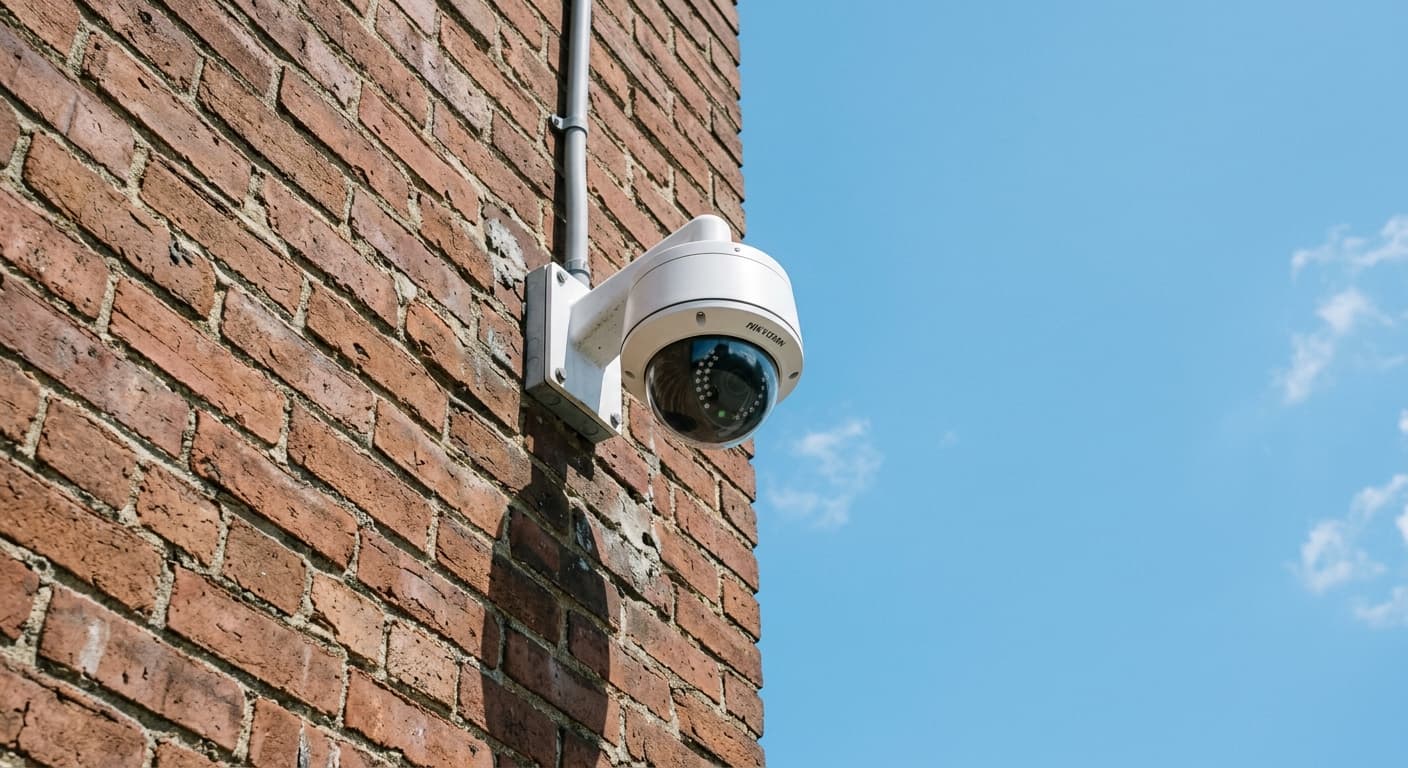
In South Dakota, homeowners may install security cameras on their own property without a permit. Video-only surveillance is generally unrestricted, while audio recording follows one-party consent rules under SDCL 23A-35A-20. Cameras are barred from bathrooms and other private spaces under SDCL 22-21-1.
South Dakota does not have a comprehensive statute specifically governing security cameras. Instead, the legality of security camera use is determined by two existing laws: SDCL 22-21-1, which prohibits surveillance devices in private places without consent, and SDCL 23A-35A-20, which governs audio recording.
This guide covers the rules for residential security cameras, business and commercial surveillance systems, audio recording by security cameras, neighbor disputes, and the interaction between security camera footage and South Dakota courts.
Residential Security Cameras in South Dakota
Your Right to Install Cameras on Your Property
South Dakota homeowners have broad rights to install security cameras on their own property. You can place cameras:
- On the exterior of your home (doorbell cameras, porch cameras, driveway cameras)
- In common areas of your home (living rooms, kitchens, hallways)
- In your garage, shed, or outbuildings
- Along your property line, aimed at your own property
- Covering your driveway, walkways, and yard
There is no South Dakota statute requiring you to register security cameras, obtain a permit, or notify neighbors about their installation.
Where You Cannot Place Cameras
SDCL 22-21-1 prohibits placing surveillance devices in any private place without the consent of the person entitled to privacy. In a residential setting, this means you cannot place cameras in:
- Bathrooms used by family members, guests, or tenants
- Bedrooms of other household members without their knowledge
- Guest bedrooms or bathrooms where visitors have a privacy expectation
- Tenant-occupied areas without the tenant's consent (for landlords with rental properties)
- Changing areas within the home
Violating this rule is a Class 1 misdemeanor carrying up to 1 year in jail and a $2,000 fine.
Audio Recording by Residential Security Cameras
Many modern security cameras, including popular doorbell cameras like Ring and Nest, capture audio along with video. In South Dakota, the audio recording component adds legal complexity.
Under SDCL 23A-35A-20, recording a conversation requires the consent of at least one party. If your doorbell camera captures a conversation between two visitors on your porch and you are not participating in that conversation, the audio recording could potentially violate the wiretapping statute.
Practical guidance for homeowners:
- Video-only recording of your property exterior is generally unrestricted
- Audio recording of your own conversations with visitors is legal under one-party consent
- Audio recording of conversations between others that you are not part of carries legal risk
- Consider disabling audio recording on outdoor cameras, or post signage alerting visitors that audio and video recording is in progress
Neighbor Privacy Concerns
South Dakota law does not specifically address camera placement relative to neighboring properties. However, the general principles are:
- Point cameras at your own property, not directly at a neighbor's windows or private areas
- A camera that incidentally captures a portion of a neighbor's property (driveway, front yard) is generally acceptable
- Deliberately training a camera on a neighbor's bedroom window or fenced backyard could support an invasion of privacy claim
- Audio recording of a neighbor's private conversations without participation or consent may violate SDCL 23A-35A-20
If a neighbor objects to your camera placement, the dispute is typically resolved through civil channels rather than criminal law, unless the camera is capturing images in a private place without consent.
Business and Commercial Security Cameras
General Rules for Businesses
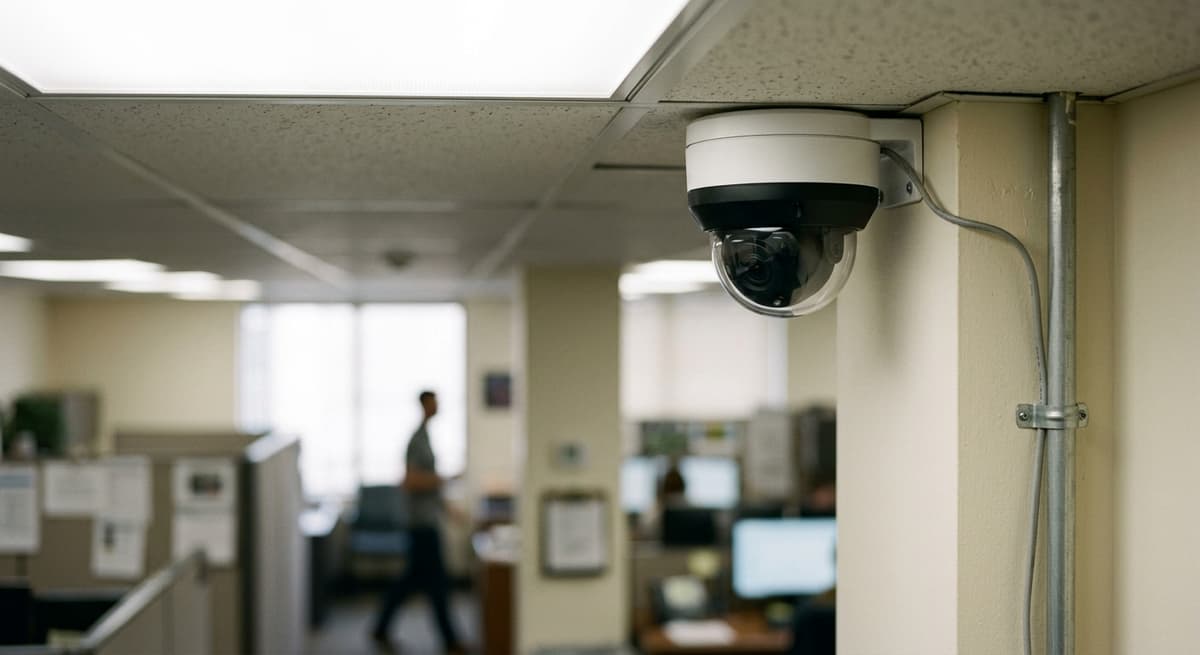
South Dakota businesses can use security cameras for loss prevention, safety monitoring, and general security. Cameras are commonly placed in:
- Retail floors and sales areas
- Cash register areas and checkout lanes
- Warehouses, stockrooms, and loading docks
- Parking lots and exterior entrances
- Lobbies and reception areas
- Hallways and common areas
Prohibited Locations for Business Cameras
Businesses cannot install cameras in locations where employees or customers have a reasonable expectation of privacy:
- Customer restrooms and fitting rooms
- Employee bathrooms and locker rooms
- Changing areas in gyms, pools, and spas
- Break rooms designated as private employee spaces
- Nursing and lactation rooms
Installing cameras in these areas violates SDCL 22-21-1.
Employee Notification
South Dakota does not have a statute requiring employers to notify employees about security cameras. However, notification is recommended because:
- It establishes that employees have no expectation of privacy in monitored areas
- It reduces the risk of invasion of privacy claims
- The NLRB has scrutinized employer surveillance that chills protected concerted activity
- Some industries have specific notification requirements under federal regulations
Audio on Business Security Cameras
The same rules that apply to residential audio recording apply to business settings. If a security camera captures audio of employee or customer conversations that no one with managerial authority is participating in, the audio component could violate SDCL 23A-35A-20. Many businesses disable audio recording on their security camera systems to avoid this issue.
HOA and Multi-Unit Housing Security Cameras
HOA Rules and Security Cameras
If you live in a community governed by a homeowners' association (HOA), the HOA may have rules about security camera placement, size, visibility, and orientation. These rules are separate from state law and are enforced through the HOA's governing documents.
Common HOA restrictions include:
- Limits on the number of visible cameras
- Requirements that cameras match the home's exterior
- Restrictions on camera placement that affects common areas
- Rules about cameras pointing toward neighboring properties
Apartment and Condo Security Cameras
Tenants in South Dakota apartments and condos can generally install cameras inside their own units and on their own doorways. Tenants should:
- Check their lease for restrictions on camera installation
- Not install cameras in common areas without building management permission
- Not capture footage of other tenants' private spaces
- Be aware that landlords control camera placement in common areas like hallways, lobbies, and parking garages
Doorbell Cameras (Ring, Nest, Arlo)

Legal Considerations
Doorbell cameras are among the most common residential security devices in South Dakota. These cameras typically record video and audio of anyone who approaches your front door.
- Video recording of your porch, walkway, and driveway is legal
- Audio recording of your conversations with visitors is legal under one-party consent
- Audio recording of conversations between others at your door that you are not part of carries risk
- Sharing footage with law enforcement is generally permissible
- Posting footage on social media is not prohibited by recording law but could create other legal issues
Law Enforcement Access to Doorbell Camera Footage
Law enforcement may request doorbell camera footage as part of an investigation. You are not required to share footage without a warrant or subpoena. However, many homeowners voluntarily cooperate with police requests. If you use a cloud-based service, be aware that the company's terms of service may address law enforcement access to your stored footage.
Security Camera Footage as Evidence
Admissibility in Court
Security camera footage is regularly used as evidence in South Dakota courts. For footage to be admissible:
- The camera must have been operating legally
- The footage must be authenticated as genuine and unaltered
- The footage must be relevant to the case
- The chain of custody must be established
- The probative value must outweigh any prejudicial effect
Preserving Security Camera Footage
Many security cameras record on a loop, overwriting old footage after a set period. If you capture an incident that may be relevant to a legal matter:
- Download and save the footage immediately
- Back up the file to a separate device or cloud storage
- Note the date, time, and camera location
- Do not edit or alter the footage
- Consult an attorney about preserving the evidence
More South Dakota Recording Laws
Audio Recording | Video Recording | Voyeurism & Hidden Cameras | Workplace Recording | Recording Police | Phone Call Recording | Security Cameras | Recording in Public | Landlord-Tenant | Dashcam Laws | Schools | Medical Recording
Back to South Dakota Recording Laws
More South Dakota Recording Topics
See Also
- South Dakota Surveillance Camera Laws covers home, HOA, neighbor, workplace, and landlord camera rules in South Dakota.
More South Dakota Laws
Frequently Asked Questions
Are security cameras legal in South Dakota?
Yes. South Dakota homeowners and businesses can install security cameras on their own property. The main restriction is SDCL 22-21-1, which prohibits placing cameras in private places like bathrooms and locker rooms without consent. Video-only surveillance of your property exterior is generally unrestricted.
Do I need to tell my neighbors about my security cameras in South Dakota?
South Dakota does not require you to notify neighbors about security cameras on your property. However, cameras should be pointed at your own property. Deliberately aiming a camera at a neighbor's private areas could support an invasion of privacy claim.
Can my security camera record audio in South Dakota?
Audio recording by security cameras follows one-party consent rules under SDCL 23A-35A-20. If you are participating in a conversation captured by the camera, the audio is legal. If the camera records conversations between others that you are not part of, the audio could violate wiretapping law.
Can my employer put cameras in the break room?
It depends on the nature of the break room. Cameras in open, common break areas are generally permissible. However, cameras in break rooms designated as private spaces, and especially in any area near bathrooms or changing areas, could violate SDCL 22-21-1.
Can police access my Ring doorbell footage without a warrant?
You are not legally required to share doorbell camera footage with police without a warrant or subpoena. However, you can choose to cooperate voluntarily. Be aware that your cloud storage provider's terms of service may address law enforcement access to stored footage.
Updates
Independently fact-checked against the cited primary sources; governing law re-checked for recent changes
Governing law re-checked for recent changes
Reviewed and approved by an editor
The Law Behind This Article
This article rests on the statutory provisions below, held in our own legal record and retrieved from the official source. Tap a section to read the operative text.
South Dakota Codified Laws, Chapter 22-21: INVASIONS OF PRIVACY
§ 22-21-1Eavesdropping--Privacy--Misdemeanor.In forcecited in 14 of our articles
No person may, except as authorized by law: (1) Trespass on property with intent to subject anyone to eavesdropping or other surveillance in a private place; or (2) Install in any private place, without the consent of the person or persons entitled to privacy there, any device for observing, photographing, recording, amplifying, or broadcasting sounds or events in such place, or uses any such unauthorized installation. A person who violates this section is guilty of a Class 1 misdemeanor. Subdivision (2) does not apply to law enforcement officers, or to those acting under the direction of a law enforcement officer, while engaged in the performance of the officer's lawful duties.
Official text (excerpt) · last checked 2026-08-31 · Read the full text in our law library · Verify at sdlegislature.gov
Cited in 3 court opinions in our collectionLatest citing opinion in our collection: 2022
Opinions citing this section in our collection:
- State v. Olson (South Dakota Supreme Court 1981, 305 N.W.2d 852)“…9,1980, appellant was arraigned on four counts of violating SDCL 22-21-1(1) 1 and one count of viol…”
- State v. Reif (South Dakota Supreme Court 1992, 490 N.W.2d 511)“…d to "reasonably satisfy" the court that appellant violated SDCL 22-21-1(1) and that these activities were suffi…”
- Gantvoort v. Ranschau (South Dakota Supreme Court 2022, 2022 S.D. 22)“…Further, placing such a device is a class one misdemeanor. SDCL 22-21-1(2), provides in part that:…”
Identified automatically from the court opinions citing this section — not a ranking of which case controls.
Also relied on in: South Dakota Audio Recording Laws, South Dakota Dashcam Laws, South Dakota Landlord-Tenant Recording Laws
South Dakota Codified Laws, Chapter 23A-35A: INTERCEPTION OF WIRE, ELECTRONIC, OR ORAL COMMUNICATIONS
§ 23A-35A-20Overhearing or recording communications, conversations, or jury deliberations by means of eavesdropping device as felony.In forcecited in 17 of our articles
Except as provided in § 23A-35A-21, a person is guilty of a Class 5 felony who is not: (1) A sender or receiver of a communication who intentionally and by means of an eavesdropping device overhears or records a communication, or aids, authorizes, employs, procures, or permits another to overhear or record, without the consent of either a sender or receiver of the communication; (2) A person present during a conversation or discussion who intentionally and by means of an eavesdropping device overhears or records the conversation or discussion, or aids, authorizes, employs, procures, or permits another to overhear or record, without the consent of a party to the conversation or discussion; or (3) A member of a jury who intentionally records or listens to by means of an eavesdropping device the deliberations of the jury or aids, authorizes, employs, procures, or permits another to record or listen.
Official text (excerpt) · last checked 2026-08-31 · Read the full text in our law library · Verify at sdlegislature.gov
Cited in 3 court opinions in our collectionLatest citing opinion in our collection: 2022
Opinions citing this section in our collection:
- State v. Woods (South Dakota Supreme Court 1985, 361 N.W.2d 620)“…ent fails. We next address the State’s argument that SDCL 23A-35A-20(2) exempts one party consent recordings…”
- State v. Braddock (South Dakota Supreme Court 1990, 452 N.W.2d 785)“…nsent recordings without prior court authorization” because SDCL 23A-35A-20 exempts from criminal liability a perso…”
- Gantvoort v. Ranschau (South Dakota Supreme Court 2022, 2022 S.D. 22)“…ff when no noise was detected in the room. 3. SDCL 23A-35A-20(1)–(2), which criminalizes recordings m…”
Identified automatically from the court opinions citing this section — not a ranking of which case controls.
Also relied on in: South Dakota Recording Laws (2026): One-Party Consent Rules, South Dakota Medical Recording Laws, South Dakota Phone Call Recording Laws
United States Code Title 18
§ 2511Interception and disclosure of wire, oral, or electronic communications prohibitedIn forcecited in 422 of our articles
Except as otherwise specifically provided in this chapter any person who— intentionally intercepts, endeavors to intercept, or procures any other person to intercept or endeavor to intercept, any wire, oral, or electronic communication; intentionally uses, endeavors to use, or procures any other person to use or endeavor to use any electronic, mechanical, or other device to intercept any oral communication when— such device is affixed to, or otherwise transmits a signal through, a wire, cable, or other like connection used in wire communication; or such device transmits communications by radio, or interferes with the transmission of such communication; or such person knows, or has reason to know, that such device or any component thereof has been sent through the mail or transported in interstate or foreign commerce; or such use or endeavor to use (A) takes place on the premises of any business or other commercial establishment the operations of which affect interstate or foreign commerce; or (B) obtains or is for the purpose of obtaining information relating to the operations of any business or other commercial establishment the operations of which affect interstate or foreign…
Official text (excerpt) · last checked 2026-09-17 · Read the full text in our law library · Verify at uscode.house.gov
Cited in 2,045 court opinions in our collectionLatest citing opinion in our collection: 2026
In the courts (editorial summary, independently checked):Griggs-Ryan v. Smith (1990) applied the Section 2511(2)(d) prior-consent exception, treating a tenant repeatedly told that all incoming calls were taped as having impliedly consented. United States v. United States District Court (1972) read the then-current Section 2511(3) as conferring no presidential surveillance power.
Opinions citing this section in our collection:
- Mitchell v. Forsyth (Supreme Court of the United States 1985, 472 U.S. 511)✓The Attorney General authorized a warrantless 1970 national security wiretap that caught the plaintiff's calls; the Court held the since-repealed Section 2511(3) disclaimer left the tap lawful under Title III, and that Mitchell had qualified immunity.
- United States v. United States District Court for the Eastern District of Michigan (Supreme Court of the United States 1972, 407 U.S. 297)✓The Attorney General approved warrantless wiretaps on members of a domestic group accused of bombing a CIA office; the Court read Section 2511(3) as a congressional disclaimer conferring no surveillance power, then held the Fourth Amendment required prior judicial approval.
- Forsyth v. Barr (Court of Appeals for the Fifth Circuit 1994, 19 F.3d 1527)✓Dallas police used, in an internal affairs probe of an officer, calls private parties allegedly intercepted illegally; assuming that was unlawful, the Fifth Circuit held Section 2517(1) and (2) allowed the disclosure and use, defeating the Section 2511(1)(c) and (d) claims.
Identified automatically from the court opinions citing this section — not a ranking of which case controls.
Also relied on in: Connecticut Recording Laws (2026): Hybrid Consent Rules Explained, Oregon Recording Laws (2026): Hybrid One-Party and All-Party Rules, US Recording Laws by State (2026): All 50 States Explained
Search our full record of US law — 2.1 million sections, every state + federal →
Sources and References
- SDCL 22-21-1 -- Trespassing With Intent to Eavesdrop; Hidden Cameras and Drones(sdlegislature.gov).gov
- SDCL 23A-35A-20 -- Interception of Communications(sdlegislature.gov).gov
- SDCL Chapter 22-21 -- Privacy Offenses(sdlegislature.gov).gov
- National Labor Relations Act(nlrb.gov).gov
- NLRB General Counsel Memo on Electronic Surveillance(nlrb.gov).gov
- 18 U.S.C. 2511 -- Federal Wiretap Act(uscode.house.gov).gov