
Alaska
Alaska Laws on Recording Police: Your Rights and Limits (2026)
Independently fact-checked against primary sources (last audited August 15, 2026). · Reviewed by the RecordingLaw editorial team. · Law checked current as of August 15, 2026. · 8 primary sources cited on this page. How we verify our legal content
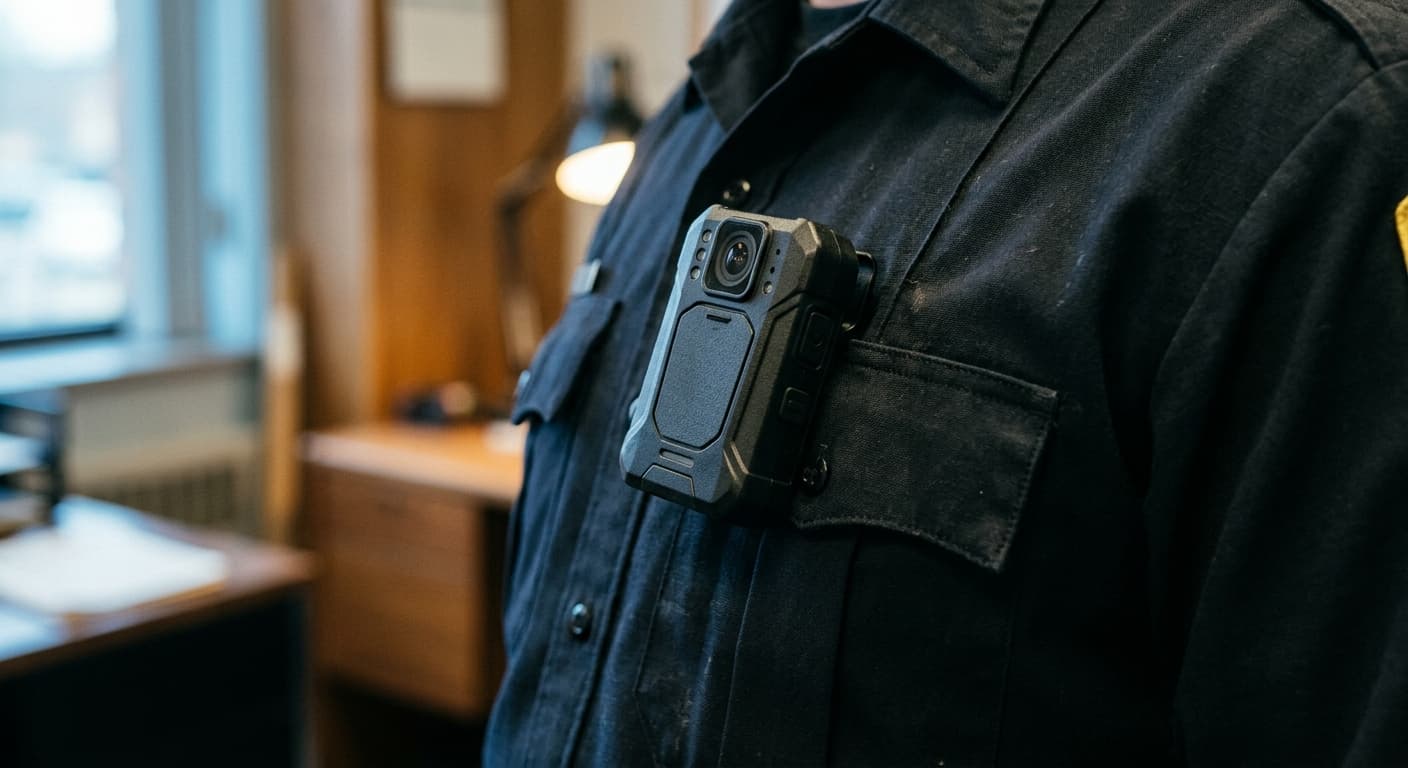
In Alaska, you have a constitutionally protected right to record police officers in public. The Ninth Circuit affirmed this right in Fordyce v. City of Seattle (1995) and Askins v. DHS (2018). Alaska's one-party consent law (AS 42.20.310) further allows you to record your own police encounters without notifying officers.
Recording police officers in Alaska is legal and constitutionally protected. The First Amendment to the U.S. Constitution safeguards the right to photograph and film law enforcement officers performing their official duties in public places. Alaska's one-party consent law further allows you to record the audio of any interaction you have with police without informing them.
This page covers the legal basis for recording police in Alaska, practical guidelines for doing so safely, body camera laws, the potential impact of SB 85, and what to do if officers interfere with your recording.
The Legal Basis for Recording Police
First Amendment Protection
The Ninth Circuit, which controls federal-law questions in Alaska, has twice held that the First Amendment protects the right to record police performing their duties in public. In Fordyce v. City of Seattle, 55 F.3d 436 (9th Cir. 1995), the court recognized a "First Amendment right to film matters of public interest," including police activity. The Ninth Circuit reaffirmed that principle in Askins v. U.S. Department of Homeland Security, 899 F.3d 1035 (9th Cir. 2018), a case challenging Customs and Border Protection's media-access policies. Citing Fordyce, the Askins panel held that the First Amendment protects recording matters of public interest, including law enforcement officers performing their duties in public places, and remanded the case for further review of the government's public-forum arguments. These decisions, not out-of-circuit cases, are the controlling authority in Alaska.
Key federal circuit decisions include:
- Glik v. Cunniffe, 655 F.3d 78 (1st Cir. 2011): The First Circuit held that recording police officers in the discharge of their duties in a public space is a clearly established constitutional right.
- Turner v. Driver, 848 F.3d 678 (5th Cir. 2017): The Fifth Circuit affirmed the right to record police activity, including from a public sidewalk across the street from a police station.
- Fields v. City of Philadelphia, 862 F.3d 353 (3rd Cir. 2017): The Third Circuit held that the First Amendment protects the right to record police regardless of whether the recorder has an expressive intent.
The U.S. Department of Justice has also affirmed this right in multiple statements of interest filed in federal court cases, stating that "the right to record police officers while performing duties in a public place, as well as the right to be protected from retaliation for doing so, are not combatable with the Constitution."
Alaska Constitution Protections
The Alaska Constitution provides additional protections. Article I, Section 5 guarantees freedom of speech and of the press. Article I, Section 6 protects the right of the people peaceably to assemble. These provisions, combined with the federal First Amendment, create a strong legal framework for recording police in Alaska.
Alaska's constitutional right to privacy (Article I, Section 22) is one of the strongest in the nation, but courts have consistently held that government officials performing public duties do not have a privacy interest that overrides the public's right to observe and record their actions.
The Glass Warrant Rule for Police Recording
Alaska imposes an unusual asymmetry on the police side. In State v. Glass, 583 P.2d 872 (Alaska 1978), the Alaska Supreme Court held that Article I, sections 14 and 22 of the Alaska Constitution require law enforcement to obtain a judicial "Glass warrant" before consensually monitoring or recording a target's conversation, even when federal Title III would allow it under one-party consent. The Alaska Court of Appeals reaffirmed the rule in Cleveland v. State (Alaska Ct. App. 2020). This is the broadest state-constitutional deviation from the federal one-party baseline. The rule constrains the state, not private citizens recording officers in public.
Alaska One-Party Consent and Police Encounters
Under AS 42.20.310, you can record the audio of any conversation you participate in without informing other parties. This means:
- You can record your own traffic stop without telling the officer
- You can audio-record your own arrest
- You can record conversations with officers at your front door
- You can record phone calls with law enforcement
Because you are a party to the interaction, your consent alone satisfies the legal requirement.
Where You Can Record Police
Public Spaces
You have the broadest right to record police in public spaces where you have a right to be:
- Public streets and sidewalks
- Public parks and plazas
- Government buildings open to the public (lobbies, hearing rooms)
- Public transportation stops and vehicles
- Public parking lots
- Your own property (including your front yard and doorstep)
From Your Vehicle
You can record police from inside your vehicle during traffic stops, checkpoints, or when you witness police activity from your car. Dashcams that continuously record are legal in Alaska and commonly capture police encounters.
From Private Property
You can record police activity that is visible from private property you own or occupy. For example, you can film officers making an arrest on the street below your apartment window. You cannot, however, trespass on someone else's private property to get a better view of police activity.
Limitations on Recording Police

While the right to record is broad, it is not absolute. Important limitations include:
Do Not Interfere with Police Operations
You must not physically interfere with officers performing their duties. Interference could include:
- Standing so close that you impede an arrest or investigation
- Crossing police tape or established perimeters
- Touching officers or their equipment
- Blocking the path of emergency vehicles
- Refusing to comply with lawful orders to step back
Under AS 11.56.700 (Resisting or Interfering with Arrest), physically interfering with an officer can result in criminal charges. The key distinction is between passive observation (protected) and active interference (not protected).
Comply with Lawful Orders
Officers may lawfully order you to move to a safe distance during active emergencies, crime scenes, or dangerous situations. A lawful order to step back does not mean you must stop recording. You can comply with the distance requirement while continuing to film.
However, an order to "stop recording" or "put your phone away" is generally not a lawful order, as courts have consistently held that recording alone does not constitute interference with police duties.
Do Not Trespass
You cannot trespass on private property to record police activity. If you enter private property without permission to get a better vantage point, you can be arrested for trespass under AS 11.46.320-330, regardless of what you were trying to film.
What to Do If Police Tell You to Stop Recording

If an officer tells you to stop recording, consider these steps:
- Stay calm and polite. Do not argue, shout, or make sudden movements.
- Clearly state your position. You can say: "I am exercising my First Amendment right to record. I am not interfering with your duties."
- Do not resist physically. If an officer physically attempts to take your phone or detain you, do not resist. Physical resistance can lead to additional charges.
- Continue recording if possible. If you are not physically prevented from recording, continue doing so.
- Note badge numbers and names. Document the identities of officers who interfere with your recording.
- File a complaint afterward. If your rights were violated, file a complaint with the department's internal affairs division and consider consulting a civil rights attorney.
What If Police Seize Your Recording Device?
If police seize your phone or camera:
- Officers generally need a warrant to search the contents of your phone, as established by the U.S. Supreme Court in Riley v. California, 573 U.S. 373 (2014)
- Do not give your passcode voluntarily
- Request a receipt for any seized property
- Contact an attorney promptly
- If you use cloud backup, your recording may be preserved even if the physical device is taken
Body Camera Laws in Alaska
State-Level Requirements
There is no Alaska statewide body-camera statute. The framework is built from agency policy and municipal ordinance: the Department of Public Safety adopted DPS Policy 241 (effective May 1, 2023) covering trooper body-worn cameras; the Anchorage Police Department maintains its own activation and retention policy; and the Anchorage Assembly adopted Anchorage Ordinance 2024-69 (codified at Anchorage Municipal Code 3.102), the municipal body-cam framework, on July 31, 2024. Other Alaska agencies set their own policies regarding:
- Whether officers are required to wear cameras
- When cameras must be activated
- How footage is stored and for how long
- Who has access to the footage
- When footage is released to the public
Anchorage Police Department Body Camera Policy
The Anchorage Police Department (APD), Alaska's largest law enforcement agency, has implemented body-worn cameras. The Municipality of Anchorage sets policies for camera activation, retention, and public access to footage.
Requesting Body Camera Footage
Body camera footage from Alaska police departments may be available through public records requests under the Alaska Public Records Act (AS 40.25.110). To request footage:
- Identify the law enforcement agency that has the footage
- Submit a written public records request citing AS 40.25.110
- Specify the date, time, location, and incident as precisely as possible
- Be prepared for the agency to redact portions that are exempt from disclosure
Exemptions may apply to footage that:
- Is part of an ongoing investigation
- Contains information about minors
- Shows the interior of private residences
- Is subject to other statutory privacy protections
The Impact of Proposed SB 85 on Recording Police
Senate Bill 85, pending in the Senate Labor and Commerce Committee as of August 2026, would convert Alaska to an all-party consent state and create a significant asymmetry in police recording rights:
What SB 85 Would Change
- Police officers would be exempt from the all-party consent requirement when interacting with the public, gathering evidence, or investigating crimes. Officers could continue to record without anyone's consent.
- Members of the public would need consent from all parties, including the officer, before recording. This means you could not legally record a police encounter without the officer's permission.
Criticism of the Proposal
This asymmetric approach has drawn strong criticism from:
- Journalists and media organizations who rely on the ability to record police for newsgathering
- Civil liberties groups including the American Civil Liberties Union (ACLU) of Alaska, which argues the provision would undermine police accountability
- Community oversight advocates who view citizen recording as essential to documenting misconduct
- Legal scholars who question whether restricting the public's right to record police would survive First Amendment challenges in federal court
As of August 2026, SB 85 has not been enacted and no committee hearings have been scheduled.
Recording Police During Specific Situations
Traffic Stops
You can record your own traffic stop from the moment the officer approaches your vehicle. Many drivers use dashcams that continuously record, capturing the entire interaction automatically. Tips for recording during traffic stops:
- Mount your phone in a visible dashboard holder before the stop
- Do not reach for your phone in a way that could be mistaken for reaching for a weapon
- Inform the officer if you need to reach for your phone
- Keep your hands visible at all times
Protests and Demonstrations
The right to record police at protests and public demonstrations is particularly well-established. Both the First Amendment and Alaska's constitutional protections for assembly (Article I, Section 6) support recording at these events. However:
- Stay behind any police lines or barriers
- Do not block streets or interfere with crowd control operations
- Be aware that crowd conditions may make it difficult to maintain a safe distance
- Consider using livestreaming to preserve footage in case your device is lost or seized
Arrests and Uses of Force
Bystander recordings of arrests and use-of-force incidents have played a critical role in accountability nationwide. In Alaska, you can record arrests you witness in public spaces. Position yourself at a safe distance where you can see clearly without being in the officers' immediate work area.
At Your Front Door
When police come to your door, you can record the interaction from inside your home. You have an absolute right to record on your own property. Ring doorbells and similar doorbell cameras commonly capture these encounters. You are not required to open your door for police unless they have a warrant.
Retaliation for Recording Police
If a police officer retaliates against you for recording, you may have legal claims under:
- 42 U.S.C. Section 1983: A federal civil rights claim for violation of your First Amendment and Fourth Amendment rights
- State tort claims: Including false arrest, assault, and seizure of property
- Internal affairs complaints: Administrative remedies within the police department
Damages in Section 1983 cases can include compensatory damages, punitive damages, and attorney's fees. Courts have awarded significant damages in cases where officers unlawfully arrested, detained, or assaulted individuals for recording police activity.
More Alaska Recording Laws
Audio Recording | Video Recording | Voyeurism & Hidden Cameras | Workplace Recording | Recording Police | Phone Call Recording | Security Cameras | Recording in Public | Landlord-Tenant | Dashcam Laws | Schools | Medical Recording
More Alaska Recording Topics
More Alaska Laws
Frequently Asked Questions
Can I record police in Alaska?
Yes. The First Amendment protects your right to record law enforcement officers performing their duties in public spaces. Alaska's one-party consent law also allows you to record the audio of your own interactions with police without telling them. You must not physically interfere with police operations while recording.
Can a police officer tell me to stop recording in Alaska?
An officer may ask you to move to a safe distance during an active emergency, but an order to stop recording is generally not a lawful order. Courts have consistently held that recording alone does not constitute interference with police duties. If an officer tells you to stop recording, calmly state your right to record and continue if you are not physically prevented.
Can police seize my phone for recording them in Alaska?
Officers generally cannot seize your phone solely because you are recording. Under Riley v. California (2014), police need a warrant to search the contents of your phone. If your phone is seized, do not provide your passcode voluntarily, request a receipt, and contact an attorney.
Would SB 85 make it illegal to record police in Alaska?
If passed, SB 85 would require all-party consent for recording, but it includes an exemption for law enforcement. Police could record the public without consent, but citizens would need the officer's permission to record. The bill has not advanced as of August 2026, and legal scholars question whether such a restriction would survive First Amendment challenges.
How do I get police body camera footage in Alaska?
Submit a written public records request to the relevant law enforcement agency under the Alaska Public Records Act (AS 40.25.110). Specify the date, time, location, and incident. The agency may redact portions of the footage that are exempt from disclosure, such as footage related to ongoing investigations or showing minors.
Updates
Corrected an overstated description of Askins v. DHS (2018) -- the case confirms a First Amendment right to record police but, contrary to the prior text, does not contain a qualified-immunity holding -- replaced a dead case-law citation link with a working one, and refreshed the SB 85 status date.
Independently fact-checked against the cited primary sources; governing law re-checked for recent changes
Governing law re-checked for recent changes
Governing law re-checked for recent changes
Reviewed and approved by an editor
The Law Behind This Article
This article rests on the statutory provisions below, held in our own legal record and retrieved from the official source. Tap a section to read the operative text.
Alaska Statutes, Title 42. Public Utilities and Carriers and Energy Programs, Chapter 20. Telegraph and Telephone Systems and Cable Lines; Eavesdropping
§ 42.20.310EavesdroppingIn forcecited in 17 of our articles
(a) A person may not (1) use an eavesdropping device to hear or record all or any part of an oral conversation without the consent of a party to the conversation; (2) use or divulge any information which the person knows or reasonably should know was obtained through the illegal use of an eavesdropping device for personal benefit or another's benefit; (3) publish the existence, contents, substance, purport, effect, or meaning of any conversation the person has heard through the illegal use of an eavesdropping device; (4) divulge, or publish the existence, contents, substance, purport, effect, or meaning of any conversation the person has become acquainted with after the person knows or reasonably should know that the conversation and the information contained in the conversation was obtained through the illegal use of an eavesdropping device. (b) In this section eavesdropping device means any device capable of being used to hear or record oral conversation whether the conversation is conducted in person, by telephone, or by any other means; provided that this definition does not include devices used for the restoration of the deaf or hard-of-hearing to normal or partial hearing.
Official text (excerpt) · last checked 2026-08-31 · Read the full text in our law library · Verify at akleg.gov
Also relied on in: Alaska Recording Laws (2026): One-Party Consent Rules, Alaska Audio Recording Laws: One-Party Consent Rules and Penalties (2026), Alaska Security Camera Laws: Home, Business, and Surveillance Rules (2026)
Alaska Statutes, Title 11. Criminal Law, Chapter 56. Offenses Against Public Administration
§ 11.56.700Resisting or interfering with arrestIn force
(a) A person commits the crime of resisting or interfering with arrest if, knowing that a peace officer is making an arrest, with the intent of preventing the officer from making the arrest, the person resists personal arrest or interferes with the arrest of another by (1) force; (2) committing any degree of criminal mischief; or (3) any means that creates a substantial risk of physical injury to any person. (b) Resisting or interfering with arrest is a class A misdemeanor.
Official text (excerpt) · last checked 2026-07-31 · Read the full text in our law library · Verify at akleg.gov
Cited in 28 court opinions in our collectionLatest citing opinion in our collection: 2025
Opinions citing this section in our collection:
- Eide v. State (Court of Appeals of Alaska 2007, 168 P.3d 499)“…ng aside the jury's verdict. The State charged Eide under AS 11.56.700(a)(3). That subsection of the resisting…”
- Fallon v. State (Court of Appeals of Alaska 2010, 221 P.3d 1016)“…was already complete. The resisting arrest statute, AS 11.56.700, provides in pertinent part: (a)…”
- Velarde v. State (Court of Appeals of Alaska 2015, 353 P.3d 355)“…A person commits the crime of resisting arrest under AS 11.56.700(a)(1) if the person uses force to resis…”
Identified automatically from the court opinions citing this section — not a ranking of which case controls.
Alaska Statutes, Title 40. Public Records and Recorders, Chapter 25. Public Record Disclosures
§ 40.25.110Public records open to inspection and copying; feesIn forcecited in 2 of our articles
(a) Unless specifically provided otherwise, the public records of all public agencies are open to inspection by the public under reasonable rules during regular office hours. The public officer having the custody of public records shall give on request and payment of the fee established under this section or AS 40.25.115 a certified copy of the public record. (b) Except as otherwise provided in this section, the fee for copying public records may not exceed the standard unit cost of duplication established by the public agency. (c) If the production of records for one requester in a calendar month exceeds five person-hours, the public agency shall require the requester to pay the personnel costs required during the month to complete the search and copying tasks. The personnel costs may not exceed the actual salary and benefit costs for the personnel time required to perform the search and copying tasks. The requester shall pay the fee before the records are disclosed, and the public agency may require payment in advance of the search. (d) A public agency may reduce or waive a fee when the public agency determines that the reduction or waiver is in the public interest.
Official text (excerpt) · last checked 2026-09-02 · Read the full text in our law library · Verify at akleg.gov
Cited in 12 court opinions in our collectionLatest citing opinion in our collection: 2026
In the courts (editorial summary, independently checked):Fuller v. City of Homer (2005) applied AS 40.25.110 to municipalities, allowing a city to charge a search fee once production for one requester exceeds five person-hours in a month, but held that production does not include time spent reviewing records for privilege, so that time could not be billed.
Opinions citing this section in our collection:
- Fuller v. City of Homer (Alaska Supreme Court 2005, 113 P.3d 659)✓Homer billed a records requester for the 7.25 hours its city manager spent screening annexation files for privilege; the court held "production" under AS 40.25.110 covers only routine search and copying, so privilege-review time could not be charged, and remanded to deduct it.
- Doe v. State (Alaska Supreme Court 2008, 189 P.3d 999)“…t visited July 21, 2008). . 13 AAC 09.050(a). . AS 40.25.110(a) ("Unless specifically provided other…”
- Copeland v. Ballard (Alaska Supreme Court 2009, 210 P.3d 1197)“…s an issue of public interest."). 26 . AS 40.25.110-295. 27 . City of…”
Identified automatically from the court opinions citing this section — not a ranking of which case controls.
Also relied on in: Alaska Public Records Act: How to Request Records and Appeal a Denial
United States Code Title 42
§ 1983Civil action for deprivation of rightsIn forcecited in 50 of our articles
Every person who, under color of any statute, ordinance, regulation, custom, or usage, of any State or Territory or the District of Columbia, subjects, or causes to be subjected, any citizen of the United States or other person within the jurisdiction thereof to the deprivation of any rights, privileges, or immunities secured by the Constitution and laws, shall be liable to the party injured in an action at law, suit in equity, or other proper proceeding for redress, except that in any action brought against a judicial officer for an act or omission taken in such officer’s judicial capacity, injunctive relief shall not be granted unless a declaratory decree was violated or declaratory relief was unavailable. For the purposes of this section, any Act of Congress applicable exclusively to the District of Columbia shall be considered to be a statute of the District of Columbia.
Official text (excerpt) · last checked 2026-09-16 · Read the full text in our law library · Verify at uscode.house.gov
Cited in 282,365 court opinions in our collectionLatest citing opinion in our collection: 2026
Opinions citing this section in our collection:
- Ashcroft v. Iqbal (Supreme Court of the United States 2009, 556 U.S. 662)“…its brought against state officials under Rev. Stat. §1979, 42 U. S. C. §1983.” Hartman, 547 U. S., at 254, n. 2. Cf.…”
- Celotex Corp. v. Catrett, Administratrix of the Estate of Catrett (Supreme Court of the United States 1986, 477 U.S. 317)“…policeman as she left. Petitioner brought an action under 42 U. S. C. § 1983 claiming that the refusal of service a…”
- Monell v. New York City Dept. of Social Servs. (Supreme Court of the United States 1978, 436 U.S. 658)“…decided less than two decades ago. Focusing new light on 42 U. S. C. § 1983 , that decision widened access to the f…”
Identified automatically from the court opinions citing this section — not a ranking of which case controls.
Also relied on in: Alabama Laws on Recording Police: Your Rights and Limits, Arkansas Laws on Recording Police: Your Rights and Limits (2026), District of Columbia Laws on Recording Police: Your Rights and Limits
Search our full record of US law — 2.1 million sections, every state + federal →
Sources and References
- AS 42.20.310 - Eavesdropping Statute(akleg.gov).gov
- AS 40.25.110 - Alaska Public Records Act(akleg.gov).gov
- AS 11.56.700 - Resisting or Interfering with Arrest(akleg.gov).gov
- Senate Bill 85 - 34th Alaska Legislature(akleg.gov).gov
- Alaska Constitution(ltgov.alaska.gov).gov
- U.S. DOJ - Addressing Police Misconduct(justice.gov).gov
- 42 U.S.C. Section 1983(uscode.house.gov).gov
- Askins v. DHS, 899 F.3d 1035 (9th Cir. Aug. 14, 2018)(cdn.ca9.uscourts.gov).gov
- Fordyce v. City of Seattle, 55 F.3d 436 (9th Cir. 1995)(courtlistener.com)